Takemikumari Shrine (Osaka Prefecture) Complete Guide | The Charm of an Ancient Shrine Associated with Kusunoki Masashige and its Important Cultural Properties
About Takemikumari Shrine
Takemikumari Shrine is a historic shrine located in Suibun, Chihayaakasaka Village, Minamikawachi District, Osaka Prefecture. Also known as “Suibun Shrine,” it has been deeply revered since ancient times as the guardian shrine of the sacred Mount Kongo and as the tutelary deity of the Kusunoki clan.
It is a Shikinaisha (a shrine listed in the Engishiki, an ancient Japanese legal text), and its former shrine rank was Prefectural Shrine. Also known as Suibun Daimyojin and Ueno Suibun no Yashiro, it is counted as one of the “Three Mikumari Shrines of Kawachi Province,” along with Nishikiori Shrine (Tondabayashi City) and Migukuru Mitama Shrine (Shimo-Suibun Shrine, Tondabayashi City).
Within the shrine grounds are three main hall buildings designated as Important Cultural Properties, making it a nationally recognized shrine with high historical and cultural value.
History and Origins of Takemizuwake Shrine
Origin of Founding
The founding of Takemizuwake Shrine is very old, dating back to the 5th year of Emperor Sujin’s reign (92 BC). It is said to have started as a shrine dedicated to the water god at the foot of Mount Kongo-Katsuragi, and has been revered as the tutelary deity of 18 surrounding villages, as the god who controls water essential for agriculture.
“Mikumari” means “water distribution,” and as a shrine dedicated to the god who controls the distribution of agricultural water, it has played an important role in supporting the lives of local people since ancient times.
Reconstruction of the Shrine by Kusunoki Masashige
A noteworthy aspect of the history of Takemizuwake Shrine is its deep connection with Kusunoki Masashige. It is said that in the first year of the Kenmu era (1334), by order of Emperor Go-Daigo, Kusunoki Masashige moved the shrine to its current location and rebuilt the main hall, worship hall, bell tower, etc.
The Kusunoki clan was based in Chihayaakasaka Village, and Takemizuwake Shrine was the tutelary shrine of the Kusunoki family. It is said that Kusunoki Masashige prayed for victory at this shrine during his campaigns to overthrow the Kamakura Shogunate, making it a valuable historical site that conveys the history of the Nanboku-cho period.
As the Guardian Shrine of Mount Kongo
Takemizuwake Shrine, which has been positioned as the guardian shrine of Mount Kongo since ancient times, is deeply connected to the faith in the sacred Mount Kongo. Mount Kongo is also known as a sacred site for Shugendo (mountain asceticism), and was a holy place visited by many ascetics and pilgrims.
Takemizuwake Shrine has served as a base for this Mount Kongo faith and as a shrine protecting the villages at the foot of the mountain, becoming a spiritual pillar of the region.
Deities and Divine Virtues
Main Deity
The main deity of Takemizuwake Shrine is Amenominakanushi-no-kami. Amenominakanushi-no-kami is considered the first deity to appear in Japanese mythology and is revered as the supreme god who governs the center of the universe.
Due to its nature as a water deity shrine, it is also deeply worshipped as a water deity, and is believed to bestow blessings such as agricultural prosperity, abundant harvests, and protection of water sources.
Enshrined Deities
Along with Amenominakanushi-no-kami, several other deities are enshrined, each believed to possess different divine virtues. As gods who govern the blessings of water, they have played a role in protecting local agriculture and livelihoods.
Divine Virtues
The main divine virtues of Takemizuwake Shrine are as follows:
- Abundant Harvest and Agricultural Prosperity: As a water deity, it is a belief in praying for abundant harvests.
- Protection of Water Sources: A belief in protecting the blessings of pure water and shielding against floods.
- Family Safety and Protection from Misfortune and Good Fortune: As the local tutelary deity, it is a belief in protecting the peace and well-being of its parishioners.
- Victory and Long-Lasting Military Fortune: As a place associated with Kusunoki Masashige, it is a belief in bestowing strength to overcome challenges and difficulties in competitions.
Important Cultural Property Main Hall
Three Main Halls
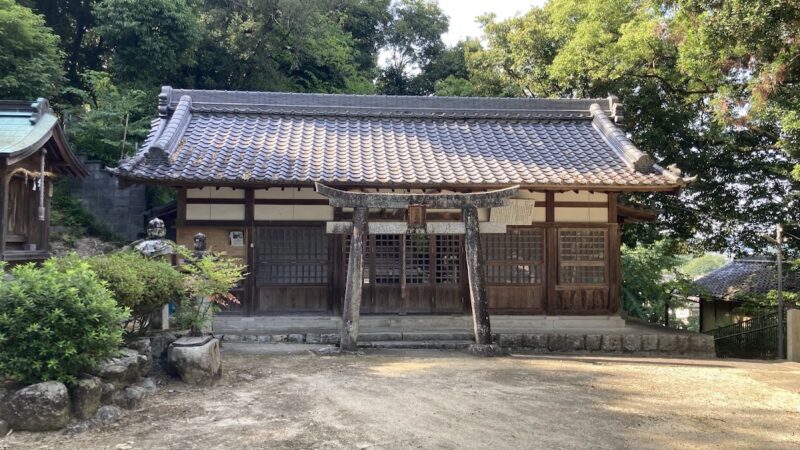
The greatest highlight of Takemizuwake Shrine is its three main halls, designated as important cultural properties of Japan. The three shrine buildings—the Left Hall, the Middle Hall, and the Right Hall—stand side by side, each recognized for its value as an independent structure.
Designation Details:
- Date of Designation: April 7, 1900 (Meiji 33)
- Construction Period: Mid-Muromachi Period (1393-1466)
- Architectural Style: Two-bay Nagare-zukuri style, cypress bark roofing
- Features: Corridors connecting each hall
Architectural Features
The main hall is built in the two-bay Nagare-zukuri architectural style, a Nagare-zukuri style shrine with a frontage of two bays (approximately 3.6 meters). The roof is covered with cypress bark shingles, and its elegant curved shape is a distinctive feature.
It is a valuable building that conveys the architectural techniques of the mid-Muromachi period, and the excellent craftsmanship of the time can be seen in the detailed carvings and joinery. It is preserved as an integrated architectural group, including the corridors connecting each hall.
Cultural Value
Nationwide, examples of Muromachi period shrine architecture remaining in such good condition are rare, making the main hall of Takemizuwake Shrine a very important location in architectural history. It is particularly noteworthy among the important cultural properties in Osaka Prefecture.
Highlights of the Shrine Grounds
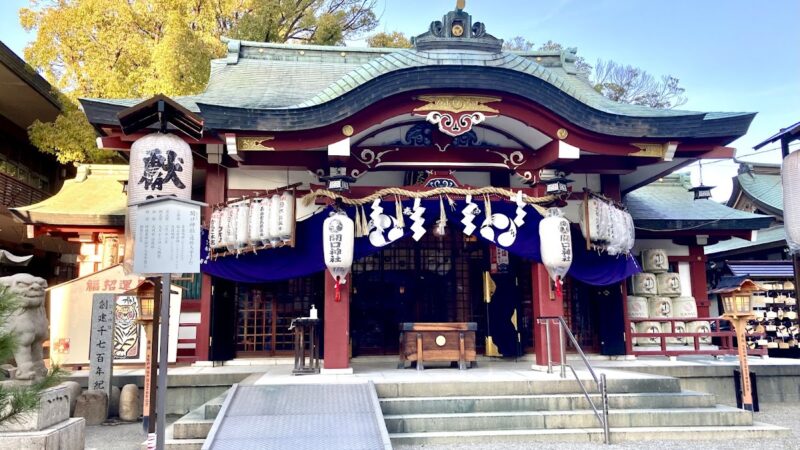
Worship Hall
Located in front of the main hall, the worship hall is where worshippers offer their prayers. It is said to have been built during the reconstruction by Kusunoki Masashige, and is a building imbued with historical weight.
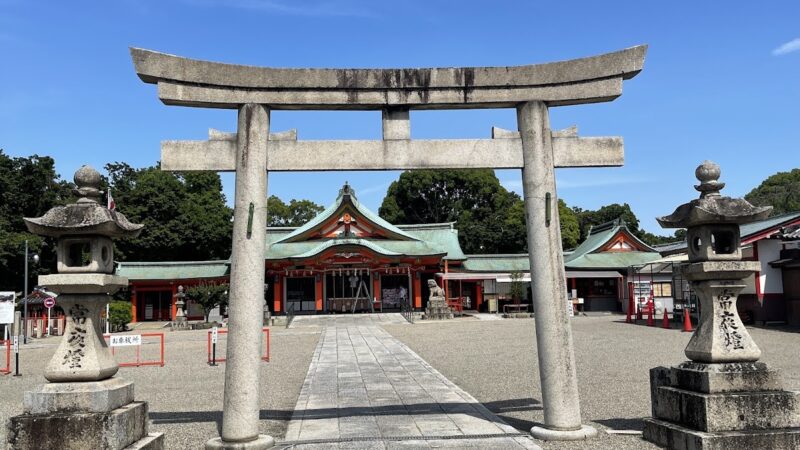
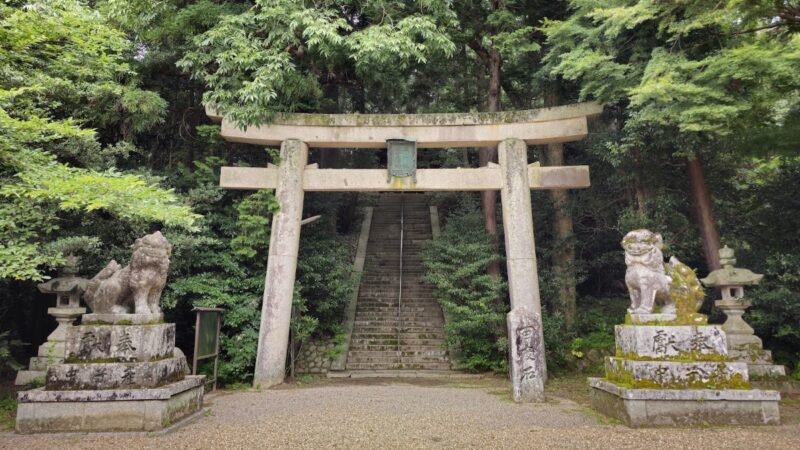
Shrine Gate and Torii
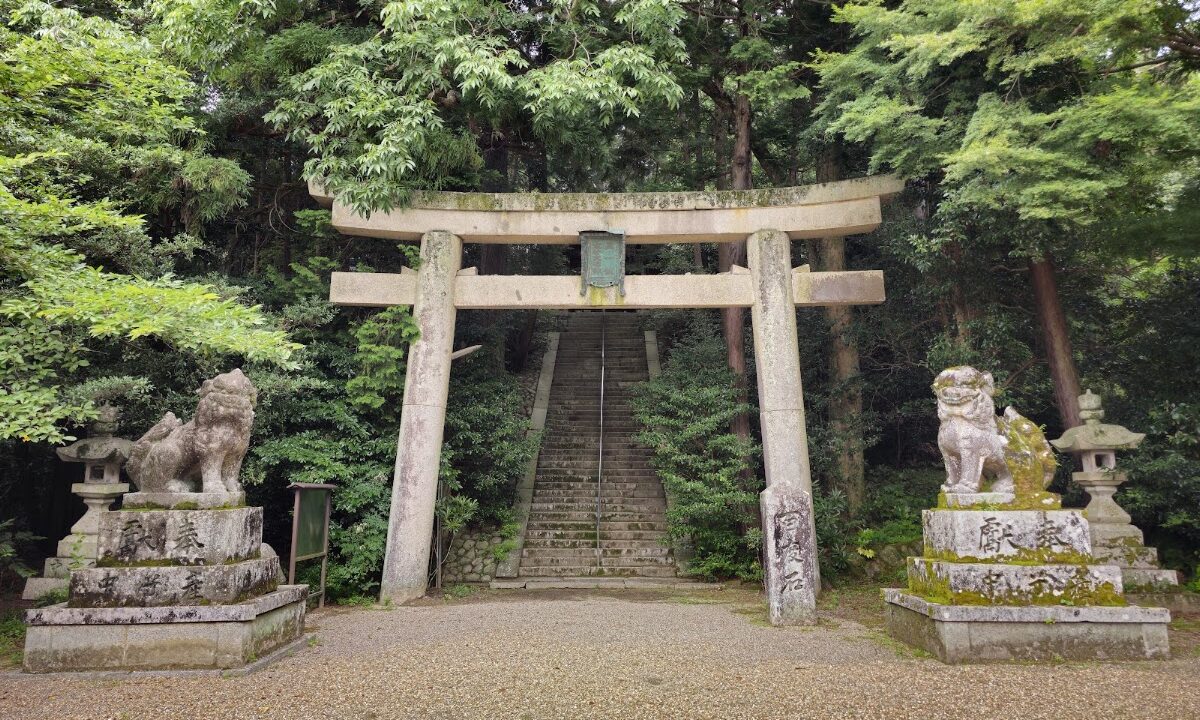
At the entrance to the shrine grounds is the shrine gate, with a stone torii gate in front of it. Passing through the torii gate leads to a solemn and dignified path.
Shrine Office and Treasures
The shrine office displays a model of the battleship Kongo and pencil drawings. The battleship Kongo was named after Mount Kongo, and the exhibits illustrate its deep connection to this region.
Furthermore, items related to the Kusunoki clan and ancient documents passed down through the shrine are also preserved, and in some cases, they can be viewed upon prior request.
Kikusui Crest
The crest of Takemizuwake Shrine is the Kikusui crest. This crest, with the upper half representing a chrysanthemum and the lower half representing water, is the same as the family crest of the Kusunoki clan, indicating its connection to Kusunoki Masashige.
The Kikusui crest is also stamped on the shrine’s goshuin (seal), making it a popular memento of visits.
Nature within the Shrine Grounds
Located at the foot of Mount Kongo, Takemizuwake Shrine is blessed with abundant nature. Visitors can enjoy the beautiful scenery of each season, and especially during the seasons of fresh greenery and autumn leaves, many people come to the shrine.
The tranquil atmosphere, where visitors can listen to the chirping of birds and the rustling of trees, is another major attraction of this shrine.
Annual Events and Festivals
Main Festivals
Takemizuwake Shrine holds various festivals throughout the year.
Annual Grand Festival:
Held every autumn, the annual grand festival is the most important festival at Takemizuwake Shrine. It has been a long-standing tradition, celebrating a bountiful harvest and praying for the prosperity of the region.
Spring Festival:
Held with the arrival of spring, the spring festival prays for a good harvest that year.
New Year’s Day Festival:
A New Year’s Day festival praying for happiness and peace in the coming year.
Special Rituals
As a shrine associated with Kusunoki Masashige, historically significant rituals are also performed. Efforts continue to preserve local traditions and pass them on to future generations.
Goshuin (Shrine Seals) and Amulets
Goshuin (Shrine Seals)
Takemizuwake Shrine offers goshuin to visitors. The goshuin (temple/shrine stamp) bearing the Kikusui crest is unique to this place associated with Kusunoki Masashige and is popular among goshuin collectors.
It is available at the shrine office, and many people receive it as proof of their visit and as a memento of their trip.
Amulets and Souvenirs
As a shrine dedicated to the water god, various amulets are available, including those for protection against water-related disasters and for agricultural prosperity. Amulets for good fortune related to Kusunoki Masashige are also popular.
Access Information
Location
Address: 357 Mizubun, Chihayaakasaka-mura, Minamikawachi-gun, Osaka Prefecture
Access by Public Transportation
By Train/Bus:
- Get off at Tondabayashi Station on the Kintetsu Nagano Line
- Take the Kongo Bus bound for Chihaya Ropeway or Kongozan Ropeway
- Get off at the Mizubun bus stop and walk for approximately 5 minutes.
Due to its proximity to the trailhead for Mount Kongo, this route is frequently visited by hikers.
Access by Car
By Car:
- Approximately 30 minutes from Mihara-Kita IC on the Hanwa Expressway
- Approximately 40 minutes from Fujiidera IC on the Nishi-Meihan Expressway
- Accessible via National Route 309
Parking: There is parking space for visitors on the temple grounds, but the number of spaces is limited. Especially during festivals and on weekends, it may be crowded, so we recommend considering using public transportation.
Visiting Hours
While the shrine grounds are generally open for free worship, the shrine office has limited hours. If you wish to receive a Goshuin (shrine stamp) or amulet, it is recommended to check in advance.
Nearby Tourist Attractions
Mount Kongo
Mount Kongo, towering behind Takemizuwake Shrine, is a 1,125-meter-high mountain located on the border of Osaka and Nara prefectures. It is a popular hiking spot in the Kansai region, attracting many hikers throughout the year.
A popular itinerary involves visiting Takemizuwake Shrine followed by a hike up Mount Kongo.
Chihaya Castle Ruins
This mountain castle, built by Kusunoki Masashige, is a historical site where he fought a siege against the Kamakura Shogunate army. It is relatively close to Takemizuwake Shrine, making it ideal for a historical walk visiting places associated with Kusunoki Masashige.
Birthplace of Kusunoki Masashige
In Chihayaakasaka Village, there is a place believed to be the birthplace of Kusunoki Masashige, and a monument has been erected there. Visiting this site along with the Takemizuwake Shrine will allow you to gain a deeper understanding of Kusunoki Masashige’s footsteps.
Shimoakasaka Rice Terraces
These beautiful rice terraces, selected as one of Japan’s Top 100 Rice Terraces, offer the opportunity to enjoy the rural scenery of each season. Considering that Takemizuwake Shrine is a shrine dedicated to the water god, this landscape of rice terraces can be said to be a place where you can visually understand the significance of the shrine’s existence.
The Charm of Takemizuwake Shrine
Historical Value
With its founding dating back to the reign of Emperor Sujin, its reconstruction by Kusunoki Masashige, and its main hall designated as an Important Cultural Property, Takemizuwake Shrine is a valuable place where you can experience Japanese history. The turmoil of the Nanboku-cho period, the story of Kusunoki Masashige’s loyalty, and the history of the faith of the local people are all etched into this shrine.
Cultural Value
The three main shrine buildings from the Muromachi period are a valuable architectural heritage site, even on a national level. Protected as Important Cultural Properties, these structures can be considered living textbooks that convey the architectural techniques and aesthetic sensibilities of that era.
Harmony with Nature
Located at the foot of Mount Kongo, the shrine enjoys a rich natural environment. The tranquility enveloping the grounds, the changing seasons, and the pure air make it a place of peace and tranquility away from the hustle and bustle of the city, beloved by many worshippers.
Inheritance of Faith
Revered since ancient times as a water deity and tutelary deity, Takemizuwake Shrine continues to attract the faith of local people. It continues to function as a living place of faith, with the continuation of traditional festivals and the maintenance of the shrine by its parishioners.
Points to Note When Visiting
Etiquette for Visiting
When visiting Takemizuwake Shrine, please follow the general etiquette for visiting a shrine:
- Bow before passing through the torii gate.
- Avoid walking in the center of the path.
- Cleanse your hands and mouth at the water basin.
- Bow twice, clap twice, and bow once in front of the main hall.
- Bow once again at the torii gate when leaving.
Recommended Time to Visit
Spring (March-May): The fresh greenery is beautiful, and the mild weather makes it ideal for visiting.
Autumn (October-November): The autumn leaves are at their peak, and the annual festival is held during this time.
Winter (December-February): There are fewer visitors, allowing for a peaceful visit. The snowy scenery of Mount Kongo is also beautiful during this season.
Estimated Time Required
A visit to the shrine grounds alone takes about 30 minutes. However, if you wish to carefully appreciate the main hall (a designated Important Cultural Property) and enjoy the natural surroundings, it is recommended to allow about an hour.
If you plan to visit other nearby tourist attractions as well, we recommend scheduling a half-day to full-day visit.
Takemizuwake Shrine and Kusunoki Masashige
As the Guardian Deity of the Kusunoki Clan
Takemizuwake Shrine has been deeply revered as the guardian deity of successive generations of the Kusunoki clan. It is said that Kusunoki Masashige prayed for victory at this shrine when he fought to overthrow the Kamakura Shogunate, demonstrating his loyalty to Emperor Go-Daigo.
Meaning of the Kikusui Crest
The Kikusui crest, the shrine’s divine emblem, is also the family crest of the Kusunoki clan. The chrysanthemum is said to represent the Imperial family, and the water represents the water deity worship at Takemizuwake Shrine, symbolizing Kusunoki Masashige’s loyalty to the Imperial family and his deep connection with Takemizuwake Shrine.
Value as a Historical Heritage Site
Kusunoki Masashige is a figure known in Japanese history as a representative of loyalty. The Take-Mikumari Shrine, a place associated with Kusunoki Masashige, is a must-see spot for history enthusiasts.
The Three Mikumari Shrines of Kawachi Province
Take-Mikumari Shrine, along with Nishikiori Shrine (Tondabayashi City) and Mikukuru Mitama Shrine (Shimo-Mikumari Shrine, Tondabayashi City), is known as one of the “Three Mikumari Shrines of Kawachi Province.”
What is Mikumari Worship?
“Mikumari” means “water distribution,” and this is a belief in the god who presides over the distribution of agricultural water. In ancient agricultural societies, water management was a matter of life and death, and the Mikumari god was revered as the guardian deity of the region.
Role of the Three Mikumari Shrines
The three Mikumari shrines of Kawachi Province each played a role in protecting water sources in different regions and supporting the prosperity of agriculture. Take-Mikumari Shrine is also called “Kami-Mikumari Shrine” and is positioned as a shrine protecting the water source at the foot of Mount Kongo.
Summary
Takemizuwake Shrine (Osaka Prefecture) is a venerable shrine with a long history dating back to ancient times. It possesses multifaceted value as a place associated with Kusunoki Masashige and as a cultural heritage site with a main hall designated as an Important Cultural Property.
As the guardian shrine of the sacred Mount Kongo, Takemizuwake Shrine has preserved the faith in the water deity and served as a spiritual pillar for the local people. Its tranquil grounds offer a sense of history and tranquility, welcoming many visitors.
Located in Chihayaakasaka Village, Minamikawachi District, Osaka Prefecture, somewhat removed from urban areas, it can be said that it retains a strong sense of ancient faith. The main hall, an Important Cultural Property, the Kikusui crest, the traces of Kusunoki Masashige, and the rich natural beauty of Mount Kongo—all these elements harmonize to make Takemizuwake Shrine a special place well worth visiting.
This shrine is recommended for a wide range of people, from those interested in history and those who enjoy visiting shrines and temples to those seeking solace in nature and those who wish to experience the spirit of loyalty of Kusunoki Masashige. Please visit Takemizuwake Shrine at least once and experience its history, culture, and tranquil space for prayer.