Hirokuni Shrine (Mihara Ward, Sakai City, Osaka Prefecture) Complete Guide | History, Deities, the Mystery of the Giant Pot on the Grounds, and Goshuin Information
Hirokuni Shrine (広國神社), located in Oho, Mihara Ward, Sakai City, Osaka Prefecture, is a historical shrine with a history dating back to the Heian period. Situated along National Route 309, and even having its name used in an intersection, this shrine boasts a very unique feature: a giant iron pot and a part of a burial chamber from an ancient tomb are located on its grounds. This article provides a detailed explanation of Hirokuni Shrine’s history, deities, highlights on the grounds, access methods, and information on its Goshuin (shrine stamp).
Basic Information about Hirokuni Shrine
Location: 248 Oho, Mihara-ku, Sakai City, Osaka Prefecture 587-0011
Managing Shrine: Hagiwara Shrine (Hagiwara Tenjin)
Managing Shrine Address: 75-1 Hishioshohara-cho, Higashi-ku, Sakai City, Osaka Prefecture 599-8112
Phone Number: 072-285-0295 (Hagiwara Shrine)
Visiting Hours: Grounds are open for worship (advance notice required for use of the shrine office)
Admission Fee: Free
Parking: Free parking available (approx. 5 spaces)
Hirokuni Shrine does not have a resident priest and is managed by Hagiwara Shrine (Hagiwara Tenjin) located in Hishioshohara-cho, Higashi-ku, Sakai City. For information regarding Goshuin (shrine stamps) or other details, it is recommended to contact Hagiwara Shrine in advance.
History and Origins of Hirokuni Shrine
History from the Heian Period
The exact founding date of Hirokuni Shrine is unknown, but it is believed to have existed since the mid-Heian period. It was deeply revered by the local people as the tutelary shrine of the former Oho Village, Tannan District, Kawachi Province.
The name Oho is an ancient place name, and this area was historically very important. In particular, from the medieval to the early modern period, it flourished as the base of a group of metal casting technicians known as the Kawachi Imono-shi (Kawachi metal casters).
Deep Connection with the Kawachi Imono-shi
The area around Oho in Mihara Ward was known as the center of the Kawachi Imono-shi. The Kawachi Imono-shi were a group of craftsmen skilled in casting techniques for temple bells, Buddhist implements, pots, kettles, and other items, and their techniques were known throughout Japan. The giant iron pot located on the grounds of Hirokuni Shrine is a valuable cultural asset that conveys the techniques of these Kawachi Imono-shi to the present day.
This large cauldron is carefully preserved within the shrine grounds as a symbol of the high skill of the foundry workers and as a legacy that tells the story of the region’s industrial history.
About the Deity
Main Deity: Hirokuni Oshitake Kanahi no Mikoto
The main deity of Hirokuni Shrine is Hirokuni Oshitake Kanahi no Mikoto. This deity is another name for Emperor Ankan, the 27th emperor. Emperor Ankan reigned in the first half of the 6th century (531-535) and is known as the son of Emperor Keitai.
The “Kanahi” part of Emperor Ankan’s name, “Hirokuni Oshitake Kanahi no Mikoto,” is sometimes interpreted as meaning metal, suggesting a connection to the local foundry industry.
Enshrined Deities
In addition to the main deity, many other deities are enshrined at Hirokuni Shrine. This is the result of the consolidation of small local shrines and temples over a long history, and is evidence of its function as a guardian deity for the entire region.
Highlights of the Shrine Grounds
Giant Iron Cauldron
The most distinctive feature of Hirokuni Shrine is the giant iron cauldron located on the shrine grounds. This cauldron is a valuable legacy demonstrating the skills of Kawachi metalworkers, and its size astonishes visitors.
The size of the cauldron reveals the high level of casting technology at the time and the prosperity of the industry in this region. Currently, it has high cultural value and serves as an important historical document that tells the story of the region.
Part of a Burial Mound’s Stone Chamber
There is another interesting feature on the shrine grounds. It is a stone structure believed to be part of a burial mound’s stone chamber. Many Kofun period ruins exist around Mihara Ward, and it is presumed that this part of the stone chamber was relocated from a nearby burial mound.
There are various theories as to why a burial mound’s stone chamber is located on the shrine grounds, but it is considered one piece of evidence that this area was considered important as a sacred place since ancient times.
Atmosphere of the Shrine and Grounds
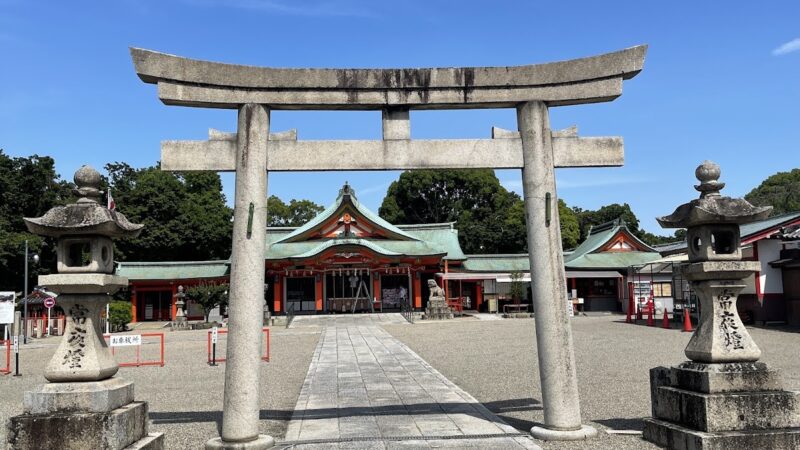
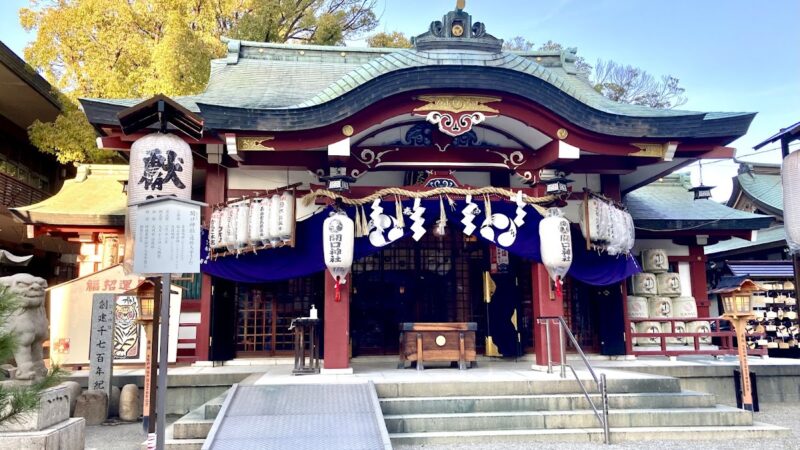
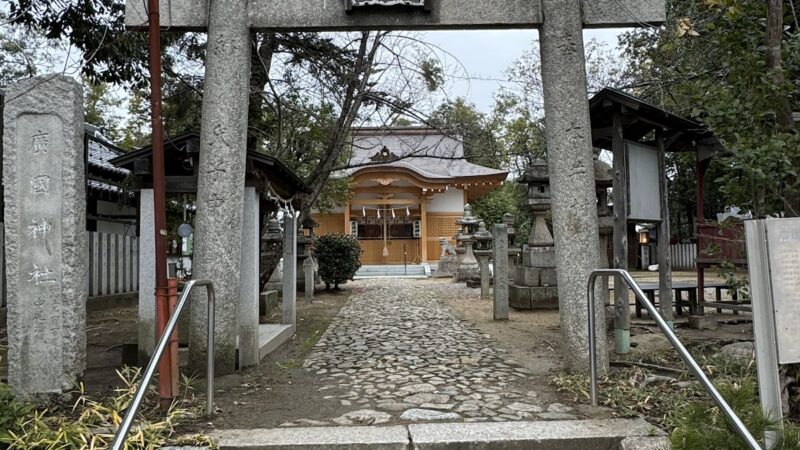
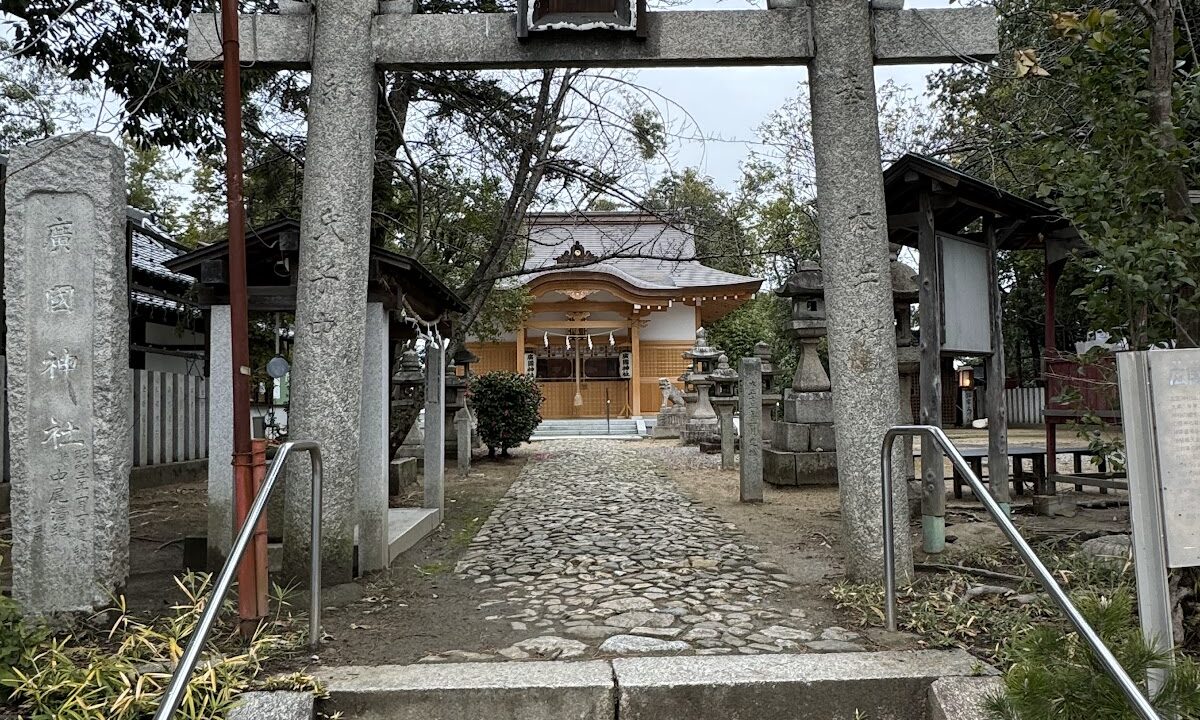
Hirokuni Shrine’s main building, though small, possesses a solemn atmosphere. While located along National Route 309, a major thoroughfare, entering the grounds envelops you in a tranquil ambiance.
The grounds are meticulously maintained by local residents, ensuring a clean and peaceful environment for worship.
Access Methods
Access by Public Transportation
Nearest Station: Kintetsu Minami-Osaka Line, “Kawachi-Matsubara Station”
From Kawachi-Matsubara Station, take a Kintetsu bus and get off at the “Hirokuni Shrine-mae” bus stop. The location is very easy to find, as it’s also the name of the bus stop.
It’s also within walking distance from Hagiwara-Tenjin Station, but it’s a bit of a distance, so taking the bus is recommended.
Access by Car
Located along National Route 309, it’s also easily accessible by car. It’s approximately a 30-minute drive from Osaka city center.
Car Navigation Settings: Search for “Hirokuni Shrine” or “248 Oho, Mihara-ku, Sakai City”.
There is free parking on the shrine grounds (approximately 5 spaces), but since the number of spaces is limited, we recommend using nearby parking lots during busy times.
Nearby Landmarks
The “Hirokuni Shrine Mae” intersection on National Route 309 is a landmark. As the name of this intersection suggests, the shrine is very close by. Since it is located along a major road connecting Osaka City and Kumano City in Mie Prefecture, it is possible to stop by during a drive.
About Goshuin (Shrine Seals)
You can receive a Goshuin at Hirokuni Shrine, but since there are no priests permanently stationed there, prior contact is necessary.
Location for obtaining Goshuin (temple/shrine stamp): Hagiwara Shrine (Hagiwara Tenjin)
Address: 75-1, Hishio-hara-dera-cho, Higashi-ku, Sakai City, Osaka Prefecture 599-8112
Phone Number: 072-285-0295
If you wish to receive a Goshuin, it is recommended that you first contact Hagiwara Shrine by phone to arrange a date and time. The general procedure is to visit Hirokuni Shrine first, then Hagiwara Shrine to receive the Goshuin.
Nearby Spots and Tourist Information
Hagiwara Shrine (Hagiwara Tenjin)
Hagiwara Shrine, which manages Hirokuni Shrine, is also a shrine worth visiting. It enshrines Sugawara no Michizane, the god of learning, and is bustling with many worshippers during exam season. Visiting it together with Hirokuni Shrine is recommended.
Places Associated with Kawachi Metal Foundry Workers
The Mihara Ward area is dotted with places where you can feel the history of Kawachi metal foundry workers. Those interested in local history may enjoy exploring the surrounding area.
Burial Mounds
Sakai City is famous for the Mozu Burial Mounds, but many Kofun period (ancient burial mound) sites also exist around Mihara Ward. For history buffs, a tour combining burial mound visits with sightseeing is highly recommended.
Manners and Precautions for Visiting Shrines
Basic Manners for Visiting Shrines
- Bow before passing through the torii gate: Bow before entering the shrine grounds.
- Purify at the water basin: If there is a water basin, purify your hands and mouth before praying.
- Two bows, two claps, one bow: The basic custom before the shrine is to bow twice, clap twice, and then bow once.
Photography
Photography is generally permitted on the shrine grounds, but please be considerate of other visitors. Especially when photographing cultural artifacts such as the large cauldron or stone chamber, it is important to treat them with respect.
Absence of Shinto Priests
Since Hirokuni Shrine does not have a resident Shinto priest, amulets and Goshuin (stamped seals) cannot be obtained immediately. It is recommended to contact Hagiwara Shrine in advance to confirm the necessary procedures before visiting.
Cultural Value of Hirokuni Shrine
Conveying the Local Industrial History
Hirokuni Shrine is not merely a religious facility, but also a cultural heritage site that conveys the history of the Kawachi foundry workers, a group of craftsmen who played a crucial role in the history of Japanese industry.
The large cauldron on the shrine grounds is a valuable historical artifact that speaks to the high level of technology at the time, and is a source of local pride.
A Sacred Site Since Ancient Times
The presence of a burial chamber from an ancient tomb on the shrine grounds suggests that this area has held some religious or cultural significance since ancient times. The fact that this place has remained an object of worship from the Kofun period to the Heian period and up to the present day is a very interesting fact.
Annual Events and Festivals
Details regarding Hirokuni Shrine’s annual events can be obtained by contacting Hagiwara Shrine, which manages the shrine. As the local guardian shrine, traditional festivals are held here.
This shrine is carefully preserved by the local people and plays a central role in the community.
Summary
Hirokuni Shrine is a historic shrine located in Mihara Ward, Sakai City, Osaka Prefecture. It enshrines Emperor Ankan as its main deity and boasts unique cultural artifacts within its grounds, such as a giant iron pot that showcases the techniques of Kawachi metalworkers and a stone chamber from an ancient burial mound.
Despite its convenient location along National Route 309, it maintains a quiet and peaceful environment for worship. Those wishing to receive a Goshuin (shrine stamp) should contact the managing shrine, Hagiwara Shrine, in advance.
This shrine is highly recommended for those interested in Osaka’s history and industrial history, and for those wishing to visit a place of worship with a long history dating back to ancient times. Combined with nearby tourist attractions, it offers a fulfilling experience.