Kashima Shrine (Ibaraki Prefecture) Complete Guide | History, Highlights, Blessings, and Access: A Thorough Explanation
Kashima Shrine, located in Kashima City, Ibaraki Prefecture, is a venerable shrine that has walked hand in hand with the history of Japan’s founding. As the head shrine of approximately 600 Kashima shrines nationwide, it enshrines Takemikazuchi-no-Okami, the god of martial arts, and has long been revered by the Imperial family and the Shogunate. The vast grounds are full of highlights, including sacred trees over 1000 years old, the mystical inner sanctuary, and the Kanameishi (foundation stone), known as a power spot.
This article thoroughly explains everything you need to know before visiting Kashima Shrine, from its historical background to its highlights, blessings, points to consider when visiting, and access methods.
About Kashima Shrine | The History and Prestige of One of Japan’s Oldest Shrines
A Foremost Ancient Shrine in Eastern Japan with a History of 2680 Years
According to ancient documents, Kashima Shrine was founded in the first year of Emperor Jimmu’s reign (660 BC). This is considered the year of Japan’s founding, and is evidence that Kashima Shrine has walked hand in hand with Japanese history. Its establishment is also recorded in the “Hitachi Province Fudoki” (ancient provincial gazetteer), establishing its firm position as the foremost ancient shrine in Eastern Japan.
Until modern times, only three shrines were permitted to bear the title of “Jingu” (Grand Shrine): Ise Grand Shrine, Katori Grand Shrine, and Kashima Grand Shrine. This fact alone demonstrates how exceptional Kashima Shrine was. Currently, it continues to uphold its prestige as an Imperial Shrine and the Ichinomiya (first-ranked shrine) of Hitachi Province.
About Takemikazuchi-no-Okami | God of Martial Arts and Victory
Takemikazuchi-no-Okami, the enshrined deity of Kashima Shrine, is a god who played an important role in Japanese mythology. In the “Myth of the Transfer of the Land” recorded in the Kojiki and Nihon Shoki, he is depicted as a god of war who successfully negotiated with Okuninushi-no-Mikoto of Izumo to relinquish his land.
Due to his immense military power and negotiating skills, Takemikazuchi-no-Okami has long been worshipped as the god of martial arts and the god of victory. He is deeply revered not only by martial artists such as swordsmen and judo practitioners, but also by athletes and those facing competitive situations. Furthermore, as a god of national protection, he has also played a role in guarding the eastern part of Japan.
Position as one of the Three Shrines of Eastern Japan
Kashima Shrine, along with Ikisu Shrine in Ibaraki Prefecture and Katori Shrine in Chiba Prefecture, is known as one of the “Three Shrines of Eastern Japan.” During the Edo period, the “Shimosangu Pilgrimage,” a visit to the three eastern shrines after visiting Ise Grand Shrine, was very popular, attracting many worshippers.
The three shrines have deep connections to each other; Takemikazuchi-no-Okami of Kashima Shrine and Futsunushi-no-Okami of Katori Shrine are deities who cooperated in the myth of the transfer of the land. Kunado-no-Kami, the principal deity of Ikisu Shrine, is considered the god who guided the two deities on their journey to the eastern provinces.
Even today, the “Eastern Provinces Three Shrines Pilgrimage” remains popular, and special stamp books and amulets are available. It is believed that visiting all three shrines brings greater blessings.
Highlights of Kashima Shrine | A Complete Guide to the Shrine Grounds
Kashima Shrine boasts a vast area of approximately 210,000 tsubo (about 15 times the size of Tokyo Dome). Nestled within a lush forest, the temple grounds are dotted with historical buildings and mystical power spots.
Tower Gate | One of Japan’s Three Great Tower Gates
The first thing that catches your eye upon entering the grounds is the beautiful vermilion tower gate. Donated in 1634 by Tokugawa Yorifusa, the first lord of the Mito domain, this tower gate boasts a height of approximately 13 meters and is counted as one of Japan’s three great tower gates.
The inscription on the tower gate’s plaque, “Kashima Jingu,” was written by Admiral Togo Heihachiro. Its harmonious blend of dignified vermilion and elegant curves makes it a symbol of Kashima Jingu, welcoming many visitors. When passing through the tower gate, take your time to appreciate its magnificence.
Main Hall and Worship Hall | Important Cultural Property Donated by Tokugawa Ieyasu
After passing through the tower gate, the main hall and worship hall appear directly ahead. The current shrine building was donated in 1619 by Tokugawa Hidetada, the second Tokugawa shogun, at the command of his father, Tokugawa Ieyasu, and is designated as an Important Cultural Property.
The main hall is built in the Sangensha Nagare-zukuri style, characterized by a beautiful contrast of vermilion and black lacquer. With its cypress bark roof and intricate carvings, the shrine is a masterpiece that embodies the finest of early Edo period shrine architecture.
At the worship hall, offer your prayers to Takemikazuchi-no-Okami with sincerity. It is believed to bring various blessings, including good fortune in competitions, improvement in martial arts, protection from evil, and traffic safety.
Inner Shrine | A sacred sanctuary enveloped in a mystical atmosphere
A 10-minute walk along the forest path from the main shrine will take you to the inner shrine. This shrine, said to have been dedicated by Tokugawa Ieyasu in 1605 to express gratitude for his victory at the Battle of Sekigahara, was originally used as the main sanctuary.
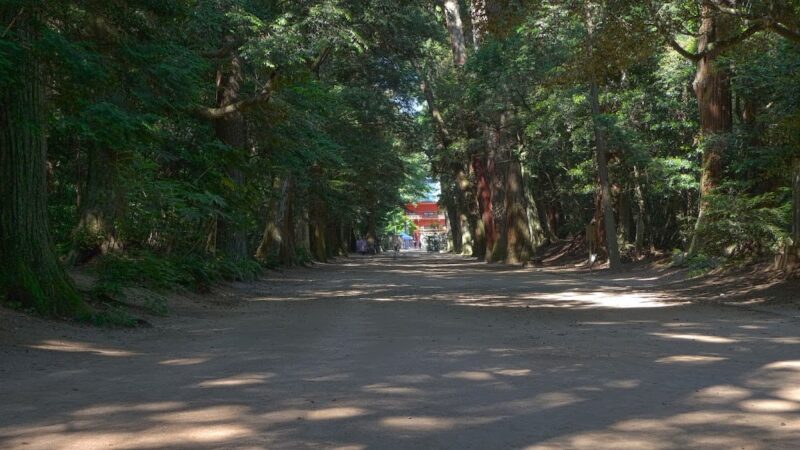
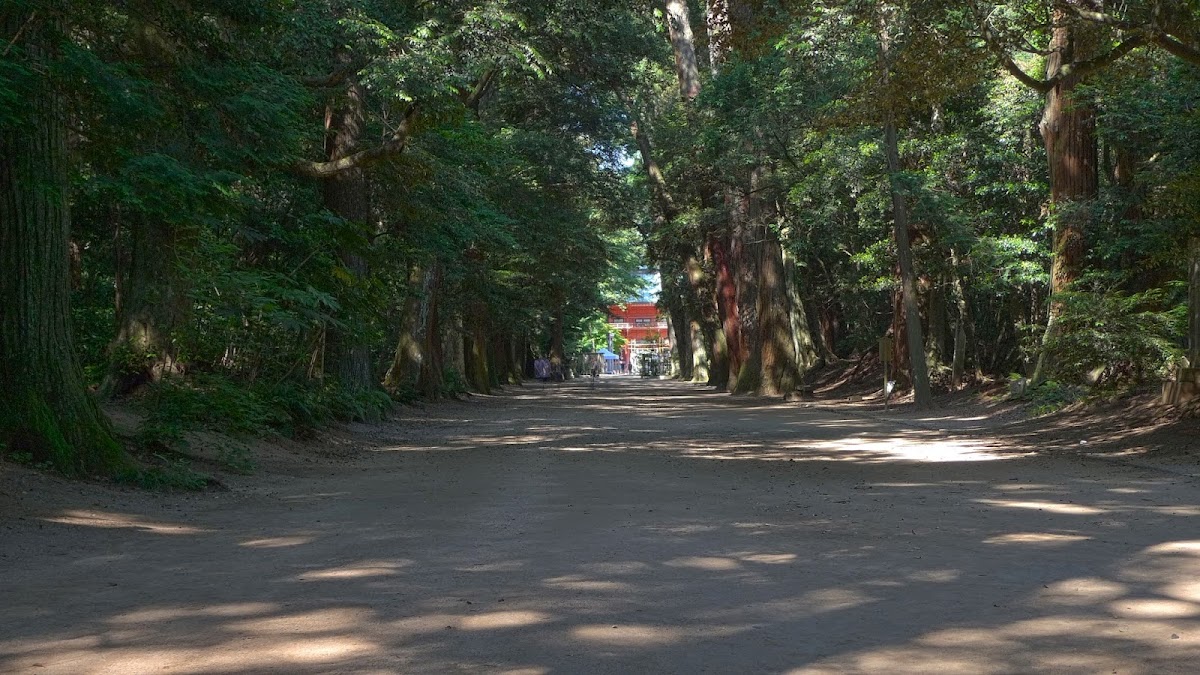
The area around the inner sanctuary is particularly enveloped in a mystical atmosphere, and one can feel a deep spirituality amidst the silence surrounded by ancient trees. This place, with its solemn atmosphere distinct from the main sanctuary, is a spot where many visitors say they “feel a special power.”
Kanameishi (Keystone) | The Legendary Stone that Calms Earthquakes
Further beyond the inner sanctuary lies the Kanameishi, known as the greatest power spot at Kashima Shrine. Although only a small portion of the stone protrudes above ground, it is said to extend deep into the earth, holding down the head of a giant catfish believed to cause earthquakes.
There is an anecdote that Tokugawa Mitsukuni, known as Mito Komon, had digging done for seven days and seven nights to find the base of this stone, but was unable to reach the bottom. Katori Shrine also has a similar keystone; it is said that the keystone at Kashima holds down the head of a giant catfish, while the keystone at Katori holds down its tail.
The area around the keystone is particularly filled with a sacred atmosphere, and if you quietly put your hands together in prayer, you may feel the energy emanating from the earth.
Mitarai Pond | 400,000 Liters of Spring Water Per Day
Located on the south side of the shrine grounds, Mitarai Pond is a clear pond from which more than 400,000 liters of water spring forth daily. The water depth is about 1 meter, but strangely, there is a legend that the water level never exceeds chest level, whether an adult or a child enters.
In the past, it was used as a place for purification rituals (misogi) before worship. Even today, on the coldest day of January, the “Daikan Misogi” purification ceremony is held, with more than 200 participants. There are also tea houses around the pond where you can enjoy coffee brewed with the spring water and amazake (sweet rice wine).
The reflection of the trees on the crystal-clear water is enchanting, allowing visitors to enjoy the beautiful scenery of each season. The beauty is especially striking during the fresh green season and the autumn foliage season.
Deer Park | Interacting with Deer, Messengers of the Gods
The deer, which are the origin of the name “Kashima” of Kashima Shrine, are considered messengers of Takemikazuchi-no-Okami. Approximately 30 deer are kept in the deer park on the shrine grounds, and visitors can freely observe them.
Kasuga Taisha Shrine in Nara also considers deer as messengers of the gods, based on the legend that when Takemikazuchi-no-Okami was invited from Kashima Shrine, the god arrived riding a white deer. The connection between Kashima Shrine, Kasuga Taisha Shrine, and deer speaks to the profound depth of Japanese Shinto culture.
The deer in the deer park are friendly, and visitors can even feed them (subject to change depending on the season). Interacting with the deer, messengers of the gods, is particularly popular with families with children.
Treasure Hall | Valuable Cultural Assets Including National Treasures
The Kashima Shrine Treasure Hall houses many valuable cultural assets, including the national treasure “Futtsu no Mitama no Tsurugi” (straight sword). This sword, measuring approximately 2.7 meters in length, is one of the largest straight swords in Japan and is believed to have been crafted between the Nara and Heian periods.
In addition, the hall displays ancient documents, armor, paintings, and other items that tell the long history of Kashima Shrine. However, the Treasure Hall is sometimes closed for renovations, so it is recommended to check the official website for opening hours before visiting.
Blessings and Amulets of Kashima Shrine
Main Blessings
The blessings that can be obtained at Kashima Shrine are diverse, but the following are particularly well-known.
- Good Fortune in Competitions and Victory: Due to Takemikazuchi-no-Okami’s nature as a god of war, you can pray for success in all kinds of competitions, including sports, exams, and business.
- Improvement in Martial Arts: Protects those who aspire to martial arts such as kendo, judo, and karate.
- Protection from Misfortune and Disaster: As a god who protects the nation, he protects against all kinds of disasters.
- Matchmaking: Due to his negotiating skills in the myth of the transfer of the land, he is believed to have the power to bring about good relationships.
- Traffic Safety: He is also worshipped as a god who protects the safety of travelers.
- Earthquake Protection: Based on the legend of the keystone, you can pray for protection from earthquakes and disasters.
Popular Amulets and Souvenirs
Kashima Shrine offers a variety of amulets and souvenirs.
The Victory Amulet (Kachimamori) is a representative amulet of Kashima Shrine and is believed to bring good fortune in all kinds of competitions. Despite its simple design, it is chosen by many visitors.
The Eastern Japan Three Shrines Amulet is an amulet given when visiting the three shrines of Kashima Jingu, Katori Jingu, and Ikisu Jinja. You receive a card at Kashima Jingu and complete it by attaching stickers of the shrine’s crest at the other two shrines. It’s a popular amulet, considered a special amulet that combines the power of the three shrines.
The Deer Clay Bell is a cute clay bell shaped like a deer, the divine messenger of the shrines, and is a popular souvenir.
In addition, there are amulets for various wishes, such as academic success, traffic safety, and good health.
About Goshuin (Shrine Seals)
At Kashima Jingu, you can receive different goshuin at the main shrine and the inner shrine. The powerful ink calligraphy and red seal are distinctive and a must-see for goshuin collectors.
A special goshuin notebook for the Eastern Japan Three Shrines pilgrimage is also available, and many visitors purchase it as a memento of their visit. The reception hours for receiving Goshuin (temple/shrine stamps) are usually from 8:30 to 16:30, but these may change due to festivals and other events, so please check in advance if you wish to be sure to receive one.
Festivals and Events at Kashima Shrine
More than 90 festivals are held annually at Kashima Shrine, where gratitude and prayers are offered to the gods through traditional ceremonies.
Saitosai Festival | March 9th
One of Kashima Shrine’s three major festivals, this festival prays for a bountiful harvest and peace throughout the land. Saito, clad in brightly colored costumes, performs a magnificent dance to the accompaniment of music. This festival, with a history of approximately 1200 years, is designated as an Intangible Folk Cultural Property of Ibaraki Prefecture.
Jinkosai Festival | September 1st
This is the largest festival, held once every 12 years in the Year of the Horse. The portable shrine parades through the parish area, attracting many worshippers. Many locals are eagerly awaiting the next Shinkosai festival.
Aouma-sai (White Horse Festival) | January 7th
This is a Shinto ritual in which a white horse is brought before the shrine to pray for a bountiful harvest. There is a belief that seeing the white horse wards off evil spirits for the year.
Yabusame (Mounted Archery) | Irregular
As a ritual unique to Kashima Shrine, which enshrines a god of war, Yabusame is sometimes performed. The magnificent sight of archers shooting at targets from galloping horseback captivates many spectators.
The dates of these festivals can be checked on the official website of Kashima Shrine. Visiting on the day of a festival will allow you to see the shrine in a different light and provide a deeper experience.
How to Enjoy Kashima Shrine | Points for Visiting
Time Required for Visiting
The time required for visiting Kashima Shrine varies depending on the area you wish to explore.
- Visiting the Main Shrine Only: Approximately 30 minutes
- Standard Course Including the Inner Shrine and the Kanameishi Stone: 1 hour 30 minutes to 2 hours
- Complete Course Including the Mitarai Pond and the Treasure Museum: 2 hours 30 minutes to 3 hours
To fully enjoy the nature and history while leisurely strolling through the vast grounds, we recommend visiting with ample time.
Recommended Visiting Route
The following order is recommended for the Standard Course:
- From the Great Torii Gate to the Tower Gate
- Visit the Main Shrine and Worship Hall
- See the deer, messengers of the gods, at the Deer Park
- Walk along the forest path to the Inner Shrine
- Receive power at the Kanameishi Stone
- Rest at the Mitarai Pond
- Obtain amulets and Goshuin (stamps) at the shrine office
This route allows you to efficiently visit the main sights of Kashima Shrine.
Seasonal Charms
Kashima Shrine shows different faces in each season.
Spring (March-May) is beautiful with fresh greenery, and the cherry blossoms on the shrine grounds are magnificent. The Saito Festival is also held in spring.
Summer (June-August) is enveloped in deep green, and the cool atmosphere of the Mitarai Pond is very pleasant.
Autumn (September-November) boasts stunning autumn foliage, especially around the inner shrine, which is a must-see.
Winter (December-February) offers a crisp, mystical atmosphere. The Hakuba Festival and the Daikan Misogi (Great Cold Purification Ritual) in January are also highlights.
Nearby Tourist Attractions
When visiting Kashima Shrine, you can also enjoy nearby tourist attractions.
A classic pilgrimage is to visit Katori Shrine (Katori City, Chiba Prefecture) and Ikisu Shrine (Kamisu City, Ibaraki Prefecture) as part of the Eastern Japan Three Shrines Pilgrimage. The three shrines are about 30 minutes apart by car.
Kashima Soccer Stadium is the home stadium of J.League team Kashima Antlers, and a must-visit spot for soccer fans.
Restaurants in Kashima City offer dishes made with fresh seafood. Seafood caught in the Kashima Sea is especially exquisite.
Access to Kashima Shrine
Access by Train
From Tokyo
- Approximately 2 hours via JR Sobu Line/Narita Line to “Kashima Jingu Station”
- Approximately 2 hours by express bus “Kashima-go” from Tokyo Station (get off at Kashima Jingu bus stop)
From Kashima Jingu Station
- Approximately 10 minutes on foot to the large torii gate
- Approximately 5 minutes by taxi
Kashima Jingu Station is the closest station to Kashima Jingu Shrine, and the route from the station to the shrine is well-marked with signs.
Access by Car
From Tokyo
- Approximately 15 minutes from the Higashi-Kanto Expressway “Itako IC”
- Approximately 1 hour 30 minutes via the Joban Expressway “Mito-Oarai IC”
Car Navigation Settings
- Address: 2306-1 Miyachu, Kashima City, Ibaraki Prefecture
- Phone Number: 0299-82-1209
Parking Information
Kashima Shrine has multiple parking lots available.
Parking Lot 1 (Near the Great Torii Gate)
- Capacity: Approximately 60 cars
- Fee: 300 yen for regular cars (500 yen during the New Year period)
- Closest parking lot to the main shrine
Parking Lot 2 (Near the Mitarai Pond)
- Capacity: Approximately 55 cars
- Fee: Free
- Convenient if you start your visit from the Mitarai Pond
Temporary Parking Lot
- Temporary parking lot opened during New Year’s visits and festivals
- Capacity: Several hundred cars
During peak seasons such as the first three days of the New Year and the Saito Festival, early morning visits or using public transportation are recommended.
Notes and Manners for Visiting
Visiting Hours
While the grounds of Kashima Shrine are open 24 hours for worship, the gift shop and treasure hall have specific operating hours.
- Gift Office: 8:30 AM – 4:30 PM
- Treasure Hall: 9:00 AM – 4:00 PM (Closed on some days)
- Prayer Reception: 8:30 AM – 4:30 PM
If you wish to receive a Goshuin (temple stamp) or amulet, please visit during the gift office’s operating hours.
Clothing and Items to Bring
The temple grounds are vast, and you will be walking through the forest if you go to the inner shrine or the foundation stone. Comfortable shoes and clothing are recommended. Don’t forget insect repellent in the summer and warm clothing in the winter.
Shrine Visiting Etiquette
- Bow when passing through the torii gate.
- Walk along the sides of the path, as the center is the path for the gods.
- Cleanse your hands and mouth at the water basin.
- At the main hall, worship using the “two bows, two claps, one bow” method.
- Photography is permitted, but please be considerate of other worshippers.
- Do not take photos in areas where photography is prohibited, such as inside the main hall.
Frequently Asked Questions about Kashima Shrine
Q1: When is the best time to visit Kashima Shrine?
A: Each season has its own charm, but if you want to avoid crowds, weekday mornings are recommended. If you want to see a festival, the Saitosai festival in March is best, and if you want to enjoy the autumn leaves, November is ideal. New Year’s visits are extremely crowded, so visiting from mid-January onwards is more comfortable.
Q2: Is it possible to visit all three shrines of the Eastern Provinces in one day?
A: If you have a car, it is perfectly possible to visit all three shrines in one day. It is most efficient to visit the shrines in the following order: Kashima Shrine → Katori Shrine → Ikisu Shrine. Allow one hour for worship at each shrine, and plan for approximately 5-6 hours including travel time.
Q3: Is it possible to visit with a pet?
A: In principle, pets are not allowed on the grounds of Kashima Shrine. However, assistance dogs such as guide dogs and service dogs are permitted. If you wish to bring a pet, it is recommended to check with the shrine office in advance.
Q4: Do you sell Goshuincho (stamp books)?
A: Yes, original Kashima Shrine Goshuincho are sold at the shrine office. There are also Goshuincho specifically for the Eastern Japan Three Shrines pilgrimage. Prices may vary depending on the season, so please check on-site.
Q5: Is it possible to visit in a wheelchair? **
A: While the main shrine is accessible by wheelchair, the path leading to the inner shrine and the foundation stone has stairs and unpaved sections, making wheelchair access difficult. The main route from the parking lot to the main shrine is barrier-free. If you have any concerns, we recommend consulting the shrine office in advance.
Q6: Can I have a wedding ceremony at Kashima Shrine?
A: Yes, you can have a Shinto wedding ceremony at Kashima Shrine. A ceremony in such a solemn atmosphere will be a fitting experience for an important milestone in your life. Please inquire at the shrine office for details.
Summary | Experience Japanese History and Power at Kashima Shrine
Kashima Shrine boasts a long history of 2680 years and is one of Japan’s leading power spots, enshrining the powerful warrior god, Takemikazuchi-no-Okami. The vast grounds offer a wealth of attractions, including important cultural property shrine buildings, the mystical inner shrine, the legendary foundation stone, and the serene Mitarai Pond.
Many worshippers visit Kashima Shrine throughout the year, seeking various blessings such as good fortune in competitions, improvement in martial arts, and protection from evil. It is also a popular destination as one of the three major shrines of Eastern Japan, and it is believed that visiting Kashima Shrine along with Katori Shrine and Ikisu Shrine will bring even greater blessings.
When you visit Ibaraki Prefecture, be sure to visit Kashima Shrine. The ancient Japanese spirituality and the atmosphere of the shrine grounds, surrounded by nature, are sure to provide you with a special experience. Through your visit, experience the history and traditions of Japan, and the power of the gods.