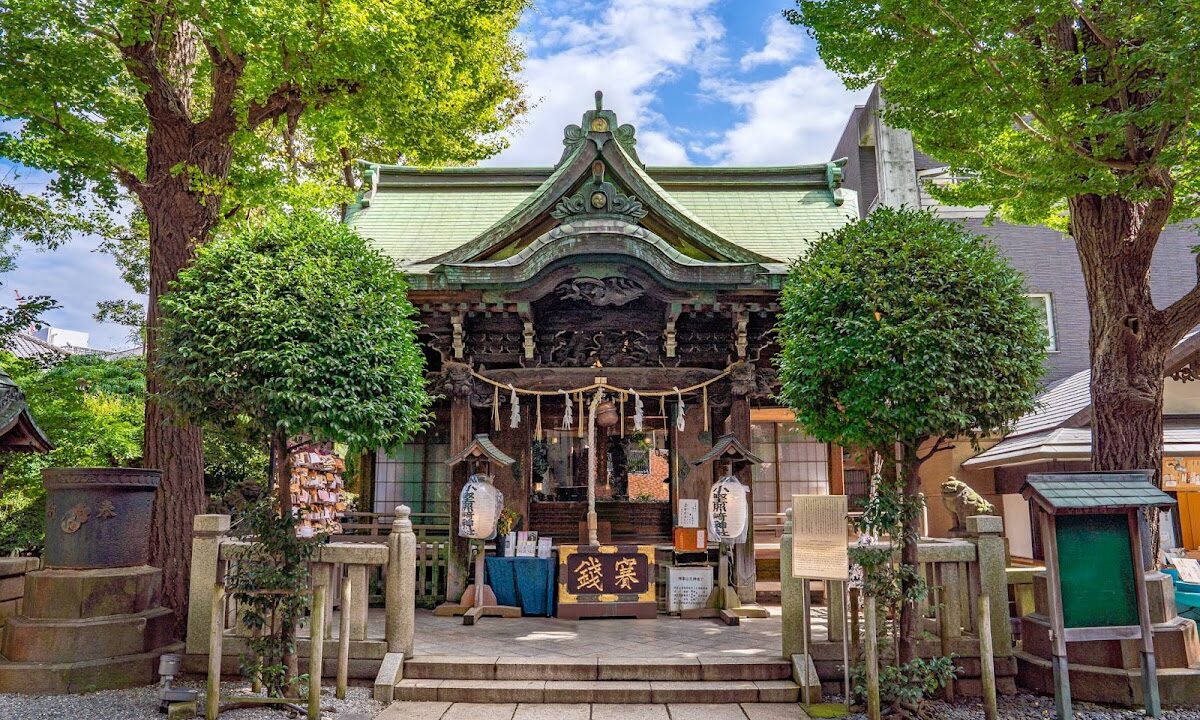
Complete Guide to Ono Terusaki Shrine (Taito Ward, Tokyo) | Thorough Explanation of Goshuin (Shrine Seals), Benefits, Access, and History
Ono Terusaki Shrine, located in Shitaya, Taito Ward, Tokyo, is a historic shrine dedicated to Ono no Takamura, a poet and scholar of the Heian period. Known for its blessings in academics and performing arts, it is also famous for the anecdote that actor Kiyoshi Atsumi was cast as the lead in the “Tora-san” film series after visiting the shrine. This article provides a detailed explanation of everything you need to know before visiting Ono Terusaki Shrine, including its history, benefits, highlights, and access methods.
History and Origins of Ono Terusaki Shrine
Origin of Founding
Ono Terusaki Shrine is said to have been founded in 852 AD (Jinju 2). This shrine originates from the fact that the local residents enshrined Ono no Takamura, a Confucian scholar and poet of the early Heian period, in the Ueno Terusaki area where he resided during his journey to the east. Takamura was respectfully referred to as “Ueno-dono,” and the shrine was built by people who admired his virtues.
Ono no Takamura was born the son of Ono no Minemori, a councilor, and served three emperors: Saga, Junna, and Ninmyo. He was an accomplished scholar and poet. He excelled in Chinese poetry and prose, and was also known as “Nosō-kō” (Lord Nosō). His vast knowledge and diverse talents have been passed down through generations. Furthermore, Takamura is known as the grandfather of Ono no Komachi and is a figure symbolizing the cultural tradition of the Ono clan.
Relocation to Current Location
Originally located in Terusaki, Ueno (around present-day Ueno Park), the shrine was relocated to its current location in Shitaya 2-chome, Taito-ku, Tokyo, during the Kan’ei era (1624-1644) when Tokugawa Iemitsu built Kan’ei-ji Temple. This relocation led to the shrine becoming revered by local people as the guardian shrine of the Iriya and Shitaya areas.
Development After the Edo Period
In the late Edo period, Sugawara no Michizane, known as the god of learning, was enshrined alongside the main deity. This further increased the shrine’s popularity as a deity of learning and performing arts.
In the Meiji era, it was ranked as a village shrine and recognized as an important local shrine. Miraculously surviving two major fires—the Great Kanto Earthquake (1923) and the air raids of World War II—the main hall, built in 1866 (Keio 2) during the late Edo period, remains unchanged to this day. This historical building is highly valued as a rare example of Edo-period shrine architecture within Tokyo.
Connection to Literary Works
Ono Terusaki Shrine appears as “Ono Terusama” in *Takekurabe*, a representative work by Higuchi Ichiyo, a female writer of the Meiji era. Ichiyo lived in the nearby Ryusenji-cho (present-day Ryusen) and depicted the scenery and customs of the area in her work. *Takekurabe* is set in the downtown area near the Yoshiwara pleasure district, and Ono Terusaki Shrine has left its mark on literary history as part of that setting.
Deities and Benefits
Main Deity: Ono no Takamura
The main deity of Ono Terusaki Shrine is Ono no Takamura. Takamura was a court official and man of letters in the early Heian period, and due to his multifaceted talents, he is revered as the “god of learning and performing arts.” The following blessings are particularly believed to be offered:
- Academic Achievement: Many worshippers visit the shrine to pray for success in examinations and academic achievements, drawing on the legacy of Takamura, a Confucian scholar who left behind outstanding accomplishments.
- Improvement in Performing Arts: Famous as a poet, he attracts the faith of those involved in the arts and performing arts.
- Improved Career Luck: Due to his achievements as an excellent official who served three emperors, he is believed to bring blessings for career success and advancement.
- Improved Writing: Drawing on Takamura’s proficiency in Chinese poetry and prose, writers and those involved in the writing profession visit the shrine.
Enshrined Together: Sugawara no Michizane
Sugawara no Michizane, who was enshrined alongside Takamura in the late Edo period, is also widely known as a god of learning. By enshrining both Michizane and Takamura, Ono Terusaki Shrine’s blessings for academic success are further enhanced.
Kiyoshi Atsumi and Ono Terusaki Shrine
Ono Terusaki Shrine became particularly famous as a “shrine for career success and improvement in performing arts” due to an episode involving the nationally beloved actor, Kiyoshi Atsumi. When Atsumi was still unknown, he visited Ono Terusaki Shrine and prayed, “Please grant me success as an actor.” Immediately afterward, he was cast as the lead role of Torajiro Kuruma in the film series “Tora-san.”
This story became widely known in the entertainment industry, and since then, many actors and people involved in the entertainment world have visited the shrine. Even today, it attracts worshippers from all over the country who wish for success in performing arts and their careers, and is revered as a “shrine where wishes come true.”
Highlights of the Shrine Grounds
Main Hall (Built in 1866)
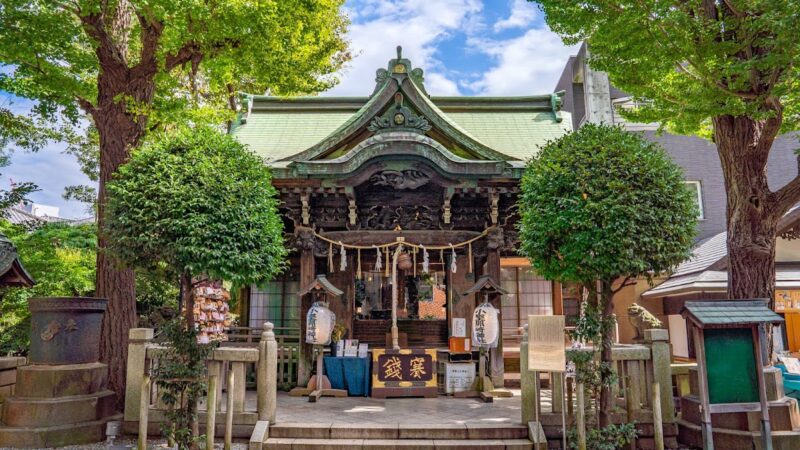
The main hall of Ono Terusaki Shrine is a historical building constructed in 1866, during the late Edo period. This precious Edo-period shrine architecture, having survived two major fires—the Great Kanto Earthquake and the wartime fires—continues to convey the technology and aesthetic sensibilities of the time. It boasts the Gongen-zukuri style and is a beautiful building adorned with intricate carvings.
Shimo-ya Sakamoto Fuji (Fujizuka)
Within the grounds of Ono Terusaki Shrine is the Shimo-ya Sakamoto Fuji, a Fujizuka designated as a National Important Tangible Folk Cultural Property. A Fujizuka is an artificial mountain built to resemble Mount Fuji based on the worship of Mount Fuji, and was constructed in various locations during the Edo period by Fuji-ko (religious groups that worshipped Mount Fuji).
Shimo-ya Sakamoto Fuji, built in 1789 (Kansei 1), is one of the oldest Fujizuka in Tokyo, standing approximately 5 meters tall. It is actually climbable, and an Asama Shrine is enshrined at the summit. Climbing the Fujizuka is believed to bring the same blessings as climbing Mount Fuji.
Every year on July 1st, the “Fuji-san Festival” is held, and the Fujizuka (miniature Mount Fuji) is opened to the public, attracting many worshippers. This traditional event coincides with the opening of Mount Fuji to the climbing season, and visitors can climb the Fujizuka.
God of Connections (Inari Shrine and Orihime Shrine)
Within the temple grounds is an Inari Shrine, originally called “Chozaemon Inari.” After the war, the Orihime Shrine, dedicated to the god of matchmaking, was enshrined there, and it is now worshipped as the “God of Connections.” It is believed to bring good fortune not only in romantic relationships but also in work and personal relationships, making it popular with young worshippers.
Koshin Mound
Within the temple grounds is a Koshin mound, which tells the history of Koshin belief. The Koshin mound is a remnant of folk belief from the Edo period and is a valuable cultural asset for understanding the history of the region.
Fujisawa Hideyuki Memorial Monument
Within the temple grounds is a memorial monument commemorating the achievements of Fujisawa Hideyuki, a representative Go player of the Showa era. Mr. Fujisawa had a deep faith in Ono Terusaki Shrine, and a monument was erected in connection with this. Many Go fans and professional Go players also visit the shrine.
Goshuin (Shrine Seals) and Other Items
Goshuin
Ono Terusaki Shrine offers beautifully designed goshuin. They also distribute limited-edition goshuin with unique designs that change monthly, making it a popular shrine among goshuin collectors. In addition to the regular goshuin, special goshuin are sometimes available to coincide with the seasons and events.
The reception hours for goshuin are usually from 9:00 to 17:00, but these may change during events and religious ceremonies, so it is recommended to check the official website in advance if you want to be sure to receive one.
Happy Fortune Slip
One of the popular items offered at Ono Terusaki Shrine is the “Happy Fortune Slip.” It’s a special fortune slip with a wish written on it, featuring an owl, a symbol of wisdom, depicted on a natural silkworm cocoon. Cocoon balls are made from natural materials produced by silkworms, and are considered auspicious because “mayu” (cocoon) sounds similar to “mayoke” (warding off evil). Their cute appearance and perceived blessings make them particularly popular among female worshippers.
Other Items Offered
Various amulets related to the blessings of the enshrined deity are offered, including amulets for academic success and passing exams, amulets for career advancement, and amulets for improvement in performing arts. Ema (votive tablets) are also available, and students and those in the entertainment industry dedicate them with their wishes.
Annual Festival and Events
Annual Festival
The annual festival of Ono Terusaki Shrine is held every year in mid-May. It is an important festival that brings liveliness to the Iriya and Shimo-ya areas, which are the shrine’s parishioners’ area. The festival features a portable shrine procession, numerous stalls, and a large number of worshippers. It is cherished by the parishioners as an important event that preserves local traditions.
Fujisan’s Festival (July 1st)
Every year on July 1st, coinciding with the opening of Mount Fuji to the climbing season, the “Fujisan’s Festival” is held. On this day, the normally closed Fujizuka (miniature Mount Fuji) “Shitaya Sakamoto Fuji” is opened to the public, allowing visitors to climb it. This is an important event that preserves the traditions of the Fuji-ko (Fuji pilgrimage), attracting many worshippers.
Other Annual Events
- Hatsumode (January 1st-3rd): Bustling with New Year’s worshippers
- Setsubun Festival (February 3rd): Bean-throwing ceremony
- Natsukoshi no Oharae (June 30th): A Shinto ritual to purify oneself of sins and impurities accumulated over the past six months
- Shichi-Go-San Pilgrimage (November): A pilgrimage to celebrate the growth of children
- Toshikoshi no Oharae (December 31st): A Shinto ritual to purify oneself of sins and impurities accumulated over the past year
Access and Visiting Information
Location
2-13-14 Shitaya, Taito-ku, Tokyo 110-0004
Nearest Station and Access
From Iriya Station on the Tokyo Metro Hibiya Line
- Approximately 2-3 minutes on foot from Exit 4 (most convenient)
- Exit the station and turn right. Head north without crossing Showa-dori Avenue, and you will see the shrine on your right.
From JR Yamanote Line/Keihin-Tohoku Line “Uguisudani Station”
- Approximately 7 minutes on foot from the South Exit
- Exit the station and head west along Kototoi-dori Avenue. Turn left at the intersection with Showa-dori Avenue and walk a short distance; the shrine will be on your left.
From Tsukuba Express “Asakusa Station”
- Approximately 15 minutes on foot
Visiting Hours/Shrine Office Hours
- Visiting Hours: The shrine grounds are generally open for worship all day.
- Shrine Office Hours: Approximately 9:00 AM to 5:00 PM (Goshuin stamps and amulets are available).
- Closed Days: None
*Hours may change due to religious ceremonies or events. Please check the official website for the most up-to-date information.
Parking
There is no dedicated parking lot, so we recommend using public transportation. If you are visiting by car, please use nearby coin-operated parking lots.
Nearby Tourist Attractions
Iriya Morning Glory Market
Near Ono Terusaki Shrine, the “Iriya Morning Glory Market” is held annually from July 6th to 8th. This traditional event, which has continued since the Edo period, features approximately 120 morning glory vendors and 100 stalls, attracting over 400,000 visitors each year, making it a quintessential summer event in Tokyo. Visiting it in conjunction with a visit to Ono Terusaki Shrine is highly recommended.
Places Associated with Higuchi Ichiyo
The area around Ono Terusaki Shrine is where Higuchi Ichiyo, a female writer of the Meiji era, lived. The Ichiyo Memorial Museum is nearby, where you can learn about Ichiyo’s life and works. Recommended for those who want to enjoy a literary stroll.
Ueno Park
Ueno Park is within walking distance of Ono Terusaki Shrine. Many cultural facilities are concentrated here, including Ueno Zoo, Tokyo National Museum, National Museum of Western Art, and Ueno Royal Museum, making it a great place for a full day of sightseeing.
Asakusa
The Asakusa area, home to Senso-ji Temple and Nakamise Street, is easily accessible on foot or by bus. Many tourists visit this popular Tokyo tourist spot in conjunction with Ono Terusaki Shrine.
Manners and Points for Worship
Basic Worship Etiquette
- Bow before passing through the torii gate: This is a courtesy when entering the sacred area.
- Purify yourself at the water basin: Purify your left hand, then your right hand, then your mouth.
- Offer a monetary donation: There is no set amount.
- Two bows, two claps, one bow: This is the basic Shinto worship etiquette.
- Bow when leaving the torii gate: This is a courtesy when leaving the sacred area.
Photography
Photography is generally permitted within the shrine grounds, but please refrain from taking photos inside the main hall or during Shinto rituals. Also, please be considerate of other worshippers.
Attire
While casual attire is acceptable for visiting the shrine, it is advisable to avoid overly casual or revealing clothing.
Summary
Ono Terusaki Shrine is a renowned shrine in Taito Ward, Tokyo, with a history and tradition dating back to the Heian period, known for its blessings related to academics, performing arts, and career success. The shrine boasts numerous attractions, including its Edo-period main hall, a Fujizuka (a miniature Mount Fuji) designated as a National Important Tangible Folk Cultural Property, and anecdotes about Kiyoshi Atsumi.
Its convenient location, just a 3-minute walk from Iriya Station on the Tokyo Metro Hibiya Line, makes it easily accessible in conjunction with sightseeing in Ueno and Asakusa. It is a popular shrine visited by many people for various purposes, including students preparing for exams, those praying for success in performing arts or work, and those wishing to visit historical shrines in Tokyo.
The beautiful goshuin (shrine stamps) and charming fortune slips are also popular, and the number of visitors, especially among younger generations, is increasing. Why not visit Ono Terusaki Shrine, nestled in a quiet residential area of downtown Tokyo, and offer a peaceful prayer?
Frequently Asked Questions (FAQ)
Q1: What are the reception hours for receiving Goshuin (shrine stamps) at Ono Terusaki Shrine?
A1: The reception hours for receiving Goshuin are usually from 9:00 to 17:00. However, these hours may change during Shinto rituals and events, so if you want to be sure to receive one, we recommend checking the official website or calling ahead. The limited-edition Goshuin, which change monthly, are also popular, so if you wish to receive one, it’s best to visit earlier in the day.
Q2: Can I climb Fujizuka (Shitaya Sakamoto Fuji) anytime?
A2: Fujizuka is usually closed to the public, and is only open to the public and can be climbed on July 1st each year, the day of “O-Fuji-san no Ennichi” (Fuji-san’s Festival). This is a traditional event coinciding with the opening of Mount Fuji to the public, and many worshippers visit on this day. This is a valuable Fujizuka (miniature Mount Fuji) designated as a National Important Tangible Folk Cultural Property, so we recommend visiting on July 1st.
Q3: Is there parking at Ono Terusaki Shrine?
A3: Ono Terusaki Shrine does not have its own parking lot. Public transportation is convenient, so we recommend using Iriya Station on the Tokyo Metro Hibiya Line (3-minute walk) or Uguisudani Station on the JR Line (7-minute walk). If you are visiting by car, please use the coin parking lots around the shrine.
Q4: What kind of blessings can I expect from Ono Terusaki Shrine?
A4: Ono Terusaki Shrine is said to offer blessings for academic success, improvement in performing arts, career advancement, and literary improvement. Because the main deity, Ono no Takamura, was a distinguished scholar and poet of the Heian period, it is particularly known for its blessings related to academics and performing arts. Furthermore, due to the anecdote that actor Kiyoshi Atsumi was cast as the lead in “Tora-san” after visiting the shrine, it is a shrine that is deeply revered by people praying for success in their careers and in the entertainment industry.
Q5: When is the annual festival of Ono Terusaki Shrine held?
A5: The annual festival of Ono Terusaki Shrine is held every year in mid-May. It is an important festival for the Iriya and Shimo-ya areas, which are the shrine’s parish area, and features a portable shrine procession, stalls, and is bustling with many worshippers. The exact date may vary from year to year, so please check the official website for the latest information.
Q6: What is the relationship between Ono Terusaki Shrine and Higuchi Ichiyo?
A6: Ono Terusaki Shrine appears as “Ono Terusama” in “Takekurabe,” a representative work by Higuchi Ichiyo, a female writer of the Meiji era. Ichiyo lived in the nearby Ryusenji-cho (present-day Ryusen) and wrote her works set in this area. The area around Ono Terusaki Shrine is known as a place associated with Ichiyo Higuchi, and the Ichiyo Higuchi Memorial Museum is also nearby. It’s a recommended spot for those who want to enjoy a literary stroll.