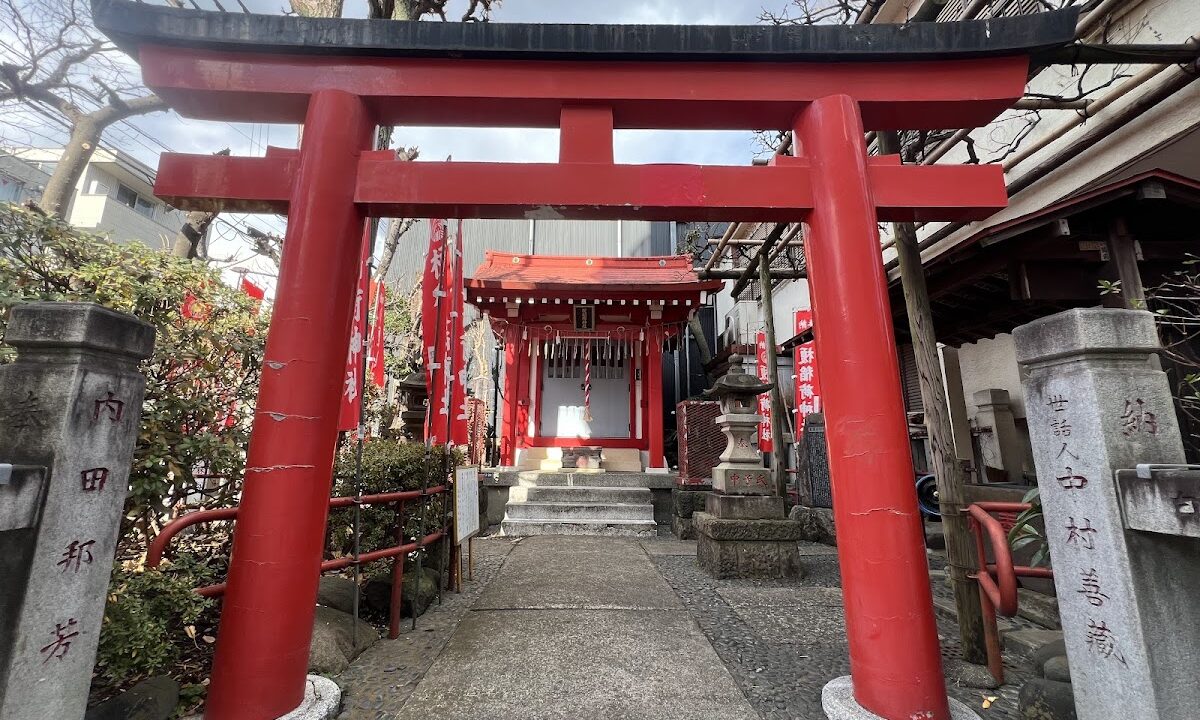
Enoki Inari Shrine (Tokyo) Complete Guide | History and Access Information for Two Shrines in Sumida and Shibuya Wards
There are several shrines named “Enoki Inari Shrine” in Tokyo. The two main ones are the Enoki Inari Shrine in Tachikawa, Sumida Ward, and the Enoki Inari Shrine (Oman Enoki Inari Shrine) in Sendagaya, Shibuya Ward. Each has a different history and characteristics. This article provides detailed information about these Enoki Inari Shrines in Tokyo, including their history, enshrined deities, access methods, and highlights—all essential information before visiting.
What is Enoki Inari Shrine? | Origin of the Name and Commonalities
The name “Enoki Inari Shrine” originates from the large hackberry (enoki) trees that were located within or around the shrine grounds. Hackberry trees have long been considered sacred and objects of worship, and in shrines particularly associated with Inari worship, they have been cherished as symbolic trees of the land.
All Enoki Inari Shrines in Tokyo are based on Inari worship and are believed to bring blessings such as business prosperity and abundant harvests. Each shrine has its own independent history and has been cherished by the local community.
Enoki Inari Shrine (Tachikawa, Sumida Ward) | A Historic Shrine with a History Dating Back to the Edo Period
History of Enoki Inari Shrine in Sumida Ward
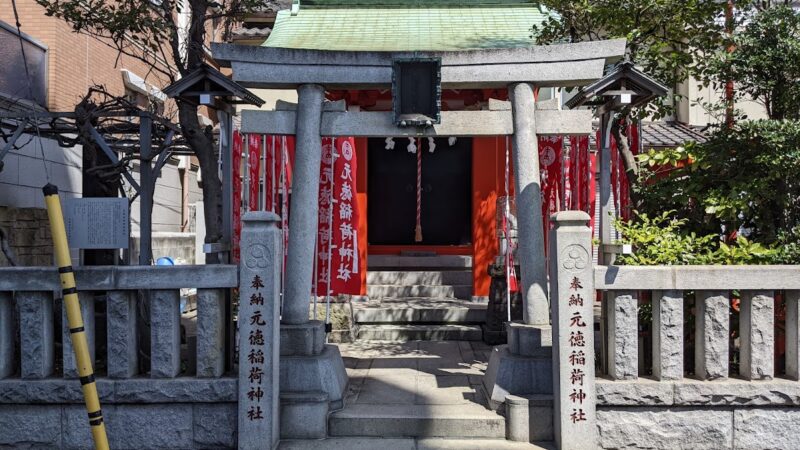
Enoki Inari Shrine, located in Tachikawa, Sumida Ward, is said to have originated in 1682 (Tenna 3) when it was built on the embankment of the Kikukawa River. Initially, it was called “Dote Inari” (Embankment Inari).
Later, in 1693 (Genroku 6), there are records indicating that the Inari shrine, which was the household deity of Kawamura Tokuemon, a village headman near Izumibashi in Kanda, was moved to its current location in Sumida Ward. During the Edo period, it became a shrine within the residence of Okubo Kii-no-kami, and because of the large hackberry trees that stood in the precincts, it came to be called “Enoki Inari Daimyojin.”
After the Great Kanto Earthquake, it was relocated to its current location in Tachikawa 4-chome, and has continued to serve as the guardian deity of the area ever since. This area was lined with samurai residences during the Edo period, and it is a valuable shrine that still conveys the atmosphere of that time.
Deity and Blessings
Deity: Ukanomitama-no-Mikoto
Ukanomitama-no-Mikoto is a representative deity of Inari, and is believed to bestow blessings such as abundant harvests, business prosperity, and family safety. Local people affectionately call him “Enoki-san.”
Highlights of the Shrine Grounds
The most distinctive feature of Enoki Inari Shrine in Sumida Ward is the hackberry trees from which the shrine’s name originates. Unfortunately, it was destroyed in the Tokyo air raids, but it still remains on the shrine grounds in its withered state, a precious reminder of the war’s devastation.
This withered hackberry tree symbolizes the history of the shrine and the memory of the region, leaving a deep impression on visitors. The shrine grounds are not particularly large, but they offer a peaceful space for worship.
Access Information
Address: 4-12-24 Tachikawa, Sumida-ku, Tokyo 130-0023
Phone Number: 03-3633-1910
Nearest Station: Approximately 5 minutes on foot from the “Tachikawa” bus stop (Toei Bus Route 10)
Annual Festival Date: April 17th
If using public transportation, Toei buses are convenient. Kikukawa Station (Toei Shinjuku Line) is also nearby, and it is possible to access the shrine on foot from there.
Points to Note When Visiting
Enoki Inari Shrine in Sumida-ku is a shrine quietly nestled in a residential area. This is a community-oriented shrine, and its charm lies in its simple atmosphere, unspoiled by tourism. When visiting, be sure to take notice of the hackberry tree that survived the war.
It is an officially recognized shrine belonging to the Tokyo Metropolitan Shrine Association, and local festivals and events are held here. It is recommended for those who wish to worship quietly or visit a historical shrine.
Enoki Inari Shrine (Sendagaya, Shibuya Ward) | A shrine on a slope, known as Oman Enoki Inari Shrine
History and Characteristics of Enoki Inari Shrine in Shibuya Ward
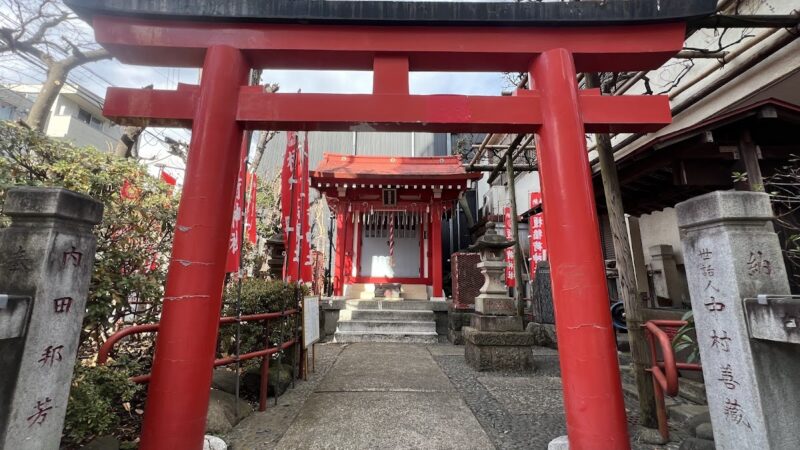
Enoki Inari Shrine, located in Sendagaya, Shibuya Ward, is also known as “Oman Enoki Inari Shrine.” This shrine is located near Hatomori Hachiman Shrine and is characterized by its unique location on a slope.
When heading to Hatomori Hachiman Shrine from the Gaienmae area, if you take the route that goes around Senjuin Temple on your right, you will be climbing the slope where Enoki Inari Shrine is located. The surrounding area is close to the Tokyo Metropolitan Gymnasium and the National Stadium, maintaining a quiet atmosphere despite being in the heart of the city.
A Mysterious Atmosphere is Part of its Charm
Enoki Inari Shrine in Shibuya Ward is often described by visitors as an “Inari shrine with a mysterious atmosphere.” Its location on a slope, surrounded by trees, and its small yet imposing shrine building all contribute to its unique ambiance.
Located slightly away from the hustle and bustle of the city center, it’s known as a hidden gem where one can pray in peace.
Access Information
Location: 2-29 or 2-35-1 Sendagaya, Shibuya-ku, Tokyo
Nearest Stations:
- Approximately 7-8 minutes on foot from Kita-Sando Station on the Tokyo Metro Fukutoshin Line
- Approximately 6 minutes on foot from Sendagaya Station on the JR Sobu Line
- Approximately 10 minutes on foot from Kokuritsu-Kyogijo Station on the Toei Oedo Line
Directions: With Kita-Sando Station behind you, walk straight down the road next to the Tokyo Metropolitan Gymnasium, then turn left at the entrance to Hatomori Hachiman Shrine. It is located on your left, halfway up a slope.
Points to Note When Visiting
While Enoki Inari Shrine in Shibuya Ward does not offer Goshuin (shrine stamps), many people visit it in conjunction with a visit to Hatomori Hachiman Shrine. Since it is located halfway up a slope, be careful not to miss it.
The surrounding area includes the Tokyo Metropolitan Gymnasium, the National Stadium, and Meiji Jingu Gaien, making it a suitable stop during a stroll. This is a precious space where you can pray in a peaceful atmosphere, calming your mind.
Comparison of Enoki Inari Shrines in Tokyo
Differences between Sumida Ward and Shibuya Ward
| Item | Enoki Inari Shrine, Sumida Ward | Enoki Inari Shrine, Shibuya Ward |
|——|——————|——————|
| Year of Founding | Tenna 3 (1682) | Details Unknown |
| Alternate Names | Enoki-san | Oman Enoki Inari Shrine |
| Deity Enshrined | Ukanomitama-no-Mikoto | Inari-no-Kami |
| Characteristics | Remaining Enoki tree damaged by war | Mysterious atmosphere on a slope |
| Surrounding Environment | Residential area | Near Tokyo Metropolitan Gymnasium and National Stadium |
| Annual Festival Date | April 17th | Unknown |
| Phone Number | 03-3633-1910 | None |
Which Shrine Should You Visit?
Both shrines have their own unique charm, and if possible, we recommend visiting both.
Enoki Inari Shrine in Sumida Ward is recommended for those who:
- Want to visit a historical shrine dating back to the Edo period
- Are interested in places that convey the memories of war damage
- Like simple, community-oriented shrines
- Want to visit an officially recognized shrine belonging to the Tokyo Metropolitan Shrine Association
Enoki Inari Shrine in Shibuya Ward is recommended for those who:
- Want to visit it together with Hatomori Hachiman Shrine
- Plan to stroll around the National Stadium or Meiji Jingu Gaien area
- Want to explore hidden shrines in the heart of the city
- Like quiet and mysterious places
The Relationship Between Inari Faith and the Enoki Tree
What is an Inari Shrine?
Inari shrines are the most numerous type of shrine in Japan, with approximately 30,000 shrines nationwide. The main deity is Ukanomitama-no-Mikoto, and they are believed to bring blessings such as abundant harvests, business prosperity, and family safety.
During the Edo period, the belief in Inari spread particularly among merchants and townspeople, and it was often enshrined as a household deity. Enoki Inari Shrine in Sumida Ward also originated as a household deity for a village headman or a shrine within a samurai’s residence.
The Meaning of the Enoki Tree
The hackberry (Enoki) is a deciduous tree belonging to the elm family, and has been familiar to the Japanese people since ancient times. It is often planted within shrine grounds and has been treated as a sacred tree.
Especially during the Edo period, large hackberry trees functioned as local landmarks and were even used in the names of shrines. The name Enoki Inari Shrine is a direct result of the connection between the symbolic hackberry tree of the area and Inari worship.
Manners and Etiquette When Visiting a Shrine
Basic Etiquette for Visiting a Shrine
- Bow Before Passing Through the Torii Gate: As a sign of respect before entering the sacred area, bow slightly.
- Purify yourself at the water basin (if available): Purify your left hand, then your right hand, then your mouth.
- Avoid the center of the approach to the shrine: The center is considered the path of the gods.
- Etiquette in front of the main hall:
- Quietly place your offering in the offering box.
- Ring the bell (if available).
- Bow twice, clap twice, and bow once.
- Bow once upon leaving: Before leaving the torii gate, turn around and bow once.
Points unique to Inari shrines
At Inari shrines, foxes are considered messengers of the gods. Fox statues are often placed on both sides of the main hall, so pay attention to them when you visit.
Nearby attractions and recommended spots
Around Enoki Inari Shrine, Sumida Ward
Area around Kikukawa Station: This area retains the atmosphere of old Tokyo, with traditional shopping streets and restaurants.
Kinshicho: Located in the heart of Sumida Ward, it’s convenient for shopping and dining. It’s just a few minutes by train from Enoki Inari Shrine.
Ryogoku: Known as a sumo town, it’s home to the Edo-Tokyo Museum and the Ryogoku Kokugikan (sumo arena). It’s ideal for learning about the history of Sumida Ward.
Around Enoki Inari Shrine, Shibuya Ward
Hatomori Hachiman Shrine: A large shrine within walking distance, famous for its Fujizuka (Sendagaya Fuji). Many people visit it in conjunction with Enoki Inari Shrine.
Meiji Jingu Gaien: A beautiful area with ginkgo trees, offering different scenery in each season.
National Stadium: Recommended for those interested in sports events and architecture.
Tokyo Metropolitan Gymnasium: A facility hosting various sports events, surrounded by lush greenery.
Planning a Visit to Enoki Inari Shrine
Best Time to Visit
Enoki Inari Shrine is open year-round, but there are particularly recommended times to visit.
Spring (March-May): The annual festival at Enoki Inari Shrine in Sumida Ward is held on April 17th. It’s also cherry blossom season, making it a great time to enjoy a stroll around the area.
Autumn (September-November): The weather is mild, making it ideal for visiting. Near Enoki Inari Shrine in Shibuya Ward, the ginkgo trees at Meiji Jingu Gaien are beautifully colored in November.
New Year’s Visit (January): New Year’s visits are possible, but as it’s a small shrine, it’s less crowded.
Estimated Time Required
Enoki Inari Shrine, Sumida Ward: Approximately 10-15 minutes for worship only. Including a stroll around the area, 30 minutes to 1 hour.
Enoki Inari Shrine, Shibuya Ward: A visit to the shrine alone takes about 5-10 minutes. Visiting both Enoki Inari Shrine and Hatomori Hachiman Shrine takes 30 minutes to 1 hour.
Photography Guidelines
Photography is generally permitted at shrines, but please observe the following points:
- Refrain from photographing inside the main hall.
- Be considerate of other worshippers in your photos.
- Use flash sparingly.
- Be mindful of location information when posting on social media.
The atmosphere of the grounds and the distinctive scenery of each shrine, such as the hackberry trees, are well worth capturing in photographs.
Summary | The Value of Visiting Enoki Inari Shrines in Tokyo
There are two distinct Enoki Inari Shrines in Tokyo, one in Sumida Ward and the other in Shibuya Ward. The Enoki Inari Shrine in Sumida Ward has a history dating back to the Edo period, and its hackberry trees, which bear witness to wartime destruction, are particularly striking. On the other hand, the Enoki Inari Shrine in Shibuya Ward, a hidden gem in the heart of the city, is appealing for its mysterious atmosphere and tranquility.
Neither shrine is a major tourist attraction, making them precious spaces where you can quietly and peacefully offer your prayers. When visiting shrines in Tokyo, be sure to visit both Enoki Inari Shrines and experience their respective histories and atmospheres.
Because these shrines have been cherished by the local community for many years, they offer visitors warmth and tranquility. Enoki Inari Shrines, steeped in the history of Inari worship, the meaning of the hackberry tree, and the memories of the region, will undoubtedly continue to be protected by many as hidden cultural treasures of Tokyo.