Enokido Inari Shrine (Sumida Ward, Tokyo) Complete Guide | History, Goshuin (Shrine Seal), and Access Information
Enokido Inari Shrine, located in Narihira, Sumida Ward, Tokyo, is a historical shrine founded during the Keicho era (1596-1615). This shrine, which has been revered as a guardian deity of the region for over 400 years, is a valuable presence that conveys the history of the Enokido (earth) cultivated land of Yanagishima Village. This article provides a detailed introduction to Enokido Inari Shrine, including its history, enshrined deities, visiting information, and access methods.
What is Enokido Inari Shrine?
Enokido Inari Shrine is an Inari shrine located in Narihira, Sumida Ward, Tokyo. It is pronounced “Enokido Inari Jinja” and is affectionately known locally as “Enokido no Oinari-san.” Since its founding in the early Edo period, it has functioned as a place of worship closely intertwined with the lives of local residents.
While there are several Inari shrines in Sumida Ward, Enokido Inari Shrine is particularly known as an important center of worship in the Narihira area. The shrine’s name originates from the fact that this area was formerly called “Yanagishima-mura Enokido (Tsuchi) Kouchi” (Yanagishima Village Enokido Farmland), demonstrating a historical background closely linked to the place name and the shrine’s name.
Basic Information on Enokido Inari Shrine
Location: Narihira, Sumida Ward, Tokyo
Deity Enshrined: Ukanomitama-no-kami
Founding Date: Keicho era (1596-1615)
Former Head Temple: Enokidoyama Joshōji Temple
History and Origins of Enokido Inari Shrine
The exact founding date of Enokido Inari Shrine is not precisely known, but it is said to have been established during the Keicho era (1596-1615) by Saikaku Hōin, the founder of Enokidoyama Joshōji Temple, its former head temple. This period coincides with the immediate aftermath of the establishment of the Edo Shogunate and the rapid development of Edo.
Origin of the Place Name Enokido
During the Edo period, the area around this location was known as “Yanagishima-mura Enokido (Tsuchi) Kouchi” (Yanagishima Village Enokido (Tsuchi) Farmland.” This place name is the origin of the shrine’s name, and the mountain name of Joshōji Temple was also “Enokido-yama.” It is believed that “Enoki” in Enokido refers to the hackberry tree, and “Do” or “Tsuchi” means land or farmland.
There is also a theory that the name became established because there were large hackberry trees in the area, indicating a historical background where the natural environment, place name, and shrine name are intertwined.
Relationship with Joshōji Temple
Enokido-yama Joshōji Temple, which was the head temple of Enokido Inari Shrine, was responsible for the management and operation of the shrine before the separation of Shinto and Buddhism. The head temple system was based on the syncretic Shinto-Buddhist thought of the Edo period, and many shrines were managed by temples.
Although Joshōji Temple and Enokido Inari Shrine were separated by the Meiji-era decree separating Shinto and Buddhism, their historical connection remains in the memory of the community. The fact that Saikaku Hōin, the founder of Joshōji Temple, invited the Inari deity to the shrine speaks to the deep relationship between the two.
Deity and Divine Virtues
The deity enshrined at Enokido Inari Shrine is Ukanomitama-no-kami. This deity is worshipped nationwide as the principal deity of Inari shrines and is believed to bestow blessings such as abundant harvests, business prosperity, and family safety.
About Ukanomitama-no-kami
Ukanomitama-no-kami is a deity appearing in the Kojiki and Nihon Shoki, and is said to be the child of Susanoo-no-Mikoto and Kamuōichihime. “Uka” is an archaic word meaning grain or food, and the deity has been revered since ancient times as the god who presides over food.
Inari worship spread throughout Japan from the Heian period onward, with Fushimi Inari Taisha in Kyoto as its head shrine. During the Edo period, it was particularly revered among merchants and craftsmen as a god of business prosperity, and numerous Inari shrines were built throughout Edo (present-day Tokyo).
Benefits of Visiting
By visiting Enokido Inari Shrine, you are believed to receive the following divine blessings:
- Abundant Harvest: Prayers for a bountiful harvest
- Business Prosperity: Success and prosperity in business
- Family Safety: Health and safety of family members
- Good Fortune and Happiness: Improved luck and the arrival of happiness
- Protection from Misfortune: Protection from disasters and calamities
Highlights of the Shrine Grounds
Enokido Inari Shrine maintains a tranquil atmosphere despite being located in a residential area. Although compact, elements that evoke a sense of history can be seen throughout.
Shrine Buildings
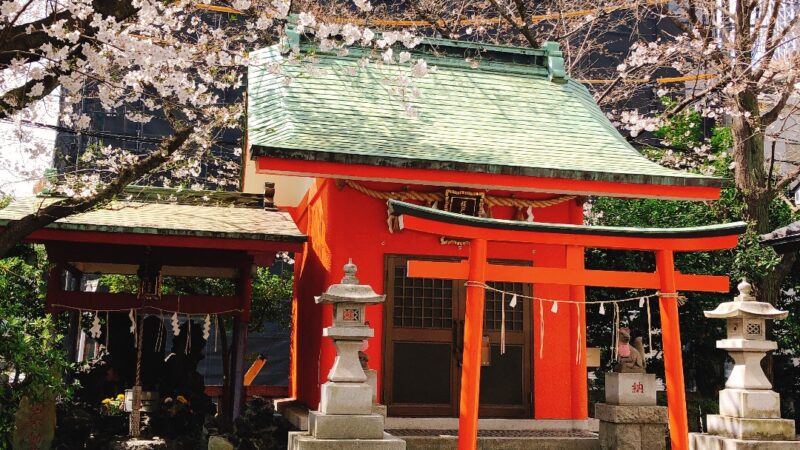
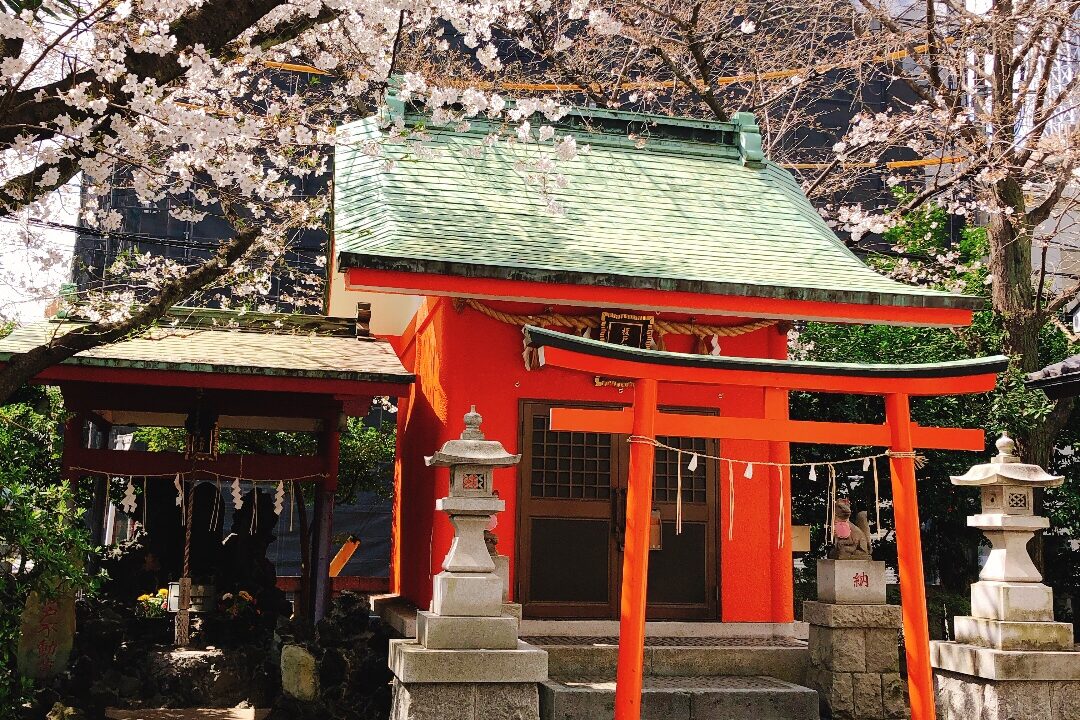
The main shrine building is in the Inari style, characterized by its beautiful vermilion paint. Despite its small size, it is meticulously maintained, reflecting the deep faith of the local people. Instead of guardian lions, fox statues, characteristic of Inari shrines, are placed in front of the shrine.
Torii Gate
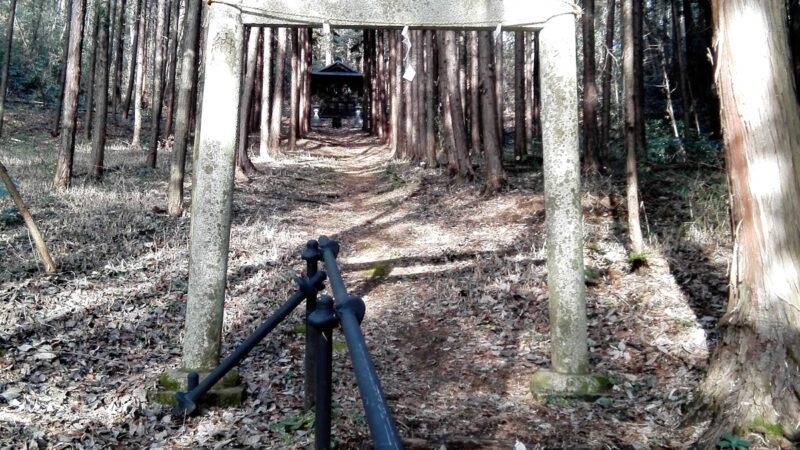
A vermilion torii gate stands at the entrance to the shrine grounds, creating a landscape characteristic of an Inari shrine. Passing through the gate, you enter a sacred space far removed from the hustle and bustle of the city.
Stone Monuments and Memorials
Within the shrine grounds are stone monuments detailing the shrine’s history and memorials that tell the story of the region. These inscriptions reveal the long-standing relationship between the community and the shrine dating back to the Edo period.
Information on Visiting Enokido Inari Shrine
Visiting Hours
Enokido Inari Shrine is open 24 hours for worship, but the shrine office has limited hours. If you wish to receive a Goshuin (shrine stamp), it is recommended to check in advance.
Shrine Visiting Etiquette
Please observe basic shrine visiting etiquette:
- Bow before passing through the torii gate: This is a sign of respect before entering the sacred area.
- Purify yourself at the water basin: If there is a water basin, purify your hands and mouth.
- Avoid walking in the center of the path: The center is considered the path of the gods.
- Two bows, two claps, one bow: This is the general etiquette for visiting a shrine.
- Bow again at the torii gate upon leaving: This expresses gratitude when leaving the sacred area.
About Goshuin (Shrine Seals)
Enokido Inari Shrine offers goshuin, but there may not always be a resident priest. Those wishing to receive a goshuin are advised to inquire in advance at other shrines in Sumida Ward or at the former head temple, Joshōji Temple.
Goshuin are proof of shrine visit, not collectibles. Please receive them with respect as a memento of your visit.
Annual Festivals and Events
Enokido Inari Shrine holds various Shinto rituals throughout the year. The Hatsuumasai festival (the first day of the horse in February) is a particularly important festival for the Inari shrine, attracting many worshippers.
During local festivals and events, community activities centered around the shrine are also held, serving as a place for local residents to interact.
Access Information
Here’s how to access Enokido Inari Shrine.
Access by Train
Nearest Stations:
- Approximately 10-minute walk from Oshiage Station (Tokyo Metro Hanzomon Line/Toei Asakusa Line)
- Approximately 10-minute walk from Tokyo Skytree Station (Tobu Skytree Line)
- Approximately 15-minute walk from Kinshicho Station (Tokyo Metro Hanzomon Line)
The route from Oshiage Station is the most convenient. Exit the station and head southwest. Entering the residential area of Narihira, you will arrive at the shrine.
Access by Bus
If using the Toei Bus, the nearest bus stop is towards Narihira. You can also consider using the Sumida Ward community bus, “Sumida Hyakkei Sumimaru-kun.”
Access by Car
There is no dedicated parking lot for the shrine. If visiting by car, you will need to use nearby coin-operated parking lots. However, since it is located in a residential area, using public transportation is recommended.
Landmarks in the Area
Enokido Inari Shrine is located in the residential area of Narihira, Sumida Ward. It is southwest of Tokyo Skytree, in the area between the Sumida River and the Kitajikken River. The former head temple, Joshōji Temple, is also nearby and can be visited together.
Detailed Information
Shrine Size and Characteristics
Enokido Inari Shrine is a small shrine, but its historical value is highly regarded. Although the grounds are limited, they are kept clean, reflecting the faith of the local people.
Surrounding Environment
The area around the shrine is a quiet residential neighborhood, retaining the atmosphere of the Edo period. Traditional shops and factories are scattered throughout the area, making it a place where you can experience Tokyo’s traditional downtown culture.
Connection with the Community
Enokido Inari Shrine is a central presence in the local community, deeply rooted in the lives of its residents. Through local festivals and cleaning activities, it serves as a place for intergenerational exchange.
Relationship with Other Inari Shrines in Sumida Ward
Besides Enokido Inari Shrine, there are several other Inari shrines in Sumida Ward. Particularly famous is the “Enoki Inari Shrine” located in Tachikawa, Sumida Ward.
Differences from Enoki Inari Shrine (Tachikawa)
Enoki Inari Shrine in Tachikawa, Sumida Ward, was relocated from near Izumibashi in Kanda in 1693 (Genroku 6), and was the household shrine of the village headman, Kawamura Tokuemon. The shrine came to be called “Enoki Inari” after a large hackberry tree that stood on the grounds.
On the other hand, Ariwara no Narihira’s Enokido Inari Shrine derives its name from the place name “Enokido (土),” and its founding history is different. Both shrines contain the character “Enoki,” but they are separate shrines, so care should be taken not to confuse them.
Visiting Inari Shrines in Sumida Ward
Sumida Ward has many other Inari shrines, including Gentoku Inari Shrine and Hikan Inari Shrine. If you have time, a “Inari Shrine Tour” in Sumida Ward is highly recommended. Each shrine has its own unique history and characteristics, allowing you to gain a deeper understanding of the religious culture of Edo/Tokyo.
Tourist Spots Around Enokido Inari Shrine
Here are some nearby tourist spots you might want to visit when you come to Enokido Inari Shrine.
Tokyo Skytree
Within walking distance of Enokido Inari Shrine, the Tokyo Skytree is one of the world’s tallest broadcasting towers, standing at 634 meters. From the observation deck, you can enjoy a panoramic view of Tokyo’s cityscape, and on clear days, you can even see Mount Fuji. Why not combine your visit to the shrine with a visit to this landmark symbolizing modern Tokyo?
Sumida River Promenade
A well-maintained promenade runs along the Sumida River, allowing you to enjoy the scenery of each season. Especially during cherry blossom season, the cherry tree-lined avenue known as “Sumida Embankment Cherry Blossoms” is beautiful and attracts many visitors.
Mukojima Hyakkaen Garden
This garden, beloved by Edo-period literati, offers a chance to enjoy seasonal flowers and plants. While it’s a bit of a distance from Enokido Inari Shrine, it’s a spot where you can experience the history and culture of downtown Tokyo.
Ryogoku Kokugikan and Edo-Tokyo Museum
The Ryogoku Kokugikan, the sacred ground of sumo wrestling, and the Edo-Tokyo Museum, where you can learn about the history of Edo/Tokyo, are both located within Sumida Ward. Recommended for those interested in traditional Japanese culture and history.
Sumida Hokusai Museum
This museum exhibits the works of Katsushika Hokusai, allowing you to experience the artistic world of the world-renowned ukiyo-e artist. Sumida Ward is the birthplace and hometown of Hokusai, making this an important facility for conveying his achievements.
How to Enjoy Visiting Enokido Inari Shrine
A Quiet Worship Experience
Enokido Inari Shrine is a community-oriented shrine that has not been commercialized for tourism. Therefore, you can enjoy a quiet and peaceful worship experience. Away from the hustle and bustle of the city, the time spent quietly offering prayers can be a refreshing break from daily life.
Combining with a Stroll Through the Old Town
Combining a visit to the shrine with a stroll through the surrounding old town area will make your experience even more fulfilling. Walking through old-fashioned shopping streets and back alleys will allow you to discover the hidden charms of Tokyo.
Historical Exploration
Learning about the history of Enokido Inari Shrine beforehand will make your visit even more meaningful. Visiting while researching Edo-period maps and documents and imagining what the Enokido farmland in Yanagishima Village looked like at the time is also an enjoyable experience.
Photography
Photography is permitted on the shrine grounds, but please be considerate of other visitors. The vermilion-lacquered shrine buildings and torii gates are photogenic subjects. Especially on sunny mornings, the lighting makes for beautiful photos.
Basic Knowledge of Inari Worship
To understand Enokido Inari Shrine more deeply, here is some basic knowledge about Inari worship.
Origin of Inari Shrines
The origin of Inari worship lies in Fushimi Inari Taisha in Kyoto. It is said to have begun in 711 AD when the ancestors of the Hata clan enshrined the Inari god on Mount Inari. The name “Inari” is widely believed to derive from “Ina ga naru” (rice growing).
Why Foxes?
The reason why foxes are considered divine messengers (messengers of the gods) at Inari shrines is deeply related to agriculture. Foxes were beneficial animals to farmers because they preyed on mice that damaged crops. Other reasons for this association include the resemblance of the fox’s color to rice stalks and the association of foxfire (foxfire) with the rice harvest season.
As a God of Business Prosperity
Since the Edo period, Inari has also been worshipped as a god of business prosperity. This is due to the interpretation of “rice harvest” (稲成) as “business prosperity” (商い成), and the rise of the merchant class, which led to the spread of faith in praying for economic success.
Summary
Enokido Inari Shrine is a historic Inari shrine located in Narihira, Sumida Ward, Tokyo. Since its founding during the Keicho era, it has attracted the faith of the local community for over 400 years. The shrine’s name, derived from the place name Enokido (土) Kouchi in Yanagishima Village, reflects the history of this region.
The enshrined deity, Ukanomitama-no-kami, is believed to bestow blessings such as abundant harvests, business prosperity, and family safety, attracting many worshippers. Though small, the meticulously maintained grounds function as a quiet place of prayer amidst the city.
Despite its location within walking distance of Tokyo Skytree, its unpretentious atmosphere, untouched by commercialization, is a major draw. Spending time quietly praying at this historic shrine, while experiencing the traditional culture of Sumida Ward, will be a valuable refresh from daily life.
When visiting Sumida Ward, be sure to stop by Enokido Inari Shrine. You can experience the history of faith that has continued since the Edo period and the warmth of a shrine deeply rooted in the community.