Complete Guide to Kaichu Inari Shrine (Shinjuku Ward, Tokyo) | The Blessings of 100% Success, History, Amulets, and Goshuin Information
Located in Hyakunincho, Shinjuku Ward, Tokyo, Kaichu Inari Shrine is affectionately known as “100% Success” or “Everyone Hits the Mark,” attracting worshippers from all over Japan who pray for lottery winnings, exam success, and improved luck in competitions. Its convenient location, just a one-minute walk from JR Shin-Okubo Station, is another attractive feature. In the multicultural Shin-Okubo area, it remains a valuable place that conveys Japanese tradition and faith to the present day.
This article comprehensively introduces everything you need to know before visiting Kaichu Inari Shrine, including its history, origins, enshrined deities, blessings, amulets, goshuin information, worship methods, and access.
Overview of Minaka Inari Shrine
Location: 1-11-16 Hyakunincho, Shinjuku-ku, Tokyo
Main Deity: Ukanomitama-no-Okami
Founded: Tenbun 2 (1533)
Shrine Rank: Former Unranked Shrine
Annual Festival: September 27th every year
Telephone: 03-3361-4398
Shrine Office Hours: 9:00 AM – 5:00 PM
Minaka Inari Shrine is a shrine deeply rooted in the local community as the guardian shrine of Hyakunincho in Shinjuku-ku, while also attracting widespread devotion due to its unique blessings. Although the grounds are not particularly large, upon passing through the torii gate and approaching the main hall, one is enveloped in a tranquil atmosphere that makes one forget the hustle and bustle of the city.
History and Origins of Kaichu Inari Shrine
Founding and Early History
Kaichu Inari Shrine is said to have been founded on September 27, 1533 (Tenbun 2). At this time, Inari no Okami was enshrined in this location. This suggests that Inari worship was deeply rooted in this area even before the founding of Edo during the late Sengoku period.
Deep Connection with the Teppo-gumi Hyakunin-tai (Hundred-Man Gun Unit)
Kaichu Inari Shrine gained prominence during the Kan’ei era (1624-1644) in the early Edo period. The Tokugawa Shogunate stationed the “Teppo-gumi Hyakunin-tai” (Hundred-Man Gun Unit) in what is now Hyakunin-cho, Shinjuku Ward. This unit was a musketeer unit positioned by Tokugawa Ieyasu to guard the Koshu Kaido road, and was composed of hatamoto (direct retainers of the shogun) and samurai.
The origin of the place name “Hyakunin-cho” (Hundred-Man Town) is precisely derived from the stationing of this Teppo-gumi Hyakunin-tai. The yoriki and doshin of the Hyakunin-tai (100-man unit) diligently practiced shooting every day, but at some point, some were troubled by their stagnant shooting skills.
The Birth of the “Perfect Hit” Legend
According to Edo period legend, a yoriki of the musketeer unit was troubled by his poor shooting performance when Inari Okami (the god of rice) appeared to him in a dream and showed him a talisman. Upon waking, the yoriki followed the instructions, visited the local Inari shrine, and tried shooting again, achieving perfect accuracy with 100% hits.
This miraculous event became famous, and faith in the Inari shrine spread among the Hyakunin-tai musketeers. Because “everyone hit the target,” it was named “Kaichu Inari” (Perfect Hit Inari), and since then, it has attracted the faith of people praying for accuracy and success.
Developments in the Modern Era
Even after the Meiji Restoration and the dissolution of the samurai class, faith in Kaichu Inari Shrine continued without interruption. While deeply rooted in the community as the guardian shrine of Hyakunincho, its reputation as a “god of accuracy” became widely known.
From the Showa and Heisei eras to the present day of Reiwa, it has developed as a shrine visited by a diverse range of worshippers seeking “accuracies,” including winning lotteries and Toto, passing various exams, and winning in competitions.
Deities and Benefits
Main Deity: Ukanomitama-no-Okami
The main deity of Kaichu Inari Shrine is Ukanomitama-no-Okami. This deity is known in Japanese mythology as the god who presides over grains and food, and is worshipped nationwide as the main deity of Inari shrines.
Ukanomitama-no-Okami is believed to have a wide range of benefits, including abundant harvests, business prosperity, and family safety, but at Kaichu Inari Shrine, the miraculous powers related to “accuracies” and “winning” are particularly emphasized.
Benefits of Kaichu Inari Shrine
Kaichu Inari Shrine is believed to offer the following benefits, attracting many visitors:
1. Increased Luck in Winning Lottery Tickets and Financial Fortune
Many people visit to pray for success in lotteries, Lotto, Toto, horse racing, and other similar competitions. The number of visitors increases especially during the year-end Jumbo Lottery season.
2. Success in Exams and Academic Achievement
Many students and working adults visit to pray for success in exams, qualification tests, and job interviews.
3. Luck in Competitions and Victory
Visitors can pray for success in all kinds of competitions, including sports, business negotiations, and presentations.
4. Ticket Winning
An increasing number of visitors pray for success in concert and event ticket lotteries.
5. Good Fortune and Prosperity
Visitors are also expected to receive benefits that bring good fortune and happiness in all aspects of life.
As its name suggests, “Hyakuhatsu Hyakuchū” (meaning “100% accuracy”) and “Minaataru” (meaning “perfect hit”), this shrine is believed to grant blessings for all kinds of “hits” and is cherished as a shrine that addresses various wishes in modern society.
Highlights of the Shrine Grounds
Torii Gate and Approach
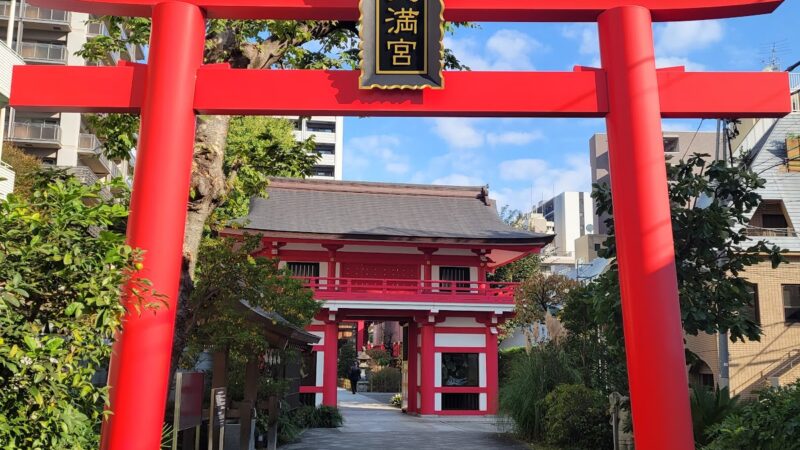
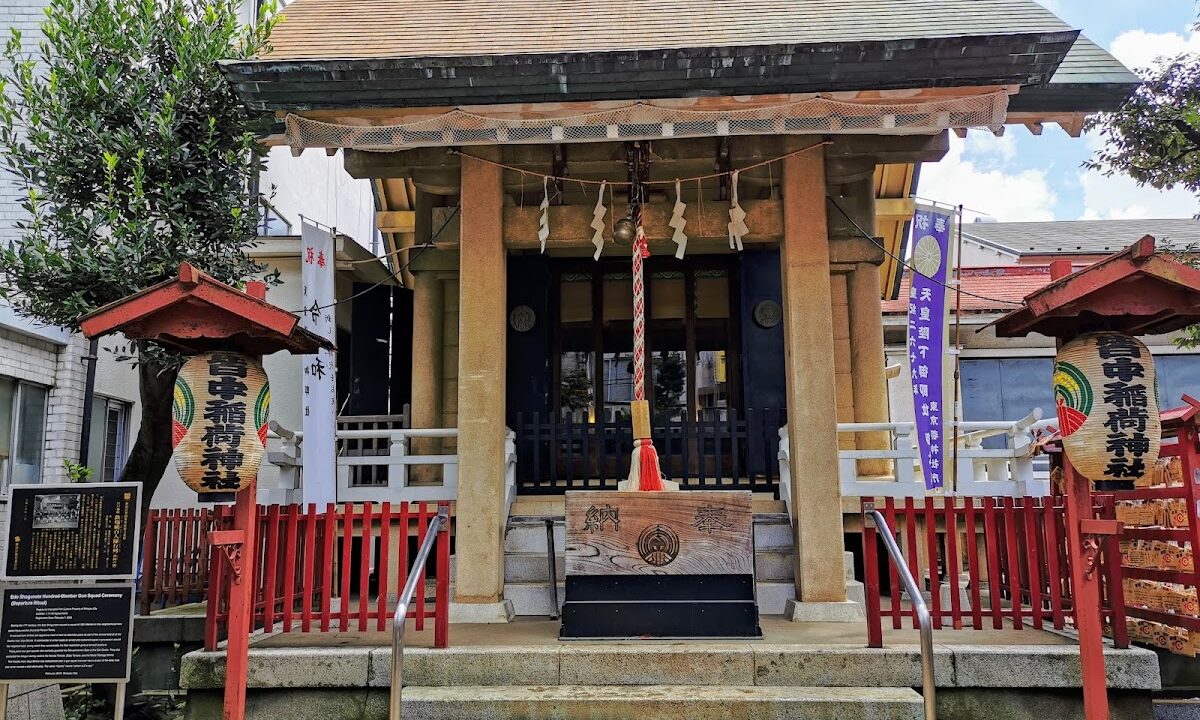
A vermilion torii gate appears in the residential area of Hyakunincho, just a one-minute walk from Shin-Ōkubo Station. While not particularly large, it exudes a strong presence as an entrance to a sacred area, even in the heart of the city. Passing through the torii gate, a short approach leads to the main hall.
Main Hall
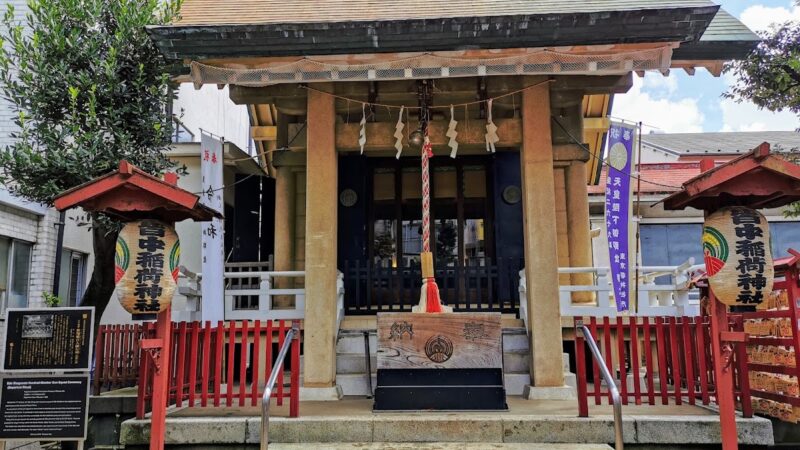
The main hall is built in the traditional style of shrine architecture, and worshippers pray here using the two bows, two claps, and one bow ritual. A donation box is placed in front of the main hall, and many worshippers pray here with their wishes.
The plaque above the main hall bears the inscription “Minaataru Inari Shrine,” telling the history of this shrine.
Okubo Azaleas
The shrine grounds are planted with azaleas called “Okubo Azaleas,” which bloom beautifully in the spring. These azaleas are a local specialty and evoke a sense of the changing seasons.
Monument to Emperor Meiji’s Poem
A monument inscribed with a waka poem by Emperor Meiji stands on the shrine grounds. It is a valuable historical site demonstrating the historical connection between Emperor Meiji and Hyakunincho.
Fox Statues
A statue of a fox, a symbol of Inari shrines, is enshrined on the grounds. The fox, considered a messenger of the Inari god, sits there, watching over worshippers.
Amulets and Souvenirs
Kaichu Inari Shrine offers a variety of amulets and souvenirs that reflect the characteristics of the shrine.
Kaichu Amulet (Amulet for 100% Success)
The most popular amulet is the “Kaichu Amulet.” This amulet is meant to grant the blessing of hitting the target every time, and is given to people who wish for success in lotteries, exams, and competitions. The design is also related to the history of the shrine.
Hit-or-Death Amulet (Amulet for Prayer of Accuracy)
The “Hit-or-Death Amulet” is an amulet for praying for success in all kinds of situations. It is said to be effective not only for lotteries, but also for ticket raffles, sweepstakes entries, and all kinds of luck tests.
Ema (Votive Tablet)
The ema at Kaichu Inari Shrine are decorated with target and arrow designs, and you can write your wish for “hitting the target every time.” The ema rack on the shrine grounds is filled with ema inscribed with various wishes, such as winning lottery numbers, passing exams, and success in love.
Ofuda (Talisman)
Amaterasu Omikami Shrine Ofuda and Kaichu Inari Shrine Ofuda are available. By enshrining them in your home or business’s household shrine, you can receive daily protection.
Other Items Offered
A variety of items unique to Inari shrines, such as those for good fortune and business prosperity, are available.
The shrine office is open from 9:00 to 17:00, so it is recommended to visit within these hours.
About Goshuin (Shrine Seals)
Information regarding Goshuin at Kaichu Inari Shrine is conflicting. Some sources state that “Goshuin are not available,” while others state that they are offered.
Regarding Goshuin notebooks, it has been confirmed that Kaichu Inari Shrine offers its own original notebooks.
Those wishing to receive a Goshuin are advised to inquire directly at the shrine office during their visit. Special Goshuin, such as New Year’s limited editions, may also be offered depending on the season (information available as of January 2025).
Those who collect Goshuin as a hobby should inquire with the shrine in advance or check the latest information on social media.
Annual Festival and Events
Annual Festival (September 27th)
The annual festival of Kaichu Inari Shrine is held every year on September 27th, the day of its founding. This is the most important festival day for the shrine, and parishioners and devotees gather to give thanks for divine blessings and pray for the peace and prosperity of the community.
New Year’s Visit
During the New Year’s visit period, the shrine is bustling with worshippers praying for good fortune throughout the year. Many people, especially those praying for lottery winnings, visit from the beginning of the year.
Other Annual Events
As an Inari shrine, traditional events such as the Hatsuumasai (First Horse Day Festival) may also be held. Please contact the shrine directly for details.
How to Worship and Manners
Basic Worship Etiquette
- Bow Before the Torii Gate: The torii gate is the entrance to the sacred area. Bow before passing through it. 2. Purifying at the Water Basin: If there is a water basin, purify your hands and mouth.
- Walking the Path: The center of the path is considered the path of the gods, so walk along the sides.
- Worship at the Main Hall:
- Quietly place your offering in the offering box.
- Ring the bell if there is one.
- Bow twice deeply.
- Clap your hands twice.
- Pray with all your heart.
- Bow once deeply.
- Leaving the Shrine Grounds: After exiting the torii gate, turn around and bow once.
Points to Note When Visiting a Shrine
- The shrine grounds are a sacred place. Please refrain from making loud noises or running around.
- Photography is generally permitted, but there are areas where photography is prohibited, such as inside the main hall.
- Policies regarding bringing pets vary by shrine. It is recommended to check in advance.
- Always take your trash with you. ## Access Information
Access by Train
Minaka Inari Shrine is conveniently located near major stations in central Tokyo.
Nearest Stations:
- JR Yamanote Line “Shin-Okubo Station”: Approximately 1 minute walk (approximately 100m from the West Exit)
- JR Chuo/Sobu Line “Okubo Station”: Approximately 3 minutes walk
Access from Shin-Okubo Station is the most convenient, as the shrine is located right outside the station. The path from the station to the shrine is flat, and you are unlikely to get lost.
Access from Major Stations
- From Shinjuku Station: 1 stop on the JR Yamanote Line, approximately 2 minutes
- From Tokyo Station: Approximately 25 minutes via Shinjuku Station on the JR Chuo Line Rapid Service
- From Shibuya Station: Approximately 10 minutes on the JR Yamanote Line
- From Ikebukuro Station: Approximately 7 minutes on the JR Yamanote Line
Access by Car and Parking
There is no dedicated parking lot at Kaichu Inari Shrine. If you are visiting by car, you will need to use a nearby coin-operated parking lot.
However, the Shin-Okubo area is very crowded and the roads are narrow, so we strongly recommend using public transportation. Especially during busy periods such as weekends and the New Year holidays, access by train is the most reliable option.
Surrounding Environment
The area around Shin-Okubo Station is known as a multicultural area with many Korean restaurants, Korean food stores, and restaurants serving various Asian cuisines. After visiting the shrine, we recommend enjoying ethnic food or strolling through the internationally diverse shopping streets.
Furthermore, Okubo Park and other attractions are within walking distance, making it a beloved oasis in the city.
Connection between the Shrine and the Community
Kaichu Inari Shrine has long been revered by local residents as the guardian shrine of the area centered around Hyakunincho in Shinjuku Ward.
History of Hyakunincho
As mentioned above, the name Hyakunincho originates from the fact that a hundred-man musketeer unit was stationed there during the Edo period. Beginning as a samurai town, Hyakunincho developed as a commoner’s town after the Meiji Restoration and is now a symbolic area of multicultural coexistence.
As a Guardian Deity of the Community
Even as the appearance of the town has changed with the passage of time, Kaichu Inari Shrine has continued to exist as a spiritual cornerstone of the community. Through events such as the annual festival, it also plays a role in strengthening the bonds of the local community.
Points to Note When Visiting Kaichu Inari Shrine
Best Time to Visit
Kaichu Inari Shrine is open year-round, but the best times to visit are:
- New Year’s Eve and New Year’s Day: For the first shrine visit of the year and to try your luck in the new year
- September 27th: The day of the annual festival
- Spring (April-May): The Okubo azaleas are in full bloom
- Lottery Ticket Sales Period: Especially around the end of the year for the Jumbo Lottery
Time Required for Visit
The shrine grounds are compact, so the visit itself can be completed in about 10-15 minutes. Even including receiving amulets and exploring the grounds, 30 minutes should be sufficient.
Combined Sightseeing
Combining a visit with a stroll around the Shin-Okubo area or other shrines and temples in the Shinjuku area (such as Hanazono Shrine or Shinjuku Junisha Kumano Shrine) is also recommended.
Frequently Asked Questions
Q: How do you pronounce Kaichu Inari Shrine? **
A: It is pronounced “Kaichu Inari Jinja.” It is also affectionately known as “Minaataru.”
Q: Should I bring my lottery ticket when I visit?
A: Many people bring their purchased lottery tickets and pray for a win. It’s also a good idea to keep them with your amulet.
Q: Can I get a Goshuin (temple/shrine stamp)?
A: Information regarding the issuance of Goshuin varies. Please check directly at the reception area when you visit. Goshuin notebooks are sold.
Q: Is there parking?
A: There is no dedicated parking lot. We recommend using nearby coin parking or public transportation.
Q: Can I have an amulet mailed to me?
A: Please contact the shrine directly regarding mail order (03-3361-4398).
Q: Can I visit with my pet? **
A: We recommend contacting the shrine in advance regarding whether pets are allowed.
Q: Is it beneficial to visit before an exam?
A: It is known for its blessings for passing exams and achieving academic success. Many students and those taking qualification exams visit the shrine.
Summary
Kaichu Inari Shrine is a venerable shrine with a history of approximately 500 years since its founding in 1533. The belief in “100% hits” and “perfect accuracy,” which originated from its connection with the Edo period’s Hyakunin-tai (100-man musketeer unit), continues to be a source of support for many people today who wish to win the lottery, pass exams, or improve their luck in competitions.
The shrine’s appeal lies in its excellent accessibility (just a 1-minute walk from Shin-Okubo Station), its compact yet historically significant and spiritually charged grounds, and its warm atmosphere that embraces wishes for success.
Located in the modern Shin-Okubo area, a crossroads of diverse cultures, the Kaichu Inari Shrine preserves traditional Japanese beliefs and history. Whether you’re facing an important competition, a turning point in your life, or simply want to try your luck, we encourage you to visit.
We sincerely hope that the shrine’s blessings of “100% accuracy” will help fulfill your wishes.