Complete Guide to Oji Inari Shrine (Tokyo) | From History, Goshuin (Shrine Seals), and Foxfire Legend to the Hatsuuma Kite Market
Located in Kishicho, Kita-ku, Tokyo, Oji Inari Shrine is a historic shrine that has long been revered as the head shrine of Inari in the Kanto region. During the Edo period, it was known as the “leader of Inari in the eight provinces of Kanto” and received deep faith from the people of Edo. It is also famous as the setting for the foxfire legend and the rakugo (traditional Japanese comic storytelling) story “The Fox of Oji,” and every year on New Year’s Eve, a fantastical “procession of foxes” takes place.
This article comprehensively introduces all the information you need to know before visiting Oji Inari Shrine, including its history, enshrined deities, goshuin information, highlights of the grounds, annual events such as the Hatsuuma Kite Market, and access methods.
Basic Information about Oji Inari Shrine
Location: 1-12-26 Kishicho, Kita-ku, Tokyo
Deities Enshrined: Ukanomitama-no-kami, Ukemochi-no-kami, Wakumusubi-no-kami
Former Shrine Rank: Unranked Shrine
Founded: Kohei era (1058-1065)
Annual Festival Day: First Horse Day of February
Main Blessings: Business prosperity, good fortune, fire prevention, family safety
Access Method
Access by Train:
- Approximately 5 minutes on foot from the North Exit of Oji Station on the JR Keihin-Tohoku Line
- Approximately 5 minutes on foot from Exit 3 of Oji Station on the Tokyo Metro Namboku Line
- Approximately 5 minutes on foot from the Oji-ekimae tram stop on the Toden Arakawa Line.
Oji Station is served by multiple lines, making it very convenient to access from central Tokyo. The path from the station to the shrine passes through a residential area, and there are signs along the way.
Parking: There are a few parking spaces for visitors on the shrine grounds, but the number is limited, so using public transportation is recommended.
History and Origins of Oji Inari Shrine
Founding Legend by Minamoto no Yoriyoshi
It is said that Oji Inari Shrine was founded during the Kohei era (1058-1065) when Minamoto no Yoriyoshi invited the deity from Fushimi Inari Taisha in Kyoto during his conquest of Oshu (the Former Nine Years’ War). Minamoto no Yoriyoshi is said to have invited Inari shrines throughout the Kanto region to pray for victory, and Oji Inari Shrine was one of them.
Initially, it was also called “Kishi Inari” and “Oji Gongen-sha,” and has long been revered as the guardian deity of this region. ### Prosperity in the Edo Period and the Chief Inari Shrine of Kanto
During the Edo period, Oji Inari Shrine was highly regarded as a place of prayer for the Tokugawa shogunate and received reverence from successive shoguns. In particular, it enjoyed immense popularity among the common people of Edo as a god of business prosperity and fire prevention, becoming the central figure of Inari worship throughout the Kanto region, known as the “Chief Inari Shrine of Kanto” and the “Head of Inari Shrines in the Eight Provinces of Kanto.”
According to Edo period documents, it held the status of the head shrine overseeing Inari shrines in the 33 provinces of eastern Japan, attracting many worshippers from all over Kanto. At that time, Oji flourished as a recreational area near Edo, and visiting Oji Inari Shrine and enjoying the surrounding nature was a popular leisure activity for Edoites.
Changes After the Meiji Era
Due to the Meiji-era separation of Shinto and Buddhism, Kinrinji Temple (the affiliated temple) that had previously been attached to the shrine was separated. Although it was classified as an unranked shrine under the shrine ranking system, its importance in folk belief remained unchanged, and it continues to attract much reverence to this day.
During the post-war period of rapid economic growth, the surrounding area became increasingly urbanized, but the shrine grounds remain enveloped in lush greenery, maintaining a tranquil atmosphere that makes one forget the hustle and bustle of the city.
Deities and Blessings
Ukanomitama-no-kami
Ukanomitama-no-kami, the principal deity, is the god who presides over grains and food, and is the central deity of Inari shrines. “Uka” means grain and food, and this deity is believed to bring blessings of abundant harvests and business prosperity.
Ukemochi-no-kami
This goddess presides over food and appears in the *Nihon Shoki* (Chronicles of Japan). She is sometimes identified with Ukanomitama-no-kami and brings blessings related to fertility and food.
Wakumusubi-no-kami
One of the gods of creation (Musubi), believed to bestow blessings of creation, development, good fortune, and prosperity.
Three of these gods are believed to grant blessings at Oji Inari Shrine, including business prosperity, good fortune, fire prevention, family safety, and abundant harvests. Especially known as a god of fire prevention since the Edo period, it was deeply revered in Edo, a city prone to fires.
Highlights and Cultural Assets within the Shrine Grounds
Main Hall and Worship Hall
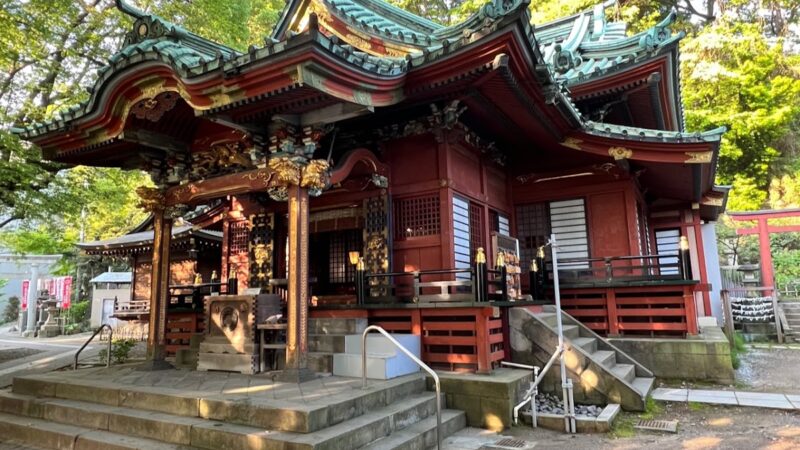
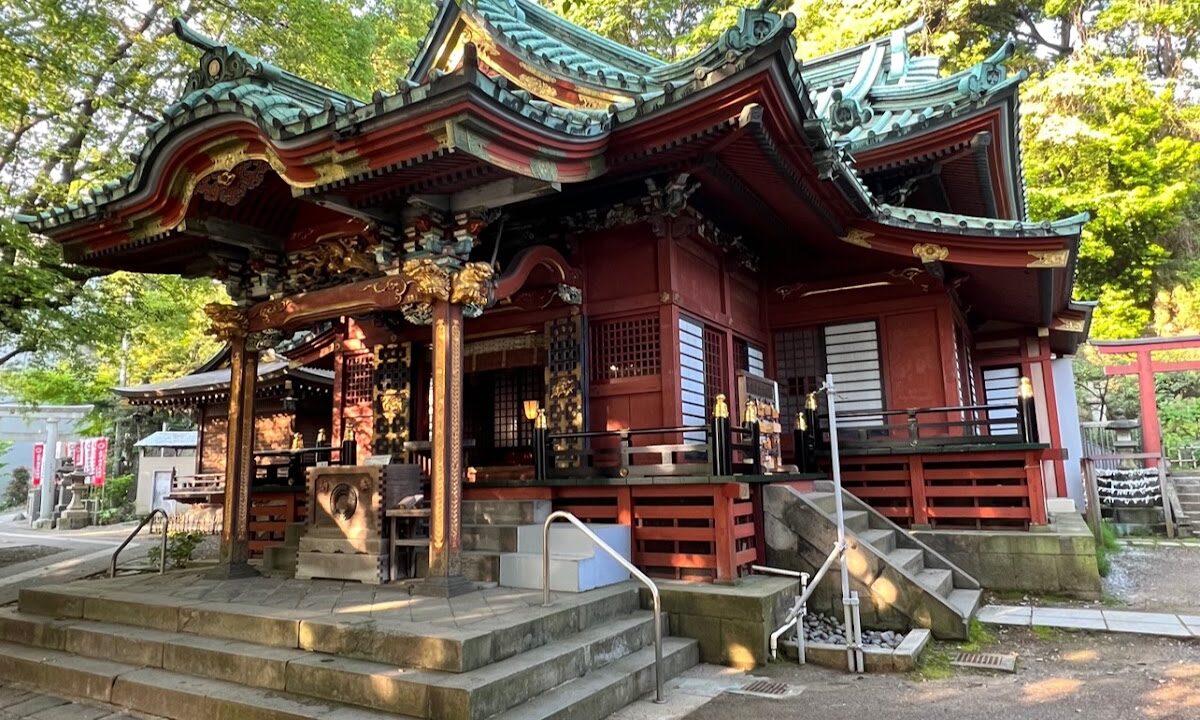
The shrine buildings of Oji Inari Shrine are valuable structures that survived the war. The worship hall is a wooden building that conveys the architectural style of the late Edo period and is adorned with vividly colored decorations. The brightly vermilion-painted shrine has the splendor characteristic of Inari shrines and welcomes worshippers.
The main hall is located behind the worship hall and features intricate carvings. The decorative carvings, particularly on the wooden brackets and frog-leg supports, are magnificent and showcase the high level of craftsmanship from the Edo period.
Sacred Stone
Within the shrine grounds is a sacred stone called “Sacred Stone.” This stone has been an object of worship since ancient times and has been revered as a stone for making wishes. It is believed that visitors who touch this stone and pray will have their wishes granted.
Fox Statues and Fox Den
Statues of foxes, symbols of Inari shrines, are placed throughout the grounds. These foxes are considered messengers of the Inari god and are depicted holding keys, jewels, or scrolls in their mouths.
Furthermore, there is a cave-like area called “Fox Den” within the grounds, creating a mystical atmosphere associated with the legend of fox fire.
Seki Shrine (Hair Shrine)
Within the shrine grounds stands the “Seki Shrine (Hair Shrine).” This shrine is known as the guardian deity of hair health, and is constantly visited by people in the beauty industry and those with hair problems. A special Shinto ritual is held every year on the first day of the Horse in February.
Vividly Colored Torii Gates
A row of vermilion torii gates lines the approach to the shrine, creating a landscape typical of an Inari shrine. Especially during the seasons of fresh greenery and autumn leaves, the contrast between the vibrant vermilion and the natural green and red is beautiful, making it a popular spot for photography.
The Legend of the Foxfires of Oji and the Shozoku Inari Shrine
The Origin of the Foxfire Legend
The legend of the “Foxfires of Oji” is indispensable when discussing Oji Inari Shrine. According to legend, during the Edo period, every year on New Year’s Eve, foxes from all over the Kanto region would gather at Oji Inari Shrine to make their first shrine visit of the year.
The foxes are said to have prepared their attire under a large hackberry tree near Oji and headed towards Oji Inari Shrine with lanterns. From a distance, the scene appeared as if countless foxfires were moving in a procession.
It is also said that the number of these foxfires was used to predict the year’s harvest. The legend says that a large number of foxfires indicates a bountiful harvest, while a small number indicates a poor harvest.
Relationship with Shōzoku Inari Shrine
The Shōzoku Inari Shrine now stands on the site where the hackberry tree once stood, where the foxes are said to have prepared their attire. Located about a 10-minute walk from Ōji Inari Shrine, it attracts many visitors due to its connection to the foxfire legend.
Rakugo “Ōji no Kitsune” (The Fox of Ōji)
The foxfire legend is also famous as the rakugo (traditional Japanese comic storytelling) performance “Ōji no Kitsune” (The Fox of Ōji). This story, centered on a visit to Ōji Inari Shrine and the foxfire legend, unfolds as a charming and heartwarming tale of Edo-era people. Through rakugo, the name of Ōji Inari Shrine became known nationwide.
Fox Procession (Traditional New Year’s Eve Event)
The Foxfire Legend Revived in Modern Times
The “Fox Procession” is an event that recreates the foxfire legend in modern times. Every year on New Year’s Eve, local residents and participants, dressed in fox masks and costumes, parade from Shozoku Inari Shrine to Oji Inari Shrine.
Participants carry lanterns, creating a fantastical procession. This scene evokes the legend of fox fire from the Edo period and has become a popular winter spectacle attracting many spectators.
Event Details
Date: December 31st (New Year’s Eve) every year
Time: From evening to night
Route: Starting from Shozoku Inari Shrine and ending at Oji Inari Shrine
Participation: Open to the public with prior registration (for details, please inquire with the Kita Ward Tourism Association, etc.)
After the procession arrives, a New Year’s Eve ritual is held at Oji Inari Shrine to welcome the new year.
Hatsuuma Festival and Kite Market (Fire Prevention Kites)
Origin of the Hatsuuma Festival
The most important festival at Oji Inari Shrine is the “Hatsuuma Festival,” held on the first day of the horse in February. Hatsuumai (the first day of the horse in the lunar calendar) is considered the day when Inari-sama (the Inari god) descended to earth, and festivals are held at Inari shrines throughout Japan.
The Hatsuumai Festival at Oji Inari Shrine was particularly grand during the Edo period, attracting many worshippers as part of the “Hatsuumai Pilgrimage.”
Kite Market and Fire Prevention Blessings
A major feature of the Hatsuumai Festival is the “kite market.” During the Edo period, a belief arose that purchasing a kite on Hatsuumai at Oji Inari Shrine and displaying it on the roof or in a high place would protect against fire.
Oji Inari Shrine is known as a god of fire prevention, and was a particularly important object of worship during the Edo period, when fires were frequent. The kites given out on Hatsuumai were called “fire prevention kites” and were highly valued as amulets against fire.
The Kite Market Today
Even today, a kite market is held on the shrine grounds on Hatsuumai, where traditional Edo-style kites are sold. The kites are decorated with the characters for “fire prevention” and images of foxes, messengers of the Inari god.
The kite market is not merely a marketplace; it is a traditional event that has continued since the Edo period and is an important cultural heritage with value as an intangible folk cultural property of Tokyo. Many worshippers visit on the first day of the horse in the lunar calendar, seeking fire prevention kites.
Limited-Time Offerings on the First Day of the Horse
Special offerings are available on the first day of the horse in the lunar calendar. Fire prevention amulets, fire prevention kites, and limited-edition goshuin (temple/shrine stamps) are given out, and many people visit the shrine specifically for these offerings.
Goshuin and Goshuincho (Stamp Books)
Issuance of Goshuin
Oji Inari Shrine offers regular goshuin.
Location of Issuance: Shrine Office
Hours of Issuance: Approximately 9:00 AM to 5:00 PM (may vary depending on the season)
Offering Fee: Usually around 300-500 yen
The goshuin (shrine stamp) features the calligraphy and red seal of “Oji Inari Shrine,” and is popular as a memento of the visit by many worshippers. There are slight variations depending on the calligrapher, each with its own unique charm.
Special Goshuin
On special days such as the Hatsuumasai (First Horse Day Festival) and the Reitaisai (Grand Festival), limited edition goshuin are sometimes issued. These feature different designs and colors than usual and are popular among collectors.
Original Goshuincho (Goshuin Notebook)
Oji Inari Shrine also offers original goshuincho. The designs feature motifs such as foxes, rice stalks, and the shrine’s crest, giving them a distinctive Oji Inari Shrine feel.
Annual Events and Festivals
Main Annual Events
January 1st: New Year’s Day Festival
First Horse Day of February: First Horse Day Festival & Kite Market
July: Summer Purification Ceremony
November: Shichi-Go-San Festival
December 31st: New Year’s Eve, Fox Procession, New Year’s Eve Festival
Monthly Festivals
Monthly festivals are held on specific days each month, attended by parishioners and devotees.
Special Prayers
Prayers for business prosperity, family safety, fire prevention, good fortune, etc., are accepted at any time. It is recommended to contact the shrine office in advance before visiting.
Items and Amulets
Main Items
Oji Inari Shrine offers a variety of items.
- Business Prosperity Amulet: An amulet to pray for the development of business.
- Fire Prevention Amulet: An amulet to protect against fire.
- Good Fortune Amulet: An amulet to bring good fortune and happiness.
- Traffic Safety Amulet: An amulet to pray for traffic safety.
- Academic Success Amulet: An amulet to pray for academic improvement.
- Fire Prevention Kite: A traditional item only available on the first day of the horse in the lunar calendar.
Amulets
Amulets for enshrining in household altars are also available. Fire prevention amulets are particularly popular and are often seen in restaurants and corporate kitchens.
Ema (Votive Tablets)
Ema (votive tablets) are available for writing wishes and offering them. The ema, designed with foxes and rice stalks, are characteristic of Oji Inari Shrine.
Spots to Visit Along with Nearby Attractions
Shozoku Inari Shrine
As mentioned above, Shozoku Inari Shrine, associated with the legend of fox fire, is within walking distance. Visiting both Oji Inari Shrine and Oji Inari Shrine allows for a deeper experience of the world of the fox fire legend.
Oji Shrine
Near Oji Station is Oji Shrine. This shrine is the origin of the name Oji and is separate from Oji Inari Shrine. Visiting both shrines is recommended if you have the time.
Asukayama Park
Asukayama Park, near Oji Station, is famous for its cherry blossoms. In spring, approximately 600 cherry trees bloom, attracting many visitors. Enjoy the seasonal nature in conjunction with a visit to Oji Inari Shrine.
Otonashi Waterfront Park
This waterfront park, along the Shakujii River, offers opportunities for waterside strolls. Beautiful scenery unfolds during the autumn foliage season.
Manners and Precautions for Visiting a Shrine
Basic Worship Etiquette
- Bow before passing through the torii gate.
- Cleanse your hands and mouth at the water basin.
- Place your offering in front of the main hall.
- Worship with two bows, two claps, and one bow.
- Bow again at the torii gate when leaving.
Photography
Photography is generally permitted on the shrine grounds, but consideration should be given to avoid disturbing other worshippers or those participating in religious ceremonies. There are also areas where photography is prohibited, such as inside the main hall; please follow the signs.
Attire
No special attire is required for a normal visit, but appropriate attire is desirable if receiving prayers.
Summary of the Charms of Oji Inari Shrine
Oji Inari Shrine is a valuable shrine that, while possessing the prestige and history of being the head shrine of Inari in the Kanto region, also preserves unique cultural traditions such as the fox fire legend and the Hatsuuma kite market. This shrine boasts diverse attractions, including a long-standing belief in fire prevention dating back to the Edo period, blessings for business prosperity, and a fantastical fox procession on New Year’s Eve.
While easily accessible from central Tokyo, the shrine grounds are enveloped in a tranquil atmosphere. It’s a place where you can find peace and tranquility not only on special occasions like the Hatsuumai kite market and the New Year’s Eve fox procession, but also during everyday visits.
For those seeking a historic Inari shrine in Tokyo, those interested in Edo culture and legends, or those seeking blessings for business prosperity and fire prevention, Oji Inari Shrine is a must-see.
The shrine grounds, displaying different expressions throughout the seasons, offer new discoveries with every visit. Be sure to visit at least once.