Complete Guide to Omori Inari Shrine (Ota Ward, Tokyo) | History, Deities, Access, and Benefits Explained in Detail
Omori Inari Shrine, located in Omori Higashi, Ota Ward, Tokyo, is a historical Inari shrine deeply rooted in the community. Despite its urban location along National Route 15, it is a valuable shrine that preserves the belief in abundant harvests that has continued since the Tenpo era, and is cherished by local people.
This article comprehensively introduces information you should know before visiting Omori Inari Shrine, including its historical background, enshrined deities and benefits, highlights of the grounds, and access methods.
Basic Information on Omori Inari Shrine
Omori Inari Shrine is an Inari shrine located in Omori Higashi, Ota Ward, Tokyo, and is easily accessible, approximately a 5-minute walk from Heiwajima Station on the Keihin Kyuko Railway.
Location: Near 1-chome, Omori-Higashi, Ota-ku, Tokyo
Nearest Station: Approximately 5 minutes on foot from Heiwajima Station on the Keihin Kyuko Main Line
Deity Enshrined: Ukanomitama-no-Mikoto
Shrine Rank: Local shrine equivalent to a village shrine
Located along National Route 15 (Dai-ichi Keihin), it is accessible by car, but since the surrounding area is a mix of residential and commercial areas, using public transportation is recommended.
History of Omori Inari Shrine
Background and History of its Founding
The exact founding date of Omori Inari Shrine is unknown, but tracing the history of this region reveals that it has been deeply connected to people’s lives since ancient times.
In the Mihara area of Omori-Higashi, in the cultivated land formerly known as “Satouchigawa,” there was a shell mound. This is evidence that people lived in this area from the Jomon period, telling the story of the land’s history that has continued since ancient times. Omori Inari Shrine is thought to have been established as the center of faith for these old settlements. ### The Legend of the Abundant Harvest During the Tenpo Era
An essential part of understanding the faith surrounding Omori Inari Shrine is the legend of a miracle that occurred during the Tenpo era (1830-1844).
The Tenpo era is known as a period of great famine throughout Japan. During the Tenpo Famine (1833-1839), many areas suffered severe food shortages due to cold damage and floods. During this difficult time, local people prayed to Omori Inari Shrine for a bountiful harvest.
Mindlessly, while surrounding areas suffered from poor harvests, it is said that the farmland along the Satouchi River, where prayers were offered to Omori Inari Shrine, achieved a rich harvest. This event led to Omori Inari Shrine gaining deep reverence from the local people and becoming worshipped as the guardian deity of agriculture and commerce.
Changes After the Meiji Era
After the Meiji-era reforms to the shrine system, Omori Inari Shrine continued to attract worshippers as the local tutelary deity. The Omori area transformed from a rural suburb of Tokyo to a residential and industrial area from the Meiji to Showa periods, but even amidst these changes, the Omori Inari Shrine remained a symbol of the region.
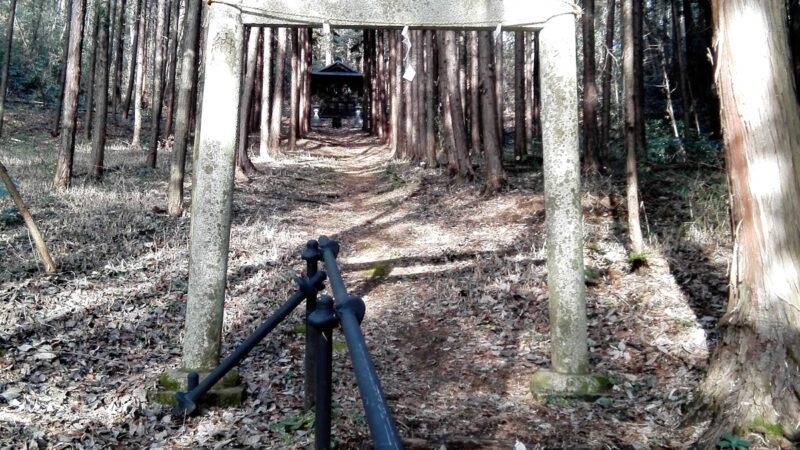
Although the surrounding environment has changed significantly due to post-war urban development, the shrine, despite its location along a national highway, maintains a tranquil precinct and functions as a spiritual haven for local residents.
Deity and Blessings
Ukanomitama-no-Mikoto
The deity enshrined at Omori Inari Shrine is Ukanomitama-no-Mikoto. Ukanomitama-no-Mikoto is a god of grain and food appearing in Japanese mythology, and is widely worshipped at Inari shrines throughout Japan.
In the Kojiki, it is recorded that this god was born to Susanoo-no-Mikoto and Kamu-Oichihime, and “Uka” originates from the archaic word “uke,” meaning grain or food. As the central deity of Inari worship, it is revered as the god who presides over the prosperity of not only agriculture but also commerce and industry in general.
Benefits of Omori Inari Shrine
Omori Inari Shrine is said to offer the following benefits:
Abundant Harvest and Agricultural Prosperity As evidenced by traditions from the Tenpo era, this is the oldest known benefit. It is based on the belief in praying for a bountiful harvest.
Business Prosperity and Success This benefit is common to all Inari shrines, and allows for prayers for success in commercial activities and businesses. It is also revered by merchants and industrialists in the Omori area.
Family Safety As the local guardian deity, there is also a deep-rooted belief in protecting the health and safety of families.
Good Fortune and Prosperity Inari is also known as a god who brings good fortune, and many worshippers pray for overall improved luck.
Highlights of the Shrine Grounds
Shrine Buildings and Atmosphere
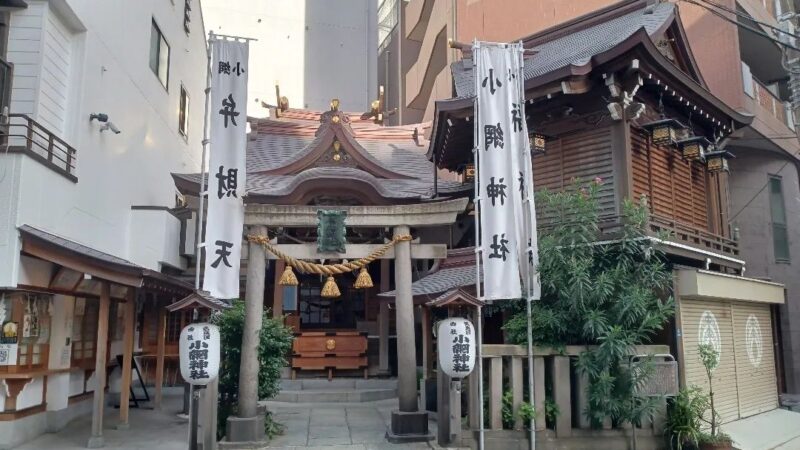
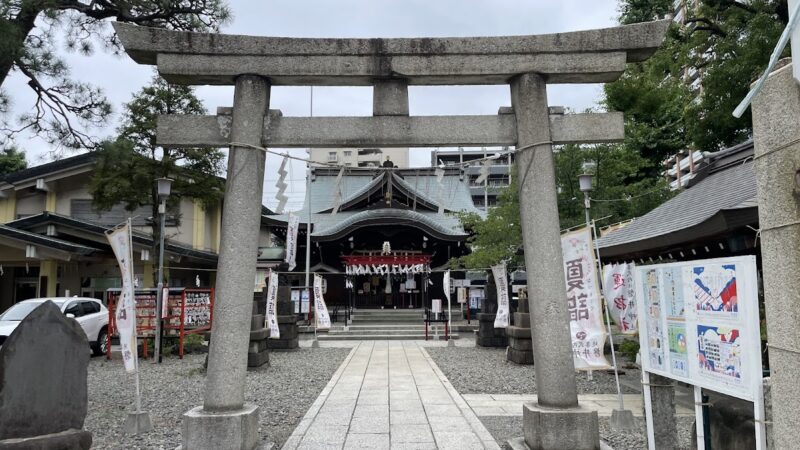
Omori Inari Shrine is a small but well-maintained shrine. Although located along National Route 15, a busy road, a tranquil atmosphere permeates the grounds.
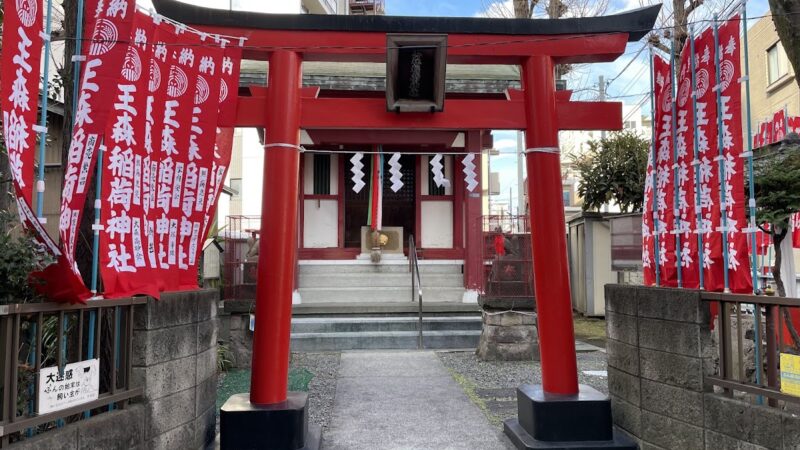
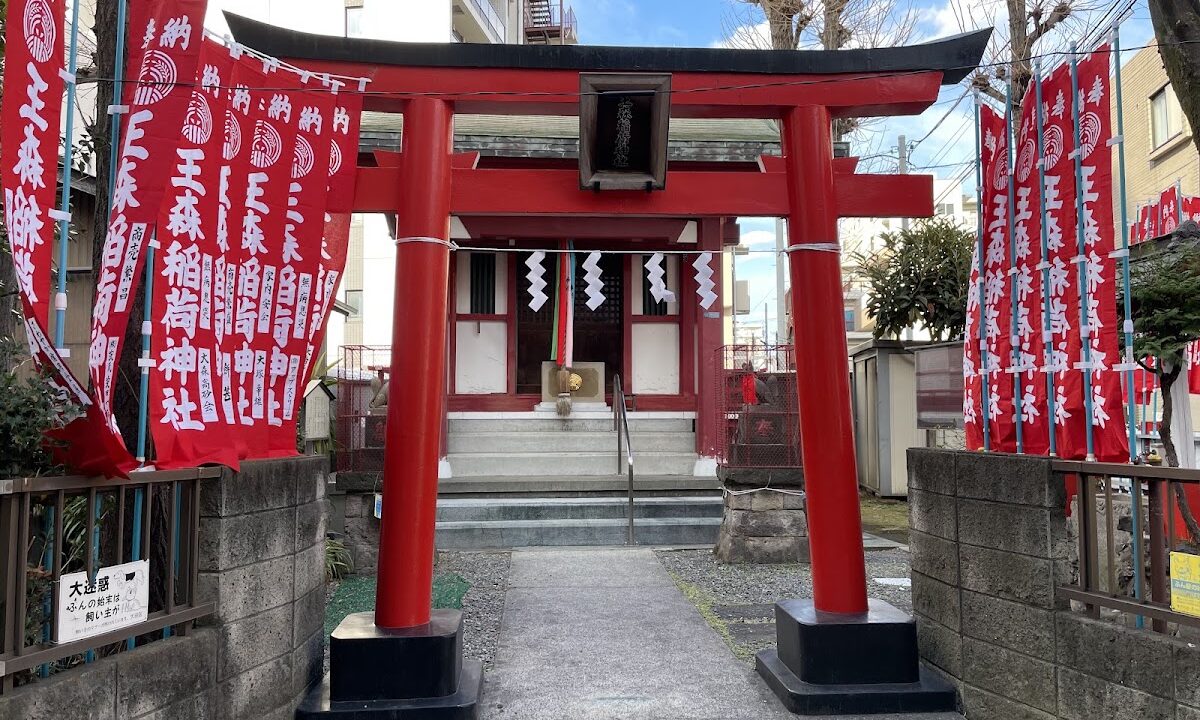
The shrine building is built in the distinctive vermilion color characteristic of Inari shrines, and is compactly designed, as is typical of shrines in urban areas. Several banners bearing the name “Omori Inari Shrine” are erected within the grounds, attracting the attention of visitors.
History and Information
A sign detailing the history of Omori Inari Shrine is installed within the grounds, allowing visitors to learn about the shrine’s history, including the legend of a bountiful harvest during the Tenpo era and its connection to shell mounds. Be sure to read this information board during your visit.
Atmosphere of an Inari Shrine
Characteristic elements of Inari worship, such as fox statues (symbols of Inari shrines) and vermilion torii gates, can be seen within the grounds. Despite its small size, this shrine maintains the traditional form of an Inari shrine.
Access and Transportation Information
Access by Train
Nearest Station: Heiwajima Station, Keihin Kyuko Main Line
The shrine is easily accessible, located approximately a 5-minute walk from Heiwajima Station.
Directions from Heiwajima Station:
- Exit the ticket gate at Heiwajima Station and head towards National Route 15 (Dai-ichi Keihin).
- Once on National Route 15, proceed towards Omori (south).
- You will arrive at Omori Inari Shrine in approximately 5 minutes on foot.
Heiwajima Station is approximately 10 minutes from Shinagawa Station and approximately 20 minutes from Yokohama Station on the Keikyu Main Line, making it easily accessible from central Tokyo.
Access by Car
Located along National Route 15, it is also accessible by car. However, there is no dedicated parking lot, so you will need to use a nearby coin-operated parking lot.
Travel time from major locations:
- From Shinagawa: Approximately 15 minutes
- From Yokohama: Approximately 30 minutes
- From Haneda Airport: Approximately 15 minutes
Due to its proximity to Haneda Airport, it is also accessible to travelers.
Landmarks in the surrounding area
Omori Inari Shrine is located along National Route 15, near Omori Higashi 1-chome. The surrounding area is a mix of residential and commercial facilities, and several banners serve as landmarks.
Etiquette and Manners for Visiting a Shrine
Basic Etiquette for Visiting a Shrine
When visiting Omori Inari Shrine, follow the general etiquette for visiting a shrine:
- Bow before passing through the torii gate: Bow before entering the shrine grounds, in front of the torii gate.
- Water purification ritual: If there is a water purification basin, purify your left hand, then your right hand, then your mouth.
- Offering a monetary donation: Gently place your offering in the offering box.
- Two bows, two claps, one bow: Bow deeply twice, clap twice, and finally bow once.
- When leaving: Turn around and bow once after leaving the torii gate.
Points to Note When Visiting a Shrine
- Due to its location along a national highway, please be extremely careful of traffic safety when visiting.
- As it is a small shrine, please avoid visiting in large groups and pray quietly.
- Photography is permitted, but please be considerate of other visitors.
- The shrine grounds are kept clean, so please be sure to take your trash with you.
Nearby Shrines and Temples
When visiting Omori Inari Shrine, we also recommend visiting other shrines and temples around Ota Ward.
Main Shrines around Omori
Iwai Shrine (Omori Kita, Ota Ward): A historical shrine listed in the Engishiki (ancient Japanese legal code), and the guardian shrine of the Omori area. It is within walking distance of Omori Inari Shrine.
Kashima Shrine (Omori Higashi, Ota Ward): Another shrine located in the Omori Higashi area, it is a place of worship for the local community.
Genshoji Temple: A temple known as an ancient temple in the Omori area.
Recommended Shrine Pilgrimage Course
If you want to enjoy a shrine pilgrimage in Ota Ward, the following course is recommended:
- Start from Heiwajima Station
- Visit Omori Inari Shrine (5 minutes)
- Travel towards Omori Station
- Visit Iwai Shrine (15 minutes)
- Rest and eat around Omori Station
You can visit several shrines in about half a day.
Annual Events at Omori Inari Shrine
Main Festivals at Inari Shrines
Inari shrines generally hold the following annual events:
Hatsuumasai (First Horse Day of February): This is the most important festival at Inari shrines. It is said to be the day when Inari Okami descended to Mount Inari, and it is bustling with worshippers praying for business prosperity.
Reitaisai (Autumn): This is the most important festival at the shrine, a festival of gratitude for a bountiful harvest.
New Year’s Visit (January 1st-3rd): A visit to the shrine in the new year to pray for safety and prosperity throughout the year.
For specific festival dates at Omori Inari Shrine, please check during your visit or find information on local bulletin boards.
History and Culture of the Omori Area
Origin of the Name Omori
The name Omori is said to originate from the fact that “there was a large forest.” This area was formerly part of Ebara District in Musashi Province and was a rural area near the coastline.
Shell Mounds and Ancient Life
The shell mound mentioned in the history of Omori Inari Shrine is famous as the Omori Shell Mound. Discovered in 1877 (Meiji 10) by Edward S. Morse, the Omori Shell Mound is known as the birthplace of archaeology in Japan.
The existence of this shell mound indicates that people lived in this area from the Jomon period, illustrating the deep history of the land where Omori Inari Shrine is located.
Development Since the Modern Era
Since the Meiji era, the Omori area has developed as a suburban residential area of Tokyo. Industry also developed as part of the Keihin Industrial Zone, resulting in the current landscape of mixed residential and industrial areas.
About Inari Worship
History of Inari Shrines
Inari worship is one of the most widespread Shinto beliefs in Japan. There are said to be over 30,000 Inari shrines nationwide, with the head shrine being Fushimi Inari Taisha in Kyoto.
Originally, Inari worship began as a deity of agriculture, but from the medieval period onward, its character as a deity of commerce also strengthened, and today it is revered as the guardian deity of all industries.
Characteristics of Inari Shrines
Vermilion Torii Gates: A symbolic feature of Inari shrines; vermilion is considered a symbol of protection against evil and fertility.
Fox Statues: Statues of foxes, considered messengers of the Inari deity, are placed at the shrines. The fox is not the deity itself, but rather a divine messenger.
Offering of Fried Tofu: There is a custom of offering fried tofu, which is said to be a favorite food of foxes.
Recommended Points for Visiting Omori Inari Shrine
Recommended for:
- Business owners and self-employed individuals praying for business prosperity: Seeking the unique blessings of an Inari shrine
- Residents and employees of Ota Ward: For daily visits to the local guardian shrine
- History enthusiasts: Those interested in the historical background, such as the legends of the Tenpo era and its connection to shell mounds
- Shrine pilgrimage enthusiasts: As one of the Inari shrines to visit in Tokyo
- Users of Heiwajima Station: Close to the station, making it easy to stop by on your way to work or school
Best Season for Visiting
While Omori Inari Shrine is open year-round, the following times are especially recommended:
Hatsuuma Day (February): The most important day at Inari shrines, offering a special atmosphere.
Hatsumode (January): Ideal for New Year’s prayers.
Autumn (September-November): A season of gratitude for a bountiful harvest, allowing you to experience the true meaning of Inari worship.
Photography Tips
Photo Spots on the Shrine Grounds
Although Omori Inari Shrine is small, you can capture the authentic atmosphere of an Inari shrine in your photos:
- Scene of Banners: The numerous banners bearing “Omori Inari Shrine” are an iconic sight of the shrine.
- Vermilion Shrine Building: You can photograph the unique vermilion architectural beauty of Inari shrines.
- Urban Location Along the National Highway: You can capture a modern landscape where city and faith coexist.
Precautions When Taking Photos
- Please be considerate and avoid including other worshippers in your photos.
- Please refrain from taking photos inside the shrine.
- It is best to avoid using flash.
- Please pay attention to location information when posting on social media.
Summary: The Charm of Omori Inari Shrine
Omori Inari Shrine, despite its urban location in Omori Higashi, Ota Ward, Tokyo, is a valuable shrine that preserves the belief in abundant harvests that has continued since the Tenpo era.
The ancient activities of people revealed by shell mounds, the miraculous legend of overcoming the famine of the Tenpo era, and the local faith that continues to this day—all of these are condensed within the small shrine grounds.
Its convenient access, just a 5-minute walk from Heiwajima Station, makes it easy to visit regularly. Omori Inari Shrine is a place where you can pray for various wishes, such as business prosperity, abundant harvests, and family safety. When you visit the Omori area, please be sure to stop by.
Leaving the hustle and bustle of the national highway behind, the time spent praying in the tranquil temple grounds will be a precious moment that allows you to forget the busyness of everyday life. As a place of faith deeply rooted in the community, it will surely continue to be cherished by many people for years to come.