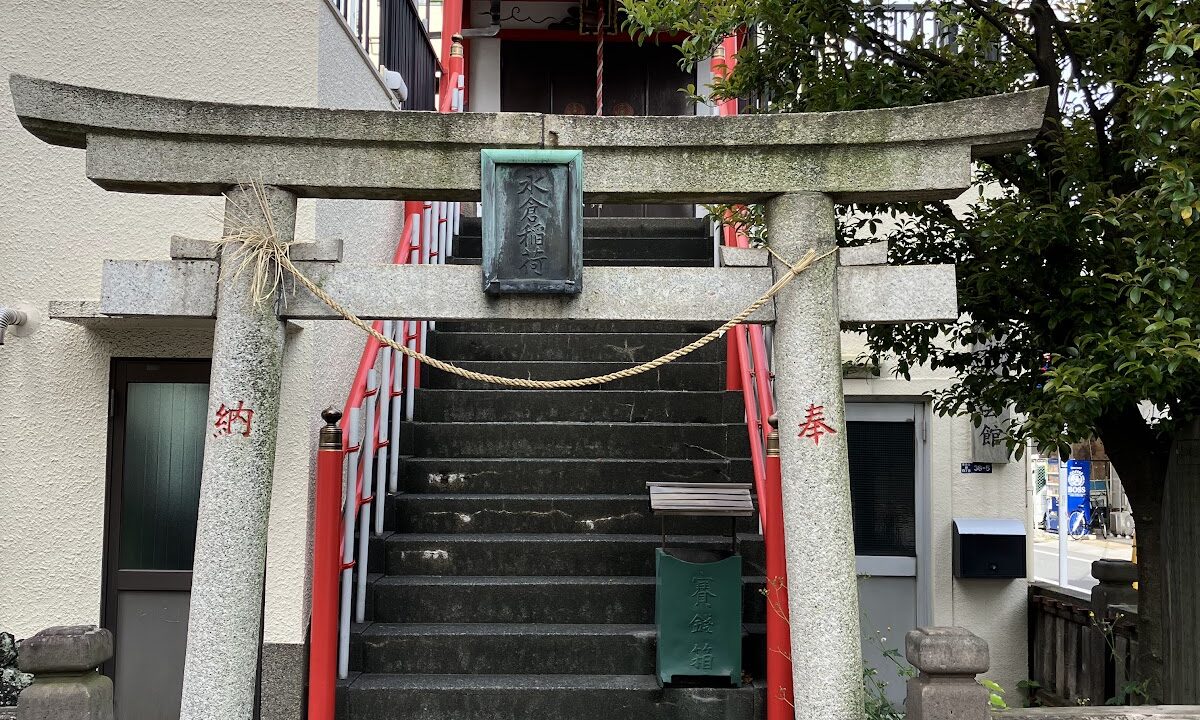
Nagakura Inari Shrine (Sumida Ward, Tokyo) Complete Guide | History, Goshuin (Shrine Seal), and Access Information
Nagakura Inari Shrine is quietly nestled beside the JR Sobu Line elevated tracks in Midori 4-chome, Sumida Ward, Tokyo. Founded after a fire during the Taisho era, it’s a small, community-based Inari shrine. This article comprehensively covers everything you need to know before visiting, from the shrine’s history and origins to its enshrined deities, goshuin information, access methods, and nearby attractions.
Basic Information on Nagakura Inari Shrine
Nagakura Inari Shrine is a community-oriented shrine located in Midori 4-chome, Sumida Ward. While within walking distance of Kinshicho Station, it’s situated in a quiet residential area despite being in the heart of Tokyo.
Location: 4-38-5 Midori, Sumida-ku, Tokyo 130-0021
Nearest Station:
- Approximately 10 minutes on foot from the North Exit of Kinshicho Station on the JR Sobu Line
- Approximately 9 minutes on foot from Exit 4 of Kinshicho Station on the Tokyo Metro Hanzomon Line
Shrine Rank: Unranked shrine (revered as the local guardian deity)
Shrine Size: Small (urban Inari shrine)
The History and Origins of Nagakura Inari Shrine
A Shrine Born from a Fire in the Taisho Era
The founding of Nagakura Inari Shrine is deeply connected to a tragic event in the Taisho era. In 1913 (Taisho 2), a large-scale fire broke out in Nagakura-cho, near this location. After the fire was extinguished, while clearing the ruins, the remains of an old Inari shrine were discovered underground.
This discovery caused great shock to the local residents. Following the disaster of a fire, the remains of an Inari shrine were discovered. People believed it was a curse from Inari Okami (the Inari deity), and decided to rebuild the shrine to appease the spirit.
From Nagakura-cho to Hikura-cho
The discovered remains of the Inari shrine were located in an area formerly known as Nagakura-cho. This place name, Nagakura-cho, is the origin of the current shrine name, “Nagakura Inari Shrine.”
After the fire, the local people built a new shrine in a corner of Hikura-cho (near present-day Midori 4-chome, Sumida Ward) and enshrined Inari Okami. This marked the beginning of the current Nagakura Inari Shrine.
Inari Faith Continues to Protect the Community
Since its founding in the Taisho era, Nagakura Inari Shrine has been a center of faith for local residents. Having weathered war and urban development, it continues to quietly watch over the community as the guardian deity of the Midori area of Sumida Ward.
Inari worship, deeply intertwined with the lives of ordinary people, flourished in various parts of Tokyo from the Edo period onward, as a faith closely tied to their daily lives, praying for business prosperity, abundant harvests, and family safety. Nagakura Inari Shrine can be considered one of the shrines that carries on this tradition of Edo/Tokyo Inari worship.
Deity and Divine Virtues
Inari Okami (Ukanomitama-no-Mikoto)
The deity enshrined at Nagakura Inari Shrine is Inari Okami. Inari Okami is generally known as Ukanomitama-no-Mikoto, the god of grain and food.
In Japanese mythology, Ukanomitama-no-Mikoto is said to be a god born between Susanoo-no-Mikoto and Kami-Oichihime. “Kura” refers to a warehouse for storing grain, and “Inadama” signifies the spiritual power of rice.
Divine Virtues (Benefits)
Nagakura Inari Shrine, which enshrines Inari Okami, is believed to offer the following divine blessings:
- Business Prosperity: A representative benefit of Inari worship. Prayers for success and prosperity in business.
- Abundant Harvest: Gratitude for a bountiful harvest and the blessings of food.
- Family Safety: Health and peaceful living for the family.
- Industrial Development: Development and success in all industries.
- Good Fortune and Happiness: Improved luck and the arrival of happiness.
In particular, local shop owners and business owners often visit the shrine to pray for business prosperity.
Highlights of the Shrine Grounds
Atmosphere of the Shrine and Grounds
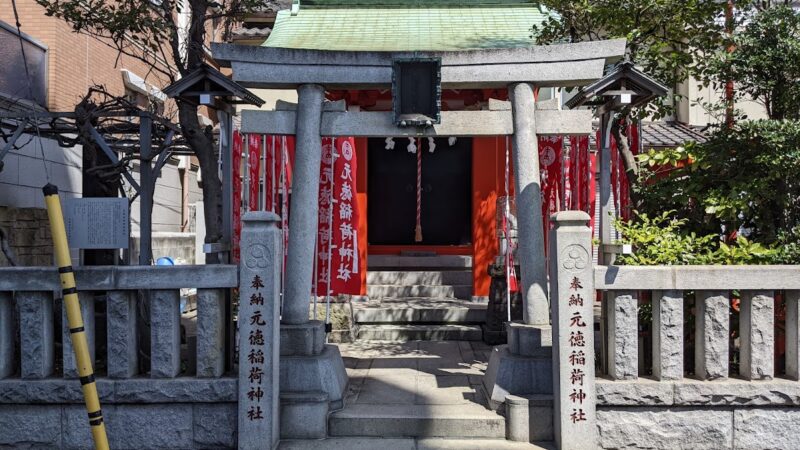
Although small, Nagakura Inari Shrine has well-maintained grounds. Despite its urban location right next to the JR Sobu Line elevated tracks, a tranquil atmosphere permeates the shrine grounds.
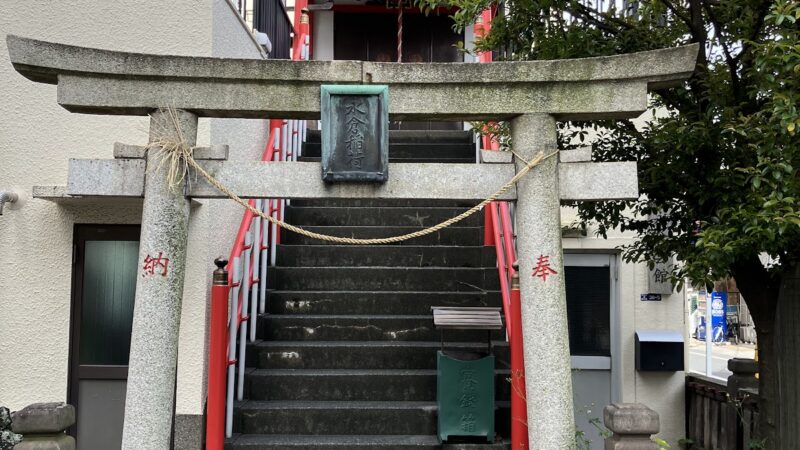
The shrine building is a typical Inari-style structure, characterized by its vermilion torii gate. Although a small, urban shrine, it is carefully maintained by local residents, keeping the grounds clean and tidy.
Fox Statues and Symbols of Inari Faith
Fox statues, symbols of Inari shrines, are also enshrined on the grounds. In Inari faith, foxes are considered messengers of the gods and are cherished as guardians of worshippers.
Offerings and Local Beliefs
The grounds contain torii gates and lanterns donated by local residents, reflecting the long history of the shrine’s cherished presence in the community.
About Goshuin (Shrine Seals)
Goshuin Availability
Because Nagakura Inari Shrine is a small shrine, it is highly likely that there are no resident priests, and the availability of goshuin is unclear. Like many small Inari shrines, it is possible that goshuin are not available.
Those wishing to obtain a goshuin are advised to inquire beforehand with the Sumida Ward Shrine Association or a larger nearby shrine.
Advice for those seeking Goshuin (temple/shrine stamps)
There are many other shrines within Sumida Ward. Those visiting shrines to collect Goshuin (temple/shrine stamps) should also consider visiting the following shrines:
- Ushijima Shrine (Mukojima, Sumida Ward): The guardian shrine of Sumida Ward
- Mimeguri Shrine (Mukojima, Sumida Ward): An Inari shrine associated with the Mitsui family
- Tobiki Inari Shrine (Oshiage, Sumida Ward): An ancient shrine near Tokyo Skytree
Access and Surrounding Information
Access by Train
Using the JR Sobu Line:
- Exit Kinshicho Station North Exit
- Head north along the main street in front of the station
- Walk east along the Sobu Line overpass for about 10 minutes
- The shrine is located near Midori 4-chome, next to the overpass
Using the Tokyo Metro Hanzomon Line:
- Exit Kinshicho Station Exit 4
- Head towards JR Kinshicho Station
- Follow the same route as above from the North Exit
- Approximately 9 minutes on foot
Access by Car and Parking
Nagakura Inari Shrine does not have its own parking lot. If you are visiting by car, you will need to use the coin parking lots around Kinshicho Station. However, since it is in the city center, parking fees are relatively expensive. We recommend using public transportation.
Nearby Attractions
Kinshi Park (approx. 15-minute walk): A large park representative of Sumida Ward. It has a gymnasium and swimming pool, and is a place of relaxation for the local community.
Sumida Triphony Hall (approx. 12-minute walk): A music hall located in front of Kinshicho Station. Classical concerts and other events are held here.
Edo-Tokyo Museum (approx. 20-minute walk): A museum in Ryogoku where you can learn about the history of Edo and Tokyo. There are also exhibits from the Taisho era, when Nagakura Inari Shrine was founded.
Ryogoku Kokugikan (approx. 25-minute walk): The sacred ground of sumo wrestling. It is bustling with many sumo fans during tournaments.
Nearby Shrines and Temples
Around Nagakura Inari Shrine, there are several other shrines and temples worth visiting.
Kameido Tenjin Shrine
Approximately 1.5 km east of Kinshicho. This Tenjin shrine enshrines Sugawara no Michizane, the god of learning, and is also famous for its wisteria. It is bustling with many worshippers during exam season.
Ushijima Shrine
Located in Mukojima, Sumida Ward, this is the main guardian shrine of Sumida Ward. Situated along the Sumida River, it is a shrine with a beautiful view overlooking the Tokyo Skytree.
Mimeguri Shrine
An Inari shrine associated with the Mitsui family in Mukojima. The shrine grounds feature a rare triangular torii gate, and it is revered as a god of business prosperity.
Ekoin Temple
A Jodo sect temple located in Ryogoku. Built to commemorate the unclaimed dead of the Edo period, it is also known as the grave of Nezumi Kozo (a famous Edo-period thief).
Manners and Etiquette for Visiting a Shrine
Basic Shrine Visit Etiquette
When visiting Nagakura Inari Shrine, please observe the following basic shrine visit etiquette:
- Bow before passing through the torii gate: This is a sign of respect when entering the sacred area.
- Walk along the edge of the path: The center is considered the path of the gods.
- Purify yourself at the water basin (if available): Purify your left hand, then your right hand, then your mouth.
- Etiquette in front of the main hall: Two bows, two claps, and one bow are the basic rituals.
- Bow again at the torii gate when leaving: This expresses gratitude.
Unique Visiting Practices at Inari Shrines
At Inari shrines, show respect to the Inari (fox statues). Foxes are messengers of the gods, not gods themselves, but they are treated with respect.
Annual Events at Nagakura Inari Shrine
As it is a small shrine, it is unlikely that large-scale festivals are held. However, typical Inari shrines have the following annual events:
Hatsuumasai (First Horse Day of February)
The most important festival at an Inari shrine is the Hatsuumasai. Held on the first Horse Day of February, it is considered the day when Inari Okami descended upon Mount Inari. Prayers are offered for business prosperity and a bountiful harvest.
Reitaisai (Annual Grand Festival)
The timing varies depending on the shrine, but this is the most important festival held once a year. For the date of Nagakura Inari Shrine’s Reitaisai, it is best to check local bulletin boards.
Inari Faith and Local Culture in Sumida Ward
Inari Faith in Edo/Tokyo
It is said that there are thousands of Inari shrines in Tokyo. During the Edo period, with the development of townspeople’s culture, Inari faith spread as a god of business prosperity, and small Inari shrines were built in each neighborhood.
Nagakura Inari Shrine is one of the shrines that carries on the tradition of Inari worship in Edo/Tokyo. Although relatively new, having been founded during the Taisho era, its history, born from the disaster of fire, symbolizes Tokyo’s history of repeated disasters and reconstructions.
History and Shrines of Sumida Ward
Sumida Ward is located on the east bank of the Sumida River and has been a thriving area of downtown culture since the Edo period. It suffered significant damage from the Great Kanto Earthquake and the Tokyo air raids, but has rebuilt each time.
Shrines like Nagakura Inari Shrine, founded or rebuilt in the wake of disasters, are important cultural heritage sites that convey the memory of the region.
Points to Note and Advice for Visitors
Suitable Time to Visit
Nagakura Inari Shrine appears to be open for worship 24 hours a day, but because it is located in a residential area, consideration for nearby residents is necessary when visiting early in the morning or late at night. Visiting during daylight hours is recommended.
Regarding Photography
Photography is generally permitted on the shrine grounds, but please note the following:
- Refrain from taking photos inside the shrine buildings.
- Be considerate and avoid including other worshippers in your photos.
- Avoid using flash photography.
- Pay attention to location information when posting on social media.
Clothing and Belongings
No special attire is required, but please wear clean clothing appropriate for visiting a shrine. Remember to take precautions against heatstroke in the summer and warm clothing in the winter.
Summary: The Charm of Nagakura Inari Shrine
Nagakura Inari Shrine is a small, community-based Inari shrine born from the tragedy of a fire during the Taisho era. While not flashy, its quiet presence amidst the hustle and bustle of the city embodies the culture of Tokyo’s old downtown and the traditions of Inari worship.
Despite its convenient location in Kinshicho, it’s a hidden shrine unknown to many. When visiting Sumida Ward, be sure to stop by. For over 100 years since the fire of the Taisho era, the Inari deity has protected this land. Taking time to quietly offer prayers to this deity will be a precious moment of healing amidst your busy daily life.
Nagakura Inari Shrine is recommended for business owners praying for prosperity, those interested in local history, and anyone who wants to visit a quiet shrine at their own pace. Why not experience a lesser-known side of Tokyo at this small but carefully preserved shrine?