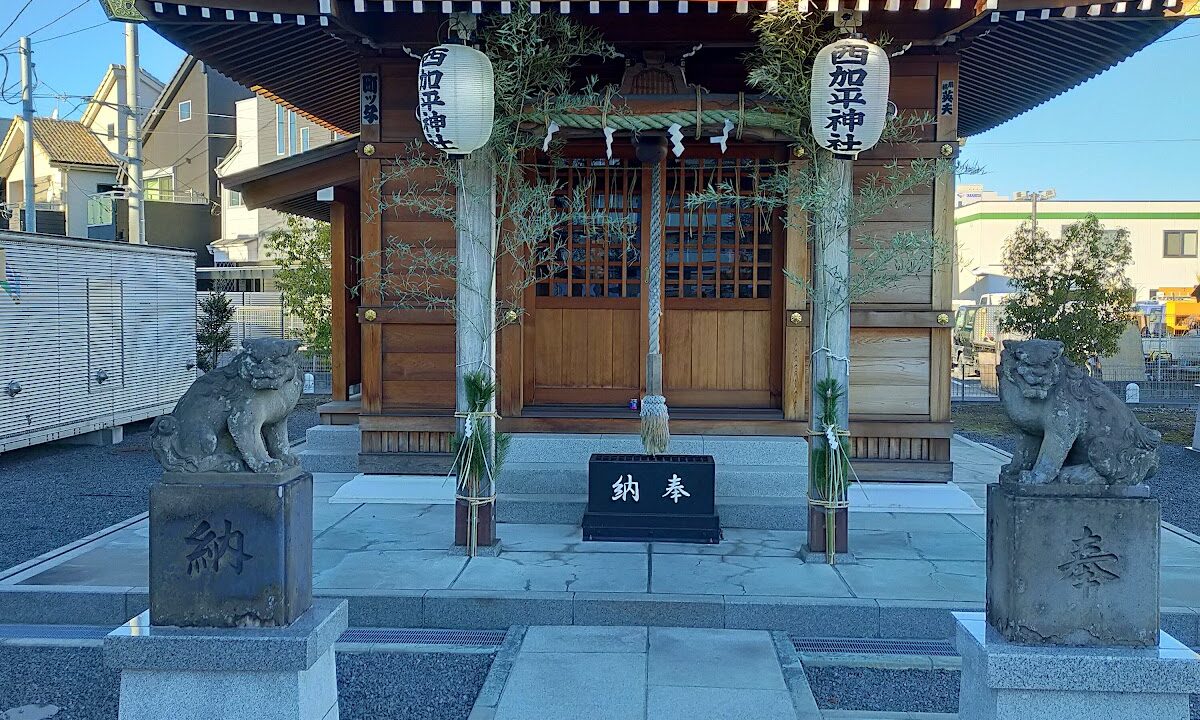
Nishikahira Shrine (Adachi Ward, Tokyo) Complete Guide | History, Deities, Access, and Visiting Information
Nishikahira Shrine, located in Nishikahira, Adachi Ward, Tokyo, is a beloved Inari shrine among local residents. It has a history intertwined with the development of Kahei Shinden and continues to be revered as the local guardian deity. This article provides detailed information useful for visitors, including the history of Nishikahira Shrine, its enshrined deities, highlights of the grounds, access methods, and annual events.
Basic Information on Nishikahira Shrine
Location: 1-1-36 Nishikahira, Adachi-ku, Tokyo 121-0074
Deities Enshrined: Ukanomitama-no-Mikoto / Ukanomitama-no-Mikoto
Shrine Rank: Former Village Shrine
Founding Date: Unknown (Estimated to be during the Edo period, around the time of the Kahei Shinden land reclamation project)
Annual Festival Day: Second Sunday of September
Corporate Number: 4011805000254
Nishikahira Shrine is located approximately 8 minutes on foot from Rokucho Station and approximately 8 minutes on foot from Aoi Station on the Tsukuba Express line. It is a quiet shrine nestled in a residential area. The grounds are spacious and it is a popular place of relaxation for the local community.
History of Nishikahira Shrine
Development of Kahei Shinden and the Founding of the Shrine
The exact founding date of Nishikahira Shrine is unclear, but it is believed to have been established during the Edo period in conjunction with the development of Kahei Shinden. Kahei Shinden was a region developed as part of the land reclamation project in the Ayase River basin. Along with the development of agriculture, a shrine dedicated to Inari, the god of abundant harvests, was built.
In land reclamation, shrines served not merely as religious facilities but also as the center of the local community. The settlers cherished the Inari shrine as a place to pray for a bountiful harvest and express gratitude for the harvest.
Changes in the Meiji Era
In the Meiji era, Nishikahira Shrine became a subsidiary shrine of Kahei Tenso Shrine. At that time, the former village area was divided east and west by the Ayase River. Nishikahira Shrine was worshipped as the guardian shrine of the area west of the Ayase River, while Kahei Tenso Shrine was worshipped as the guardian shrine of the area east of the Ayase River.
Tenso Shrine is a shrine dedicated to Amaterasu Omikami, while Nishikahira Shrine, while enshrining Ukanomitama-no-Mikoto as an Inari shrine, was administratively under the management of Tenso Shrine.
Post-War Independence and Religious Corporation Status
After the war, in the Showa era, the population gradually increased in the area west of the Ayase River, and the foundation of life changed. Amidst the growing regional distinctiveness, the Nishikahira parishioners’ organization desired independent shrine management.
As a result, Nishikahira Shrine separated from Kahira Tenso Shrine and was officially recognized as a religious corporation during the Showa era. At this time, its name was changed from Inari Shrine to its current name, “Nishikahira Shrine,” and it began a new chapter as the guardian shrine of the region.
Currently, it is maintained and managed by a parishioners’ organization centered around the Nishikahira Town Association, and continues to operate as a shrine deeply rooted in the community.
About the Deity
Ukanomitama-no-Mikoto (Aoina-no-Mikoto)
The deity enshrined at Nishikahira Shrine is Ukanomitama-no-Mikoto. Also known as Aoina-no-Mikoto, this deity is widely worshipped throughout Japan as a representative deity of Inari.
In the Kojiki, Ukanomitama-no-Mikoto is said to be a deity born between Susanoo-no-Mikoto and Kami-Oichihime, and is a food deity who presides over grains, especially rice. “Uka” is an archaic word meaning grain or food, and this deity has been revered as one of the most important gods for the Japanese people, an agricultural society.
Spread of Inari Worship
Inari worship spread throughout Japan from the Heian period onward. Especially during the Edo period, it was also worshipped as a god of business prosperity, and came to be revered not only as a god of agriculture but also as a guardian deity of commerce.
Nishikahira Shrine is believed to offer blessings for family safety, business prosperity, and good fortune, in addition to the traditional prayers for a bountiful harvest. Local residents pray for peace and tranquility in their daily lives and visit the shrine to offer prayers at important life events.
Highlights of the Shrine Grounds
Shrine Buildings
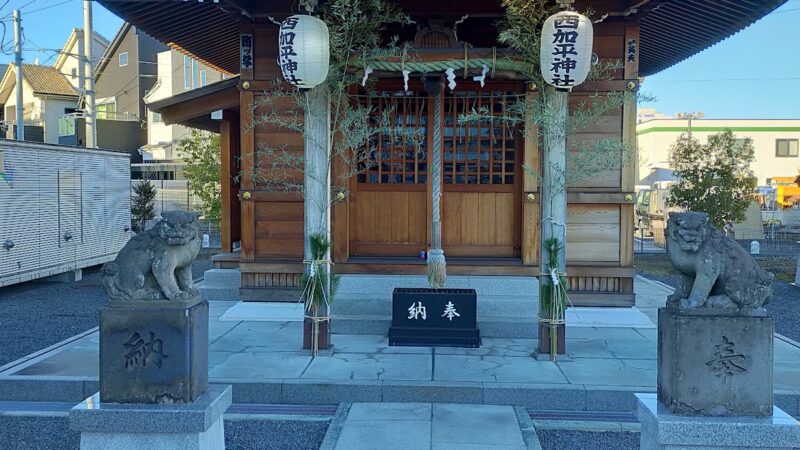
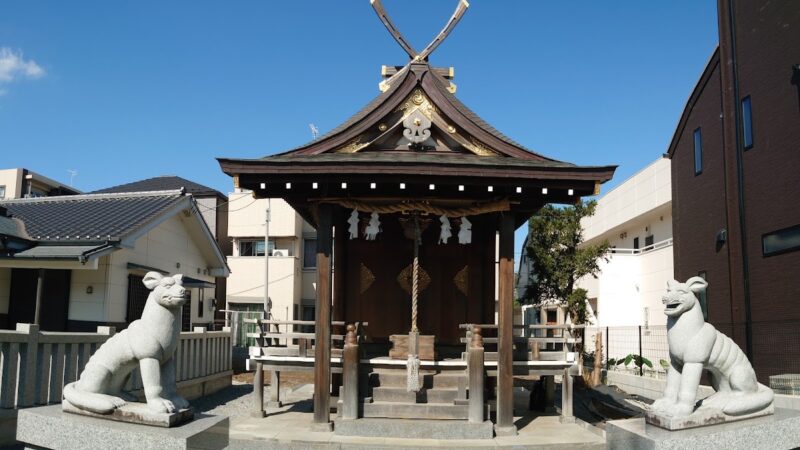
The shrine buildings of Nishikahira Shrine are traditional wooden structures. The main hall is protected by a protective structure, and the worship hall is a well-maintained space for worshippers to offer their prayers. The area around the shrine is meticulously clean, allowing for a peaceful and serene atmosphere during worship.
Torii Gate and Approach
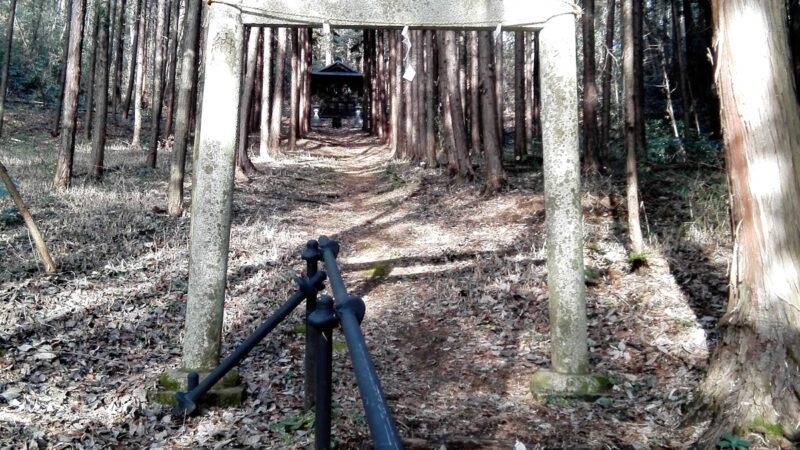
A torii gate stands at the entrance to the shrine grounds, and an approach leads to the shrine buildings. The approach is paved, making it relatively easy for the elderly and those in wheelchairs to visit.
Size and Environment of the Shrine Grounds
Despite being located in a residential area, the grounds of Nishikahira Shrine are of a reasonable size. The temple grounds are planted with trees, creating a tranquil space that allows you to forget the hustle and bustle of the city. It’s a popular walking spot for local residents and a place visited regularly.
Water Basin
A water basin is provided for purifying oneself before worship. It is customary to purify your hands and mouth here before approaching the shrine.
Shrine Office
There is a shrine office on the grounds, but it may not always be staffed. Those wishing to obtain a Goshuin (temple stamp) or amulet are advised to check in advance.
Access
Access by Train
Using the Tsukuba Express:
- Approximately 8 minutes on foot from Rokucho Station (approx. 676m)
- Approximately 8 minutes on foot from Aoi Station (approx. 706m)
Both stations are roughly the same distance and within walking distance. Rokucho Station is a relatively new station, opened in 2005, and the surrounding area is a well-maintained residential neighborhood.
Directions from Rokucho Station
- Exit Rokucho Station and head south.
- Cross the Kan-nana-dori (Ring Road 7) and enter the residential area.
- Follow the signs towards Nishikahira, and you will arrive at the shrine.
Directions from Aoi Station
- Exit Aoi Station and head north.
- Go through the residential area and enter the Nishikahira district.
- Follow the local signs, and you will arrive at the shrine.
Access by Bus
You can use bus routes operating within Adachi Ward, such as Tobu Bus and Toei Bus. The nearest bus stop is a few minutes’ walk away. Please check the official websites of each bus company for detailed routes and timetables.
Access by Car and Parking
Since the area around the shrine is a residential area, dedicated parking is limited. If you are visiting by car, we recommend using nearby coin parking or public transportation. Please note that parking spaces may be particularly scarce during events such as festivals.
Annual Events and Festivals
Grand Festival (Second Sunday of September)
The most important festival at Nishikahira Shrine is the Grand Festival, held every year on the second Sunday of September. On this day, parishioners and local residents gather for a procession of the portable shrine and offering ceremonies.
During the Grand Festival, children from the community also carry their own portable shrine, parading through the town. It’s an important event that strengthens community bonds, and many people participate.
New Year’s Visit
The shrine is bustling with visitors for the New Year’s visit. From New Year’s Day to the third day, people visit to pray for good health and safety for their families. While not as crowded as large shrines, it’s an important annual event for the local community.
Setsubun Festival
During Setsubun in February, events such as bean-throwing are sometimes held. Local children also participate, and it’s a beloved traditional event for inviting good fortune.
Shichi-Go-San (7-5-3 Festival)
In November, many families visit shrines for Shichi-Go-San. This is an important ceremony to celebrate a child’s growth and pray for their healthy development, and many families visit shrines for this occasion.
Etiquette for Visiting a Shrine
Here are some basic etiquette rules for visiting a shrine.
How to Pass Through the Torii Gate
The torii gate is the entrance to the sacred area. It is considered polite to bow before passing through, and to walk along the side of the path, as the center is considered the path of the gods.
Proper Hand-Washing Ritual
- Take the ladle with your right hand and wash your left hand.
- Switch the ladle to your left hand and wash your right hand.
- Switch the ladle back to your right hand, receive water in your left hand, and rinse your mouth.
- Finally, stand the ladle upright and pour water over the handle to cleanse it.
Worship at the Main Hall
- Stand in front of the offering box and bow slightly.
- Gently place your offering in the box.
- If there is a bell, ring it.
- Perform the two bows, two claps, one bow ritual (two deep bows, two claps, one deep bow).
- After worshiping, turn around and bow once more as you leave through the torii gate.
Nearby Attractions
Kahei Tenso Shrine
Kahira Tenso Shrine, which has close ties to Nishikahei Shrine, is located on the east side of the Ayase River. This shrine, dedicated to Amaterasu Omikami, is the main shrine, formerly the subsidiary shrine of Nishikahira Shrine. Visiting both shrines together will allow you to gain a deeper understanding of the region’s history.
Ayase River
The Ayase River, which separates the Nishikahira and Higashikahira areas, was once a river closely intertwined with the lives of the local people. Currently, the riverbanks have been developed, making it a place of relaxation for people enjoying walks and jogging.
Around Rokucho Station
The area around Rokucho Station on the Tsukuba Express line has seen station-front development, resulting in a concentration of commercial facilities and restaurants. You can enjoy meals and shopping before or after visiting the shrine.
Other Shrines in Adachi Ward
Adachi Ward has many shrines, making it enjoyable to visit them. Historic temples and shrines such as Nishiarai Daishi, Shimane Washijinja, and Senju Shrine are scattered throughout the area.
Characteristics of the Nishikahira Area
Origin of the Region
Nishikahira is a region that was created through land reclamation during the Edo period. The lowlands in the Ayase River basin were reclaimed and developed as farmland. This area, known as Kahei Shinden, was long characterized by an agricultural lifestyle.
Modern Nishikahira
Present-day Nishikahira has changed dramatically with the opening of the Tsukuba Express line. The opening of the station has improved transportation access, leading to the construction of new houses and apartments, and a population increase.
However, traditional houses and farmland remain in the area, creating a unique atmosphere where old and new coexist. Nishikahira Shrine continues to exist as a spiritual center for the community amidst these changes.
Neighborhood Association Activities and Community
The Nishikahira Neighborhood Association conducts active community activities, centered around the shrine’s festivals. Through annual festivals, cleaning activities, and local events, interaction among residents is promoted.
Even as urbanization progresses, these community bonds are carefully preserved, and Nishikahira Shrine plays a central role in this.
Visitor Feedback and Reviews
Quiet and Peaceful Atmosphere
Many visitors comment on the spacious grounds and the quiet, peaceful atmosphere. Despite being located in a residential area, entering the shrine grounds offers a tranquil space far removed from the hustle and bustle of the city.
A Shrine Beloved by the Community
Many visitors have the impression that this shrine is cherished by the local community. The grounds are well-maintained, reflecting the affection the local residents have for the shrine.
Easy Access
The shrine’s easy accessibility, being within walking distance of a Tsukuba Express station, is also highly valued. Its proximity to the station and ease of visitation encourage regular visits.
Goshuin (Shrine Seals) and Gifts
About Goshuin
Goshuin (shrine seals) are available at Nishikahira Shrine, but the shrine office may not always be open. Those wishing to receive a goshuin are advised to contact the shrine in advance or visit during events such as festivals.
The Goshuin (temple/shrine stamp) will have the shrine’s name and date of visit inscribed on it, and will bear the shrine’s seal. Bring your Goshuincho (stamp book) and make your request respectfully.
Amulets and Gifts
Shrines offer various amulets and lucky charms. Amulets are available to fulfill various wishes, such as traffic safety, family safety, academic success, and business prosperity.
Special gifts may be available during New Year’s visits and annual festivals.
Photography
Photography is generally permitted at shrines, but please observe the following manners:
- Do not take photos in areas where photography is prohibited, such as inside the main hall.
- Be considerate of other worshippers.
- Refrain from taking photos during festivals or ceremonies, or obtain permission first.
- When posting on social media, be mindful of personal information.
You can enjoy taking photos of the shrine grounds and the exterior of the shrine buildings as a memento of your visit.
Summary
Nishi-Kahira Shrine is a historic Inari shrine located in Nishi-Kahira, Adachi-ku, Tokyo. Founded during the Edo period in conjunction with the development of Kahei Shinden, Nishikahira Shrine has walked hand in hand with the community, serving as a subsidiary shrine of Kahei Tenso Shrine during the Meiji era and becoming an independent shrine after World War II.
It enshrines Ukanomitama-no-Mikoto and is believed to bestow blessings such as abundant harvests, family safety, and business prosperity. Its convenient location, approximately an 8-minute walk from Rokucho and Aoi stations on the Tsukuba Express line, is also a major draw.
The shrine grounds are spacious and tranquil, making it a beloved place of relaxation for local residents. Annual events, including the grand festival in September, strengthen the bonds of the local community.
When visiting Adachi Ward, or if you live in the area, we highly recommend visiting Nishikahira Shrine and finding peace in this serene space steeped in history and tradition. The time spent expressing gratitude and prayers to the gods while reflecting on the region’s history will be a precious moment in today’s busy life.