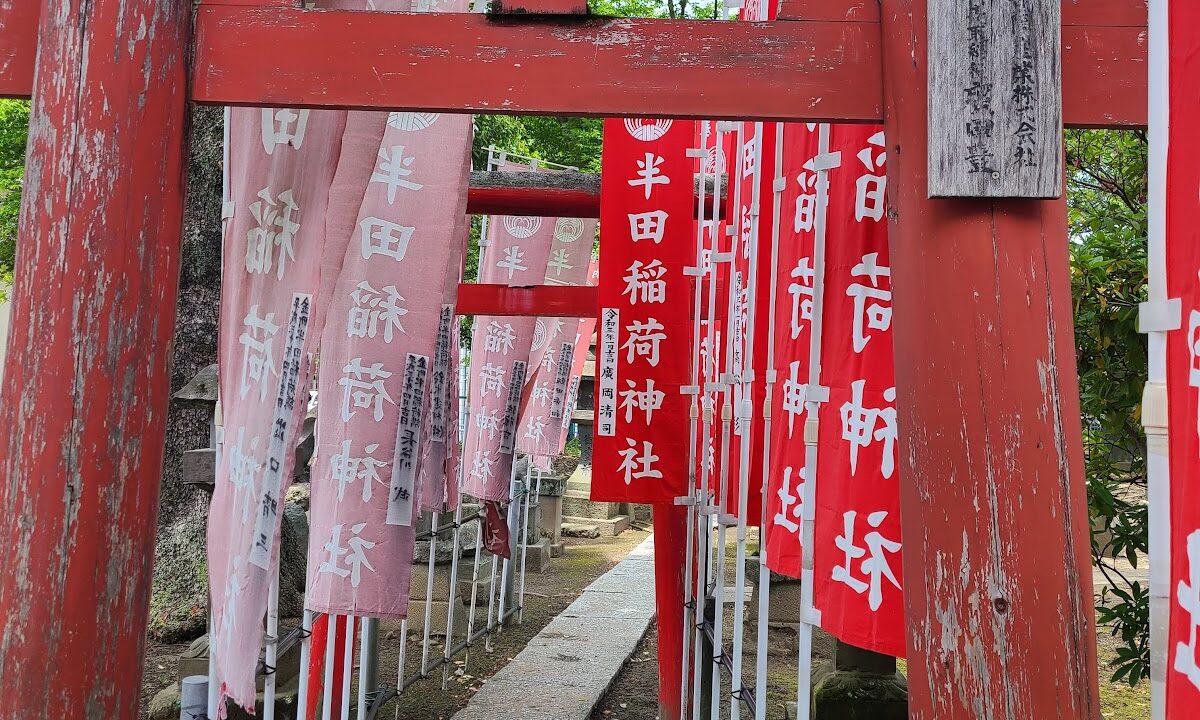
Handa Inari Shrine (Katsushika Ward, Tokyo) Complete Guide | History, Goshuin (Shrine Seal), Benefits, and Access Information
Handa Inari Shrine, located in Higashi-Kanemachi, Katsushika Ward, Tokyo, is a historic Inari shrine said to have been founded between the Nara and Heian periods. During the Edo period, the slogan “Inari of Handa in Kasai-Kanemachi, even smallpox and measles are mild” spread throughout the country, attracting the faith of ordinary people to the point of appearing in Kabuki dances. This article comprehensively introduces information you should know before visiting Handa Inari Shrine, including its history, benefits, goshuin (shrine seal), annual festival, highlights of the grounds, and access methods.
Basic Information on Handa Inari Shrine
Handa Inari Shrine is an Inari shrine located at 4-28-22 Higashi-Kanemachi, Katsushika Ward, Tokyo. It is approximately a 13-minute walk northeast from Kanemachi Station on the JR Joban Line and Keisei Kanemachi Line.
Location: 4-28-22 Higashi-Kanemachi, Katsushika-ku, Tokyo 125-0041
Phone Number: 03-3607-0413
Nearest Station: Approximately 13 minutes on foot from the North Exit of Kanemachi Station on the JR Joban Line and Keisei Kanemachi Line
Parking: Available (several spaces on the shrine grounds)
Our shrine is one of the oldest in Katsushika Ward and is beloved by the local community. Despite being located in a residential area, the shrine grounds maintain a tranquil atmosphere, allowing visitors to enjoy the beauty of the four seasons.
History of Handa Inari Shrine
Various Theories Regarding the Founding Date
There are several theories regarding the founding date of Handa Inari Shrine.
Theory of Founding in Wado 4 (711 AD): According to the “Shinpen Musashi Fudoki-ko” (New Compilation of the Topography of Musashi Province), it is said to have been founded in Wado 4 during the Nara period. This date corresponds to the year following the relocation of the capital to Heijo-kyo in Nara, a period when the influence of the ancient Ritsuryo state extended to the Kanto region.
Theory of Founding in 714 AD (Wado 7): Records from the former head temple (now defunct) indicate that the shrine was founded in 714 AD.
Theory of Founding during the Eikyu Era (1113-1117): According to shrine tradition, the shrine was founded during the Eikyu Era in the late Heian period. This period coincided with the Insei period (rule by retired emperors), and many shrines were founded and developed in the Kanto region with the rise of the samurai class.
Regardless of which theory is correct, Handa Inari Shrine is undoubtedly an ancient shrine with a history of at least 900 years.
Relationship with the Owari Tokugawa Family
Handa Inari Shrine has an important historical significance as it was a place of prayer for the Owari Tokugawa family. A “Ritsugansho” is a special shrine where daimyo (feudal lords) and others offered prayers, demonstrating the deep connection between the Owari Tokugawa family and our shrine. The fact that the Owari family, one of the three main branches of the Tokugawa family, designated this Inari shrine in Katsushika, far from Edo, as their Ritsugansho speaks to the shrine’s high spiritual efficacy.
Prosperity in the Edo Period
From the mid-Edo period onward, Handa Inari Shrine became widely known as a deity of measles and safe childbirth. Records indicate that it was extremely popular, with worshippers from all over the country visiting to pray for the recovery of children from smallpox and measles.
At that time, religious entertainers called “Ganjinbozu” traveled throughout the country singing and dancing to the tune, “Inari of Handa, Kasai, Kanemachi, smallpox is mild, measles is mild…” spreading the miraculous powers of Handa Inari Shrine. This chant became extremely popular among the common people and was eventually incorporated into Kabuki dance.
For the people of Edo, smallpox and measles were terrifying, life-threatening diseases. Especially because of the high child mortality rate, parents desperately prayed at shrines believed to offer miraculous relief. Handa Inari Shrine, as a shrine that answered the earnest wishes of these common people, became the focus of the faith of the Edo commoners.
Changes After the Meiji Era
Due to the Meiji-era separation of Shinto and Buddhism, the temple that had previously managed the shrine was abolished, but Handa Inari Shrine survived as the local guardian deity. Although the surrounding environment changed dramatically due to post-war urbanization, it continues to receive fervent devotion from local residents and is protected as an important cultural asset and center of faith in Katsushika Ward.
Deities and Benefits
Deities
The deity enshrined at Handa Inari Shrine is Ukanomitama-no-Mikoto. Ukanomitama-no-Mikoto is the god who presides over grains and food, and is worshipped as the principal deity of Inari shrines throughout Japan. “Uka” means food, and the deity has been worshipped since ancient times as a god of abundant harvests, business prosperity, and industrial development.
Main Benefits
Handa Inari Shrine is particularly known for the following benefits due to its historical background:
Children’s Health and Recovery from Illness: Since the Edo period, it has been believed to have miraculous powers in healing childhood illnesses such as smallpox and measles, and even today, many worshippers visit to pray for the healthy growth of their children.
Prayers for Safe Childbirth: It has been worshipped since ancient times as a god of safe childbirth, and pregnant women and their families visit to pray for a safe delivery.
Abundant Harvests and Business Prosperity: As a benefit inherent to the Inari deity, many worshippers pray for bountiful harvests and business prosperity.
Family Safety: As the local guardian deity, it is worshipped as a god that protects the health and safety of families.
Protection from Misfortune: It is believed to offer protection from various calamities.
Highlights of the Shrine Grounds
Shrine Building
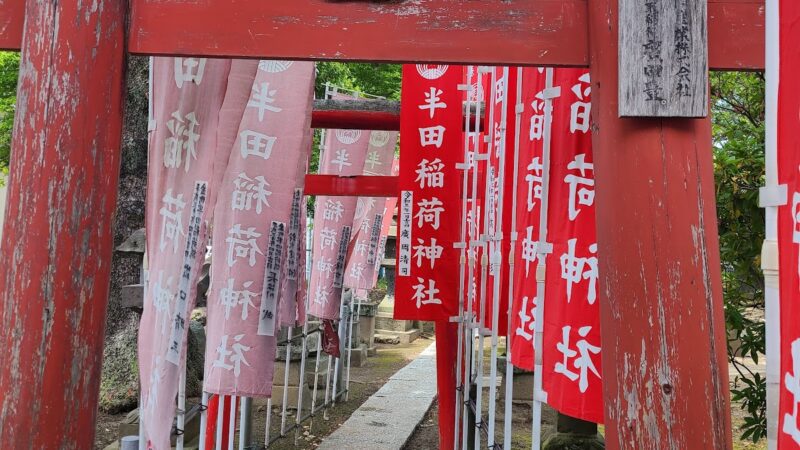
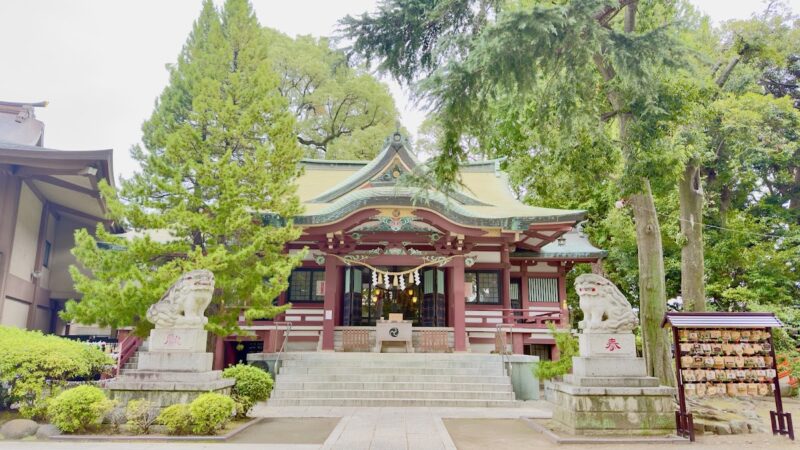
The shrine building of Handa Inari Shrine is carefully maintained while preserving the style of traditional shrine architecture. A magnificent shimenawa (sacred rope) is stretched in front of the worship hall, creating a solemn atmosphere befitting a sacred place. The vermilion color of the shrine building is characteristic of Inari shrines and is believed to ward off evil spirits and create a sacred space.
Mikoshi Hall
Within the shrine grounds is a glass-enclosed mikoshi hall, where a magnificent shrine mikoshi is enshrined. This mikoshi is a valuable item used during the annual festival and is usually carefully stored inside the hall. You can see it up close through the glass, and its intricate decorations and majestic appearance are well worth seeing. The mikoshi is only carried out of the shrine once every few years, so the opportunity to see it in action is rare.
Trees and Nature on the Shrine Grounds
The shrine grounds are planted with trees, including sacred trees, maintaining a lush green environment despite being in the middle of an urban area. The shrine grounds, which display different expressions with each season, offer peace and tranquility to visitors.
Komainu and Stone Sculptures
The shrine grounds are dotted with stone sculptures such as komainu (guardian lion-dogs) and stone lanterns, evoking a sense of history. These were donated between the Edo and Meiji periods and are valuable cultural assets that speak to the deep faith of the time.
Goshuin (Shrine Seals) and Goshuincho (Shrine Seal Books)
About Goshuin
Handa Inari Shrine offers goshuin. Goshuin are records of visits to shrines, featuring calligraphy and a red seal, and have become popular as a way to enjoy shrine visits in recent years.
The goshuin at Handa Inari Shrine features the shrine’s name and date of visit in calligraphy, along with the shrine’s seal. Its simple yet powerful calligraphy conveys the history and prestige of the shrine.
Goshuin (Shrine Stamp) Reception Hours: During the hours the shrine office is open (please contact the shrine directly for details)
Offering Fee: Generally around 300-500 yen
When receiving a goshuin, please complete your prayers first before informing the shrine office. Bringing your own goshuincho (stamp book) is common, but some shrines offer pre-written goshuin.
Goshuincho
We recommend contacting the shrine directly to inquire about the availability of an original goshuincho at Handa Inari Shrine. Many shrines offer goshuincho with designs reflecting the shrine’s characteristics, and these are popular as souvenirs of your visit.
Manners When Receiving a Goshuin
- Complete your prayers first before receiving your goshuin.
- Open your goshuincho and specify the page you would like it written on.
- Wait quietly while the priest or shrine maiden writes the goshuin.
- A goshuin is not a “commemorative stamp,” but proof of a connection with the deity. Handle with care.
- It’s a good idea to prepare exact change for the offering fee, as no change will be given.
Items Offered
Amulets
Handa Inari Shrine offers various types of amulets.
Children’s Amulet: An amulet to pray for the healthy growth and recovery from illness of children. This is a unique item offered at our shrine, which has been known for praying for children’s health since the Edo period.
Safe Childbirth Amulet: An amulet for pregnant women and their families who pray for a safe childbirth.
Health Amulet: An amulet to pray for the health and well-being of the family.
Business Prosperity Amulet: An amulet unique to Inari shrines, praying for business prosperity and success.
Traffic Safety Amulet: An amulet to protect against traffic accidents.
Exorcism Amulet: An amulet to protect against various calamities.
Ema (Votive Tablets)
There is an ema rack on the shrine grounds where visitors can dedicate ema inscribed with their wishes. The ema feature designs representing the shrine’s characteristics, and many are inscribed with wishes for children’s health, safe childbirth, and family safety.
Other Items Offered
Some shrines also offer lucky charms such as amulets, protective arrows, and rakes. Please inquire at the shrine office for details.
Annual Festivals and Rituals
Grand Festival
The Grand Festival of Handa Inari Shrine is held annually in early April. This is the most important festival of the year, a ritual to honor the shrine’s deities and pray for a bountiful harvest and the prosperity of the region.
Date: Early April every year
Main Contents: Rituals, performances, stalls, etc.
During the Grand Festival, stalls line the shrine grounds, attracting many visitors. As a traditional local event, it is an important opportunity to deepen community bonds, with participation from a wide range of generations, from children to the elderly.
Procession of the Portable Shrine
At the Handa Inari Shrine’s annual festival, the procession of the portable shrine takes place every three to four years on a Sunday. This is a Shinto ritual in which the shrine’s deity is transferred to the portable shrine and paraded through the parish area. It is believed that the deity visits the area and bestows divine blessings upon the people.
The procession of the portable shrine is a spectacular sight. The sight of the heavy shrine parading through the area accompanied by the energetic shouts of the bearers is breathtaking. This day attracts a particularly large number of spectators and is the largest festival in the region.
Kanemachi Kasai Hayashi (Traditional Music)
Handa Inari Shrine is also the headquarters of the Kanemachi Kasai Hayashi Preservation Society. Kasai Bayashi is a traditional performing art that has been passed down since the Edo period. It is a festival music played with flutes, drums, and gongs. During the annual grand festival, this traditional music is offered as a dedication, adding to the splendor of the celebration.
Kasai Bayashi is designated as an Intangible Folk Cultural Property of Tokyo and is preserved and passed down as a valuable cultural heritage of the region.
Monthly Festival
A monthly festival (Tsukinami-sai) is held regularly each month, where gratitude to the gods and prayers for peace in the community are offered. General visitors may be able to attend; please inquire at the shrine if you are interested.
New Year’s Visit
Many visitors come to the shrine for their first visit of the year (Hatsumode). Hatsumode, a traditional Japanese annual event, is a prayer for safety and peace throughout the year. At Handa Inari Shrine, from January 1st to the third day of the new year, sweet sake (amazake) may be offered to visitors, and special items may be distributed.
Access Methods
Access by Train
Nearest Station: JR Joban Line/Keisei Kanamachi Line “Kanamachi Station”
Approximately 13 minutes on foot from the north exit of Kanamachi Station. After exiting the station, head northeast and you will arrive at the shrine after passing through a residential area. There are signs along the way, but it is convenient for first-time visitors to use a smartphone map app.
Access by Bus
If using the bus from Kanamachi Station, take a Keisei Bus or Toei Bus and get off at the “Higashi-Kanamachi 4-chome” or “Higashi-Kanamachi 5-chome” bus stop, then it’s a few minutes’ walk. However, considering the distance from the station, it is also easily accessible on foot.
Access by Car
Metropolitan Expressway: Approximately 15 minutes from the Metropolitan Expressway Central Circular Route “Kosuge IC”
Parking: There are several parking spaces on the shrine grounds.
If visiting by car, please enter “4-28-22 Higashi-Kanamachi, Katsushika-ku, Tokyo” or “Handa Inari Shrine” into your car navigation system. However, since parking on the shrine grounds is limited, we recommend using public transportation during busy times such as the annual festival. There are also several coin-operated parking lots nearby.
Nearby Shrines
When visiting Handa Inari Shrine, why not also visit the nearby shrines?
Katori Shrine (2-41-1 Higashi-Mizumoto, Katsushika-ku): This is a related shrine to Handa Inari Shrine and is managed by the same chief priest.
Fuji Shrine (2-1-1 Minami-Mizumoto, Katsushika-ku): This is also a shrine related to Handa Inari Shrine.
A “Katsushika Shrine Pilgrimage” visiting these shrines is a great opportunity to learn more about the local history and culture.
Manners and Etiquette for Visiting Shrines
How to Pass Through the Torii Gate
The torii gate at the entrance of a shrine is the boundary separating the secular world from the sacred realm. Before passing through the torii gate, bow to show respect to the gods. Furthermore, the center of the approach to the shrine is called “Seichu” and is considered the path of the gods. Therefore, when walking along the approach, avoid the center and walk to either the left or right side.
Proper Ritual of Purification
Before praying, purify your body and mind at the purification fountain (Chozuya/Temizuya).
- Take the ladle in your right hand and purify your left hand.
- Switch the ladle to your left hand and purify your right hand.
- Take the ladle back in your right hand, receive water in your left hand, and rinse your mouth (do not put your mouth directly on the ladle).
- Purify your left hand once more.
- Stand the ladle upright and purify the handle with the remaining water.
- Place the ladle face down in its original place.
Proper Ritual of Worship
The basic worship ritual at a shrine is “two bows, two claps, one bow.”
- Stand in front of the offering box and quietly place your offering inside.
- If there is a bell, ring it.
- Bow deeply twice (two bows).
- Clap your hands twice at chest height (two claps).
- With your hands clasped together, silently recite your wish.
- Finally, bow deeply once (one bow).
Attire for Visiting the Shrine
Everyday clothes are acceptable, but please dress in a clean and respectful manner, as you are visiting a deity. Especially when attending Shinto rituals such as the annual festival, more formal attire is desirable.
The Charm of Handa Inari Shrine
History and Tradition
The greatest charm of Handa Inari Shrine lies in its combination of the weight of an ancient shrine with over 1000 years of history and the approachability it enjoyed during the Edo period, attracting the faith of ordinary people. Its cultural aspect, including its appearance in Kabuki dance, is another unique charm not found in other shrines.
A Faith Rooted in the Community
Even in modern times, this shrine functions as one deeply rooted in the lives of local residents. The sight of people visiting at various milestones in life—prayers for children’s health, safe childbirth, New Year’s visits, Shichi-Go-San (a traditional rite of passage for children)—demonstrates that the shrine is not merely a tourist destination, but a living place of faith.
A Tranquil Precinct
Located in a residential area slightly removed from the hustle and bustle of the city, the shrine grounds are enveloped in a quiet and peaceful atmosphere. This space, where one can escape the busyness of daily life and pray with a calm mind, is a precious place of healing for modern people.
Preservation of Traditional Performing Arts
As the headquarters of the Kanemachi Kasai Hayashi Preservation Society, the shrine’s commitment to preserving traditional performing arts is also significant. Passing on local culture to the next generation is one of the social roles that shrines should fulfill.
Notes on Visiting
Visiting Hours
While the shrine is generally open for worship from sunrise to sunset, there are time restrictions for receiving Goshuin (shrine stamps) and other items at the shrine office. If you definitely want to receive a Goshuin (temple/shrine stamp), we recommend calling ahead to confirm.
Photography
Photography is generally permitted on the shrine grounds, but please be considerate of those performing religious ceremonies or other visitors. Also, there are areas where photography is prohibited, such as inside the shrine buildings, so please follow the signs.
Pets
Some shrines prohibit pets. We recommend checking in advance before visiting Handa Inari Shrine.
Crowds during the Grand Festival
The shrine becomes extremely crowded during the Grand Festival in early April, especially in years when the portable shrine is carried. If you want to visit at a more leisurely pace, we recommend visiting on weekdays or outside of the festival period.
Summary
Handa Inari Shrine is a historical and traditional Inari shrine located in Higashi-Kanemachi, Katsushika-ku, Tokyo. Founded in either 711 AD (Wado 4) or the Eikyu era (1113-1117), Handa Inari Shrine gained nationwide devotion during the Edo period with the popular song, “At Handa Inari in Kasai-Kanemachi, even smallpox and measles are mild.”
It is believed to offer various blessings, including children’s health, safe childbirth, business prosperity, and family safety, and continues to attract many worshippers today. The annual grand festival is held in early April, and the procession of the portable shrine, held only once every few years, is the largest and most lively festival in the region.
Conveniently located about a 13-minute walk from Kanemachi Station, the shrine grounds offer a quiet and peaceful atmosphere despite being in the heart of the city, making it a place for calm and peaceful worship. The shrine also offers Goshuin (stamped seals) and various amulets, making it a popular destination for shrine pilgrimages.
Handa Inari Shrine possesses multifaceted charms, including its historical grounds, deeply rooted community faith, and the preservation of traditional performing arts. When you visit Katsushika Ward, be sure to visit and experience its history and spiritual power.
Frequently Asked Questions (FAQ)
Q1: When can I get a Goshuin (temple/shrine stamp) at Handa Inari Shrine?
A1: Goshuin are given out during the hours the shrine office is open. If you want to be sure to get one, we recommend calling the shrine (TEL: 03-3607-0413) in advance to confirm the reception hours. Generally, it is from 9:00 AM to around 4:00 PM, but there may be times when the office is closed due to religious ceremonies or events.
Q2: Is there parking available?
A2: There are a few parking spaces on the shrine grounds. However, since the number of spaces is limited, it is likely to be full during busy times such as the annual festival. We recommend using public transportation, but if you are coming by car, please use the nearby coin parking lots.
Q3: Is a reservation required for prayers for safe childbirth? **
A3: If you wish to have prayers for safe childbirth or other similar rituals performed, we recommend contacting the shrine by phone in advance to discuss the date and time. While same-day registration may be possible in some cases, it’s best to make a reservation as it may not be possible depending on the priest’s schedule.
Q4: When is the annual festival held?
A4: The annual festival is held in early April every year. The procession of the portable shrine takes place on a Sunday once every 3-4 years. The specific date varies each year, so please check the shrine’s official information or social media (X: @handa_inari).
Q5: Can I have a baby’s first shrine visit or Shichi-Go-San ceremony?
A5: Yes, we accept prayers for life rituals such as baby’s first shrine visit and Shichi-Go-San. The shrine is particularly known for prayers for children’s health, so many families visit. We recommend making a reservation by phone in advance and confirming the offering fee and what to bring.
Q6: How long does it take to get there from the nearest station?
A6: It’s about a 13-minute walk from the north exit of Kanamachi Station on the JR Joban Line and Keisei Kanamachi Line. The route goes through a residential area, but you can easily find your way using a smartphone map app. If you’re taking the bus, the nearest bus stops are “Higashi-Kanamachi 4-chome” or “Higashi-Kanamachi 5-chome”.
Q7: Is it possible to visit with a pet?
A7: Please contact the shrine directly regarding whether pets are allowed. Generally, shrines restrict pets to maintain the purity of the sacred grounds.
Q8: Do you sell Goshuincho (stamp books)?
A8: Please contact the shrine directly regarding the availability of original Goshuincho. Many shrines offer Goshuincho with their own unique designs, but availability may vary.