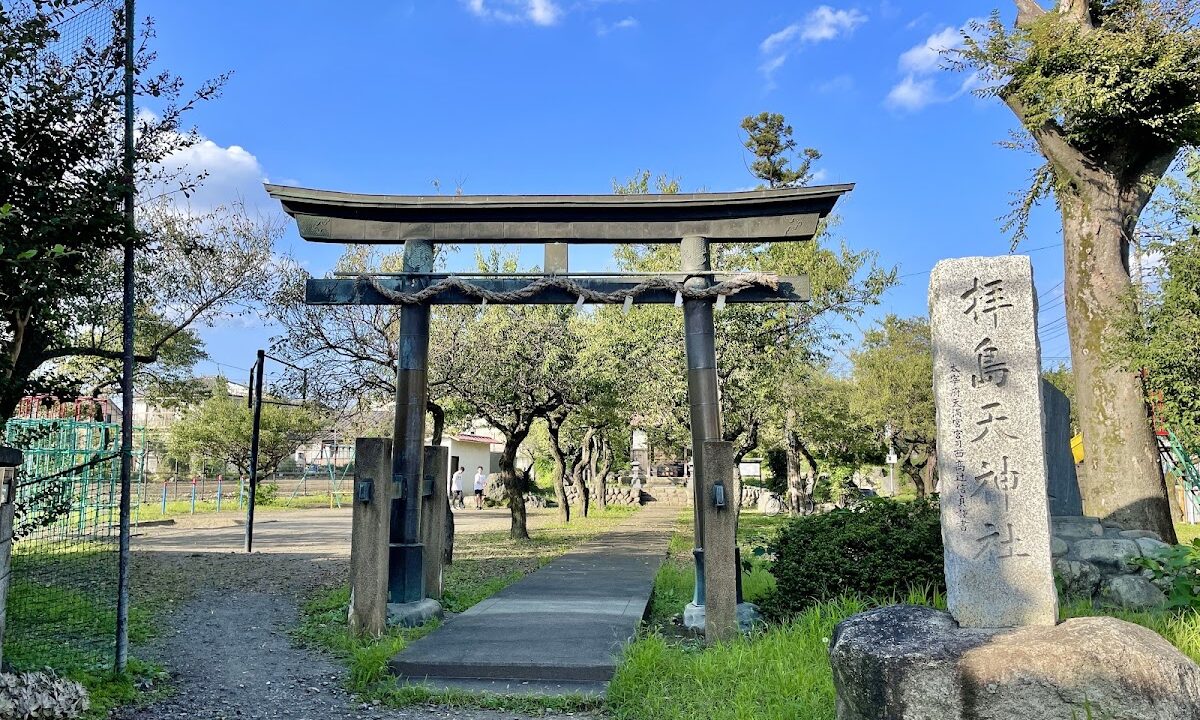
Complete Guide to Haijima Tenjin Shrine (Akishima City, Tokyo)
Located in Haijima-cho, Akishima City, Tokyo, Haijima Tenjin Shrine is a shrine dedicated to Sugawara no Michizane, known as the god of learning. Affectionately known as “Tenjin-sama” by locals, it remains a place of worship with a constant stream of visitors. This article provides a detailed guide to Haijima Tenjin Shrine, including its history, enshrined deities, highlights within the grounds, access information, and details on its Goshuin (shrine stamp).
Basic Information about Haijima Tenjin Shrine
Location and Access
Location
2-14-7 Haijima-cho, Akishima City, Tokyo 196-0002
Access from Nearest Station
- Approximately 18 minutes on foot from JR Ome Line “Haijima Station”
- Approximately 8 minutes by bus from JR Ome Line “Haijima Station”
- Approximately 25 minutes on foot from JR Ome Line “Akishima Station”
- From JR Chuo Line/JR Ome Line “Tachikawa Station,” take a bus bound for “Haijima Station” or “Haijima Bus Depot,” get off at “Haijima Daishi-mae,” and walk 5 minutes.
When accessing on foot from Haijima Station, the route towards Haijima Daishi and Hiyoshi Shrine is easy to follow, and it is possible to visit the surrounding shrines and temples while making your pilgrimage.
Contact Information
Haijima Tenjin Shrine is a shrine under the jurisdiction of Hiyoshi Shrine.
TEL: 042-544-0636 (Hiyoshi Shrine)
Main Shrine: Hiyoshi Shrine (1-10-19 Haijima-cho, Akishima City, Tokyo)
For inquiries regarding Goshuin (shrine stamps), prayers, etc., please contact Hiyoshi Shrine.
History and Origins of Haijima Tenjin Shrine
Origins of Founding
Haijima Tenjin Shrine is said to have been founded during the Bunroku era (1592-1595) by inviting the deity from Yaho Tenmangu Shrine. Yaho Tenmangu Shrine is an ancient shrine located in Kunitachi City, Tokyo, and is a historically significant Tenmangu shrine counted as one of the three major Tenjin shrines in the Kanto region. The divine spirit of Sugawara no Michizane was divided and enshrined from Yaho Tenmangu Shrine, and the shrine was founded in Haijima as a base for Tenjin worship.
The Bunroku era was the time of Toyotomi Hideyoshi and corresponds to the end of the Azuchi-Momoyama period. During this period, the construction and enshrinement of shrines were flourishing throughout Japan, and it is believed that Haijima Tenjin Shrine was founded as a center of local faith within this trend.
Merger in the Meiji Era
In 1907 (Meiji 40), it is said that Hachiman Hiyoshi Shrine was merged with Haijima Tenjin Shrine. The Meiji era was a time when many small shrines were consolidated due to the shrine consolidation policy. This merger allowed Haijima Tenjin Shrine to develop into a shrine that attracted a wider range of local faith.
The Tradition of the Tenjin-ko
In the past, Haijima Tenjin Shrine had a “Tenjin-ko” (Tenjin Association) organized for children. The Tenjin-ko was a religious organization that worshipped Sugawara no Michizane, and it was customary to gather regularly for festivals and to enjoy meals together. This gathering was called “Ohimachi,” and records indicate that rice and boiled vegetables were served.
These religious activities, centered on local children, played an important role in strengthening the ties of the local community and fostering reverence for Sugawara no Michizane, the god of learning.
Deity and Divine Virtues
Sugawara no Michizane
The deity enshrined at Haijima Tenjin Shrine is Sugawara no Michizane.
Sugawara no Michizane was a scholar and politician of the Heian period. He rose to the position of Minister of the Right due to his exceptional talent and learning, but was embroiled in political strife and exiled to Dazaifu, where he spent the rest of his life. After his death, various calamities occurred in Kyoto, leading to the construction of Kitano Tenmangu Shrine to appease Michizane’s vengeful spirit. Since then, he has been revered throughout Japan as “Tenjin-sama.”
Divine Virtues
The main divine virtues of Sugawara no Michizane are as follows:
- Academic Achievement and Passing Exams: Many students and those preparing for exams visit the shrine, inspired by Michizane’s exceptional academic talent from a young age.
- Literary Improvement: His reputation as a literary figure excelling in waka and Chinese poetry attracts those seeking improvement in literature and art.
- Calligraphy Improvement: Known as a master calligrapher, many visitors pray for improvement in their calligraphy skills.
- Sincerity: Known for his honest character, he is worshipped as a god who guides people toward an honest and sincere way of life.
Especially during exam season, many students and their parents can be seen visiting to pray for success.
Highlights of the Shrine Grounds
Plum Trees and the Approach
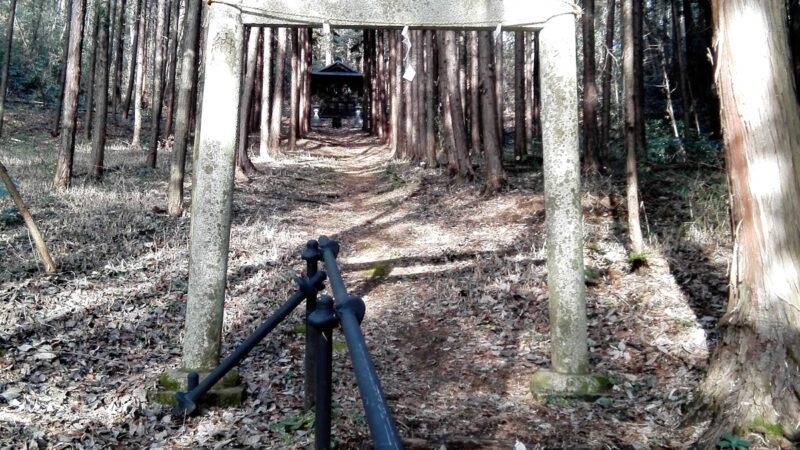
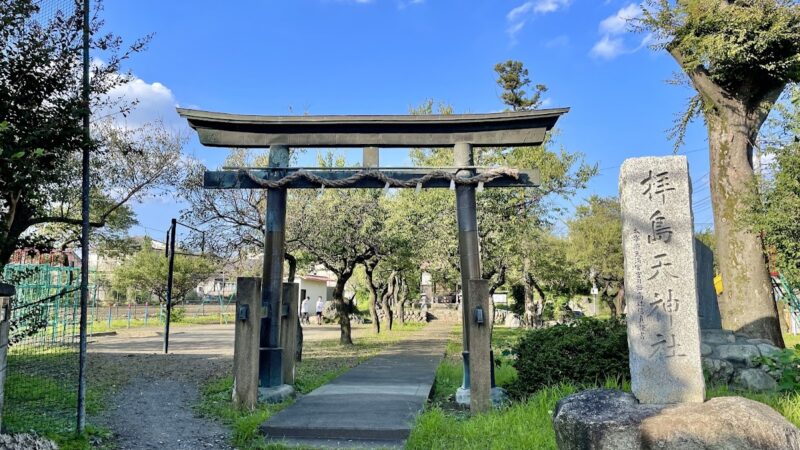
One of the distinctive features of Haijima Tenjin Shrine is the plum trees lining both sides of the approach. Sugawara no Michizane is known to have loved plums, and the Tenjin faith and plums are inextricably linked. The poem composed by Sugawara no Michizane, “When the east wind blows, send forth your fragrance, O plum blossoms; do not forget spring, even though your master is gone,” is particularly famous.
Numerous plum trees are planted on the grounds of Haijima Tenjin Shrine, and during the blooming season from February to March, the shrine grounds are enveloped in a vibrant atmosphere. Visiting during the plum blossom season is especially recommended, allowing you to pray while feeling the arrival of spring.
Shrine Grounds and Adjacent Park
The shrine grounds offer a relatively spacious area, allowing for a peaceful atmosphere during worship. A park is adjacent to the grounds, serving as a place of relaxation for the community. This integrated space of shrine and park is cherished by local residents.
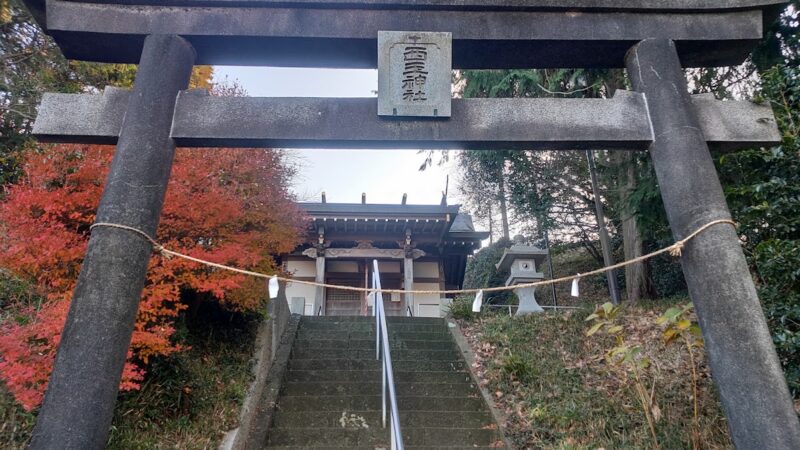
Shrine Building
The shrine building, though simple, is carefully maintained, reflecting the faith of the local people. Offerings such as statues of oxen, characteristic of Tenjin worship, can also be seen, allowing visitors to experience the traditional atmosphere of a Tenjin shrine.
Annual Festival and Other Events
Annual Festival
The annual festival of Haijima Tenjin Shrine is held on January 25th, or the Sunday closest to that date.
January 25th is the anniversary of the death of Sugawara no Michizane, and festivals are held at Tenmangu and Tenjin shrines throughout Japan. On this day, parishioners and devotees gather to hold a ceremony praising the divine virtues of Michizane.
Other Annual Events
Tenjin shrines generally hold the following events, and Haijima Tenjin Shrine may also be continuing these as local religious events:
- Hatsu-Tenjin (January 25th): The first Tenjin festival of the new year
- Baika-sai (February-March): A festival timed to coincide with the plum blossom season
- Natsu-Matsuri (Summer Festival): A local summer festival
For specific event dates, please contact Hiyoshi Shrine, the main shrine of the shrine.
About Goshuin (Shrine Seals)
Issuance of Goshuin
The goshuin of Haijima Tenjin Shrine is issued at its principal shrine, Hiyoshi Shrine.
Hiyoshi Shrine
1-10-19 Haijima-cho, Akishima-shi, Tokyo 196-0002
TEL: 042-544-0636
Hiyoshi Shrine offers both handwritten and pre-printed goshuin, as well as mail-order goshuin. If you wish to receive a goshuin from Haijima Tenjin Shrine, it is recommended to contact Hiyoshi Shrine in advance to confirm availability.
Manners When Receiving a Goshuin
Goshuin are given as proof of your visit. Please observe the following etiquette:
- Complete your prayers first before receiving your goshuin (temple/shrine stamp).
- Bring your goshuincho (stamp book) (If you don’t have one, you may be able to receive a pre-printed goshuin).
- Prepare a donation (generally around 300-500 yen).
- Don’t forget to express your gratitude to the staff at the shrine office.
Nearby Shrines and Temples
Many historical shrines and temples are scattered around Haijima Tenjin Shrine.
Hiyoshi Shrine (Haijima’s tutelary deity)
Location: 1-10-19 Haijima-cho, Akishima City, Tokyo
Deities Enshrined: Oyamakui-no-Mikoto, Hayamato-no-Mikoto, Kayamato-no-Mikoto
This is the main shrine of Haijima Tenjin Shrine and has been cherished as “Haijima’s tutelary deity” since ancient times. It is said to have been founded during the Azuchi-Momoyama period and is located in a corner of Haijima Park. It enshrines three brother deities and is revered as the guardian deity of the region.
Haijima Shinmei Shrine
The Haijima area also houses the Shinmei Shrine, a revered shrine dedicated to Amaterasu Omikami. Many visitors combine their visit with that of the Haijima Tenjin Shrine.
Haijima Daishi (Hongakuin Temple)
This temple belongs to the Buzan branch of the Shingon sect and is affectionately known as Haijima Daishi. It enshrines Kobo Daishi (Kukai) as its principal deity and attracts many worshippers. It’s a local landmark, even giving its name to the “Haijima Daishi-mae” bus stop.
Fumyo-ji Temple
A historic temple near Haijima Station, it’s one of the centers of Buddhist faith in the area.
Fussa Shinmei Shrine
Located in the neighboring city of Fussa, this Shinmei Shrine is also accessible from Haijima Station.
A “Haijima Shrine and Temple Pilgrimage” visiting these shrines and temples offers a wonderful opportunity to gain a deeper understanding of the history and culture of the Akishima and Fussa areas.
Points to Note When Visiting Haijima Tenjin Shrine
Recommended Time to Visit
The plum blossom season (February to March) is especially recommended. The plum trees planted along the approach and within the shrine grounds are in full bloom, allowing you to feel the arrival of spring while you visit. The shrine grounds, enveloped in the fragrance of plum blossoms, offer a uniquely vibrant atmosphere.
Also, the annual festival day (around January 25th) is a valuable opportunity to experience local religious events.
Etiquette for Visiting a Shrine
Please observe the basic etiquette for visiting a shrine:
- Bow before passing through the torii gate.
- Avoid walking in the center of the approach to the shrine. (The center is considered the path of the gods.)
- Purify your body and mind at the water basin.
- Hold the ladle in your right hand and purify your left hand.
- Switch the ladle to your left hand and purify your right hand.
- Switch the ladle back to your right hand, receive water in your left hand, and rinse your mouth.
- Finally, hold the ladle upright and purify the handle.
- “Two bows, two claps, one bow” in front of the main hall.
- Bow deeply twice.
- Clap your hands twice.
- Pray with all your heart.
- Finally, bow deeply once.
Prayers for Success in Exams and Academic Achievement
Haijima Tenjin Shrine, which enshrines Sugawara no Michizane, the god of learning, is ideal for students and those taking exams. When praying for success in exams or academic achievement, keep the following points in mind:
- Pray with a sincere heart (Michizane valued sincerity)
- Vow to make daily efforts (Gods support those who strive)
- Never forget to be grateful (It’s also important to be grateful for the learning environment)
The Charm of the Haijima Area
The Historic Land of Haijima
Haijima has long flourished as a transportation hub in the Tama region. Commercial facilities and residential areas spread out around Haijima Station, where the JR Ome Line, JR Itsukaichi Line, and Seibu Haijima Line intersect.
On the other hand, many shrines and temples remain, including Haijima Tenjin Shrine, making it a fascinating area where history and modernity coexist.
Haijima Park
Haijima Park is located around Hiyoshi Shrine and serves as a place of relaxation for local residents. A stroll through the park in conjunction with a visit to the shrine is highly recommended.
Easy Access
Haijima Tenjin Shrine is easily accessible from Tachikawa Station and Hachioji Station, and is relatively easy to visit from central Tokyo. Many people visit Haijima Tenjin Shrine as part of a tour of shrines and temples along the Ome Line.
Tokyo Metropolitan Shrine Association and Kita-Tama Branch
Haijima Tenjin Shrine belongs to the Kita-Tama Branch of the Tokyo Metropolitan Shrine Association.
The Tokyo Metropolitan Shrine Association is a regional office of the Association of Shinto Shrines, which reveres Ise Grand Shrine as its head shrine and encompasses approximately 80,000 shrines nationwide. It oversees 1,398 shrines in Tokyo.
The Kita-Tama Branch has jurisdiction over shrines in the Kita-Tama region, including Akishima City, and is responsible for the maintenance and operation of local shrines, the continuation of rituals, and the training of Shinto priests.
Summary
Haijima Tenjin Shrine is a shrine located in Akishima City, Tokyo, dedicated to Sugawara no Michizane, the god of learning. Founded during the Bunroku era (1592-1592) when the deity was invited from Yaho Tenmangu Shrine, this shrine has been a center of local faith for over 400 years.
With its rows of plum trees, adjacent park, and warm, community-oriented atmosphere, it’s a truly charming shrine. Visitors come with a variety of wishes, from students praying for success in exams to academic achievement, improvement in calligraphy, and literary arts.
Located within walking distance of Haijima Station, it can be easily visited along with other nearby shrines and temples such as Hiyoshi Shrine and Haijima Daishi. Visiting during February and March, when the plum blossoms are in bloom, offers a particularly beautiful and peaceful experience.
If you’re interested in experiencing Tenjin worship in Tokyo, exploring shrines in the Kita-Tama area, or praying for academic success, be sure to visit Haijima Tenjin Shrine. The beloved “Tenjin-sama” will warmly welcome you.