Complete Guide to Kisaki Shrine (Miyakejima, Tokyo) | History and Visiting Information for this Shikinaisha Shrine
Kisaki Shrine is a historic shrine located on Miyakejima Island in Miyake Village, Tokyo. As a Shikinaisha (a shrine listed in the Engishiki, an ancient Japanese legal code), it has long been revered and is a valuable shrine deeply connected to the mythology of Miyakejima Island. It remains cherished by the local community today. This article provides a comprehensive overview of Kisaki Shrine, including its detailed history, the origin of its enshrined deities, how to visit, and access information.
Basic Information about Kisaki Shrine
Kisaki Shrine is located in Igaya, Miyake Village, Tokyo, in the northwestern part of Miyakejima Island. It is approximately 5km north of the Miyake Village Office and is an important site that preserves the shrine culture of the Izu Islands.
Location: Igaya, Miyake Village, Tokyo
Main Deity: Igamuhime-no-Mikoto
Shrine Rank: Shikinaisha (Igamuhime-no-Mikoto Shrine, Kamo District, Izu Province)
Former Shrine Rank: Village Shrine
Miyakejima is one of the Izu Islands, located approximately 180km south of Tokyo. The Kōjin Shrine has served as a spiritual pillar of the island, watching over the prosperity of the region and the peace of its people throughout its long history.
About the Deity, Igamuhime-no-Mikoto
Igamuhime-no-Mikoto, enshrined at the Kōjin Shrine, is a goddess who plays an important role in the mythology of Miyakejima. As the shrine’s name, “Kōjin,” suggests, this shrine is known for enshrining the consort of Kotoshironushi-no-Kami (Mishima Daimyōjin).
Miyakejima’s Mythology and the Kōjinja Shrine
Miyakejima has three shrines dedicated to the consort of Kotoshironushi-no-kami (Mishima Daimyōjin), and Kōjinja Shrine is one of them. Kotoshironushi-no-kami is a deity widely worshipped throughout the Izu Islands, and has been revered as the guardian deity of Miyakejima.
Igamuhime-no-mikoto, as the consort of Kotoshironushi-no-kami, is believed to bestow blessings such as fertility, maritime safety, and prosperity of descendants. For the islanders, visiting Kōjinja Shrine is not merely a religious event, but an important activity for passing on the island’s history and culture to future generations.
Value as a Shikinaisha Shrine
Kōjinja Shrine is identified as the “Igamuhime-no-mikoto Shrine” listed in the Engishiki Jinmyōchō (a list of shrines compiled in the Heian period). The Engishiki is a legal code from the Heian period, and shrines listed in it signify high-ranking shrines recognized by the imperial court since ancient times.
As a Shikinaisha (a shrine listed in the Engishiki) in Kamo District, Izu Province, the Kōjin Shrine boasts a history of over 1000 years. Its recognition as an important shrine since ancient times, despite its remote island location, speaks to the historical and cultural significance of Miyakejima Island.
History of Kōjin Shrine
Founding and Ancient Beliefs
The exact founding date of Kōjin Shrine is unknown, but as it is listed in the Engishiki as a Shikinaisha, it is believed to have existed before the early Heian period (9th century). The Izu Islands have been a vital hub for maritime traffic since ancient times and had deep ties to the imperial court.
Miyakejima Island has long been known as a place of exile, with many nobles and monks being banished there. Records show that these people visited the island’s shrines and deepened their faith. It is presumed that Kōjin Shrine also served as a spiritual center not only for the islanders but also for the exiles.
Changes from the Medieval to the Early Modern Period
In the Edo period, Miyakejima Island became a direct territory of the shogunate, and the island’s administrative system was established. During this period, the Kōjinja Shrine came to play a central role in the community as the village’s tutelary deity.
According to records from that time, various Shinto rituals were performed at the Kōjinja Shrine as part of its annual events, and it was closely intertwined with the lives of the islanders. Festivals praying for bountiful harvests in fishing and agriculture, and prayers for safe voyages, it functioned as an indispensable place of worship for island life.
Developments since the Modern Era
Following the Meiji-era separation of Shinto and Buddhism, the Kōjinja Shrine was incorporated into the modern Shinto system and ranked as a village shrine. In the Showa era, Miyakejima Island was repeatedly struck by volcanic eruptions, significantly impacting the lives of the islanders.
In particular, the eruptions of 1983 (Showa 58) and 2000 (Heisei 12) forced all islanders to evacuate the island. However, even in these difficult circumstances, the Kōjinja Shrine continued to exist as a spiritual support for the islanders. Reconstruction and restoration work after the eruptions was supported by the strong faith and love for their homeland of the islanders.
Even in the Reiwa era, the Kōjinja Shrine is carefully preserved as an important cultural asset of Miyakejima Island and a spiritual haven for the islanders.
Shrine Grounds and Highlights
Shrine Buildings and Facilities
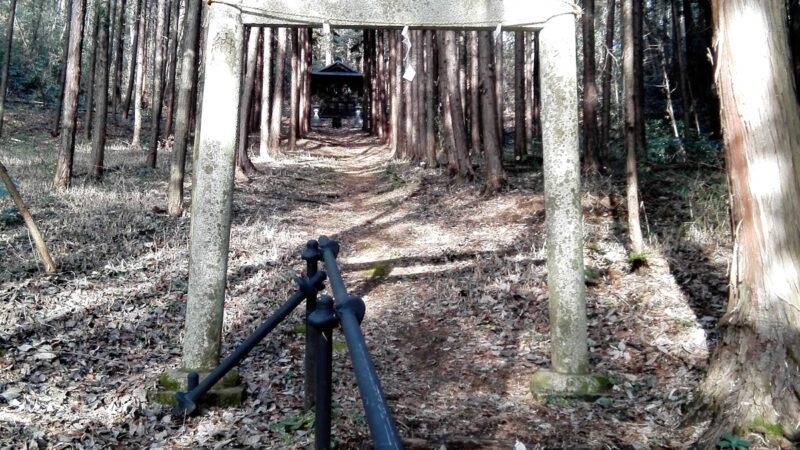
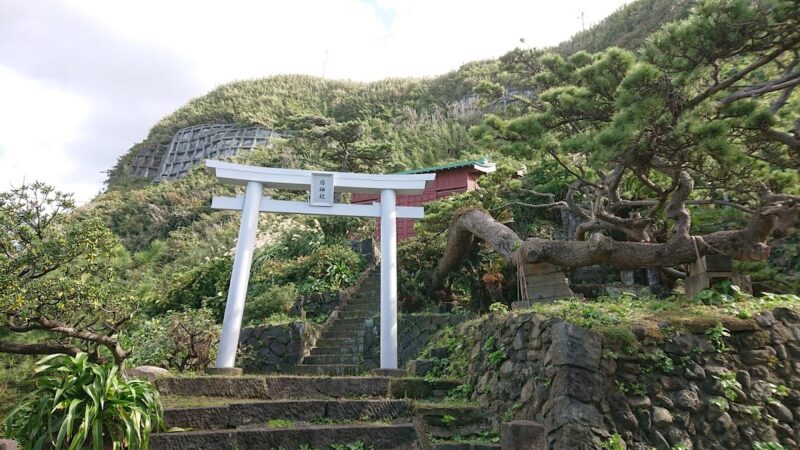
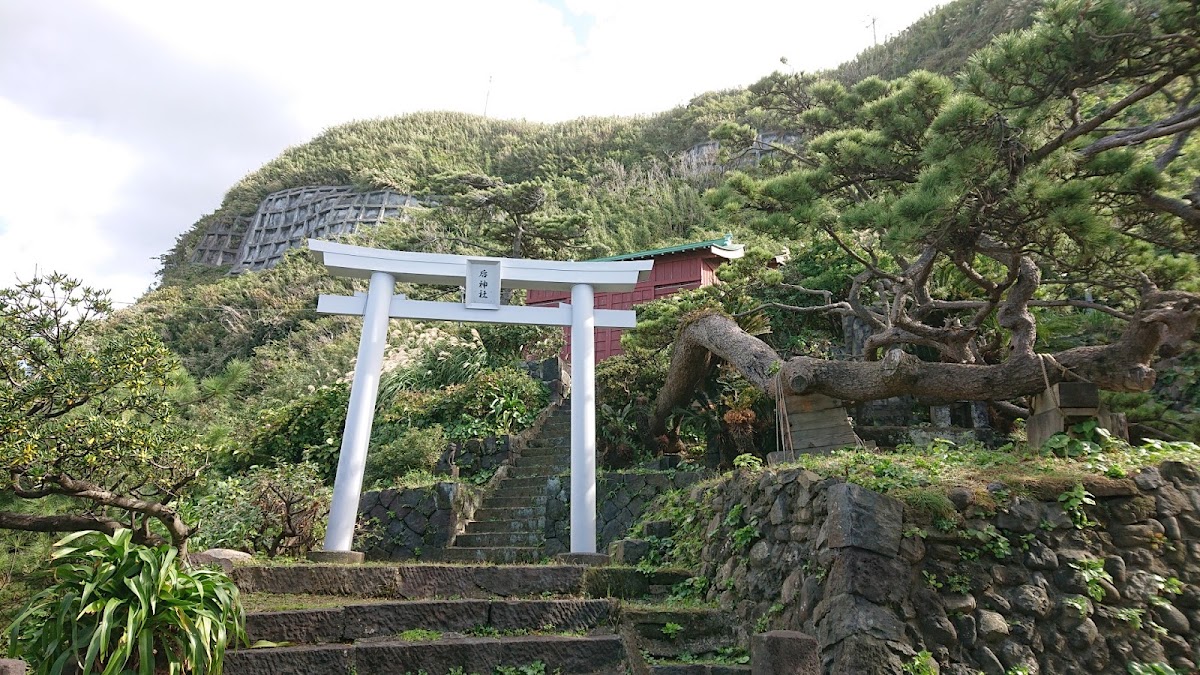
The grounds of Kōjinja Shrine possess a tranquil atmosphere surrounded by the nature of Miyakejima Island. Situated in the Igaya settlement, it is enveloped in lush greenery.
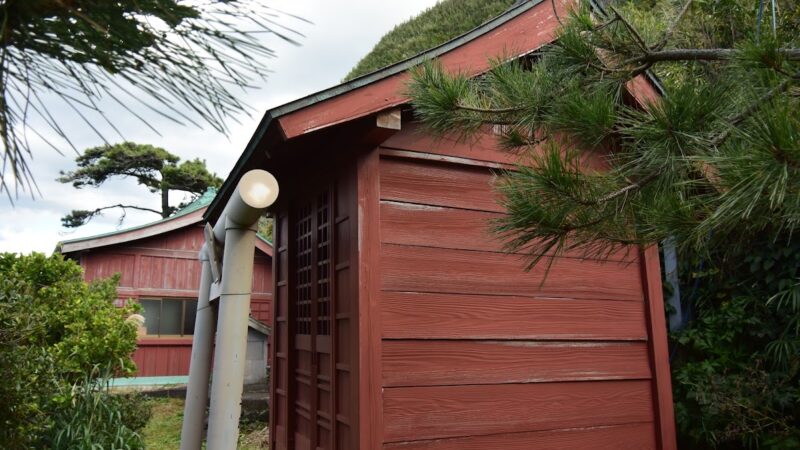
The shrine buildings follow the traditional style of shrine architecture, consisting of a main hall and a worship hall. The layout takes advantage of the unique topography of the volcanic island, allowing visitors to enjoy the beautiful natural scenery of Miyakejima Island from the grounds.
Harmony with the Natural Environment
Miyakejima Island is a volcanic island with a unique natural environment. The grounds of Kōjinja Shrine are surrounded by the island’s unique vegetation, giving it a different feel from shrines in urban areas.
The island’s evergreen broadleaf forests and volcanic terrain give the shrine a mystical atmosphere, allowing visitors to experience a sacred space integrated with nature. The sounds of birdsong and sea breeze echo through the shrine grounds, maintaining a tranquil environment unique to a remote island.
Annual Events and Rituals
Grand Festival
The annual Grand Festival is held at Kōjinja Shrine every year. This festival is one of the island’s important annual events, and many islanders participate. Traditional rituals, such as the procession of the portable shrine and the dedication of Kagura (sacred dance), are passed down, making it a valuable opportunity to transmit the island’s culture to the next generation.
Other Rituals
Various rituals are held throughout the year, including the New Year’s Day Festival, the Setsubun Festival, and the Autumn Niiname-sai (harvest festival). These rituals are deeply intertwined with the island’s agricultural and fishing cycles and are an important element in shaping the rhythm of life for the islanders.
How to Worship and Manners
Basic Worship Etiquette
When visiting Kōjinja Shrine, please follow general shrine worship manners.
- Bow before passing through the torii gate.
- Cleanse your hands and mouth at the water basin.
- Bow twice, clap twice, and bow once in front of the main hall.
- After praying, bow towards the shrine as you leave the torii gate.
As this is a shrine on a remote island, please remember to be considerate of the island’s natural environment. Always take your trash with you and cherish the plants and animals on the shrine grounds.
About Goshuin (Shrine Seals)
Regarding the issuance of Goshuin at Kōjinja Shrine, we recommend checking with the Miyake Village Tourism Association or shrine officials in advance. Due to the nature of being a remote island, there may not be a resident Shinto priest, so checking before your visit is important.
Access and Tourist Information for Miyakejima Island
How to Access Miyakejima Island
You can access Miyakejima Island, where Kōjinja Shrine is located, in the following ways:
By Plane
Approximately 50 minutes by Shin Chuo Airlines small aircraft from Chofu Airport. There are 1-3 flights per day. Cancellations due to weather are possible, so prior confirmation is essential.
By Ferry
From Takeshiba Pier in Tokyo, take a large passenger ship operated by Tokai Kisen (overnight service) for approximately 6 hours and 30 minutes. During the summer, a high-speed jet ferry also operates, arriving in about 3 hours.
Getting Around the Island
After arriving at Miyakejima, you can reach the Igaya area where the Kōjinja Shrine is located by rental car, rental bicycle, or local bus. While a car is convenient for sightseeing around the island, exploring at a leisurely pace by bicycle is also appealing.
Precautions When Visiting
Miyakejima is an active volcano, and volcanic gases may be emitted. Before visiting, check volcanic information and take necessary safety precautions, such as carrying a gas mask. Also, as it is an isolated island, accommodation and restaurants are limited, so advance reservations and planning are important.
Nearby Attractions
Other Shrines on Miyakejima
Besides the Kōjinja Shrine, Miyakejima is home to several other historical shrines, including the Tomiga Shrine and Miyakejima Shrine. Each shrine on the island, from those dedicated to Kotoshironushi-no-kami to the tutelary deities of each village, has its own unique history and characteristics. If you have time, a tour of the island’s shrines is highly recommended.
Nature and Tourist Spots of Miyakejima Island
Miyakejima Island is blessed with abundant nature. There are many sights to see, including Oji Pond, Izu Cape, and the primeval forest around Shiitori Shrine. It’s also known as a mecca for birdwatching, attracting many bird enthusiasts.
It’s also a popular diving spot, offering clear waters and a rich marine ecosystem. Combining a visit to Kōjinja Shrine with a trip to fully enjoy the island’s nature is a great idea.
Comparison with Shikinaisha Shrines in Tokyo
Besides Kōjinja Shrine, there are several other Shikinaisha shrines in Tokyo. Famous Shikinaisha shrines from Musashi Province include Ōkunitama Shrine (Fuchu City) and Ono Shrine (Tama City). In the Izu Islands, in addition to Kōjinja Shrine, there are numerous Shikinaisha shrines, indicating that this region has been considered important since ancient times.
Compared to the Shikinaisha shrines in urban areas, the Kōjinja Shrine, due to its remote island location, can be said to retain a more primitive form of faith. It is a valuable example of ancient beliefs being preserved in a pure form in an environment less affected by urbanization.
Cultural Value of Kōjinja Shrine
Preservation of Regional Culture
Kōjinja Shrine embodies the history and culture of Miyakejima Island. The lives, beliefs, and values of the islanders have been shaped around this shrine. Despite facing various difficulties such as depopulation and volcanic disasters, the islanders’ continued protection of the shrine is a fine example of how regional culture is preserved in Japan.
Characteristics as a Remote Island Shrine
Remote island shrines have developed uniquely, different from those on the mainland. Kōjinja Shrine also possesses characteristics unique to remote islands, such as maritime worship, coexistence with volcanoes, and the maintenance of faith within a limited community.
Studying such remote island shrines is important for understanding the diversity of Japanese religious culture. Kōjinja Shrine is a valuable academic site, and further research and preservation are expected in the future.
Message to Visitors
A visit to Kōjinja Shrine is not merely sightseeing; it is a valuable experience of touching upon ancient Japanese beliefs. While the 180km distance from Tokyo is not short, the sense of accomplishment upon arrival is all the greater.
By immersing yourself in the magnificent natural beauty of Miyakejima Island and the ancient site of worship, you can escape the hustle and bustle of modern life and have time to reflect on yourself. The warm hospitality of the islanders and the tranquil atmosphere of the shrine will leave a deep impression on the hearts of visitors.
Future Prospects and Challenges
Preservation and Succession
The biggest challenge facing Kōjinja Shrine is the decline in parishioners due to depopulation. The population decline on Miyakejima Island is affecting the maintenance of the shrine and the continuation of festivals. However, former islanders who have moved off the island, and people with roots on Miyakejima Island, continue to support the shrine, and new forms of faith transmission are being explored.
Potential as a Tourism Resource
On the other hand, Kōjinja Shrine also has the potential to be an important tourism resource for Miyakejima Island. The shrine possesses many attractions, including its historical value as a Shikinaisha (a shrine listed in the Engishiki), its unique location on an isolated island, and its rich natural environment.
Achieving both sustainable tourism development and the maintenance of its dignity as a place of worship will be a crucial challenge going forward. With appropriate information dissemination and the development of a proper reception system, the Kōjinja Shrine has the potential to become an even more widely known cultural symbol of Miyakejima.
Summary
The Kōjinja Shrine is a Shikinaisha located on Miyakejima Island in Tokyo, a venerable shrine with a history of over 1000 years. It enshrines Igamuhime-no-Mikoto and conveys a faith deeply intertwined with the mythology of Miyakejima.
Due to its isolated island location, access is not easy, but this is precisely why the pure form of faith that has been preserved, and its harmony with the island’s rich nature, offer a special experience well worth visiting.
While within Tokyo, Miyakejima Island offers a completely different pace of life compared to the city center. Through a visit to the Kōjinja Shrine, you can experience ancient Japanese beliefs, island culture, and the strength of the people’s faith. If you ever have the opportunity to visit Miyakejima Island, be sure to stop by the Kōjinja Shrine and experience its history and culture firsthand.