Complete Guide to Shiitori Shrine (Miyakejima, Tokyo) | The History of the Torii Gate Buried in Mudflow and the Shikinaisha Shrine
Shiitori Shrine, located in Kamitsuki, Miyake Village, Tokyo, is a valuable shrine that conveys the memory of a natural disaster, with its torii gate still standing, buried in mudflow from the 2000 eruption of Miyakejima. Of the 2,861 Shikinaisha shrines nationwide, 12 exist on Miyakejima, and Shiitori Shrine is one of them, having long been revered by the islanders.
This article comprehensively introduces information you should know before visiting, including the historical background of Shiitori Shrine, the damage caused by the 2000 eruption, the current state of the shrine grounds, and access methods.
Basic Information on Shiitori Shrine
Location: 2420-1 Kamitsuki, Miyake Village, Miyakejima, Tokyo
Deity Enshrined: Shiritagi-no-mikoto
Shrine Rank: Shikinaisha (a candidate for Shiritagi Shrine or Shiritaogi Shrine listed in the Engishiki Jinmyocho), Former Unranked Shrine
Nearest Bus Stop: Shiitori Shrine Mae (approx. 1 minute walk)
Location: Located in the Kamitsuki area, north of Miyakejima Airport
Shiitori Shrine is a particularly important shrine among the 12 Shikinaisha on Miyakejima, and has long been revered by local residents. Currently, it is attracting attention as a geospot due to the disaster remains from the 2000 eruption.
History and Origins of Shiitori Shrine
Status as a Shikinaisha Shrine
Shiitori Shrine is considered a candidate for the “Shiritaigi Shrine” or “Shiritaigi Shrine” listed in the “Engishiki Jinmyocho,” a list of shrines compiled during the Heian period. A Shikinaisha is a shrine listed in the Engishiki, compiled in 927 AD, indicating that it was a highly prestigious shrine recognized by the imperial court at that time.
Of the approximately 2,861 Shikinaisha shrines nationwide, 12 are concentrated on Miyakejima Island in the Izu Islands, a remarkably high density relative to the island’s area. This suggests that Miyakejima was an important center of religious activity in ancient times.
About the Enshrined Deity, Shiritaigi-no-Mikoto
Shiritaigi-no-Mikoto, the enshrined deity of Shiitori Shrine, is an important god appearing in the pioneering myths of Miyakejima Island. According to tradition, Shirita-no-Mikoto is the eighth child of Sakitama-hime-no-Mikoto and has been revered as a god who protects the development of Miyakejima Island and the lives of its inhabitants.
In the mythological system of Miyakejima Island, the children of Sakitama-hime-no-Mikoto are enshrined in various locations throughout the island, creating a structure that protects the entire island. Shiitori Shrine, in particular, has functioned as a shrine protecting the important settlement of the Kamitsuki district.
Founding Period and Historical Changes
The exact founding date of Shiitori Shrine is not clearly documented, but since it is listed as a Shikinaisha (a shrine listed in the Engishiki) in the Engishiki, it is thought to have existed at least by the early Heian period (around the 9th century). In fact, it has also been suggested that it may have been founded even earlier, during the late Kofun period or Asuka period.
Edo period records indicate that Shiitori Shrine was the guardian shrine of Kamitsuki village and the center of the villagers’ faith, with various festivals held throughout the year. Although it was classified as an unranked shrine under the Meiji era’s shrine ranking system, its historical value as a Shikinaisha (a shrine listed in the Engishiki, an ancient Japanese legal code) has been highly regarded in the region.
The Reality of the 2000 Eruption and Mudflow Damage
Overview of the 2000 Miyakejima Eruption
The volcanic activity on Miyakejima, which began in June 2000, left a significant scar on the island’s history. In July, Mount Oyama erupted, and a large amount of volcanic ash fell mainly on the northeastern part of the island. Thick deposits of volcanic ash were particularly observed around the Kanzaki area.
Due to the eruption, all island residents were forced to evacuate the island, resulting in a long period of evacuation lasting approximately four and a half years. During this time, the uninhabited island continued to emit volcanic gases, and dangerous conditions persisted where volcanic mudflows occurred with every rainfall.
Damage to Shiitori Shrine Due to Volcanic Mudflow
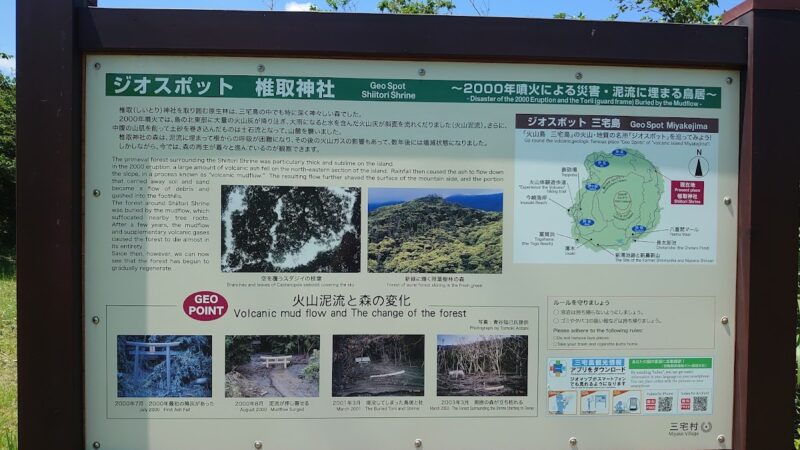
The massive amount of volcanic ash that accumulated during the 2000 eruption caused “volcanic mudflows” that flowed down the slopes with each rainfall. The Kanzaki district, where Shiitori Shrine is located, was one of the areas directly hit by these mudflows.
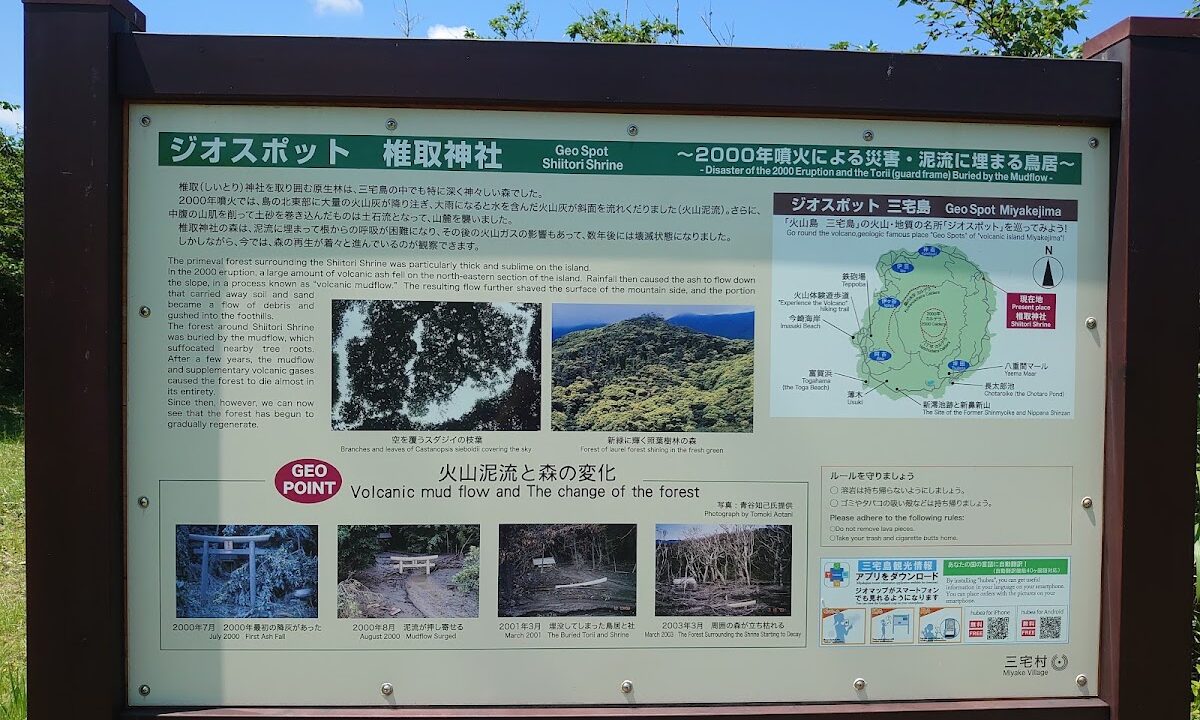
The primeval forest surrounding Shiitori Shrine was known as one of the deepest and most sacred forests on Miyakejima Island, but many trees were felled by the mudflow, and the shrine grounds were buried under several meters of mud. The shrine building and torii gate were completely swallowed by the mudflow, and the former torii gate was buried underground, with only the top horizontal beam remaining.
Details of the Damage
The scale of the damage caused by the mudflow was unimaginable.
- Old Shrine Building: Buried with only a portion of the roof exposed above the mudflow.
- Old Torii Gate: Buried with only the top beam (approximately 3-4 meters high) visible above the ground.
- Shrine Grounds: Mudflow accumulated to a height of approximately 2-3 meters.
- Surrounding Virgin Forest: Numerous trees were toppled or buried by the mudflow.
The buried top beam of the torii gate, which still remains today, is preserved as vivid evidence of the sheer scale of the mudflow at the time.
Current Appearance of Shiitori Shrine
Reconstructed Shrine Building and New Torii Gate
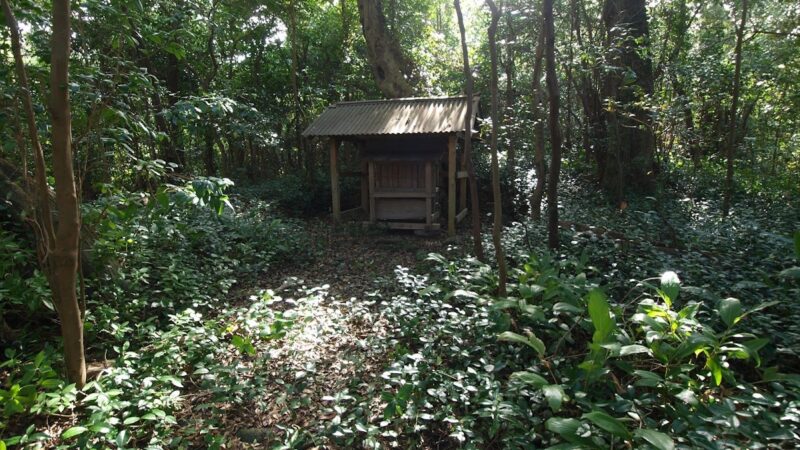
Since 2005 (Heisei 17), when island residents began returning to the island, the reconstruction of Shiitori Shrine has progressed. A new shrine grounds were developed to the right (east) of the old grounds buried by the mudflow, and the shrine building and torii gate were reconstructed.
The new shrine building follows the traditional style of shrine architecture while also incorporating a disaster-resistant structure. The vibrant vermilion torii gate stands out strikingly amidst the lush natural surroundings of Miyakejima Island, serving as a symbol of reconstruction.
Buried Torii Gate Remaining as a Disaster Relic
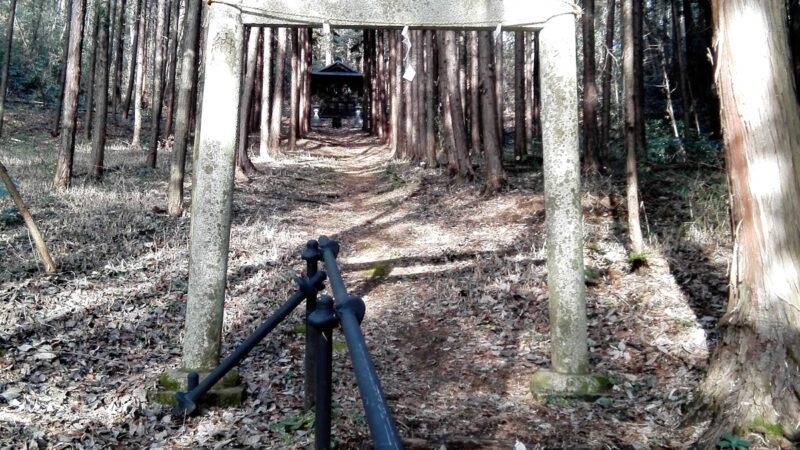
The most distinctive feature of Shiitori Shrine is the preservation of its old torii gate, buried in a mudflow, as a disaster relic. Buried except for its lintel, the gate serves as a valuable visual reminder of the ferocity of the 2000-year-old eruption.
A little further into the new shrine grounds, you can see the lintel of the torii gate protruding from the mudflow deposits. The unusual sight of the top of the torii gate, originally several meters above ground, now near the surface, truly conveys the threat of natural disasters.
The old shrine building is also preserved with part of its roof visible, and these remains are positioned as important geospots in Miyakejima Island’s geopark concept.
Highlights of the Shrine Grounds
New Shrine Building: The shrine building is kept clean, and rituals continue to be performed by local residents. The typical pilgrimage route involves offering prayers at the new shrine building before viewing the disaster remains.
Buried Torii Gate: The lintel protruding from the mudflow deposition surface is a popular photo spot. The contrast between the remaining torii gate and the blue sky and greenery is particularly striking on sunny days.
Roof of the Old Shrine: The roof of the old shrine building, emerging from the mudflow, serves as an important landmark indicating the former location of the shrine grounds.
Explanatory Signboard: Signboards explaining the conditions at the time of the eruption and the mechanism of the mudflow are installed on the shrine grounds, making it a place of high educational value.
Cultural and Academic Value of Shiitori Shrine
Importance as a Geosite
Shiitori Shrine is highly regarded in the fields of geology and volcanology as a living teaching material that conveys the reality of volcanic disasters to future generations. Places where the deposition of volcanic mudflows can be directly observed are limited, and the combination of a cultural property like a shrine is considered rare worldwide.
The Miyakejima Geopark concept positions Shiitori Shrine as one of its key geosites, and its use as a disaster prevention education and tourism resource is being promoted. Visits during school trips and disaster prevention training are increasing, and it functions as a place to learn about the relationship between natural disasters and human society.
Position in the Study of Shikinaisha Shrines
From the perspective of shrine history research, Shiitori Shrine is an important research subject. There are multifaceted research themes, including the reality of ancient rituals in the Izu Islands, the relationship between the central government (imperial court) and remote islands, and the belief forms of seafaring peoples.
In particular, regarding the reason why 12 Shikinaisha shrines are concentrated on Miyakejima, various hypotheses have been proposed, such as its role as a key point for maritime traffic in ancient times, its connection to the Kuroshio Current cultural sphere, and its link to volcanic worship. Further research is expected.
Use in Disaster Prevention Education
The disaster remains at Shiitori Shrine are used as a site for disaster prevention education, conveying the horrors of volcanic disasters and the importance of preparedness. It is considered to have high educational value, particularly in the following respects:
- Visual Impact: The buried torii gate conveys the scale of the disaster more effectively than words or numbers can.
- Observation of the Passage of Time: Observation of natural changes after the disaster, such as the recovery of vegetation, is possible.
- Symbol of Reconstruction: The existence of the new shrine building symbolizes recovery from the disaster and the bonds of the community.
- Continued Faith: The ongoing rituals after the disaster demonstrate the importance of cultural inheritance and regional identity.
How to Access Shiitori Shrine
Transportation to Miyakejima Island
To visit Shiitori Shrine, you must first travel to Miyakejima Island.
Airplane: Shin Chuo Airlines operates 1-3 flights daily from Chofu Airport to Miyakejima Airport (approximately 50 minutes). Cancellations due to weather are relatively frequent, so it is recommended to allow ample time in your schedule.
Ship: Tokai Kisen operates large passenger ships from Takeshiba Pier to Miyakejima Island. The overnight ferry takes approximately 6 hours and 30 minutes, while the high-speed jet ferry (mainly in summer) takes about 3 hours. Ferry service is generally reliable.
Access within the Island
Local Bus: Miyake Village buses circulate around the island. Get off at the “Shiitori Shrine” bus stop; the shrine is about a 1-minute walk away. Bus service is limited, so it’s important to check the timetable in advance.
Rental Car/Motorcycle: Rental car and motorbike shops are available near Miyakejima Airport and the various ports, allowing for independent travel. The island’s main roads are well-maintained, and parking is available around Shiitori Shrine.
Taxis: Taxis operate on the island, but the number is limited, so it’s recommended to book in advance by phone.
Walking/Cycling: Shiitori Shrine is about 2-3 kilometers from Miyakejima Airport, and is accessible on foot or by bicycle in good weather. However, the island has many hills, so choose a mode of transportation that suits your physical condition.
Precautions and Manners for Visiting Shiitori Shrine
Clothing and Items to Bring When Visiting
Shiitori Shrine is located in a rich natural environment, so the following preparations are recommended:
- Comfortable Walking Shoes: Since some areas of the shrine grounds and surrounding area are unpaved, comfortable walking shoes such as sneakers are suitable.
- Hat and Sunscreen: Sunshine is strong on many days, so sun protection is necessary.
- Drinking Water: Especially in summer, hydration is important to prevent heatstroke.
- Rain Gear: The weather on Miyakejima Island is unpredictable, so a folding umbrella or rain gear is recommended.
Precautions When Visiting Disaster Remains
The buried torii gate and old shrine buildings are valuable disaster remains, so please pay attention to the following points.
- Respecting Restricted Areas: For safety reasons, do not enter areas where entry is prohibited.
- No Touching the Ruins: Do not directly touch or climb on the buried torii gate or the old shrine building.
- Take Your Trash Home: For environmental conservation, please be sure to take your trash home with you.
- Photography Etiquette: Be considerate of other visitors.
Precautions Regarding Volcanic Gas
Volcanic gas (sulfur dioxide) is still being released on Miyakejima Island, and the gas concentration can be high depending on the day.
- Carrying a Gas Mask: It is recommended to always carry a gas mask while on the island (available for rent at accommodations, etc.).
- What to Do If You Feel Unwell: If you experience irritation in your eyes or throat, move upwind immediately.
- Checking Weather Information: Gas concentration changes depending on the wind direction, so pay attention to weather information.
Attractions Around Shiitori Shrine
Other Shikinaisha Shrines on Miyakejima Island
If you visit Shiitori Shrine, we recommend visiting other Shikinaisha shrines on Miyakejima Island as well.
- Toga Shrine: The guardian shrine of Miyakejima Island.
- Sakitamahime-no-Mikoto Shrine: An important shrine dedicated to the ancestral deity of Miyakejima Island’s development.
- Kou Shrine: A shrine dedicated to the guardian deity of the sea.
Visiting these shrines will allow you to gain a deeper understanding of Miyakejima Island’s religious culture and history.
Miyakejima Island Geospots
Besides Shiitori Shrine, Miyakejima Island has many geospots that show traces of volcanic activity.
- Mt. Oyama: An active volcano located in the center of Miyakejima Island (currently closed to climbers)
- Oji Pond: A beautiful pond formed as a crater lake
- Izu Cape: A cape formed by lava flowing into the sea
- Satado Cape: A spot with a magnificent landscape of sea cliffs and lava
Nature and Birdwatching on Miyakejima Island
Miyakejima Island is known as a treasure trove of wild birds, and is particularly popular with birdwatchers as a place to observe rare species, including the Japanese Robin (a wild bird endemic to Miyakejima). If you’re lucky, you can also observe various wild birds in the forests around Shiitori Shrine.
Annual Events and Festivals at Shiitori Shrine
At Shiitori Shrine, traditional local festivals are still being held. However, due to the declining and aging population, the scale of these festivals is shrinking.
The main festival is the annual Grand Festival, held once a year, where local residents gather to perform Shinto rituals. If your visit coincides with a festival, it will be a valuable opportunity to experience Miyakejima’s traditional culture.
Specific festival dates may vary from year to year, so it is recommended to check with the Miyake Village Office or the Miyakejima Tourism Association in advance.
Practical Information for Your Stay on Miyakejima
Accommodation
Miyakejima has accommodations, mainly guesthouses. Reservations can be difficult to obtain during peak seasons (Golden Week, summer holidays, long weekends, etc.), so early booking is recommended. Many accommodations offer meals made with local island ingredients.
Restaurants and Shopping
There are restaurants and shops on the island, but their number is limited. Especially since few establishments are open at night, it is common to eat dinner at your accommodation. There are supermarkets and convenience stores, but the selection is limited compared to the mainland.
Communication Environment
Mobile phone service is available in the main settlements of Miyakejima, but there are areas in mountainous regions and along the coast where there is no signal. Wi-Fi is available at some accommodations, but the connection speed may be slower than on the mainland. ### Medical Facilities
Miyakejima Island has the Miyake Village National Health Insurance Clinic, where you can receive basic medical services. However, if specialized treatment is required, you may need to be transported off the island by helicopter. Therefore, those with pre-existing conditions should prepare in advance by having sufficient medication.
Best Season to Visit Shiitori Shrine
Spring (March-May)
The temperature is mild and pleasant, and it’s a beautiful season with fresh greenery. However, spring often has unstable weather, and there is a risk of cancellations of ferries and flights.
Summer (June-August)
This is the peak season for Miyakejima Island tourism. The number of tourists enjoying swimming and diving increases. While temperatures are high, the sea breeze prevents it from feeling as humid as in mainland cities. It is also typhoon season, so caution is needed regarding the weather.
Autumn (September-November)
After the typhoon season ends, the weather becomes mild again. While the autumn foliage is not as spectacular as on the mainland, the pleasant climate makes it suitable for sightseeing.
Winter (December-February)
This is the quietest season with the fewest tourists. While temperatures are relatively mild, rough seas are frequent, leading to a high rate of ferry cancellations. Accommodation and restaurants may be closed during winter, so prior confirmation is necessary.
Disaster Prevention Lessons from Shiitori Shrine
The disaster remains at Shiitori Shrine are not merely a tourist attraction; they convey important lessons to us.
The Difficulty of Predicting Volcanic Disasters
The 2000 eruption demonstrated the difficulty of predicting volcanic activity. While prior evacuation minimized human casualties, the impact on the lives of island residents forced into long-term evacuation was immense.
Cultural Property Protection and Disaster Countermeasures
Protecting historical buildings like Shiitori Shrine from disasters is a common challenge in cultural property management nationwide. The case of Shiitori Shrine demonstrates the importance of balancing pre-disaster prevention measures with post-disaster record preservation and reconstruction.
The Importance of Local Communities
Through the process of long-term evacuation, return to the island, and reconstruction of the shrine, the bonds of the local community played a significant role. The continuation of religious rites and the maintenance of the shrine continue to function as the core of the local identity.
Summary: The Past and Future Told by Shiitori Shrine
Shiitori Shrine is an extremely unique shrine, possessing both the cultural value of a Shikinaisha (a shrine listed in the Engishiki, an ancient Japanese legal code) with a history of over a thousand years, and the educational value of disaster prevention as a relic of the 2000 eruption.
The lintel of the torii gate, buried in the mudflow, quietly but eloquently tells the story of the threat of natural disaster. At the same time, the reconstructed shrine and the continuing religious rites demonstrate the human strength to overcome difficulties and the significance of preserving and passing on culture.
If you have the opportunity to visit Miyakejima, please be sure to visit Shiitori Shrine. There, you will find an irreplaceable story where history and nature, disaster and reconstruction, and faith and community bonds intersect.
Taking photographs of Shiitori Shrine and reflecting on its history holds more meaning than mere sightseeing. It can serve as a catalyst for considering disaster prevention and cultural preservation in our own communities, prompting us to consider what we should leave for future generations.
Shiitori Shrine lies on Miyakejima Island, 180 kilometers south of Tokyo. Please listen to the profound message this small shrine conveys.