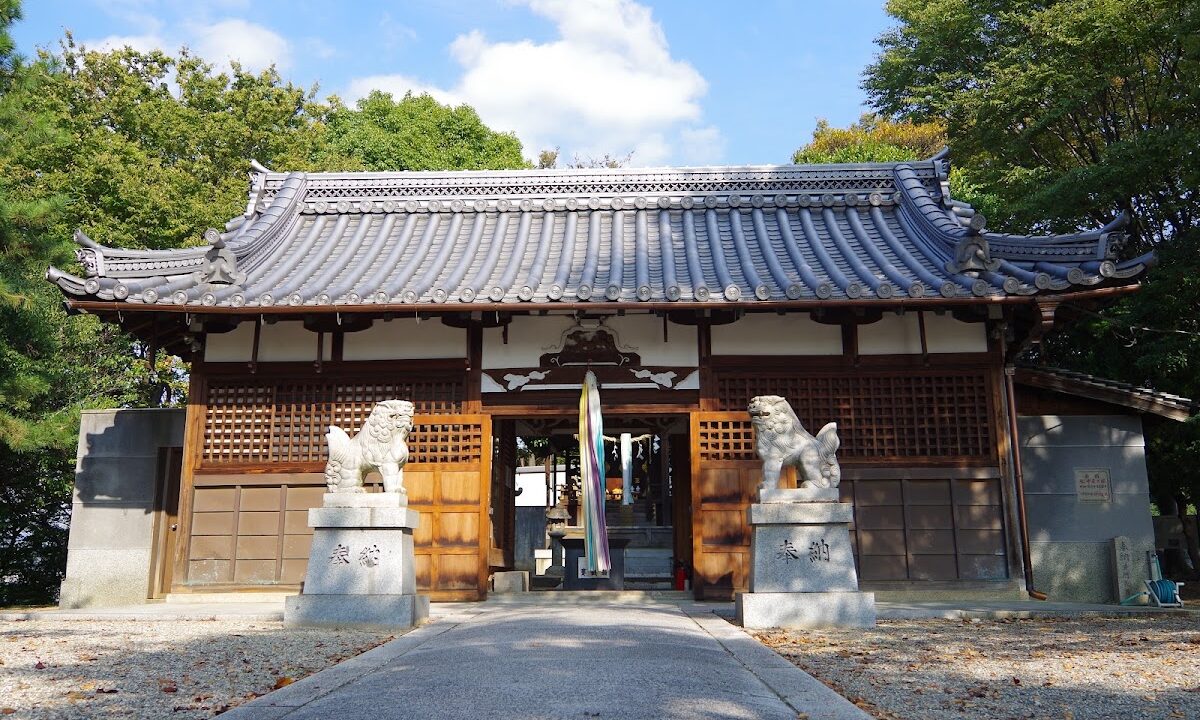
Complete Guide to Komuro Hachiman Shrine (Fujiidera City, Osaka Prefecture) | A Historic Hachiman Shrine Adjacent to Emperor Ojin’s Mausoleum
Komuro Hachiman Shrine is a historic shrine located in Komuro, Fujiidera City, Osaka Prefecture. Situated west of the Nakatsuyama Kofun (Empress’s Mausoleum of Emperor Ojin), which forms part of the World Heritage Site “Mozu-Furuichi Kofun Group,” it has been carefully preserved by local people as a sacred place deeply connected to ancient history.
This article comprehensively introduces information you should know before visiting Komuro Hachiman Shrine, including its historical background, enshrined deities, highlights within the grounds, access methods, and nearby tourist attractions.
Basic Information on Komuro Hachiman Shrine
Location: 2-1-15 Komuro, Fujiidera City, Osaka Prefecture 583-0013
Main Deity: Hachiman Okami (Emperor Ojin)
Annual Festival Date: October 9th
Management: Domyoji Tenmangu Shrine (Tel: 072-953-2525)
Former Shrine Rank: Village Shrine
Nearest Station: Approximately 10 minutes on foot from Kintetsu Minami-Osaka Line “Hajinosato” Station (approximately 700m southwest)
Komuro Hachiman Shrine is a shrine without a resident priest and is managed by Domyoji Tenmangu Shrine in Fujiidera City. For inquiries and detailed information regarding worship, please contact Domyoji Tenmangu Shrine.
History and Origins of Komuro Hachiman Shrine
Circumstances and Date of Founding
The exact founding date of Komuro Hachiman Shrine is unknown, but according to records of the Osaka Prefectural Shrine Association and local traditions, it is presumed to have been established in the early Edo period by inviting a divided spirit from Konda Hachiman Shrine.
Konda Hachiman Shrine is a powerful Hachiman shrine in Kawachi Province, adjacent to the tomb of Emperor Ojin (Konda Gobyoyama Kofun), and enshrines Emperor Ojin as its principal deity. It is believed that Komuro Hachiman Shrine, by receiving a divided spirit from Konda Hachiman Shrine, has played a role in protecting the tomb of Empress Nakatsuhime, the consort of Emperor Ojin.
Deep Connection with the Tomb of Empress Ojin
The location of Komuro Hachiman Shrine is a special one, situated at the western foot of the Nakatsuyama Kofun (Nakatsuhime Nakatsuyama Mausoleum). The Nakatsuyama Kofun is believed to be the tomb of Empress Nakatsuhime-no-Mikoto, the consort of Emperor Ojin, the 15th emperor of Japan. It is a keyhole-shaped burial mound approximately 290 meters long, occupying an important position within the Furuichi Kofun Group.
Emperor Ojin’s tomb (Homuda Gobyoyama Kofun) is also located nearby, and Komuro Hachiman Shrine is situated almost flanked by the tombs of Emperor Ojin and his empress. Therefore, it is believed that Komuro Hachiman Shrine served not only as a local tutelary shrine but also as a guardian deity protecting the imperial tombs.
From the Edo Period to the Present
Throughout the Edo period, Komuro Hachiman Shrine was revered by local people as the tutelary shrine of the Komuro region. During the Meiji era’s shrine system reforms, it was designated a village shrine and functioned as a central religious facility in the community.
Even today, it is carefully maintained by local people, and annual events, including the autumn festival, are held. Although there is no resident priest, the shrine is properly maintained under the management of Domyoji Tenmangu Shrine.
Deities and Divine Virtues
Hachiman Daishin (Emperor Ojin)
The main deity enshrined at Komuro Hachiman Shrine is Hachiman Daishin. Hachiman Daishin generally refers to Emperor Ojin and is widely worshipped as the god of military fortune and victory. He is also believed to bestow divine virtues such as national protection, industrial development, and traffic safety.
Emperor Ojin is considered the 15th emperor and one of the oldest emperors whose existence is considered highly likely. He is believed to have contributed to the introduction of continental culture and the strengthening of national power, and has been revered as a symbol of the developmental period of ancient Japan.
The Spread of Hachiman Faith
Hachiman faith is widespread throughout Japan, with approximately 44,000 Hachiman shrines and Hachiman-gu shrines nationwide, making it the most common shrine name. Komuro Hachiman Shrine also plays a part in this vast network of Hachiman faith. In particular, Kawachi Province (present-day eastern Osaka Prefecture) has been considered one of the important sacred sites of Hachiman worship due to the location of Emperor Ojin’s tomb. Within the Hachiman faith of Kawachi, centered around Hōda Hachiman Shrine, Komuro Hachiman Shrine has functioned as a place of worship deeply rooted in the community.
Highlights of the Shrine Grounds
Main Hall and Worship Hall
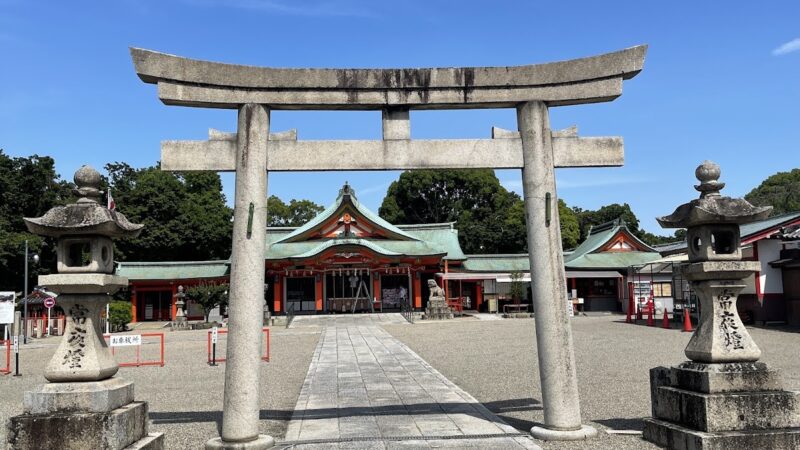
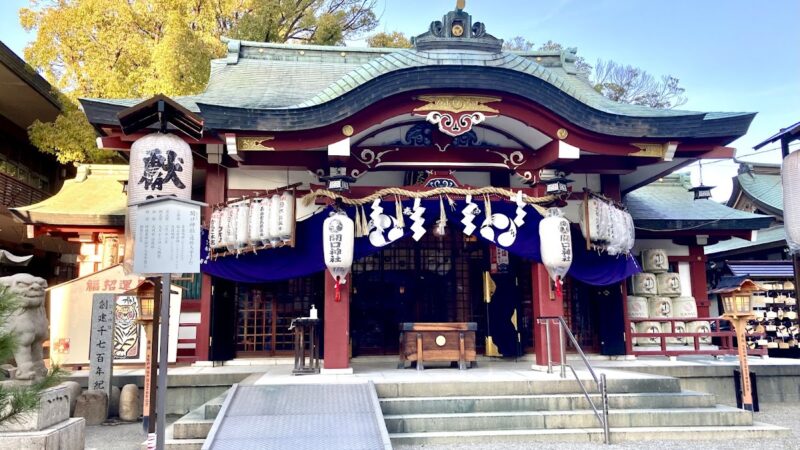
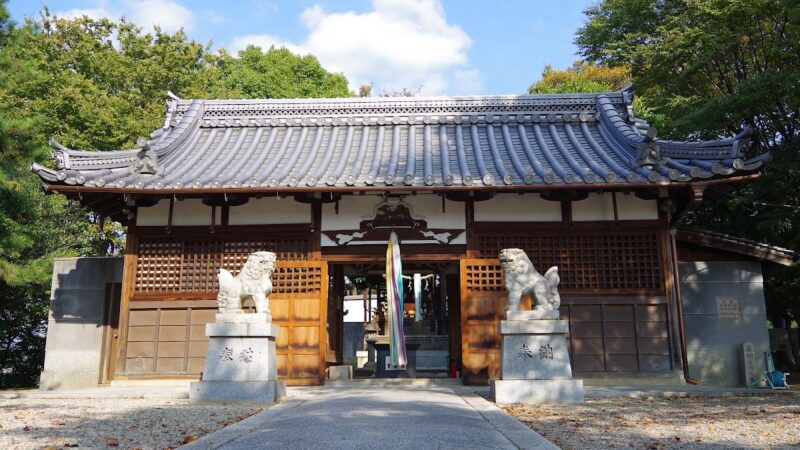
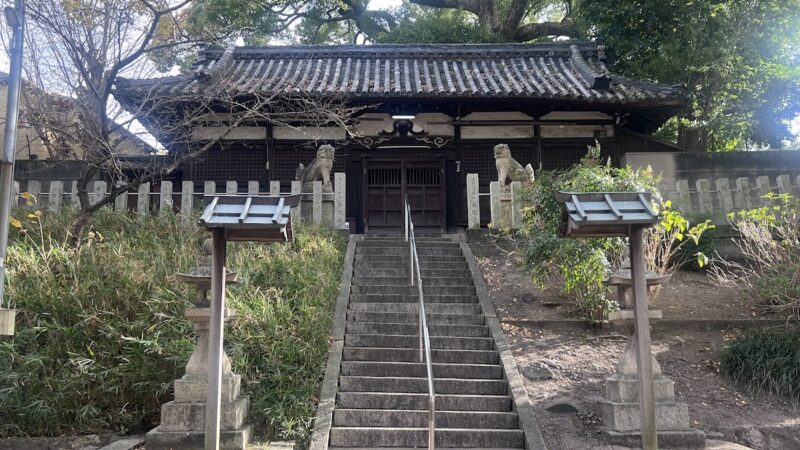
Komuro Hachiman Shrine is a shrine with a main hall and a worship hall. Although small in scale, it possesses the style of traditional shrine architecture and is a valuable cultural asset that conveys the history of the region to the present day.
The main hall is the most sacred building where the deity is enshrined, and the worship hall is where worshippers offer their prayers. Both are properly maintained, and visitors can find peace and tranquility in the peaceful atmosphere.
Atmosphere of the Shrine Grounds
Despite being located in a residential area, the grounds of Komuro Hachiman Shrine maintain a quiet and peaceful atmosphere. Trees are planted on the grounds, and it is especially known as a cherry blossom viewing spot in spring.
This shrine retains its simple, unspoiled charm, a place regularly visited by locals for worship, untouched by commercialization. Therefore, it’s especially recommended for those seeking a quiet visit or a glimpse into local history.
Seasonal Attractions
Spring (March-May): The cherry blossoms in the shrine grounds bloom, making it a popular spot for cherry blossom viewing among locals. It can be enjoyed in conjunction with the cherry blossoms around the Nakatsuyama Kofun (ancient burial mound).
Summer (June-August): Enjoy a cool and refreshing atmosphere within the lush green grounds.
Autumn (September-November): The annual festival is held on October 9th. It’s also the season for autumn foliage, making it ideal for a visit in conjunction with a stroll through the burial mounds.
Winter (December-February): A tranquil atmosphere allows for New Year’s prayers and prayers for protection against misfortune.
Access and Surrounding Area Information
Access by Train
Using the Kintetsu Minami-Osaka Line:
- Get off at “Hajinosato” Station and walk southwest for approximately 10 minutes (approx. 700m).
- Get off at “Domyoji” Station and walk for approximately 15 minutes.
- Get off at “Furuichi” Station and walk for approximately 15 minutes.
Hajinosato Station is the closest station, but it is also within walking distance from Domyoji Station and Furuichi Station. It can also be visited as part of a walking route around the Furuichi Kofun Cluster.
Access by Car
Access from Major Roads:
- Approximately 10 minutes from the Nishi-Meihan Expressway “Fujiidera IC”.
- From National Route 170 (Outer Ring Road) towards Fujiidera city center.
Regarding parking, there may not be a dedicated parking lot for the shrine, so we recommend using nearby coin-operated parking lots or public transportation.
Nearby Parking Information
There are coin-operated parking lots near Fujidera City Hall and Domyoji Tenmangu Shrine. If you are visiting in conjunction with a tour of the Furuichi Kofun Group, it is recommended to use a parking lot near the main burial mounds and walk the rest of the way.
Nearby Tourist Attractions
Nakatsuyama Kofun (Nakatsuhime-no-Mikoto Nakatsuyama Mausoleum)
Located right next to Komuro Hachiman Shrine, this is a keyhole-shaped burial mound approximately 290 meters long. It is one of the constituent assets of the World Heritage Site “Mozu-Furuichi Kofun Group” and is managed by the Imperial Household Agency as the mausoleum of the Empress of Emperor Ojin. You can stroll around the burial mound and experience the magnificent scale of ancient times.
Emperor Ojin’s Mausoleum (Homuda Gobyoyama Kofun)
Located approximately 1 km northeast of Nakatsuyama Kofun, this is a massive keyhole-shaped burial mound approximately 425 meters long. It boasts the second largest scale in Japan and is considered the mausoleum of Emperor Ojin. The magnificent scenery, including the surrounding moat, is breathtaking.
Konda Hachimangu Shrine
This historic shrine is adjacent to the tomb of Emperor Ojin and is the main shrine of Komuro Hachiman Shrine. It is said to have been founded during the reign of Emperor Kinmei (6th century) and is the center of Hachiman worship in Kawachi Province. It boasts a magnificent shrine building and treasure hall, making it well worth a visit.
Domyoji Tenmangu Shrine
This shrine manages Komuro Hachiman Shrine and is a historic Tenmangu shrine dedicated to Sugawara no Michizane. It is also known as a famous spot for plum blossoms, and visitors can enjoy the beautiful plum grove from February to March. It also houses valuable cultural assets, including the national treasure, relics of Sugawara no Michizane.
Fujidera City Kofun Cluster Walking Route
The Furuichi Kofun Cluster area, spanning Fujidera City and Habikino City, is dotted with various sizes of ancient burial mounds. The recommended walking route is as follows:
- Start at Kintetsu “Hajinosato” Station
- Visit Komuro Hachiman Shrine
- Visit Nakatsuyama Kofun (ancient burial mound)
- Visit Emperor Ojin’s tomb
- Visit Konda Hachiman Shrine
- Finish at Kintetsu “Furuichi” Station
The estimated walking time is approximately 2-3 hours. This is an ideal walking course for experiencing the romance of history.
Manners and Precautions for Visiting a Shrine
Basic Worship Etiquette
- Bow before passing through the torii gate: This is a courtesy before entering the sacred area.
- Walk along the edge of the path: The center is considered the path of the gods.
- Purify yourself at the water basin: Purify your left hand, right hand, and mouth in that order.
- Etiquette in front of the main hall: Two bows, two claps, and one bow is the basic procedure.
Photography
Photography is generally permitted within the shrine grounds, but please refrain from taking pictures inside the main hall or in sacred areas. Also, please be considerate of other worshippers.
Visiting Hours
While Komuro Hachiman Shrine is generally open for worship throughout the day, it is best to avoid visiting early in the morning or after sunset out of consideration for local residents. Visiting during daylight hours is recommended.
Historical Value of Komuro Hachiman Shrine and the Furuichi Kofun Group
Relationship to World Heritage Site
In July 2019, the “Mozu-Furuichi Kofun Group” was registered as a UNESCO World Cultural Heritage site. While Komuro Hachiman Shrine is not a component of the World Heritage site itself, it is adjacent to the Nakatsuyama Kofun and deeply intertwined with the history of the kofun group.
The landscape, where a massive kofun group from the Kofun period (4th-6th centuries) coexists with a shrine founded during the Edo period, is a valuable example demonstrating the multi-layered nature of Japanese history.
Role in Preserving Local History
Komuro Hachiman Shrine has supported the identity of local people as the tutelary shrine of the region. Although it is a small shrine without a resident priest, it continues to function as a place that fosters community bonds through activities such as cleaning by local residents and the maintenance of festivals.
The existence of such a community-rooted shrine has a different value than large, tourist-oriented shrines. Visitors can experience the reality of local life, culture, and beliefs.
History and Culture of the Komuro Region
Origin of the Place Name “Komuro”
The place name “Komuro” suggests that this region was an important place from ancient times. “Muro” in ancient times sometimes meant a special facility or warehouse, suggesting the possibility of facilities related to the management of burial mounds or rituals.
Historical Importance of Kawachi Province
Ancient Kawachi Province was an important region with deep ties to the Yamato court. It was a gateway for the transmission of culture and technology from the continent, and also one of the political centers where massive burial mounds were constructed.
Fujiidera City, where Komuro Hachiman Shrine is located, is precisely in this historical center, an area where the tombs of Emperor Ojin and his family are concentrated. Visiting the shrine provides an opportunity to consider the power structure and beliefs of ancient Japan.
Annual Events and Festivals
Annual Festival (October 9th)
The most important annual event at Komuro Hachiman Shrine is the annual festival held every year on October 9th. Local parishioners and devotees gather for a Shinto ritual. While not large in scale, it is an important event for preserving local traditions.
Other Events
- Hatsumode (January 1st-3rd): Prayers for the New Year
- Setsubun Festival (around February 3rd): Prayers for warding off evil
- Natsukoshi no Harae (around June 30th): A Shinto ritual to cleanse away the impurities accumulated over the past six months
For specific information regarding the implementation of these events, it is recommended to contact Domyoji Tenmangu Shrine, which manages the shrine.
Visitor Voices and Experiences
Visitors to Komuro Hachiman Shrine have shared the following impressions:
- “It’s a quiet shrine nestled in a residential area, and it brings a sense of peace.”
- “I stopped by while touring the World Heritage Site of ancient burial mounds, and I felt the depth of the region’s history.”
- “I visited during cherry blossom season, and I was deeply moved by the beautiful cherry blossoms in the shrine grounds.”
- “I felt a warmth in my heart, seeing how carefully the local people protect the shrine.”
Because it’s a simple shrine that hasn’t been commercialized for tourism, visitors seem to gain quiet inspiration and discoveries.
Summary: The Charm of Komuro Hachiman Shrine
Komuro Hachiman Shrine is a historic Hachiman shrine located in Fujiidera City, Osaka Prefecture. It is believed to have been founded in the early Edo period by inviting a divided spirit from Konda Hachiman Shrine, and has played a role in protecting the Nakatsuyama Kofun, the tomb of Empress Ojin.
This shrine possesses multifaceted charm, situated adjacent to the World Heritage site “Mozu-Furuichi Kofun Group,” boasting a history of enshrining Hachiman-Okami, and serving as a deeply rooted place of worship in the community. Although it’s a small shrine without a resident priest, this allows visitors to feel the warm faith of the local people and the weight of its long-standing history.
Visiting it in conjunction with a stroll through the Furuichi Kofun Group will allow you to experience both the historical romance of ancient Japan and the continuation of religious practices to this day. Its convenient location, approximately a 10-minute walk from Hajinosato Station on the Kintetsu Minami-Osaka Line, is another attractive feature.
If you want to delve deeper into Osaka’s history and culture, find peace in a quiet shrine, or are visiting the World Heritage site of the kofun group, be sure to visit Komuro Hachiman Shrine. A special space where local history breathes awaits you.