Asukabe Shrine (Habikino City, Osaka Prefecture) Complete Guide | History, Deities, Access, and Highlights Explained in Detail
Asukabe Shrine, located in Asuka, Habikino City, Osaka Prefecture, is a venerable shrine with a long history dating back to ancient times. Listed as a Myojin Taisha (a major shrine) in the Engishiki Jinmyocho (a list of shrines compiled in the Heian period), it was once revered as a particularly prestigious shrine within Kawachi Province. It is believed to have been founded by the Asukabe clan, a clan of immigrant origin descended from the royal family of Baekje, and is a valuable historical legacy that conveys the deep exchange between ancient Japan and the Korean Peninsula.
This article provides a thorough explanation of everything you need to know before visiting Asukabe Shrine, including its detailed history, enshrined deities, highlights within the grounds, access methods, and surrounding attractions.
Basic Information about Asukado Shrine
Location and Contact Information
Location: 1023-6 Asuka, Habikino City, Osaka Prefecture 583-0842
Management: Tsuboi Hachimangu Shrine (Phone number: 072-956-2824)
Former Shrine Rank: Village Shrine
**Shikinaisha (Shrine listed in the Engishiki): Asukado Shrine, Yasushuku District, Kawachi Province, Myojin Taisha (Grand Shrine)
Asukado Shrine is currently under the management of Tsuboi Hachimangu Shrine, and daily rituals and maintenance are carried out by Tsuboi Hachimangu Shrine.
Deity Enshrined
The deity enshrined at Asukado Shrine is said to be Susanoo-no-Mikoto. Susanoo-no-Mikoto is a representative god in Japanese mythology, known as the younger brother of Amaterasu-Omikami, and famous for the legend of slaying the Yamata no Orochi (eight-headed serpent). He is widely worshipped as a god of protection against evil, eradication of disease, and protection of agriculture. However, considering the shrine’s founding history, there is a theory that it originally enshrined King Konki, a member of the Baekje royal family. It has been suggested that the shrine later changed to enshrine Susanoo-no-Mikoto as its principal deity.
History of Asukabe Shrine
Origin of the Shrine and the Asukabe Clan
The founding of Asukabe Shrine is deeply connected to the Asukabe clan, an ancient clan of immigrant origin. The Asukabe clan was a clan descended from the Baekje royal family, and their ancestor is believed to be King Konki.
King Konki was a member of the Baekje royal family in the late 5th century and is recorded in the *Nihon Shoki* (Chronicles of Japan). It is said that he immigrated to Japan during the reign of Emperor Yuryaku and resided in Kawachi Province. It is believed that the Asukabe clan founded the shrine in this area to enshrine King Konki as their ancestral deity.
Engishiki Jinmyocho and Myojin Taisha Shrines
Asukado Shrine is listed in the Engishiki Jinmyocho (927 AD), compiled during the Heian period, as a Myojin Taisha shrine in Yasuku District, Kawachi Province. Myojin Taisha shrines were particularly important to the imperial court and were the subject of national rituals.
The Engishiki Jinmyocho lists approximately 3,000 shrines nationwide, but only about 300 of them were designated as Myojin Taisha. This demonstrates the importance of Asukado Shrine in ancient times.
The Engishiki also mentions “Asukado Shrine, Myojin Taisha, Monthly and Harvest Festivals,” indicating that the imperial court offered offerings (heihaku) during important national rituals such as the monthly festival (tsukinami no matsuri) and the harvest festival (niiname sai).
Changes Since the Middle Ages
Asukado Shrine, which flourished as a prestigious shrine in ancient times, gradually declined from the Middle Ages onward. Like many ancient shrines affected by the wars and social changes of the Sengoku period, Asukado Shrine lost its former power.
During the Edo period, it was protected by the local people as a village shrine, and was also ranked as a village shrine under the Meiji era’s shrine ranking system. Currently, it is under the management of Tsuboi Hachimangu Shrine and is quietly worshipped as the local tutelary deity.
Highlights of Asukado Shrine
Atmosphere of the Shrine Grounds
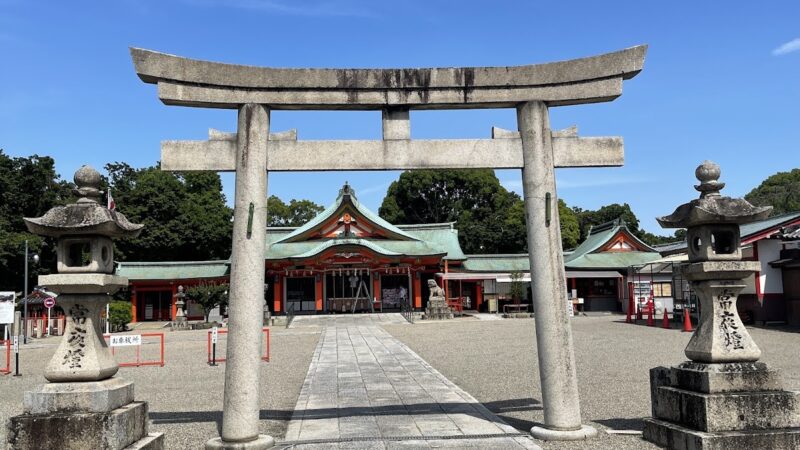
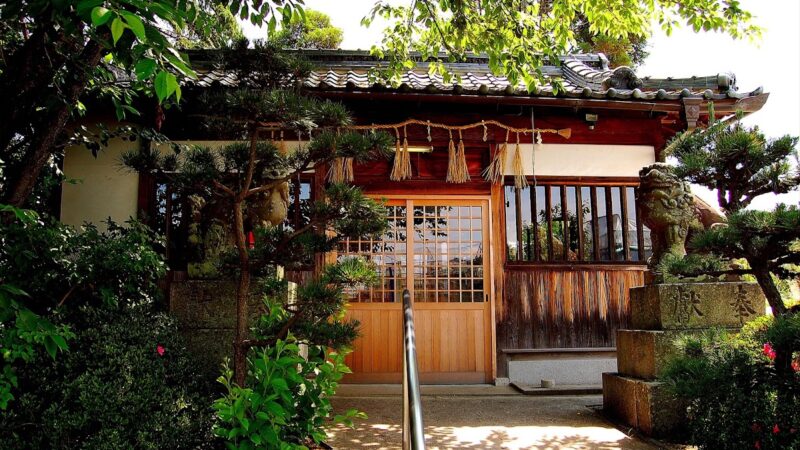
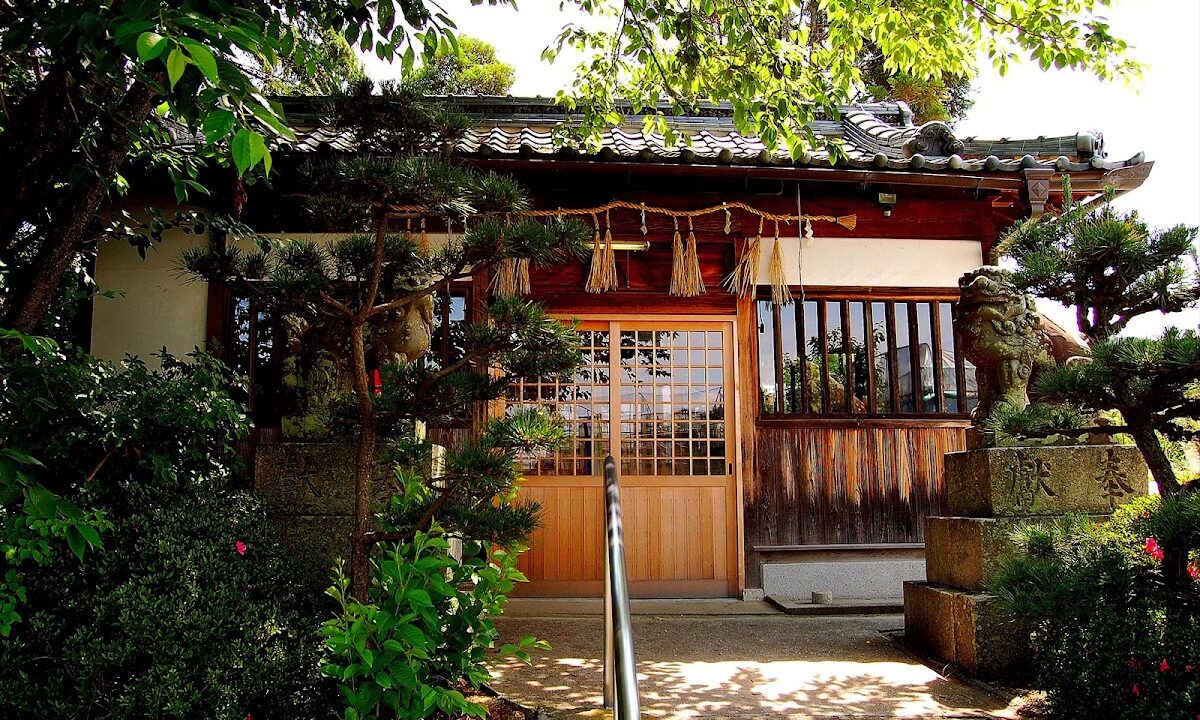
Asukado Shrine is a small shrine quietly nestled in a residential area. While not flashy, it exudes a tranquil atmosphere that evokes its ancient history. The grounds are well-maintained, conveying the sense that it is carefully preserved by the local people.
Shrine Building
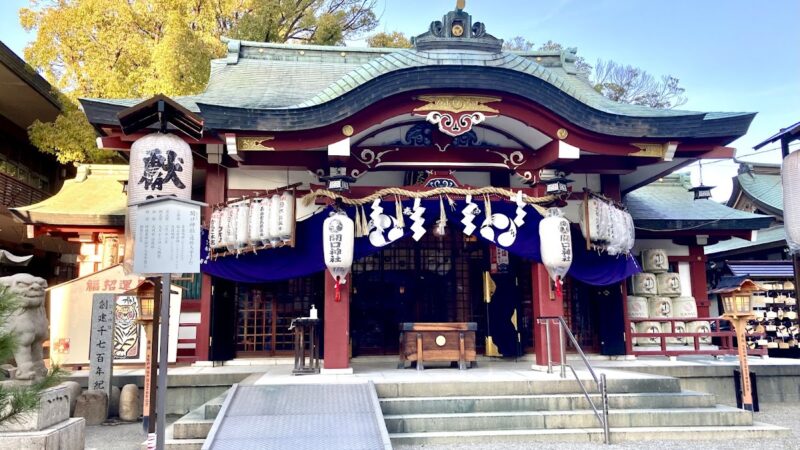
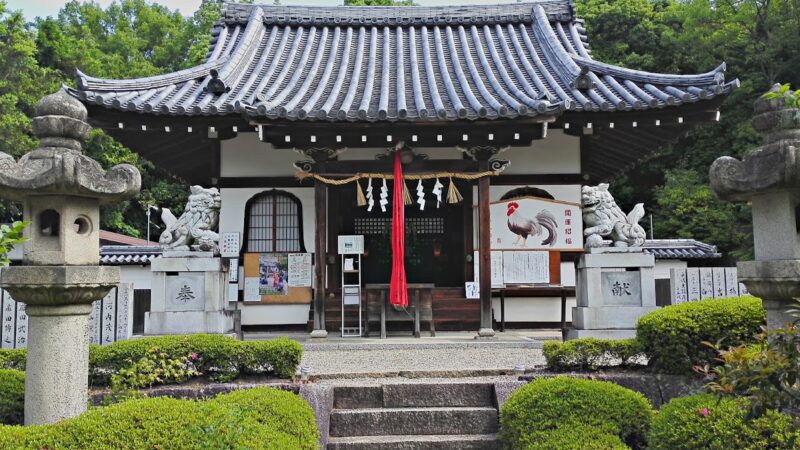
The current shrine building is relatively new, but it possesses a simple yet dignified appearance. The shrine consists of a worship hall and a main sanctuary, with the main sanctuary housing the enshrined deity, Susanoo-no-Mikoto.
Stone Monuments and Historical Records
Within the shrine grounds, there are information boards and stone monuments detailing the history of Asukato Shrine, allowing visitors to learn about the shrine’s history and its relationship with the Asukato clan. This is particularly interesting for those interested in ancient history and immigrant cultures.
Surrounding Historical Environment
The Asuka district of Habikino City, where Asukato Shrine is located, is believed to have been the base of the ancient Asukato clan. Numerous archaeological sites from the Kofun and Asuka periods are scattered throughout the area, allowing visitors to experience the history of ancient Kawachi.
Access to Asukato Shrine
Access by Train
The nearest station to Asukato Shrine is Kintetsu Minami-Osaka Line “Kaminotaishi Station”.
- Approximately 3 minutes on foot from Kintetsu Minami-Osaka Line “Kaminotaishi Station”
The shrine is easily accessible by heading west from Kaminotaishi Station. It’s very close to the station, making access extremely convenient. The express train from Osaka Abenobashi Station to Kaminotaishi Station takes approximately 30 minutes.
Access by Car
- Approximately 10 minutes from Minami-Hanna Expressway “Habikino IC”
- Approximately 15 minutes from Nishi-Meihan Expressway “Fujiidera IC”
Parking: Asukado Shrine does not have its own parking lot. Also, since the area around the shrine is residential, street parking should be avoided. If visiting by car, we recommend using coin-operated parking lots near Kaminotaishi Station.
Location Information
Asukado Shrine is located at 1023-6 Asuka, Habikino City, Osaka Prefecture. It is very close to the Kintetsu Minami-Osaka Line tracks and within walking distance of Kaminotaishi Station. You can easily find Asukado Shrine by searching for “Asukado Shrine” or its address on a map app or car navigation system.
Tourist Spots Around Asukado Shrine
When visiting Asukado Shrine, we recommend also visiting the surrounding historical sites.
Tsuboi Hachimangu Shrine
Tsuboi Hachimangu Shrine, which manages Asukado Shrine, is a shrine said to have been founded by Minamoto no Yorinobu, the ancestor of the Minamoto clan. Known as a place associated with the Minamoto clan, the shrine grounds contain historical sites that tell the history of the Minamoto clan. It is within walking distance of Asukado Shrine.
Furuichi Kofun Group
Habikino City is home to the Furuichi Kofun Group, part of the World Heritage Site “Mozu-Furuichi Kofun Group.” Huge burial mounds, including the tomb of Emperor Ojin (Homuda Gobyoyama Kofun), are scattered throughout the area, allowing you to experience the power and culture of ancient Japan.
Chikatsu Asuka Museum
The Osaka Prefectural Chikatsu Asuka Museum is a museum that exhibits archaeological materials, mainly from the Kofun period. You can learn in depth about the Asukado clan and the history of ancient Kawachi. It’s about a 15-minute drive from Asukado Shrine.
Eifuku-ji Temple (Kami-no-Taishi)
Eifuku-ji Temple, believed to be the burial place of Prince Shotoku, is within walking distance of Kami-no-Taishi Station. It is a famous temple that has attracted many worshippers since ancient times as a center of Prince Shotoku worship.
Asukado Shrine and Baekje Culture
Immigrant Clans and Ancient Japan
Understanding the history of Asukado Shrine is essential, as it involves the existence of immigrant clans. Many people migrated to ancient Japan from the Korean Peninsula, bringing advanced technology and culture. The Asukado clan was one of them, a noble clan descended from the Baekje royal family.
The Relationship Between Kawachi Province and Baekje
Kawachi Province (present-day eastern Osaka Prefecture) was a region where many immigrant clans resided in ancient times. In particular, there was a concentration of clans of Baekje origin in this area. Besides the Asukato clan, other well-known clans include the Nishibun and Fune clans. These clans served the imperial court and played important roles in politics, culture, and technology.
The Legend of King Konji
King Konji, considered the ancestor of the Asukato clan, appears in the section on Emperor Yūryaku in the *Nihon Shoki* (Chronicles of Japan). He is recorded as the younger brother of King Munju of Baekje and as having stayed in Japan as a hostage. It is believed that descendants of King Konji adopted the name Asukato and settled in this area.
Points to Note When Visiting Asukato Shrine
Etiquette for Visiting Shrine
When visiting Asukato Shrine, follow the general etiquette for visiting shrines.
- Bow before passing through the torii gate.
- Cleanse your hands and mouth at the purification fountain (this step can be omitted if there is no purification fountain).
- Bow twice, clap twice, and bow once in front of the main hall.
- Stroll around the shrine grounds and read the historical information.
- Bow once at the torii gate upon leaving.
About Goshuin (Shrine Seals)
Asukado Shrine does not have a resident priest, therefore, goshuin are not issued at the shrine. If you wish to receive a goshuin, you can inquire at Tsuboi Hachimangu Shrine, the managing shrine.
Photography Etiquette
Photography is generally permitted on the shrine grounds, but please be considerate of the surrounding residents as it is located in a quiet residential area.
The Significance of Visiting Asukado Shrine
Asukado Shrine is a small shrine today, but its historical value is immeasurable. This shrine encapsulates important elements of ancient Japanese history, including its status as a Myojin Taisha (a major shrine listed in the Engishiki Jinmyocho), its deep connection with the Baekje royal family, and its importance in ancient Kawachi.
It is especially recommended for the following people:
- Those interested in ancient history: You can experience the history from the Asuka period to the Heian period firsthand.
- Those interested in immigrant culture: You can learn about the history of exchange between Japan and the Korean Peninsula.
- Those visiting Shikinaisha (shrines listed in the Engishiki): This is a Myojin Taisha, the highest-ranking shrine listed in the Engishiki.
- Those who prefer quiet shrines: Its simple atmosphere, unspoiled by tourism, is its charm.
Summary
Asukado Shrine is a historical shrine located in Asuka, Habikino City, Osaka Prefecture. It is listed as a Myojin Taisha in the Engishiki Jinmyocho and was a highly prestigious shrine that was the object of national worship in ancient times. Founded by the Asukado clan, descendants of the Baekje royal family, this is a valuable historical site that conveys the exchange between ancient Japan and the Korean Peninsula.
Although it is a small shrine today, its historical significance is immense, making it a must-see spot for anyone interested in ancient history or immigrant culture. It’s easily accessible, just a 3-minute walk from Kaminotaishi Station on the Kintetsu Minami-Osaka Line, so we recommend visiting it along with the surrounding burial mounds and Tsuboi Hachimangu Shrine.
Spending time reflecting on history in the quiet grounds, while feeling the breath of ancient times, will be a precious experience that allows you to forget the hustle and bustle of modern life. When exploring history in Osaka Prefecture, be sure to visit Asukado Shrine.