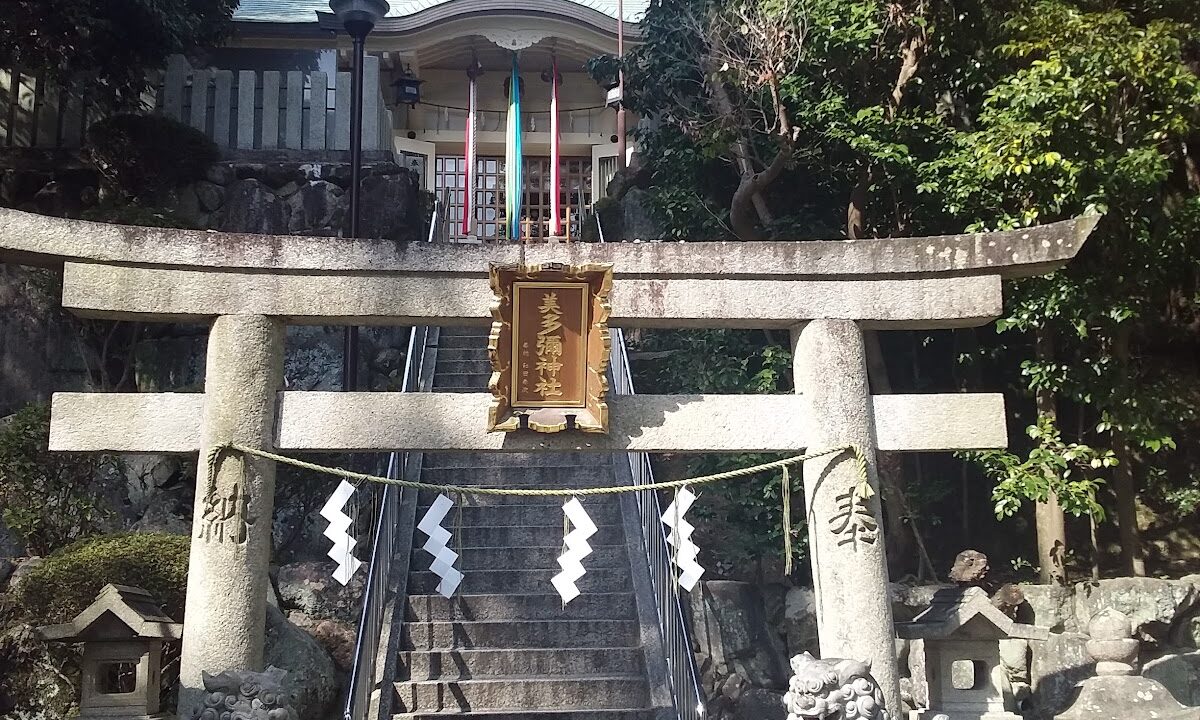
Complete Guide to Mitami Shrine | History, Deities, and Access Information for this Engishiki-Listed Shrine
Mitami Shrine, located in Minami-ku, Sakai City, Osaka Prefecture, is a prestigious shrine listed in the Engishiki Jinmyocho (a list of shrines compiled in the Heian period). Affectionately known locally as “Mikita no Miya-san,” it is a historically significant shrine with Amenokoyane-no-Mikoto as its main deity, attracting many worshippers. This article provides a detailed explanation of Mitami Shrine’s history, enshrined deities, highlights of the grounds, annual events, and access methods.
What is Mitami Shrine?
Mitami Shrine is an ancient shrine listed in the “Engishiki Jinmyocho,” which corresponds to volumes 9 and 10 of the Engishiki, a collection of laws completed in 927 (Engi 5). The Engishiki Jinmyocho lists 2,861 shrines nationwide, and its inclusion indicates a shrine of high status recognized by the imperial court since ancient times. The shrine’s former rank was Village Shrine. Located in Kamoyadai, Minami-ku, Sakai City, Osaka Prefecture, it stands quietly in an area developed as part of the Senboku New Town project. While the exact founding date is unknown, its inclusion in the Engishiki Jinmyocho (a list of shrines compiled in the Heian period) confirms its existence at least as early as the beginning of the Heian period.
Origin of the Name of Mitami Shrine
There are various theories regarding the origin of the shrine’s name, “Mitami,” but it is deeply connected to the history of this area, which was formerly known as Wada-go, and the Wada-sho (Wada Manor) that existed there during the medieval period. Locally, it is affectionately called “Mikita no Miya-san” and has been revered by the local residents.
Deities Enshrined at Mitami Shrine
Mitami Shrine enshrines multiple deities, each possessing different divine virtues.
Main Deity: Amenokoyane-no-Mikoto
The main deity is Amenokoyane-no-Mikoto, known as the ancestral deity of the Nakatomi clan (later the Fujiwara clan). Famous for the myth of guiding the gods out of the Amano-Iwato cave when Amaterasu Omikami hid, Susanoo-no-Mikoto is revered as the god of the power of words, learning, wisdom, and politics. As the principal deity of Kasuga Taisha Shrine, his enshrinement in this region, which has deep ties to the Nakatomi clan, holds significant meaning.
Enshrined Deities
Susanoo-no-Mikoto Known as the brave god who defeated Yamata-no-Orochi, he is worshipped as the god of protection against misfortune, eradication of disease, and agriculture.
Sugawara-no-Michizane Nationally famous as the god of learning, he bestows divine blessings for passing examinations and achieving academic success.
Ame-no-Mikumari-no-Okami The god who controls water, bringing the blessing of water essential for agriculture and daily life.
Itsukushima-no-Okami
This refers to Ichikishima-hime no Mikoto, who is worshipped as the god of maritime safety, traffic safety, and performing arts.
With these deities enshrined, Mitami Shrine is a shrine with diverse divine virtues, welcoming worshippers with a variety of wishes.
History of Mitami Shrine
Ancient Times: The Central Shrine of Wada-go
The area where Mitami Shrine is located was called Wada-go in ancient times, and it was an important shrine, even listed in the Engishiki Jinmyocho (a list of shrines compiled in the Heian period). This area was developed from ancient times, and it is believed that a settlement centered on agriculture was formed here.
Medieval Times: Wada-sho and the Onakatomi-Wada Clan
In the medieval period, Wada-sho was established, and the Onakatomi-Wada clan, who were the estate managers of Wada-sho, held power as a local powerful family. The Onakatomi clan was a branch of the Nakatomi clan, and their ancestral deity was Amenokoyane no Mikoto. The Ōnakatomi Wada clan formed a small samurai group and is said to have performed Yabusame (mounted archery) from around the Kamakura period to encourage martial arts. This Yabusame ritual is still passed down today as an important traditional event at Mitami Shrine.
Peak Period: During the Reign of Emperor Go-Daigo
During the reign of Emperor Go-Daigo (early 14th century), Mitami Shrine is said to have had a vast precinct spanning 30,000 tsubo (approximately 100,000 square meters), and was at the height of its grandeur, meaning the shrine buildings were magnificent and splendid. This period is considered to be the peak of Mitami Shrine’s prosperity.
History Since the Early Modern Period: As a Village Shrine
After the Edo period, in the Meiji era, it was ranked as a village shrine under the modern shrine ranking system. Since the Meiji era, it has continued to attract the faith of local residents as the guardian deity of the region.
Modern Era: Development of Senboku New Town
From the late Showa period to the Heisei period, this area underwent large-scale development as Senboku New Town. While the surrounding environment changed dramatically, Mitami Shrine has been preserved as a historical shrine, receiving reverence from both new residents and long-time parishioners.
Mitami Shrine Grounds and Highlights
Shiribukagashi Forest
The most noteworthy feature of the Mitami Shrine grounds is the “Shiribukagashi Forest.” Shiribukagashi (Quercus serrata) is an evergreen tree belonging to the genus Quercus in the beech family, and is designated as a natural monument of Osaka Prefecture. This forest has also been selected as one of “Osaka’s 100 Green Spaces,” preserving a valuable natural environment in the increasingly urbanized Minami Ward of Sakai City.
A distinctive feature of the Japanese evergreen oak (Quercus serrata) is the deep cupule (the cap portion of the acorn). This forest contains several giant trees estimated to be hundreds of years old, creating a sacred atmosphere befitting a shrine. Walking through the forest, you can experience a sense of ancient nature preserved intact.
Main Shrine and Worship Hall
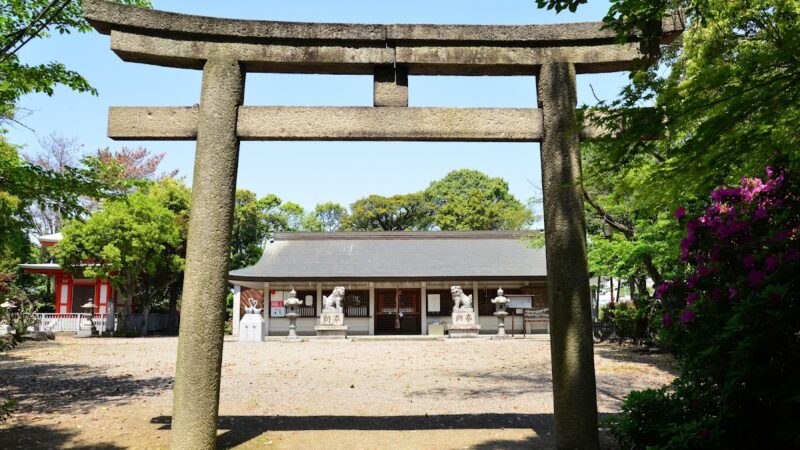
The main shrine is built in the traditional style of shrine architecture, and worship can be conducted from the worship hall. The grounds are enveloped in a tranquil atmosphere, providing a space for peaceful worship, far removed from the hustle and bustle of the city.
Subsidiary Shrines
There are several subsidiary shrines within the grounds, each dedicated to a different deity. Visiting not only the main shrine but also the subsidiary shrines allows you to receive even greater divine blessings.
Connection to the Manyoshu
Mitami Shrine is known as a shrine mentioned in the Manyoshu, Japan’s oldest collection of waka poetry. Only a limited number of shrines in Japan are mentioned in the Manyoshu (an ancient collection of Japanese poetry), indicating that this area has been known to poets since ancient times.
Annual Events of Mitami Shrine
Tondo Festival (Mid-January)
The Tondo Festival, held annually in mid-January, is a representative event of Mitami Shrine. It is a traditional event where New Year’s decorations and old amulets are burned to pray for good health throughout the year, and it is a very famous event in the local area.
At the Tondo Festival, New Year’s decorations are piled high and set ablaze. There is a tradition that eating mochi (rice cakes) roasted over the flames will ensure good health for the year. Many worshippers visit, and it serves as an opportunity to deepen community bonds.
Yabusame Ritual
The Yabusame ritual, said to have continued since the Kamakura period, is one of the most important traditional events of Mitami Shrine. This ritual, said to have been started by the Ōnakatomi Wada clan to encourage martial arts, is still practiced today, allowing visitors to witness the magnificent sight of mounted archers shooting at targets.
Yabusame (mounted archery) is a ritual praying for lasting military fortune and a bountiful harvest, and is deeply intertwined with the history of the shrine. The date varies each year, so it is recommended to check with the shrine in advance.
Annual Grand Festival
The annual Grand Festival features a procession of the portable shrine and various dedication ceremonies. The portable shrine parades through the parish area, creating a festive atmosphere throughout the community.
Monthly Festival
The monthly festival, held regularly each month, offers daily gratitude and prayers. Those who wish to worship in peace may consider visiting on the day of the monthly festival.
About Goshuin (Shrine Seals)
Mitami Shrine offers Goshuin. As a shrine listed in the Engishiki (an ancient Japanese legal code), the Goshuin will be a valuable item for those who visit shrines.
Goshuin (temple/shrine stamps) are available at the shrine office and will be carefully written as proof of your visit. The correct procedure is to bring your goshuincho (stamp book) and receive the stamp after your visit. The offering fee is generally around 300 yen, but it is customary to offer whatever you feel is appropriate.
Access to Mitami Shrine
Access by Train
From Senboku Rapid Railway “Kōmyōike Station”
- Kōmyōike Station is the nearest station
- Approximately 15 minutes on foot from the station
- It is also possible to use Nankai Bus from the station
Using Nankai Bus
- Take a Nankai Bus from Kōmyōike Station
- Get off at the “Kamoyadai 2-chome” bus stop, approximately 5 minutes on foot
Access by Car
From the Hanwa Expressway
- Approximately 15 minutes from Sakai IC
- Accessible via National Route 310
Parking
- There is a parking lot for visitors on the shrine grounds
- Due to limited spaces, the use of public transportation is recommended during festivals
Address and Basic Information
Location
5-1, Kamoyadai 2-chome, Minami-ku, Sakai City, Osaka Prefecture 590-0138
Phone Number
Please contact the shrine directly
Visiting Hours Grounds are freely accessible (please check the shrine office’s opening hours).
Official Website
https://www.mitami.or.jp/
Attractions around Mitami Shrine
Senboku New Town
Senboku New Town, where Mitami Shrine is located, is a planned residential area with a lush green environment. Visiting the shrine while strolling through the area is highly recommended.
Komyōike Pond
Komyōike Pond, which is also the name of the nearest station, was originally built as an irrigation reservoir. Currently, the surrounding area has been developed into a park, serving as a place of relaxation for residents.
Historical Spots in Minami Ward, Sakai City
Minami Ward in Sakai City has many other historical temples and shrines, making it an attractive area for shrine enthusiasts. You can enjoy exploring the surrounding history starting from Mitami Shrine.
Manners and Etiquette for Visiting a Shrine
How to Pass Through a Torii Gate
When passing through a torii gate, bow slightly before entering the shrine grounds. Since the center of the path is considered the path of the gods, it is polite to walk along the side.
Proper Ritual for Washing Hands
- Take the ladle with your right hand and wash your left hand.
- Switch the ladle to your left hand and wash your right hand.
- Switch the ladle back to your right hand, receive water in your left hand, and rinse your mouth.
- Wash your left hand once more.
- Hold the ladle upright, wash the handle, and return it to its original position.
Proper Ritual for Worshiping at the Main Hall
- Bow slightly before the offering box.
- Place your offering quietly.
- Ring the bell if there is one.
- Bow twice, clap twice, and bow once (two deep bows, two claps, one deep bow).
- Quietly express your wish in your heart.
Divine Virtues of Mitami Shrine
Because Mitami Shrine enshrines multiple deities, it offers a variety of divine virtues.
Academic Success & Prayer for Passing Exams
Many students and those preparing for exams visit this shrine due to the divine virtues of Amenokoyane-no-Mikoto and Sugawara no Michizane.
Protection from Misfortune & Good Fortune
Many people visit this shrine for protection against misfortune, particularly those in their unlucky years or facing life-changing events, due to the powerful protective energy of Susanoo-no-Mikoto.
Family Safety & Business Prosperity
As the local guardian deity, many people visit to pray for the health of their families and the development of their businesses.
Abundant Harvest & Protection of Agriculture
Many people involved in agriculture worship this shrine, thanks to the divine virtues of Amenomikumari-no-Okami.
Traffic Safety & Travel Safety
The shrine is also suitable for car blessings and prayers before travel, thanks to the divine virtues of Itsukushima-no-Okami.
The Charm of Mitami Shrine
Depth of History
With its status as a Shikinaisha (a shrine listed in the Engishiki Jinmyocho), its history celebrated in the Manyoshu (an ancient collection of Japanese poetry), and its Yabusame (mounted archery) ritual continuing since the Kamakura period, this shrine boasts a history of over 1000 years, making it a fascinating spot for history enthusiasts.
Natural Environment
Surrounded by the Shiribukagashi Forest, a natural monument, the shrine grounds offer a rare space to experience abundant nature despite being in an urban area. Visitors can enjoy the changing seasons.
Connection to the Community
Affectionately known as “Mikita no Miya-san” by locals, the shrine attracts many residents to events such as the Tondo Festival. It is a deeply rooted community shrine, supported by both long-time parishioners and new residents.
Easy Access
Located within walking distance of Komyoike Station on the Senboku Rapid Railway, it offers excellent access from Osaka city. It’s easily accessible for a day trip.
Summary
Mitami Shrine is a prestigious shrine listed in the Engishiki Jinmyocho (a historical record of shrines), yet it is a familiar and beloved local shrine known as “Mikita no Miya-san.” With Amenokoyane-no-Mikoto as its main deity, it offers diverse blessings, including academic success, protection from evil, and family safety. Surrounded by a forest of evergreen oaks (a natural monument), the shrine grounds provide a peaceful space for worship, far removed from the hustle and bustle of the city.
With many traditional events, such as the Yabusame (mounted archery) ritual dating back to the Kamakura period and the annual Tondo Festival in January, you can feel the history and culture of the shrine. When visiting Minami-ku, Sakai City, Osaka Prefecture, be sure to visit Mikita Shrine and experience the atmosphere of this shrine with over a thousand years of history.
It’s easily accessible, about a 15-minute walk from Komyoike Station, and offers Goshuin (shrine stamps), making it a great choice for shrine enthusiasts. The shrine grounds show different expressions in each of the four seasons, offering new discoveries with every visit.