Nishikatsuragi Shrine (Kaizuka City, Osaka Prefecture) Complete Guide | History, Goshuin (Shrine Seal), Access, and Benefits Information
About Nishikatsuragi Shrine
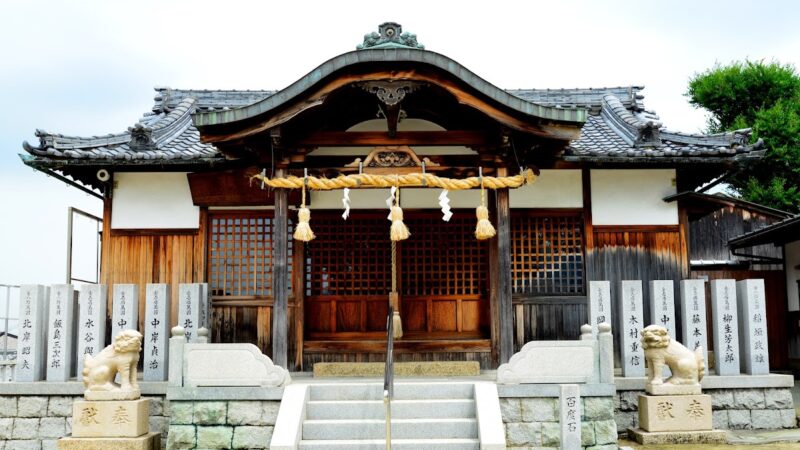
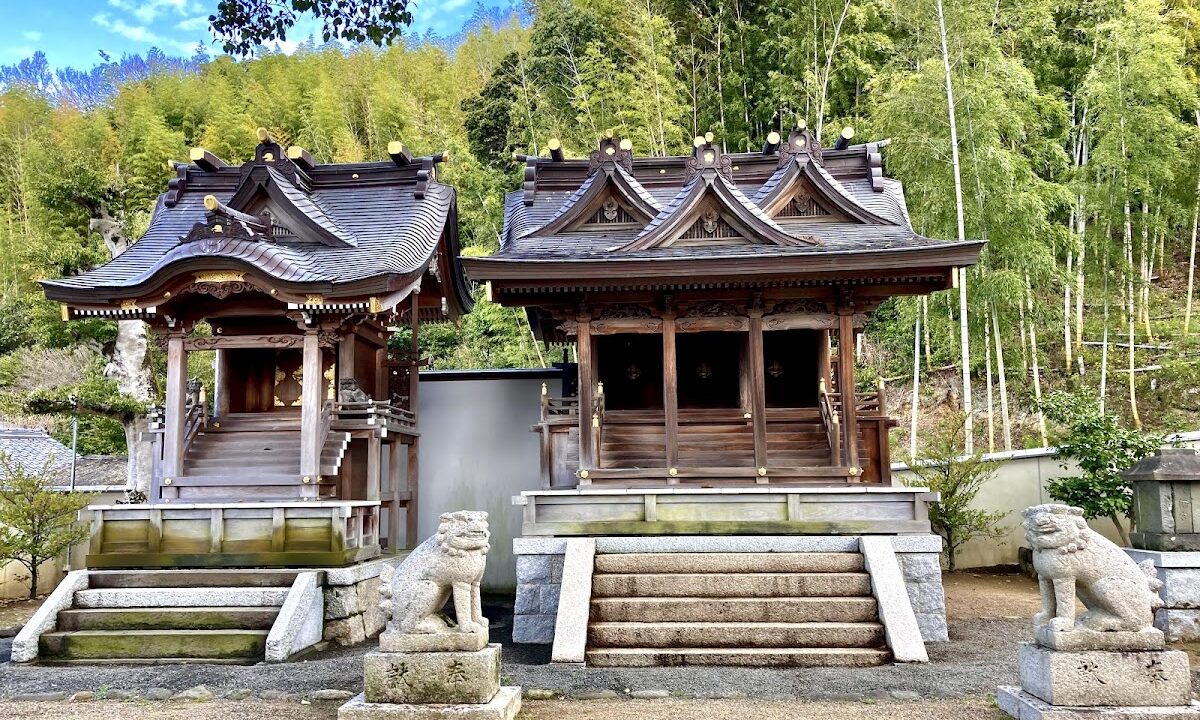
Nishikatsuragi Shrine is a shrine located at 2273 Kizumi, Kaizuka City, Osaka Prefecture. It is also known as “Kusunoki Shrine” or “Kusunoki-san” and is beloved by the local people. It has a history dating back to the Meiji era’s shrine consolidation policy and has been passed down to the present day as the center of faith for the former Nishikatsuragi Village.
It is located about 1km east of Mizuma Kannon Station on the Mizuma Railway, about a 15-minute walk, in the quiet environment of the Kizumi area in the mountainous part of Kaizuka City. Within the shrine grounds, Kusunoki Shrine, associated with Kusunoki Masashige, is enshrined as a secondary shrine and is known for its blessings for fertility.
History of Nishikatsuragi Shrine
Founding of Fukaya Shrine
Fukaya Shrine, the predecessor of Nishikatsuragi Shrine, was enshrined as the guardian deity of Kozumi Kannon-ji Temple, which was founded in 726 AD (Shinki 3). Records of its reconstruction in 1010 AD (Kankō 7) indicate that it had long functioned as a center of faith in this region. Fukaya Shrine enshrined Ōkuninushi-no-Mikoto and Sugawara no Michizane as its deities.
Founding of Kusunoki Shrine and its Connection to Kusunoki Masashige
In 1364 AD (Jōji 3), the Matsuura clan, lords of Jagatani Castle built on Jagatani Mountain in this region, founded Kusunoki Shrine in Katayama, Kozumi, to mourn the death of Kusunoki Masashige in battle at Minatogawa. Kusunoki Masashige was a warrior who was active from the late Kamakura period to the Nanboku-chō period and is known for his loyalty to Emperor Go-Daigo. It is believed that the Matsuura clan’s decision to enshrine Kusunoki Masashige stemmed from their respect for Masashige’s loyalty and martial prowess. This Kusunoki Shrine is said to have been established alongside a shrine originally located on this site, called Kusumoto Shrine.
Consolidation in the Meiji Era and the Birth of Nishikatsuragi Shrine
In 1910 (Meiji 43), under the “One Shrine Per Village” decree promoted by the Meiji government, all shrines in the former Nishikatsuragi Village were consolidated into Fukaya Shrine. This policy aimed to consolidate and organize shrines according to administrative districts.
As a result of this consolidation, the name of Fukaya Shrine was also changed to “Nishikatsuragi Shrine.” The consolidated shrines included those from various areas of the former Nishikatsuragi Village, such as Kizumi, Baba, Mikayama, Sobara, Tani, and Okawa.
Relocation in the Taisho Era
During the Taisho era, Nishikatsuragi Shrine was relocated to the site of Kusunoki Shrine. This led to the construction of the shrine at its current location, 2273 Kizumi, Kaizuka City. Kusunoki Shrine is enshrined within Nishikatsuragi Shrine as a secondary shrine, and continues to attract worshippers today, known for its blessings related to fertility.
Deities and Blessings
Main Deities
The main deities of Nishikatsuragi Shrine are as follows:
- Okuninushi-no-Mikoto: God of matchmaking, business prosperity, and agricultural protection
- Sugawara no Michizane: God of learning and literature
Kusunoki Shrine (Secondary Shrine)
Kusunoki Shrine enshrines Kusunoki Masashige and is particularly known for its blessings related to fertility. It is affectionately known as “Kusunoki-san” in the region, and attracts worshippers praying for children.
Other Benefits
- Matchmaking and marital harmony (Okuninushi-no-Mikoto)
- Academic success and passing exams (Sugawara no Michizane)
- Business prosperity and abundant harvests (Okuninushi-no-Mikoto)
- Conception and safe childbirth (Kusunoki Shrine)
- Protection from evil and family safety
Highlights of the Shrine Grounds
Main Hall and Worship Hall
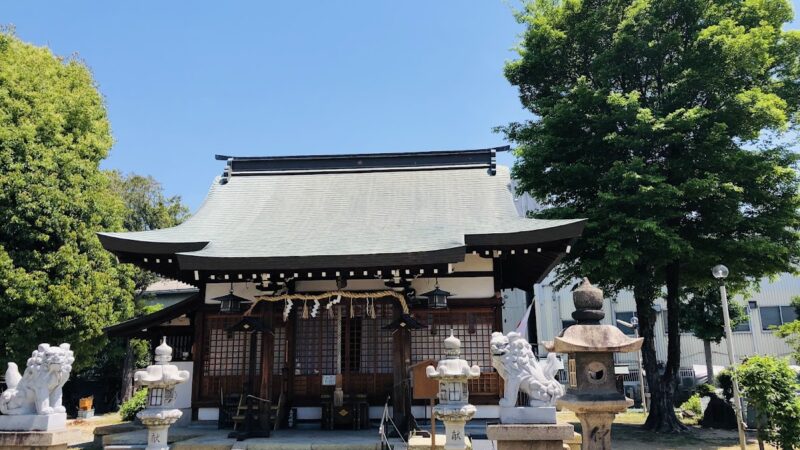
The main hall of Nishikatsuragi Shrine was renovated when the shrine was relocated during the Taisho era and retains the style of traditional shrine architecture. The worship hall is kept clean as a place for worshippers to offer prayers.
Kusunoki Shrine (Auxiliary Shrine)
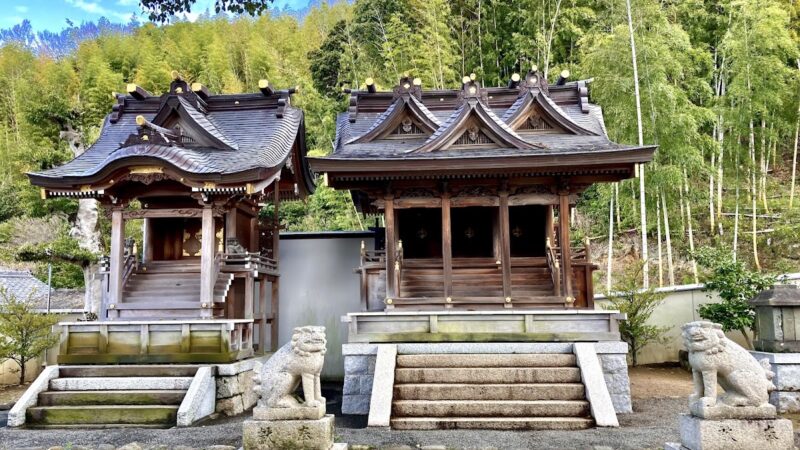
The Kusunoki Shrine is enshrined as an auxiliary shrine within the grounds and is a place particularly visited by worshippers praying for conception. It is a valuable historical site where the faith in Kusunoki Masashige is still passed down.
Traces of Shinto-Buddhist Syncretism
A distinctive feature of Nishikatsuragi Shrine is the remnants of Shinto-Buddhist syncretism. Reflecting the history of Fukaya Shrine, which began as the guardian shrine of Kizumi Kannon-ji Temple, Buddhist elements remain within the shrine grounds. Some reports even mention the unusual sight of a Buddhist statue enshrined within a tree.
Natural Environment of the Shrine Grounds
Located in the mountainous area of Kaizuka City, Nishikatsuragi Shrine’s grounds are surrounded by abundant nature. In particular, trees such as camphor trees flourish, creating a tranquil atmosphere. The shrine grounds, which show different expressions with each season, offer peace to visitors.
About Goshuin (Shrine Seals) and Goshuincho (Shrine Seal Books)
Regarding the issuance of Goshuin at Nishikatsuragi Shrine, prior confirmation is necessary. It is recommended to inquire by calling the shrine’s telephone number (072-446-2261).
Generally, Goshuin are given as proof of worship and can be obtained by requesting them at the shrine office after your visit. The goshuin (seal) of Nishikatsuragi Shrine includes the shrine’s name, the date of visit, and the shrine’s seal.
Regarding the availability of original goshuin notebooks, it’s best to confirm directly with the shrine.
Annual Events and Festivals
Festival Date
The annual festival of Nishikatsuragi Shrine is held every year on October 17th. The festival is the most important event for the shrine, and people from the parish gather to express gratitude to the gods and pray for the prosperity of the community.
Other Events
- New Year’s Day Festival (January 1st): Celebrating the New Year and praying for safety and prosperity throughout the year
- Setsubun Festival (around February 3rd): A ritual to ward off evil and invite good fortune
- Summer Purification Ceremony (June 30th): A Shinto ritual to cleanse away the sins and impurities accumulated over the past six months
- Year-End Purification Ceremony (December 31st): A Shinto ritual to cleanse away the sins and impurities accumulated over the past year
For specific event dates and details, it is recommended to inquire directly with the shrine. ## Access and Transportation
Basic Information
- Address: 2273 Kizumi, Kaizuka City, Osaka Prefecture 597-0102
- Phone: 072-446-2261
- FAX: 072-446-2261
Access by Train
Using the Mizuma Railway
- Get off at Mizuma Kannon Station on the Mizuma Railway
- Walk east from the station for approximately 15 minutes (about 1 km)
The Mizuma Railway can be accessed by transferring from Kaizuka Station on the Nankai Main Line. The journey from Kaizuka Station to Mizuma Kannon Station takes about 10 minutes.
Access by Car
- Approximately 15 minutes from Kaizuka IC on the Hanwa Expressway
- From National Route 170 (Outer Ring Road), head towards Kizumi
It is recommended to check with the shrine in advance regarding parking availability and capacity.
Walking Route
From Mizuma Kannon Station to Nishikatsuragi Shrine, follow the road through the Kizumi district settlement. There are signs along the way, but if it’s your first time visiting, using a smartphone map app is convenient.
Parishioning Area
The parishioning area of Nishikatsuragi Shrine corresponds to the former Nishikatsuragi Village:
- Kizumi
- Baba
- Mitsugayama
- Sobura
- Tani
- Okawa
- Higashiyama (part)
For the people of these areas, Nishikatsuragi Shrine is worshipped as the guardian deity of the region and as the tutelary deity.
Nearby Attractions
Doroku Shrine
Located near Nishikatsuragi Shrine at 3758 Kizumi, Kaizuka City, Doroku Shrine, commonly known as “Doroku-san,” is known as the god of feet. The enshrined deities are Harayamatsumi-no-kami and Toyamatsumi-no-kami. Visitors come to pray for good health of their legs and lower backs.
Mizuma Kannon (Mizuma-dera Temple)
Near Mizuma Kannon Station, the terminal station of the Mizuma Railway, lies Mizuma-dera Temple (Mizuma Kannon), an ancient Tendai sect temple. This renowned temple, said to have been founded by Gyoki at the behest of Emperor Shomu, is revered as a Kannon that wards off evil.
Jagatani Castle Ruins
The ruins of Jagatani Castle, which has deep ties to the history of Nishikatsuragi Shrine, are located on Jagatani Mountain. Built by the Matsuura clan, it is a historical site with strong connections to Kusunoki Masashige. It is an interesting place for history enthusiasts.
Kozumi Kannon-ji Temple Ruins
The ruins of Kozumi Kannon-ji Temple, which has a history as the guardian temple of Fukaya Shrine, are also an important place for understanding the history of this region. It is a valuable historical site that tells the story of the syncretism of Shinto and Buddhism.
Manners and Etiquette for Visiting a Shrine
Basic Visiting Etiquette
- Bow before passing through the torii gate: As a courtesy before entering the sacred area.
- Purify yourself at the water basin:
- Hold the ladle in your right hand and purify your left hand.
- Switch the ladle to your left hand and purify your right hand.
- Switch the ladle back to your right hand, receive water in your left hand, and rinse your mouth.
- Finally, hold the ladle upright and purify the handle.
- Worship in front of the main hall:
- Bow slightly.
- Place your offering.
- Ring the bell if there is one.
- Two bows, two claps, one bow (two bows, two claps, one bow).
- Bow when leaving the torii gate: As a courtesy when leaving the sacred area.
Points to Note When Visiting a Shrine
- Be quiet within the shrine grounds and be considerate of other worshippers.
- Even if photography is permitted, refrain from taking pictures inside the main hall or worship hall.
- Please refrain from bringing pets to the shrine (except for assistance dogs such as guide dogs).
- Do not touch the plants or buildings on the shrine grounds.
- Please take all your trash with you.
Cultural Properties of Nishikatsuragi Shrine
Nishikatsuragi Shrine may preserve cultural properties and historical materials inherited from the various shrines that were merged into it. For details on specific designated cultural properties, please inquire at the shrine or the Kaizuka City Board of Education.
Records concerning the merger during the Meiji era and materials from the founding of Kusunoki Shrine are valuable historical resources for understanding the history of the region.
Seasonal Highlights
Spring (March-May)
The trees on the shrine grounds are enveloped in fresh greenery, creating a refreshing atmosphere for worship. If there are cherry trees, you can enjoy beautiful scenery during the cherry blossom season.
Summer (June-August)
The lush green grounds offer cool shade, making it comfortable to visit even in the hot summer. During the summer purification ritual, Shinto ceremonies such as passing through a ring of reeds may be held. ### Autumn (September-November)
The highlight is the annual festival on October 17th. The trees in the shrine grounds change color, allowing visitors to enjoy the autumnal atmosphere while praying.
Winter (December-February)
Enjoy a solemn prayer experience in the tranquil shrine grounds. Events such as the New Year’s Day Festival and the Setsubun Festival are held.
Characteristics and Charms of Nishikatsuragi Shrine
History that Tells the Story of the Meiji Era’s Shrine Consolidation Policy
Nishikatsuragi Shrine was established under the “One Shrine Per Village” decree of the Meiji era. While this policy was met with both support and opposition, it ultimately unified the faith of various areas within the former Nishikatsuragi Village, strengthening community ties.
Faith in Kusunoki Masashige
The presence of a shrine dedicated to Kusunoki Masashige as part of the Kusunoki Shrine demonstrates the connection between this region and the history of the Nanboku-cho period. The history of the Matsuura clan, a powerful local family, who admired Lord Masashige and founded the shrine, is a source of local pride.
Traces of Shinto-Buddhist Syncretism
Because Fukaya Shrine began as the guardian shrine of Kozumi Kannon-ji Temple, a strong influence of Shinto-Buddhist syncretism remains. Even after the Meiji-era separation of Shinto and Buddhism, traces of this can still be seen on the shrine grounds, making it valuable for understanding the changes in Japanese religious culture.
Benefits for Fertility
Kusunoki Shrine’s blessings for fertility attract worshippers from a wide area, not just the local region. It is a shrine that serves as a spiritual anchor for couples hoping for children.
A Faith Rooted in the Community
For the people of the parish, Nishikatsuragi Shrine is not merely a tourist attraction, but a shrine that functions as an integral part of their lives. Through its annual festivals and events, it plays a role in maintaining community ties.
Visitor Records and Reviews
The following are some comments from people who have visited Nishikatsuragi Shrine:
- “It’s a small shrine in the middle of a village, but it was a somewhat unusual sight.” (From Hotokami)
- You can worship in a quiet and peaceful atmosphere.
- A shrine where you can feel the history of the region.
- Many people visit seeking the blessings of fertility from Kusunoki Shrine.
- It’s a bit of a walk from Mizuma Kannon Station, but you can enjoy the scenery along the way.
Visitor records and photos can be found on shrine information websites such as Hotokami.
Contact Information
Inquiries regarding Nishikatsuragi Shrine are accepted at the following contact points:
- Phone: 072-446-2261
- FAX: 072-446-2261
- Address: 2273 Kizumi, Kaizuka City, Osaka Prefecture 597-0102
For inquiries regarding the issuance of Goshuin (shrine seals), prayer requests, annual event schedules, and use of facilities on the shrine grounds, it is recommended to contact the shrine directly.
Summary
Nishikatsuragi Shrine is a historically significant shrine located in Kizumi, Kaizuka City, Osaka Prefecture. It was established through the Meiji-era consolidation policy, integrating the shrines of the former Nishikatsuragi Village. It inherits the history of Fukaya Shrine and the faith of Kusunoki Shrine, which enshrines Kusunoki Masashige.
The main deities enshrined are Okuninushi-no-Mikoto and Sugawara no Michizane, and the shrine offers blessings for matchmaking, academic success, and business prosperity. Kusunoki Shrine is particularly famous for its blessings related to fertility, attracting many worshippers.
It’s easily accessible, about a 15-minute walk from Mizuma Kannon Station on the Mizuma Railway, and offers a peaceful and tranquil pilgrimage in a quiet mountain setting. Annual events, including the annual festival on October 17th, are held throughout the year, making it a central hub of local faith.
When visiting Kaizuka City, be sure to stop by Nishikatsuragi Shrine and experience its history and serene atmosphere.