Complete Guide to Shiki Nagayoshi Shrine (Osaka Prefecture) | History, Goshuin (Shrine Seal), and Benefits of this Engishiki-listed Shrine Associated with Sanada Yukimura
Shiki Nagayoshi Shrine, located in Nagayoshi Nagahara, Hirano Ward, Osaka City, is an Engishiki-listed shrine boasting a history of over 1200 years since its founding in 794 AD. Known for being visited by Sanada Yukimura (Nobushige) to pray for victory during the Winter and Summer Sieges of Osaka and for dedicating a battle flag bearing the six-coin emblem, this shrine is affectionately known as “Nagayoshi no Miya” by the local people.
This article comprehensively introduces information useful for visiting Shiki Nagayoshi Shrine, including its history, enshrined deities, benefits, goshuin (shrine seal), highlights of the grounds, annual events, and access methods.
History and Origins of Shiki Nagayoshi Shrine
1200 Years of History Dating Back to the Early Heian Period
Shiki Nagayoshi Shrine is said to have been founded in 794 (Enryaku 13), the same year the capital was moved to Heian-kyo. With a long history dating back to the early Heian period, it is listed in the “Engishiki Jinmyocho” (a list of shrines compiled in 927), and has long been revered by the imperial court and the local community.
Engishiki Jinmyocho are historically significant shrines recognized by the government during the Heian period, and there are approximately 2,800 of them nationwide. Among them, Shiki Nagayoshi Shrine, located in Shiki District, Kawachi Province, has been worshipped as a guardian deity of the region for over 1200 years.
Origin of the Place Names Shiki District and Nagayoshi
This region was once called “Shiki District” and was an important area since ancient times. The place name “Nagayoshi” is said to be a combination of “Naga” from the name of the enshrined deity, Nagae no Sotsuhiko no Mikoto, and “Yoshi” (吉), meaning prosperity for the region. The shrine’s name, “Shiki Nagayoshi Shrine,” combines the historical place name of the region with the name of the enshrined deity.
Deep Connection to Sanada Yukimura
One reason why Shiki Nagayoshi Shrine has gained national attention is its connection to Sanada Yukimura (Sanada Nobushige). During the Winter Siege of Osaka in 1614 and the Summer Siege of Osaka the following year, Sanada Yukimura visited Shiki Nagayoshi Shrine to pray for victory.
It is said that Yukimura dedicated his military banner, the “Rokumonsen Military Banner,” to the shrine and prayed for victory. This Rokumonsen Military Banner is still carefully preserved as a shrine treasure, making the shrine specially significant for Sanada Yukimura fans and history enthusiasts.
Deities and Blessings
Main Deity: Nagae no Sotsuhiko no Mikoto
The main deity of Shiki Nagayoshi Shrine is Nagae no Sotsuhiko no Mikoto. This deity is considered the ancestral god of the ancient Shiki clan and is revered as a god who contributed greatly to regional development and industrial growth.
Nagae no Sotsuhiko no Mikoto has been worshipped as a guardian deity of the region and a protector of industry, having made significant contributions to the development of the Kawachi region.
Enshrined Deity: Kotoshironushi no Mikoto
Enshrined alongside the main deity is Kotoshironushi no Mikoto. Kotoshironushi no Mikoto is also known as “Ebisu-sama” and is worshipped throughout Japan as a god of business prosperity, maritime safety, and protection of fisheries.
Kotoshironushi no Mikoto played an important role in the myth of the transfer of the land and is also known as a god of wisdom and decisiveness.
Benefits of Shiki Nagayoshi Shrine
Shiki Nagayoshi Shrine is believed to bestow the following blessings:
- Traffic Safety: As a guardian deity of the region, many worshippers visit to pray for traffic safety.
- Victory and Success: Popular among those wishing for success in competitions, as Sanada Yukimura prayed here for victory in battle.
- Business Prosperity: Benefits of business prosperity and success through the divine virtues of Kotoshironushi-no-Mikoto.
- Increased Financial Fortune: Improved financial fortune through the blessings of Kotoshironushi-no-Mikoto as Ebisu.
- Protection from Evil and Good Fortune: Benefits of protection from evil, as a guardian deity of the region since ancient times.
- Family Safety: As a shrine rooted in the community, it protects the safety of families.
Highlights and Cultural Assets on the Shrine Grounds
Main Hall and Worship Hall
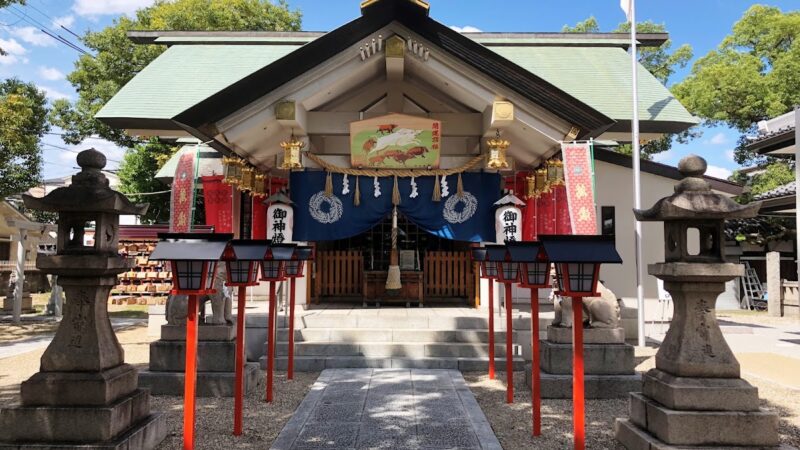
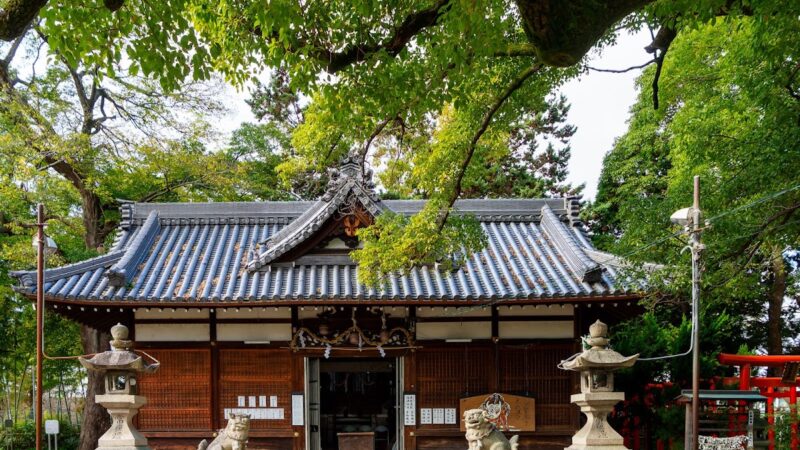
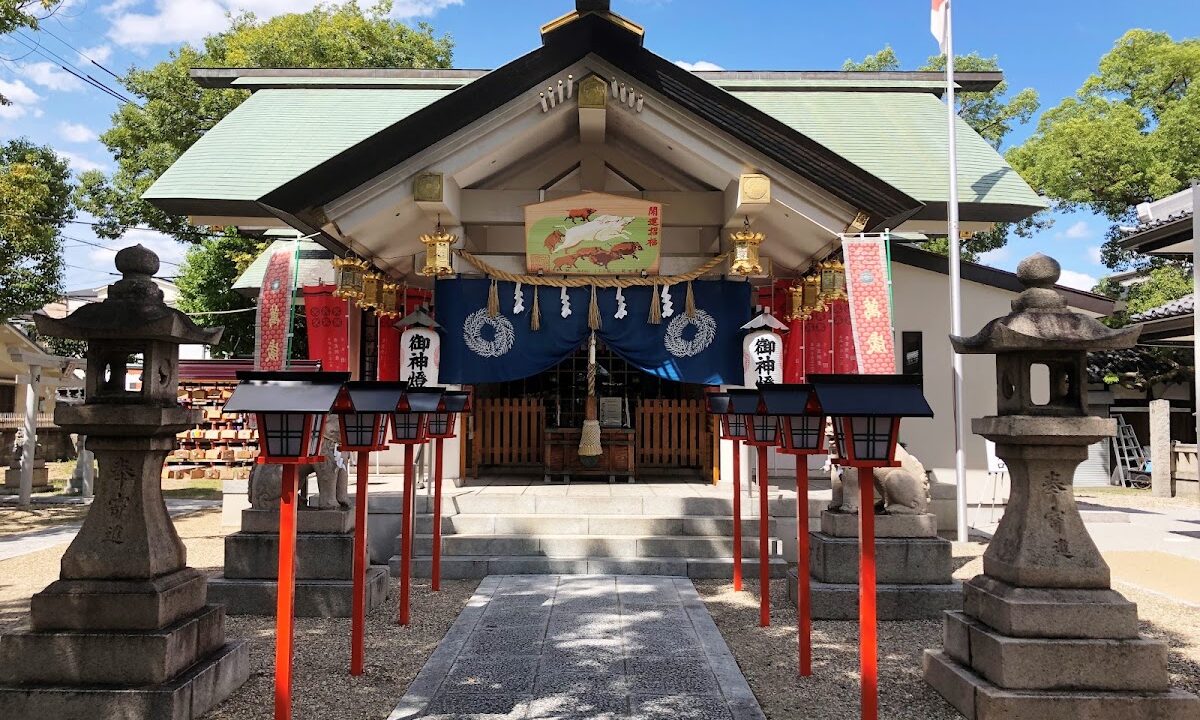
The main hall of Shiki Nagayoshi Shrine is built in the traditional style of shrine architecture, creating a quiet and solemn atmosphere. The main hall is always kept clean and well-maintained as a place for worshippers to offer their prayers.
The shrine grounds are not particularly vast, but despite being in an urban area, a tranquil space is maintained, allowing worshippers to offer their prayers in peace.
Shrine Treasure: The Six-Coin Battle Flag Donated by Sanada Yukimura
The most precious treasure of Shiki Nagayoshi Shrine is the Six-Coin Battle Flag donated by Sanada Yukimura. This battle flag, depicting the six coins (rokurensen), the family crest of the Sanada clan, is a testament to Yukimura’s prayer for victory in the Siege of Osaka, and has been carefully preserved for over 400 years.
The six coins symbolize “the fare for crossing the Sanzu River” and represent the Sanada family’s “resolve to fight without fear of death.” This battle flag is usually not on public display, but is sometimes exhibited on special occasions.
Stone Monuments and Memorials on the Shrine Grounds
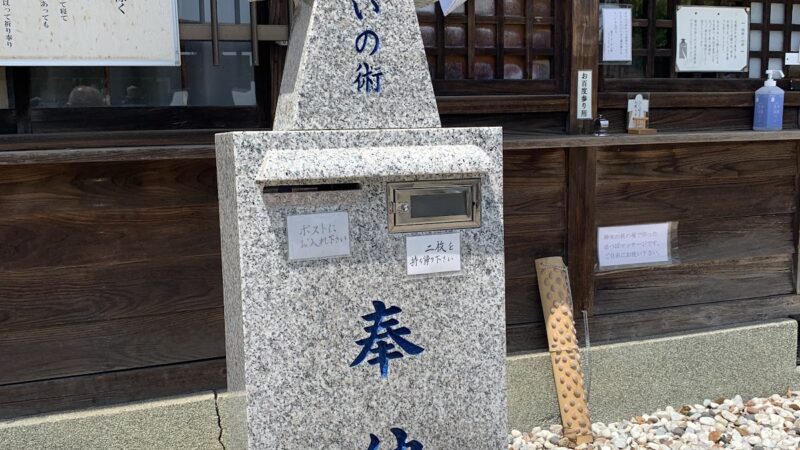
Several stone monuments and memorials that tell the history of the shrine are erected on the shrine grounds. A stone monument indicating that it is an Engishiki-listed shrine and an information board indicating its connection to Sanada Yukimura are installed, allowing visitors to feel the history while praying.
Water Basin and Torii Gate
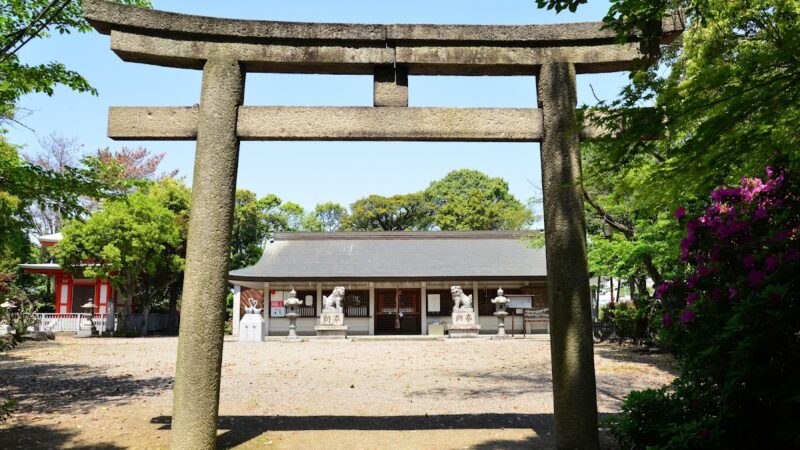
A magnificent torii gate stands at the entrance to the approach to the shrine, and beyond it is a water basin. It is customary to purify oneself at the water basin before proceeding to the main shrine. The water basin is always kept clean, allowing for a pleasant preparation for worship.
Information on Goshuin (Shrine Seal) and Goshuincho (Shrine Seal Book)
Goshuin of Shiki Nagayoshi Shrine
At Shiki Nagayoshi Shrine, you can receive a goshuin as proof of your visit. The goshuin will have the shrine name “Shiki Nagayoshi Shrine” and the date of visit written in ink, and the shrine’s red seal will be stamped on it.
Goshuin are available at the shrine office, and the offering fee is generally around 300 to 500 yen. When receiving a Goshuin (temple/shrine stamp), it is considered proper etiquette to visit the shrine office after completing your prayers.
Original Goshuincho (Stamp Book)
Shiki Nagayoshi Shrine offers its own original Goshuincho. As befits a shrine associated with Sanada Yukimura, they sometimes offer unique Goshuincho featuring designs such as the Rokumonsen (six-coin) emblem.
The availability and types of Goshuincho may vary depending on the time of year, so please inquire at the shrine office for details.
Goshuin Reception Hours
The reception hours for Goshuin are generally as follows, but may vary due to Shinto rituals and events:
- Weekdays, Saturdays, Sundays, and Holidays: Approximately 9:00 AM to 5:00 PM
- New Year’s Holidays: Extended hours may apply
We recommend checking by phone in advance.
Offerings and Amulets
Shiki Nagayoshi Shrine offers various offerings to meet the diverse wishes of visitors.
Main Items Offered
- Traffic Safety Amulet: An amulet for praying for traffic safety in cars and bicycles.
- Victory Amulet: An amulet for good fortune and victory, associated with Sanada Yukimura.
- Business Prosperity Amulet: An amulet for business prosperity through the divine virtues of Kotoshironushi-no-Mikoto.
- Exorcism Amulet: An amulet for warding off evil and bringing good fortune.
- Academic Success Amulet: An amulet for praying for success in exams and academic improvement.
- Family Safety Amulet: An amulet for protecting the health and safety of the family.
Talismans and Divine Talismans
Divine talismans for enshrining in household altars are also available. By enshrining them in the household or office altar, you can receive the blessings of the gods.
Ema (Votive Tablets)
Ema (votive tablets) for writing wishes and offering them are also available. Ema for praying for victory and traffic safety are particularly popular.
Annual Events and Festivals
Shiki Nagayoshi Shrine holds various Shinto rituals and festivals throughout the year.
Main Annual Events
January
- Saitansai (January 1st): A Shinto ritual celebrating the New Year
- Hatsumode (First Shrine Visit of the Year): The shrine is bustling with many worshippers from New Year’s Day through the third day of the year.
February
- Setsubunsai (Bean-Throwing Festival): Setsubun rituals such as bean-throwing
- Kigensai (National Foundation Day): A Shinto ritual held on National Foundation Day
October
- Autumn Grand Festival (Annual Festival): The most important festival of Shiki Nagayoshi Shrine. Held in mid-October, the festival includes a portable shrine procession and dedication ceremonies.
November
- Shichi-Go-San Pilgrimage: A prayer ceremony celebrating the growth of children.
December
- Great Purification Ceremony (December 31st): A Shinto ritual to purify and cleanse away the impurities of the year.
Highlights of the Autumn Grand Festival
The Autumn Grand Festival, held in October, is the most grand annual festival of Shiki Nagayoshi Shrine. It is a traditional festival where the portable shrine parades through the area, with participation from parishioners and local residents. Kagura (sacred dance) performances and stalls are also present, enveloping the entire area in a festive atmosphere.
Access and Basic Information
Access by Train
Approximately 5 minutes on foot from Nagahara Station on the Osaka Metro Tanimachi Line
Nagahara Station is the nearest station, and the shrine is approximately a 5-minute walk west from the station. The path from the station to the shrine is flat and well-marked, so you won’t get lost.
Access by Car
Turn west at the “Nagayoshi 3rd Housing East Intersection” on the Central Loop Line; approximately 1 minute.
Access from the Central Loop Line is convenient. Please enter “2-8-23 Nagayoshi Nagahara, Hirano-ku, Osaka City” into your car navigation system.
Parking
The shrine has parking spaces for visitors, but the number of spaces is limited. During busy periods such as New Year’s Day and the Autumn Grand Festival, we recommend using public transportation.
Basic Information
- Official Name: Shikinagayoshi Shrine
- Address: 2-8-23 Nagayoshi Nagahara, Hirano-ku, Osaka City, Osaka Prefecture 547-0016
- Phone Number: 06-6709-1757
- Visiting Hours: Grounds are freely accessible (Shrine office is open from 9:00 to 17:00)
- Admission Fee: Free
- Official Website: https://www.shikinagayoshi-jinjya.org/
- Goshuin (Shrine Seal): Available (Granted at the shrine office)
- Parking: Available (Limited number of spaces)
Nearby Tourist Attractions and Shrines/Temples
Kumata Shrine
An Engishiki-listed shrine located in Hirano-ku, approximately 2km from Shikinagayoshi Shrine. Known as the guardian shrine of Hirano-go, its July summer festival is considered one of Osaka’s three major summer festivals.
Dainenbutsu-ji Temple
The head temple of the Yuzu Nenbutsu sect, located in Hirano Ward. It boasts vast grounds and features a main hall and bell tower designated as important cultural properties. Approximately 2.5 km from Shiki Nagayoshi Shrine.
Nagai Park
A representative comprehensive park of Osaka City. It includes Nagai Athletic Stadium, a botanical garden, and a natural history museum, making it a popular spot for families. One stop from Nagahara Station on the Midosuji Line.
Hirano-go Townscape
Hirano-go retains the atmosphere of a moated settlement dating back to the Middle Ages. Historic townhouses and temples are scattered throughout, making it ideal for a stroll.
Manners and Etiquette for Visiting a Shrine
Basic Etiquette for Visiting a Shrine
- Bow before passing through the torii gate: This is a courtesy before entering the sacred area.
- Purify yourself at the water basin: Purify your left hand, then your right hand, then your mouth.
- Walk along the edge of the path: The center is considered the path of the gods.
- Etiquette at the main hall: Two bows, two claps, and one bow are the basic rituals.
Regarding Photography
Photography is generally permitted within the shrine grounds, but it may be prohibited inside the main hall or the shrine office. Please be considerate of other visitors.
Regarding Attire
There are no specific dress code requirements, but it is desirable to wear clothing that reflects the sacred nature of the place. If you are receiving a prayer, it is preferable to wear attire that is not too casual.
Regarding Prayers and Supplications
Shiki Nagayoshi Shrine accepts prayers from individuals and groups.
Main Prayer Services Offered
- Prayer for Traffic Safety (Vehicle Purification)
- Prayer for Protection from Evil Spirits
- Prayer for Family Safety
- Prayer for Business Prosperity
- Prayer for Success in Exams/Academic Achievement
- Prayer for Safe Childbirth
- First Shrine Visit for a Newborn
- Shichi-Go-San Ceremony
- Prayer for Victory
How to Apply for Prayer Services
If you wish to have prayer services offered, we recommend making a reservation by phone in advance. While same-day registration is possible, there may be a waiting time due to the schedule of Shinto rituals.
The offering fee varies depending on the prayer service; please confirm when applying.
The Charm of Shiki Nagayoshi Shrine and Recommendation for Visiting
Shiki Nagayoshi Shrine is a shrine listed in the Engishiki (an ancient Japanese legal code) with a history of over 1200 years, yet it is a friendly and approachable shrine deeply rooted in the local community. It is popular with history buffs as a place associated with Sanada Yukimura, and many visitors come seeking blessings for traffic safety and good fortune in victory.
Despite being located in an urban area, the shrine grounds offer a quiet and peaceful atmosphere, making it the perfect place to escape the hustle and bustle of everyday life and find peace of mind. Its convenient location, just a 5-minute walk from Nagahara Station, is also a major draw, making it easily accessible during Osaka sightseeing.
Shiki Nagayoshi Shrine, where you can feel the history and tradition while also having your modern wishes granted, is definitely worth a visit.
Summary
Shiki Nagayoshi Shrine boasts a history of over 1200 years, founded in 794 (Enryaku 13), and is a prestigious shrine visited by Sanada Yukimura to pray for victory in battle. It offers blessings for traffic safety, good fortune, and business prosperity, and is affectionately known as “Nagayoshi no Miya” by the local people.
With its excellent accessibility, just a 5-minute walk from Nagahara Station on the Osaka Metro Tanimachi Line, the shrine also offers Goshuin (shrine stamps) and various amulets. With many annual events, including the Autumn Grand Festival in October, it’s a shrine that can be enjoyed throughout the year.
When you visit Hirano Ward in Osaka City, be sure to pay your respects at Shiki Nagayoshi Shrine and experience its long history and the blessings of the gods.