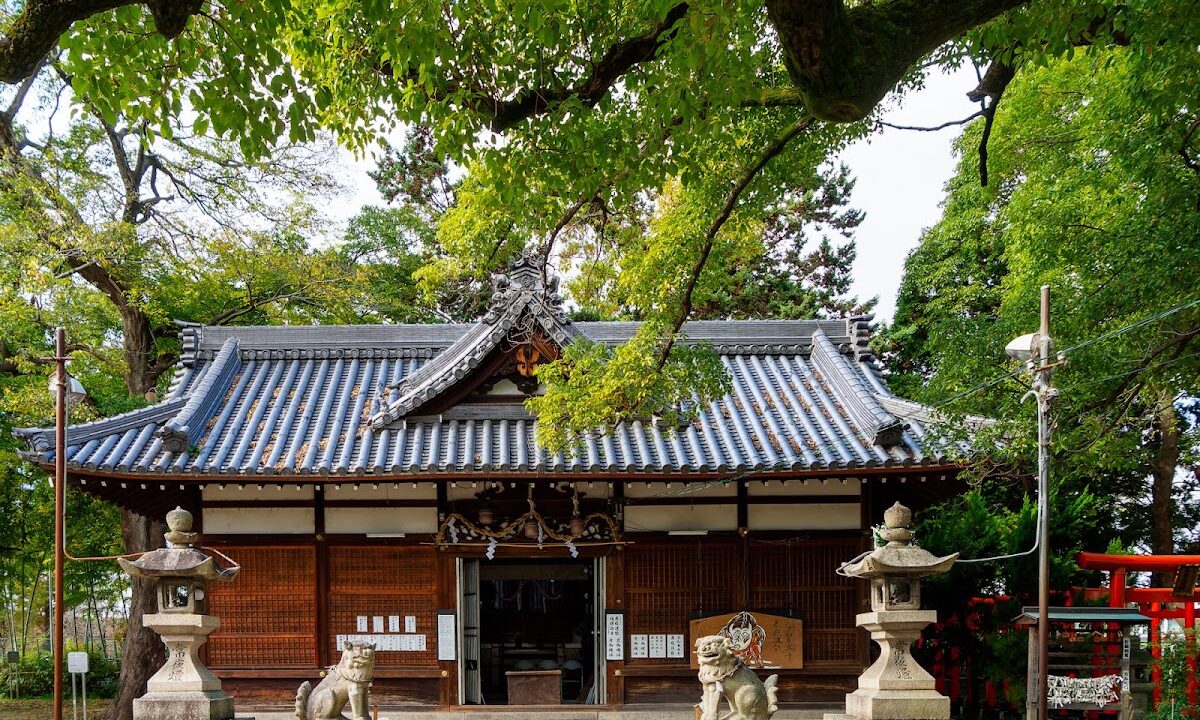
Kawabe Hachiman Shrine (Osaka Prefecture) Complete Guide | Thorough Explanation of Goshuin, History, Access, and Highlights
Located in Nagayoshikawabe, Hirano Ward, Osaka City, Kawabe Hachiman Shrine is a historic shrine that enshrines a divided spirit of Iwashimizu Hachiman Shrine. Having experienced a historical turning point with the diversion of the Yamato River, it has been preserved as a center of local faith to this day. This article provides a detailed introduction to the history, goshuin (shrine seal), access methods, annual events, and highlights of Kawabe Hachiman Shrine.
Basic Information about Kawabe Hachiman Shrine
Location: 1-4-38 Nagayoshikawabe, Hirano-ku, Osaka City, Osaka Prefecture 547-0014
Phone Number: 06-6769-0323
Main Deity: Emperor Ojin
Shrine Rank: Village Shrine
Nearest Station: Approximately 12 minutes on foot from Exit 3 of Nagahara Station on the Osaka Metro Tanimachi Line
Kawabe Hachiman Shrine is a shrine quietly nestled in a residential area adjacent to the Yamato River riverbed. It continues to attract the faith of local residents in a tranquil atmosphere away from the hustle and bustle of the city.
History and Origins of Kawabe Hachiman Shrine
Founding and Relationship with Iwashimizu Hachiman Shrine
The exact founding date of Kawabe Hachiman Shrine is unknown, but it is said to have been established by inviting a divided spirit from Iwashimizu Hachiman Shrine, located in Yawata City, Kyoto Prefecture. Iwashimizu Hachimangu Shrine, founded in the early Heian period in 859 (Jōgan 1), is one of Japan’s three great Hachiman shrines, and has numerous branch shrines throughout the country.
Kawabe Hachiman Shrine is one of these branch shrines and has long been revered as the tutelary deity of this region. It enshrines Emperor Ōjin as its main deity and is believed to bestow blessings such as military success, protection from evil, and family safety.
The Yamato River Diversion Project and the Shrine’s History
Indispensable to understanding the history of Kawabe Hachiman Shrine is the Yamato River diversion project carried out in 1704 (Hōei 1). This large-scale flood control project significantly altered the course of the Yamato River, which flowed through the then-Kawachi Province, and had a major impact on the area from eastern to southern Osaka Prefecture.
Traditionally, the Yamato River flowed north through what is now eastern Osaka City and merged with the Yodo River, but it suffered from repeated flood damage. Therefore, through the long-standing petitions of Naka Jinbei, the village headman of Tanboku District in Kawachi Province, a new channel was constructed to flow directly from Kashiwara into Osaka Bay.
This diversion project forced the Kawabe Hachiman Shrine to relocate, and a large portion of its land became part of the new riverbed. The shrine was relocated to its current location, losing its former vast territory, but it has been preserved through the faith of the local people.
This historical event demonstrates that the Kawabe Hachiman Shrine is not merely a religious institution, but also a valuable cultural asset that conveys the history of flood control in Osaka.
From the Edo Period to the Present
Even after the diversion of the Yamato River, the Kawabe Hachiman Shrine continued to attract worshippers as the local tutelary deity. Throughout the Edo period, it was bustling with people praying for abundant harvests and family safety, serving as the guardian deity of the surrounding farming areas.
Even after the Meiji-era separation of Shinto and Buddhism and the wave of modernization, the shrine has been maintained thanks to the deep faith of the local residents, and its traditions have been continuously passed down through the Showa, Heisei, and Reiwa eras.
Currently, in a quiet environment surrounded by residential areas, it plays a central role in the local community, serving as a place to deepen community bonds through annual events and festivals.
Information on Goshuin (Shrine Seals) at Kawabe Hachiman Shrine
About the Issuance of Goshuin
Goshuin are available at Kawabe Hachiman Shrine. Goshuin are popular among many visitors as proof of their visit to the shrine and as a tangible record of their connection with the deities.
Those wishing to receive a Goshuin should speak to the shrine office after their visit. However, due to the size of the shrine and the priest’s schedule, it may not always be possible to receive one, so it is recommended to check by phone in advance.
Design and Features of the Goshuin (Shrine Seal)
The goshuin of Kawabe Hachiman Shrine features a simple yet dignified design with the words “Kawabe Hachiman Shrine” written in ink and stamped in red. It is characterized by a powerful brushstroke typical of Hachiman shrines, and many people cherish this goshuin as a memento of their visit.
The offering fee is generally around 300 to 500 yen, similar to other shrines, but please offer what you feel is appropriate. If you do not have a goshuincho (seal book), you may be given a pre-printed goshuin.
Etiquette When Receiving a Goshuin
A goshuin is not merely a stamp rally; it is proof of your visit to the shrine. Please observe the following etiquette when receiving your goshuin:
- Complete your prayers first: Before receiving your goshuin, be sure to complete your prayers at the main hall.
- Prepare your goshuincho: Open your goshuincho and point to the page where you would like the seal written.
- Use polite language: Ask politely, “May I request a Goshuin (temple/shrine stamp)?”
- Wait quietly: Wait quietly while the Goshuin is being prepared.
- Express gratitude: After receiving the Goshuin, say “Thank you very much.”
Access to Kawabe Hachiman Shrine
Access by train
Using the Osaka Metro Tanimachi Line
The nearest station is “Nagahara Station.” It’s approximately a 12-minute walk (about 780m) from Exit 3.
- Exit Nagahara Station Exit 3 and head southeast.
- Turn right at the Nagayoshi Nagahara Higashi intersection and head south.
- Continue straight towards the Yamato River riverbed.
- Kawabe Hachiman Shrine will come into view in the residential area.
The route from the station to the shrine is flat and easy to walk.
Access by Bus
If using Osaka City Bus, the nearest bus stop is within walking distance. However, the number of buses may be limited, so please check the timetable in advance.
Access by Car
If using the Hanshin Expressway
- Approximately 10 minutes from the Hirano Exit of the Hanshin Expressway Route 14 Matsubara Line
- Approximately 20 minutes from the Sanbo Exit of the Hanshin Expressway Route 4 Wangan Line
The area around the shrine is a residential area, so some roads are narrow. Please drive carefully.
Parking
Kawabe Hachiman Shrine has its own parking lot, but the number of spaces is limited. It is expected to be crowded on festival days and during the New Year’s visit period, so we recommend using public transportation.
There are a few coin-operated parking lots nearby, but there are not many due to it being a residential area. If you are coming by car, please allow ample time for your journey.
Kawabe Hachiman Shrine Grounds and Highlights
Main Hall and Worship Hall
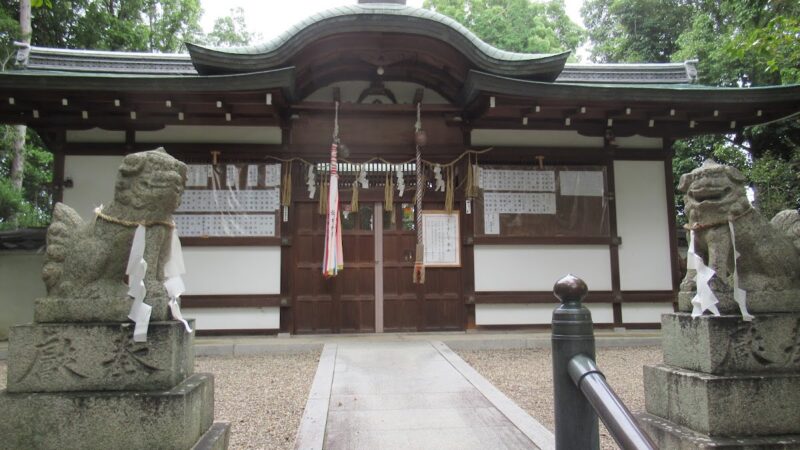
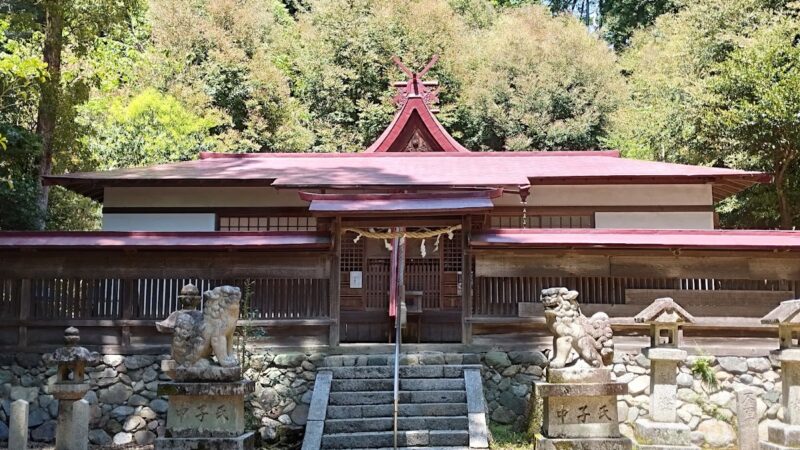
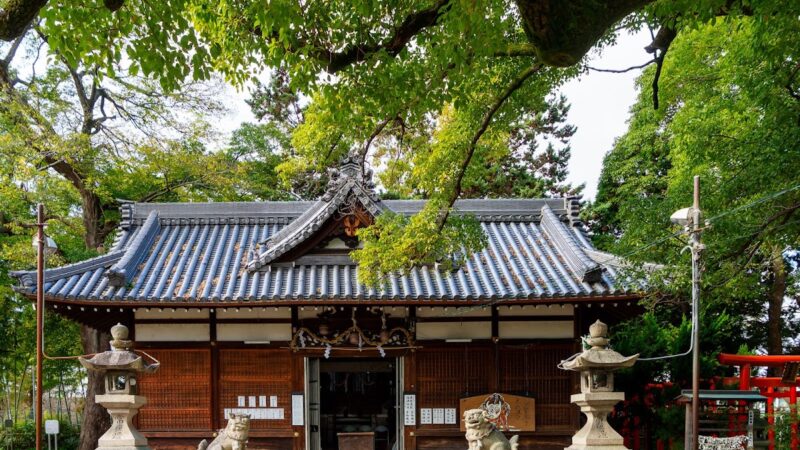
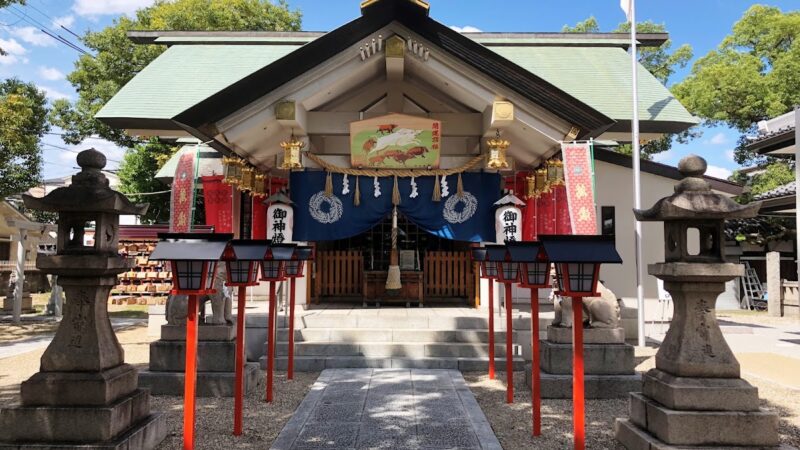
The main hall of Kawabe Hachiman Shrine is built in a traditional shrine architectural style, and its tranquil presence is impressive. The worship hall is where worshippers offer their prayers to the gods, and the well-maintained grounds are enveloped in a peaceful atmosphere that cleanses the soul.
The carvings and decorations of the main hall feature designs characteristic of Hachiman shrines, allowing visitors to appreciate the meticulously crafted architectural beauty down to the smallest detail.
Torii Gate and Approach
A magnificent torii gate stands at the entrance to the shrine, serving as a boundary separating the secular world from the sacred realm. Passing through the torii gate, the approach leads to the main hall.
The approach is paved with stone, and trees are planted on both sides. The nature of the grounds, which shows different expressions with each season, soothes the hearts of visitors.
Water Basin
A water basin is also provided for purifying the body and mind before worship. Please purify your hands and mouth using the correct etiquette before offering your prayers.
Procedure for Washing Hands:
- Take the ladle with your right hand and purify your left hand.
- Switch the ladle to your left hand and purify your right hand.
- Take the ladle back into your right hand, receive water in your left hand, and rinse your mouth.
- Purify your left hand once more.
- Hold the ladle upright, let the water flow over the handle, and return it to its original place.
Shrines and Stone Monuments
Besides the main shrine, Kawabe Hachiman Shrine’s grounds are dotted with small shrines and stone monuments. These are valuable cultural assets that tell the story of the region’s history and the diversity of its beliefs.
In particular, the stone monuments and memorials that tell the history related to the Yamato River diversion project are a unique highlight of this shrine. Those interested in history should definitely take their time to look at them.
Sacred Trees and Nature
Within the shrine grounds stands a magnificent, ancient sacred tree that has watched over the history of the shrine. A sacred rope (shimenawa) is stretched around the large tree, creating a sacred atmosphere.
One of the charms of Kawabe Hachiman Shrine is that you can enjoy the changing seasons: cherry blossoms in spring, lush greenery in summer, vibrant autumn leaves, and tranquility in winter.
Annual Events and Festivals
Autumn Festival (Grand Festival)
The most important annual event at Kawabe Hachiman Shrine is the Autumn Festival, held every year in mid-September. This festival is a major event for the entire community, bustling with many worshippers and local residents.
The Autumn Festival includes a procession of portable shrines and dedication ceremonies, preserving the traditional festival format. Local children also participate, making it a place for intergenerational exchange.
Autumn Festival Fireworks Display
The highlight of Kawabe Hachiman Shrine’s Autumn Festival is the fireworks display held at night. Taking advantage of its location near the Yamato River embankment, fireworks light up the night sky.
This fireworks display has been a long-standing local tradition and is a popular event attracting visitors from far and wide. The fireworks can be viewed from the shrine grounds and surrounding areas, creating a breathtaking spectacle that brilliantly illuminates the autumn night sky.
The fireworks display is usually scheduled for a weekend in mid-September each year, but this may change due to weather conditions. Therefore, it is recommended to inquire with the shrine or check local bulletin boards beforehand.
New Year’s Visit
The New Year’s visit is also an important event at Kawabe Hachiman Shrine. From January 1st to 3rd, many worshippers visit to pray for the new year.
The shrine is bustling with people praying for family safety, good health, business prosperity, and more. Temporary gift shops are set up on the shrine grounds, and lines form for people seeking amulets, protective arrows, and other items.
Other Annual Events
- Setsubun Festival (around February 3rd): Events such as bean-throwing are held, and prayers are offered for protection against evil.
- Summer Purification Ceremony (June 30th): A Shinto ritual to purify and cleanse away the sins and impurities accumulated over the past six months.
- Shichi-Go-San Festival (around November 15th): A visit to celebrate the growth of children.
- Year-End Purification Ceremony (December 31st): A Shinto ritual to purify oneself of the sins and impurities accumulated over the year and prepare for the New Year.
These events are still carefully preserved as traditional Japanese annual events.
Benefits and Divine Virtues of Kawabe Hachiman Shrine
Main Benefits
The main deity enshrined at Kawabe Hachiman Shrine, Emperor Ojin, was a real historical figure as the 15th Emperor of Japan, later deified as Hachiman-sama. Hachiman-sama has a strong character as a god of war, and is believed to offer the following benefits:
- Long-lasting military fortune and victory: Grants the strength to overcome difficulties.
- Protection from evil and disaster: Protects against various calamities.
- Family safety: Protects the peace and safety of the family.
- Safe childbirth and child-rearing: Due to its connection with Empress Jingu, the mother of Emperor Ojin, it also offers blessings for safe childbirth and child-rearing.
- National protection: Protects the peace of the country and region.
Proper etiquette for visiting a shrine
There are proper manners for visiting a shrine. At Kawabe Hachiman Shrine, please follow the basic etiquette below when visiting.
Two Bows, Two Claps, One Bow
- Stand in front of the main hall and bow slightly.
- Place your offering in the offering box.
- If there is a bell, ring it.
- Bow deeply twice (two bows).
- Clasp your hands twice at chest height (two claps).
- With your hands clasped together, silently recite your wish.
- Bow deeply once (one bow).
Amulets and Gifts
At Kawabe Hachiman Shrine, you can receive various amulets and gifts. Amulets are available to suit various wishes, such as traffic safety, academic success, and health and longevity.
Amulets are meant to make you feel the protection of the gods close at hand, so please carry them with you carefully. It is also considered good practice to return amulets that have expired after a year to the shrine and receive a new one.
Nearby Tourist Attractions and Points of Interest
Yamato River Riverbed
The Yamato River flows right beside Kawabe Hachiman Shrine, and a spacious riverbed stretches out before you. It’s a popular spot for local residents to relax, enjoy walks, jogging, and cycling.
In spring, cherry blossoms bloom, making it a popular spot for cherry blossom viewing. Furthermore, the riverbed offers a valuable space to feel the changing seasons and connect with nature.
History of the Nagayoshi Nagahara Area
The Nagayoshi Nagahara area, where Kawabe Hachiman Shrine is located, has a long history. Before the diversion of the Yamato River, it was one of the important areas of Kawachi Province.
The surrounding area is dotted with old buildings and historical sites that retain the atmosphere of the former highway, making it a great place to enjoy a historical stroll.
Other Shrines and Temples in Hirano Ward
In addition to Kawabe Hachiman Shrine, Hirano Ward in Osaka City has many other historical shrines and temples. If you have time, visiting them as well is recommended.
- Kuwata Shrine: A large shrine representative of Hirano Ward
- Dainenbutsu-ji Temple: The head temple of the Yuzu Nenbutsu sect
Visiting these temples and shrines allows you to experience the deep history and culture of Hirano Ward.
Points and Advice for Visiting Kawabe Hachiman Shrine
Suitable Time and Season for Visiting
Kawabe Hachiman Shrine is open year-round, but here are some particularly recommended times:
Spring (March-May): During cherry blossom season, the shrine grounds and surrounding nature are beautiful, and you can visit in pleasant weather.
Autumn (September-November): You can experience a special atmosphere during the autumn festival. It’s also a beautiful season for autumn foliage.
New Year’s Visit (January 1st-3rd): You can visit in a special New Year’s atmosphere, but crowds are expected.
As for time of day, early morning or late morning is relatively quiet and recommended for a peaceful visit.
Attire and Belongings
While no special attire is required for visiting the shrine, please dress neatly and respectfully to show devotion to the gods.
Checklist of Items to Bring:
- Goshuincho (stamp book) (if you wish to receive a Goshuin stamp)
- Offering money (small change is convenient)
- Camera (photography is permitted within the shrine grounds, but please check beforehand regarding the interior of the main hall, etc.)
- Drinks (especially in summer to prevent heatstroke)
Photography Etiquette
Photography is generally permitted within the shrine grounds, but please observe the following etiquette:
- Check beforehand regarding photography inside the main hall or in sacred areas
- Be considerate of other visitors
- Use tripods sparingly
- When posting on social media, be mindful not to detract from the shrine’s atmosphere
Coexistence with the Community
Kawabe Hachiman Shrine is located in a residential area, so please be considerate of the surrounding residents when visiting.
- Please refrain from loud conversations.
- When parking, please be careful not to disturb the neighbors.
- Please take your trash with you.
- Please refrain from visiting at night.
Summary: The Charm of Kawabe Hachiman Shrine
Kawabe Hachiman Shrine is a historic shrine that has been preserved and passed down through the faith of the local people, despite experiencing a historical turning point with the diversion of the Yamato River.
With a history of inviting a divided spirit from Iwashimizu Hachiman Shrine, Kawabe Hachiman Shrine, which enshrines Emperor Ojin as its main deity, is believed to offer blessings for military success, protection from evil, and family safety. In particular, the autumn festival and fireworks display held in mid-September each year are popular events representing the region.
It is easily accessible, about a 12-minute walk from Nagahara Station on the Osaka Metro Tanimachi Line, and you can visit the shrine peacefully in a calm environment near the Yamato River embankment. Goshuin (shrine stamps) are also available, and many people visit to commemorate their visit.
Kawabe Hachiman Shrine is a valuable cultural asset that preserves the history of flood control in Osaka. Why not take some time to quietly pray in its peaceful grounds, away from the hustle and bustle of the city, while reflecting on its history? The warm atmosphere of this shrine, which has been cherished by the local community for generations, will gently welcome all who visit.