Complete Guide to Okoma Shrine (Kashiwara City, Osaka Prefecture) | History, Deities, and Access Information for this Shikinaisha Shrine
Okoma Shrine, located in Hondo, Kashiwara City, Osaka Prefecture, is a Shikinaisha shrine with deep ties to the Okoma clan, an ancient Korean clan. As a historical shrine listed in the Engishiki Jinmyocho (a list of shrines compiled in the Heian period), it has attracted the faith of the local community. This article provides a detailed introduction to Okoma Shrine, including its historical background, enshrined deities, highlights within the grounds, and information on surrounding cultural properties.
Basic Information on Okoma Shrine
Okoma Shrine is identified as the “Okoma Shrine” listed in the Kinai region, Kawachi Province, Oagata District, in the Engishiki Jinmyocho (a list of shrines compiled in the Heian period). In the modern shrine ranking system, it was classified as a village shrine.
Location: 388 Hondō, Kashiwara City, Osaka Prefecture
Phone Number: 072-979-0683
Former Province/County: Ōagata District, Kawachi Province
Shrine Rank: Shikinaisha (Minor Shrine), Former Village Shrine
Jurisdiction: Osaka Prefectural Shrine Association, 6th Branch
The Hondō area of Kashiwara City has flourished as a transportation hub since ancient times, located at an important point where water transport on the Yamato River and land routes intersect.
Deity of Ōkoma Shrine
The deity enshrined at Ōkoma Shrine is said to be the Ōkoma-no-Muraji no Oya (ancestor of the Ōkoma clan). The Ōkoma clan was one of the Korean clans that immigrated to ancient Japan, settling in this region and bringing various technologies and cultures with them.
About the Okoma Clan
The Okoma clan is believed to be descended from a clan that immigrated from Goguryeo (Goryeo) on the Korean Peninsula, and they held power primarily in Oagata District, Kawachi Province. They are thought to have brought advanced technologies such as blacksmithing, weaving, and civil engineering, making a significant contribution to the development of ancient Japan.
Okoma Shrine was founded by this clan to enshrine their ancestral deity and has functioned as a place to pray for the clan’s prosperity and the protection of the region. Many immigrant clans settled in Kawachi Province, and the Okoma clan is a representative family that has left its mark on history.
History of Okoma Shrine
Founding and Ancient Times
The exact founding date of Okoma Shrine is unknown, but its inclusion in the Engishiki Jinmyocho (compiled in 927) confirms its existence at least by the early Heian period. It is believed that the actual founding date is even older, likely predating the Nara period.
The Oagata district of Kawachi Province was an important region in ancient times, and many Shikinaisha (shrines listed in the Engishiki, an ancient Japanese legal code) are concentrated there. Within the same city of Kashiwara, there are several Shikinaisha, including Takuhiko Takuhime Shrine, Kokubun Shrine, Kanayamahiko Shrine, and Kanayamahime Shrine, attesting to the religious and political importance of this region.
Medieval to Early Modern Period
Detailed records of Okoma Shrine from the medieval period onward are limited, but it continued to attract the faith of villagers as the local tutelary deity. Despite the wars of the Sengoku period and the social changes of the Edo period, it survived as the center of the local community.
Modern Period
With the reform of the shrine system during the Meiji era, Okoma Shrine was ranked as a village shrine. It came under the jurisdiction of the Osaka Prefectural Shrine Association and continues to be maintained as a local shrine. Even amidst the waves of modernization, it is one of the valuable shrines that continues to preserve its ancient traditions.
Highlights of the Shrine Grounds
Main Hall and Worship Hall
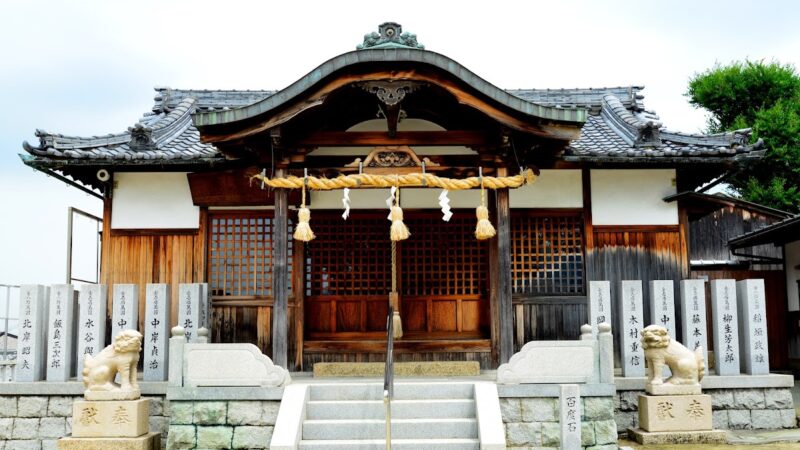
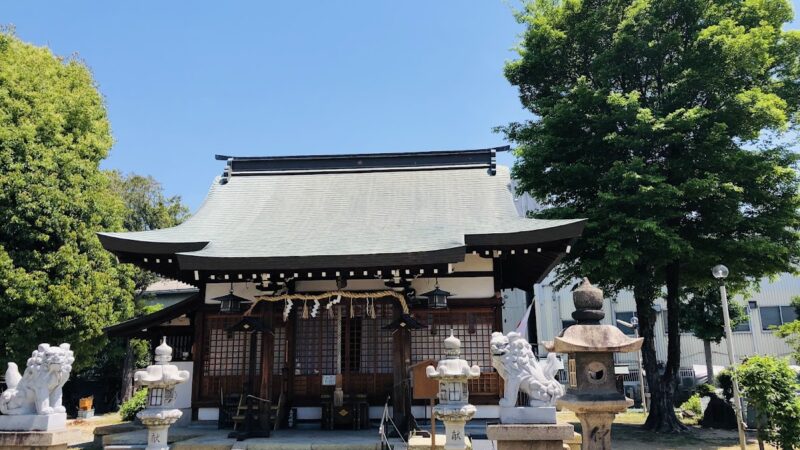
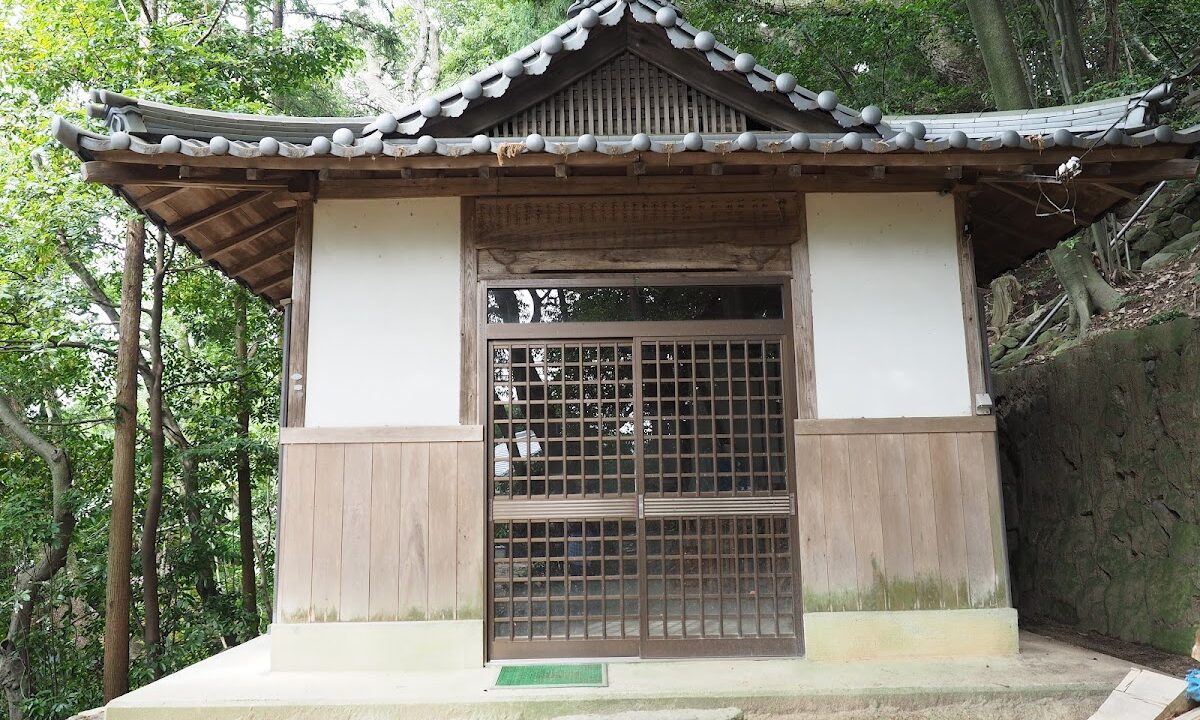
The main hall of Okoma Shrine maintains a traditional shrine architectural style. Although small in scale, it is meticulously maintained, reflecting the deep faith of the local people.
Adjacent to Shōanji Temple
Ōkoma Shrine is adjacent to Shōanji Temple, a layout that suggests the remnants of the syncretism of Shinto and Buddhism. It appears that before the separation of Shinto and Buddhism in the Meiji era, shrines and temples formed a unified place of worship.
Tranquil Grounds
Despite being located in a residential area, the shrine grounds maintain a quiet and peaceful atmosphere. Surrounded by ancient trees, the grounds are a valuable green space even in today’s increasingly urbanized world.
Surrounding Burial Mounds and Artifacts
Excellent artifacts from the Kofun period have been unearthed in the area surrounding Ōkoma Shrine. These are important archaeological evidence demonstrating the advanced technology and cultural level of immigrant clans, including the Ōkoma clan.
Numerous burial mounds, such as the Anpukuji Cave Tombs and the Tamateyama Burial Mounds, are distributed within the Kashiwara City area, indicating that this region was an important residential area from ancient times. The excavated grave goods include gilded bronze artifacts, Sue ware pottery, and iron artifacts, demonstrating the high level of technical skill of the immigrant clans.
Other Shikinaisha Shrines in Kashiwara City
Kashiwara City, where Okoma Shrine is located, has a high concentration of Shikinaisha shrines. Visiting these together will allow for a deeper understanding of the ancient religious culture of Kawachi Province.
Takuhiko Takuhime Shrine
This Shikinaisha shrine is located in Oagata, Kashiwara City, and was formerly known as “Takao Daimyojin” and “Hime Kasuga Gozen.” It enshrines Takuhiko-no-Mikoto and Takuhime-no-Mikoto and is revered as an important shrine in the region.
Kokubun Shrine
Located in Kokubun Ichiba, Kashiwara City, this former village shrine enshrines Okuninushi-no-Mikoto, Sukunahikona-no-Mikoto, and Asuka-no-Okami. It belongs to the Yasube District of Kawachi Province, and its annual festival is held on July 17th and October 17th.
Kanayamahiko Shrine and Kanayamahime Shrine
The Kanayamahiko Shrine and Kanayamahime Shrine, located in Enmyo-cho, Kashiwara City, are worshipped as gods of mining and blacksmithing. They are thought to have a deep connection to the iron-making technology brought by immigrant clans.
Other Shrines in Kashiwara City
Kashiwara City has numerous shrines, including Amayukawada Shrine, Ishi Shrine, Kasuga Shrine, Ninomiya Shrine, Katayama Shrine, Sukunagawada Shrine, Hakutahiko Shrine, Hakutahime Shrine, Hachiman Shrine, Wakayamahiko Shrine, Wakayamahime Shrine, Kashiwara Kuroda Shrine, and Kashiwara Shrine. Visiting these shrines allows you to experience the history of local faith from ancient times to the present day.
Access Methods
Access by Train
Nearest Station: JR Yamatoji Line (Kansai Main Line) “Kashiwara Station” or Kintetsu Osaka Line “Katashita Station”
- Approximately 15 minutes on foot from JR Kashiwara Station
- Approximately 20 minutes on foot from Kintetsu Katashishita Station
Access by Car
Major Roads: National Route 25, Prefectural Route 185
- Approximately 10 minutes from Nishimeihan Expressway “Kashiwara IC”
- Parking: There is parking space for visitors on the shrine grounds, but the number of spaces is limited.
Landmarks in the Surrounding Area
Since it is adjacent to Shoanji Temple, using Shoanji Temple as a landmark will make it easier to find. The Hondo area of Kashiwara City is a residential area, but locals will kindly give you directions if you ask.
Points to Note When Visiting
Visiting Hours
Okoma Shrine is generally open for free visits. However, it is recommended to avoid visiting early in the morning or late at night, and instead visit during daylight hours.
About Goshuin (Shrine Seals)
We recommend calling ahead to confirm the availability of Goshuin (Shrine Seals) (Tel: 072-979-0683). As it is a small shrine, there may not be a resident priest.
Annual Festivals and Rituals
For information on local rituals, please contact the Osaka Prefectural Shrine Association or the shrine directly. During the autumn annual festival, local people gather for traditional ceremonies.
Osaka Prefectural Shrine Association and Shrines in Kashiwara City
Okoma Shrine is under the jurisdiction of the 6th Branch of the Osaka Prefectural Shrine Association. The Osaka Prefectural Shrine Association is an organization that oversees shrines within Osaka Prefecture, managing shrines, ensuring the continuation of rituals, and training Shinto priests.
Kashiwara City is located in the eastern part of Osaka Prefecture, bordering Nara Prefecture. It flourished as a transportation hub connecting Yamato and Kawachi since ancient times, and many historical legacies remain. The city has numerous Shikinaisha (shrines listed in the Engishiki) and is known as a “town of shrines.”
Historical Background of Ōagata District, Kawachi Province
Ōagata District in Kawachi Province was an important region in ancient Japan. It was close to the Yamato court and is known as a region where many immigrants settled.
Settlement of Immigrant Clans
Besides the Ōkoma clan, many immigrant clans, such as the Hata and Han clans, resided in this region. They brought advanced technology and culture, making a significant contribution to the development of ancient Japan. They played a particularly important role in fields such as ironworking, weaving, civil engineering, and agricultural technology.
Kofun Culture
The Kawachi Plain was one of the centers of the Kofun period, and numerous burial mounds were constructed. Many burial mounds remain around Kashiwara City, indicating the presence of powerful figures of the time.
Introduction of Buddhist Culture
From the Asuka period to the Nara period, many temples were built in Kawachi Province. Under the system of Kokubunji and Kokubun-niji temples, official temples were established in each province, and the Kawachi Kokubunji was also located within Kashiwara City.
Value as a Shikinaisha Shrine
Shikinaisha shrines, listed in the Engishiki Jinmyocho (a list of shrines compiled in the Heian period), are high-ranking shrines that received special treatment from the imperial court during the Heian period. Approximately 3,000 such shrines are listed nationwide, and Okoma Shrine is one of them, possessing historical value.
What is the Engishiki Jinmyocho?
The Engishiki Jinmyocho is part of the Engishiki, compiled in 927 AD, and is an important historical document recording the official shrines of the time. It lists shrines by province in the Kinai region and the seven circuits, making it a valuable resource for understanding the distribution of shrines and aspects of religious beliefs in ancient times.
Shikinaisha Shrines in Kawachi Province
Kawachi Province has 113 Shikinaisha shrines listed, a relatively large number even within the Kinai region. This indicates that Kawachi Province was close to the imperial court and a politically and economically important region.
Significance of Visiting Okoma Shrine
Although Okoma Shrine is not large in scale, it is worth visiting for the following reasons:
Deepening Understanding of Ancient History
By tracing the footsteps of immigrant clans, you can truly appreciate how ancient Japan was shaped by people with diverse cultural backgrounds. Considering the role played by immigrant clans like the Okoma clan in Japanese history offers valuable insights for understanding modern multicultural coexistence.
Experiencing Local Faith and Culture
Small, community-based shrines possess a different charm than large, tourist-oriented shrines. You can witness shrines that continue to thrive as everyday places of worship for local people.
A Quiet Worship Experience
Away from the hustle and bustle of urban areas, you can have time to quietly contemplate history. Because it’s less crowded, you can worship at your own pace and savor the atmosphere of the shrine grounds.
Nearby Tourist Attractions
When visiting Okoma Shrine, we recommend also exploring other tourist attractions in Kashiwara City and the surrounding area.
Kashiwara City Historical Museum
A facility where you can learn about the history and culture of Kashiwara City. The museum displays materials from the Kofun period to modern times, helping visitors understand the historical background around Okoma Shrine.
Tamateyama Park
Known as a famous cherry blossom viewing spot, this park is bustling with many visitors in spring. Ancient burial mounds are scattered throughout the park, making it suitable for historical walks.
Yamato River
The Yamato River, flowing through Kashiwara City, has been an important waterway since ancient times. The riverbanks are maintained as walking paths, allowing visitors to enjoy nature while strolling.
Kamesen Landslide Museum
Located on the border of Kashiwara City and Nara Prefecture, this museum offers a history of landslide prevention. Recommended for those interested in the history of civil engineering.
Summary
Okoma Shrine, located in Hondo, Kashiwara City, Osaka Prefecture, is a historically important shrine associated with the ancient immigrant clan, the Okoma clan, and is listed in the Engishiki Jinmyocho (a list of shrines compiled in the Heian period). Although small in scale, it continues to attract local devotion as a venerable shrine listed in the Engishiki Jinmyocho.
Located in the ancient and important region of Oagata District in Kawachi Province, Okoma Shrine is surrounded by numerous Shikinaisha (shrines listed in the Engishiki) and burial mounds. Visiting Okoma Shrine offers a valuable opportunity to understand the multicultural origins of ancient Japan and consider the role played by immigrant clans.
When visiting Kashiwara City, be sure to stop by Okoma Shrine and reflect on its ancient history in its tranquil grounds. Visiting nearby Shikinaisha such as Takuhiko Takuhime Shrine, Kokubun Shrine, Kanayamahiko Shrine, and Kanayamahime Shrine will allow you to experience the history and culture of Kawachi Province more deeply.
Please refer to the Osaka Prefectural Shrine Association website and Kashiwara City’s tourist information for further details and enjoy a fulfilling shrine tour.