Complete Guide to Ogase Shrine (Higashi-Osaka City, Osaka Prefecture): A Sacred Site of Wind God Worship Situated on a Burial Mound
Ogase Shrine, located in Yokokoji-cho, Higashi-Osaka City, Osaka Prefecture, is known for its unusual location—built on a burial mound—and its long history as a shrine dedicated to the wind god. It enshrines the same deity as Tatsuta Shrine, which is listed in the Engishiki Jinmyocho (a historical record of shrines), and has long been revered as the local guardian deity. This article provides a detailed explanation of Ogase Shrine’s history, enshrined deity, access methods, cultural properties, and surrounding attractions.
Basic Information on Ogase Shrine
Ogase Shrine is located at 2-1-45 Yokokoji-cho, Higashi-Osaka City, Osaka Prefecture (some sources list it as 46). Under the modern shrine ranking system, it was classified as a village shrine and is still revered by local residents as the guardian deity of Yokokoji-cho.
Location and Access
Address: 2-1-45 Yokokoji-cho, Higashi-Osaka City, Osaka Prefecture 579-8063
Phone Number: 072-986-5253
Nearest Station: Approximately 20 minutes on foot (approx. 1.7 km) from the South Exit of Hyotan-yama Station on the Kintetsu Nara Line
The shrine is located in a residential area, situated on a slightly elevated area. While walking from Hyotan-yama Station is the most common way to access it, it’s recommended to allow ample time due to the distance. Visiting by car is possible, but parking space is limited, so please be aware of this.
History and Origins of Ogase Shrine
Background of Founding
The founding date of Ogase Shrine is unknown, but based on its location and enshrined deities, it is believed to have a history dating back to ancient times. The shrine is situated atop a burial mound called the Ōgase Kofun, and it is believed that smaller burial mounds, often accompanied by haniwa (clay figures), were scattered around this central mound.
The fact that a shrine was built on top of a circular burial mound from the Kofun period suggests that this area was recognized as a sacred place from ancient times. The relationship between the burial mound and the shrine is a valuable example illustrating the continuity between ancient Japanese beliefs and Shinto.
Relationship with Tatsuta Shrine
Ōgase Shrine enshrines two deities: Amenomihashira-no-kami and Kuninomihashira-no-kami. These deities are identical to those enshrined at Tatsuta Shrine (a former Kanpei Taisha shrine located in Tateno, Sango-cho, Ikoma-gun, Nara Prefecture), which is listed in the Engishiki Jinmyōchō (a list of shrines compiled in the Heguri era) as “Tatsuta-ni-imasu Amenomihashira-Kunimihashira Shrine, two deities, and Myōjin Ōtsukitsuji Niiname-sai.”
Amenomihashira-no-kami and Kunimihashira-no-kami are also known as Shinatsuhiko-no-kami and Shinatsuhime-no-kami, respectively, and have been worshipped since ancient times as gods who control the wind. Ogase Shrine is thought to have been established at some point by inviting the deities from Tatsuta Shrine, and is an important shrine demonstrating the spread of wind god worship.
Changes during the Meiji Period
Due to the Meiji era’s shrine reorganization policy, Ogase Shrine underwent significant changes.
1872 (Meiji 5): On June 26th, it was merged with Hiraoka Shrine, located in Izumoi-cho, in the same city, under the name “Tatsuta Shrine.” During this period, a policy of consolidating small shrines was being implemented nationwide, and Ogase Shrine was among those targeted.
1880 (Meiji 13): On March 27th, at the strong request of local residents, it was restored (rebuilt) on its original site. Although the period of joint enshrinement was only eight years, it is evident that the absence of the local guardian deity was unbearable for the people of the region.
This restoration of the shrine is recorded as an event demonstrating the importance of the shrine to the local community and the strength of the residents’ faith.
Deities and Beliefs
Amenomihashira-no-kami and Kunimihashira-no-kami (Wind Gods)
Amenomihashira-no-kami and Kunimihashira-no-kami, the deities enshrined at Ogase Shrine, are known as gods who control the wind. They are also known as Shinatsuhiko-no-kami and Shinatsuhime-no-kami, names derived from ancient Japanese words meaning “wind god.”
In ancient Japan, wind was an important natural phenomenon that directly affected agriculture and navigation. Moderate winds helped crops grow, dried grains, and propelled ships. On the other hand, storms were a terrifying force that brought disaster. Therefore, the worship of wind gods, praying for calming the winds and for beneficial winds, developed throughout the country.
Connection to the Aza-Ōkaze Area
Oogase Shrine is recorded as being located on top of the Ōgase Kofun (ancient burial mound) in the Aza-Ōkaze area. The place name “Ōkaze” itself suggests a deep connection to wind god worship. The character “風” (wind) remaining in the place name indicates that this area has long been deeply connected to wind.
As the Guardian Deity of Yokokōji Town
Oogase Shrine has been deeply intertwined with the lives of the local residents as the guardian deity of Yokokōji Town. A guardian deity is a god that protects the people living in a specific area and is a core element of that area’s identity. During annual events and at important life milestones, local people have visited Oogase Shrine to pray for divine protection.
Cultural Properties and Architecture
Main Hall Designated as a City-Designated Tangible Cultural Property
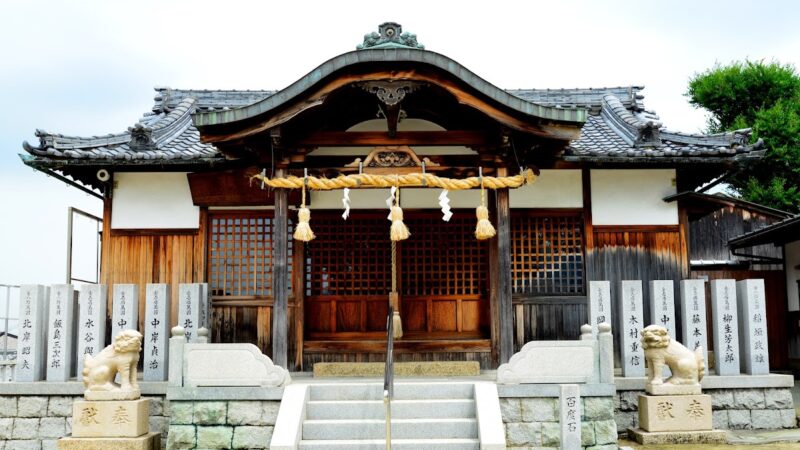
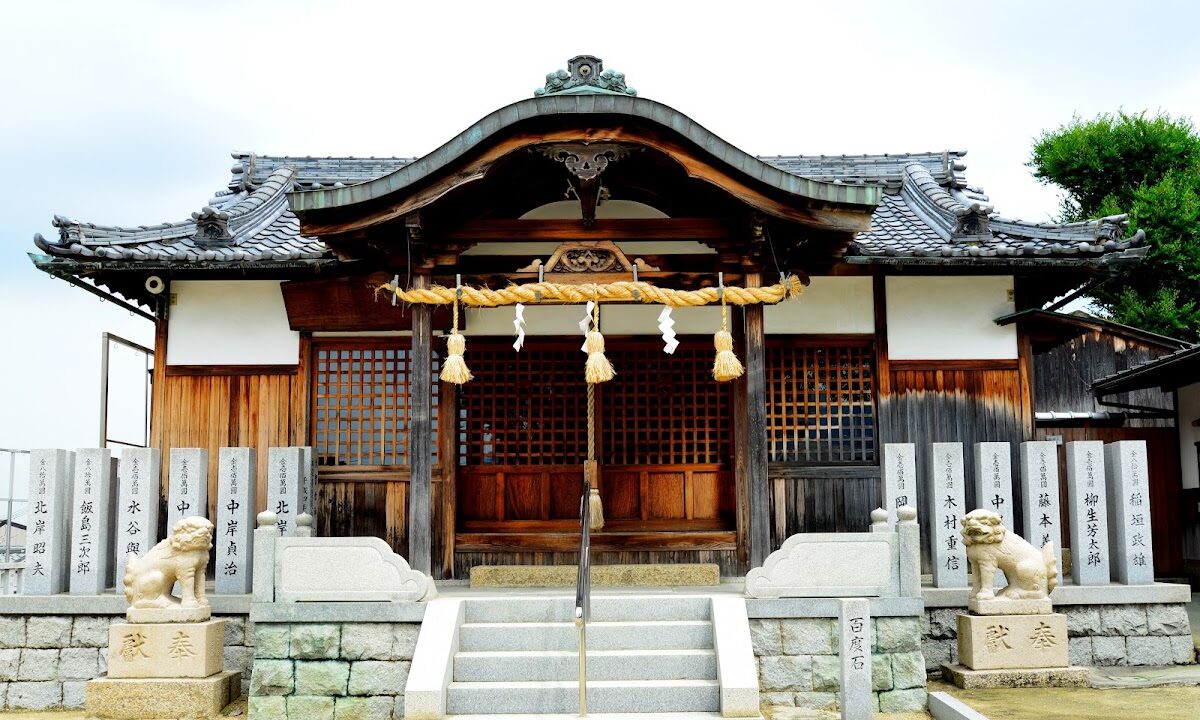
The main hall of Oogase Shrine is a valuable building designated as a Higashi-Osaka City-Designated Tangible Cultural Property.
Architectural Style: Ikkensha Kasuga-zukuri (One-Bay Kasuga Style)
Roof: Kokerabuki (Persimmon-Stone Bark Roof)
Construction Period: Mid-Edo Period
Current Status: Protected by a protective structure
The Kasuga-zukuri style is a shrine architectural style exemplified by Kasuga Taisha Shrine in Nara, characterized by a gabled roof with an overhang in front. “Ikkensha” refers to a shrine with a front column spacing of one ken (approximately 1.8 meters). Kokerabuki is a traditional roofing method using multiple layers of thin wooden planks, a rare technique today.
The main hall is protected by a protective structure to shield it from wind and rain, but its exquisite construction demonstrates the high level of architectural technology of the mid-Edo period. Its designation as a cultural property further acknowledges its high historical and artistic value.
Location on a Burial Mound
The most distinctive feature of Ogase Shrine is its location on top of a burial mound. The shrine is situated on a circular mound that is significantly higher than the surrounding land, and this mound has been confirmed to be a circular burial mound from the Kofun period (Tumulus period).
It is believed that numerous small burial mounds, often accompanied by haniwa (clay figures), were scattered around the area, and the burial mound on which Oogase Shrine stands is thought to have been the central one. While archaeological excavations are limited due to the existence of the shrine, the burial mound is an important site for understanding the ancient history of the region.
There are various interpretations regarding the relationship between the burial mound and the shrine, including the theory that the shrine was built on top of the mound to enshrine the spirit of the deceased, and the theory that the elevated area of the burial mound was recognized as a sacred place and chosen as the site for the shrine. In any case, it can be said to be a valuable example demonstrating the continuity of a place of worship that has continued since ancient times.
Highlights for Visitors
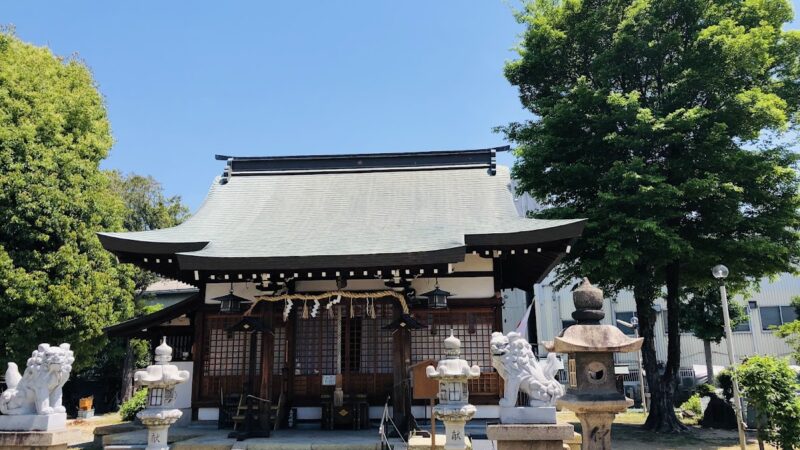
Atmosphere of the Shrine Grounds
Although Oogase Shrine is located in a residential area, its elevated position creates a unique sense of tranquility and sacredness upon entering the grounds. Due to its location atop an ancient burial mound, the shrine’s structure involves ascending a path to reach the grounds, allowing visitors to experience a sense of transition from everyday life to a sacred space.
Although small, the grounds are meticulously maintained, reflecting the care and dedication of the local community. In the increasingly urbanized city of Higashi-Osaka, the preservation of such a tranquil space for prayer is invaluable.
Points to Note When Visiting Oogase Shrine
When visiting Oogase Shrine, please pay attention to the following points:
- Location on a Burial Mound: From the elevated grounds, you can truly feel that this place has been special since ancient times.
- Main Hall Architecture: Through the gaps in the protective structure, you can observe the beautiful architecture of the Kasuga-style main hall from the mid-Edo period.
- Prayer to the Wind God: Prayers to the god who controls the wind still hold significance today for stable weather and protection from disasters.
- Connection to the Community: You can feel the presence of a shrine deeply rooted in the community as the local guardian deity.
Nearby Shrines, Temples, and Tourist Spots
Hiraoka Shrine
Located approximately 3 kilometers from Ogase Shrine, Hiraoka Shrine is a prestigious shrine known as the Ichinomiya (first-ranked shrine) of Kawachi Province. It also has a historical connection, having been temporarily merged with Ogase Shrine in 1872 (Meiji 5).
Hiraoka Shrine enshrines Amenokoyane-no-Mikoto as its main deity and is considered the original shrine of Kasuga Taisha. With its vast grounds and magnificent shrine buildings, it is bustling with many worshippers during New Year’s visits and autumn festivals. Visiting both Ogase Shrine and Hiraoka Shrine will allow you to gain a deeper understanding of the history of shrine worship in this region.
Hyotan-yama Inari Shrine
Hyotan-yama Inari Shrine, which gives its name to the nearest station, Hyotan-yama Station, is also an important shrine in the area. Known as a god of business prosperity, it is crowded with many worshippers on its monthly festival day, the 18th. It is also famous for its unique form of fortune-telling called Tsujiura, and the approach to the shrine is lined with many stalls, creating a lively atmosphere.
Ishikiri Tsurugiya Shrine
Ishikiri Tsurugiya Shrine, one of the representative shrines of Higashi-Osaka City, is located about 5 kilometers from Ogase Shrine. Affectionately known as “Ishikiri-san,” it is nationally known as a god that heals swellings.
The approach to the shrine is lined with old-fashioned shops, creating a unique atmosphere with fortune-telling stalls and herbal medicine shops.
Mount Ikoma
Mount Ikoma rises to the east of Higashi-Osaka City and is a popular spot for hiking and enjoying night views. There are also many attractions, such as Ikoma Sanjo Amusement Park and Hozanji Temple. After visiting Ogase Shrine, if you have time, it is recommended to extend your trip towards Mount Ikoma.
Wind God Worship and Tatsuta Shrine-related Shrines in Osaka Prefecture
Several shrines in Osaka Prefecture, like Ogase Shrine, enshrine the wind god, the deity of Tatsuta Shrine. These shrines demonstrate the widespread wind god worship in ancient times and the significant influence of Tatsuta Shrine.
Wind god worship was particularly prevalent in agricultural areas, with the purpose of protecting crops from typhoons and strong winds, and praying for a bountiful harvest through moderate winds. Furthermore, the Kawachi Plain was a region where water transport developed from ancient times, and wind was a crucial factor for navigation. These regional characteristics are thought to have contributed to the establishment of wind god worship.
Annual Events and Festivals
Ogase Shrine is a small shrine, and therefore does not hold large-scale festivals. However, it does hold annual events as the local tutelary shrine.
Annual Festival
An annual festival as the local tutelary shrine is held once a year, with local residents participating in the religious rites. The specific date may vary from year to year, so it is recommended that those planning to visit check in advance. ### Daily Worship
Even outside of the annual festival period, local residents regularly visit the shrine. It remains a place of worship for important life events such as New Year’s visits, Shichi-Go-San (a traditional rite of passage for children), and exorcisms, maintaining a deeply rooted community faith.
Etiquette and Manners for Worship
When visiting Ogase Shrine, please observe basic shrine worship etiquette.
Basic Worship Etiquette
- Bow before passing through the torii gate: Bow respectfully before entering the sacred area.
- Walking along the approach: The center of the approach is considered the path of the gods, so it is preferable to walk along the sides.
- Water purification ritual: If there is a water purification basin, purify your hands and mouth before worship.
- Etiquette at the main hall: Two bows, two claps, and one bow are the basic rituals.
- Bow deeply twice.
- Clap your hands twice at chest height.
- Bow deeply once at the end.
- Upon Exiting: After exiting the torii gate, turn around and bow once.
Photography Etiquette
Photography is generally permitted on the shrine grounds, but please observe the following points:
- Refrain from photographing sacred areas such as the interior of the main hall.
- Be considerate of other worshippers.
- Avoid using flash photography.
- Obtain prior permission for commercial photography.
The Charm and Value of Ogase Shrine
Historical Value
Ogase Shrine has a long history, possibly dating back to the Kofun period. Its connection to Tatsuta Shrine, listed in the Engishiki Jinmyocho (a list of shrines compiled in the Heian period), makes it a valuable shrine that preserves ancient wind god worship. The history of its merger and restoration during the Meiji period is an important example of how local communities protected their tutelary deities amidst modernization.
Cultural Value
The main shrine building, constructed in the mid-Edo period, is protected as a city-designated tangible cultural property, conveying the architectural techniques and aesthetic sensibilities of the time to the present day. The Kasuga-zukuri style (one-bay shrine) and the kakibuki (persimmon bark) roofing method are important elements that demonstrate the characteristics of traditional shrine architecture.
Archaeological Value
Its location atop a burial mound indicates a continuity as a sacred site dating back to ancient times. Records of small burial mounds accompanied by haniwa (clay figures) scattered around the area suggest that this region was important during the Kofun period, making it an archaeologically interesting site.
Value as a Local Culture
As the tutelary shrine of Yokokoji-cho, Ogase Shrine has served as a spiritual center for the local community. Even in modern times of increasing urbanization, it plays an important role in maintaining local traditions and bonds. Its small size, yet deeply rooted community, symbolizes the richness of Japanese regional culture.
Important Notes for Visitors
Access
The shrine is approximately a 20-minute walk from Hyotan-yama Station, the nearest station. Please be especially careful during the summer or in bad weather. We recommend wearing comfortable shoes. Also, as it is located in a residential area, checking the route in advance using a map app will make your visit smoother.
Parking
Due to the small size of the shrine, dedicated parking is limited. If you are visiting by car, please consider using nearby paid parking lots or public transportation.
Visiting Hours
Oogase Shrine is open for worship at all times, but the shrine office may not always be staffed. If you wish to obtain a Goshuin (shrine stamp) or receive detailed information, we recommend calling in advance.
Consideration for Local Residents
Since the shrine is located in a residential area, please be considerate of the residents’ lives during your visit and avoid loud conversations and noise.
Current Status and Challenges of Research on Ogase Shrine
While the basic history and deities of Ogase Shrine are recorded in historical documents, detailed research is insufficient. Further research is needed, particularly in the following areas:
Relationship with Kofun (Ancient Burial Mounds)
Detailed investigation of the burial mound on which the shrine is located is difficult due to the shrine’s existence. However, non-destructive research methods such as surrounding archaeological excavations and ground-penetrating radar surveys may reveal the size and structure of the burial mound.
Timing of the Invitation from Tatsuta Shrine
The exact timing of the invitation from Tatsuta Shrine to Ogase Shrine is unclear. If this period can be identified through careful examination of historical documents and archaeological investigations, a more detailed understanding of the spread of wind god worship from ancient to medieval times will be possible.
Positioning in Local History
More detailed research is needed regarding the role of Ogase Shrine in the local history of Yokokoji-cho and Higashi-Osaka City. Interviews with local elders and examination of documents remaining in the area could clarify the relationship between the shrine and the local community in modern and contemporary times.
Summary: The Significance of Visiting Ogase Shrine
Ogase Shrine is a small shrine quietly nestled in a residential area of Higashi-Osaka City, Osaka Prefecture, but its history and cultural value are immense. Its location, potentially dating back to the Kofun period, its connection to Tatsuta Shrine (listed in the Engishiki Jinmyocho), its valuable main hall architecture from the mid-Edo period, and its history of merger and restoration during the Meiji era—all of these are condensed within this small shrine.
As a shrine dedicated to the wind god, Ogase Shrine conveys the history of people’s reverence for the power of nature since ancient times, their prayers for its blessings, and their desire for protection from disaster. Even in today’s increasingly urbanized world, its continued presence as a local guardian deity demonstrates the richness and strength of Japanese regional culture.
Visiting Ogase Shrine is not merely sightseeing; it is a valuable opportunity to experience Japanese history, culture, and the bonds of a local community. When visiting Higashi-Osaka City, be sure to visit this historic shrine and feel the spirit of the ancient wind god worship.
Osaka Prefecture boasts numerous shrines and temples, but shrines like Ogase Shrine, situated atop ancient burial mounds and preserving the ancient belief in the wind god, are rare. Spending time in its tranquil grounds, contemplating the weight of history and the faith of the local people, will surely be a memorable experience.