Complete Guide to Fumotomi Shrine (Osaka Prefecture) | The Wind God Who Appeared Overnight and the Legendary Yaho-sama
Fumotomi Shrine, located on the summit of Mt. Fumotomi in Chihayaakasaka Village, Minamikawachi District, Osaka Prefecture, is known as one of the most secluded shrines in Osaka Prefecture. This shrine holds many charms and mysteries, including the wind god enshrined on the mountaintop with a mysterious legend of appearing overnight, and the sumo wrestling ritual of “Yaho-sama,” a local legend.
This article comprehensively introduces information you should know before visiting Fumotomi Shrine, including its history, enshrined deities, unique legends, access methods, and highlights for worshippers.
What is Fumotomi Shrine? | The Only Mountaintop Shrine in a Village in Osaka Prefecture
Fumotomi Shrine is located at 1129 Azumazaka, Chihayaakasaka Village, Minamikawachi District, Osaka Prefecture. Chihayaakasaka Village is known as the only “village” in Osaka Prefecture and is surrounded by the rich natural beauty of the foothills of Mount Kongo.
The most distinctive feature of this shrine is its location on the summit of Mount Fumotomi. Although the elevation is not particularly high, the path to the summit is steep, making it one of the most difficult shrines to visit in the Minami-Kawachi region. Therefore, it receives few visitors, making it a precious sacred site where one can worship in a tranquil atmosphere.
Basic Information about the Shrine
- Official Name: Fumotomi Shrine
- Location: 1129 Higashisaka, Chihayaakasaka-mura, Minamikawachi-gun, Osaka 585-0055, Japan
- Deities Enshrined: Ame-no-kami-hashira-no-mikoto, Kuni-no-kami-hashira-no-mikoto
- Divine Status: God of Wind
- Contact Information: Otsu Shrine (TEL: 072-955-0945)
- Management: Otsu Shrine manages the shrine concurrently
History and Origin of Fumotomi Shrine
Fumotomi Shrine is said to have been founded in ancient times, dating back to the reign of Emperor Monmu (697-707). The person involved in its founding was En no Gyoja, known as the founder of Shugendo (mountain asceticism).
En no Gyoja was a legendary mountain ascetic who was active mainly in Yamato Province (present-day Nara Prefecture) and is said to have opened many sacred mountains. It is also said that En no Gyoja, feeling a divine presence, invited the wind god to this location and founded the shrine.
Reasons for Worshipping the Wind God
The enshrined deities, Amegami Hashira no Mikoto and Kunigami Hashira no Mikoto, are both gods who control wind. In ancient times, wind was both a blessing that brought bountiful harvests and a threat that brought disasters such as typhoons. It is believed that by building a shrine on a mountaintop, a wind tunnel, and worshipping the wind god, the village was protected from wind damage, and prayers were offered for a bountiful harvest through moderate winds.
The area at the foot of Mount Kongo has long been a thriving agricultural region, with a lifestyle centered around rice cultivation. The belief in the wind god was closely intertwined with the lives of the people in this region.
The Legend of Fumotomi Mountain | The Mountain That Appeared Overnight
A fascinating legend surrounds Fumotomi Mountain, where Fumotomi Shrine is located. It’s the legend of a mountain that “appeared overnight.”
According to local tradition, the mountain suddenly appeared overnight. When the villagers awoke in the morning, a mountain had sprung up where the flat land had been. Because of this miraculous event, people came to regard the mountain as sacred and began to enshrine a deity at its summit.
The Origin of the Name “Fumotomi”
There are several theories regarding the origin of the name “Fumotomi,” which is both the name of the shrine and the mountain. One theory suggests it’s a variation of “Fumotomi,” meaning “a mountain viewed from the foot of the mountain.” Another theory suggests it was named “Fumotomi” to mean “something that was originally invisible (didn’t exist) became visible.”
Considering the legend of the mountain appearing overnight, many would find the latter theory more convincing. In any case, this name has a mystical ring to it, further highlighting the sacredness of the shrine.
The Legend of Yaho-sama and the Sumo Ritual
Fumotomi Shrine has another intriguing legend: the legend of “Yaho-sama“.
Who is Yaho-sama?
According to local legends, long ago, when children were playing sumo on Fumotomi Mountain, they heard a mysterious voice saying “Yaho, Yaho” from high up in the trees. The children looked up in the direction of the voice, but could not see anything. However, the voice was clearly audible, as if someone was watching over their sumo.
Eventually, the villagers began to call the source of this voice “Yaho-sama,” and it is said that they came to worship him as the god of sumo, or a guardian deity watching over children.
A Unique Sumo Ritual
At Fumotomi Shrine’s autumn festival, a unique ritual based on this legend is performed. This is a ceremony in which a boy selected from among the parishioners wrestles with the invisible Yaho-sama.
The child steps onto the sumo ring alone and seriously engages in a match with an unseen opponent. The adults around him call out “Yaho, Yaho,” adding to the excitement of the ritual. This ritual is a cherished local tradition, passed down through generations, and embodies prayers for the healthy growth of the child and the peace and prosperity of the village.
The Relationship Between Sumo and Shinto
Sumo has a history that began as a Shinto ritual. The Kojiki and Nihon Shoki describe contests of strength, and sumo has been performed as an offering to the gods. The Yaho-sama ritual at Fumotomi Shrine can be considered a valuable folk culture that conveys this ancient Japanese form of belief to the present day.
Highlights and Cultural Properties of Fumotomi Shrine
The Layered Pagoda, the Village’s First Designated Tangible Cultural Property
A layered pagoda (soto) is enshrined on the grounds of Fumotomi Shrine. This multi-story pagoda is designated as the first tangible cultural property of Chihayaakasaka Village and is an important cultural heritage that tells the history of the shrine.
A multi-story pagoda is a stone structure with multiple layers, and is a stone object that incorporates Buddhist elements. It is a remnant of the era of syncretism of Shinto and Buddhism, suggesting that Fumotomi Shrine once functioned as a sacred site for Shugendo (mountain asceticism).
View from the Mountaintop
From the mountaintop where Fumotomi Shrine is located, on a clear day, you can enjoy a panoramic view of the beautiful rural landscape of Chihayaakasaka Village. You can see the mountains of the Kongo mountain range, the rice paddies, and sometimes even the Osaka Plain in the distance.
The magnificent view, which seems to reward the effort of visiting the shrine, deeply moves visitors. It is especially beautiful during the autumn foliage season and the season of fresh greenery.
The Shrine Grounds Enveloped in Silence
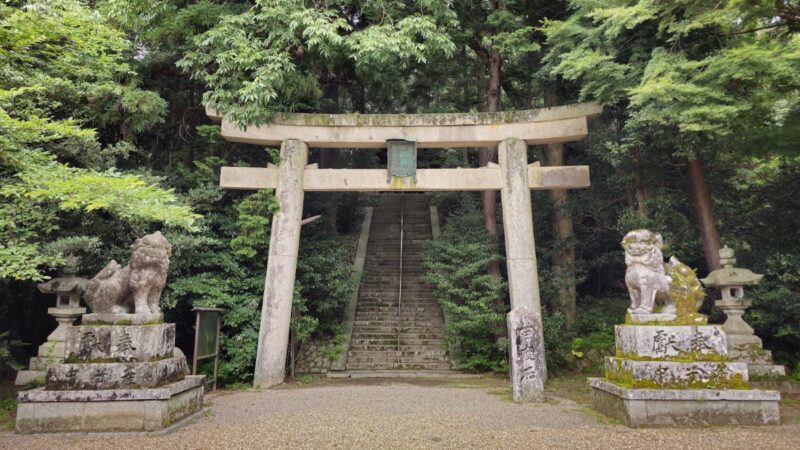
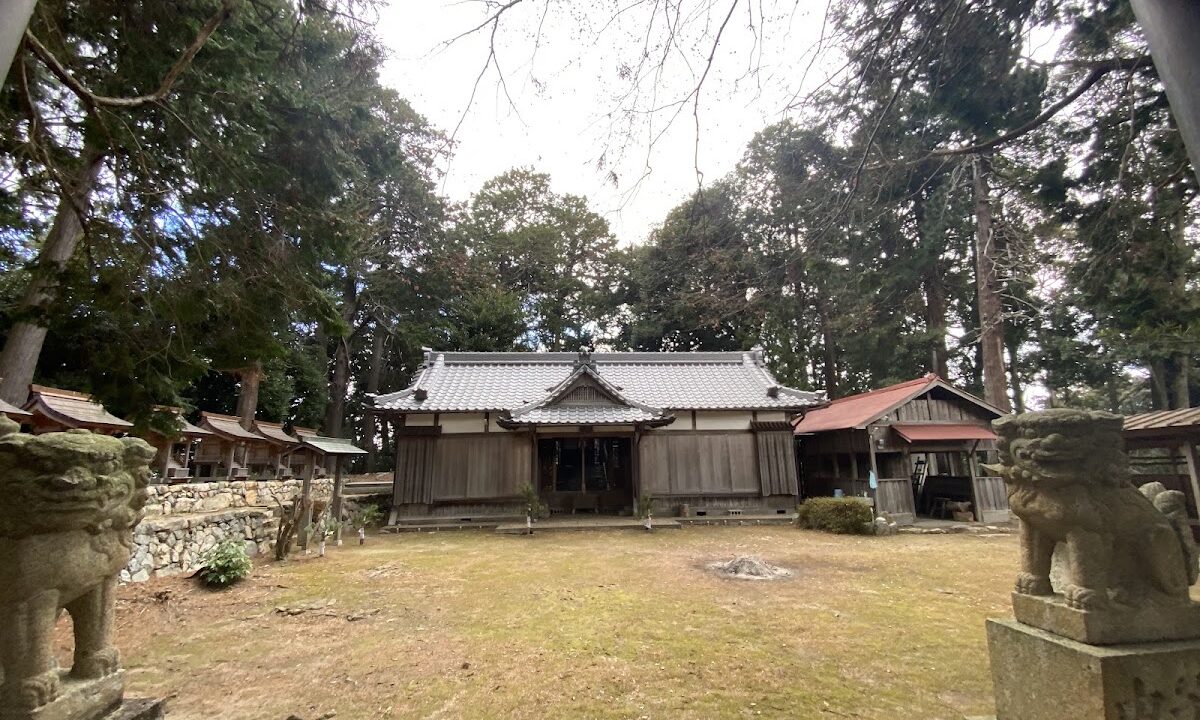
Due to its mountaintop location and the difficulty of accessing it, Fumotomi Shrine is not visited by many people. Therefore, the shrine grounds are enveloped in deep silence, making it a precious space where you can leave the hustle and bustle of the city and pray in peace.
The sound of the wind rustling through the trees, the chirping of birds, and the occasional sound of bells – praying while experiencing nature with all five senses is ideal for refreshing your mind and body.
Access and Points for Visiting
Access by Public Transportation
The following is the most common route to Fumotomi Shrine using public transportation:
- Get off at Kintetsu Nagano Line “Tondabayashi” Station
- Take the Kongo Bus and get off at the Azumazaka bus stop
- From the bus stop, it’s about a 20-30 minute walk to the Fumotomiyama trailhead
- From the trailhead, it’s about a 15-20 minute walk to the shrine at the summit
The total journey takes about one hour. Since the number of buses is limited, it is recommended to check the timetable in advance.
Access by Car
If you are using a private car, head towards the Higashisaka area of Chihayaakasaka Village. However, since the shrine is located at the mountaintop, you cannot drive directly to it. You will need to park in a suitable location in the Higashisaka area and hike up from there.
Parking space is limited, so please be considerate of the local community.
Precautions for Hiking
The path to Fumotomi Shrine is a proper mountain trail. Please pay attention to the following points when visiting the shrine.
- Attire: Wear comfortable clothing and non-slip shoes (trekking shoes recommended).
- Season: In summer, bring insect repellent; in winter, bring warm clothing.
- Drinks: Bring water for hydration.
- Time: Plan with ample time to descend before sunset.
- Weather: Be careful as the ground can be slippery in rainy weather or after rain.
- Solo Travel: Visiting in a group is safer if possible.
Best Time to Visit
While you can enjoy the beauty of nature throughout the seasons at Fumotomi Shrine, the following times are particularly recommended:
- Spring (April-May): Beautiful fresh greenery and mild weather.
- Autumn (October-November): Stunning autumn foliage and an autumn festival.
- Summer: Lush greenery, perfect for a cool visit (insect repellent is essential).
- Winter: Clear air and excellent views (cold weather gear is essential).
Nearby Attractions and Tourist Spots
When visiting Fumotomi Shrine, why not also explore other tourist spots in Chihayaakasaka Village?
Mount Kongo
Mount Kongo (elevation 1,125m), located on the border of Osaka and Nara prefectures, is one of Kansai’s premier hiking spots. Enjoy the changing seasons and the spectacular views from the summit.
Places Associated with Kusunoki Masashige
Chihayaakasaka Village is the birthplace of Kusunoki Masashige, a samurai who was active from the late Kamakura period to the Nanboku-cho period. Historical sites associated with the Kusunoki clan, such as the Chihaya Castle ruins and the Takemizuwake Shrine, are scattered throughout the area.
Terraced Rice Fields
Beautiful terraced rice fields spread throughout the village, offering a landscape that can be described as a quintessential Japanese scene. The scenery is particularly magnificent during rice planting season and in autumn when the rice stalks ripen.
Chihaya Akasaka Roadside Station
This roadside station offers the opportunity to purchase fresh local produce and specialty products. It’s a convenient rest stop and a useful place to gather local information.
Benefits of Fumotomi Shrine
The wind deity enshrined at Fumotomi Shrine is believed to bestow the following benefits:
Abundant Harvests and Protection of Agriculture
The wind deity is deeply connected to agriculture. Moderate wind promotes crop growth and brings about a bountiful harvest. It is especially recommended for those involved in agriculture.
Protection from Disasters and Misfortune
As a deity who protects against wind damage such as storms and typhoons, you can expect blessings for protection from disasters and misfortune.
Healthy Upbringing of Children
Based on the legend of Yaho-sama, the deity is also worshipped as a god who watches over the healthy growth of children. Families visit to pray for the health and growth of their children.
Purification of Mind and Body
By praying in the pure environment of the mountaintop, while being caressed by the wind, you can experience the purifying and refreshing effects on your mind and body.
Guidelines for Visiting Fumotomi Shrine
Basic Manners for Shrine Visits
When visiting Fumotomi Shrine, please observe the following basic manners.
- Bow before passing through the torii gate.
- Avoid walking in the center of the approach to the shrine. (The center is the path for the gods.)
- If there is a purification fountain, cleanse your hands and mouth.
- Bow twice, clap twice, and bow once before the main hall.
- Worship quietly and with reverence.
Consideration for the Natural Environment
Fumotomi Shrine is surrounded by abundant nature. Please be mindful of the following points to protect the natural environment.
- Always take your trash with you.
- Do not collect plants.
- Do not shout.
- Walk on the designated paths.
- Do not feed wild animals.
Photography Etiquette
Photography is generally permitted on the shrine grounds, but please be mindful of the following points.
- Do not take photos in areas where photography is prohibited, such as inside the main shrine.
- Please be considerate of other worshippers.
- Please take photos within limits that do not detract from the sacred atmosphere.
- Please be mindful of location information when posting on social media. (To maintain its secluded nature)
Summary | Fumotomi Shrine: A Hidden Sacred Site in Osaka
Fumotomi Shrine is a secluded shrine in Osaka Prefecture, particularly difficult to visit and visited by few. However, this also means it offers a precious sacred site where one can have a unique pilgrimage experience, enveloped in deep silence and a sacred atmosphere.
The legend of Mount Fumotomi appearing overnight, its long history of worshipping the wind god, the mysterious figure of Yaho-sama, and the layered pagoda designated as a village cultural property—all of these contribute to the special charm of Fumotomi Shrine.
The path to the summit is not easy, but the sense of accomplishment and refreshment upon completing the pilgrimage is exceptional. Enjoy the beautiful nature of Chihayaakasaka Village while refreshing your mind and body during your visit.
Located in the only village in Osaka Prefecture, Fumotomi Shrine is a little-known sacred site. Why not pay a visit sometime? The god of wind and the mysterious Yaho-sama await you.