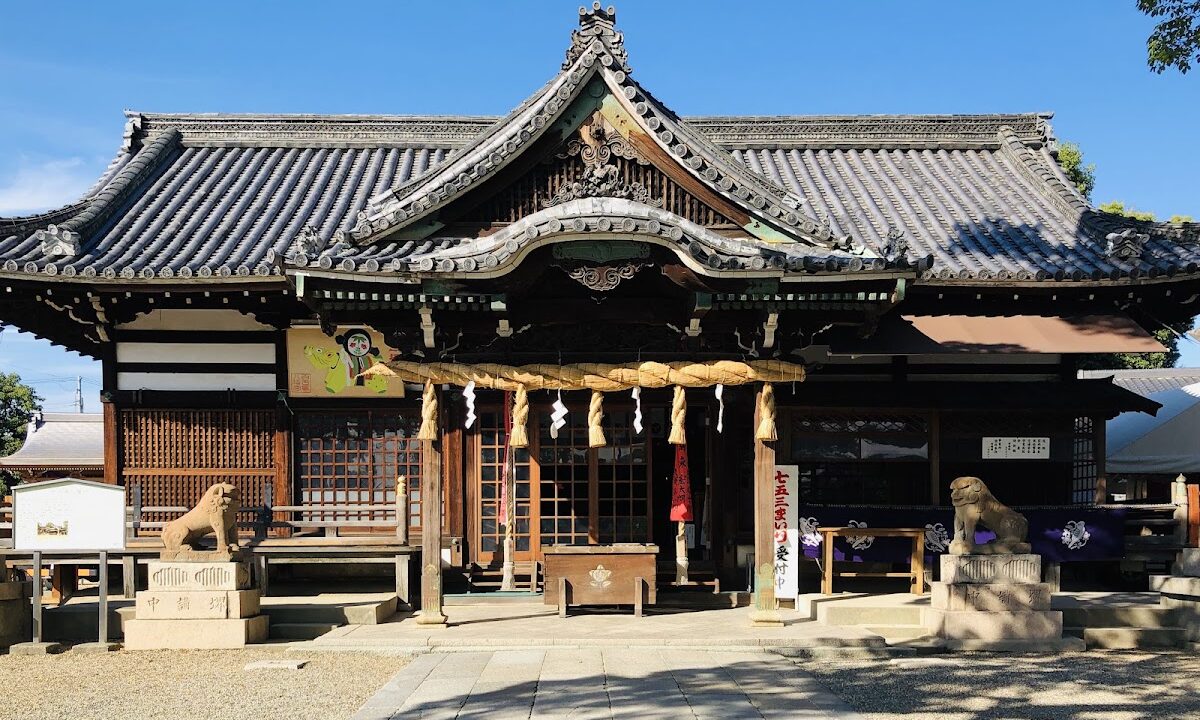
Mozu Hachimangu Shrine (Sakai City, Osaka Prefecture) Complete Guide | The Charm of the 800-Year-Old Camphor Tree and the Moon-Viewing Festival
About Mozu Hachimangu Shrine
Mozu Hachimangu Shrine is a historic shrine located in Mozu Akahata-cho, Kita-ku, Sakai City, Osaka Prefecture. Situated in the heart of the Mozu Kofun Group, a UNESCO World Heritage Site, it boasts a vast precinct of approximately 10,000 tsubo (approximately 30,000 square meters).
Formerly a prefectural shrine, it has long been revered by local people as a deity of protection against misfortune, good fortune, and career advancement. Within the grounds stands a massive camphor tree, approximately 800 years old, designated as a natural monument of Osaka Prefecture. Its majestic presence overwhelms visitors.
The Moon-Viewing Festival, held every autumn, features the traditional Sakai City cultural event of “Futon Taiko” (a type of portable shrine), entering and leaving the shrine grounds, attracting many spectators. As a shrine where you can experience Japanese history and culture firsthand, it is a popular spot not only for locals but also for tourists.
History of Mozu Hachimangu Shrine
Origin of Founding
The founding of Mozu Hachimangu Shrine dates back to the reign of Emperor Kinmei (532-571 AD). Approximately 1400 years ago, Empress Jingu made a vow in this place to “ensure peace throughout the land and protect all people for tens of thousands of years to come.”
During the reign of Emperor Kinmei, this area was called “Mozu,” and it is said that the shrine was founded to pray for national peace based on an oracle from Hachiman Okami. The place name “Mozu” is said to originate from this “Mozu” and is also related to the name of the bird, Mozu.
Relationship with the Mozu Kofun Group
The Mozu Kofun Group, where Mozu Hachimangu Shrine is located, was registered as a World Cultural Heritage site in 2019 as the “Mozu-Furuichi Kofun Group.” This group contains numerous burial mounds, including the Emperor Nintoku Mausoleum Kofun, the largest keyhole-shaped burial mound in Japan.
Mozu Hachimangu Shrine is located in the center of this burial mound group, reflecting the importance of this area as a sacred site since ancient times. The shrine enshrines Emperor Nintoku within its grounds, making it a shrine deeply connected to the history of the Kofun period.
Historical Changes
Since its founding, Mozu Hachimangu Shrine has been revered as the guardian deity of the region. In the Middle Ages, it was deeply revered by samurai families, and although it suffered damage from war during the Sengoku period, it was rebuilt each time, leading to its current state.
During the Edo period, it attracted the faith of the townspeople of Sakai, and in the Meiji era, it was ranked as a prefectural shrine under the shrine ranking system. Even after World War II, the shrine remains a central hub in the region, with a constant stream of worshippers visiting for protection against misfortune and prayers for safety.
Deities and Benefits
Main Deities
The main deities of Mozu Hachimangu Shrine are the following three:
Emperor Ōjin
The 15th Emperor, he is enshrined as Hachiman-sama in Hachiman shrines throughout Japan. He is known as the god of military success, national peace and security, and protection against misfortune and good fortune.
Empress Jingū
The mother of Emperor Ōjin, she is said to have made a vow for peace throughout the land in this area. She is worshipped as the god of safe childbirth, child-rearing, and victory.
Emperor Chūai
The 14th Emperor, he was the husband of Empress Jingū and the father of Emperor Ōjin.
Deities Enshrined in the Shrines Within the Precincts
Within the precincts are several smaller shrines, where various deities, including Emperor Nintoku, are enshrined. Emperor Nintoku was the 16th emperor and is believed to be buried in the Emperor Nintoku Mausoleum, the center of the Mozu Kofun Cluster. Known for the anecdote of the smoke rising from the hearths of the people, Nintoku’s reign is considered a symbol of ideal governance.
Benefits
Mozu Hachimangu Shrine is believed to offer the following benefits:
- Exorcism and Good Fortune: Worshipped since ancient times as a deity of protection against misfortune, many visitors come during their unlucky years.
- Career Advancement and Good Fortune: Popular with visitors praying for improved career and promotion luck.
- Traffic Safety: Car blessings and prayers for traffic safety are also accepted.
- Family Safety: Suitable for those praying for the health and peace of their family.
- Safe Childbirth and Child-rearing: Due to the divine virtues of Empress Jingu, many visitors come to pray for safe childbirth.
Highlights of the Shrine Grounds
The 800-Year-Old Camphor Tree
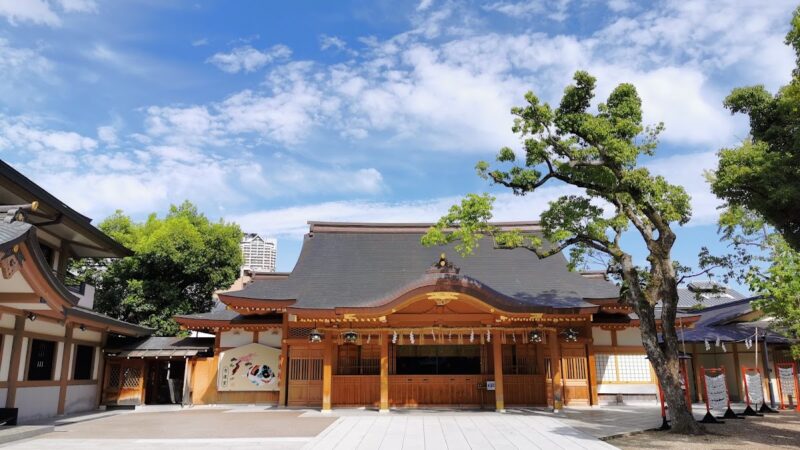
A must-see when visiting Mozu Hachimangu Shrine is the gigantic camphor tree, approximately 800 years old, towering in front of the main hall. This camphor tree is designated as a natural monument of Osaka Prefecture, with a trunk circumference of approximately 10 meters and a height of approximately 25 meters.
This camphor tree, which has watched over the shrine grounds since the Kamakura period, welcomes visitors with its overwhelming presence. In the season of fresh green leaves, the tree is covered in vibrant green foliage, and in autumn, its colors change to more subdued hues, showcasing its beauty throughout the seasons.
The area around the large camphor tree is enveloped in a sacred atmosphere, attracting many visitors seeking a power spot. It is said that touching the tree allows one to feel its life force and find peace of mind.
Main Hall and Worship Hall
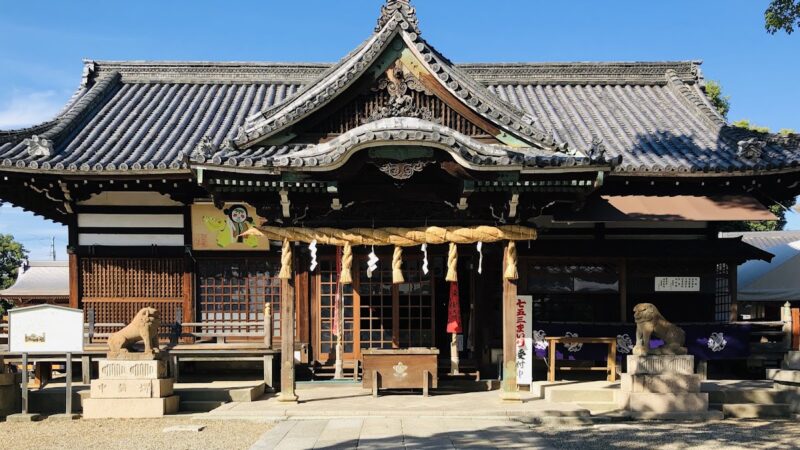
The main hall of Mozu Hachimangu Shrine is built in the traditional style of shrine architecture, exuding a solemn atmosphere. The worship hall is where worshippers offer their prayers, and the meticulously maintained building conveys a sense of high status.
A vermilion-painted fence surrounds the main hall, maintaining the solemnity of a sacred area. Especially on sunny days, the contrast between the blue sky and the vermilion is beautiful, making it a popular spot for photography.
Nature within the Shrine Grounds
The vast grounds, covering approximately 30,000 square meters, are home to many trees in addition to the large camphor tree. Some trees are designated as protected trees by Sakai City, allowing visitors to experience abundant nature despite being in the heart of the city.
In spring, cherry blossoms bloom; in summer, the deep greenery provides coolness; and in autumn, the autumn leaves color the shrine grounds. It’s a shrine worth visiting throughout all four seasons.
Water Basin and Approach
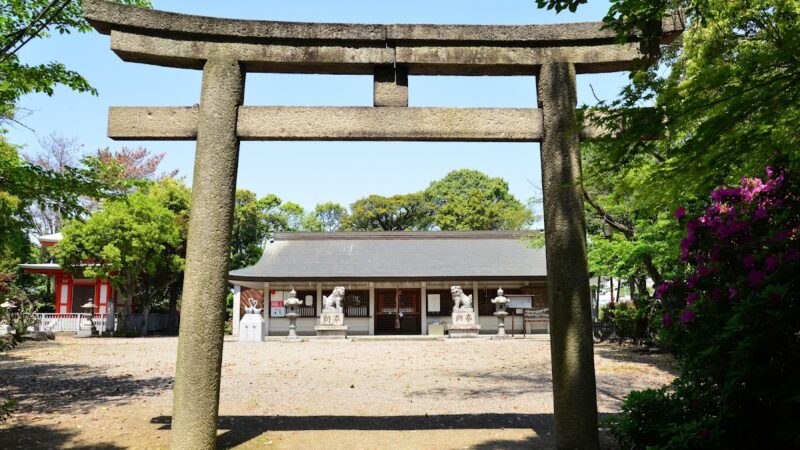
Upon entering the shrine grounds, a magnificent torii gate welcomes visitors. The approach is well-maintained, lined with lanterns on both sides. At the water basin, you can purify your body and mind with pure water before praying.
Even just walking along the approach allows you to escape the hustle and bustle of everyday life and experience a sense of peace and tranquility.
Moon Viewing Festival and Futon Taiko Drums
History of the Moon Viewing Festival
The Moon Viewing Festival, the annual festival of Mozu Hachimangu Shrine, is a traditional event held every year around the time of the Mid-Autumn Moon (mid-September to early October). This festival has a history of several hundred years and is known as one of Sakai City’s representative festivals.
The Tsukimi Festival is a festival to pray for a bountiful harvest and peace in the community, and has been carefully preserved and passed down by local residents since ancient times.
The Charm of Futon Taiko
The greatest highlight of the Tsukimi Festival is the traditional performing art called “Futon Taiko.” Futon Taiko involves dozens of bearers carrying a lavishly decorated drum float, made up like a stack of futons, through the streets.
The drum float reaches a height of approximately 4 meters and weighs about 2 tons, its magnificent appearance being truly breathtaking. The sight of the drum float, adorned with red and gold decorations, entering and leaving the shrine accompanied by powerful shouts is incredibly impressive and captivates many spectators.
Festival Highlights
At the Tsukimi Festival, futon taiko are dedicated from multiple districts, each competing to showcase its beauty and grandeur. Especially at night, the drum floats illuminated by lanterns create a fantastical atmosphere.
During the festival, numerous stalls line the temple grounds and surrounding areas, enveloping the entire region in a festive atmosphere. Supported by the enthusiastic preparation and participation of local residents, this festival holds an important position as an intangible cultural asset of Sakai City.
Goshuin (Temple Seals) and Souvenirs
Goshuin (Temple Seals)
At Mozu Hachimangu Shrine, you can receive a goshuin as a memento of your visit. In addition to the regular goshuin, special seasonal goshuin are sometimes offered, making them popular among goshuin collectors.
During the Moon Viewing Festival, festival-exclusive goshuin are sometimes offered, attracting many visitors. Goshuin notebooks are also sold, and the original Mozu Hachimangu designs are popular as souvenirs.
Amulets and Souvenirs
Various amulets and souvenirs are available at the shrine’s office.
- Exorcism Charm: A charm believed to ward off evil and bring good fortune.
- Traffic Safety Charm: A charm for safe driving and cycling.
- Academic Success Charm: A popular charm among students and those taking exams.
- Safe Childbirth Charm: A charm for pregnant women praying for a safe delivery.
- Ema (votive tablet): Various types of ema are available for writing wishes and offering.
Each charm is carefully crafted, and carrying one allows you to feel the blessings of the gods.
Prayers and Sorrows
Mozu Hachimangu Shrine accepts various prayers and blessings.
Main Prayers
- Exorcism Prayer: Prayers for protection from misfortune for those in their unlucky year.
- Traffic Safety Prayer: Prayers for the blessing of new cars and safe driving.
- Family Safety Prayer: Prayers for the health and peace of the family.
- Business Prosperity Prayer: Prayers for the development of the business.
- Safe Childbirth Prayer: Prayers for a safe childbirth and the health of mother and child.
- First Shrine Visit: Prayers for the healthy growth of the baby.
- Shichi-Go-San Visit: Prayers for the growth of a child and for their future health.
Applying for a Prayer
Advance reservations are recommended for prayers, but same-day registration is also possible. For registration times and offering fees, please check the official website or contact the shrine directly.
Upon receiving a prayer, you will receive items such as amulets and talismans. The careful recitation of prayers by the Shinto priest and the solemn atmosphere of the prayer will be a deeply memorable experience. ## Access & Basic Information
Address & Contact Information
Address: 5-706 Mozu Akahata-cho, Kita-ku, Sakai City, Osaka Prefecture
Phone Number: 072-252-1089
Access by Train
JR Hanwa Line
- Get off at JR Mozu Station, approximately 5-10 minutes on foot from the west exit
Nankai Koya Line
- Get off at Nankai Koya Line Mozu Hachiman Station, approximately 10-15 minutes on foot
Osaka Metro Midosuji Line
- Get off at Osaka Metro Midosuji Line Nakamozu Station, approximately 15 minutes on foot
All stations are within walking distance, making public transportation convenient. Directional signs are installed along the route from the stations, so even first-time visitors can arrive without getting lost.
Access by Car
Hanshin Expressway
- Approximately 10 minutes from the Sakai exit
General Roads
- Accessible from National Route 310, Prefectural Route 28, etc.
When using a car navigation system, please search for “Mozu Hachimangu Shrine” or the address “5-706 Mozu Akahata-cho, Kita-ku, Sakai City.”
Parking
There is a free parking lot for visitors on the shrine grounds. It can accommodate about 50 cars, but it can get crowded during events such as the Moon Viewing Festival, so using public transportation is recommended.
Large buses can also visit, but it is recommended to contact the shrine in advance.
Visiting Hours
The shrine grounds are generally open for free visits. However, the reception hours for receiving amulets and prayers are limited, so if you want to be sure to receive a goshuin (shrine stamp) or amulet, it is recommended to check in advance.
General reception hours are from 9:00 AM to around 4:00 PM, but these may vary depending on the season and events.
Admission Fee
Entry to the shrine grounds is free. A donation is required if you wish to receive prayers.
Nearby Tourist Attractions
Emperor Nintoku’s Mausoleum (Daisen Kofun)
Located about a 15-minute walk from Mozu Hachimangu Shrine, this is one of the world’s largest burial mounds. A keyhole-shaped tumulus approximately 486 meters long, it is a World Cultural Heritage site. You can walk around the tumulus and truly appreciate its immense size.
Sakai City Museum
This museum allows you to learn about the Mozu Kofun Group and the history of Sakai. Located very close to Emperor Nintoku’s Mausoleum, it features extensive exhibits including tumulus models, excavated artifacts, and displays on Sakai’s culture. Visiting it in conjunction with a visit to Mozu Hachimangu Shrine will allow you to gain a deeper understanding of the region’s history.
Daisen Park
This vast park offers seasonal flowers and greenery. It also features a Japanese garden and a tea house, making it ideal for a stroll. A popular spot for families.
Mozu Kofun Cluster Visitor Center
This facility provides detailed information about the Mozu Kofun Cluster. Through VR experiences and display panels, you can experience the history and culture of the Kofun period. It’s free to use, making it a convenient base for sightseeing.
Manners and Enjoyment of Worship
Worship Etiquette
By observing basic worship etiquette at shrines, you can have a more heartfelt visit.
- When passing through the torii gate: Bow before entering the shrine grounds.
- How to walk along the approach: The center of the approach is considered the path of the gods, so walk along the sides.
- How to wash your hands: Cleanse your left hand, right hand, and mouth in that order, and finally cleanse the handle of the ladle.
- Worship at the main hall: Two bows, two claps, and one bow are the basic rituals.
Recommended Time to Visit
The quiet early morning hours allow you to worship peacefully, as the shrine grounds are enveloped in refreshing air. Taking a deep breath, especially under the large camphor tree, allows you to feel the energy of nature.
Visiting the shrine in the soft afternoon sunlight is also highly recommended, as it highlights the beauty of the grounds. Enjoy a peaceful time while appreciating the changing scenery of the grounds with the seasons.
Photography
Photography is generally permitted on the shrine grounds, but please refrain from taking pictures inside the main hall or during rituals. While the large camphor tree and shrine buildings make wonderful subjects, please be considerate of other visitors.
Summary
Mozu Hachimangu Shrine is a venerable shrine with a history of approximately 1400 years, located in Kita-ku, Sakai City, Osaka Prefecture. Situated at the heart of the World Heritage Site, the Mozu Kofun Group, and boasting a natural monument—an 800-year-old camphor tree—the grounds deeply impress visitors.
It is believed to offer blessings for protection against misfortune and good fortune, and is beloved by the local community. Furthermore, the Futon Taiko drum performance at the annual Moon Viewing Festival in autumn attracts many tourists as a representative traditional culture of Sakai City.
With excellent transportation access, its convenient location—just a 5-10 minute walk from JR Mozu Station—is a major draw. The surrounding area boasts numerous tourist attractions, including the Nintoku Emperor’s Mausoleum, making it an area where you can enjoy history and culture for a full day.
If you’re seeking peace of mind or want to experience Japanese history and culture, please visit Mozu Hachimangu Shrine. Its vast grounds, solemn atmosphere, and 800-year-old camphor tree will surely warmly welcome you.