Complete Guide to Kusumoto Shrine (Kishiwada City, Osaka Prefecture) | History and Access Information for this Shikinaisha Shrine
About Kusumoto Shrine
Kusumoto Shrine is a historic shrine located in Kanechika-cho, Kishiwada City, Osaka Prefecture. It is a Shikinaisha shrine listed in the Engishiki Jinmyocho (a list of shrines compiled during the Heian period) and is known as a historical shrine belonging to Izumi District, Izumi Province.
Locally, it is affectionately known as “Kusumoto-san” and has attracted the faith of the community throughout its long history. Its former shrine rank was Village Shrine, and it is still cherished as the tutelary shrine of the Kanechika area.
Status as a Shikinaisha Shrine
It is listed in the Engishiki Jinmyocho as “Kusumoto Shrine, Izumi District, Izumi Province,” and is a shrine with a status that has continued since the Heian period. A Shikinaisha is a shrine listed in the Engishiki Jinmyocho, a list of shrines compiled in the mid-Heian period (927 AD), signifying a historically significant shrine recognized by the imperial court at the time.
There are 62 Shikinaisha in Izumi Province, and Kusumoto Shrine is one of them, boasting a history of over a thousand years.
Deities Enshrined
Kusumoto Shrine enshrines two deities.
Sugawara no Michizane
The main deity enshrined is Sugawara no Michizane, widely known as the god of learning. Michizane was a scholar and politician of the Heian period, as well as a distinguished Chinese poet. After his death, he was worshipped as Tenman Tenjin, and is believed to bestow blessings for academic success, passing examinations, and improvement in calligraphy.
Funatama Okami
Funatama Okami, the god who protects safe voyages, is also enshrined. Kishiwada City is located on Osaka Bay and has a long history of deep ties to maritime traffic and fishing. Funatama-no-Okami is revered as the god who presides over the safety of ships, the protection of maritime traffic, and the prosperity of fishing, and has been worshipped by the local people.
This combination of two deities represents a unique form of worship that reflects the region’s characteristics of learning and maritime transport.
Location
Official Address: 1448, Kanechika-cho, Kishiwada City, Osaka Prefecture 596-0101
Kusumoto Shrine is located in Kanechika-cho, in the eastern part of Kishiwada City. The Kanechika area is approximately 4 kilometers east of the city center and is a peaceful rural landscape.
The area surrounding the shrine is a quiet environment with a mix of houses and farmland, and the shrine stands as the center of an old settlement. The shrine grounds are lush with greenery, creating a tranquil atmosphere where one can feel the changing seasons.
Access Information
Nearest Station and Line
The nearest station to Kusumoto Shrine is JR Hanwa Line “Shimomatsu Station”.
- Walking from Shimomatsu Station: Approximately 50 minutes (approx. 4 km)
- Taxi from Shimomatsu Station: Approximately 10 minutes
- Bus from Shimomatsu Station: Please use the bus routes listed below.
For train access, it is convenient to use the Hanwa Line from Osaka city. It takes approximately 30 minutes by rapid train from Tennoji Station to Shimomatsu Station.
Other Nearest Stations
- Nankai Main Line “Kishiwada Station”: Approximately 15 minutes by bus or taxi from the station
- Nankai Main Line “Izumi-Omiya Station”: Approximately 12 minutes by bus or taxi from the station
Nearest Bus Stop and Route
When accessing by public transport, using the bus is convenient.
If using Nankai Bus:
- Take a bus bound for “Katsuchika” from Kishiwada Station.
- Get off at the “Katsuchika” bus stop and walk for approximately 5 minutes.
Since the number of buses is limited, it is recommended to check the Nankai Bus timetable in advance. Especially on holidays, the number of buses may be reduced, so planning your visit is recommended.
Access by Car
If using the Hanwa Expressway:
- Approximately 10 minutes from “Kishiwada Izumi IC”
- Approximately 15 minutes from “Kaizuka IC”
There is no dedicated parking lot near the shrine, but there is some space in front of the grounds. It may get crowded during festivals, so please consider using public transportation.
Map Information
When searching on a smartphone or car navigation system, searching for “Kusumoto Shrine Kishiwada City” or the address “1448 Katsuchika-cho, Kishiwada City, Osaka Prefecture” will display the location accurately. In map apps such as Google Maps, entering “Kusumoto Shrine” will display shrines in Kishiwada City.
Highlights of the Shrine Grounds
Main Hall and Worship Hall
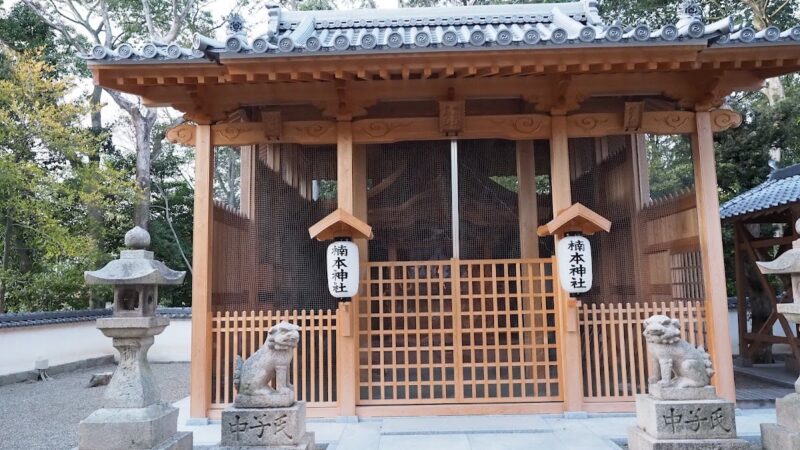
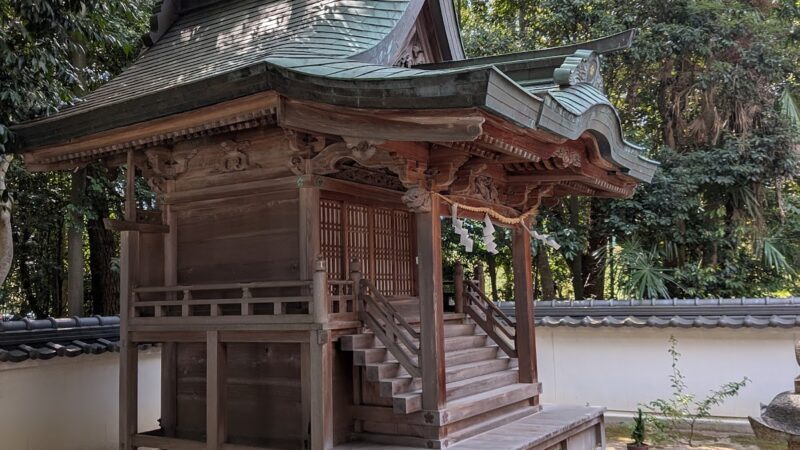
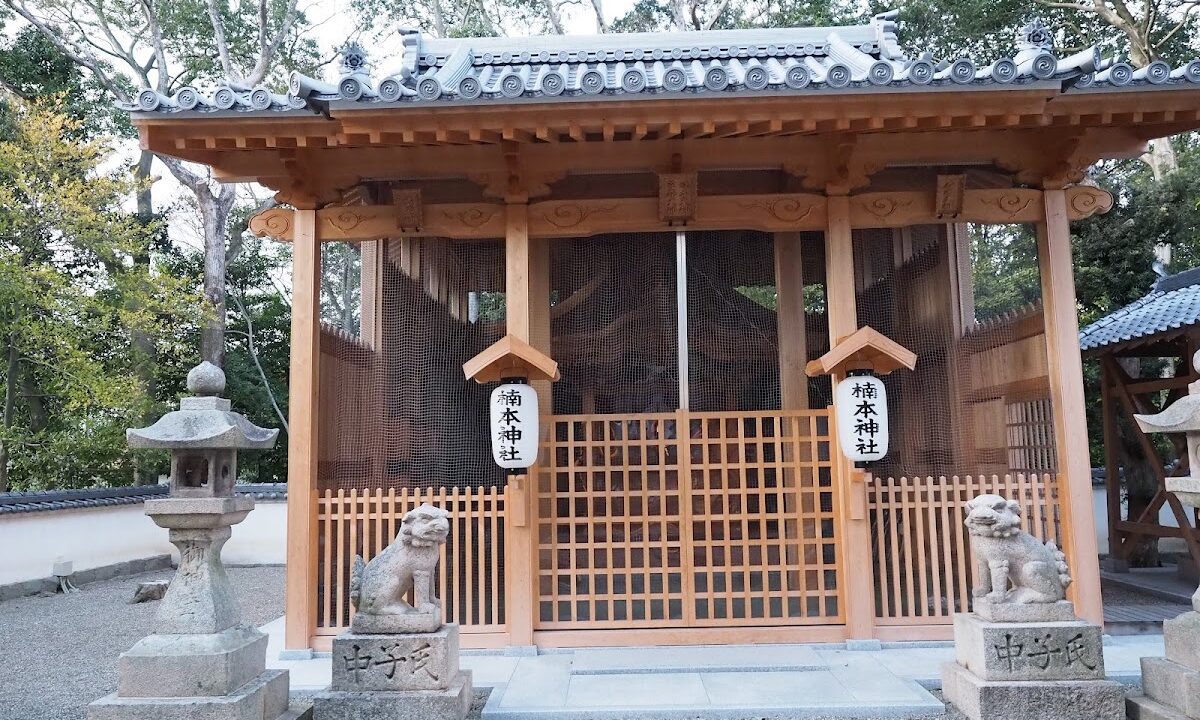
The main hall of Kusumoto Shrine is built in the traditional style of shrine architecture. The worship hall is a sacred space that welcomes worshippers and is carefully maintained. The shrine grounds are meticulously clean, reflecting the respect the local people have for the shrine.
Sacred Tree and Nature of the Shrine Grounds
There is an ancient camphor tree (Kusunoki) on the shrine grounds, which tells the story of the shrine’s history. The camphor tree is thought to be related to the origin of the shrine’s name and is cherished as a sacred tree.
The camphor tree has been considered a sacred tree since ancient times and has been revered as a sacred tree in many shrines. The camphor tree at Kusumoto Shrine is also a symbolic presence that has watched over the region for many years.
Seasonal flowers and plants are planted on the shrine grounds, allowing visitors to enjoy nature throughout the seasons, such as cherry blossoms in spring and autumn leaves in fall.
Torii Gate and Approach
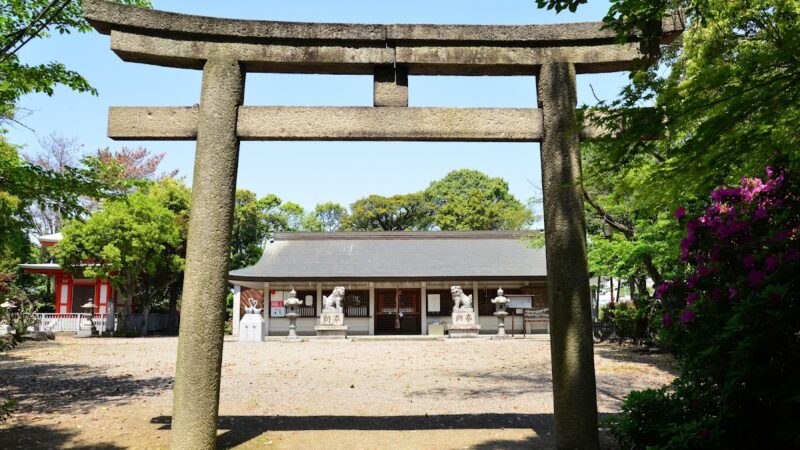
A torii gate stands at the entrance to the shrine, and an approach path leads to the main hall. The approach path is kept clean by local residents, maintaining a pleasant environment for worship.
Festivals and Annual Events
Annual Festival
The annual festival of Kusumoto Shrine is held on October 8th. This is the most important festival at the shrine, where gratitude for the past year is offered to the gods, and prayers are offered for peace and prosperity in the community.
On the day of the festival, local parishioners and devotees gather, and the Shinto rituals are solemnly performed. In some areas, lion dances and drum performances may also be offered.
Other Annual Events
- New Year’s Day Festival (January 1st): A celebration of the new year and prayers for peace throughout the year.
- Setsubun Festival (around February 3rd): A ritual to ward off evil spirits, including bean-throwing.
- Summer Festival (July or August): A local summer tradition.
- Autumn Festival (October): A harvest festival including the annual festival.
Specific event dates and content may vary from year to year, so it is recommended to check before visiting.
Goshuin (Shrine Seal) Information
Regarding obtaining a Goshuin at Kusumoto Shrine, there may not be a permanent shrine office. Although it is a shrine of high status (a Shikinaisha), it is a small shrine, so prior confirmation is necessary if you wish to obtain a Goshuin.
Generally, at such local shrines, the parish representatives or chief priest may live nearby and be able to assist you if you contact them in advance. If you want to be sure to obtain a Goshuin, it is recommended to inquire with the Kishiwada City Shrine Association or the local tourism association.
When bringing your Goshuincho (stamp book), please remember to show respect to the shrine and be mindful of courteous service.
History of Kusumoto Shrine
Founding and History
The exact founding date of Kusumoto Shrine is unclear, but since it is listed in the Engishiki Jinmyocho (compiled in 927), it is believed to have existed in the early Heian period or earlier.
The name “Kusumoto” is presumed to originate from the fact that many camphor trees grew in this area, or that camphor trees were worshipped as sacred trees. From ancient to medieval times, this region flourished as part of Izumi Province, and Kusumoto Shrine functioned as the spiritual center of the region.
From the Medieval to the Early Modern Period
During the medieval period, Izumi Province was under the control of various forces, but Kusumoto Shrine continued to attract worshippers as the local tutelary deity. It is believed to have been protected by the local people even during the turbulent Sengoku period.
During the Edo period, the shrine was part of the Kishiwada Domain, and was protected by the domain and maintained by local parishioners. It is possible that the current shrine buildings were constructed during this period.
After the Meiji Era
With the Meiji-era separation of Shinto and Buddhism, shrines throughout Japan underwent significant changes. Kusumoto Shrine was also ranked as a village shrine within the modern shrine system, and positioned as a public shrine in the region.
Even as times changed through the Showa, Heisei, and Reiwa eras, Kusumoto Shrine has continued to be protected as the local guardian deity, through the faith and maintenance of the local people.
Nearby Tourist Attractions
Kishiwada Castle
Kishiwada Castle, a representative tourist attraction in Kishiwada City, is about a 15-minute drive from Kusumoto Shrine. Also known as “Chikame Castle,” its beautiful keep and gardens are its main attractions.
Danjiri Hall
Kishiwada is famous for its “Danjiri Festival.” At the Danjiri Hall, you can learn about the history and culture of the festival, and actual danjiri floats are on display. It’s a facility where you can gain a deep understanding of Kishiwada’s culture.
Kumeda Pond
Kumeda Pond, one of the largest reservoirs in Japan, is a historical pond built during the Nara period. The surrounding area has been developed into a park where you can enjoy strolling and birdwatching.
Manners and Precautions for Visiting a Shrine
Basic Worship Etiquette
- When passing through the torii gate: Bow before entering the shrine grounds.
- Temizuya (water purification pavilion): Cleanse your hands and mouth (omit this step if there is no temizuya).
- In front of the main hall: Worship using the two bows, two claps, and one bow method.
- Behavior within the shrine grounds: Act quietly and respectfully.
Regarding Photography
Photography is generally permitted within the shrine grounds, but it is considered good manners to refrain from taking pictures inside the main hall or during Shinto rituals. Please be considerate of other worshippers.
Attire
No special attire is required, but it is desirable to wear clothing that reflects the sacred nature of the place. Formal attire is appropriate if participating in a festival.
Other Shikinaisha Shrines in Osaka Prefecture
Here are some shrines in Osaka Prefecture that, like Kusumoto Shrine, hold the status of Shikinaisha shrines.
Sumiyoshi Taisha (Sumiyoshi-ku, Osaka City)
The head shrine of all Sumiyoshi shrines nationwide and one of Osaka’s representative shrines. It is a large shrine that attracts over 2 million visitors for Hatsumode (first shrine visit of the year).
Hiraoka Shrine (Higashi-Osaka City)
An ancient shrine known as the Ichinomiya (first-ranked shrine) of Kawachi Province, and said to be the original shrine of Kasuga Taisha. Its beautiful shrine buildings and abundant nature are its charm.
Izumi Anashi Shrine (Izumiotsu City)
One of the Shikinaisha shrines of Izumi Province, it is worshipped as the local tutelary deity. It belongs to the same Izumi Province as Kusumoto Shrine.
Connection with the Community
Kusumoto Shrine, as the tutelary shrine of the Kanechika district, plays a central role in the local community. Through festivals and cleaning activities, it serves as a place to deepen the bonds among local residents.
Local children learn about traditional culture and local history through playing at the shrine and participating in festivals. This intergenerational exchange strengthens the relationship between the shrine and the community.
In recent years, maintaining local shrines has become a challenge due to urbanization and depopulation, but at Kusumoto Shrine, traditions continue to be preserved thanks to the efforts of parishioners and local residents.
Benefits of Worship
Academic Achievement and Prayer for Success
As it enshrines Sugawara no Michizane, it is believed to grant blessings for academic success. Many students and those striving for academic success visit the shrine.
Maritime Safety and Traffic Safety
As it enshrines Funatama Okami, it is believed to grant blessings for safe voyages and traffic safety. In modern times, people also visit to pray for traffic safety, including for automobiles.
Peace and Prosperity of the Community
As the guardian deity of the region, it plays a role in protecting the peace and prosperity of the entire community. Prayers for family safety, business success, and other matters are also offered.
Best Season to Visit
Spring (March-May)
Spring, when the cherry blossoms in the shrine grounds bloom, is a season when the beauty of nature and the tranquil atmosphere of the shrine harmonize. The fresh greenery is also beautiful, making for a refreshing visit.
Autumn (September-November)
October, when the annual festival is held, is the busiest time for the shrine. You can enjoy the atmosphere of the autumn festival. It is also the season of autumn leaves, and the nature of the shrine grounds is beautifully colored.
New Year’s Visit (January)
New Year’s visits are mainly made by local people. It is not as crowded as large shrines, allowing for a peaceful New Year’s prayer.
Thoughts on Kusumoto Shrine
Kusumoto Shrine is a Shikinaisha (a shrine listed in the Engishiki, an ancient Japanese legal code) with a history of over a thousand years, yet it is a simple shrine deeply rooted in the local community. While it lacks ostentation, it possesses the weight of the faith of the local people and the history of those who have continuously protected the shrine.
Unlike the famous shrines in Osaka City, Kusumoto Shrine’s charm lies in its quiet and peaceful atmosphere, allowing visitors to worship at their own pace. The time spent praying in a calm state of mind, while feeling the history, allows one to forget the hustle and bustle of everyday life.
When visiting the Kishiwada area, please be sure to visit Kusumoto Shrine. An encounter with a special shrine awaits you, one that combines the prestige of a Shikinaisha with the warmth of a local guardian deity.
Summary
Kusumoto Shrine is a Shikinaisha located in Kanechika-cho, Kishiwada City, Osaka Prefecture, and enshrines Sugawara no Michizane and Funatama-no-Okami as its deities. While it is a historical shrine dating back to the Heian period, its distinguishing feature is that it is cherished as a local guardian deity. The nearest station is Shimomatsu Station on the JR Hanwa Line, and it’s convenient to access the shrine by bus or taxi. The annual festival is held on October 8th and is an important local event.
The shrine offers blessings for academic success, maritime safety, and traffic safety, and it’s a peaceful place to worship in a tranquil environment. Visiting nearby tourist spots such as Kishiwada Castle and the Danjiri Museum will allow you to gain a deeper understanding of Kishiwada’s history and culture.
While there are many shrines in Osaka Prefecture, Kusumoto Shrine, a locally rooted Shikinaisha (shrine listed in the Engishiki), is a valuable example that teaches us about the importance of traditional Japanese culture and local community.