A Complete Guide to Amayukawata Shrine (Kashiwara City, Osaka Prefecture) | A Historic Shrine with a History of a Shikinaisha and Dedicating the Ancestral God of the Tottori Clan
Amayukawata Shrine, located in Takaida, Kashiwara City, Osaka Prefecture, is a venerable shrine with a long history dating back to ancient times. As a Shikinaisha listed in the Engishiki Jinmyocho (a list of shrines compiled in the Heian period), it has attracted the faith of the local community. This article comprehensively introduces information useful for visiting Amayukawata Shrine, including its history, enshrined deities, highlights of the grounds, and access methods.
What is Amayukawata Shrine?
Amayukawata Shrine is located at 89 Takaida, Kashiwara City, Osaka Prefecture, and is a Shikinaisha (minor shrine) listed in the Engishiki Jinmyocho for Oagata District, Kawachi Province. Under the modern shrine ranking system, it was classified as a village shrine.
A notable feature of the shrine is that it is situated on the site of the pagoda of Torisaka-dera Temple, one of the six temples in Kawachi Province that Emperor Shomu and Empress Koken are said to have visited during the Nara period. Currently, the shrine grounds are maintained as Kashiwara City Takaida Park and are a popular place of relaxation for local residents.
Pronunciation and Former Name of the Shrine
Amayukawata Shrine is pronounced “Amayukawata Jinja.” It was formerly known as “Kawada Daimyojin” and “Kasuga Shrine,” and has been affectionately known by various names depending on the region.
About the Enshrined Deities
Amayukawata Shrine enshrines three deities.
Amenoyukawatana no Mikoto
The main enshrined deity, Amenoyukawatana no Mikoto, is considered the ancestral deity of the ancient Tottori clan. It is also written as Amenoyukawatana no Mikoto. This deity is said to have been active during the reign of Emperor Suinin and has been revered as the founder of the Tottori clan.
According to the *Nihon Shoki*, Prince Homutsuwake no Mikoto, son of Emperor Suinin, was unable to speak until adulthood. One day, upon seeing a flying bird, he cried out, prompting the Emperor to order its capture. Legend says that the ancestors of Ame-no-Yukawa-keta-no-Mikoto pursued the bird to Izumo and presented it to the Emperor, thus receiving the surname “Totori-no-Miyatsuko” (meaning “Chief of Tottori”).
Ame-no-Koyane-no-Mikoto
Ame-no-Koyane-no-Mikoto is a deity known as the ancestral god of the Fujiwara clan. He is also one of the principal deities of Kasuga Taisha Shrine and is worshipped as the god who presides over Shinto rituals and ceremonies. It is believed that the former name of Ame-no-Yukawa-da Shrine, “Kasuga-sha,” originated from the fact that this deity was enshrined there.
Ohirume-no-Mikoto
Ohirume-no-Mikoto is considered another name for Amaterasu-Omikami and is revered as the sun goddess. He is one of the supreme deities in Japanese mythology and is also known as the ancestral god of the Imperial family.
History of Tenyukawada Shrine
Founding and the Ancient Tottori Clan
The exact founding date of Tenyukawada Shrine is unclear, but according to tradition, it was founded in September of the 19th year of Emperor Keiko’s reign (around 89 AD). However, this is tradition, and there are various theories regarding the actual founding date.
What is certain is that it already existed in the early Heian period, as it is listed as “Tenyukawada Shrine, Oagata District, Kawachi Province” in the Engishiki Jinmyocho (compiled in 927 AD).
The area around this location was called Tottori-go in ancient times and was a region ruled by the Tottori clan (Tottori no Muraji). The Tottori clan was a powerful clan that served the Yamato court, and it is believed that this shrine was founded to enshrine their ancestral deity.
Nearby is Sukunagawada Shrine, which is said to enshrine the parent deity of Tenyukawada Shrine, indicating a deep connection between the two shrines.
Relationship with Torisaka-dera Temple
The site where Tenyukawada Shrine is located is believed to be the site of the pagoda of Torisaka-dera Temple, an ancient temple from the Nara period. Torisaka-dera was an important temple, counted among the six temples of Kawachi Province that Emperor Shomu and Empress Koken are said to have visited.
The six temples of Kawachi Province refer to a group of major temples that existed in Kawachi Province during the Nara period, and they flourished as a center of Buddhist culture. Torisaka-dera was one of them, and is thought to have played a central role in the region’s faith and culture.
The practice of building shrines on the sites of temples after their decline is common throughout Japan, and Tenyukawada Shrine is one such shrine with this historical background. There is a possibility of discovering ancient remains within the shrine grounds, making it an archaeologically interesting site.
From the Early Modern to the Modern Period
Throughout the Edo period, Tenyukawada Shrine was revered as the local tutelary deity. Under the modern shrine ranking system of the Meiji era, it was ranked as a village shrine and functioned as a central presence in the local community.
Since the Showa era, the shrine grounds have been developed as Kashiwara City Takaida Park, creating a system where the shrine and park coexist. This allows it to serve as both a place of worship and a place of relaxation for local residents.
Highlights of the Shrine Grounds
Main Hall and Worship Hall
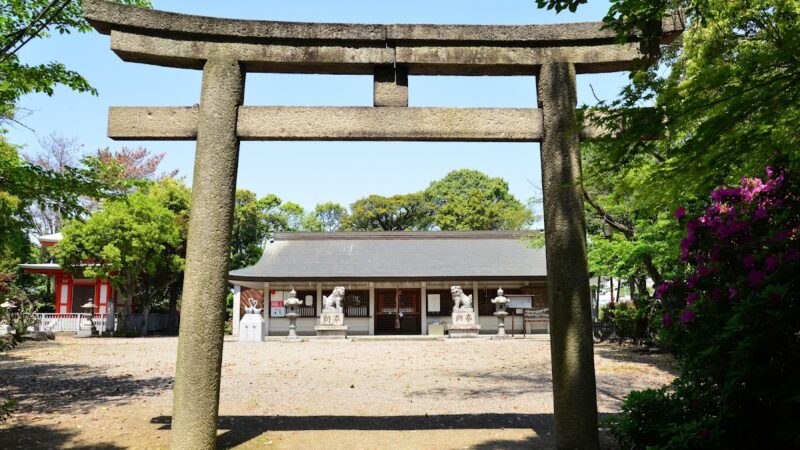
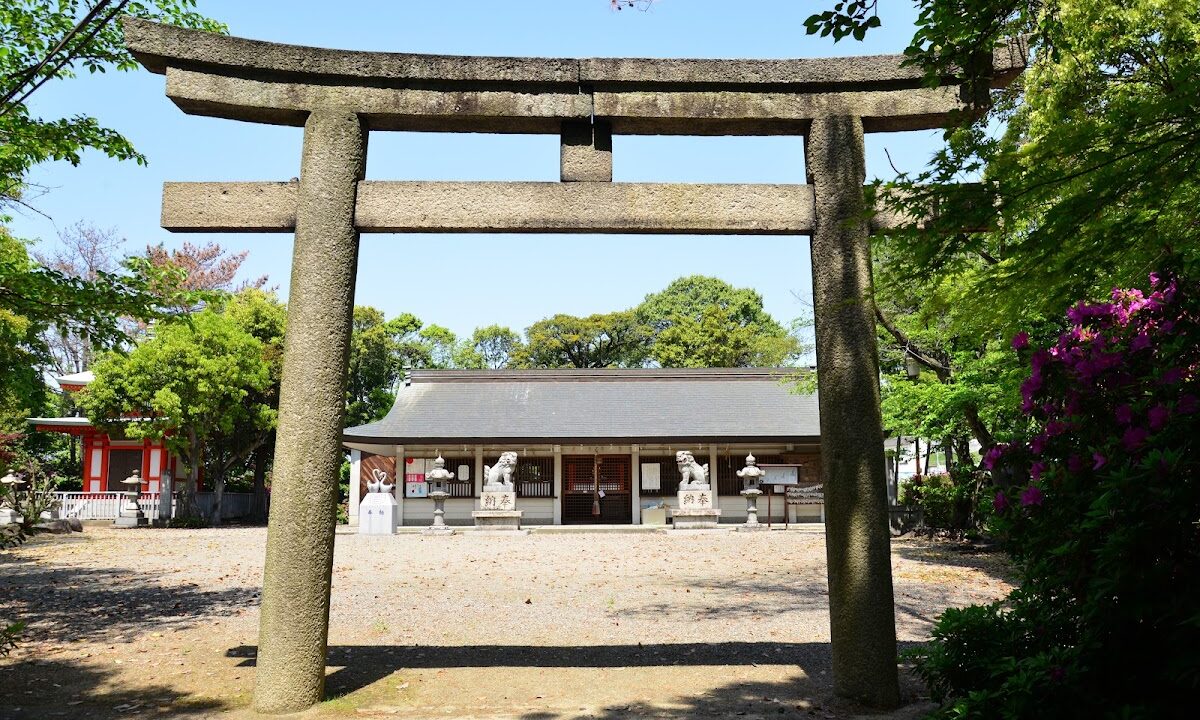
The main hall of Tenyukawada Shrine is built in the traditional style of shrine architecture. While not large in scale, it exudes a solemn atmosphere befitting an ancient shrine.
The worship hall welcomes daily visitors and serves as a place of worship for the local community. It is a shrine where one can worship peacefully in a quiet environment.
Kashiwara City Takaida Park
The shrine grounds are currently developed as Kashiwara City Takaida Park. The park includes playground equipment and rest areas, making it a family-friendly environment.
The topography, which is thought to have been an ancient burial mound, remains, allowing visitors to enjoy the historical landscape. It is a place where one can enjoy nature throughout the seasons, especially during cherry blossom season when it is bustling with visitors.
Memorial Tower
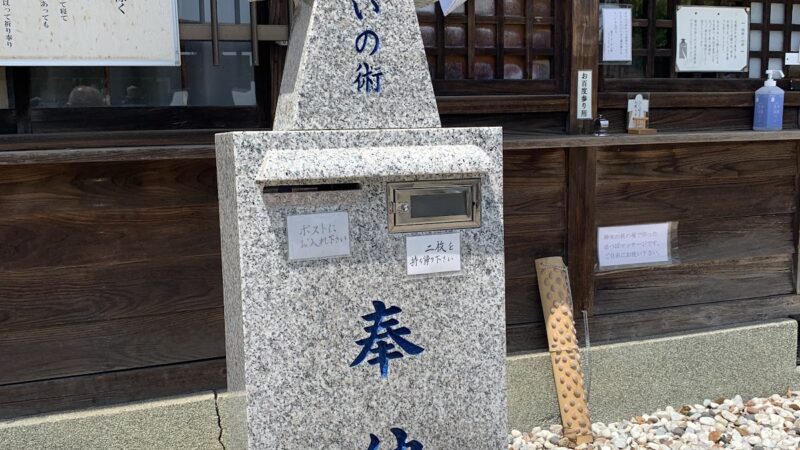
A memorial tower stands on the shrine grounds, commemorating those who died in war. It is an important site that conveys the history of the region and is carefully maintained.
Remains of Torisaka Temple Site
The site where the shrine stands is believed to be the site of the Torisaka Temple tower, and careful observation reveals traces of the ancient temple. It is a fascinating historical space where Nara period Buddhist culture and Shinto beliefs intersect.
Annual Events and Festivals
Grand Festival
The annual festival of Tenyukawada Shrine is held on July 17th and October 17th. The October festival, in particular, is celebrated grandly and is often held on the Sunday closest to October 17th.
Danjiri Festival
In conjunction with the October festival, a local Danjiri festival is held. This festival strongly reflects the Danjiri culture unique to the Kawachi region, and is a traditional event where local residents come together to create a lively atmosphere. The magnificent procession of the festival floats is a sight to behold, attracting many spectators.
Access Information
Access by Train
Approximately 8-9 minutes on foot from JR Kansai Main Line “Takaida Station”
Takaida Station is easily accessible from both Osaka and Nara. The path from the station to the shrine is flat, and you can reach it without getting lost by following the signs.
The distance from the nearest station is approximately 714 meters, within walking distance.
Access by Car
It is recommended to check the shrine’s parking availability before visiting. While parking spaces at Takaida Park may be available, using public transportation is more convenient on days when congestion is expected, such as during festivals.
Address and Contact Information
- Address: 89 Takaida, Kashiwara City, Osaka Prefecture 582-0015
- Phone: 072-978-6428
Nearby Attractions
Sukunagawada Shrine
This shrine is said to enshrine the parent deity of Tenyukawada Shrine. Visiting both shrines together will provide a deeper religious experience.
Takaida Yokokana Park
Kashiwara City is home to Takaida Yokokana Park, which preserves a group of horizontal tombs from the Kofun period. Those interested in ancient history are encouraged to visit.
Yamato River
The Yamato River flows near the shrine, offering pleasant walks along its banks. A walking path maintained by the Yamato River River Office of the Kinki Regional Development Bureau of the Ministry of Land, Infrastructure, Transport and Tourism provides a chance to enjoy both history and nature.
Manners and Points for Visiting a Shrine
Etiquette for Visiting a Shrine
The basic etiquette for visiting a shrine is as follows:
- Bow before passing through the torii gate.
- Cleanse your hands and mouth at the temizuya (water basin).
- Place your offering in front of the haiden (main hall).
- Worship using the two bows, two claps, and one bow ritual.
- Bow again at the torii gate when leaving.
Photography
Photography is generally permitted on the shrine grounds, but consideration should be given to avoiding disturbing other worshippers or during festivals. Please refrain from taking photographs inside the main hall.
Suitable Time for Visiting a Shrine
While shrines are generally open for worship at any time during the day, early mornings and evenings offer a quiet and peaceful atmosphere. During festivals, shrines become crowded with many worshippers, so weekday visits are recommended for those who wish to worship at a leisurely pace.
Cultural Value of Tenyukawada Shrine
Importance as a Shikinaisha Shrine
Shikinaisha shrines, listed in the Engishiki Jinmyocho (a list of shrines compiled in the Heian period), are shrines recognized as particularly important by the imperial court during the Heian period. As one of approximately 3,000 Shikinaisha shrines nationwide, Tenyukawada Shrine holds high historical and cultural value.
Ancient Clans and Shrines
As a shrine dedicated to the ancestral deity of the ancient Tottori clan, it serves as important material for studying the ancient Japanese clan system and belief systems. Considering that the name Tottori is the origin of the present-day Tottori Prefecture, its significant historical influence can be seen.
History of Shinto-Buddhist Syncretism
Its location on the site of the Torisaka-dera Temple tells the story of the history of Shinto-Buddhist syncretism in Japan. The changes in religious culture from the Nara period to the Heian period can be gleaned from this single location.
The Role of Tenyukawada Shrine in the Community
The Center of the Community
Tenyukawada Shrine plays an important role in the community of the Takaida district of Kashiwara City. Through festivals, it serves as a place where local residents gather and deepen their bonds.
A Place for Historical Education
The shrine grounds, which have been developed as a park, provide a place for children to learn about local history while playing. School students also visit as part of their local studies.
Potential as a Tourism Resource
Tenyukawada Shrine has the potential to attract even more attention as part of Kashiwara City’s historical tourism route. Combining archaeological value as an ancient temple site with historical value as a Shikinaisha (a shrine listed in the Engishiki), it is a popular destination for history enthusiasts and shrine-visiting fans.
Summary
Tenyukawada Shrine is a historical shrine located in Takaida, Kashiwara City, Osaka Prefecture. It is a Shikinaisha (a shrine listed in the Engishiki) and enshrines Tenyukawaketa-no-Mikoto, the ancestral deity of the ancient Tottori clan, as its main deity. Built on the site of the Nara period Torisaka-dera Temple, the grounds of Tenyukawada Shrine, now developed as Kashiwara City Takaida Park, serve as both a place of worship and a place of relaxation for local residents.
Its convenient location, just an 8-minute walk from JR Kansai Main Line Takaida Station, is another attractive feature. Annual events, including the Danjiri Festival in October, offer a chance to experience local traditional culture. Tenyukawada Shrine, where ancient history blends seamlessly with a modern community, is a hidden historical spot in Osaka well worth visiting.
Combining a visit along the Yamato River or exploring the surrounding burial mounds will provide a deeper understanding of the ancient history of the Kawachi region. Why not spend some time reflecting on the long history in this tranquil environment?