Iwanonishi Shrine (Gifu Prefecture) Complete Guide | History, Deities, Goshuin (Shrine Seal), and Access Information
Iwanonishi Shrine, located in Iwata-nishi, Gifu City, Gifu Prefecture, is a prestigious shrine with a history of over a thousand years, listed in the Engishiki Jinmyocho (a list of shrines compiled in the Heian period). Situated at the southern foot of Mt. Shimizu, it enshrines Hikonimasu-no-mikoto, an ancient pioneering deity, as its main deity. This article comprehensively introduces information useful for visiting Iwanonishi Shrine, including its detailed history, enshrined deities, highlights of the grounds, goshuin information, and access methods.
Basic Information on Iwanonishi Shrine
Iwanonishi Shrine is a shrine listed in the Engishiki, belonging to the former Kakami District of Mino Province, and is currently located at 3-421 Iwata-nishi, Gifu City, Gifu Prefecture.
Basic Data
- Location: 3-421 Iwata-Nishi, Gifu City, Gifu Prefecture
- Main Deity: Hikonimasu-no-Mikoto
- Enshrined Deity: Yatsuriirihiko-no-Mikoto
- Shrine Rank: Shikinaisha (Minor Shrine), Former Village Shrine, Silver Offering Shrine
- Founding: Unknown (Pre-Heian period, as it is listed in the Engishiki Jinmyocho)
- Main Rituals: Imperial Mausoleum Festival (March 21st)
- Parking: Available (Approximately 10 cars)
The shrine is located at the southern foot of a graceful, isolated peak called Shimizu-yama (163 meters above sea level), and was once known as a sacred area covered by a beautiful forest of hundreds of giant cypress trees.
Deities and History of Iwanonishi Shrine
Main Deity: Prince Hikonimasu
Prince Hikonimasu is a member of the imperial family who appears in the Kojiki and Nihon Shoki as the fourth son of Emperor Kaika, the 9th emperor. The Kojiki, in the section on Mizugaki Palace (during the reign of Emperor Sujin), states, “Prince Hikonimasu was sent to the land of Tanba to kill Kugamiminomikasa,” indicating his contributions to the pacification of the Tanba region.
According to the traditions of Iwanonishi Shrine, Prince Hikonimasu is considered a pioneering deity who developed this area, and is said to have dedicated himself to flood control and agricultural development. He has been deeply revered by the local people as the ancestral deity of this region.
Enshrined Deity: Yatsuriirihiko-no-Miko
Yatsuriirihiko-no-Miko was the son of Hikosato-no-Mikoto, also known as Kamu-Oone-no-Mikoto. He is said to have made significant contributions to the development of this region, succeeding his father, and is enshrined as a deity who contributed to the development of this area for two generations.
Engishiki Jinmyocho and Status as a Shikinaisha
Iwanonishi Shrine is a Shikinaisha listed in the Engishiki Jinmyocho as “Iwanonishi Shrine, one of the seven shrines in Kakami District, Mino Province.” The Engishiki Jinmyocho is a list of major shrines throughout Japan compiled in the mid-Heian period (927 AD), and its inclusion indicates that it was a shrine of high status recognized by the imperial court since ancient times.
There were seven Shikinaisha in Kakami District, Mino Province, and Iwanonishi Shrine, as one of them, played a central role in the region’s faith.
History and Changes of Iwanonishi Shrine
Founding and Ancient Beliefs
The exact date of Iwanonishi Shrine’s founding is unknown, but its inclusion in the Engishiki Jinmyocho (a list of shrines compiled in the Heian period) indicates that it was already recognized as an important shrine at least by the early Heian period. While some suggest its founding dates back to the time of Prince Hikosato, no definitive records remain.
In ancient times, it is said that the shrine was originally located on the slopes of Mt. Shimizu. The current shrine building is a later relocation site, and a burial mound believed to be the tomb of Prince Hikosato still exists at the former site.
Changes from the Medieval to the Early Modern Period
Although detailed records from the medieval period are scarce, the shrine continued to be worshipped as the local tutelary deity. After the turbulent Sengoku period, it became a deeply rooted presence in the local community as a village shrine during the Edo period.
Shrine Rank in the Modern Era
Under the Meiji era’s shrine ranking system, it was ranked as a village shrine and also designated as a Silver Coin Shrine. This signifies the official recognition of its status as an important shrine in the region. From the post-war reforms of the shrine system to the present day, it continues to attract the faith of the local people.
Highlights and Cultural Assets of the Shrine Grounds
Atmosphere of the Shrine Buildings and Grounds
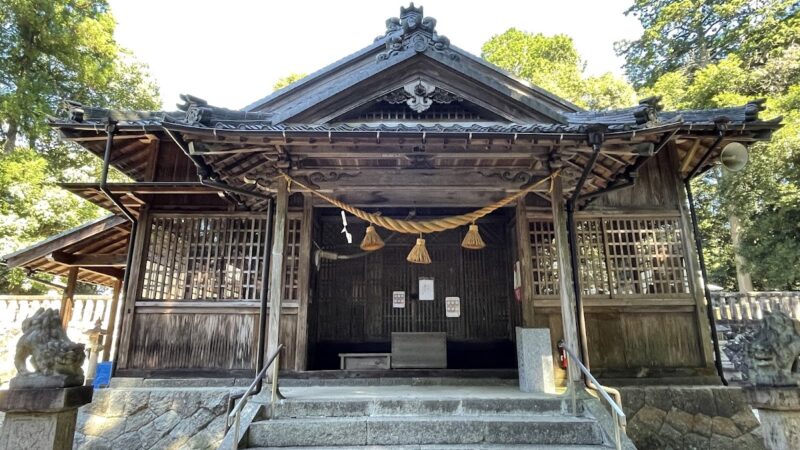
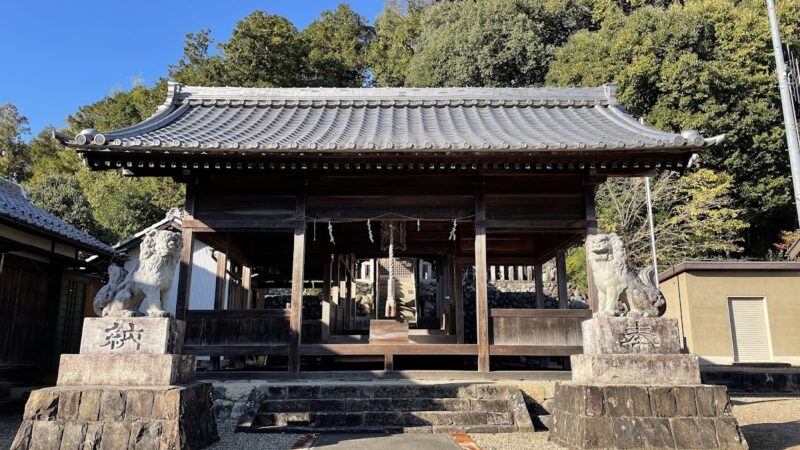
The grounds of Iwanonishi Shrine are a tranquil space embraced by the nature of Mt. Shimizu. As you proceed along the approach, the main hall and worship hall are neatly arranged, giving a sense of the dignity of an ancient shrine. While the former grove of giant cypress trees has changed with time, a lush green environment is still maintained.
Although the grounds are relatively compact, they exhibit a dignified presence befitting a Shikinaisha (a shrine listed in the Engishiki, an ancient Japanese legal code). Visitors can offer their prayers in a peaceful environment.
Relationship with the Tomb of Hiko-no-Mikoto
One of the most distinctive features of Iwanonishi Shrine is the presence of the “Tomb of Hiko-no-Mikoto” adjacent to the shrine. This burial mound is located on the slopes of Mt. Shimizu, on the former site of the shrine, and is said to be the burial place of Hiko-no-Mikoto, the principal deity.
Located within walking distance of the shrine, it’s a popular destination for visitors combining their shrine visit with a visit to the shrine itself. It’s also attracting archaeological attention as a valuable historical site where mythology and history intersect, and as a relic from the Kofun period (ancient burial mound period).
Natural Environment of Shimizu-yama
Shimizu-yama is an isolated peak with an elevation of 163 meters, a prominent mountain located in the plains of northeastern Gifu City. The entire mountain has a history of being cherished as a sacred area, and its rich natural environment remains. In spring, cherry blossoms bloom beautifully, delighting visitors.
Goshuin (Shrine Seals) and Gifts
About Goshuin
Goshuin are available at Iwanonishi Shrine. The goshuin, featuring ink calligraphy and a red seal indicating its status as a Shikinaisha (a shrine listed in the Engishiki), is popular among those who enjoy shrine pilgrimages and goshuin collection.
When requesting a goshuin, it is recommended to check the shrine office’s operating hours in advance. Some shrines do not have their offices open all the time, so if you definitely want to get a Goshuin (shrine stamp), it’s wise to contact them in advance.
Items Offered
Iwanonishi Shrine offers items such as amulets and talismans. Due to its divine virtues as the god of pioneering and the god of mountain and water management, it is believed to bring blessings such as business prosperity, land safety, and family safety.
Manners and Etiquette for Visiting Shrines
Basic Etiquette for Visiting Shrines
When visiting Iwanonishi Shrine, please observe basic manners for visiting shrines.
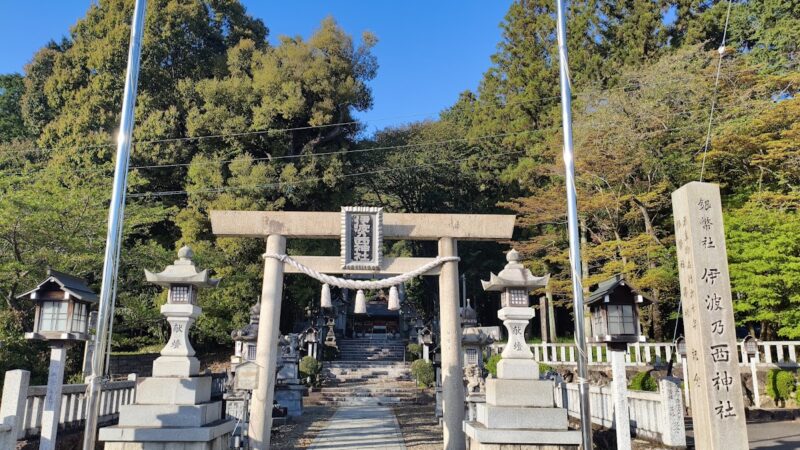
- Bow before passing through the torii gate: As a sign of respect when entering the sacred area, bow before the torii gate.
- Purify yourself at the water basin: If there is a water basin, purify your left hand, then your right hand, then your mouth.
- Walk along the edge of the path: The center of the path is considered the path of the gods.
- Etiquette at the main hall: Two bows, two claps, and one bow are the basic rituals.
- Bow upon leaving: Turn around and bow when leaving the torii gate.
Regarding Photography
Photography is generally permitted on the shrine grounds, but consideration should be given to avoiding disturbing other worshippers. In particular, refrain from taking photos inside the main hall or in sacred areas, or obtain permission beforehand.
Access Information and Surrounding Environment
Access by Public Transportation
Nearest Stations
- Approximately 5.2 kilometers from JR Takayama Line “Naka Station”
- Approximately 5.2 kilometers from Meitetsu Kakamigahara Line “Shimin Koen-mae Station”
- Approximately 5.2 kilometers from Meitetsu Kakamigahara Line “Shin-Naka Station”
The shrine is a bit of a distance from the nearest stations, so walking will take some time. We recommend using a taxi or checking bus schedules in advance.
Access by Car
Visiting by car is the most convenient option. The shrine has a parking lot that can accommodate approximately 10 cars. It is about a 15-20 minute drive from the center of Gifu City.
Access from Major Roads
- Accessible via Prefectural Road from National Route 21
- Search for “3-421 Iwata-Nishi, Gifu City” or “Iwanonishi Shrine” on your car navigation system.
Nearby Shrines and Temples
There are many other historical shrines and temples in Gifu City.
Inaba Shrine
A Shikinaisha (shrine listed in the Engishiki) known as the guardian shrine of Gifu City, located at the foot of Mt. Kinka. Although its name is similar to Iwanonishi Shrine, it is a different shrine. Visiting both is recommended when you are in Gifu City.
Tejikarao Shrine
A Shikinaisha located in Kakamigahara City, worshipped as the god of strength.
Shrine pilgrimage routes such as the “Gifu Seven Lucky Gods Pilgrimage,” which visits these shrines, are also popular.
Annual Events and Festivals
Imperial Mausoleum Festival (March 21st)
As a major religious ceremony of Iwanonishi Shrine, the Imperial Mausoleum Festival is held annually on March 21st. This is a festival related to the adjacent tomb of Hikosasagi-no-Mikoto, and is an important event to commemorate and express gratitude to the enshrined deity.
Other Annual Events
Like most shrines, annual events such as the New Year’s Day Festival, Spring Festival, and Autumn Festival are also held. Detailed dates may change from year to year, so it is recommended that those wishing to participate check in advance.
Divine Virtues and Faith of Iwanonishi Shrine
Gods of Development and Pioneering
Hikosasagi-no-Mikoto and Hachiuriirihiko-no-Mikoto are revered as gods who dedicated themselves to the development and pioneering of this region. Therefore, they are believed to bestow divine virtues such as success in new businesses, safety in land development, and regional development.
Gods of Mountain and Water Management
In ancient times, mountain and water management were essential for pioneering. The enshrined deity is believed to have made significant contributions to water-related projects, such as preventing floods and developing agricultural water systems. Even today, it is revered as a protector against disasters and water-related calamities.
Guardian Deity of the Region
For over a thousand years, Iwanonishi Shrine has been worshipped as the tutelary deity of the Iwata-Nishi region. It continues to attract unwavering devotion as a god protecting the safety and prosperity of the local residents.
Visitor Voices and Experiences
Charming Serene Atmosphere
Many visitors highly appreciate the quiet and peaceful atmosphere of Iwanonishi Shrine. Its location at the foot of Mt. Shimizu, far from the hustle and bustle of urban areas, provides an environment conducive to peaceful worship.
A Sense of Historical Romance
Its status as a Shikinaisha (a shrine listed in the Engishiki, an ancient Japanese legal code) and the presence of the Hiko-no-Mikoto tomb (an ancient burial mound) attract history buffs and those interested in ancient history. Many visitors feel a special attraction to this place where mythology and history intersect.
The Beauty of Cherry Blossom Season
In spring, cherry blossoms bloom on the shrine grounds and on Kiyomizu Mountain, offering a beautiful landscape. Visitors who come during cherry blossom season often comment on the impressive harmony between the solemnity of the shrine and the vibrant blossoms.
The History of Iwanonishi Shrine and Gifu
The Historical Position of Kakami District, Mino Province
The former Kakami District, where Iwanonishi Shrine is located, was an important area in ancient Mino Province. It was a fertile land blessed by the Nagara River and was developed early on. The presence of seven Shikinaisha (shrines listed in the Engishiki) attests to the importance of this region in ancient times.
Relationship with Gifu City
Although now incorporated into Gifu City, the Iwata Nishi area, along the Nagara River, has maintained its own unique culture and traditions. Iwanonishi Shrine is cherished by local residents as a symbol of the region’s identity.
Important Points and Useful Information for Visiting a Shrine
Appropriate Attire for Visiting a Shrine
While there are no specific dress code requirements for visiting a shrine, it is advisable to dress appropriately, as it is a sacred place. Especially when performing a formal prayer or receiving a blessing, avoid overly casual attire.
Seasonal Highlights
- Spring (March-May): The cherry blossom season makes the shrine grounds vibrant. The Imperial Mausoleum Festival is also held in March.
- Summer (June-August): The lush greenery creates a refreshing atmosphere.
- Autumn (September-November): The autumn foliage is beautiful, allowing for a peaceful visit.
- Winter (December-February): Experience the tranquil atmosphere of the shrine in winter.
Estimated Time Required for Visiting
Visiting only the shrine grounds takes approximately 15-30 minutes. If you extend your visit to the tomb of Hiko-no-Mikoto, allow an additional 30 minutes to 1 hour.
Accessibility Information
As the shrine is located at the foot of a mountain, there are steps and slopes within the grounds. Those wishing to visit in a wheelchair are advised to contact the shrine in advance.
Cultural Value of Iwanonishi Shrine
Academic Importance as a Shikinaisha Shrine
Shikinaisha shrines listed in the Engishiki Jinmyocho (a list of shrines compiled in the Heian period) are extremely important historical sources for studying the religious and social history of ancient Japan. Iwanonishi Shrine is of high academic value as a clue to understanding the reality of ancient beliefs in Mino Province.
Preservation of Regional Culture
Iwanonishi Shrine, which has attracted the faith of the region for over a thousand years, is the core of the cultural identity of the Iwata Nishi area. Traditional culture is passed down to future generations through festivals and annual events.
Combined Value of Kofun and Shrine
The adjacent existence of the Kofun (ancient burial mound) known as the Hiko-no-Mikoto Tomb and the shrine is a valuable example illustrating the changes in Japanese belief forms. As a place where you can experience the history of faith that has continued uninterrupted since the Kofun period, it is highly valued as a cultural asset.
Summary: The Significance of Visiting Iwanonishi Shrine
Iwanonishi Shrine is a valuable shrine with a history of over a thousand years, listed in the Engishiki Jinmyocho (a list of shrines compiled in the Heian period). It enshrines Prince Hikosato, son of Emperor Kaika, and his son, Prince Hachiuriirihiko, and has been worshipped as an ancient pioneering god and a god of mountain and water control.
Nestled in a naturally rich environment at the southern foot of Mt. Shimizu, and together with the adjacent tomb of Hikosato, it forms a special space where mythology and history intersect. It is a precious place where you can feel the breath of faith that has continued since ancient times in a tranquil atmosphere.
When visiting Gifu City, along with other famous shrines such as Inaba Shrine, be sure to visit this historic Engishiki shrine, Iwanonishi Shrine. Parking is available, and access is relatively easy. Receiving a Goshuin (temple/shrine stamp) while reflecting on the ancient pioneering deities will surely bring a deep sense of fulfillment to your heart.
As a ancestral shrine of the region and a valuable cultural heritage site that conveys Japan’s ancient history, Iwanonishi Shrine is a shrine well worth visiting. Through your visit, experience the depth of Gifu’s history and culture.