Complete Guide to Make Shrine (Nantan City, Kyoto Prefecture) | The History of a Myojin Taisha Shrine and the Charm of Thatched-Roof Architecture
Make Shrine, located in Takei, Sonobe-cho, Nantan City, Kyoto Prefecture, is a venerable shrine that has long been revered as the deity of food and agriculture. Listed as a Myojin Taisha (a major shrine) in the Engishiki Jinmyocho (a list of shrines compiled in the Heian period), it received a visit from Emperor Shirakawa in 1079, and is known as a prestigious shrine with deep ties to the imperial court since the Heian period.
This article provides detailed information you should know before visiting Make Shrine, including its history, architectural features, enshrined deities, and access methods.
History and Origins of Maki Shrine
Ancient Beliefs and the Engishiki Myojin Taisha Shrine
The founding of Maki Shrine is extremely ancient, and although the exact founding date is unknown, it is listed as “Maki Shrine, Funai District, Tanba Province, Myojin Taisha” in the “Engishiki Jinmyocho,” compiled in the 5th year of Encho (927) during the mid-Heian period. Myojin Taisha is the highest rank for shrines considered to have particularly remarkable spiritual power, indicating that it received special reverence from the imperial court.
Of the 2,861 shrines listed in the Engishiki nationwide, only 285 were Myojin Taisha. This shows how important Maki Shrine was considered.
Emperor Shirakawa’s Visit and the Imperial Plaque of “Funai Daiichi Maki Shrine”
A noteworthy event in the history of Maki Shrine is the visit of Emperor Shirakawa in the 3rd year of Shoryaku (1079). At this time, the Emperor ordered the repair of the entire shrine complex and bestowed upon it an imperial plaque bearing the inscription “Funai Daiichi Maki Shrine.”
This imperial plaque, personally recognized by the Emperor as the foremost shrine in Funai County, is an important testament to the high status of Maki Shrine. This event further solidified Maki Shrine’s position as a center of faith in the region.
Relationship with the Sonobe Domain during the Edo Period
During the Edo period, Maki Shrine became a place of prayer for the Koide clan, the lords of the Sonobe Domain. The Koide clan was a daimyo family that ruled the Sonobe Domain with a 26,000 koku (unit of rice production) yield, and they deeply revered Maki Shrine for generations, dedicating themselves to the maintenance and management of the shrine buildings.
All of the current shrine buildings were constructed after the Edo period, with the main hall built in 1767 (Meiwa 4). It is a valuable cultural asset that preserves the architectural style of that era.
Deity and Divine Virtues
Ōmiketsuhiko-no-Mikoto
The deity enshrined at Maki Shrine is Ōmiketsuhiko-no-Mikoto. “Mike” refers to food offered to the gods, and Ōmiketsuhiko-no-Mikoto has been worshipped as the god who presides over food.
The prosperity of Kyoto for a thousand years was underpinned by a rich food supply from the surrounding areas. Maki Shrine, as the “god who presides over food and agriculture that supported Kyoto’s food supply for a thousand years,” has long attracted the faith of farmers and people involved in food production.
Divine Virtues and Faith
The main divine virtues of Maki Shrine are as follows:
- Abundant Harvest: Prayers for a bountiful harvest as the guardian deity of agriculture
- Food Safety: Protection of food safety and a rich diet
- Industrial Prosperity: Development of agriculture and other industries
- Family Safety: Health and safety of families through daily meals
Even today, people involved in agriculture and the food and beverage industry visit the shrine to pray for business prosperity and food safety.
Highlights of the Shrine Grounds and Architecture
Kyoto Prefecture’s Largest Thatched-Roof Covering
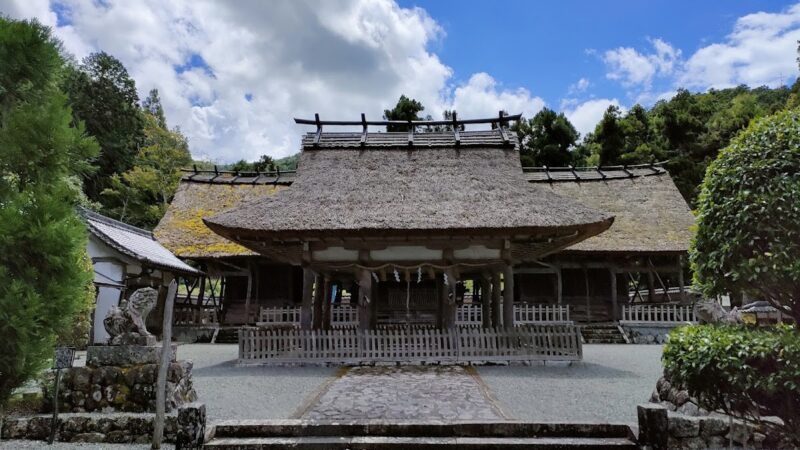
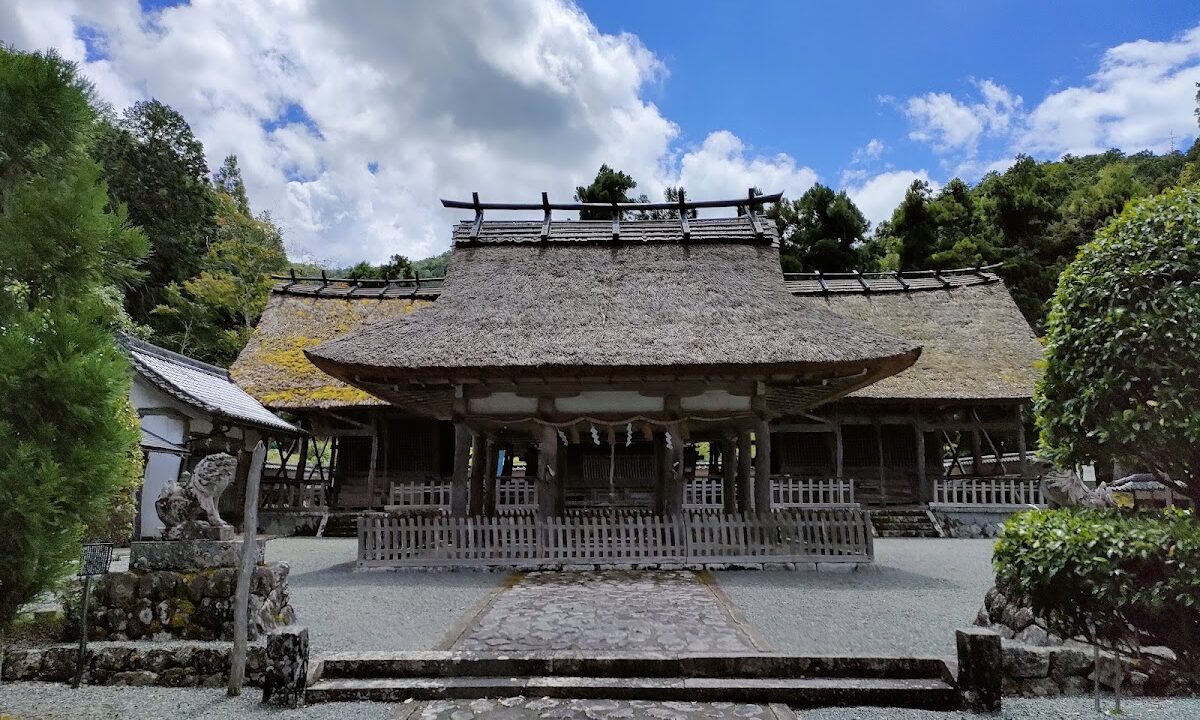
The most distinctive feature of Maki Shrine is the large thatched-roof covering that encloses the main shrine and the east and west subsidiary shrines. This covering boasts one of the largest scales in Kyoto Prefecture, and its grandeur overwhelms visitors.
Thatched roofs require periodic re-thatching, and Maki Shrine has preserved this traditional architectural style for over 1200 years since its founding. In recent years, the decline in thatched roof craftsmen and the difficulty in securing materials have made the maintenance of this cultural property a challenge, and preservation activities are being carried out through crowdfunding and other means.
Shrine Buildings Designated as Kyoto Prefecture Cultural Properties
The three shrine buildings—the main hall, the eastern subsidiary shrine, and the western subsidiary shrine—located within a protective structure, were designated as Kyoto Prefecture Cultural Properties on April 14, 1984.
The main hall was built in 1767 and is characterized by its humorous-looking wooden brackets (kibana). Kibana are decorative parts protruding from pillars, often carved with animals such as lions and elephants. The kibana at Maki Shrine have a unique expression that delights visitors.
The Eastern and Western Subsidiary Shrines are also housed within thatched-roof structures, just like the main shrine, creating a solemn atmosphere where the three shrines are united.
Kyoto Prefecture Registered Cultural Properties
In addition to the main shrine and subsidiary shrines, the following structures are registered cultural properties of Kyoto Prefecture:
- Ema-sha: A building where votive tablets offered by worshippers are displayed
- Shinmon: The gate that serves as the entrance to the shrine grounds
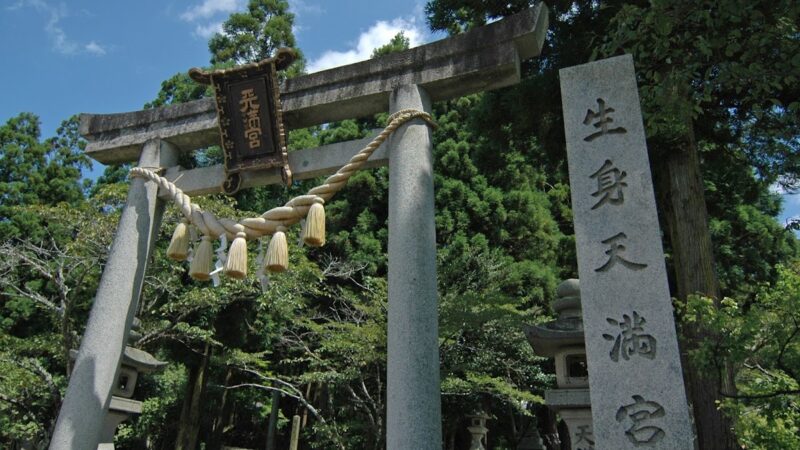
- Torii: A symbol indicating the entrance to the sacred area
These structures are also valuable examples of Edo period architecture.
Kyoto Prefecture Cultural Property Environmental Preservation Area
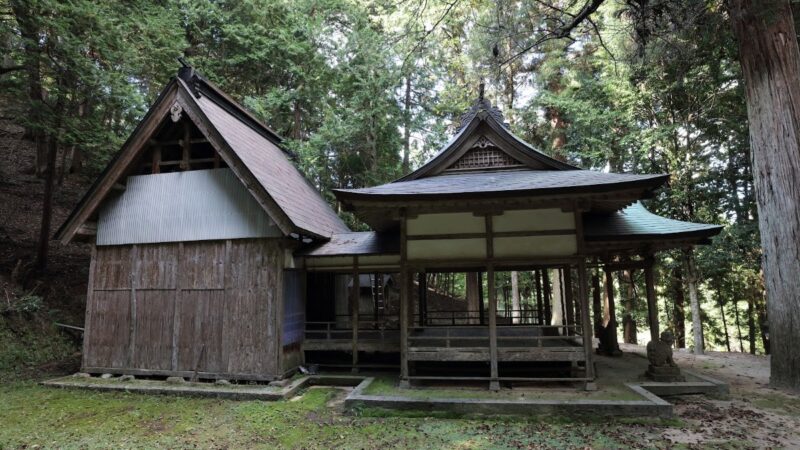
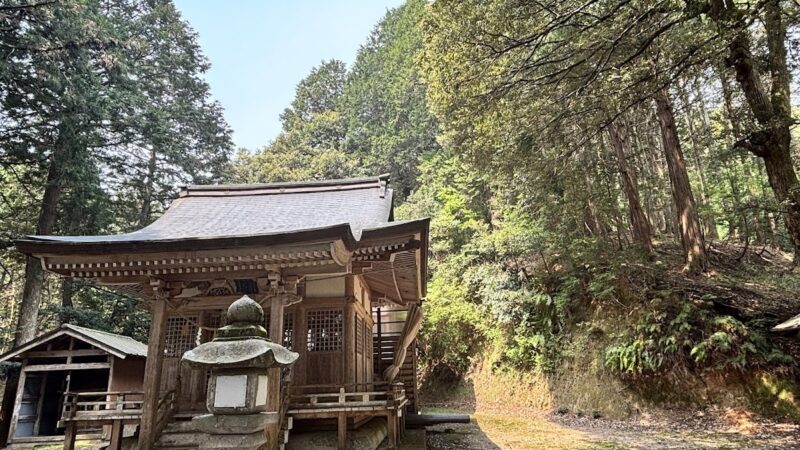
The entire shrine grounds are designated as a Kyoto Prefecture Cultural Property Environmental Preservation Area, protecting not only the shrine buildings but also the surrounding natural environment. Located at the northern foot of Mount Taikinji, the shrine grounds exude a sacred atmosphere surrounded by a deep forest, offering peace of mind to visitors.
Shrine Treasures and Cultural Properties
Kannon Statues Attributed to Gyoki
Maki Shrine possesses two Kannon statues attributed to Gyoki Bodhisattva, a high-ranking priest of the Nara period, as its shrine treasures. Gyoki was a high-ranking priest who was involved in the construction of the Great Buddha of Todai-ji Temple and is known for constructing temples and bridges throughout Japan.
These Kannon statues are valuable cultural properties that tell the story of the era of syncretism between Shinto and Buddhism, indicating that Maki Shrine has had deep ties with Buddhism since ancient times.
Detailed Information
Basic Information
- Location: Takei Miyanotani, Sonobe-cho, Nantan City, Kyoto Prefecture
- Deity Enshrined: Ōmiketsuhiko-no-Mikoto
- Shrine Rank: Shikinaisha (Myōjin Taisha), Former Prefectural Shrine
- Cultural Property Designation:
- Kyoto Prefecture Designated Cultural Property: Main Hall, East Subsidiary Shrine, West Subsidiary Shrine
- Kyoto Prefecture Registered Cultural Property: Ema Hall, Shrine Gate, Torii Gate
- Kyoto Prefecture Cultural Property Environmental Preservation Area: Shrine Grounds
Access Method
Access by Train and Bus
- Get off at Sonobe Station on the JR Sagano Line
- Take the Keihan Kyoto Kotsu Bus Sonobe-Sasa Line (approx. 20 minutes)
- Get off at the “Maki Shrine Mae” bus stop and it’s a short walk.
Maki Shrine is approximately 7km west of Sonobe Station. Since bus service is limited, it is recommended to check the timetable in advance.
Access by Car
- Head north along the Sonobe River from National Route 9
- Head west on National Route 477 and Prefectural Route 54
- Approximately 15 minutes from Sonobe Station
There is parking space on the shrine grounds, but the number of spaces is limited, so caution is advised during busy times.
Visiting Hours and Admission Fee
- Visiting Hours: Grounds are freely accessible (please check the hours of the shrine office)
- Admission Fee: Free
About Goshuin (Shrine Seals)
Goshuin (shrine seals) are available at Maki Shrine. Since the shrine office may be unattended, it is recommended to contact them in advance if you wish to receive a goshuin. Inquiries can be made through the official website.
Annual Events and Festivals
Maki Shrine holds various festivals throughout the year. The Autumn Grand Festival, in particular, is an important event where local people gather. It is a traditional festival to give thanks for a bountiful harvest and pray for a good harvest the following year.
Nearby Attractions
Forest Kyoto Area
Nantan City, where Maki Shrine is located, is part of an area known as “Forest Kyoto.” This region blends rich nature with historical culture, and includes the following tourist spots:
- Miyama Kayabuki no Sato: A thatched-roof village preserving Japan’s original landscape
- Rurikei Onsen: A hot spring resort surrounded by nature
- Sonobe Castle Ruins: Castle ruins that tell the history of the Sonobe Domain
Shrines and Temples in the Same Area
Many other historical shrines and temples are scattered around Maki Shrine. If you have time, a historical walk visiting the surrounding temples and shrines is highly recommended.
Preservation Activities for Maki Shrine
Thatched Roof Preservation Project
In recent years, crowdfunding has been used to preserve the thatched-roof architecture of Maki Shrine, which has a history of over 1200 years, for future generations. Thatched roofs need to be re-thatched every 20-30 years, but the aging of craftsmen and the difficulty in securing thatch are currently posing challenges.
This project has garnered many supporters, demonstrating the high level of interest in preserving traditional architectural techniques and cultural properties.
Collaboration with the Community
Maki Shrine also functions as a center of the local community, receiving support in various forms, such as cleaning activities and preparations for festivals by local residents. Protecting the shrine is also about protecting the history and culture of the region.
Points to Note and How to Enjoy Your Visit
Experiencing History in Tranquility
The grounds of Maki Shrine are a quiet space surrounded by a deep forest. Away from the hustle and bustle of the city, you can find peace of mind in a place of worship that has continued for over 1200 years. The unique atmosphere created by the thatched roof is something special that cannot be experienced at other shrines.
Enjoying Architectural Beauty
The largest thatched-roof shrine building in Kyoto Prefecture is breathtaking whether viewed from afar or up close. The humorous expressions of the wooden carvings on the main hall are a must-see. You can feel the skill and playful spirit of Edo-period craftsmen.
Seasonal Scenery
The shrine grounds offer the beauty of nature throughout the seasons. Spring brings fresh greenery, summer brings deep green, autumn brings vibrant foliage, and winter brings a blanket of snow, each season displaying a different face.
Photography Tips
The thatched-roof shrine building is a photogenic spot. Especially recommended are full views from the front and shots looking up from beneath the building. However, as it is a sacred place, please observe proper etiquette when taking photos.
Summary
Maki Shrine boasts a history of over 1200 years as a Myojin Taisha (a major shrine listed in the Engishiki), and is a prestigious shrine that received a visit from Emperor Shirakawa. As the deity presiding over food and agriculture, it has played a vital role in supporting the food supply of Kyoto.
The shrine’s thatched roof structure, one of the largest in Kyoto Prefecture, and its main hall, a designated cultural property of Kyoto Prefecture, are valuable cultural assets that preserve the architectural style of the Edo period. The entire shrine grounds are designated as a Kyoto Prefecture Cultural Property Environmental Preservation Area.
Nearby surrounded by the rich natural beauty of Nantan City, Makijinja Shrine offers a sacred atmosphere where you can feel the weight of Japanese traditional culture and history. It is a special place well worth visiting, even if it means taking a short detour during your Kyoto sightseeing trip.
For the latest information, please check the official website (https://www.makejinja.org/) before your visit.