Kumano Wakamiya Sansha Shrine (Kyotango City, Kyoto Prefecture): A Thorough Explanation of the History and Charms of this Shikinaisha Shrine
Located in Shinada, Kumihama-cho, Kyotango City, Kyoto Prefecture, Kumano Wakamiya Sansha Shrine is a venerable Shikinaisha shrine boasting an ancient origin. It is said to have been established during the reign of Emperor Sujin by Tanba-no-Mikoto, one of the Four Generals, and is listed in the Engishiki Jinmyocho (a historical record of shrines). This shrine has long been a center of local faith. This article provides a detailed explanation of Kumano Wakamiya Sansha Shrine, including its history, enshrined deities, highlights of the grounds, festivals, and access information.
Table of Contents
- What is Kumano Wakamiya Sansha Shrine?
- Deities and Divine Virtues
- History and Origins
- Highlights of the Shrine Grounds
- Annual Festivals
- Cultural Properties and Shrine Treasures
- Location and Access Information
- Points to Note When Visiting
What is Kumano Wakamiya Sansha Shrine?
Kumano Wakamiya Sansha Shrine is a shrine located in Shinada, Kumihama-cho, Kyotango City, Kyoto Prefecture. It is a Shikinaisha (shrine listed in the Engishiki Jinmyocho, an ancient Japanese legal code). It is formally listed as “Kumano Shrine” in the Engishiki and has been revered since ancient times as a Shikinaisha of Kumano District, Tango Province.
This shrine was formerly a village shrine and has been the center of faith for local residents throughout its long history as the local tutelary deity. While it is a different shrine from the Kyoto Three Kumano Shrines (Kumano Shrine, Shin-Kumano Shrine, and Kumano Wakaoji Shrine) in Kyoto City, it is similarly known as a historically significant shrine based on Kumano faith. ### Status as a Shikinaisha Shrine
The Engishiki Jinmyocho is a list of shrines compiled in the 5th year of the Encho era (927 AD) during the mid-Heian period. It lists all shrines throughout Japan that were recognized as official shrines at the time. Kumano Wakamiya Sansha Shrine is listed as “Kumano Shrine, Kumano District, Tango Province,” proving its historical significance as a shrine recognized by the imperial court since ancient times.
Deities and Divine Virtues
There are multiple traditions regarding the deities enshrined at Kumano Wakamiya Sansha Shrine.
Main Deity
Ame-no-Kumahito-no-Mikoto is said to be the main deity. Ame-no-Kumahito-no-Mikoto is a deity appearing in the Kojiki and Nihon Shoki, and is considered one of the gods who played an active role during Amaterasu Omikami’s hiding in the rock cave.
Other Legends
According to historical documents, the following records exist regarding the deities enshrined at our shrine:
- Sandai Jitsuroku: A description stating that Susanoo-no-Mikoto is enshrined.
- Dai Nihon Jingi Shi: A description stating that two deities, various kinds, are enshrined.
These records suggest the possibility that our shrine has enshrined various deities over time, or that multiple deities were enshrined together.
Divine Virtues
As a shrine based on Kumano faith, it is believed to possess the following divine virtues:
- Abundant Harvest: As the guardian deity of agriculture, prayers are offered for a bountiful harvest in the region.
- Family Safety: As the tutelary deity, it protects the peace and well-being of local residents.
- Protection from Misfortune and Bringing Good Fortune: It wards off disasters and brings good fortune.
- Maritime Safety: Due to its location near Kumihama Bay, prayers are also offered for safety at sea.
History and Origins
Legend of Founding
The founding of Kumano Wakamiya Sansha Shrine is said to date back to the reign of Emperor Sujin. Emperor Sujin was the 10th emperor and one of the first emperors whose existence is considered highly plausible. His reign is believed to have been around the 1st century BC, meaning the shrine’s founding dates back to an extremely ancient period.
The person involved in its founding is said to be Tanihanushi-no-Mikoto, one of the Four Generals of the Four Roads. The Four Generals were generals dispatched by Emperor Sujin to pacify the country, and Tanba-no-Mikoto was dispatched to pacify the Hokuriku region. It is believed that the shrine originated when Tanba-no-Mikoto enshrined Kumano-no-Okami in this area during his pacification of the Tanba and Tango regions.
History as an Engishiki Shrine
By being listed as “Kumano Shrine, Kumano District, Tango Province” in the Engishiki Jinmyocho (a list of shrines compiled in 927 AD), the shrine established its status as an official shrine. This led to recognition as a prestigious shrine receiving offerings from the imperial court, increasing its religious and political importance in the region.
History from the Medieval Period onward
While detailed records from the medieval to early modern periods are limited, the shrine continued to attract the faith of local residents as the tutelary deity of the region. It is believed to have maintained its tradition as an Engishiki shrine even amidst the wars of the Sengoku period and the social changes of the Edo period.
Modern Era
Due to the reform of the shrine system during the Meiji era, our shrine was designated a former village shrine. A village shrine is one of the ranks in the modern shrine ranking system, given to shrines recognized as the guardian shrine of a village. Even after the post-war reform of the shrine system, it remains an important shrine in the region to this day.
Highlights of the Shrine Grounds
Shrine Buildings
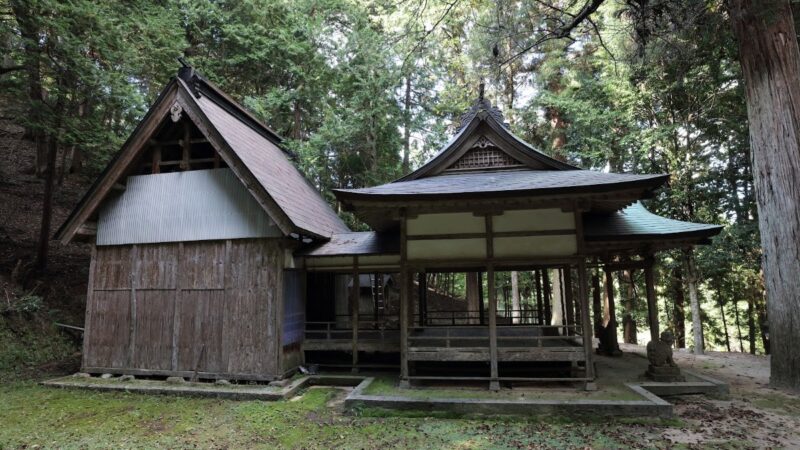
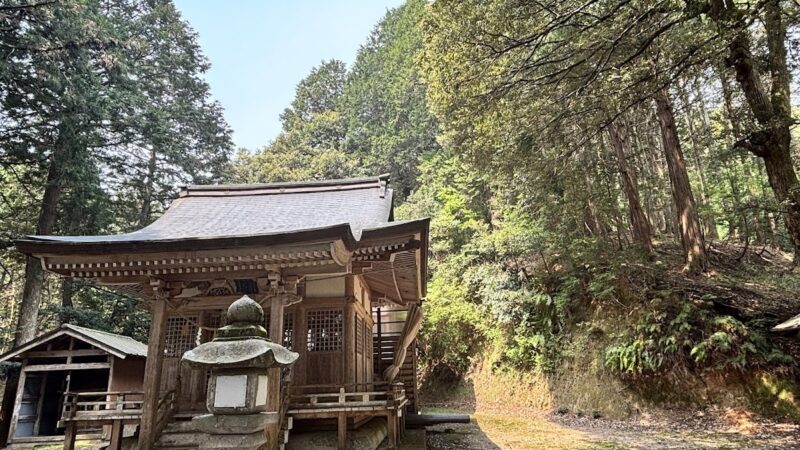
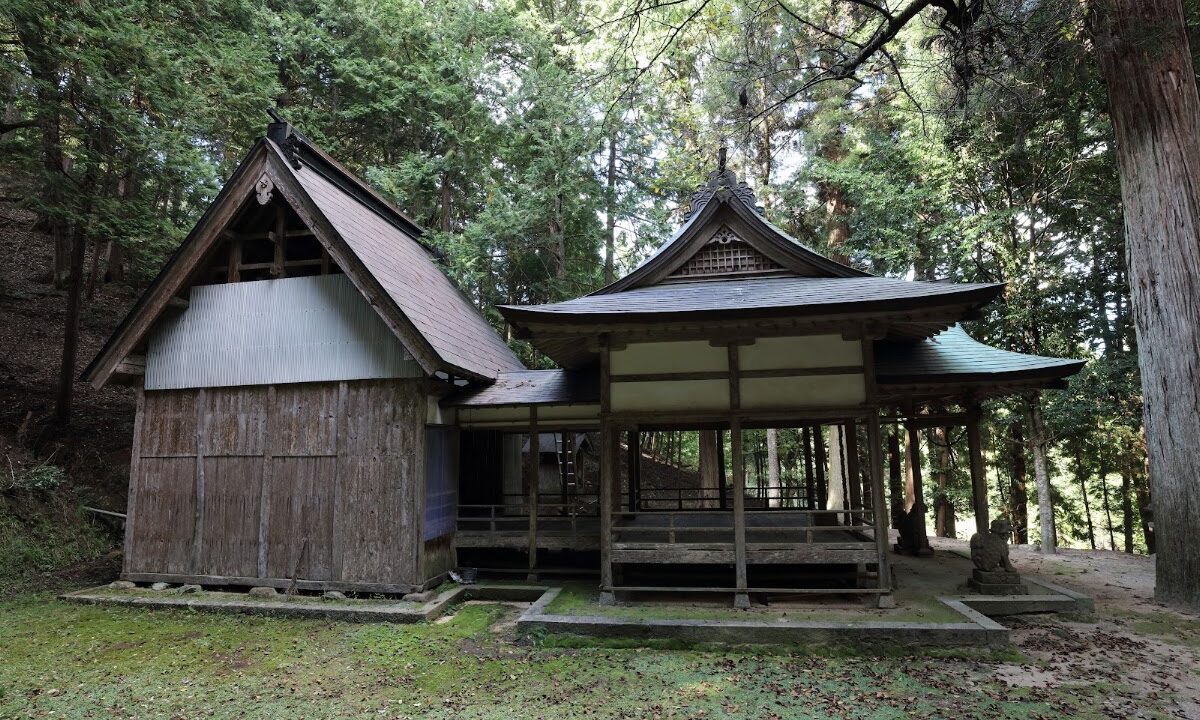
Traditional shrine architecture is arranged within the grounds of Kumano Wakamiya Sansha Shrine.
Main Hall
The main hall is the central building of the shrine, where the deity is enshrined. While detailed records of the architectural style and construction date are needed, it is a magnificent structure that maintains the status of a Shikinaisha (a shrine listed in the Engishiki, an ancient Japanese legal code).
Worship Hall
The worship hall, where worshippers offer prayers, is located in front of the main hall. As the center of local faith, it welcomes many worshippers daily.
Shrine Treasures: Guardian Deity Statues
Two guardian deity statues are preserved as important shrine treasures of our shrine. Guardian deity statues are divine images that protect the gates and shrine buildings as guardian deities of the shrine, and those from older periods are valuable cultural assets. Further research is needed to determine the age and style of our shrine’s guardian deity statues.
Atmosphere of the Shrine Grounds
Nestled in the tranquil environment of Shinada, Kumihama Town, our shrine maintains the solemn atmosphere characteristic of an ancient shrine. The grounds, harmoniously integrated with the surrounding natural environment, offer peace and tranquility to visitors.
Annual Festivals
Kumano Wakamiya Sansha Shrine holds various festivals throughout the year.
Grand Festival
The Grand Festival, the most important festival of the shrine, brings together local residents to pray for a bountiful harvest and peace in the community. Traditional Shinto rituals are solemnly performed, making it an important opportunity to pass on local culture to future generations.
New Year’s Day Festival
The New Year’s Day Festival, held at the beginning of the new year, prays for peace and prosperity throughout the year. It is also a popular place for local residents to visit for their first shrine visit of the year.
Other Festivals
Seasonal festivals and monthly rituals are held throughout the year, making it the center of the community’s religious life.
Cultural Properties and Shrine Treasures
Guardian Deity Statues
As mentioned above, two guardian deity statues are preserved as shrine treasures. These statues are valuable cultural properties that tell the history of the shrine and are properly preserved.
Ancient Documents and Records
Within its long history as a Shikinaisha (a shrine listed in the Engishiki, an ancient Japanese legal code), it is possible that various ancient documents and records have been passed down. These materials are of important value not only for understanding the history of the shrine but also for understanding the history of the region.
Location and Access Information
Location
629-3422 Shinada, Kumihama-cho, Kyotango City, Kyoto Prefecture
Access Methods
By Public Transportation
- Approximately 10 minutes by car from Kumihama Station on the Kyoto Tango Railway Miyazu Line
- It is convenient to take a taxi or rental car from Kumihama Station
- If using a local bus, it is recommended to check the latest timetable in advance.
By Car
- Approximately 30 minutes via National Route 312 and prefectural roads from Kyotango Omiya IC on the Kyoto Jukan Expressway
- Access is also possible from Kyotango Omiya IC on the San’in Kinki Expressway
- It is recommended to check the availability of parking before visiting.
Nearby Tourist Attractions
Kumihama Town is a scenic area boasting the beautiful Kumihama Bay. In addition to visiting our shrine, you can also visit the following tourist spots:
- Kumihama Bay: A quiet inlet facing the Sea of Japan, offering beautiful scenery.
- Kotenkyo: A sandbar separating Kumihama Bay from the Sea of Japan, popular as a swimming beach.
- Kumihama Onsenkyo: A hot spring resort area with numerous inns where you can relax and unwind.
Points to Note When Visiting
Etiquette for Visiting a Shrine
The basic etiquette for visiting a shrine is as follows:
- Bow before passing through the torii gate.
- Purify your body and mind at the water basin.: Purify your left hand, right hand, and mouth in that order.
- Two bows, two claps, and one bow in front of the main hall.: Bow deeply twice, clap twice, and finally bow once.
- Bow again at the torii gate when leaving.
Recommended Time to Visit
- Spring: A season of fresh greenery, perfect for visiting in the crisp, clean air.
- Autumn: The shrine grounds harmonize with the beauty of nature during the autumn foliage season.
- During the Annual Grand Festival: A valuable opportunity to experience traditional festival rituals.
Points to Note When Visiting
- Maintain silence and respect the solemn atmosphere within the shrine grounds.
- Take photographs only within permitted areas.
- Be careful not to touch the shrine buildings or treasures directly.
- Always take your trash with you.
Kumano Faith and the Tango Region
The Spread of Kumano Faith
Kumano faith is a faith with the Kumano Sanzan (Kumano Hongu Taisha, Kumano Hayatama Taisha, and Kumano Nachi Taisha) in Kii Province (present-day Wakayama Prefecture) as its head shrine. After the Heian period, as pilgrimages to Kumano became popular, Kumano shrines were established throughout Japan.
Kumano Faith in Tango
The development of Kumano faith in the Tango region is thought to have existed from extremely ancient times, as the founding tradition of this shrine dates back to the reign of Emperor Sujin. The tradition of the shrine’s enshrinement by the Four Generals is an interesting example illustrating the relationship between the spread of faith and political control in ancient times.
Position in the Study of Shikinaisha Shrines
Listing in the Engishiki Jinmyocho (Register of Shrines in the Engi Era)
The listing of “Kumano Shrine, Kumano District, Tango Province” in the Engishiki Jinmyocho proves that this shrine definitely existed in the mid-Heian period and held the status of an official shrine.
Identification Controversy
While the current shrines corresponding to some Shikinaisha shrines are unclear, there is little disagreement that the Kumano Wakamiya Sansha Shrine located in Shinada, Kumihama Town, corresponds to the Kumano Shrine listed in the Engishiki.
Role in the Region
Function as a Clan Deity
Kumano Wakamiya Sansha Shrine has served as the clan deity of the Shinada district and surrounding areas, acting as a spiritual pillar for local residents. It continues to play an important role as a place for prayer at life’s milestones and for praying for the safety and prosperity of the region.
Cultural Preservation
Through festivals and traditional events, shrines play a vital role in passing on local culture and history to future generations. Maintaining a community centered around a shrine is especially important in rural areas facing depopulation.
Summary
Kumano Wakamiya Sansha Shrine is a Shikinaisha (a shrine listed in the Engishiki) with an extremely long history, said to have been founded during the reign of Emperor Sujin. The shrine possesses many elements that demonstrate its value as an ancient shrine, including the tradition of its enshrinement by the Four Generals, Tanba-no-Mikoto, its inclusion in the Engishiki Jinmyocho (a list of shrines compiled in the Heian period), and its precious treasures such as the guardian deity statues.
Located in the beautiful Kumihama-cho, Kyotango City, Kyoto Prefecture, facing the Sea of Japan, the shrine has long been revered as the local tutelary deity. Combining the formality of a Shikinaisha with a friendly, community-rooted character, it will continue to be visited by many people, and its history and traditions will be passed down.
When visiting Kumihama, be sure to pay your respects at Kumano Wakamiya Sansha Shrine and experience the solemn atmosphere of this ancient shrine with over a thousand years of history. Surrounded by beautiful nature, you’ll be able to spend a peaceful time away from everyday life.
References
- Engishiki Jinmyocho (Register of Shrines in the Engi Era)
- Sandai Jitsuroku (Chronicle of Three Reigns)
- Dai Nihon Jingi Shi (History of Great Japanese Shinto Deities)
- Kyoto Prefecture Shrine Association Materials
- Kyotango City History
- Various Research Literature on Shikinaisha (Shrines Listed in the Engishiki)