Complete Guide to Kikube Shrine (聽部神社) | History, Deities, and Access Information for this Ancient Shrine in Kyotango City, Kyoto Prefecture
Kikube Shrine (聽部神社), located in Tomoshige, Kumihama-cho, Kyotango City, Kyoto Prefecture, is a historically significant shrine listed in the Engishiki Jinmyocho (a list of shrines compiled in the Heian period), and has been revered in this region since ancient times. As a Shikinaisha (shrine listed in the Engishiki) in Kumano District, Tango Province, it is a valuable presence that conveys the history and culture of the region to the present day.
Basic Information on Kikube Shrine
Kikube Shrine is located in Shikinotani, Tomoshige, Kumihama-cho, Kyotango City, Kyoto Prefecture, and sits quietly at the foot of a mountain. Its former shrine rank was a village shrine, and it is still carefully preserved as the local tutelary shrine.
Location: Shikinotani, Tomoshige, Kumihama-cho, Kyotango City, Kyoto Prefecture
Former Shrine Rank: Village Shrine
Deity Enshrined: Kukurihime-no-Mikoto
Annual Festival Date: April 15th
History and Origins of Kibe Shrine
Origin of Founding
According to shrine tradition, the founding of Kibe Shrine dates back to the reign of Emperor Sujin. It is said to have been established by a man named Kawakami Masu, making it a very old shrine. The reign of Emperor Sujin is believed to have been around the 1st century BC, and if this is true, it would have a history of over 2000 years.
Status as an Engishiki Shrine
It is listed as “Kibe Shrine” in the Engishiki Jinmyocho (a list of shrines compiled in the Heian period), and was officially recognized as an Engishiki shrine in Kumano District, Tango Province. The Engishiki Jinmyocho is a list of major shrines throughout Japan compiled in the mid-Heian period (927 AD). Its inclusion in this list indicates that it was recognized as an important shrine even at that time.
The Tango Province Shrine Register lists it as “Shosanmi Kikube Myojin,” indicating that it was granted a high rank. This rank of Shosanmi was quite high for a shrine at that time.
Developments since the Meiji Era
In 1912 (Meiji 45), it was designated a shrine receiving offerings from the government. This meant it was recognized as a shrine that could receive special offerings from the state, a testament to its official recognition of its importance in the region.
Origin and Changes of the Shrine Name
From “Kikube” to “Chōbe”
While the Engishiki Jinmyocho listed it as “Kikube Shrine,” the current spelling “Chōbe Shrine” is more commonly used. Both “聞” (kiku) and “聴” (chō) mean “to hear,” but “聴” has a stronger connotation of listening attentively.
Relationship with the Kikube Clan
Regarding the origin of the shrine’s name, one theory suggests it was named after the Kikube clan, a family that ruled this region and worshipped at the shrine. In the ancient clan system, it was common for specific clans to worship specific deities, and it is believed that the Kikube clan protected this shrine for generations.
Naming Theory Based on the Deity
On the other hand, there is a theory that the shrine’s name, “Kikube,” comes from the sound “kukuri” in the name of the enshrined deity, Kukurihime-no-Mikoto. Kukurihime-no-Mikoto is a goddess associated with harmony and mediation, and the phonetic similarity between her name and the shrine’s name has been pointed out.
About the Deity Enshrined: Kukurihime-no-Mikoto
The Divine Nature of Kukurihime-no-Mikoto
The enshrined deity of Chōbe Shrine is Kukurihime-no-Mikoto. Kukurihime-no-Mikoto is a goddess who appears in one version of the *Nihon Shoki* (Chronicles of Japan) and is known as the god who mediated the conflict between Izanagi and Izanami in the underworld.
Due to this role, Kukurihime-no-Mikoto is believed to possess the following divine virtues:
- Matchmaking: Bringing together the bonds between men and women
- Harmony: Mediating disputes and bringing about reconciliation
- Family Safety: Strengthening family bonds
- Business Prosperity: Fostering good relationships between people
Connection to Hakusan Faith
Kukurihime-no-Mikoto is also known as the principal deity of Hakusan Hime Shrine (Ishikawa Prefecture) and is a central deity of Hakusan faith. The fact that Chōbe Shrine enshrines Kukurihime-no-Mikoto suggests that Hakusan faith spread to this region.
Hakusan worship was widespread in the regions along the Sea of Japan, and it is believed that the Tango region was also influenced by it. Through trade and cultural exchange across the sea, the beliefs of the Kaga and Noto regions were likely brought to Tango.
Shrine Grounds and Highlights
Location and Scenery
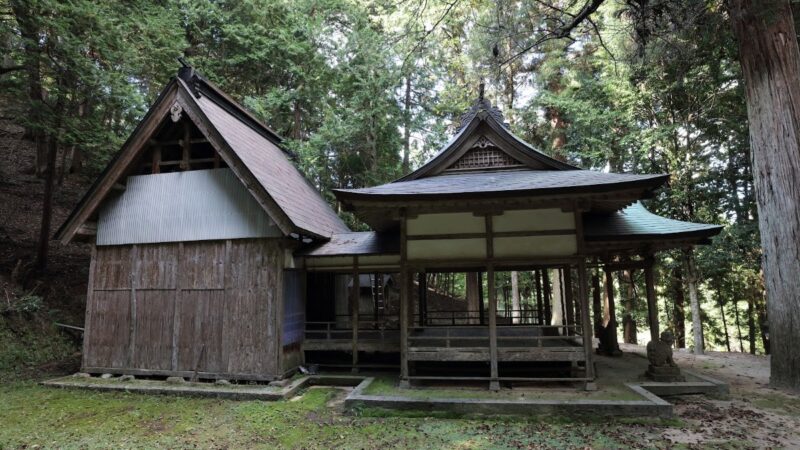
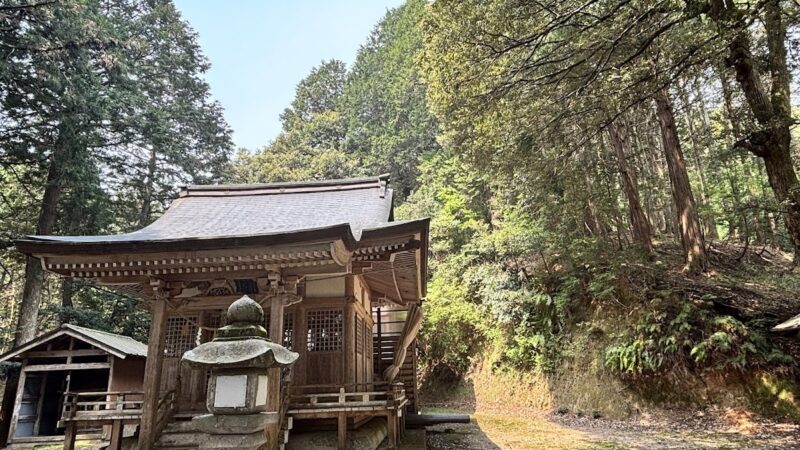
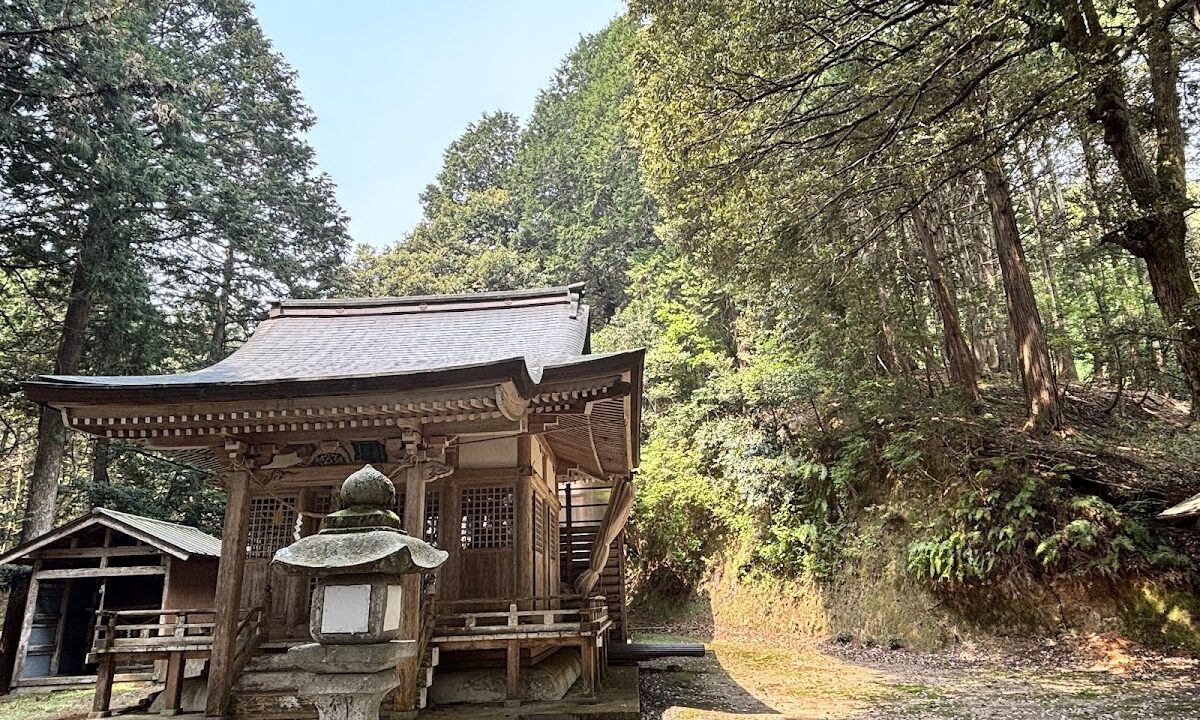
Chōbe Shrine is located in a place called “Shikinotani” in Tomoshige, Kumihama Town. Situated at the foot of a mountain in a tranquil rural area, it is surrounded by a rich natural environment. The first torii gate is at the foot of the mountain, and proceeding along the approach from there, the shrine building stands on the mountainside.
Shrine Grounds Structure
The shrine grounds are relatively small, but possess an atmosphere that conveys the dignity of a Shikinaisha (a shrine listed in the Engishiki, an ancient Japanese legal text). Climbing the approach leads to the main hall, and the surroundings are enveloped in silence. Because it is located away from the hustle and bustle of the city, worshippers can quietly contemplate the deity.
Photography Tips
Chōbe Shrine is a popular spot for photography enthusiasts. The following are some particularly noteworthy photo spots:
- First Torii Gate: The torii gate standing at the foot of the mountain, with the surrounding mountains in the background.
- Approach to the Shrine: A stone staircase approach surrounded by greenery.
- Main Shrine: A shrine building that evokes a sense of history.
- View from the Shrine Grounds: The rural landscape of the Tomoshige area.
The shrine grounds change their appearance with the seasons, showcasing the beauty of each season: the fresh green of spring, the deep green of summer, the autumn foliage, and the snowy landscape of winter.
Access Information
Access by Train
The nearest station is Kabutoyama Station (Kōyama Station) on the Kyoto Tango Railway Miyazu Line. It is approximately 2.6km in a straight line from the station.
From Kabutoyama Station:
- Walking: Approximately 35-40 minutes
- Taxi: Approximately 7-8 minutes
Access by public transport alone is somewhat inconvenient, so using a taxi or visiting by private car is recommended.
Access by Car
Access by car is the most convenient.
From Kyoto:
- Take the Kyoto Jukan Expressway north.
- Approximately 40 minutes from Yosa-Amanohashidate IC via National Routes 176 and 312.
From Osaka:
- Use the Maizuru-Wakasa Expressway.
- Approximately 1 hour from Fukuchiyama IC via National Routes 9 and 312.
From Kumihama Station:
- Approximately 10 minutes by car.
- Approximately 4 km southeast.
Parking
There is a dedicated parking space on the temple grounds, but it is small, so caution is advised when visiting with multiple vehicles.
Address and Map Information
Address: 629-3422 Shikinotani, Tomoshige, Kumihama-cho, Kyotango City, Kyoto Prefecture
Map Code: 194 890 509*02
Latitude and Longitude: 35.58275606, 134.92200481
Elevation: Approximately 34m above sea level
Manners and Etiquette for Visiting a Shrine
Basic Etiquette for Visiting a Shrine
When visiting Chōbu Shrine, please observe the following basic etiquette:
- Bow before passing through the torii gate: A courtesy when entering the sacred area
- Walk along the edge of the path: The center is the path for the gods
- Purify yourself at the water basin: Purify your left hand, right hand, and mouth in that order
- Two bows, two claps, one bow: The general etiquette for worship at shrines
Appropriate Attire for Visiting the Shrine
As the shrine is located on a mountainside, please note the following:
- Comfortable walking shoes (there are stairs on the approach to the shrine)
- Comfortable clothing
- Insect repellent in summer
- Warm clothing in winter
Annual Festivals and Events
Spring Festival (April 15th)
The annual festival of Chōbe Shrine is held every year on April 15th. Local parishioners gather, and the Shinto rituals are solemnly performed. This time of year marks the arrival of spring, and the shrine grounds are enveloped in fresh greenery.
Other Festivals
As the local guardian shrine, various festivals are held throughout the year, including the New Year’s Day festival. For detailed festival schedules, it is recommended to inquire with the local parishioners’ representative or the Kyōtango City Tourism Association.
Nearby Tourist Attractions
Kumihama Bay
Kumihama Bay, located about 15 minutes by car from Chōbe Shrine, is a beautiful lagoon facing the Sea of Japan. Known for its oyster farming, the area boasts numerous restaurants serving fresh seafood.
Kabutoyama Observatory
Kabutoyama, the mountain whose name is also used for the nearest train station, has an observatory offering panoramic views of Kumihama Bay and the Sea of Japan. Visiting it in conjunction with a visit to the Chōbe Shrine is highly recommended.
Other Shrines and Temples in Kumihama Town
Kumihama Town also has several other historical shrines and temples:
- Nyoi-ji Temple: One of the Kansai Flower Temple Pilgrimage Sites
- Kamiya Shrine: An ancient shrine known as the second-ranked shrine of Tango Province
- Minatomiya Shrine: A seaside shrine overlooking Kumihama Bay
Cultural Value of Chōbe Shrine
Importance as a Shikinaisha Shrine
There are approximately 2,800 Shikinaisha shrines listed in the Engishiki Jinmyōchō (a list of shrines compiled in the Heian period) throughout Japan, but only a limited number are located in Kumano District, Tango Province. Chōbe Shrine is one such example, a valuable resource for studying the ancient history of the region.
Position in Local History
Chōbe Shrine provides important clues to understanding the region’s history, including the existence of the Chōbe clan, the spread of Hakusan worship, and the forms of worship in ancient Tango Province.
How to Enjoy Visiting Chōbe Shrine
Worship in Tranquility
The greatest charm of Chōbe Shrine is its tranquility and the environment surrounded by nature. Because it is not a tourist destination, you can slowly connect with the deities and calm your mind. It is an ideal place for those seeking to escape the hustle and bustle of everyday life and refresh their spirits.
Historical Exploration
For those interested in ancient history and the history of shrines, Chōbe Shrine, a Shikinaisha (a shrine listed in the Engishiki), is an excellent place to explore. With the Engishiki Jinmyōchō (a list of shrines compiled in the Heian period) in hand, you can imagine the shrine as it was revered by people in the Heian period.
Photography
The shrine grounds, surrounded by nature, are also suitable for photography. The scenery is particularly beautiful during the seasons of fresh greenery and autumn leaves. Rather than aiming for Instagram-worthy photos, it’s a suitable place to document the shrine’s appearance as a quintessential Japanese landscape.
Precautions When Visiting
Unmanned Shrine
Chōbe Shrine is an unmanned shrine without a resident priest. Therefore, services such as the issuance of Goshuin (shrine stamps) are not provided. While you are free to visit, please note the following:
- Keep the shrine grounds clean
- Always take your trash with you
- Do not pick plants on the shrine grounds without permission
- Do not make loud noises
Weather and Season
Located on the mountainside, the shrine is susceptible to weather conditions:
- Rainy weather: The path may become slippery
- Winter: Snowfall is possible; warm clothing is essential
- Summer: There may be many insects; insect repellent is recommended
Respect for Privacy
This shrine is located within the living area of local residents. When visiting the shrine, please be considerate of the privacy of local residents and avoid making loud noises or parking for extended periods in residential areas.
The Future of Chōbe Shrine
In rural areas facing declining birth rates and an aging population, the decrease in parishioners is a challenge many shrines are grappling with. Chōbe Shrine is no exception, but its historical value as a Shikinaisha (a shrine listed in the Engishiki, an ancient Japanese legal code) remains unchanged.
In recent years, visits to Shikinaisha have gained attention among history enthusiasts and those who enjoy visiting shrines and temples. It is hoped that visits by such worshippers will help protect local shrines.
Summary
Chōbe Shrine (聽部神社) is a Shikinaisha located in Kumihama-cho, Kyōtango City, Kyoto Prefecture. It is said to have been founded during the reign of Emperor Sujin and is a historical shrine dedicated to Kikurihime-no-Mikoto.
In a quiet environment untouched by tourism, it is a precious place that conveys ancient forms of faith, offering peace of mind to visitors. When visiting Kyōtango, why not pay a visit?
Spending time praying in the temple grounds, surrounded by nature, and reflecting on the history of faith that has continued since ancient times, will surely be a memorable experience.