Tamadeyorimatsurikitaru Sakatoke Shrine (Kyoto Prefecture) Complete Guide | History, Goshuin (Shrine Seal), and Access Information for this Shikinaisha Shrine on Mt. Tenno
Tamadeyorimatsurikitaru Sakatoke Shrine, located on the slopes of Mt. Tenno in Oyamazaki-cho, Otokuni-gun, Kyoto Prefecture, is a Shikinaisha (a shrine listed in the Engishiki Jinmyocho, a historical record of shrines). Commonly known as Sakatoke Shrine, it is known as the oldest shrine in the Otokuni region.
Its unique location near the summit of Mt. Tenno (approximately 270 meters above sea level) makes it a historical site that gave rise to the name “Mt. Tenno, the site of the decisive battle for control of Japan.” This article provides a detailed overview of the shrine, including its history, enshrined deities, worship methods, goshuin information, and access methods.
About Tamade Yori Matsuri Kitaru Sakatoke Shrine
Origin and Pronunciation of the Shrine Name
The official name is “Tamade Yori Matsuri Kitaru Sakatoke Shrine“, pronounced “Tamade Yori Matsuri Kitaru Sakatoke Jinja”. While it’s a very long name, it’s affectionately known locally as “Sakatoke Shrine (Sakatoke Jinja, Sakatoki Jinja)” or “Sakatoke-san“.
This distinctive shrine name has deep meaning. “Tamade Yori Matsuri Kitaru” means that a deity descends and performs rituals, and “Sakatoke” is believed to be related to sake brewing and the divine virtues of sake.
Basic Information
- Location: 46 Tenno, Oyamazaki, Oyamazaki-cho, Otokuni-gun, Kyoto Prefecture
- Shrine Rank: Shikinaisha (Myojin Taisha), Former Gosha (Village Shrine)
- Main Deity: Oyamatsumi-no-kami
- Enshrined Deity: Susanoo-no-mikoto
- Founding: Unknown (Listed in the Engishiki Jinmyocho, 927 AD)
- Annual Festival: Second Sunday of October
Deities and Benefits
Main Deity: Oyamatsumi-no-kami
The main deity of Jitamate Matsuri Saketo Shrine is Oyamatsumi-no-kami. Oyamatsumi-no-kami is considered the supreme deity of mountain gods in Japanese mythology and has been revered as the protector of mountains and forests.
Given that the shrine is located on Mount Tenno, a place of mountain worship, it is natural that this deity is enshrined as the principal deity.
Enshrined Deity: Susanoo-no-Mikoto
Susanoo-no-Mikoto is enshrined in the auxiliary shrine. Until the Edo period, it was called “Tenno-sha” and worshipped as Gozu Tenno. It is believed that this “Tenno” is the origin of the name “Mount Tenno.”
Benefits
The following benefits are believed to be offered at the Jitamate Matsuri Saketoki Shrine:
- Protection from Mountains and Forests: Safety during mountain climbing, prosperity of the forestry industry
- Protection from Agriculture: Abundant harvests, prayers for a good harvest
- Protection from Sake Brewing: Success in sake brewing, prosperity of the brewing industry
- Protection from Misfortune: Protection from disasters
- Improved Financial Luck: A power spot for increasing wealth
- Good Fortune and Prosperity: Overall improvement of luck
Especially due to its name, “Saketoki” (meaning “to unwind”), the shrine enjoys strong faith from those involved in sake brewing, and sake brewers from Kyoto Prefecture sometimes visit to pray.
History
Founding and Ancient History
The exact founding date of the Jitamate Matsuri Kusake Shrine is unclear, but it is listed in the Engishiki Jinmyocho (927 AD) as “Jitamate Matsuri Kusake Shrine, Myojin Taisha, Otokuni District, Yamashiro Province,” confirming its existence at least by the early Heian period.
The “Myojin Taisha” designation is the highest rank bestowed upon shrines with particularly strong spiritual powers, indicating special reverence from the imperial court. It is considered the oldest shrine in the Otokuni region and has played an important role as a center of faith in this area.
Transition from the Medieval to the Early Modern Period
From the medieval period onward, there are various theories regarding the shrine’s location. Records indicate that it was once enshrined on the site of the Rikyu Hachimangu Shrine. Later, its location became unknown for a period, but it eventually settled on its current location on the slopes of Mt. Tenno.
During the Edo period, it was known as “Tenno-sha” and was a shrine dedicated to Gozu Tenno, attracting local devotion. During this time, Mount Tenno became known as “Tenno-zan, the site of the decisive Battle of Yamazaki” (1582), a historical site.
Modern Era
- Meiji 6 (1873): Ranked as a village shrine on August 1st.
- Meiji 10 (1877): Officially designated as the Engishiki-listed Jitamate Matsuri Kusake Shrine in June.
- Bunsei 3 (1820): The current shrine building was constructed.
Due to the Meiji-era separation of Shinto and Buddhism, Gozu Tenno was replaced by Susanoo-no-Mikoto, resulting in the current deity composition.
Precincts and Cultural Properties
Shrine Building
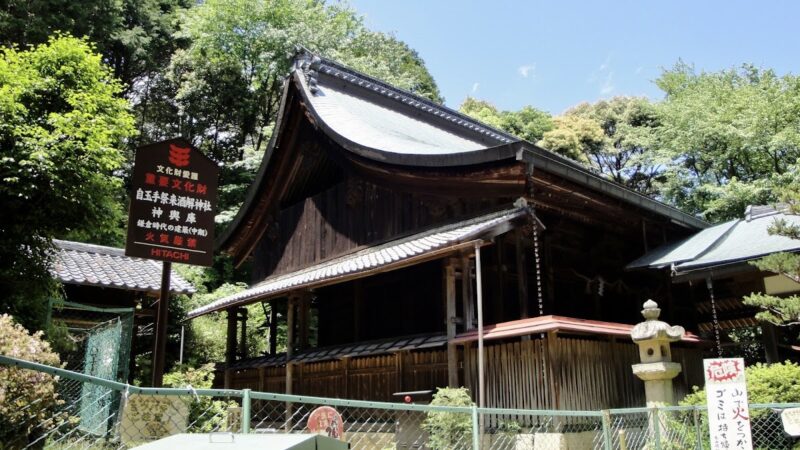
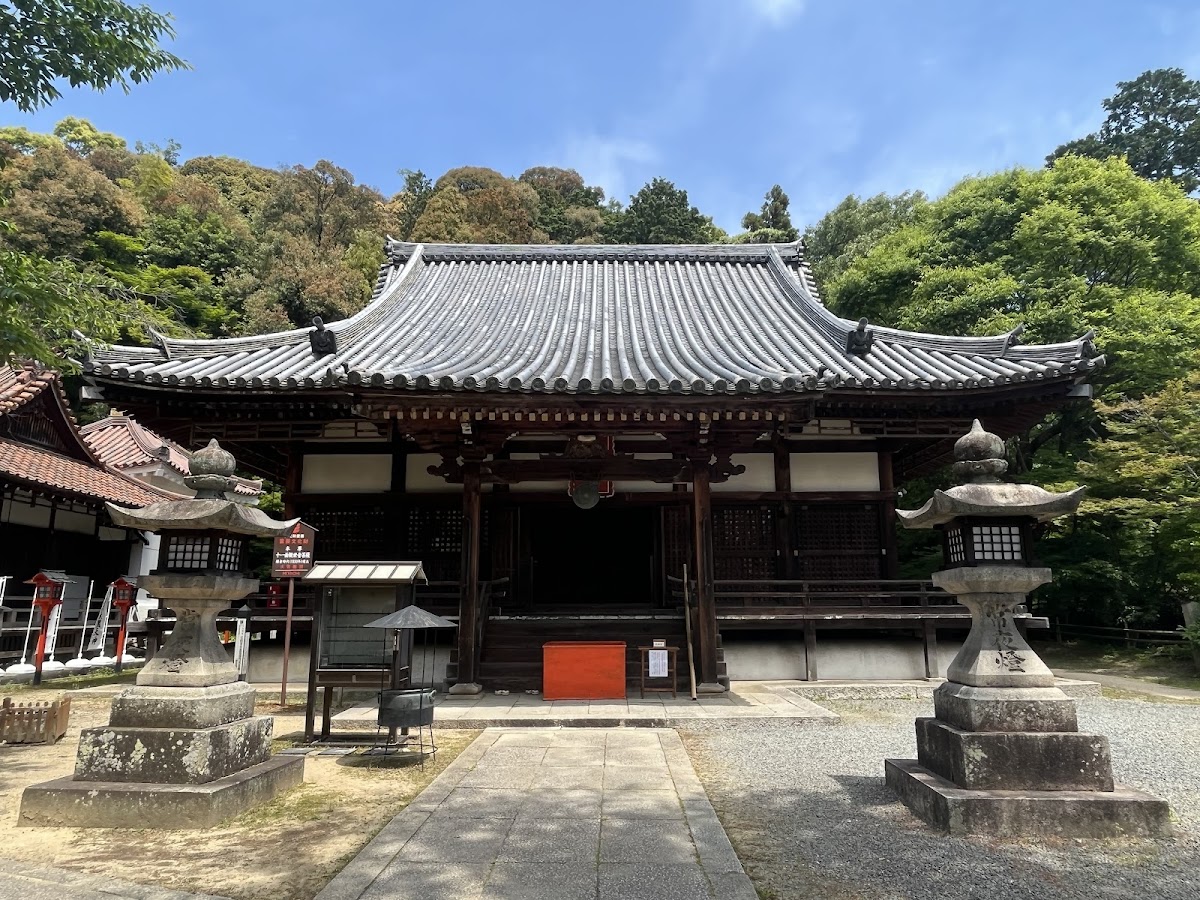
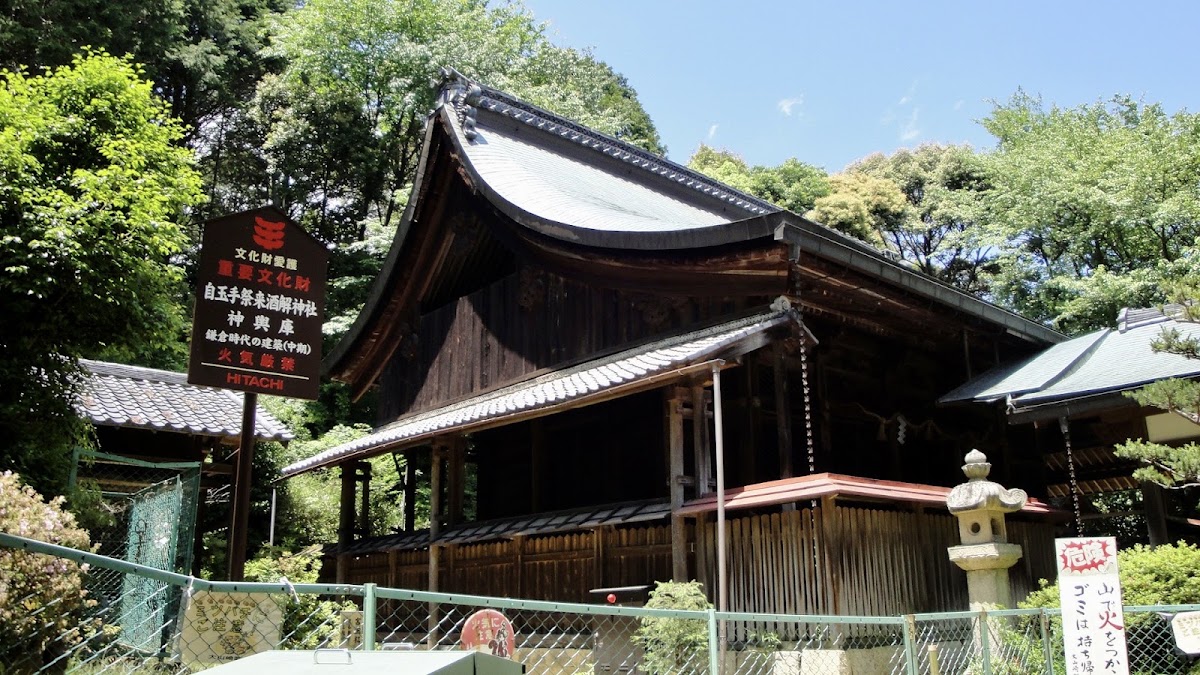
The current shrine building was constructed in 1820 (Bunsei 3), giving it a history of over 200 years. Located in a mountainous area on the slopes of Mt. Tenno, it possesses a solemn atmosphere, integrated with nature.
The main hall is built on the mountainside, creating a tranquil space surrounded by a deep forest. Visitors ascend steep stone steps, stepping into a sacred realm far removed from the secular world.
Atmosphere of the Precincts
The precincts, situated at an altitude of approximately 270 meters on Mt. Tenno, truly embody the spirit of a sacred site of mountain worship. Surrounded by abundant nature, it displays different expressions throughout the seasons.
Especially during the seasons of fresh greenery and autumn leaves, many visitors come, often combining their visit with a hike. From the precincts, one can enjoy views of the townscape of Oyamazaki, and, on clear days, a panoramic view of the Kyoto Basin.
Relationship with Tennozan
Tennozan is a mountain with an elevation of 270.4 meters and is a historical site that gave rise to the phrase “Tennozan, the site of the decisive battle for control of Japan.” The mountain’s name originates from the fact that this shrine was called “Tenno-sha.”
This mountain, the site of the Battle of Yamazaki (a battle fought between Hashiba Hideyoshi and Akechi Mitsuhide after the Honnoji Incident), is an important spot for history buffs.
Goshuin (Shrine Seal) and Goshuincho (Shrine Seal Book)
Location of Goshuin Issuance
The Goshuin of Jigyote Matsuri Saketo Shrine is not issued at the shrine office, but at Rikyu Hachimangu. This is due to the deep historical relationship between the two shrines.
Rikyu Hachimangu Shrine
- Location: 21-1 Nishitani, Oyamazaki-cho, Otokuni-gun, Kyoto Prefecture
- Nearest Station: Approximately 5 minutes on foot from JR Yamazaki Station and Hankyu Oyamazaki Station
- Hours: Usually 9:00 AM – 5:00 PM (Please confirm)
Features of the Goshuin (Shrine Seal)
The goshuin features the calligraphy of “Jitamate Matsuri Saketoki Shrine” or “Saketoki Shrine” and the shrine’s seal. It is a magnificent goshuin that reflects the status of a Shikinaisha (a shrine listed in the Engishiki, an ancient Japanese legal code).
Visiting Rikyu Hachimangu Shrine and receiving the goshuin after your visit will make your shrine pilgrimage in Oyamazaki-cho even more fulfilling.
How to Visit and Access
Pilgrimage Route
Visiting Jitamate Matsuri Saketoki Shrine involves hiking up Mt. Tenno. The main pilgrimage routes are as follows:
Route 1: Via Hoshakuji Temple
- From JR Yamazaki Station or Hankyu Oyamazaki Station to Hoshakuji Temple (approx. 10-minute walk)
- From Hoshakuji Temple, enter the Tennozan hiking trail
- Climb the mountain path for approximately 30-40 minutes
- Arrive at Jigyokute Matsuri Kusake Shrine
Route 2: Via Yamazaki Shoten (Kannonji Temple)
- From JR Yamazaki Station or Hankyu Oyamazaki Station to Kannonji Temple (Yamazaki Shoten)
- From Kannonji Temple to the Tennozan mountain trail
- Climb the mountain path for approximately 30-40 minutes
- Arrive at Jigyokute Matsuri Kusake Shrine
Clothing and Equipment
Visiting the shrine, located at an altitude of approximately 270 meters on Mt. Tennozan, is not a full-fledged mountain climb, but appropriate preparation is necessary:
- Clothing: Comfortable clothing, athletic shoes or trekking shoes
- What to bring: Drinking water, towel, rain gear (depending on the weather)
- Estimated time: Approximately 2-3 hours round trip
- Notes: The mountain trail has some steep sections, so those who are not confident in their physical fitness should not push themselves too hard.
Access by train
Nearest station:
- Get off at Yamazaki Station on the JR Kyoto Line, approximately 10 minutes on foot to the trailhead
- Get off at Oyamazaki Station on the Hankyu Kyoto Line, approximately 10 minutes on foot to the trailhead
From Kyoto Station:
- Approximately 20 minutes on the JR Kyoto Line, get off at Yamazaki Station
From Osaka Station:
- Approximately 30 minutes on the JR Kyoto Line, get off at Yamazaki Station
Access by car
- Approximately 5 minutes from the Oyamazaki Interchange on the Meishin Expressway to the vicinity of the trailhead
- Parking: Paid parking is available around Hoshakuji Temple (a few spaces available)
Note: You cannot drive directly to the shrine. You will need to park near the trailhead and proceed on foot.
Nearby Attractions
Rikyu Hachimangu Shrine
Rikyu Hachimangu Shrine, which also serves as a place to receive Goshuin (temple/shrine stamps), is considered the birthplace of oil production in Japan and is known as the “God of Oil.” It has a deep historical connection to the Jigyote Matsuri Saketo Shrine, and visiting both is recommended.
Hoshakuji Temple (Hoji Temple)
Located at the trailhead of Mt. Tenno, this ancient Shingon Buddhist temple houses a three-story pagoda, a designated Important Cultural Property. It is also known as the location where Toyotomi Hideyoshi established his headquarters during the Battle of Yamazaki.
Kannonji Temple (Yamazaki Shoten)
Affectionately known as “Yamazaki no Shoten-san,” this temple is known for its blessings of business prosperity and successful relationships. It serves as another starting point for climbing Mt. Tenno.
Asahi Beer Oyamazaki Villa Museum
This museum, housed in a British-style villa, exhibits Impressionist paintings and ceramic works by Bernard Leach. Located at the foot of Mt. Tennozan, it’s a popular stop after visiting the shrine.
Mt. Tennozan Hiking Course
Visiting the Jitamate Matsuri Saketo Shrine can be enjoyed as part of a hike up Mt. Tennozan.
Recommended Course
Standard Course (Estimated Time: Approx. 2-3 Hours)
- JR Yamazaki Station / Hankyu Oyamazaki Station (Start)
- Hoshakuji Temple (Approx. 10 minutes)
- Jigyote Matsuri Saketo Shrine (Approx. 40 minutes)
- Mt. Tennozan Summit (Approx. 15 minutes)
- Jippozan Observatory (Approx. 10 minutes)
- Descent (Via Hoshakuji Temple, Approx. 40 minutes)
- JR Yamazaki Station / Hankyu Oyamazaki Station (Goal)
The Appeal of Hiking
- Historical Exploration: Visit historical sites related to the Battle of Yamazaki
- Nature Observation: Observe plants and wild birds in each season
- Views: Enjoy views of the Kyoto Basin and Osaka Plain from the summit
- Health Promotion: Refresh your mind and body with moderate exercise
Precautions When Visiting
Preparation for Hiking
- Physical Fitness: Requires the physical fitness to hike for 2-3 hours round trip.
- Weather: Be careful as it can be slippery in rainy weather; avoid hiking in bad weather.
- Time: Start early to descend before sunset.
- Hydration: Stay well-hydrated, especially in summer.
Shrine Visit Etiquette
- The shrine is located in a quiet mountain area; refrain from loud conversations.
- Always take your trash with you.
- Respect nature; do not collect plants.
- Take photos considerately, avoiding disturbing other visitors.
Seasonal Highlights
Spring (March-May)
The fresh greenery is beautiful, making it the perfect season for hiking. You can also enjoy cherry blossom viewing around Hoshakuji Temple at the foot of the mountain during cherry blossom season.
Summer (June-August)
The shrine grounds, surrounded by deep greenery, are cool and ideal as a summer retreat. However, don’t forget to stay hydrated.
Autumn (September-November)
Known as a famous spot for autumn foliage, the entire Tennozan mountain is dyed in red and yellow. The time of the annual festival in October is especially recommended.
Winter (December-February)
The air is clear and the views are excellent; the snow-covered shrine grounds are also charming. However, caution is needed regarding icy roads.
Otokuni Shrine Pilgrimage
Jiyotematsuri Saketo Shrine is designated as “Otokuni Shrine Pilgrimage No. 20“. Many historical shrines are scattered throughout the Otokuni region (Oyamazaki Town, Nagaokakyo City, Mukō City), making it a great place to enjoy a shrine pilgrimage.
Other major shrines in the Otokuni region:
- Nagaoka Tenmangu Shrine (Nagaokakyo City)
- Mukai Shrine (Muko City)
- Oharano Shrine (Nishikyo Ward, Kyoto City)
Attractiveness as a Power Spot
In recent years, Jitamate Matsuri Saketo Shrine has attracted attention as a “spot for dramatically increasing financial luck” and a “shrine that wards off evil spirits.”
Reasons for being considered a power spot
- Sacred site of mountain worship: Since ancient times, mountains have been considered places where gods reside.
- Status as a Shikinaisha (a major shrine listed in the Engishiki): A history of receiving special reverence from the imperial court.
- Divine virtues of Oyamatsumi-no-kami: The powerful energy of the mountain god.
- Topography of Tennozan: A historical turning point known as the “decisive battle for supremacy.”
- Natural energy: Clean air surrounded by a deep forest.
It is believed that visiting the shrine, which involves mountain climbing, allows one to refresh both mind and body and gain new energy.
Frequently Asked Questions (FAQ)
Q1: How do you pronounce the name of the shrine, Tamadeyori Matsurikitaru Sakatoke Jinja?
A1: The official pronunciation is “Tamadeyori Matsurikitaru Sakatoke Jinja,” but it is also commonly called “Sakatoke Jinja” or “Sakatoki Jinja.” Locally, it is affectionately known as “Sakatoke-san.”
Q2: Where can I get a Goshuin (shrine stamp)?
A2: Goshuin are not given at the shrine office, but at the Rikyu Hachimangu Shrine (21-1 Nishitani, Oyamazaki-cho, Otokuni-gun, Kyoto Prefecture), located at the foot of the mountain. It is about a 5-minute walk from JR Yamazaki Station and Hankyu Oyamazaki Station.
Q3: How long does it take to visit the shrine?
A3: The one-way trip from the trailhead to the shrine takes about 30-40 minutes, so please allow about 2-3 hours round trip. This may vary depending on your physical condition and rest time. If you wish to go to the summit of Mt. Tennozan, you will need an additional 30 minutes or so.
Q4: Can I drive to the shrine?
A4: No, you cannot drive directly to the shrine. You will need to park your car in one of the parking lots around Hoshakuji Temple and hike up from there. Since parking is limited to only a few cars, we recommend using public transportation.
Q5: Can beginners hike this mountain?
A5: The mountain trail is only about 270 meters high, so it should be fine for those who exercise regularly. However, athletic shoes, comfortable clothing, and drinking water are essential. There are also steep stairs, so please do not push yourself if you are unsure of your physical fitness.
Q6: What is the best season to visit?
A6: Spring (April-May) with its fresh greenery and autumn (November) with its vibrant foliage are especially recommended. Summer is cool, but be sure to stay well-hydrated. Winter offers clear air and great views, but be careful of icy roads.
Q7: What is the origin of the name Tennozan?
A7: Until the Edo period, the Jitamate Matsuri Saketoki Shrine was called “Tenno-sha” and enshrined Gozu Tenno, which is why this mountain came to be called “Tennozan.” The phrase “Tennozan, the battle that decided the fate of the world” originates from the Battle of Yamazaki.
Q8: What kind of blessings can be received?
A8: The main blessings include protection of forests, agriculture, sake brewing, protection from evil, improved financial fortune, and good luck. In particular, due to the shrine’s name “Saketoki,” it is a shrine deeply revered by those involved in sake brewing.
Summary
Jitamate Matsuri Saketoki Shrine is a Shikinaisha (a major shrine listed in the Engishiki, an ancient Japanese legal text) with a history of over 1100 years, located on Mount Tennozan in Oyamazaki-cho, Kyoto Prefecture. As the oldest shrine in the Otokuni region and situated on the historically significant “Tennozan,” a site of a decisive battle for supremacy, it continues to fascinate many worshippers and history enthusiasts.
Visiting the shrine, located approximately 270 meters above sea level, offers a special experience combined with hiking. In the tranquil grounds surrounded by deep forest, you can feel the divine power of Oyamatsumi-no-kami and Susanoo-no-Mikoto, refreshing both mind and body.
Since the Goshuin (shrine stamp) is issued at Rikyu Hachimangu Shrine, we recommend visiting both shrines as part of a pilgrimage to the shrines of Oyamazaki Town. Enjoy the Tennozan hiking course and fully immerse yourself in the history, nature, and sacred atmosphere of the shrine.
When visiting, please wear comfortable clothing, prepare adequately, and prioritize safety while enjoying your journey to this special shrine.