Okada Kuni Shrine (Kizugawa City, Kyoto Prefecture) Complete Guide | History, Goshuin (Shrine Seal), and Access Information
Okada Kuni Shrine, located in Kizu-Otani, Kizugawa City, Kyoto Prefecture, is a venerable shrine with a long history dating back to ancient times, listed as a Shikinai Taisha (a shrine listed in the Engishiki Jinmyocho, a historical record of shrines compiled in the Heian period). Said to have been founded during the Asuka period, this shrine, which has a history of assisting Tokugawa Ieyasu during his escape through Iga Province, continues to be revered as the local guardian deity.
This article comprehensively introduces all the information you need to know before visiting Okada Kuni Shrine, including its history, enshrined deities, cultural value, goshuin information, and access methods.
Basic Information on Okada Kuni Shrine
Location: 105 Kizu Otani, Kizugawa City, Kyoto Prefecture
Phone Number: 0774-72-8200
Former Shrine Rank: Gosha (Village Shrine)
Shikinaisha (Shrine listed in the Engishiki): Okada Kuni Shrine, Soraku District, Yamashiro Province (Grand Shrine, Monthly and Harvest Festivals)
Cultural Property Designation: Kyoto Prefecture Registered Cultural Property (Shrine Building)
Okada Kuni Shrine is located approximately 14 minutes on foot from Kizu Station on the JR Nara Line, making it easily accessible from the center of Kizugawa City. The shrine grounds are situated in a quiet residential area, allowing visitors to experience the shrine’s history and culture in a peaceful atmosphere.
History and Origins of Okada Kuni Shrine
Founded in the Asuka Period
According to the shrine’s traditions, it was founded in September of the 5th year of Empress Saimei’s reign (659). It is said that the shrine’s origins lie in the enshrinement of Ikukunitama-no-Mikoto at this time. Ikukunitama-no-Mikoto is a deity revered as the guardian of the land, and it is believed that the shrine was established in ancient times to pray for the development and prosperity of this region.
The Asuka period was a crucial time for Japan’s development as a Ritsuryo state. The Kizu River basin was a vital transportation hub connecting Nara, the capital, and Kyoto, playing a vital role as a route for transporting goods. Okada Kuni Shrine has long been revered by local residents as the guardian deity of this region.
Status as a Grand Shrine in the Engishiki
In the Engishiki Jinmyocho (a list of shrines compiled during the Heian period), Okada Kuni Shrine is listed as a “Grand Shrine.” Furthermore, it is designated as a shrine receiving offerings during the “Monthly and Harvest Festivals,” indicating that it received special reverence from the imperial court.
The Engishiki lists approximately 2,800 shrines nationwide, but only about 300 of them were designated as “Grand Shrines.” The fact that Okada Kuni Shrine holds this status indicates that it held significant importance beyond its local area in ancient times.
Medieval Period as a Tenjin Shrine
From the medieval period to the Edo period, Okada Kuni Shrine was known as “Tenjin Shrine,” “Tenjin-gu,” and “Kizu Station Sosha Tenjin Shrine.” This indicates that it was worshipped as a shrine dedicated to Sugawara no Michizane.
Sugawara no Michizane was widely worshipped as the god of learning, and local people visited the shrine to pray for academic success and improvement in literary arts. During this period, the shrine played a central role in the local community as the tutelary shrine for the five villages within Kizu-go (Oji Village, Sendoji Village, Eda Village, Kodera Village, and Minamikawa Village).
Designation as an Engishiki Shrine in the Meiji Era
In May 1878 (Meiji 11), our shrine, which had previously been called Tenjin Shrine, was officially designated as the Engishiki shrine “Okada Kuni Shrine.” This reaffirmed its status as a historically significant shrine with a long history dating back to ancient times.
In May 1873 (Meiji 6), it was ranked as a Gosha (village shrine), positioning it as an important regional shrine within the modern shrine ranking system.
The Connection Between Tokugawa Ieyasu and Okada Kuni Shrine
A noteworthy episode in the history of Okada Kuni Shrine concerns the Honnoji Incident of 1582 (Tensho 10).
When the Honnoji Incident occurred, Tokugawa Ieyasu, who was sightseeing in Sakai, fled from Akechi Mitsuhide’s pursuers by crossing the Kizu River and Iga Pass to return to Mikawa Province. It is said that someone associated with Okada Kuni Shrine served as a guide for Ieyasu and his party during this perilous escape known as the “Divine Lord’s Crossing of Iga.” This achievement forged a special bond between the Tokugawa family and Okada Kunijinja Shrine. Throughout the Edo period, this historical episode was passed down as part of the shrine’s history.
Deities and Divine Virtues
Main Deity
Ikukunitama-no-Mikoto
A deity revered as the guardian of the land. Worshipped since ancient times as a god who brings stability and prosperity to the land. Believed to bestow divine virtues such as agricultural development, regional safety, and industrial prosperity.
Sugawara no Michizane
A deity worshipped nationwide as the god of learning. Known for divine virtues such as academic achievement, passing examinations, literary and calligraphic improvement. Also revered as a god of sincerity and justice.
Enshrined Deities
Hachiman-shin
A deity worshipped as the god of military fortune and victory. Furthermore, the shrine is believed to bestow blessings for industrial development and family prosperity.
Due to these enshrined deities, Okada Kuni Shrine is revered as a shrine with a wide range of divine blessings, including protection of the region, academic success, family safety, and business prosperity.
Highlights of the Shrine Grounds and Cultural Properties
Shrine Buildings Designated as Kyoto Prefecture Registered Cultural Properties
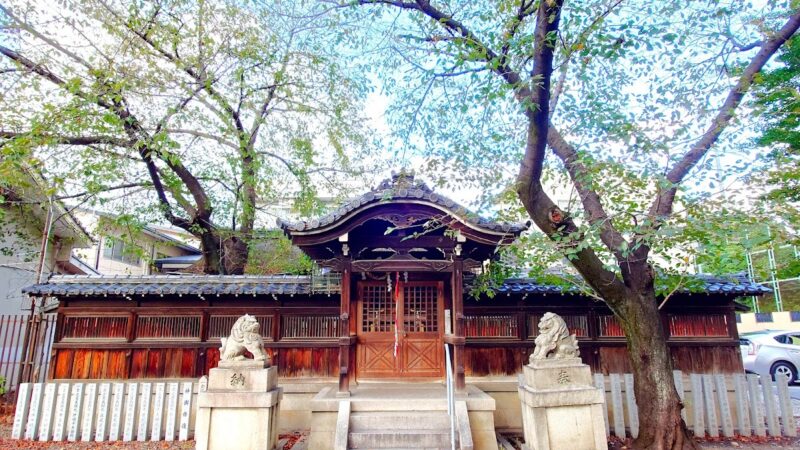
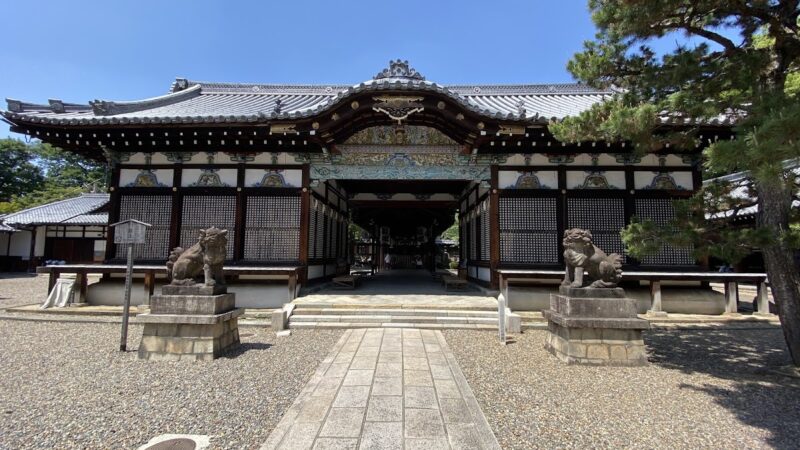
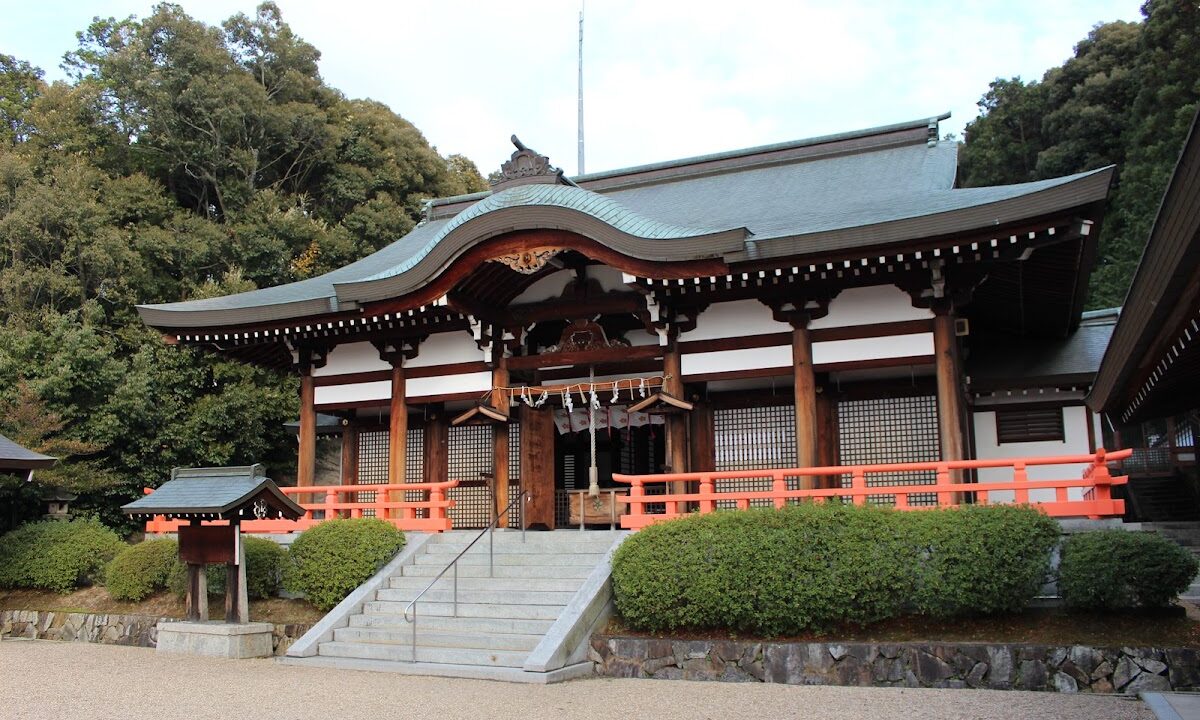
The greatest highlight of Okada Kuni Shrine is its group of shrine buildings, designated as Kyoto Prefecture Registered Cultural Properties. The current buildings are based on those constructed during the Muromachi period, making them valuable cultural assets that convey the appearance of shrine architecture from that era.
Main Hall
The main hall, retaining the style of the Muromachi period, is simple yet dignified. The roof is covered with cypress bark, exuding a sense of age and character.
Worship Hall
The worship hall, where worshippers offer their prayers, is also a historically valuable structure. It is a space where the beauty of wooden architecture and the long history of faith can be felt.
Stage
The stage used during Shinto rituals and festivals remains, allowing us to imagine what the festivals were like in the past.
Layout of a “Sō-no-Yashiro”
The layout of the grounds of Okada Kuni Shrine is important as it conveys the form of a “Sō-no-Yashiro.” A Sō-no-Yashiro refers to a type of shrine that functioned as the tutelary shrine for multiple villages in a medieval village community.
The arrangement of the worship hall, stage, and parishioner’s office is a valuable example showing the role of shrines in local communities from the medieval to the early modern period. The fact that these buildings remain as a whole enhances their value as a cultural property.
Torii Gate and Approach
A torii gate stands at the entrance to the grounds, and an approach leading to the main shrine is maintained from there. Although located in a residential area, passing through the torii gate gives a sense of a quiet, sacred space.
Lanterns are placed along the approach, creating a magical atmosphere at dusk. The shrine grounds are of a moderate size, providing a peaceful environment for worship.
Nature on the Shrine Grounds
The shrine grounds are lush with ancient trees, allowing visitors to experience the beauty of nature throughout the seasons. The fresh greenery of spring and the vibrant autumn foliage are particularly beautiful, attracting many visitors who come to take photographs.
Goshuin (Shrine Seals) and Gifts
About Goshuin
Goshuin (shrine seals) are available at Okada Kuni Shrine. The seal includes the shrine’s name, the date of visit, and the shrine’s stamp.
Goshuin Reception Hours: During the shrine office’s opening hours (prior confirmation recommended)
Offering Fee: General market rate (approximately 300-500 yen)
When requesting a goshuin, it is recommended to call ahead to confirm. Since the shrine priest may be absent, prior contact is advisable if you are certain you will receive a goshuin.
Goshuincho (Shrine Seal Book)
For information on Okada Kuni Shrine’s original goshuincho, please inquire at the shrine office. Many visitors come to this shrine as part of a pilgrimage to collect Goshuin (shrine stamps) from nearby shrines.
Other Items Offered
Other items such as amulets and votive tablets are also available. Amulets for academic success are particularly popular, as this shrine enshrines Sugawara no Michizane.
Annual Events and Festivals
Okada Kuni Shrine holds various Shinto rituals and festivals throughout the year.
Main Annual Events
Saitansai (January 1st)
A festival celebrating the New Year, praying for peace and prosperity throughout the year.
Setsubunsai (around February 3rd)
A Shinto ritual including bean-throwing is performed, praying for protection from evil and good fortune.
Kinensai (February)
A grand spring festival praying for a bountiful harvest and industrial development.
Reisai (Autumn)
The most important festival of the shrine, held grandly with local parishioners gathering. Niiname-sai (November 23rd)
This festival expresses gratitude for the harvest and continues the tradition of “Niiname” as described in the Engishiki (ancient Japanese legal code).
Oharai (June & December)
This Shinto ritual purifies and cleanses away the sins and impurities accumulated over the past six months.
For detailed information on festival dates and content, please contact the shrine directly or check the Kizugawa City tourist information.
Access Information
Access by Train
Nearest Station: JR Nara Line “Kizu Station”
Distance from Station: Approximately 14 minutes on foot from the West Exit (approximately 1.1 km)
JR Kizu Station is located approximately 40 minutes from Kyoto Station and approximately 20 minutes from Nara Station on the Nara Line. The shrine is accessible on foot from the station, passing through a residential area.
Walking Route
- Exit the west exit of JR Kizu Station.
- Head west along the road in front of the station.
- Head towards Kizugawa City Hall.
- Follow the signs and proceed through the residential area to the shrine.
The route is relatively flat and easy to walk.
Access by Car
Approximately 5 minutes from the Kizu IC on the Keina-Wa Expressway.
Approximately 15 minutes via National Route 24 from the Daini-Hanna Expressway.
Regarding parking, it is recommended to check in advance for the availability of parking spaces on the shrine grounds or nearby.
Nearby Tourist Attractions
The following tourist attractions are located near Okada Kuni Shrine.
- Jōruri-ji Temple: An ancient temple known for its National Treasure main hall and nine Amida Buddha statues (approximately 15 minutes by car)
- Iwafune-ji Temple: A temple known for its hydrangeas (approximately 20 minutes by car)
- Kaijūzan-ji Temple: An ancient temple with a National Treasure five-story pagoda (approximately 10 minutes by car)
- Kuni Palace Site: The ruins of the capital city from the Nara period (approximately 10 minutes by car)
Kizugawa City is a region rich in historical heritage from ancient to medieval times. By visiting the surrounding temples and shrines in conjunction with Okada Kuni Shrine, you can gain a deeper understanding of the region’s history.
Manners and Precautions for Visiting a Shrine
Basic Worship Etiquette
- Bow before passing through the torii gate.
- Purify your body and mind at the water basin.
- Hold the ladle in your right hand and purify your left hand.
- Switch the ladle to your left hand and purify your right hand.
- Hold the ladle in your right hand again, receive water in your left hand, and rinse your mouth.
- Finally, hold the ladle upright and purify the handle.
- Bow twice, clap twice, and bow once in front of the main hall.
- After praying, turn around and bow once after passing through the torii gate.
Photography
Photography is generally permitted on the shrine grounds, but please note the following:
- Do not take photos in areas where photography is prohibited, such as inside the main hall.
- Be considerate when Shinto rituals are being performed.
- Be careful not to disturb other worshippers.
- Obtain permission in advance for commercial use.
Attire for Visiting a Shrine
No special attire is required for a normal visit, but please consider the following:
Clothing for Visiting a Shrine
No special attire is required for a normal visit, but please consider the following: – Avoid overly revealing clothing.
- For formal worship or prayers, formal attire or equivalent is desirable.
- Choose shoes that are easy to put on and take off (when entering the shrine building).
Historical Background of Kizugawa City
Kizugawa City, where Okada Kuni Shrine is located, is a region that has flourished as a transportation hub since ancient times.
Importance of the Kizu River
The Kizu River was an important water transport route connecting the Nara Basin and Kyoto. From ancient times to the Middle Ages, timber, rice, and other goods were transported through this river. The place name Kizu is also said to originate from the “tsu” (port) of this river.
Relationship with Kuni-kyo
For five years from the 12th year of the Tenpyo era (740 AD) during the Nara period, Emperor Shomu established Kuni-kyo in the Kamo district of Kizugawa City. Although it was a short period, this region has a history of functioning as the capital.
Okada Kuni Shrine, with its rich historical background, has been revered as the guardian deity of the region since ancient times.
Okada Kuni Shrine Today
Today, Okada Kuni Shrine is cherished by the local people as the tutelary deity of the region, while also welcoming worshippers from all over Japan as a historically significant shrine listed in the Engishiki (ancient Japanese legal code).
Connection to the Community
As the tutelary deity of the five former villages of Kizu-go, it plays a central role in local festivals and events. It is maintained and managed by the local parishioners’ organization, and traditional festivals are passed down through generations.
Cultural Property Preservation Activities
The preservation and maintenance of the shrine buildings, which are registered cultural properties of Kyoto Prefecture, require the cooperation of the government and local residents. Regular repairs and management are carried out, and efforts continue to pass on this valuable cultural heritage to future generations.
Value as a Tourism Resource
As one of Kizugawa City’s tourism resources, Okada Kuni Shrine is listed in the city’s cultural property map and tourist brochures. It is recognized as a shrine worth visiting for history enthusiasts and those who enjoy visiting shrines and temples.
Summary: The Charms of Visiting Okada Kuni Shrine
Okada Kuni Shrine possesses the following attractions:
- History from Ancient Times: Founded in the Asuka period, it holds the status of a Grand Shrine listed in the Engishiki (ancient Japanese legal code).
- Connection to Tokugawa Ieyasu: A historical episode in which the shrine assisted in the escape through Iga after the Honnoji Incident.
- Valuable Cultural Assets: The shrine buildings from the Muromachi period remain as a Kyoto Prefecture registered cultural property.
- Local Guardian Deity: A deeply rooted local faith continues to this day.
- Easy Access: Conveniently located within walking distance of Kizu Station.
When visiting Kyoto or Nara, why not extend your trip a little and visit Okada Kuni Shrine in Kizugawa City? In its tranquil grounds, you can experience the history and culture that has continued since ancient times.
Its status as a Grand Shrine listed in the Engishiki, its historical connection to Tokugawa Ieyasu, and its valuable shrine buildings remaining from the Muromachi period—all of these factors enhance the value of visiting Okada Kuni Shrine. Receive a Goshuin (temple/shrine stamp), savor the atmosphere of the shrine grounds, and feel the depth of Japanese history and culture.
Frequently Asked Questions (FAQ)
Q1: Can I get a Goshuin at Okada Kuni Shrine anytime?
A1: You can get a Goshuin during the hours the shrine office is open, but there may be times when the priest is absent. If you want to be sure to get a Goshuin, we recommend calling in advance (0774-72-8200).
Q2: Is there a parking lot at Okada Kuni Shrine?
A2: Please contact the shrine directly regarding the availability and number of parking spaces. There is also the option of using nearby public parking lots.
Q3: When is the annual festival at Okada Kuni Shrine?
A3: The annual festival is held in the autumn, but the exact dates may vary from year to year. Please contact the shrine or the Kizugawa City tourist information center.
Q4: Can I have a wedding ceremony or prayer at Okada Kuni Shrine? **
A4: Please contact the shrine directly regarding various prayers. You can check whether prayers such as those for a baby’s first shrine visit, Shichi-Go-San (7-5-3) festival, and exorcism are available.
Q5: Which is correct, “Okada Kuni” or “Okada Kuni” in Okada Kuni Shrine?
A5: Officially, it’s written with the old characters “岡田國神社,” but in modern times, it’s often written as “岡田国神社.” Both refer to the same shrine. The Engishiki (an ancient Japanese legal code) uses “岡田国神社.”
Q6: Can I take a taxi from Kizu Station to Okada Kuni Shrine?
A6: You can take a taxi from Kizu Station. The journey takes about 5 minutes. It’s also about a 14-minute walk, so you can choose based on the weather and your physical condition.
Q7: Can I enter and tour the main hall of Okada Kuni Shrine?
A7: Normally, worship is conducted from the outside. Viewing the interior of the main hall may require special occasions or prior permission. For more information, please contact the shrine.