Complete Guide to Herasaka Shrine (Kizugawa City, Kyoto Prefecture)
Herasaka Shrine, located in the Ichisaka district of Kizugawa City, Kyoto Prefecture, along the Nara Road, is a historic shrine situated on the historical slope known as “Herasaka,” which appears in the Kojiki and Nihon Shoki. With Ōhiko-no-Mikoto, known as one of the Four Generals, as its main deity, and with deep ties to Kasuga Taisha Shrine, this shrine stands quietly on a mountainside, conveying ancient history and the beauty of nature to its visitors.
Basic Information about Heirasaka Shrine
Location: 100 Heirasaka, Ichisaka, Kizugawa City, Kyoto Prefecture 619-0213
Former Shrine Rank: Village Shrine
Deities Enshrined: Ohiko-no-mikoto, Amatsu-shōjo-no-mikoto
Access: Approximately 20-25 minutes on foot from the west exit of Kizu Station on the JR Nara Line
Heirasaka Shrine is located in Kizugawa City, near the border of Kyoto and Nara Prefectures, and sits along the Nara Road (Kyōkaidō), an important road connecting Nara and Kyoto since ancient times. Due to its location on the slopes of Mt. Shūmi, the shrine grounds offer views of the surrounding area.
History and Origins of Herasaka Shrine
“Herasaka” as Recorded in the Kojiki and Nihon Shoki
The name of Herasaka Shrine, “Herasaka,” is derived from a historical place name that appears in the Kojiki and Nihon Shoki. The Kojiki describes it as “a slope in Yamashiro Province,” suggesting it was an important transportation hub since ancient times. This slope was a mountain pass connecting Yamato Province (Nara) and Yamashiro Province (Kyoto), a place where many people traveled.
The Reign of Emperor Sujin and the Legend of the Four Generals
The most important legend related to the founding of Herasaka Shrine dates back to the tenth year of Emperor Sujin’s reign (around 88 BC). In that year, Emperor Sujin dispatched generals to the four directions to pacify and govern the country. This is the historical project known as the “Four Generals.”
Obiko-no-Mikoto was given the task of heading to the Hokuriku Road (Echigo Province) as one of the Four Generals. Along the way, a mysterious encounter occurred near Heirazaka Pass. It is said that he met a girl wearing a koshimo (a type of traditional Japanese garment) and received an important oracle from her. This girl is said to have come to be enshrined as Amatsu-Otome-no-Mikoto.
This legend has been passed down in the region as evidence of the importance of divine oracles in ancient times and the spiritual significance of Heirazaka Pass, a crucial transportation hub.
Deep Connection with Kasuga Taisha Shrine
In the Middle Ages, Heirazaka Shrine underwent a major turning point. Due to the extinction of the shrine’s priestly family (the lineage that served as Shinto priests for generations), the priest of Kasuga Taisha Shrine in Nanto (Nara) took on the role of priest. During this period, the shrine came to be called “Kasuga Shrine” and received the patronage of Kasuga Taisha Shrine.
This relationship with Kasuga Taisha Shrine also influenced the architecture of Heirazaka Shrine’s buildings. The current shrine buildings are considered relatively grand, likely due to the support of Kasuga Taisha Shrine. Kasuga Taisha Shrine flourished as the tutelary shrine of the Fujiwara clan and had many subsidiary and related shrines, and Heirasaka Shrine was one of them, occupying an important position.
Renaming in the Meiji Era and Modernization
In 1906 (Meiji 39), the shrine was renamed “Heirasaka Shrine.” This renaming was part of the Meiji government’s reorganization of the shrine system, and the intention was to restore the shrine’s historical identity by reviving its ancient and venerable name.
As a village shrine, Heirasaka Shrine has been carefully preserved to this day as the center of faith for the local people and as the guardian shrine of the Ichisaka district.
About the Enshrined Deity
##### Ōhiko-no-Mikoto
Ōhiko-no-Mikoto, the principal deity, was a prince of the imperial family, the son of Emperor Kōgen (8th Emperor) and the uncle of Emperor Sujin (10th Emperor). He is known for his achievements in pacifying the Hokuriku region as one of the Four Generals and is considered the ancestor of the Abe clan.
Ōbiko-no-Mikoto is remembered in ancient history not only as an excellent warrior but also as a person possessing the wisdom and virtue to govern a country. His encounter with Amatsu-shōjo-no-Mikoto at Heira-zaka is believed not merely a coincidence, but a divine guidance, indicating the spiritual significance of this place.
Amatsu-shōjo-no-Mikoto
Amatsu-shōjo-no-Mikoto is believed to be the deified form of the girl Ōbiko-no-Mikoto encountered at Heira-zaka. The name “Amatsu” indicates her connection to “Amatsu-kami,” that is, the gods who descended from Takamagahara, representing the belief that this girl was not merely human, but a messenger of the gods or even a god herself.
The description of her appearing in a loincloth suggests the image of an ancient priestess or woman serving the gods, and it is thought that she played a role in conveying divine oracles.
Highlights of the Shrine Grounds
Shrine Buildings and Approach
The grounds of Heira-zaka Shrine are located on the side of a small hill. At the top of the slope from the Nara Road, there is a torii gate, from which a stone staircase leads to the shrine.
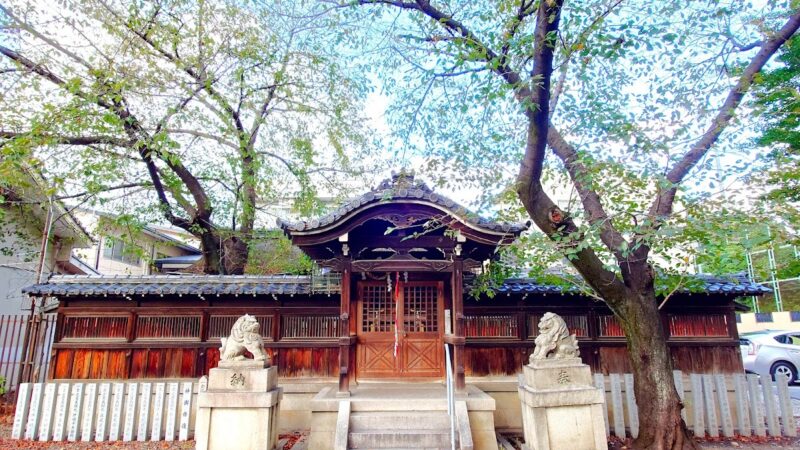
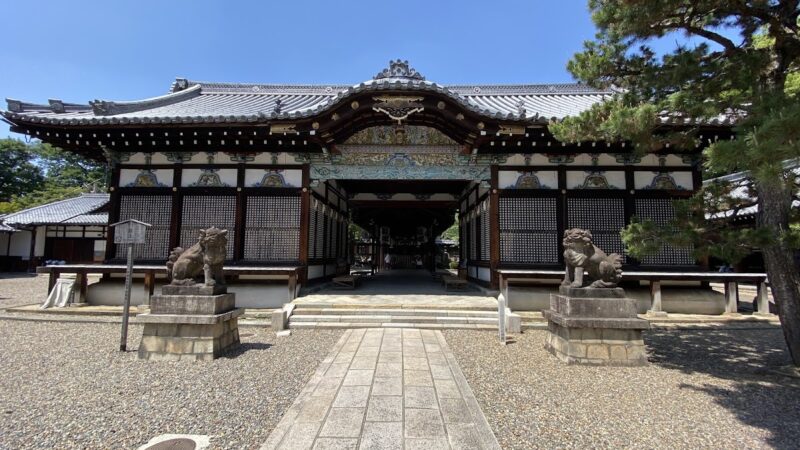
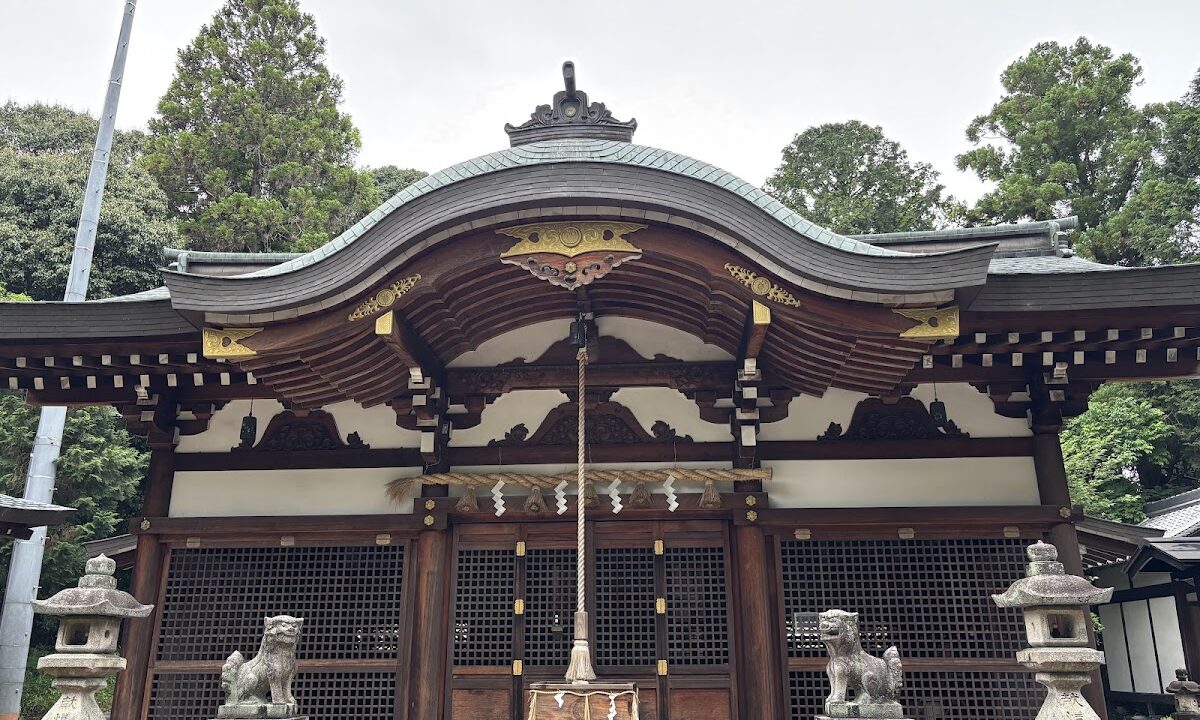
As you proceed along the path, a tranquil space surrounded by a grove of trees unfolds. Reflecting its history of being under the patronage of Kasuga Taisha Shrine, the shrine buildings are relatively grand for a village shrine, and both the main hall and the worship hall are meticulously maintained.
Remnants of Shinto-Buddhist Syncretism: Bell Tower
What particularly catches the eye within the shrine grounds is the bell tower, which exists despite it being a Shinto shrine. This is a remnant of the time before the separation of Shinto and Buddhism in the Meiji era, when many Japanese shrines were syncretized with Buddhism.
The bell tower of Heirasaka Shrine is a valuable relic indicating the former existence of a Jinguji (shrine-temple complex) or Betsuji (attendant temple) on this site. During the era of Shinto-Buddhist syncretism, shrines and temples were integrated to form places of worship, and Heirasaka Shrine was no exception. The bell tower that remains today can be considered an important cultural asset that conveys the history of Japanese religion.
Subsidiary Shrines
Several subsidiary shrines are enshrined within the grounds. The main ones are:
- Yasaka Shrine: Dedicated to Susanoo-no-Mikoto, it attracts worshippers seeking protection from disease and misfortune.
- Kitano Shrine: Dedicated to Sugawara no Michizane, it is revered as the god of learning.
These subsidiary shrines cater to the diverse religious needs of the local people and demonstrate that Heirasaka Shrine was the center of comprehensive religious belief in the region.
Shrine Grounds and Quercus dentata Colony
A notable feature of the Heirasaka Shrine grounds is the Quercus dentata colony. Quercus dentata is an evergreen tree belonging to the beech family and is one of the representative tree species of warm temperate broad-leaved forests.
According to the Kyoto Prefecture Red Data Book 2015, pure stands of Quercus dentata can only be found in two locations in Kyoto Prefecture: the colony in Hozukyo Gorge and the forest within the grounds of Heirasaka Shrine. Within the grounds of Heirasaka Shrine, a nearly pure forest of cypress trees, interspersed with other trees, forms a grove on a gently sloping hill.
This forest is recognized as a valuable natural heritage site of Kyoto Prefecture and is evidence of the preservation of the natural environment since ancient times. When visiting the shrine grounds, please take the time to appreciate this precious natural environment.
Access Information
Access by Public Transportation
From JR Nara Line “Kizu Station”:
- Approximately 20-25 minutes on foot from the west exit
- Distance: Approximately 1.5 km
- Head south along Nara Kaido (Prefectural Road 754, Kizu-Yokota Line) towards the Ichisaka area.
Walking offers the advantage of enjoying the atmosphere of the old road while visiting the shrine. However, since the shrine is located on a slope, comfortable walking shoes are recommended.
Access by Car
- Approximately 10 minutes from the Kizu Interchange on the Keina-Wa Expressway
- From National Route 24, turn onto Prefectural Route 754 (Kizu-Yokota Line), near the intersection with Nara Kaido Road
- Parking: Limited space available on the shrine grounds (please be considerate of others as spaces are limited)
Landmarks in the Surrounding Area
Heirasaka Shrine is located near the intersection of Prefectural Route 754 (Kizu-Yokota Line) and Nara Kaido Road. After passing through the Ichisaka district settlement and climbing the slope, you will see the torii gate.
Points and Precautions for Visiting
Visiting Hours
Heirasaka Shrine is open for worship at all times, but the shrine office may not always be staffed. Those wishing to receive a Goshuin (shrine stamp) are advised to check in advance.
Shrine Visit Etiquette
- When passing through the torii gate: Bow before entering the shrine grounds.
- Walking along the approach: The center of the approach is considered the path of the gods, so it is polite to walk along the sides.
- Procedure for purifying oneself at the water basin: If there is a water basin, purify your hands in the following order: left hand → right hand → mouth → handle.
- Worship at the main hall: Worship using the two bows, two claps, and one bow ritual.
- Protection of the shrine grounds’ forest: The evergreen oak grove is a valuable natural heritage site. Please be careful not to damage the trees or collect plants.
Photography
Photography is generally permitted on the shrine grounds, but please refrain from taking pictures in sacred places such as inside the main hall, or obtain permission beforehand. Also, please remember to be considerate of other worshippers.
Nearby Attractions
Historical Sites in Kizugawa City
When visiting Heirasaka Shrine, you can also visit other historical sites in Kizugawa City:
- Jōruri-ji Temple: An ancient temple known for its nine Amida Buddha statues (approx. 15 minutes by car)
- Iwafune-ji Temple: An ancient temple famous for its hydrangeas (approx. 20 minutes by car)
- Kuni Palace Site: The ruins of the capital city during the Nara period (approx. 10 minutes by car)
History of the Nara Road
The Nara Road, where Heirasaka Shrine is located, was an important route connecting Kyoto and Nara since ancient times. Along this road, there were once many tea houses and post towns, bustling with travelers. Even today, old townscapes and historical sites remain along the road, allowing visitors to enjoy historical walks.
Annual Events at Heirasaka Shrine
As a village shrine deeply rooted in the community, Heirasaka Shrine holds various festivals throughout the year. Main annual events include:
- New Year’s Day Festival (January 1st): Prayers for safety and prosperity in the new year
- Spring Grand Festival: Prayers for peace and prosperity in the region and a bountiful harvest
- Autumn Grand Festival: Offering thanks for the harvest
Specific dates may vary from year to year, so it is recommended to check before visiting.
Cultural Value of Heirasaka Shrine
Importance in Ancient History Research
Heirasaka Shrine occupies an important position in ancient history research as the setting for the legend of the Four Generals recorded in the Kojiki and Nihon Shoki. The traditions of this shrine provide valuable clues to understanding the process of nation-building during the reign of Emperor Sujin.
Nature Conservation Perspective
The presence of the evergreen oak grove indicates that Heirasaka Shrine is not merely a religious facility, but also plays a role in protecting Kyoto Prefecture’s valuable natural heritage. The fact that the forests within the shrine grounds have functioned as natural refuges protected from development is an interesting example when considering the relationship between shrines and nature conservation.
A Historical Witness to the Syncretism of Shinto and Buddhism
The bell tower remaining on the shrine grounds is a valuable relic that conveys the era of syncretism of Shinto and Buddhism in Japanese religious history. While many shrines were stripped of Buddhist elements due to the Meiji-era policy of separating Shinto and Buddhism, the survival of such a structure is evidence that the local people have cherished this history.
Visitor Voices and Experiences
Visitors who have come to Heirasaka Shrine have shared the following impressions:
- “Located in a quiet mountain setting, it was a truly refreshing experience.”
- “I was surprised to see a bell tower. It’s a valuable shrine where you can feel the history of Shinto-Buddhist syncretism.”
- “The shrine grounds, surrounded by a forest of evergreen oaks, felt like stepping back in time to ancient times.”
- “I walked there from Kizu Station, and the experience of visiting the shrine while enjoying the atmosphere of the Nara Road was exceptional.”
Summary: The Charm of Heirasaka Shrine
Heirasaka Shrine, located in Kizugawa City, Kyoto Prefecture, is situated on a historical site mentioned in the Kojiki and Nihon Shoki, and is a venerable shrine that preserves the legend of the Four Generals, Ōbiko-no-Mikoto.
Main Attractions of Heirasaka Shrine:
- Connection to Ancient History: As the setting for the legend of the Four Generals, it tells the history of Japan’s formative period.
- Historical Relationship with Kasuga Taisha Shrine: It demonstrates the spread of Kasuga faith from the medieval to the early modern period.
- Remains of Shinto-Buddhist Syncretism: The bell tower on the shrine grounds tells the story of Japan’s religious history.
- Valuable Natural Environment: A grove of evergreen oaks listed in the Kyoto Prefecture Red Data Book.
- Tranquil Worship Environment: The sacred atmosphere created by its location on the mountainside.
Away from the hustle and bustle of the city, Heirasaka Shrine, surrounded by ancient history and abundant nature, is a shrine worth visiting for anyone seeking peaceful worship, those interested in history, and nature lovers.
When visiting Kizugawa City, be sure to visit Heirasaka Shrine and experience the weight of its ancient history and the tranquility that envelops the grounds. Walking along the Nara Road while visiting temples will allow you to experience a leisurely pace of life that is hard to find in modern times.