Complete Guide to Takigi Shrine (Kyotanabe City, Kyoto Prefecture) | Birthplace of Noh Theater, Deities, Goshuin (Shrine Seal), and Access Information
Takigi Shrine, located in Kyotanabe City, Kyoto Prefecture, is a historic shrine known as the birthplace of Noh theater, situated near Ikkyu-ji Temple (Shuon-an). Located in a quiet environment at the eastern foot of Mount Kannabi, it has long been a center of local worship. This article provides detailed information necessary for visiting Takigi Shrine, including its deities, history, highlights within the grounds, goshuin (shrine seal), and access methods.
Basic Information about Takigi Shrine
Official Name: Takigi Shrine
Location: 1, Takigi-no-uchi, Kyotanabe City, Kyoto Prefecture 610-0341
Deities Enshrined: Amatsuhikone-no-mikoto, Emperor Ojin
Founded: Merged with Tenjin Shrine and Hachiman Shrine in 1907 (Meiji 40)
Shrine Rank: Village Shrine
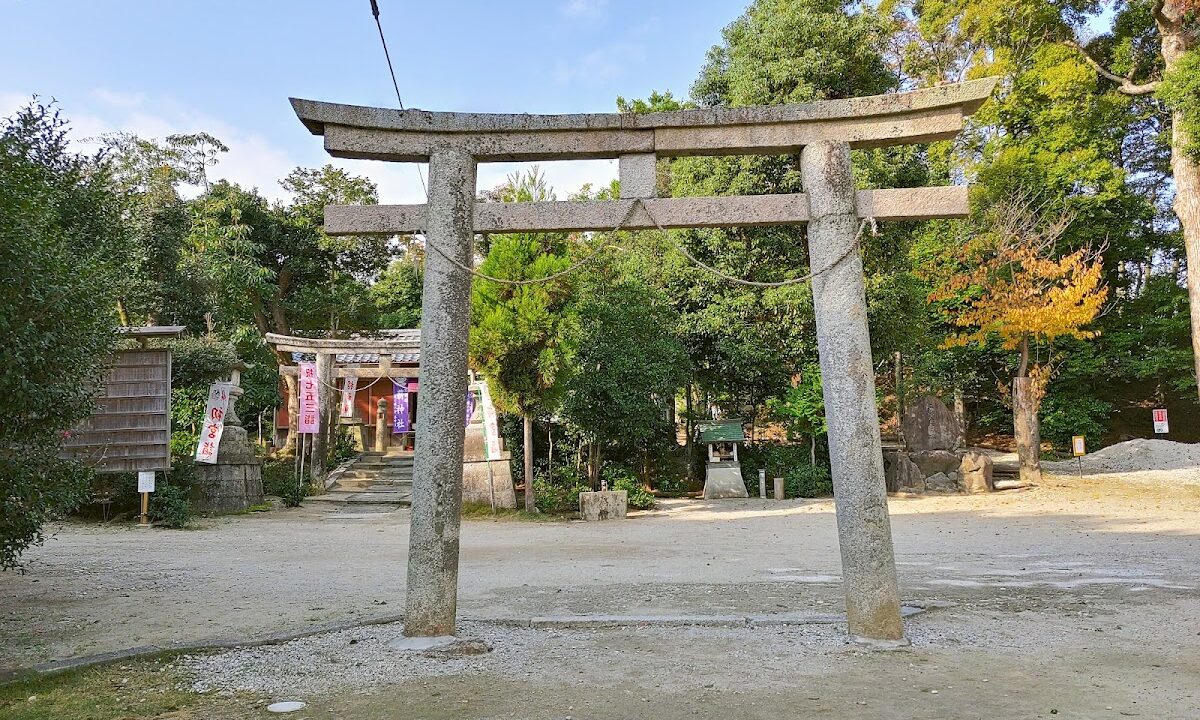
Takigi Shrine is located in the Takigi district of Kyotanabe City, within walking distance of Ikkyu-ji Temple. The shrine grounds contain a monument commemorating the birthplace of Noh theater and a sacred rock associated with Tsukuyomi-no-Mikoto, which was moved from the summit of Mt. Kannabi. It is known as a shrine rich in history and culture.
Deities and Divine Virtues
Amatsuhikone-no-Mikoto
Amatsuhikone-no-Mikoto is one of the five male deities born from the oath (ukei) between Amaterasu-Omikami and Susanoo-no-Mikoto. He appears in the Kojiki and Nihon Shoki and has been revered as the ancestral deity of the Imperial family and many clans.
Emperor Ojin
Emperor Ojin, the 15th Emperor, is enshrined as Hachiman-jin in Hachiman shrines throughout Japan. He is worshipped as a god of military fortune and national protection, and is also credited with contributing to the development of culture and scholarship.
Divine Virtues
The divine virtues of Maki Shrine include the following:
- Health and Longevity: As the local guardian deity, it protects the health and safety of the residents.
- Academic Success: Because it also enshrines Tenjin Shrine, it is also worshipped as a god of learning.
- Long-lasting Military Fortune: Protection of military fortune due to the enshrinement of Emperor Ojin.
- Improvement in Performing Arts: Divine virtues of culture and art as the birthplace of Noh theater.
History of Maki Shrine
Maki District from Ancient to Medieval Times
The Maki district played an important role from around the 10th century as “Takigi Misono,” a place that supplied fuel to Iwashimizu Hachimangu Shrine. It was responsible for offering firewood as bonfires for Kagura (sacred dance and music), and the place name is thought to originate from this role.
Restoration during the Tensho Era
According to the ridge beam inscription remaining in the main hall, the three shrines that make up Maki Shrine—Hoshino Tenjin, Sumiyoshi, and Takeshi—were restored during the Tensho era (1573-1592). This period coincided with the end of the Sengoku period, when power shifted from Oda Nobunaga to Toyotomi Hideyoshi, suggesting that local religious beliefs were maintained.
Merger during the Meiji Era
In 1907 (Meiji 40), as part of the Meiji government’s policy of merging shrines, the Tenjin Shrine and Hachiman Shrine in the Maki area were merged, creating the current “Maki Shrine.” This merger resulted in the shrine becoming dedicated to both Amatsuhikone-no-Mikoto and Emperor Ojin.
Connection to Noh Theater
A monument commemorating the origin of Noh theater stands on the grounds of Maki Shrine. This region has a long history of deep ties to performing arts, and it is said that Sarugaku and Dengaku, the origins of Noh theater, were actively performed here. Located midway between Kyoto and Nara, the Maki district has served as a key hub for cultural exchange and has contributed significantly to the development of performing arts culture.
Highlights of the Shrine Grounds
Main Hall
The main hall is a one-bay nagare-zukuri style building, constructed in 1794 (Kansei 6). It is a valuable structure that preserves the architectural style of the late Edo period. The beautiful curves of the roof retain many characteristics of traditional shrine architecture.
Worship Hall
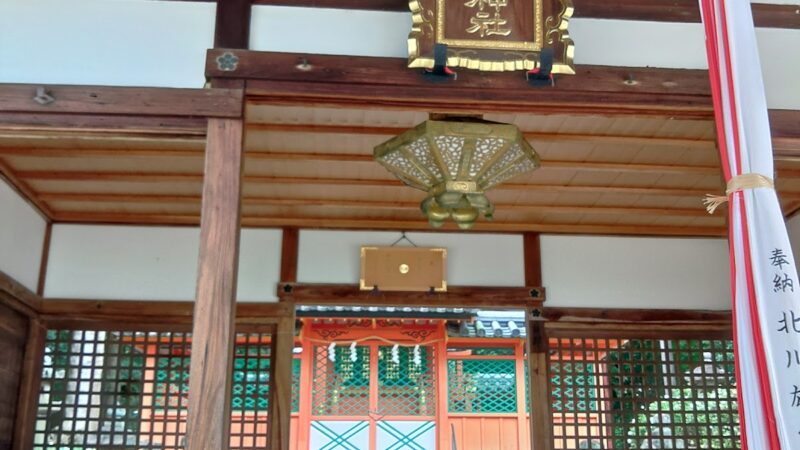
The worship hall, where worshippers offer their prayers, is located in front of the main hall. Its simple yet dignified design conveys a sense of warmth befitting a local guardian deity.
Monument to the Origin of Noh Theater
A stone monument on the shrine grounds is inscribed with “Monument to the Origin of Noh Theater.” This monument is an important symbol indicating that the Maki district is deeply connected to the origins of Noh theater. Many Noh enthusiasts and performing arts professionals visit this site.
The Sacred Rock of Tsukuyomi-no-Mikoto
The sacred rock (iwakura) that originally stood on the summit of Mount Kannabi is now enshrined within the temple grounds. This rock is considered sacred, as it is said that Tsukuyomi-no-Mikoto appeared in a temporary form, preserving a remnant of ancient beliefs. Iwakura worship is a primitive form of Japanese Shinto, an expression of the belief in worshipping nature itself as a deity.
Sacred Ox Statue
Because the shrine also enshrines Tenjin-jin (Sugawara no Michizane), a sacred ox statue is enshrined within the grounds. The ox, considered a messenger of Tenjin-sama (Sugawara no Michizane), is a beloved symbol of academic success and good health.
Shrines within the Precincts
The following shrines are enshrined within the grounds of Maki Shrine:
- Takeshi Daimyojin Shrine: The local guardian deity
- Sumiyoshi Shrine: God of safe voyages and waka poetry
- Kotohira Shrine: God of maritime safety and abundant harvests
- Sarutahiko Shrine: God of road opening and traffic safety
- Kannabi Shrine Remote Worship Place: A place for worshipping Kannabi Shrine on Mount Kannabi from afar
These shrines represent a culmination of diverse local beliefs, indicating that Maki Shrine was a central presence in the local community.
About Goshuin (Shrine Seals)
Goshuin are available at Maki Shrine. Goshuin are popular as proof of shrine visits and as souvenirs of travel.
How to Obtain a Goshuin
Because Maki Shrine is a small shrine, there may not be a permanent shrine office. If you wish to receive a Goshuin (temple/shrine stamp), please note the following:
- We recommend checking the visiting hours and whether Goshuin are available in advance.
- Local parishioners or neighbors may be handling the Goshuin.
- If visiting in conjunction with a visit to Ikkyu-ji Temple, please plan your visit with ample time.
About Goshuincho (Stamp Books)
If this is your first time receiving a Goshuin, please bring your own Goshuincho. Goshuincho can be purchased at shrines and temples nationwide, bookstores, and online. We recommend checking before your visit whether Maki Shrine offers its own original Goshuincho.
Access and Transportation Information
Nearest Stations and Lines
The nearest stations to Maki Shrine are:
JR Gakken Toshi Line (Katacho Line)
- Kyotanabe Station: Approximately 20 minutes on foot
- Osumi Station: Approximately 25 minutes on foot
Kintetsu Kyoto Line
- Shin-Tanabe Station: Approximately 25 minutes on foot
Nearest Bus Stops and Lines
If using public transportation, you can also use the bus:
- Get off at the “Maki” bus stop on the Kyotanabe City Community Bus, approximately 5 minutes on foot
- If using Keihan Bus, access is on foot from the nearest bus stop.
Please note that bus services may be limited, so it is recommended to check the timetable in advance.
Access by Car
Keinawa Expressway
- Approximately 10 minutes from Tanabe-Nishi IC
- Approximately 15 minutes from Tanabe-Kita IC
Parking Information
There is no dedicated parking lot at Maki Shrine, but you can use the parking lot at Ikkyu-ji Temple and walk (approximately 5 minutes on foot from Ikkyu-ji Temple).
Walking Route
From Ikkyu-ji Temple to Maki Shrine, it’s about a 5-minute walk through the Maki Village settlement. Located in a quiet environment at the eastern foot of Mt. Kannabi, a leisurely stroll is recommended. Along the way, you can enjoy the atmosphere of the old townscape and its historical charm.
Nearby Tourist Attractions
Ikkyu-ji Temple (Shuon-an)
Located approximately 5 minutes on foot from Maki Shrine, Ikkyu-ji Temple is the temple where Zen Master Ikkyu Sojun, famous for his witty stories, spent his later years. Its beautiful gardens and historical buildings are highlights, making it a must-visit spot along with Maki Shrine.
Kannabi Mountain
Kannabi Mountain, at an elevation of 217 meters, is a sacred mountain that has been an object of worship since ancient times. Kannabi Shrine is located at the summit, and it is also a popular hiking destination. The sacred rock formation at Maki Shrine is believed to have originally been located on this mountaintop.
Kannonji Temple (Fugenji Temple)
Kannonji Temple, known for its Eleven-Headed Kannon Standing Statue (National Treasure), is a representative ancient temple of Kyotanabe City. It is approximately a 10-minute drive from Maki Shrine.
Annual Events and Festivals
Maki Shrine, as the local guardian shrine, holds the following annual events:
New Year’s Visit (January 1st-3rd)
Many local residents visit for their New Year’s visit, praying for health and safety throughout the year. It’s a small-scale, warm, and community-based New Year’s visit.
Spring Festival
In spring, a festival is held to pray for a bountiful harvest and the prosperity of the region.
Autumn Festival
A festival is held to give thanks for the autumn harvest, and local residents gather.
For specific festival dates, please check with the Kyotanabe City Tourism Association or local information beforehand.
Manners and Precautions for Visiting the Shrine
Basic Worship Etiquette
- Bow before passing through the torii gate: This is a courtesy before entering the sacred area.
- Walk along the edge of the path: The center is considered the path of the gods.
- Purify yourself at the water basin: Purify your left hand, right hand, and mouth in that order.
- Etiquette at the main hall: The basic procedure is two bows, two claps, and one bow.
Photography
Photography is generally permitted on the shrine grounds, but please refrain from taking pictures inside the main hall or in sacred areas. Also, please be considerate of other worshippers.
Maintaining a Quiet Environment
Maki Shrine is adjacent to a residential area. Please refrain from loud conversations and noise out of consideration for the nearby residents.
The Charm and Characteristics of Maki Shrine
Cultural Value as the Birthplace of Noh Theater
The greatest characteristic of Maki Shrine is its culturally significant position as the birthplace of Noh theater. Noh is a representative traditional performing art of Japan and is registered as a UNESCO Intangible Cultural Heritage. The fact that its origins lie in this place is a great attraction for culture enthusiasts.
Traces of Ancient Beliefs
The connection between the sacred rock of Tsukuyomi-no-Mikoto and Mount Kannabi conveys the remnants of ancient nature and mountain worship. Sacred rock worship is one of the oldest forms of belief in Japan, offering a glimpse into the form of worship before the development of shrine architecture.
Center of the Local Community
After the Meiji-era consolidation of several shrines, Maki Shrine became a hub for diverse local beliefs. The large number of subsidiary shrines within the grounds also speaks to its history of accommodating the various wishes of local residents.
Combining with Ikkyu-ji Temple
Located near the famous tourist spot Ikkyu-ji Temple, yet maintaining a quiet and peaceful atmosphere, Maki Shrine is ideal for those seeking a tranquil visit away from the hustle and bustle. The silence, in stark contrast to the lively atmosphere of Ikkyu-ji Temple, enhances the sense of sacredness.
Shrine Pilgrimage in Kyoto Prefecture and Maki Shrine
Kyoto Prefecture boasts numerous shrines, but it is in small, community-based shrines like Maki Shrine that the origins of Japanese faith lie. Its charm lies in the simple and warm pilgrimage experience, distinct from that of famous tourist shrines.
Shrine Pilgrimage in Kyotanabe City
Besides Maki Shrine, Kyotanabe City also has the following shrines:
- Tsukuyomi Shrine: Located on the summit of Kannabi Mountain
- Tanagura Son Shrine: An ancient shrine known as a Shikinaisha (a shrine listed in the Engishiki)
- Saga Shrine: One of the Engishiki-listed shrines
Visiting these shrines is another enjoyable aspect of sightseeing in Kyotanabe.
Visitor Feedback and Reviews
The following are some comments from people who have actually visited Maki Shrine:
- “It’s a short walk from Ikkyu-ji Temple, and I liked the quiet and peaceful atmosphere.”
- “Seeing the monument marking the birthplace of Noh theater, I felt the depth of Japanese cultural history.”
- “I got the impression that this shrine is cherished by the local people.”
- “The sacred rock formation was mystical, and I was able to reflect on ancient beliefs.”
- “Although it’s a small shrine, there are many smaller shrines within the grounds that are worth seeing.”
Summary: Recommendation for Visiting Maki Shrine
Maki Shrine is a shrine with cultural and historical value as the birthplace of Noh theater, while also being cherished by residents as the local guardian deity. With a multi-layered history ranging from ancient rock formation worship to the Meiji-era amalgamation, it is a small shrine with many points of interest.
Combining a visit to Maki Shrine with a visit to Ikkyu-ji Temple will allow you to enjoy a more fulfilling Kyotanabe sightseeing experience. It is especially recommended for those seeking a quiet and peaceful shrine visit experience, different from the famous shrines in Kyoto City.
The rich natural environment at the foot of Mount Kannabi, its connection to Japanese culture through Noh theater, traces of ancient beliefs, and deep ties to the local community—all of these factors contribute to the charm of Maki Shrine.
When you visit Kyotanabe City in Kyoto Prefecture, be sure to stop by Maki Shrine. You’re sure to have a memorable pilgrimage experience, touching upon history, culture, and the warmth of the local community.