Complete Guide to Yakushiji Temple | Information on Exorcism Prayers, Access, and Goshuin (Temple Seal) at the 23rd Temple of the Shikoku Pilgrimage
About Yakushiji Temple | A Sacred Temple Known Nationwide as a Fundamental Place for Exorcism Prayers
Yakushiji Temple is a special head temple of the Koyasan Shingon sect, located in Minami-cho, Kaifu-gun, Tokushima Prefecture. Its official name is “Iōzan Muryōjuin Yakushiji,” and it is known nationwide as the 23rd temple of the Shikoku 88 Temple Pilgrimage and as a fundamental place for exorcism prayers.
The principal image is Yakushi Nyorai (Medicine Buddha), believed to heal illnesses and ward off misfortune, and has attracted many worshippers since ancient times. It is particularly famous throughout Japan, not just in Shikoku, as a temple visited by people facing their unlucky years to pray for exorcism.
Yakushiji Temple is the final temple on the pilgrimage route in Awa Province (Tokushima Prefecture), known as the “Dojo of Awakening,” and occupies an important position as it sends pilgrims on to the next temple, Hotsumisakiji Temple (No. 24), in Kochi Prefecture.
History of Yakushiji Temple | The Imperial Prayer of Emperor Shomu and the Origin of Kobo Daishi
Origin and Legend of its Founding
Yakushiji Temple’s founding dates back to the Tenpyo era (729-749). According to legend, it began when Gyoki Bodhisattva carved a statue of Yakushi Nyorai (Medicine Buddha) and enshrined it as the principal image, at the request of Emperor Shomu. At that time, an epidemic was raging in the region, causing suffering to the people. It is said that Emperor Shomu ordered Gyoki to enshrine Yakushi Nyorai and pray for the eradication of the disease.
Connection with Kobo Daishi Kukai
It is said that in 815 (Kōnin 6), Kobo Daishi Kukai visited this area, prayed for protection against misfortune, and rebuilt the temple buildings by imperial command of Emperor Saga. At this time, Kobo Daishi is said to have erected a 42-step “Men’s Misfortune Slope” and a 33-step “Women’s Misfortune Slope,” which remain today as the misfortune-warding stairs.
Connection with Successive Emperors
Yakushiji Temple has deep connections with successive emperors and served as an imperial prayer temple for many emperors, including Emperor Saga. It also has a history of being deeply revered by powerful figures of the time, such as the Minamoto and Taira clans and Sengoku daimyo.
Changes Since the Modern Era
During the Edo period, it received the patronage of the Hachisuka family, the lords of the Awa Domain, and many temple buildings were constructed. While it suffered some damage during the anti-Buddhist movement of the Meiji era, it avoided major losses due to the strong faith of its followers. During the Showa era, the main hall and the Yugi Pagoda were rebuilt, resulting in its current appearance.
Highlights of the Temple Grounds | The Staircase for Warding Off Evil and the Magnificent Temple Buildings
Main Hall (Yakushido)
The main hall houses the principal image, Yakushi Nyorai (Medicine Buddha). Yakushi Nyorai is the principal deity of the Eastern Pure Land, and is believed to have made twelve great vows to relieve the suffering of sentient beings and extend their lifespan. The main hall is a place where chanting and offering of sutras can be performed, and it is an important place that pilgrims on the Shikoku Pilgrimage always visit.
The hall is enveloped in a solemn atmosphere, and quietly joining your hands in prayer brings peace of mind. Many offerings are lined up in front of the principal image, testifying to the depth of faith.
Yugi Pagoda (Yugito)
The most striking feature of the temple grounds is the vermilion-painted Yugi Pagoda, approximately 29 meters tall. This pagoda is a three-story structure built in 1967, and inside it enshrines Dainichi Nyorai, the principal deity of Shingon Esoteric Buddhism.
The Yugi Pagoda is a symbol of protection against misfortune and a beloved landmark of Minami Town. Its beautiful vermilion appearance stands out even from afar, welcoming visitors.
Stairs for Protection Against Misfortune | 42 Steps for Men, 33 Steps for Women
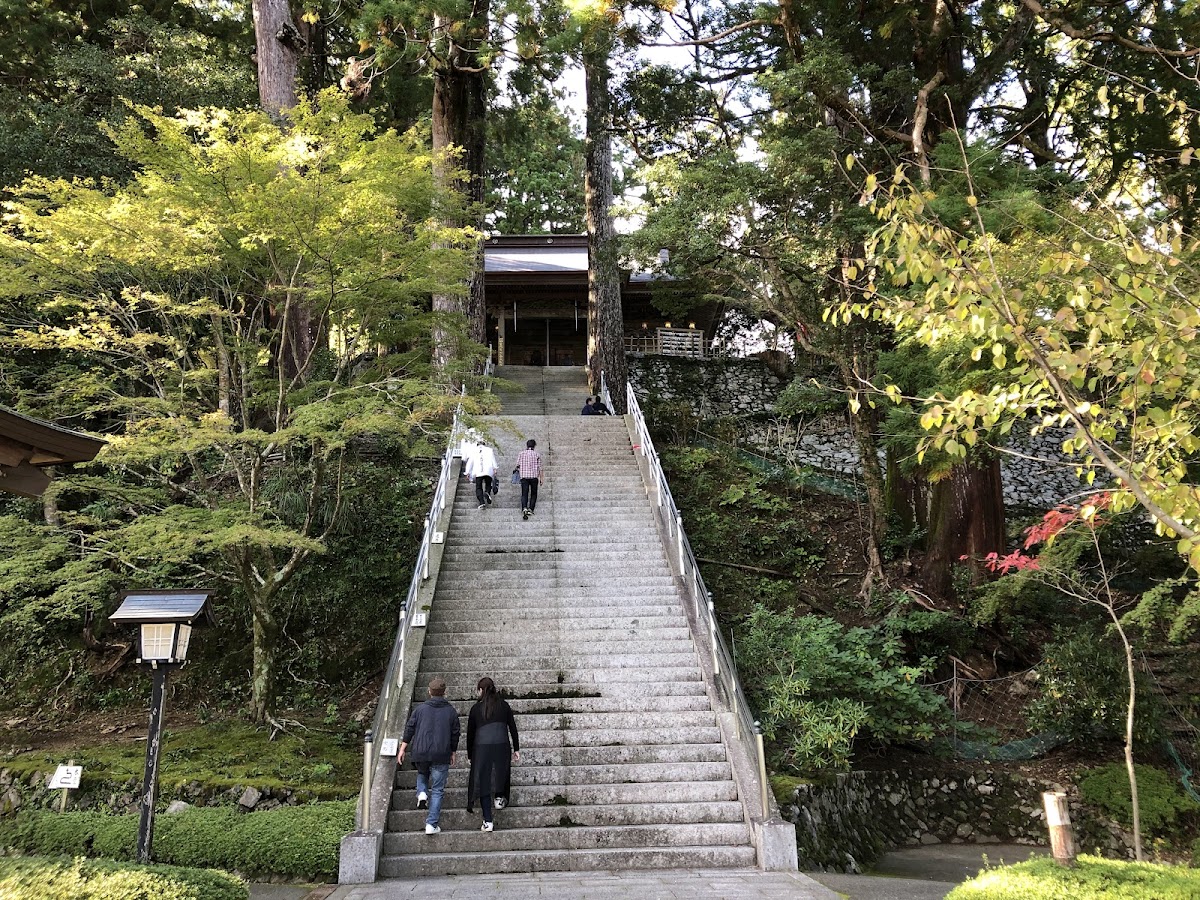
One of the most distinctive features of Yakushiji Temple is the staircase for protection against misfortune. The stone steps leading to the main hall are divided into the “Men’s Misfortune Slope” with 42 steps, corresponding to men’s unlucky years, and the “Women’s Misfortune Slope” with 33 steps, corresponding to women’s unlucky years.
Visitors ascend these steps one by one, placing coins such as one-yen coins as offerings and praying for protection against misfortune. There is a custom of placing coins on each step of the stairs to ward off misfortune, and many visitors follow this custom. ### Daishido Hall
The Daishido Hall, dedicated to Kobo Daishi Kukai, is an important building on the temple grounds. In the Shikoku Pilgrimage, it is customary to chant sutras in both the main hall and the Daishido Hall at each temple, and many pilgrims visit the Daishido Hall at Yakuoji Temple.
Bell Tower and Bell
The temple grounds feature a magnificent bell tower, and visitors can ring the bell. The sound of the bell resonates throughout Minami town, evoking a sense of time passing.
Other Highlights
The temple grounds contain various places of worship, including halls dedicated to the guardian deities of the twelve zodiac signs, Mizuko Jizo (guardian deity for aborted fetuses), and Kannon Hall. Furthermore, the Pacific Ocean can be seen from the grounds, allowing visitors to appreciate the natural beauty of Shikoku.
Exorcism Prayer | Yakushiji Temple’s Prayers and Annual Events
How to Pray for Exorcism
Yakushiji Temple, as a fundamental place for exorcism prayers, accepts prayers for exorcism throughout the year. Prayers can be offered not only for those facing their unlucky year, but also for various other wishes such as family safety, good health, and business prosperity.
Prayers can be booked in advance, but same-day registration is also accepted. Prayer fees vary depending on the wish, so it is recommended to check in advance.
Shōmiekū (Grand Memorial Service)
Every year on March 21st, the anniversary of Kōbō Daishi’s passing, an important memorial service called “Shōmiekū” is held. This is a ceremony to commemorate and express gratitude for the virtues of Kōbō Daishi, and many believers attend. Details regarding the Shōmiekū in 2025 are available on the official website.
Hatsue-shiki (First Buddhist Ceremony of the New Year)
The Hatsue-shiki, the first Buddhist ceremony of the new year, is an important event to pray for peace throughout the year. Many worshippers visit to pray for good health and protection from illness in the new year.
New Year’s Day Prayer
A New Year’s Day prayer is also held to welcome the new year. In recent years, advance applications via the internet have been accepted, making it possible for people from far away to request prayers.
Children’s Procession
During the spring and autumn festivals, a children’s procession is sometimes held. The sight of children in colorful costumes parading through the streets is a beloved local tradition.
Experiential Event | Calming the Mind with Ajikan Meditation and Sutra Copying
Ajikan Meditation Experience
At Yakuoji Temple, you can experience “Ajikan,” a meditation method of Shingon Esoteric Buddhism. Ajikan meditation is a practice of meditation where one gazes at the Sanskrit character “A,” providing an opportunity to calm the mind and reflect on oneself.
Performing Ajikan meditation in the tranquil temple hall offers a valuable experience of forgetting the hustle and bustle of everyday life and focusing the mind. Even beginners can easily participate, as careful instruction is provided.
Sutra Copying Experience
Sutra copying is a Buddhist practice of transcribing scriptures. At Yakushiji Temple, you can experience copying sutras such as the Heart Sutra. By carefully copying each character, you can calm your mind and enhance your concentration.
Anyone can participate in sutra copying, and completed sutras can be offered or taken home. The experience takes about an hour, and advance reservations are recommended.
Temple Lodging Experience
Yakushiji Temple has temple lodgings where you can stay overnight. This is a valuable opportunity to experience temple life, including participating in morning services and enjoying vegetarian meals.
Goshuin (Temple Seal) and Sutra Copying Information | Proof of the Shikoku Pilgrimage
Types of Goshuin
At Yakuoji Temple, you can receive a goshuin as the 23rd temple of the Shikoku 88 Temple Pilgrimage. Upon paying the sutra copying fee at the office, you will receive a calligraphic inscription and a red seal in your goshuincho (stamp book).
The goshuin will include the Sanskrit character for the principal image, Yakushi Nyorai (Medicine Buddha), the temple’s name, and the date of your visit. For those undertaking the Shikoku pilgrimage, the goshuin from each temple is cherished as proof of their pilgrimage.
Office Hours
The office hours are usually from 7:00 AM to 5:00 PM. However, these hours may change depending on the season and events, so it is recommended to check in advance if you want to be sure to receive a goshuin.
Sutra Copying Fee
The fee for inscription in your goshuincho is 300 yen; fees vary for inscriptions on hanging scrolls or white robes. It is best to prepare the exact amount to avoid needing change. ## Access | How to Get to Yakuoji Temple
Access by Train and Bus
Using the JR Mugi Line
The nearest station is “Hiwasa Station” on the JR Mugi Line. From Tokushima Station to Hiwasa Station, it takes approximately 1 hour by express train and approximately 1 hour 30 minutes by local train. From Hiwasa Station to Yakuoji Temple is about a 10-minute walk. If you exit the station and head towards the sea, you will see the Yugi Pagoda of Yakuoji Temple.
The path from the station to the temple is a gentle uphill slope, and there are signs along the way, so even first-time visitors can arrive without getting lost.
Access by Car
From Tokushima
From the Tokushima Interchange on the Tokushima Expressway, head south on National Route 55. You will arrive at Yakuoji Temple in approximately 1 hour 30 minutes. National Route 55 is a scenic road that runs along the coast, making for an enjoyable drive.
From Kochi
From Kochi City, take National Route 55 north and you will arrive in about 2 hours.
Parking Information
Yakuoji Temple has several free parking lots for visitors. There is a parking lot close to the main hall and a large parking lot a little further away, so parking is possible even during peak seasons. However, congestion is expected during New Year’s and major festivals, so it is advisable to consider using public transportation.
Nearby Tourist Attractions
Minami Town, where Yakuoji Temple is located, has several tourist attractions, including the Hiwasa Sea Turtle Museum “Caretta” and Ohama Beach. Ohama Beach is known as a sea turtle nesting ground, and it is sometimes possible to observe the nesting in the summer.
Basic Information about Yakuoji Temple
Official Name: Iōzan Muryōjuin Yakuoji Temple
Sect: Koyasan Shingon Sect, Special Head Temple
Principal Image: Yakushi Nyorai (Medicine Buddha)
Founder: Gyōki Bodhisattva
Founded: Tenpyō era (729-749)
Pilgrimage Site: 23rd temple of the Shikoku 88 Temple Pilgrimage
Address: 285-1 Teramae, Okukawachi, Minami-cho, Kaifu-gun, Tokushima Prefecture 779-2305
Phone Number: 0884-77-0023
Visiting Hours: Grounds are freely accessible (Temple office: 7:00-17:00)
Admission Fee: Free
Parking: Free parking available
Official Website: https://yakuouji.net/
Manners and Points for Visiting the Temple
Regarding Attire
Yakuoji Temple is a sacred place, so please dress appropriately for worship. Avoid overly revealing clothing or casual attire such as sandals. If visiting as part of the Shikoku Pilgrimage, wearing pilgrimage attire such as a white robe and straw hat is also recommended.
Order of Worship
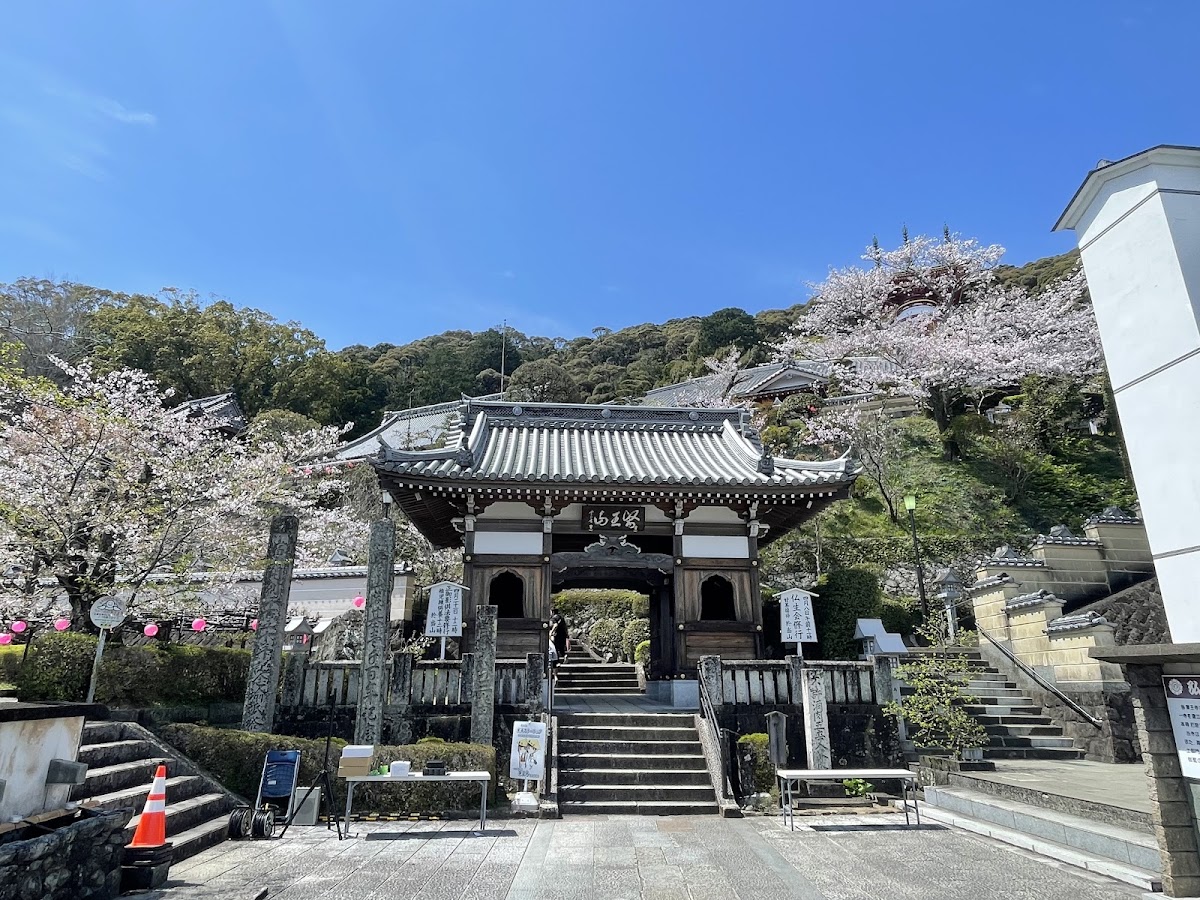
- Bow at the main gate (Niomon) before entering the temple grounds.
- Cleanse your hands and mouth at the water basin.
- Chant sutras and offer your votive slips in the main hall.
- Chant sutras similarly in the Daishi Hall.
- Receive your temple stamp at the sutra office.
How to Climb the Exorcism Stairs
When climbing the exorcism stairs, it is customary to place a coin on each step to ward off bad luck. It is recommended to prepare 42 one-yen coins (for men’s stairs) or 33 coins (for women’s stairs). However, this is not mandatory; the most important thing is to climb with a sincere heart.
Regarding Photography
Photography is generally permitted on the temple grounds, but please be considerate of those inside the halls and other visitors. In particular, please refrain from taking photographs during prayers or religious ceremonies.
Accommodation near Yakushiji Temple
Temple Lodgings
At Yakushiji Temple’s temple lodgings, you can enjoy unique temple experiences such as vegetarian meals and morning prayers. Reservations are required, so please confirm and book in advance by phone.
Nearby Inns and Hotels
There are several inns and business hotels around Hiwasa Station and in Minami Town. Some accommodations also operate as pilgrim lodgings for those visiting on the Shikoku Pilgrimage.
The Role of Yakushiji Temple in the Shikoku Pilgrimage
The Conclusion of the Dojo of Awakening
The Shikoku 88 Temple Pilgrimage is divided into four sections: the “Dojo of Awakening” in Tokushima Prefecture, the “Dojo of Training” in Kochi Prefecture, the “Dojo of Enlightenment” in Ehime Prefecture, and the “Dojo of Nirvana” in Kagawa Prefecture. Yakushiji Temple, as the last temple in Tokushima Prefecture, holds a significant position as the culmination of the pilgrimage.
To the Next Temple
The distance from Yakushiji Temple to the next temple, the 24th temple, Hotsumisakiji Temple, is approximately 75 kilometers. This is one of the longest distances between temples on the Shikoku Pilgrimage, and marks the entrance to Kochi Prefecture, the “training ground.”
Summary | The Significance of Visiting Yakushiji Temple
Yakushiji Temple is a venerable temple with a history of nearly 1300 years, and has attracted the faith of many people as a sacred site for warding off evil. It is not only a temple on the Shikoku Pilgrimage, but is also a place cherished by those facing their unlucky years or milestones in life, where they can find peace of mind and take a new step forward.
Standing on a hill overlooking the beautiful Pacific Ocean, Yakushiji Temple is a majestic space where nature and faith harmonize. Climbing each step of the staircase of protection against misfortune, the time spent confronting oneself and purifying one’s heart will be an invaluable experience.
Whether you are visiting as part of the Shikoku pilgrimage, seeking prayers for protection against misfortune, or seeking experiences such as Ajikan meditation or sutra copying, Yakushiji Temple warmly welcomes all visitors. When you visit Tokushima Prefecture, why not stop by Yakushiji Temple and experience its history and faith?