Complete Guide to Hoonji Temples: A Thorough Explanation of the History, Characteristics, and Access Information of Hoonji Temples Nationwide
The name Hoonji is the name of numerous temples throughout Japan. “Hoon” represents an important Buddhist teaching of repaying kindness, meaning expressing gratitude and repaying the kindness of parents, teachers, and Buddha. This article provides a detailed explanation of Hoonji temples scattered throughout Japan, including their historical background, sectarian characteristics, cultural assets, and access information.
What is Hoonji?: Origin and Meaning of the Name
The name Hoonji is based on the Buddhist concept of “Hoon.” Hoon refers to expressing gratitude for the four kinds of kindness (kindness to parents, kindness to all sentient beings, kindness to the king, and kindness to the Three Jewels) and repaying that kindness. By incorporating this noble ideal into the temple name, it expresses gratitude to parishioners and the local community.
Throughout Japan, there are Hoonji temples of various sects, each playing an important role as a center of faith in its region. Hoonji temples belonging to various Buddhist sects, including Jodo-shu, Soto-shu, Shinshu Otani-ha, Jodo Shinshu Honganji-ha, and Shingon-shu, are scattered throughout the region.
Hoonji Temples in Hokkaido
Hoonji Temple (Asahikawa City)
Located in Asahikawa City, Hokkaido, Hoonji Temple belongs to the Jodo-shu sect. It is known as a historical temple that has attracted the faith of local people since the pioneering days of Hokkaido. Asahikawa City is the second largest city in Hokkaido, and Hoonji Temple functions as an important religious facility within the city.
Based on the teachings of the Jodo-shu sect, it enshrines Amida Buddha as its principal deity and preaches attaining rebirth in paradise through chanting the Buddha’s name. It continues to be active as a spiritual center for local residents, handling funerals and memorial services.
Hoonji Temple (Monbetsu City)
Located in Monbetsu City, Hokkaido, Hoonji Temple belongs to the Soto-shu sect. In Monbetsu City, which faces the Sea of Okhotsk, it is positioned as an important temple that transmits the teachings of Zen Buddhism. The Soto Zen school is a branch of Zen Buddhism that emphasizes “Shikantaza” (just sitting), and its practice is based on meditation.
It has a history intertwined with the development of the Monbetsu region and is a temple with strong ties to the local community.
Hoonji Temple (Yoichi Town)
Hoonji Temple, located in Yoichi Town, Yoichi District, Hokkaido, is a temple of the Shinshu Otani sect (Higashi Honganji). While Yoichi Town is famous for the Nikka Whisky distillery, Hoonji Temple has supported the local Jodo Shinshu faith.
Based on the doctrines of the Shinshu Otani sect, it preaches the teaching of salvation through the power of others, believing in the original vow of Amida Buddha and chanting the Nembutsu.
Hoonji Temple in the Tohoku Region
Hoonji Temple (Morioka City) and the Five Hundred Arhats
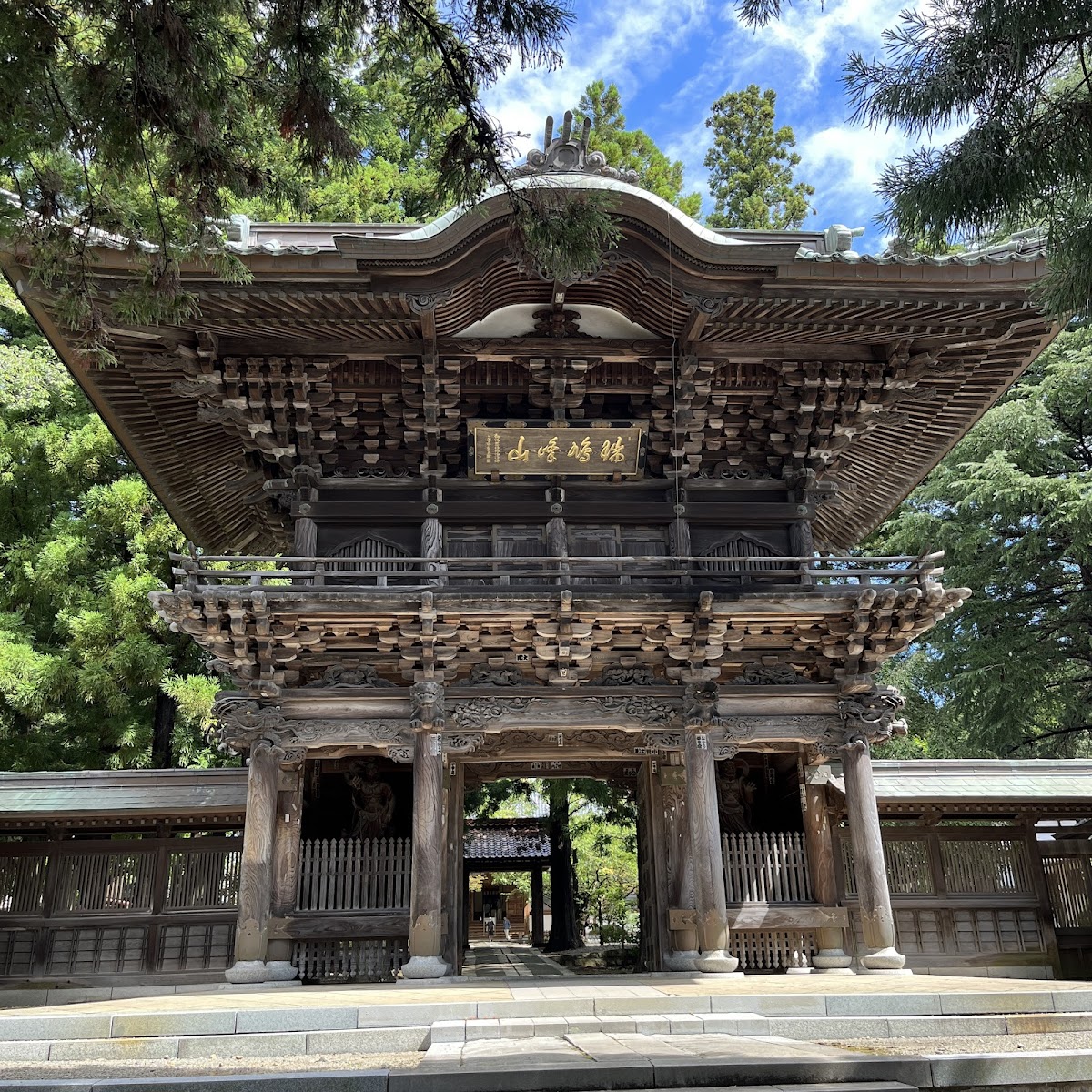
Hoonji Temple, located in Nasugawa-cho, Morioka City, Iwate Prefecture, is a Soto Zen Buddhist temple. Its mountain name is “Zuikyuhozan,” and it is also known as Hoon Zenji. The principal image is Shakyamuni Buddha. The most distinctive feature of this temple is the “Five Hundred Arhats” located within its grounds, which are widely known as a representative cultural asset of Iwate Prefecture.
History and Characteristics of the Five Hundred Arhats
The Five Hundred Arhats of Hoonji Temple are believed to have been created by a Kyoto Buddhist sculptor between 1731 (Kyoho 16) and 1735 (Kyoho 20). The Five Hundred Arhats refer to the 500 saints (Arhats) who gathered after the death of Shakyamuni Buddha, each with a different expression and posture.
These Arhat statues are characterized by their humanistic forms expressing a range of emotions, and there’s a legend that “if you look carefully, you’re sure to find a face that resembles someone you know.” Many visitors pray while searching for Arhat statues that resemble deceased relatives or acquaintances, giving the temple a friendly atmosphere that transcends mere religious significance.
Access and Visiting Information
- Location: Nasugawa-cho, Morioka City, Iwate Prefecture
- Visiting Hours: 9:00 AM – 4:00 PM
- Access: Approximately 12 minutes by bus from Morioka Station, 5 minutes walk from Kitayama bus stop, or approximately 15 minutes by taxi
- Admission Fee: 300 yen for adults, free for junior high school students and younger (fees are subject to change)
Hoonji Temple is said to have been founded in 1394 (Oei 1), making it a venerable temple with over 600 years of history. It is counted as one of Morioka’s three major temples and, along with Daikozan Seiju Zenji Temple and Daihozan Tozenji Temple, represents Morioka’s Zen Buddhist culture. ## Hoonji Temples in the Kanto Region
Several Hoonji temples exist in the Kanto region, each functioning as a center of local faith. Many of these temples have a history dating back to the Edo period, and are closely intertwined with the history of the region.
Regular memorial services are held at each temple, serving as a spiritual pillar for parishioners and local residents. They are often used not only for funerals and memorial services, but also for annual events and community gatherings.
Hoonji Temples in the Chubu Region
In the Chubu region, there are also numerous temples bearing the name Hoonji. Many of these are Jodo Shinshu or Soto Zen temples, spreading the teachings of their respective sects within the community.
Many Hoonji temples in the Chubu region have historical backgrounds from the Sengoku and Edo periods, and some possess buildings and Buddhist statues designated as regional cultural properties.
Hoonji Temples in the Kinki Region
Hoonji Temple (Kamigyo-ku, Kyoto City)
In Kamigyo-ku, Kyoto City, there is a Hoonji temple selected as one of the “100 Historic Sites of Kamigyo-ku.” Kyoto is the center of Japanese Buddhism and home to numerous historical temples. Hoonji Temple is one of the important temples that conveys Kyoto’s religious culture.
According to official information from Kyoto City, it is a historical heritage site in Kamigyo Ward, cherished by local residents, and positioned as a place to experience Kyoto’s temple culture.
Hoonji Temple (Miki City)
Hoonji Temple, with its main temple in Shijimi-cho, Miki City, Hyogo Prefecture, is a temple of the Jodo Shinshu Honganji sect (Nishi Honganji). This temple has a unique operational structure, having a branch temple in Nishi-ku, Kobe City, in addition to its main temple in Miki City.
It aims to be a “familiar temple that anyone can easily visit,” and practices modern temple management. In addition to memorial services and funerals, it also accepts life counseling and serves as a community center for the area.
Based on the teachings of the Jodo Shinshu Honganji sect, it preaches salvation through the vow of Amida Buddha and conveys the doctrine that all people can be equally saved by chanting “Namu Amida Butsu.”
Hoonji Temple in the Chugoku Region
Hoonji Temple (Hiroshima City)
Located in Funairi, Hiroshima City, Hoonji Temple is a Jodo Shinshu Honganji sect temple founded in 1951 by its first chief priest, Satoru Kubota. It has a history of being a source of spiritual support for the people of Hiroshima in the postwar period.
This temple also houses the Hoon Nursery School, functioning not only as a religious facility but also as a hub for local childcare support. As a “neighborhood temple,” it is cherished by local residents and parishioners, and continues to operate as a familiar presence.
As a temple that has walked alongside postwar reconstruction in Hiroshima, a city devastated by the atomic bomb, it also plays a role in conveying the importance of peace.
Hoonji Temple in the Shikoku Region
There is also a temple named Hoonji in the Shikoku region. Shikoku is known as a land associated with Kobo Daishi Kukai, and many temples, including the Shikoku 88 Temple Pilgrimage, are scattered throughout the region. Hoonji is one of them and attracts the faith of the local people.
Hoonji Temple in the Kyushu Region
Hoonji Temple (Satsumasendai City)
Hoonji Temple, located in Satsumasendai City, Kagoshima Prefecture, is a Shingon sect Daigo school temple with the mountain name “Keira-zan.” Shingon Buddhism is a sect of esoteric Buddhism founded by Kobo Daishi Kukai, and Hoonji functions as one of the centers of the Shingon sect Daigo school in Kyushu.
The Shingon sect Daigo school is a sect with Daigo-ji Temple in Kyoto as its head temple, and transmits the teachings and practices of esoteric Buddhism. Hoonji Temple offers a wide range of services, including funerals, interment, various Buddhist memorial services, and even life counseling, serving as a spiritual pillar for the local community.
Satsumasendai City is located in the northwestern part of Kagoshima Prefecture and historically flourished as part of the Satsuma Domain. Hoonji Temple, having walked hand in hand with the region’s history, contributes to the preservation of local culture.
Hoonji Temple (Wakayama City)
Hoonji Temple, located in Wakayama City, Wakayama Prefecture, is a Nichiren Buddhist temple with the mountain name “Hakuunzan.” Originally named “Yōgyōji,” it was later renamed Hoonji. Founded in 1609 (Keichō 14), it is a venerable temple with a history of approximately 400 years.
The Nichiren sect considers Nichiren Shōnin as its founder and the Lotus Sutra as its fundamental scripture. It teaches that one can attain Buddhahood by chanting the title “Namu Myōhō Renge Kyō.” Wakayama City has a history of developing as a castle town of the Kishu Tokugawa family, and Hoenji Temple has supported local faith since the Edo period. Even today, it remains a beloved temple for local residents, preserving the teachings of the Nichiren sect.
Hoenji Temples Overseas
Hoenji Temples in Taiwan
There are also temples named “Hoenji” in Taiwan. Due to the influence of the Japanese colonial period, temples influenced by Japanese Buddhism can be found throughout Taiwan. Furthermore, the traditions of Chinese Buddhism remain strong, forming a unique Buddhist culture.
Hoenji temples in Taiwan function as centers of faith in the local community, attracting many worshippers throughout the year.
Hoenji Temples in the People’s Republic of China
Several temples named “Hoenji” also exist in mainland China. China has a history of receiving Buddhism from India, the birthplace of Buddhism, and has developed its own unique Buddhist culture.
Many Hoenji temples in China are protected as historical buildings and are popular tourist destinations. Bao On Temples, especially those located in ancient capitals and historical cities, are considered important cultural assets that convey the history of Chinese Buddhism.
Bao On Temples in Singapore
Bao On Temples also exist in Singapore. Singapore is a multi-ethnic, multi-religious nation, and numerous Buddhist temples exist there. In Singapore, where there is a large Chinese population, many temples continue the traditions of Chinese Buddhism.
Bao On Temples in Singapore, as a center of Buddhist faith in a modern city-state, develop activities that blend tradition and modernity.
Main Events and Ceremonies Held at Bao On Temples
Across Japan, Bao On Temples hold various annual events and ceremonies according to their respective sects.
Main Annual Events
- New Year’s Day Ceremony: A memorial service to welcome the New Year
- Nirvana Ceremony: A memorial service to commemorate the passing of Buddha (around February 15th)
- Spring Equinox Ceremony: A memorial service for the spring equinox (7 days centered around the spring equinox)
- Flower Festival (Buddha’s Birthday Ceremony): A memorial service to celebrate the birth of Buddha (April 8th)
- Obon Festival: A memorial service for ancestors (July or August)
- Autumn Equinox Ceremony: A memorial service for the autumn equinox (7 days centered around the autumn equinox)
- New Year’s Eve Bell Ringing: Ringing of the bell on New Year’s Eve
Personal Memorial Services
- Funeral/Memorial Service
- Memorial services such as the 7th day and 49th day
- Annual memorial services such as the 1st anniversary and 3rd anniversary
- Interment Ceremony
- Mizuko Kuyo (Memorial Service for Stillborn Children)
The content and timing of these memorial services may vary depending on the sect of each temple and local customs.
Manners and Etiquette for Visiting Hoonji Temple
When visiting Hoonji Temple, it is important to observe basic temple visiting manners.
Basic Visiting Manners
- Attire: Please wear clean and modest clothing. Avoid overly revealing clothing.
- Bow at the Temple Gate: Bow before passing through the temple gate.
- Walking on the Path: Avoid walking in the center of the path.
- Purification at the Water Basin: If there is a water basin, purify your hands and mouth.
- Worship at the Main Hall: Quietly join your hands in prayer and pray with sincerity.
- Photography: Refrain from taking photos in areas where photography is prohibited. Even where permitted, be considerate of other visitors.
- Offering Money: Place it carefully and do not throw it.
Differences by Sect
Since Hoonji Temple belongs to various sects, the worship etiquette differs slightly.
- Jodo-shu/Jodo Shinshu: Chant “Namu Amida Butsu.”
- Soto-shu: Clasp your hands together and bow quietly.
- Shingon-shu: Sometimes chant “Namu Daishi Henjo Kongo.”
- Nichiren-shu: Chant “Namu Myoho Renge Kyo.”
If you have any questions, we recommend asking a temple staff member.
Hoonji Temple’s Connection to the Local Community
Hoonji Temples throughout Japan play diverse roles in the local community, not just as religious facilities.
Educational and Welfare Activities
Many Hoonji Temples have attached nurseries and kindergartens, contributing to local childcare support. We provide character education based on Buddhist teachings, supporting the healthy growth of children.
We also contribute to the revitalization of the local community by providing salon activities for the elderly and a place for local residents to interact.
Protection and Public Access to Cultural Properties
Many temples within the Hoonji group possess important cultural properties. In particular, some, like the Five Hundred Arhats at Hoonji Temple in Morioka City, are widely open to the public as representative cultural properties of the region.
These cultural properties play an important role in passing on the history and culture of the region to future generations and are also utilized as tourist resources.
Disaster Relief Activities
During the Great East Japan Earthquake and various natural disasters, many temples functioned as evacuation centers and support bases. Hoonji Temple also engages in disaster relief and reconstruction support activities according to the specific circumstances of the region.
Points to Note When Visiting Hoonji Temple
Please note the following points when visiting Hoonji Temple.
Visiting Hours and Admission Fees
Visiting hours and admission fees vary depending on the Hoonji Temple. Especially at temples that display cultural properties, visiting hours may be limited. It is recommended to check the official website or call in advance.
Access
While many temples in urban areas are easily accessible by public transport, some rural temples may require a private car. It’s advisable to check parking availability beforehand.
Schedule of Memorial Services and Events
During major memorial services and events, general visits may be restricted. Those who wish to visit in peace and quiet are advised to avoid visiting on event dates.
Photography
Regarding photography within temple grounds, please follow the rules of each temple. Photography inside the main hall and of Buddha statues is often prohibited, so be sure to check before taking pictures.
The Future and Challenges of Hoonji Temple
In modern Japanese society, temples face various challenges. Hoonji Temple is no exception.
Changes in the Danka System
Due to urbanization and the rise of nuclear families, the traditional Danka system is changing. Many temples are exploring ways to operate in a way that is open to people other than their parishioners.
Maintenance and Management of Cultural Properties
Hoonji Temple, which possesses historical buildings and cultural properties, requires significant expense and effort for their maintenance and management. Government support and new fundraising methods such as crowdfunding are being considered.
Adapting to Modern Society
To become a temple familiar to younger generations and foreign tourists, efforts are being made to utilize modern communication methods, such as improving the website, disseminating information on social media, and providing multilingual support.
Summary: The Spirit of Buddhism Conveyed by Hoonji Temple
Hoonji temples, scattered throughout Japan, continue to convey the fundamental Buddhist spirit of “repaying kindness” in their respective regions. Despite differences in sect, history, and scale, what all Hoonji temples have in common is their role as a spiritual haven for people.
The network of Hoonji temples, extending from Hokkaido to Kyushu and even overseas, demonstrates the diversity and universality of Buddhist culture. Even in modern society, Hoonji temples continue to contribute to local communities while preserving tradition and adapting to the new era.
A visit to Hoonji Temple will be more than just sightseeing or worship; it will be a valuable opportunity to experience Japanese history, culture, and Buddhist teachings. Please do visit a Hoonji Temple near you, or one you come across while traveling. The time spent praying in the tranquil temple grounds will be a precious moment to escape from the hustle and bustle of everyday life and find peace of mind.