Complete Guide to Watatsumi Shrine: History, Benefits, and Access Information for the Shikinaisha (Great Shrine) in Tarumi, Kobe
Watatsumi Shrine, located in Tarumi Ward, Kobe City, Hyogo Prefecture, is a venerable shrine with a long history, situated overlooking the Akashi Strait. It is listed in the Engishiki Jinmyocho (a historical record of shrines) as a Shikinaisha (a shrine listed in the Engishiki), and is known as one of the most prestigious shrines in Harima Province. This article provides a detailed overview of Watatsumi Shrine, including its history, enshrined deities, benefits, festivals, and access information for visitors.
What is Watatsumi Shrine?: Overview and Basic Information
Watatsumi Shrine is a shrine located in Miyamoto-cho, Tarumi Ward, Kobe City, Hyogo Prefecture. Its official name is “Watatsumi Jinja.” Locally, it is affectionately known as “Umi-jin-san” (Sea God), and has long been revered as the guardian deity of the Akashi Strait.
Shrine Rank and Status
Kai Shrine holds the following high shrine ranks:
- Shikinaisha (Myojin Taisha): An ancient shrine listed in the Engishiki Jinmyocho (a list of shrines compiled in the Heian period)
- Former Kanpei Chusha: Ranked under the modern shrine ranking system of the Meiji era
- Beppyo Jinja: Designated as an important shrine by the current Association of Shinto Shrines
- Harima San Daisha: One of the three major shrines representing Harima Province, along with Iwa Shrine and Tsubuza Amaterasu Shrine
These ranks demonstrate that Kai Shrine has held an extremely important position in Harima Province from ancient times to the present day.
Location and Accessibility
One of Kai Shrine’s most notable features is its excellent accessibility. Despite being located just a one-minute walk from JR Kobe Line’s Tarumi Station and Sanyo Electric Railway Main Line’s Sanyo Tarumi Station, it boasts a vast precinct and magnificent shrine buildings. It is a rare shrine space that maintains a tranquil atmosphere despite being located in an urban area near a train station.
Deities Enshrined: The Three Watatsumi Gods, Guardians of the Sea
The main deities enshrined at Umi Shrine are the three Watatsumi gods, who appear in Japanese mythology as gods of the sea.
Details of the Main Deities
Uwatsu Watatsumi-no-kami
- God who governs the surface of the sea
- Guardian of safe voyages
Nakatsu Watatsumi-no-kami
- God who governs the middle layers of the sea
- Guardian of safety underwater
Sokotsu Watatsumi-no-kami
- God who governs the deep layers of the sea
- Guardian of safety at the bottom of the sea
These three gods are said to have been born during Izanagi-no-Mikoto’s purification ritual upon his return from the underworld, and are worshipped as deities who govern the entire sea.
Enshrined Deities
In addition to the main deity, the following deities are also enshrined:
- Empress Jingu: Said to have prayed at the Kaijinja Shrine during her conquest of the Three Kingdoms of Korea.
- Other deities related to maritime safety and fishing.
History: The Legend of Empress Jingu and Ancient Beliefs
The founding of the Kaijinja Shrine is deeply connected to the legend of Empress Jingu.
Founding Legend
According to shrine tradition, the origin of the Kaijinja Shrine is said to be when Empress Jingu enshrined the three Watatsumi deities in this area upon her triumphant return from the conquest of the Three Kingdoms of Korea. It is said that Empress Jingu prayed for safe voyages and built the shrine as a token of gratitude for her safe return.
This legend indicates that the Kaijinja Shrine has been positioned as the guardian deity of the Akashi Strait, an important maritime trade route, since ancient times.
Listing in the Engishiki Jinmyocho (Register of Shrines in the Engi Era)
The Engishiki Jinmyocho (Register of Shrines in the Engi Era), a compilation of records from the Heian period (927 AD), lists “Kai Shrine, Myojin Taisha” (Great Shrine of Myojin). A “Myojin Taisha” is a particularly sacred shrine that received special treatment from the state, demonstrating the high status of Kai Shrine.
From the Medieval to the Early Modern Period
Even in the medieval period, it continued to attract the faith of sailors navigating the Akashi Strait. Although it fell into disrepair during the Sengoku period (Warring States period), the shrine buildings were restored under the protection of the Akashi Domain during the Edo period.
From the Modern Era Onward
In the Meiji era’s modern shrine ranking system, it was ranked as a Kanpei Chusha (a shrine of the second rank of the government), receiving national protection. After World War II, it has remained a Beppyo Jinsha (a shrine listed in the special register) of the Association of Shinto Shrines to this day.
Highlights of the Shrine Grounds
The grounds of Kai Shrine contain numerous historical buildings and points of interest.
The Great Torii Gate
The vermilion-painted great torii gate standing on the seaward (south) side is known as a symbol of the Sea Shrine. In the past, the coastline extended very close to the gate, and it served to welcome sailors arriving by sea. Although land reclamation has moved the coastline further away, its imposing presence remains unchanged, welcoming worshippers.
Main Shrine and Worship Hall
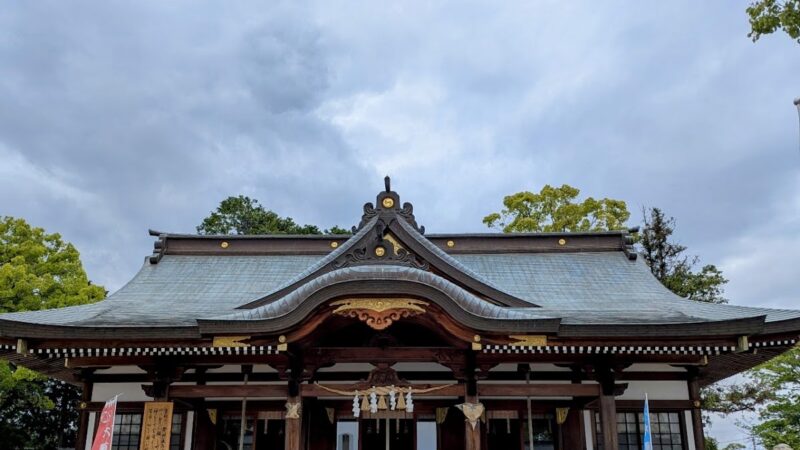
The main shrine is built in the nagare-zukuri style, and together with the worship hall, it exudes a solemn atmosphere. The architectural style of the shrine buildings is characteristic of shrine architecture in the Harima region.
Subsidiary Shrines
Several subsidiary shrines are located within the grounds, each enshrining different deities:
- Ebisu Shrine: God of business prosperity
- Sumiyoshi Shrine: God of safe voyages
- Inari Shrine: God of abundant harvests and business prosperity
These subsidiary shrines also attract the faith of the local people.
Sacred Trees and Shrine Grove
The shrine grounds are home to ancient trees, including camphor trees estimated to be several hundred years old, creating a sacred area enveloped in lush greenery despite its urban location.
Festivals and Annual Events
The Umi Shrine holds various festivals throughout the year.
Maritime Procession Festival (Autumn Festival)
Held annually on October 12th, the Maritime Procession Festival is the largest festival at the Umi Shrine. It is known as a magnificent ritual in which the portable shrine is placed on a boat and crosses the Akashi Strait.
Festival Flow:
- Ritual at the Shrine
- Placement of the Portable Shrine on the Boat
- Maritime Procession (Multiple boats parade through the strait)
- Return Procession
This festival is a traditional event expressing gratitude to the sea god and praying for safe voyages, attracting many worshippers and spectators.
Summer Festival
The summer festival, held during the three-day weekend including Marine Day in July, is a local summer tradition. Stalls line the shrine grounds, and various dedication ceremonies are held.
Other Annual Events
- New Year’s Day Festival (January 1st): A festival celebrating the New Year
- Setsubun Festival (February 3rd): A bean-throwing ritual
- Spring Grand Festival (April): The grand spring festival
- Great Purification Ceremony (June 30th, December 31st): A ritual to purify oneself of sins and impurities accumulated over the past six months
Benefits and Faith
Based on its enshrined deity and history, the Kaijinja Shrine is believed to offer the following benefits:
Main Benefits
Safe Navigation and Maritime Safety
As it enshrines the god of the sea, it has long attracted the faith of sailors and those involved in the fishing industry. Even today, it continues to receive visits from people involved in shipping.
Fishing Prosperity
For those engaged in fishing, it plays an important role as a place to pray for abundant catches and safe operations.
Traffic Safety
Originating from protection of maritime traffic, it is also believed to have miraculous powers for praying for safety in land traffic.
Business Prosperity
Many visitors pray for the prosperity of businesses related to shipping and trade.
Protection from Evil and Family Safety
As the local guardian deity, it also accepts prayers for general protection from evil and family safety.
Access and Visiting Information
Transportation Access
Access by Train (Recommended)
- 1-minute walk from the North Exit of Tarumi Station on the JR Kobe Line
- 1-minute walk from Sanyo Tarumi Station on the Sanyo Electric Railway Main Line
It is very close to the station and you can arrive without getting lost.
Access by Car
- Approximately 5 minutes from the Takamaru Interchange on the Daini-Shinmei Expressway
- Approximately 10 minutes from the Wakamiya Interchange on the Hanshin Expressway
While there is parking available on the shrine grounds for visitors, spaces are limited, so we recommend using public transportation.
Visiting Hours
- Shrine Grounds Visiting: Open all day (Caution: Limited lighting at night)
- Shrine Office Reception Hours: 9:00 AM – 5:00 PM (approximately)
- Prayer Request Reception: 9:00 AM – 4:30 PM (Advance confirmation required)
Goshuin (Shrine Seal)
Goshuin are available at Kaijinja Shrine. Applications can be made at the shrine office during reception hours. The offering fee is usually around 300-500 yen.
Nearby Attractions
The following are some of the tourist spots near Umi Shrine:
- Tarumi Fishing Port: A market offering fresh seafood
- Azure Maiko: A seaside park overlooking the Akashi Kaikyo Bridge
- Maiko Park: A park located at the foot of the Akashi Kaikyo Bridge
- Goshikizuka Kofun: The largest keyhole-shaped burial mound in Hyogo Prefecture
Visiting these spots in conjunction with your visit to the shrine is highly recommended.
Positioning as one of the Three Great Shrines of Harima
Umi Shrine, along with Iwa Shrine and Tsubuza Amaterasu Shrine, is known as one of the “Three Great Shrines of Harima” in Harima Province (present-day southwestern Hyogo Prefecture).
Harima’s Three Great Shrines:
- Iwa Shrine (Shiso City): Ichinomiya (first-ranked shrine) of Harima Province, deity of agriculture
- Tsubuza Amaterasu Shrine (Tatsuno City): Ancient shrine dedicated to the sun god
- Umi Shrine (Kobe City): Myojin Taisha (high-ranking shrine) dedicated to the god of the sea
These three shrines, each symbolizing the nature and livelihoods of Harima—mountains, agriculture, and the sea—have served as the center of local faith.
Connection with the Association of Shinto-Buddhist Sacred Sites
Umi Shrine is a member of the Association of Shinto-Buddhist Sacred Sites and is positioned as one of the “Routes of Pilgrimage to Shinto-Buddhist Sacred Sites.” The Association of Shinto-Buddhist Sacred Sites is an organization established through the cooperation of shrines and temples in the Kinki region, and Umi Shrine welcomes pilgrims as an important sacred site within Hyogo Prefecture.
Umi Shrine and the Local Community
Umi Shrine plays an important role not only as a tourist destination but also in the local community.
Role as the Guardian Deity
As the guardian deity of the Tarumi district, it is the center of faith for the local residents. It is a beloved place for prayers at important life events such as a baby’s first shrine visit, Shichi-Go-San (a traditional rite of passage for children), and protection against misfortune.
Center of the Local Community
Through festivals and events, it also functions as a place for interaction among local residents. The autumn festival’s sea procession, in particular, is a major event involving the entire community.
Protection of Cultural Properties
Umi Shrine also plays a role in protecting and passing on important cultural properties that convey the history and culture of the region. The shrine buildings, festival equipment, and ancient documents are valuable resources for understanding the region’s history.
Manners and Etiquette for Visiting
When visiting Umi Shrine, please observe the following manners.
Basic Worship Etiquette
- Bow before passing through the torii gate.
- Purify your hands and mouth at the water basin.
- Hold the ladle in your right hand and wash your left hand.
- Switch the ladle to your left hand and wash your right hand.
- Switch the ladle back to your right hand, receive water in your left hand, and rinse your mouth.
- Finally, hold the ladle upright and wash the handle.
- Bow twice, clap twice, and bow once in front of the main hall.
- Bow deeply twice.
- Clap twice.
- Offer your prayer.
- Bow deeply once.
Clothing and Belongings
There are no particularly strict dress code regulations, but it is desirable to wear clothing that is mindful of the sacred nature of the place. If you are receiving a prayer, try to wear clothing that is not too casual.
Summary: The Charm of Umi Shrine
Umi Shrine is a shrine with multifaceted charm, boasting a history dating back to ancient times, a faith in the sea god who protects the Akashi Strait, and festivals rooted in the local community.
Despite its convenient location near a train station in an urban area, Kaijinja Shrine boasts vast grounds and a magnificent shrine building, offering visitors a tranquil experience. As one of the three major shrines of Harima and a prestigious Shikinaisha (a shrine listed in the Engishiki, an ancient Japanese legal code), Kaijinja Shrine is beloved as the local guardian deity and is a must-visit shrine when visiting Kobe and Tarumi.
Offering prayers to the sea gods in this location overlooking the Akashi Strait will surely create lasting memories. When sightseeing in Kobe or exploring Tarumi, be sure to include a visit to Kaijinja Shrine in your plans.