Akama Shrine Complete Guide | A Thorough Explanation of History, Benefits, Highlights, and Visiting Information
Located in Shimonoseki City, Yamaguchi Prefecture, overlooking the Kanmon Strait, Akama Shrine is dedicated to Emperor Antoku, who drowned himself in the Battle of Dan-no-ura, a tragic event in the Tale of the Heike. The vibrant vermilion Suitenmon Gate, modeled after the Dragon Palace, is a symbol of the Kanmon Strait and is also famous as the setting for Lafcadio Hearn’s ghost story, “Hoichi the Earless.” This article provides a detailed explanation of Akama Shrine’s history, benefits, highlights within the grounds, and access information—all useful for a visit.
What is Akama Shrine? | A Land-Based Dragon Palace Dedicated to a Tragic Child Emperor
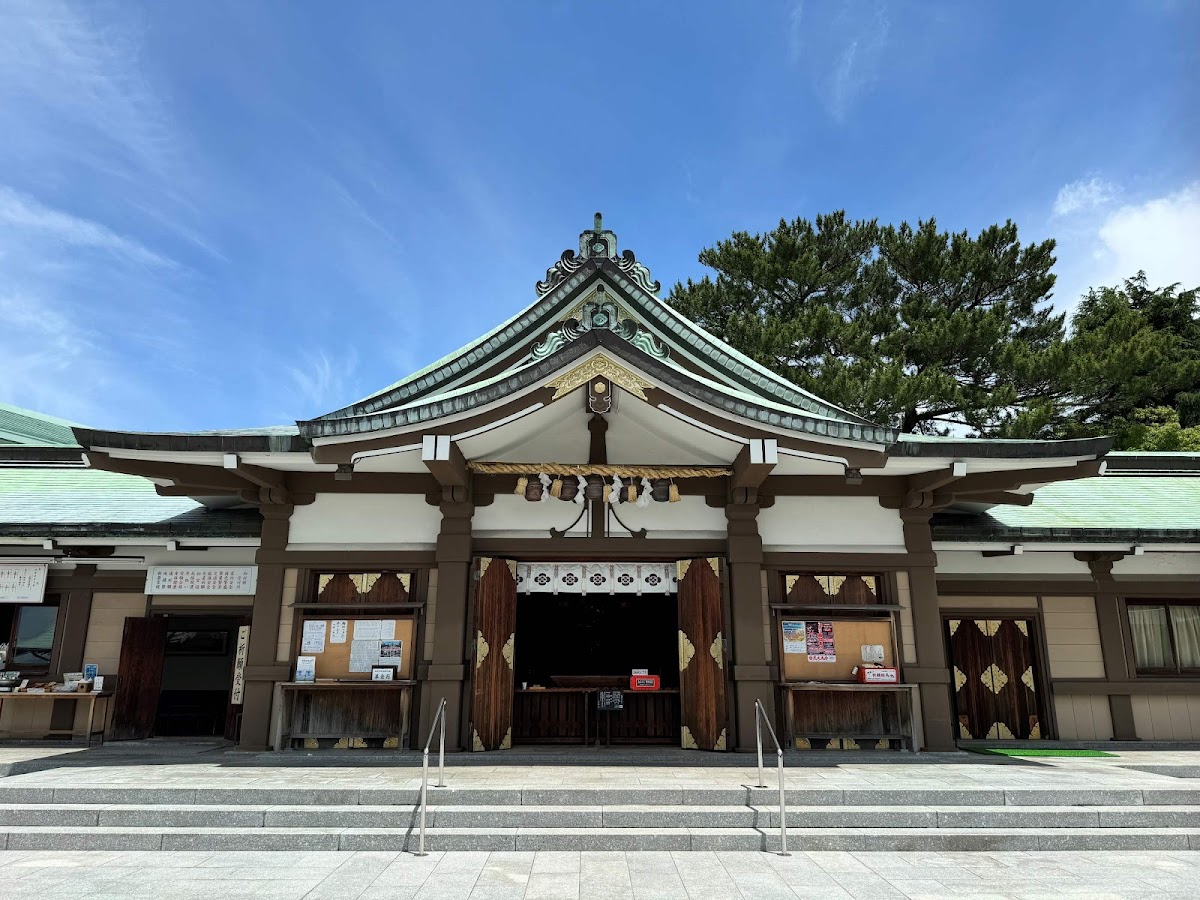
Akama Shrine is dedicated to Emperor Antoku, the 81st Emperor of Japan, who drowned himself in the Kanmon Strait at the tender age of eight during the Battle of Dan-no-ura in 1185. Formerly a Grand Imperial Shrine, it remains a historically significant shrine with deep ties to the Imperial Family.
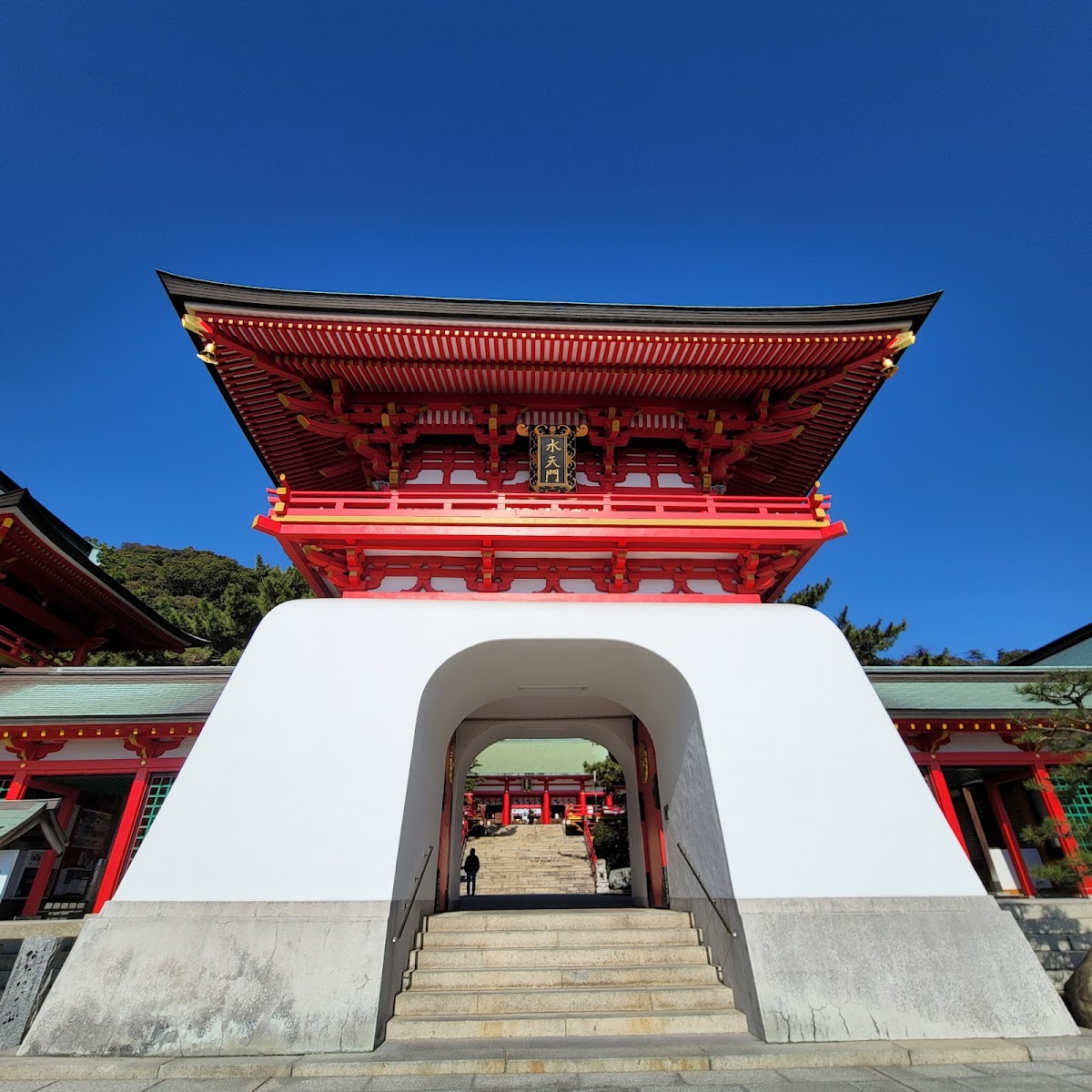
The Suitenmon Gate, located in the center of the shrine grounds, is built in the Ryugu-zukuri style, inspired by the legend in the Tale of the Heike in which Emperor Antoku traveled to the Dragon Palace at the bottom of the sea. Its vibrant vermilion color and unique architectural style continue to captivate visitors. Standing overlooking the Kanmon Strait, it is a representative tourist spot in Shimonoseki, attracting many worshippers and tourists.
Basic Information about Akama Shrine
Official Name: Akama Shrine
Location: 4-1 Amidaji-cho, Shimonoseki City, Yamaguchi Prefecture
Main Deity: Emperor Antoku
Former Shrine Rank: Kanpei Taisha (Grand Imperial Shrine)
Founded: Kenkyu 2 (1191)
Annual Festival: Sentei Festival (May 2nd and 3rd)
History of Akama Shrine | From Amidaji Temple to Shrine
The Beginning of the Amidaji Temple Era
The predecessor of Akama Shrine was a Buddhist temple called “Amidaji.” It is said to have been built in Kenkyu 2 (1191), six years after the Battle of Dan-no-ura between the Minamoto and Taira clans, to appease the spirit of Emperor Antoku. At that time, it was also called “Emperor Antoku’s Portrait Hall” and was worshipped according to Buddhist customs.
Amida-ji Temple flourished as an important temple in Akamagaseki, Shimonoseki, throughout the Edo period, and was highly protected by successive feudal lords. Many temple buildings stood within its grounds, and memorial services for the Taira clan continued there.
Meiji Restoration and Separation of Shinto and Buddhism
After the Meiji Restoration, in 1869 (Meiji 2), Amida-ji Temple was abolished due to the Shinto-Buddhist Separation Order. The following year, in 1870 (Meiji 3), it was converted into a Shinto shrine called “Tenno-sha” (Emperor’s Shrine). Later, in 1875 (Meiji 8), it was renamed “Akama-gu,” and in 1889 (Meiji 22), it was ranked as a Kanpei Chusha (a medium-ranked government-supported shrine).
In 1940 (Showa 15), it was promoted to Kanpei Taisha (a high-ranking government-supported shrine), and after the end of World War II, in 1965 (Showa 40), its current name, “Akama Jingu,” was adopted. Thus, Akama Shrine is a historic shrine that has protected the spirit of Emperor Antoku for over 800 years.
The Legend of Hoichi the Earless
Its predecessor, Amida-ji Temple, is world-famous as the setting for “Hoichi the Earless,” a story included in Lafcadio Hearn’s collection of ghost stories, “Kwaidan.” The story of Hoichi, a blind biwa player, being led by the ghosts of the Taira clan to play the biwa, and the abbot trying to protect him by writing the Heart Sutra on his body but forgetting to write his ears, resulting in his ears being taken, remains a representative Japanese ghost story that is still told today.
Highlights of the Shrine Grounds | From Suitenmon Gate to Shichiseizuka
The grounds of Akama Shrine offer many points of interest where you can feel the history and culture. Each place embodies the tragedy of the Taira clan and a deep respect for Emperor Antoku.
Suitenmon Gate (Ryugu-zukuri Style)
The Suitenmon Gate, a symbol of Akama Shrine, is a vibrant vermilion gate overlooking Dan-no-ura. It features a unique Ryugu-zukuri architectural style, modeled after the Dragon Palace, and is a two-story gatehouse.
This style was adopted in reference to a passage from the Tale of the Heike, in which Emperor Antoku, held by Ni-i no Ama (Taira no Tokiko), was told, “There is a capital even at the bottom of the sea,” before drowning. The gate is illuminated until 10 PM, creating a fantastical atmosphere along with the night view of the Kanmon Strait.
The Suitenmon Gate is designated as a National Registered Tangible Cultural Property, and its beautiful appearance attracts many photography enthusiasts and tourists. It is a particularly excellent photo spot at sunset, with the Kanmon Strait as a backdrop.
Emperor Antoku’s Mausoleum at Amidaji Temple
At the back of the shrine grounds lies the mausoleum of Emperor Antoku. It is said that the remains of Emperor Antoku, who drowned himself at Dan-no-ura, were buried here. The imperial mausoleum is enveloped in a solemn atmosphere and is a sacred place that has been protected for over 841 years.
Every year on May 2nd, the Imperial Mausoleum Festival is held, where the chief priest of Akama Shrine and others solemnly perform rituals for Emperor Antoku. This ceremony is a traditional event that has continued for over 800 years and is still carefully preserved today.
Graves of the Taira Clan (Shichiseizuka)
Within the shrine grounds is the “Shichiseizuka,” the graves of the Taira clan who drowned with Emperor Antoku at the Battle of Dan-no-ura. It enshrines key Taira warriors, including Ni-i no Ama (Taira no Tokiko), the wife of Taira no Kiyomori.
The following members of the Taira clan are buried at Shichiseizuka:
- Taira no Munemori
- Taira no Tomomori
- Taira no Norimori
- Taira no Tsunemori
- Taira no Noritsune
- Taira no Sukemori
- Taira no Arimori
In the center is the tomb of Ni-i no Ama. Many visitors come to this site, known as the “Tombs of the Taira Clan,” to reflect on the history of the Taira clan’s rise and fall.
Hoichi-do Hall
The Hoichi-do Hall, built in honor of the legend of Hoichi the Earless, houses a wooden statue of Hoichi holding a biwa (lute). The hall also displays paintings and documents depicting the story of Hoichi, allowing visitors to experience the atmosphere of the Amida-ji Temple era, the setting of this ghost story.
The story of Hōichi, made known worldwide through the works of Lafcadio Hearn, continues to attract many literature fans and ghost story enthusiasts. Hōichi-dō is a valuable spot where literature and history intersect.
Treasure Hall
The Treasure Hall of Akama Shrine houses and displays valuable materials and cultural artifacts related to the Taira clan. Historical documents, ancient manuscripts, and works of art and crafts concerning Emperor Antoku and the Taira family are preserved, allowing visitors to learn deeply about the history of the Taira clan.
Admission Fee: 100 yen for adults
Opening Hours: 9:00 AM – 4:30 PM
The materials related to the Tale of the Heike, and the ritual tools passed down from the Edo period, are particularly impressive, making this a must-see facility for history buffs.
Other Highlights
Within the shrine grounds, there are also subsidiary shrines such as Dalian Shrine and Beniseki Inari Shrine, each offering its own unique blessings. Furthermore, the view of the Kanmon Strait from the shrine grounds is magnificent, making it an excellent viewpoint for overlooking the Battle of Dan-no-ura.
Akama Shrine’s Blessings and Amulets
Main Blessings
Akama Shrine enshrines Emperor Antoku as its main deity, and is believed to offer the following blessings:
Healthy Growth of Children: In honor of Emperor Antoku, who died at a young age, prayers are offered for the health and growth of children.
Fertility and Safe Childbirth: Blessings for prosperity of descendants and safe childbirth.
Protection from Misfortune and Disaster: Protection from various calamities.
Traffic Safety: Due to its location at a key point for maritime traffic.
Academic Success: In honor of Emperor Antoku, who was intelligent despite being a young emperor.
Good Fortune and Prosperity: Good fortune at turning points in life.
The shrine is particularly famous for its blessings related to children, and many families visit for Shichi-Go-San (a traditional Japanese rite of passage for children) and Hatsumiyamairi (a first shrine visit for a newborn).
Amulets and Souvenirs
Akama Shrine offers a variety of amulets and souvenirs:
- Children’s Amulet: An amulet wishing for the healthy growth of children.
- Safe Childbirth Amulet: An amulet praying for a safe childbirth.
- Traffic Safety Amulet: Amulet for traffic safety on land and sea.
- Exorcism Amulet: Protection from misfortune during unlucky years.
- Academic Success Amulet: Amulet for academic improvement and passing exams.
Goshuin (Shrine Seals)
Akama Shrine offers beautiful goshuin (shrine seals). In addition to regular goshuin, limited-edition goshuin are sometimes available during seasonal periods and special events.
Goshuin Reception Hours: 9:00~16:30
Offering Fee: 300 yen~
Akama Shrine also offers original goshuin notebooks, featuring beautiful designs such as the Suitenmon gate and the Heike family crest.
Sentei Festival | A Magnificent Heike Picture Scroll
The Sentei Festival, held annually on May 2nd and 3rd at Akama Shrine, is a grand festival commemorating the death anniversary of Emperor Antoku. With a history spanning over 800 years, this festival is a representative traditional event of Shimonoseki, attracting many tourists.
Highlights of the Sentei Festival
May 2nd: Imperial Mausoleum Ceremony
A solemn ritual is performed at Emperor Antoku’s mausoleum by the chief priest and other Shinto priests. This is a traditional Shinto ritual that weaves together 841 years of history.
May 3rd: Jōrō Sanpai (Procession of High-Ranking Courtesans)
The highlight of the Sentei Festival is the procession of courtesans (Jōrō) adorned in magnificent costumes. The splendid procession, reminiscent of a courtesan procession, creates a breathtaking spectacle, a historical picture scroll that conveys the glory of the Heike clan.
During the Jōrō Pilgrimage, women dressed as Tayū (the highest rank of courtesan in the Edo period) and Heike ladies-in-waiting pay their respects to Emperor Antoku. Their costumes, featuring brightly colored uchikake robes, high geta sandals, and elaborate hair ornaments, recreate the culture of the time and captivate onlookers.
Other Events
During the Sentei Festival, various events such as the Shinkōsai (procession of the deity), Kankōsai (return procession), and dedication ceremonies are held, drawing large crowds of worshippers to the temple grounds. The procession of local children and the warrior procession are also highlights.
Access and Visiting Information
Access by Train and Bus
From JR Shimonoseki Station:
- Get off at “Akama Jingu-mae” bus stop (Sanden Kotsu Bus), approximately 10 minutes away
- Buses bound for Chofu/Ozuki are convenient
- Approximately 10 minutes by taxi
From JR Shin-Shimonoseki Station:
- Approximately 30 minutes by bus
From Mojiko Port:
- Disembark at Karato Pier via Kanmon Ferry, approximately 5 minutes on foot
Access by Car
Chugoku Expressway:
- Approximately 15 minutes from Shimonoseki IC
Kanmon Expressway:
- Approximately 10 minutes from Shimonoseki IC
Parking:
- Dedicated parking lot for Akama Jingu Shrine (paid)
- Several paid parking lots are also available in the surrounding area
Visiting Hours and Admission Fee
Shrine Grounds Visiting: Free (24 hours)
Shrine Office Reception Hours: 9:00~16:30
Treasure Hall Visiting Hours: 9:00~16:30
Treasure Hall Admission Fee: 100 yen for adults, free for junior high school students and younger
Inquiries
Akama Shrine Office
- Phone: 083-231-4138
- Address: 4-1 Amidaji-cho, Shimonoseki City, Yamaguchi Prefecture 750-0003
Nearby Tourist Attractions
Akama Shrine is surrounded by many attractive tourist spots in the Kanmon Strait area.
Mimosusogawa Park
A park located about a 5-minute walk from Akama Shrine, featuring statues of Minamoto no Yoshitsune and Taira no Tomomori, recreating the Battle of Dan-no-ura. You can see the currents of the Kanmon Strait up close and experience the atmosphere of the Dan-no-ura battlefield.
Kanmon Tunnel Pedestrian Walkway
Approximately a 3-minute walk from Mimosusogawa Park. This is a unique experience where you can walk through an underwater tunnel connecting Honshu and Kyushu. The tunnel also features a marker indicating the prefectural border, making it a popular spot for commemorative photos.
Karato Market and Kamon Wharf
Approximately a 10-minute walk from Akama Shrine. At Karato Market, you can enjoy fresh seafood, including the famous pufferfish and seafood bowls. Adjacent to the market is Kamon Wharf, lined with restaurants and souvenir shops where you can dine while overlooking the Kanmon Strait.
Kaikyo Yume Tower
Shimonoseki’s landmark tower. From the observation deck, you can enjoy a 360-degree view of the Kanmon Strait and Shimonoseki city. It’s also a popular spot for night views.
Chofu Area
Approximately a 15-minute drive from Akama Shrine. You can stroll through the historical streets that retain the atmosphere of a castle town, including the Chofu Mori Residence and Kozanji Temple.
Points to Note When Visiting Akama Shrine
Recommended Time
Early May (Sentei Festival): The most vibrant time. The Jōrō pilgrimage is a must-see, but it gets crowded.
Spring (March-April): The temple grounds are beautiful during cherry blossom season.
Autumn (October-November): The weather is pleasant, making it ideal for sightseeing.
Summer (July-August): The sea breeze from the Kanmon Strait is refreshing.
Winter (December-February): Relatively uncrowded, allowing for a leisurely visit.
Estimated Time Required
- Temple grounds visit only: 30 minutes to 1 hour
- Including the Treasure Hall: 1 to 1.5 hours
- Including surrounding sightseeing: Half a day to a full day
Clothing and Items to Bring
- There are stairs on the temple grounds, so comfortable shoes are recommended.
- In summer, the sun is strong, so a hat or parasol is useful.
- In winter, the sea breeze is cold, so take precautions against the cold.
- A camera is essential (many photo spots at Suitenmon Gate).
Visiting Etiquette
- Bow when passing through the Suitenmon Gate.
- The mausoleum is a sacred place, so please pray quietly.
- Photography is permitted, but please be discreet during rituals.
- Please take your trash with you.
Summary
Akama Shrine is a precious shrine that conveys the history of the Genpei War and the world of the Tale of the Heike. With its beautiful Suitenmon Gate modeled after Ryugu-jo (Dragon Palace), the legend of Hoichi the Earless, and the magnificent Sentei Festival, it offers a wealth of sights to see, making it a rare spot where you can enjoy history, culture, and architectural beauty all at once.
Standing on the Kanmon Strait, a stage of Japanese history, Akama Shrine has protected the spirit of Emperor Antoku for over 800 years. Standing on its grounds, you can almost hear the sound of the waves from the Battle of Dan-no-ura and the sorrow of the Taira clan.
When you visit Shimonoseki, be sure to visit Akama Shrine and experience the depth of Japanese history and culture. This charming shrine offers a variety of ways to enjoy yourself, from praying for the healthy growth of children and the safety of your family, to exploring history, appreciating architecture, and taking photographs.
Visiting it in conjunction with other nearby tourist attractions will make for a fulfilling trip where you can fully experience the charm of the Kanmon Strait area.