Complete Guide to Rokushō Shrines | History, Deities, and Major Rokushō Shrines Nationwide
What are Rokushō Shrines?
Rokushō Shrines (Rokushō Jinja) are a type of Shinto shrine found throughout Japan, also known as “Rokushō Myōjin,” “Rokushō Daimyōjin,” “Rokushōgū,” and “Rokushōsha.” As the name suggests, they are shrines dedicated to six deities, and are characterized by varying deities and historical backgrounds depending on the region.
Rokushō Shrines can be broadly divided into two types. One is a shrine that functioned as a “Sōsha” (general shrine) under the jurisdiction of the provincial governor during the Ritsuryo period, and the other is a shrine that enshrines six deities worshipped in a particular region. This diversity is the reason why Rokushō Shrines are scattered throughout Japan.
Origin of the Name “Rokushō”
The name Rokushō Shrine literally means “six shrines” or “six deities.” In ancient Japan, the number “six” was considered a sacred number symbolizing completeness and harmony, and it was believed that enshrining six deities in a single shrine would grant greater divine power.
While the six deities enshrined varied by region, they often included major figures such as Amaterasu-ōmikami, Susanoo-no-Mikoto, and Ōkuninushi-no-Mikoto. These deities play a central role in Japanese mythology and are believed to bring various blessings, including national peace, abundant harvests, and protection from evil.
History of Rokushō Shrine as a Soja (General Shrine)
The Ritsuryo System and the Provincial Governors’ Worship
After the Taika Reforms (645 AD), Japan adopted the Ritsuryo system, and provincial governors were dispatched to various regions. Upon arriving in their assigned province, provincial governors were obligated to perform a ceremony called “Shinpai” (worship of the gods). This was an important ritual in which they visited the major shrines within their jurisdiction and paid homage to the gods.
However, visiting all the shrines throughout the vast country required an enormous amount of time and expense. For example, in a large region like Izumo Province, visiting all the shrines could take several months.
The Establishment and Role of Sōsha Shrines
To solve this problem, the system of “Sōsha” shrines was established around the mid-Heian period. A Sōsha shrine was a shrine that enshrined the divided spirits of the major shrines within the country. It was believed that by performing rituals at this Sōsha shrine, the provincial governor could achieve the same effect as visiting all the shrines in the country.
Many of the Rokushō Shrines functioned as Sōsha. In particular, the Rokushō Shrines in Sagami Province (present-day Kanagawa Prefecture) and Izumo Province (present-day Shimane Prefecture) were important centers where the provincial governors performed official national rituals. As Sōsha shrines, the Rokushō Shrines were not merely places of worship, but political and religious institutions closely linked to local administration.
Major Rokushō Shrines Nationwide
Rokushō Shrine in Ōiso Town, Kanagawa Prefecture (Sagami Province’s Grand Shrine)
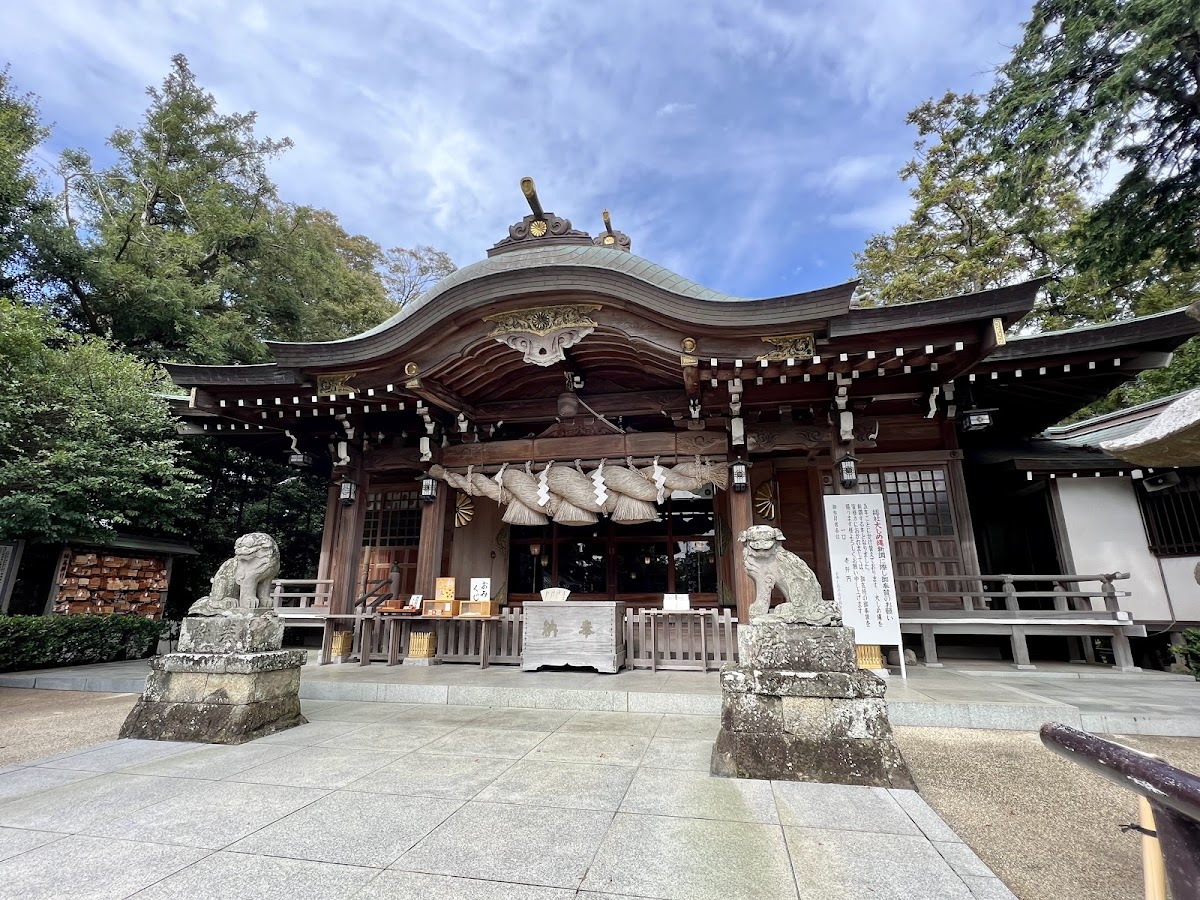
Rokushō Shrine, known as the Grand Shrine of Sagami Province, is located in Ōiso Town, Nakagun, Kanagawa Prefecture. It is said to have originated after the Taika Reforms, when the governor of Sagami Province consolidated the major shrines within the province into one, making it one of the most important shrines in Sagami Province.
This shrine enshrines the divided spirits of six shrines: Samukawa Shrine, Kawagō Shrine, Hibita Shrine, Hiratsuka Hachimangu Shrine, Maetori Shrine, and Rokushō Shrine itself. Even today, many worshippers visit during the annual festival, and it functions as a center of local faith. It is easily accessible, within walking distance of Ōiso Station on the JR Tōkaidō Line.
Rokushō Shrine in Okazaki City, Aichi Prefecture
Rokushō Shrine, located in Myōdaiji-chō, Okazaki City, Aichi Prefecture, is particularly famous for prayers for safe childbirth. Located near Okazaki Castle, the birthplace of Tokugawa Ieyasu, this shrine has a history of being revered by both the Matsudaira and Tokugawa families.
The enshrined deities are six in number: Shiotsuchi-no-Okina-no-Kami, Okuninushi-no-Kami, Emperor Ojin, Sakemizu-no-O-no-Kami, Sakemizu-no-Me-no-Kami, and Emperor Chuai. It is particularly believed to offer blessings for safe childbirth, child-rearing, and protection from evil. Since 2022, prayer reception hours have been from 9:00 to 15:00, with prayer fees starting from 6,000 yen. The shrine is open from 7:00 to 17:00 (the shrine office opens at 9:00), and many families visit for occasions such as first shrine visits for newborns and Shichi-Go-San (a traditional Japanese rite of passage for children).
Rokushō Shrine (Izumo Province’s Grand Shrine) in Matsue City, Shimane Prefecture
Rokushō Shrine, located in Ōkusa-chō, Matsue City, Shimane Prefecture, played an important role during the Ritsuryo period as the Grand Shrine of Izumo Province. Located almost in the center of the Iu Plain, it functioned as the political and religious center of ancient Izumo.
The enshrined deities are six in number: Izanagi-no-Mikoto, Izanami-no-Mikoto, Amaterasu-Omikami, Tsukuyomi-no-Mikoto, Susanoo-no-Mikoto, and Ōkuninushi-no-Mikoto. It is believed that the shrine’s name, Rokushō Shrine, comes from the fact that these six deities are the main enshrined deities. Izumo Province is known as the land of mythology, and Rokushō Shrine, with its deep connection to Izumo mythology, attracts attention from historians and shrine enthusiasts.
Rokushō Shrine in Setagaya Ward, Tokyo
Rokushō Shrine, located in Akatsutsumi, Setagaya Ward, Tokyo, was founded in December of Tenshō 12 (1584). Hattori Sadayoshi, a great-great-grandson of Taira no Sadamori, invited the deities from Rokushō Shrine in Fuchu (present-day Ōkunitama Shrine) and designated it as the guardian shrine of Akatsutsumi, establishing it as a place of prayer for the Hattori family.
The shrine building was rebuilt in September of Tenmei 7 (1787), and in Meiji 7 (1874), it was designated as the Akatsutsumi Village Shrine. Despite its proximity to the city center, it stands quietly in a residential area, attracting the faith of local residents. It is easily accessible, within walking distance of Shimotakaido Station on the Keio Line.
Rokushō Shrine (Rokushō-gū) in Shingu-machi, Kasuya-gun, Fukuoka Prefecture
Rokushō Shrine, located in Shingu-machi, Kasuya-gun, Fukuoka Prefecture, is also known as Rokushō-gū. According to the Chikuzen-no-kuni Zoku Fudoki Furoku (Supplementary Record of the Chikuzen Province), it was called Rokushō Daigongen because it enshrined six deities: Amaterasu Ōmikami, Kasuga Myōjin, Kamo Myōjin, Inari Myōjin, Atsuta Myōjin, and Kifune Myōjin.
Records show that the chief priest also served at Tokko-ji Temple in the same Tachibanaguchi district, reflecting the era of syncretism between Shinto and Buddhism. As a representative example of Rokushō Shrine in the Kyushu region, it is an indispensable presence when discussing the history of the area.
Rokushō Shrine in Nishiwaki City, Hyogo Prefecture
Rokushō Shrine, located in Kurodasho-cho, Nishiwaki City, Hyogo Prefecture, is an ancient shrine dedicated to six deities. It is believed to have been founded around 1319 during the Kamakura period, and the current main hall was built in 1789 (Tenmei 9).
As a shrine deeply intertwined with local history, it has become one of the tourist attractions in Nishiwaki City, which proclaims itself as “the center of Japan.” The old main hall architecture is highly valued as a local cultural asset and attracts attention from architectural historians.
Rokushō Shrine in Ninomiya-cho, Nakagun, Kanagawa Prefecture
Rokushō Shrine, located in Yamanishi, Ninomiya-cho, Nakagun, Kanagawa Prefecture, is said to have been founded during the reign of Emperor Sujin, the tenth emperor of Japan, by a clan that migrated to this area from the Izumo region. They named this area “Yanagida-go” and enshrined their ancestral deities, Kushinadahime-no-Mikoto, Susanoo-no-Mikoto, and Ōkuninushi-no-Mikoto, as guardian deities on Isonokamidai (also known as Isejindai), calling them Yanagida Daimyōjin.
For centuries, it has been a place of worship for local residents, serving as a place to pray for the prosperity of the community and for future generations. Because it enshrines deities of the Izumo lineage, it is noteworthy as a valuable example of ancient population migration and the spread of faith.
Deities and Benefits of Rokushō Shrine
Main Deities
While the deities enshrined at Rokushō Shrines vary by region, there are deities that are commonly worshipped.
Amaterasu Ōmikami is the supreme deity in Japanese mythology, a goddess who personifies the sun. She is revered as the ancestral deity of the Imperial family and is believed to bring national peace and good fortune.
Susanoo-no-Mikoto is the younger brother of Amaterasu-Omikami and a brave god known for the myth of slaying Yamata-no-Orochi. He is believed to offer protection against misfortune, disaster, and matchmaking.
Oonamuchi-no-Mikoto is another name for Okuninushi-no-Mikoto and is known as the god of nation-building. He is believed to offer blessings for matchmaking, business prosperity, and abundant harvests, and is a central deity at the Rokushō Shrines of the Izumo lineage.
Izanagi-no-Mikoto and Izanami-no-Mikoto are the main characters in the creation myth of the Japanese archipelago. They are believed to offer blessings for marital harmony and prosperity of descendants.
Tsukuyomi-no-Mikoto is the god who rules the night and is one of the Three Noble Children, along with Amaterasu-Omikami and Susanoo-no-Mikoto. ### Main Benefits of Rokushō Shrine
Rokushō Shrine, which enshrines six deities, is believed to offer a variety of benefits.
Safe Childbirth and Child-Rearing: Rokushō Shrine in Okazaki City, Aichi Prefecture, is particularly famous for prayers for safe childbirth, attracting many pregnant women and families with young children.
Protection from Misfortune and Disaster: Because it enshrines brave deities such as Susanoo-no-Mikoto, it is believed to offer strong protection from misfortune.
Matchmaking and Marital Harmony: The divine virtues of Ōkuninushi-no-Mikoto, Izenagi-no-Mikoto, and Izanami-no-Mikoto are believed to bring blessings for successful relationships and marital harmony.
Abundant Harvest and Business Prosperity: Because it enshrines deities involved in nation-building, many visitors pray for prosperity in agriculture and commerce.
Good Fortune and Family Safety: Through the combined divine virtues of the six deities, you can pray for the happiness and prosperity of your entire family.
How to Visit and Pray at Rokushō Shrine
Basic Worship Etiquette
The basic etiquette for visiting Rokushō Shrine is the same as for other shrines.
- Bow Before Passing Through the Torii Gate: As a sign of respect before entering the sacred area, bow before the torii gate.
- Purify at the Water Basin: Purify your left hand, then your right hand, then your mouth, and finally your left hand.
- Avoid Walking in the Center of the Path: The center of the path is considered the path of the gods, so walk along the sides.
- Worship at the Main Hall: The basic procedure is two bows, two claps, and one bow. Place your offering in the offering box, ring the bell, and then bow.
About Prayers
At Rokushō Shrine, you can receive various types of prayers. While many Rokushō Shrines operate on a reservation system, same-day registration may be possible in some cases.
Main Types of Prayers:
- Prayer for Safe Childbirth
- First Shrine Visit (Omiyamairi)
- Shichi-Go-San (7-5-3 Festival)
- Prayer for Protection from Evil
- Family Safety
- Business Prosperity
- Traffic Safety
- Prayer for Success in Exams
Prayer reception hours and fees vary by shrine. For example, at Rokushō Shrine in Okazaki City, Aichi Prefecture, since 2022, prayer reception hours have been 9:00 AM to 3:00 PM, and the prayer fee is 6,000 yen and up (please offer what you feel is appropriate).
We recommend checking the latest information on each shrine’s official website before visiting.
Annual Events and Festivals at Rokushō Shrine
Major Annual Events
Rokushō Shrine holds various festivals and events throughout the year.
New Year’s Day Festival (January 1st): A festival to pray for happiness and peace in the new year. Many worshippers visit for their first shrine visit of the year.
Setsubun Festival (around February 3rd): Events such as bean-throwing are held, and prayers are offered for protection against evil.
Annual Grand Festival (Spring/Autumn): The most important festival for the shrine, sometimes including a portable shrine procession and Kagura (sacred dance) performances. The timing varies depending on the shrine.
Summer Purification Ceremony (June 30th): A Shinto ritual to purify oneself of sins and impurities accumulated over the past six months. Some shrines also hold a ritual of passing through a ring of reeds.
Shichi-Go-San Festival (around November 15th): A celebration of children’s growth and prayers for their future health.
Niiname-sai Festival (November 23rd): A festival to give thanks for a bountiful harvest.
New Year’s Eve Festival (December 31st): A time to express gratitude for the past year and prepare to welcome the new year.
Regional Festivals
Each of the Rokushō Shrines has its own unique regional festivals. At the Rokushō Shrine, the principal shrine of Sagami Province, the Sagami Kōno-machi Festival, a traditional and elegant festival, is preserved. This festival brings together the five shrines of Sagami Province and is said to have a history of over a thousand years.
Access and Visiting Information for Rokushō Shrines
Access to Major Rokushō Shrines
Rokushō Shrine (Sagami Province Grand Shrine) – Ōiso Town, Kanagawa Prefecture
- Approximately 10 minutes on foot from Ōiso Station on the JR Tōkaidō Line
- Parking available
Rokushō Shrine – Okazaki City, Aichi Prefecture
- Approximately 10 minutes by bus from Higashi-Okazaki Station on the Meitetsu Nagoya Main Line
- Approximately 15 minutes on foot from Naka-Okazaki Station on the Aichi Loop Railway
- Parking available
- Opening Hours: 7:00 AM – 5:00 PM (Shrine Office 9:00 AM -)
Rokushō Shrine (Izumo Province Grand Shrine) – Matsue City, Shimane Prefecture
- Approximately 10 minutes by car from Ibiya Station on the JR San’in Main Line
- Parking available
Rokushō Shrine – Setagaya Ward, Tokyo
- Approximately 10 minutes on foot from Shimotakaido Station on the Keio Line
- Approximately 12 minutes on foot from Matsubara Station on the Tokyu Setagaya Line
Precautions for Visiting
- Clean and subdued attire is preferred (especially for prayers).
- Photography is permitted only in designated areas.
- Please be mindful that this is a sacred place and pray quietly.
- Pets are often prohibited, so please check in advance.
- If you wish to receive a Goshuin (temple/shrine stamp), please bring your Goshuincho (stamp book).
Cultural Properties and Architecture of Rokushō Shrine
Historical Buildings
Many Rokushō Shrines retain buildings of high historical value. For example, the main hall of Rokushō Shrine in Nishiwaki City, Hyogo Prefecture, was built in 1789 and still preserves the characteristics of late Edo period shrine architecture.
Shrine architecture varies in style depending on the era, and it is a valuable resource for learning about the changes in architectural styles, such as the Nagare-zukuri of the Heian period, the Kasuga-zukuri of the Kamakura period, and the Gongen-zukuri of the Edo period.
Designated as Cultural Properties
Some Rokushō Shrines have been designated as cultural properties due to their historical and cultural value. This includes not only buildings such as the main hall and worship hall, but also ancient documents, sacred treasures, and ritual implements passed down through the shrines.
Rokushō Shrines and the Local Community
Center of the Local Community
Rokushō Shrines have long functioned as the center of the local community. Festivals provide an opportunity for local residents to gather, playing a vital role in strengthening community bonds.
Even today, Rokushō Shrines remain indispensable to the community as venues for life rituals such as New Year’s visits, Shichi-Go-San (a traditional rite of passage for children), and exorcisms, as well as serving as centers for local festivals and events.
Value as a Tourism Resource
With their history and tradition, Rokushō Shrines are also attracting attention as tourism resources. In particular, shrines that functioned as the principal shrines of Sagami Province and Izumo Province during the Ritsuryo period are popular among history enthusiasts and shrine-hopping visitors.
The local tourism association actively promotes Rokushō Shrine as a local attraction, providing detailed information on tourist maps and websites.
Mindset for Visiting Rokushō Shrine
Significance of Shrine Visits
Shrine visits are not merely a place to make wishes, but an act of expressing gratitude and respect to the gods. At shrines like Rokushō Shrine, which enshrine multiple deities, a deeper religious experience can be gained by reflecting on the divine virtues of each deity during the visit.
Connection to Daily Life
Through visiting Rokushō Shrine, one can learn about traditional Japanese culture and history, and reaffirm the importance of having a grateful heart in daily life. Regular visits are also said to have the effect of promoting mental stability and regulating the rhythm of life.
Summary: The Charm and Future of Rokushō Shrine
Rokushō Shrine is a historical and traditional shrine scattered throughout Japan. While their origins are diverse—some shrines served as the main administrative center for a region, others enshrined six deities worshipped in a particular area—all have been deeply intertwined with their local communities and cherished as objects of faith.
The main administrative centers of Sagami Province and Izumo Province, established during the Ritsuryo period, are valuable resources that convey the ancient political and religious systems of Japan. Furthermore, shrines like Rokushō Shrine in Okazaki City, Aichi Prefecture, known for prayers for safe childbirth, continue to bring blessings to many people today.
When visiting Rokushō Shrine, learning about its historical background and enshrined deities beforehand will lead to a more meaningful pilgrimage. It is recommended to check the shrine’s official website or local tourism information to confirm opening hours, prayer reception times, and access methods before visiting.
Even in the Reiwa era, Rokushō Shrine continues to play a vital role as a center of local faith and a place to convey traditional Japanese culture. We encourage you to visit a nearby Rokushō Shrine and experience its history and sacred atmosphere.