Complete Guide to Hakozaki Shrine | History, Benefits, Shrine Grounds Highlights, and Access Information for One of Japan’s Three Great Hachiman Shrines
Hakozaki Shrine is a venerable shrine located in Hakozaki, Higashi-ku, Fukuoka City, Fukuoka Prefecture. Known as one of the Three Great Hachiman Shrines of Japan, along with Usa Shrine and Iwashimizu Hachiman Shrine, it attracts many worshippers from all over the country seeking blessings for “victory” and “protection from evil.” This article comprehensively introduces information you should know before visiting Hakozaki Shrine, including its history, enshrined deities, shrine grounds highlights, annual festivals and events, worship methods, and access information.
What is Hakozaki Shrine? | Status and History of One of Japan’s Three Great Hachiman Shrines
Overview and Shrine Rank of Hakozaki Shrine
Hakozaki Shrine is a Shikinaisha (Myojin Taisha) and has been revered since ancient times as the Ichinomiya (first-ranked shrine) of Chikuzen Province. Its former rank was Kanpei Taisha, and it is currently designated as a Beppyo Jinja (special shrine) by the Association of Shinto Shrines. Also known as Hakozaki Hachimangu, it is a historically significant shrine that has attracted worshippers from all walks of life, along with Usa Jingu in Oita Prefecture and Iwashimizu Hachimangu in Kyoto Prefecture, and is considered one of the Three Great Hachiman Shrines of Japan.
Founding and History of Hakozaki Shrine
Hakozaki Shrine is said to have been founded in Enchō 1 (923). It began when the shrine was relocated from Oita Hachimangu in Honami District, Oita (present-day Iizuka City, Fukuoka Prefecture) to this Hakozaki location. According to shrine tradition, the name “Hakozaki” originated from the fact that Empress Jingū buried the placenta (ena) of Emperor Ōjin in a box on the beach.
In the late Heian period, after the decline of the Korokan trade, this area flourished as a base for foreign trade. During the Kamakura period, it was the site of the Mongol invasions, and it is known that Emperor Kameyama prayed here for the “surrender of the enemy nation” during the Mongol invasions. This plaque bearing the “surrender of the enemy nation” is still displayed on the main gate and is an important cultural asset symbolizing Hakozaki Shrine.
During the Sengoku period, the shrine buildings were destroyed by fire during conflicts with the Otomo and Shimazu clans, but they were rebuilt in 1587 by Toyotomi Hideyoshi. During the Edo period, under the patronage of the Kuroda clan, the magnificent shrine buildings seen today were constructed.
Deities and Benefits | Power Spot for Victory and Protection from Evil
Deities of Hakozaki Shrine
Three deities are enshrined at Hakozaki Shrine.
- Emperor Ōjin: The 15th Emperor, revered as Hachiman, the god of military fortune.
- Empress Jingū: Mother of Emperor Ōjin, known for the legend of the conquest of the Three Kingdoms of Korea.
- Tamayorihime-no-Mikoto: Mother of Emperor Jimmu, goddess of the sea and matchmaking.
These three deities are collectively called “Hakozaki Ōkami.”
Benefits of Hakozaki Shrine
Hakozaki Shrine is particularly known for its blessings of victory and protection from evil. Since prayers for the surrender of enemy nations during the Mongol invasions were answered, the shrine is constantly visited by worshippers praying for success in competitions, passing exams, and winning in sports. Professional sports teams such as the Fukuoka SoftBank Hawks and Avispa Fukuoka are also famous for visiting to pray for victory.
In addition, the shrine is said to offer the following benefits:
- Prayer for Victory: For all kinds of competitions, such as exams, job hunting, and sports.
- Protection from Misfortune and Good Fortune: For warding off evil and misfortune during unlucky years.
- Business Prosperity: For business prosperity and success.
- Family Safety: For the health and peace of the family.
- Prayer for Safe Childbirth: For the benefit of safe childbirth, associated with Empress Jingu.
- Maritime Safety: For the divine virtues of Tamayorihime-no-Mikoto as the goddess of the sea.
Highlights of the Shrine Grounds | Important Cultural Properties and Pilgrimage Spots
The grounds of Hakozaki Shrine contain many highlights, including nationally designated important cultural properties. Here, we will guide you to the main pilgrimage spots.
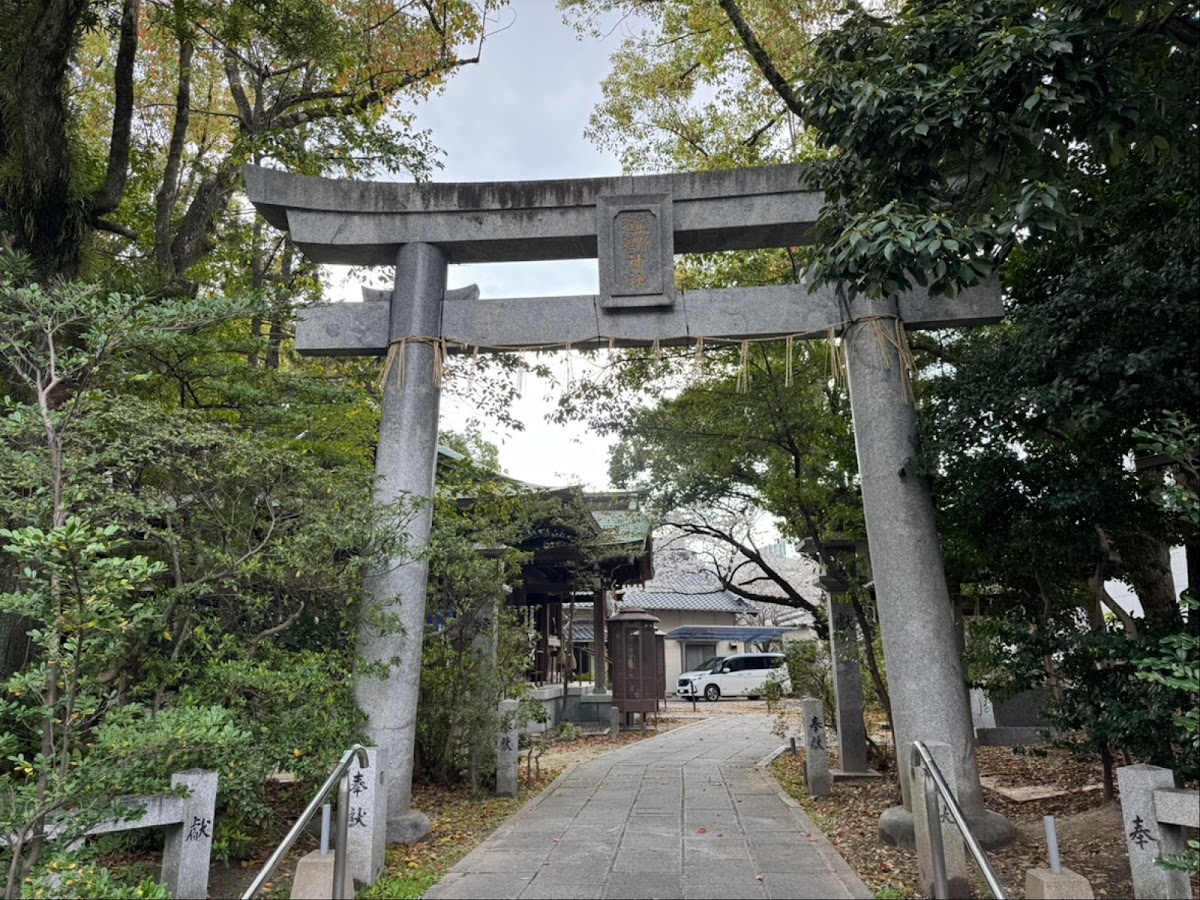
First Torii Gate and Approach
The First Torii Gate, facing Hakata Bay, was built in 1609 by Kuroda Nagamasa and is a nationally designated important cultural property. The stone torii gate, approximately 10 meters tall, stands facing the sea and is an iconic landmark of Hakozaki Shrine. The approximately 1-kilometer-long approach from the first torii gate to the main shrine evokes the remnants of the past, when people could arrive by boat directly from Hakata Bay.
The Tower Gate and the “Surrender of the Enemy Nation” Plaque
Upon entering the shrine grounds, the beautiful vermilion-painted tower gate immediately catches the eye. Built in 1594 by Kobayakawa Takakage, the lord of Chikuzen Province, it is also designated as a Nationally Important Cultural Property. The plaque above this gate, bearing the inscription “Surrender of the Enemy Nation,” is the most distinctive feature of Hakozaki Shrine, originating from a prayer offered by Emperor Kameyama during the Mongol invasions.
The phrase “Surrender of the Enemy Nation” does not mean conquering another country by force, but rather has a Buddhist meaning of “influencing the opponent with the power of virtue and quelling conflict.” This plaque is a valuable artifact, said to be in the handwriting of Emperor Daigo.
Main Hall and Worship Hall
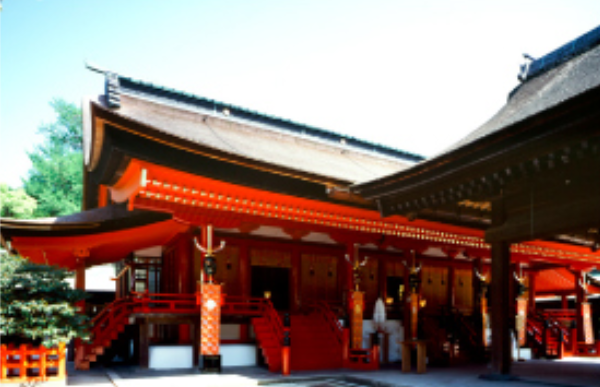
The Main Hall was rebuilt in 1546 by Ouchi Yoshitaka and is a Nationally Designated Important Cultural Property. It is an elegant building with a cypress bark roof, retaining many characteristics of Muromachi period shrine architecture. The Worship Hall is also an Important Cultural Property, where worshippers offer their prayers.
Stone Lanterns
Numerous stone lanterns line the grounds, but particularly noteworthy is the Stone Lantern Donated by Sen no Rikyu. It is said that when Toyotomi Hideyoshi stayed in Hakozaki in 1587, Sen no Rikyu held a tea ceremony and donated this lantern as a commemoration. This stone lantern is also a Nationally Designated Important Cultural Property.
Wakideishi (Emerging Stone)
Located north of the main shrine, the Wakideishi is a representative power spot of Hakozaki Shrine. It is said that this stone gradually emerged from the ground, and it is believed to bring good fortune and increased luck. Many worshippers visit to touch this stone and receive its blessings.
Hakomatsu (Hako Pine)
The Hakomatsu is a legendary pine tree planted at the site where Empress Jingu buried the box containing Emperor Ojin’s placenta. While the current pine is a successor, it is carefully preserved as an important historical site that gave Hakozaki Shrine its name.
Eikoin Five-Storied Pagoda Ruins and Mongol Anchor Stone
Within the shrine grounds, the foundation stones of the Eikoin Five-Storied Pagoda that once existed remain. Furthermore, the Mongol Anchor Stone, believed to have been used by the Mongol army during the Mongol invasions, is also on display and can be viewed as a historical artifact.
Sacred Garden
Hakozaki Shrine’s Sacred Garden is a garden where you can enjoy beautiful flowers in every season. Especially from January to April, winter peonies bloom profusely across the approximately 1500-tsubo (approx. 5000 square meters) grounds, captivating many visitors. Cherry blossoms in spring, hydrangeas in early summer, and cosmos in autumn—flowers of each season adorn the shrine grounds.
Hakozaki Shrine Festivals and Events | Annual Events Including the Hojo-e Festival
Hakozaki Shrine holds various festivals and events throughout the year. Here, we introduce some of the major festivals.
Hojo-e Festival
Hakozaki Shrine’s largest festival is the Hojo-e Festival, held annually from September 12th to 18th. This festival, based on the Buddhist philosophy of “cherishing all life and refraining from killing,” boasts a history of over 1000 years. During the festival, approximately 500 stalls line the approach to the shrine, and it is one of Hakata’s three major festivals, attracting over 1 million visitors annually.
Specialties of the Hojo-e festival include glass toys called chanpon and new ginger. Ceramic lucky charms called “ohajiki” are also popular. Various Shinto rituals and dedication ceremonies are held during the festival, making it a beloved autumn tradition in Hakata.
Tamatori-sai (Tama-tori Festival)
Held annually on January 3rd, the Tamatori-sai, also known as “Tama-seseri,” is a magnificent festival. Men in loincloths, divided into land and beach teams, compete to seize wooden balls called “tama.” Touching a ball is believed to bring good fortune, leading to a fierce battle for possession.
The origin of this festival lies in a legend in which Empress Jingu threw a “jewel” given to her by a dragon god into the sea, and fishermen vied to retrieve it. It is believed that the group that obtains the jewel will be blessed with a bountiful harvest and abundant catches that year.
Jōtenji Issan Hōsai-shiki (Jōtenji Issan Thanksgiving Ceremony)
Held annually on May 3rd, the Jōtenji Issan Hōsai-shiki is a rare Shinto-Buddhist syncretic event in which monks from Jōtenji Temple in Hakata visit Hakozaki Shrine. It expresses gratitude for the success of prayers offered at Hakozaki Shrine during the Mongol invasions and is a traditional event that has continued for over 700 years.
Other Annual Events
- Saitansai (January 1st): A festival celebrating the New Year
- Setsubunsai (around February 3rd): Bean-throwing and prayers for warding off evil
- Shunki Shajitsusai (Spring Equinox): Prayers for a bountiful harvest
- Natsugoshi no Oharae (June 30th): Purification of sins and impurities accumulated over the past six months
- Autumn Shajitsusai (Autumn Equinox): Gratitude for the harvest
- Niinamesai (November 23rd): Offering of new grain
- Toshikoshi no Oharae (December 31st): Purification of sins and impurities accumulated over the past year
Information on Prayers, Goshuin (Shrine Seals), and Amulets
Prayers for Individuals
Hakozaki Shrine accepts various prayers. The main prayer requests are as follows:
- Prayers for protection from evil and good fortune, victory in competitions, and passing exams
- Family safety, business prosperity, and company success
- Prayers for safe childbirth, first shrine visit for a newborn, and Shichi-Go-San (7-5-3) ceremony
- Recovery from illness and good health
- Traffic safety and safe travel
While prayers are accepted without reservations, it is recommended to check in advance as it can get crowded during major festivals and on weekends and holidays. Prayer reception hours are usually from 9:00 AM to 4:30 PM, but these may change due to festivals and other events. Please check the official website for the latest information.
Prayers for Corporations and Organizations
We also accept prayers from companies and organizations. Prayers for company success, business prosperity, and construction safety are available. If you wish to visit as a group, please contact the Hakozaki Shrine office in advance.
Goshuin (Shrine Seal)
Goshuin (shrine seals) from Hakozaki Shrine are available at the shrine office. In addition to the regular goshuin (temple/shrine stamps), limited-edition goshuin are sometimes given out during festival periods. Goshuin notebooks with original designs from Hakozaki Shrine are also available and are popular as souvenirs of visits.
Amulets
Hakozaki Shrine offers a variety of amulets.
- Victory Amulet: An amulet for increased luck in competitions, popular with students and athletes.
- Exorcism Amulet: An amulet for warding off evil.
- Good Fortune Amulet: An amulet for general good fortune.
- Safe Childbirth Amulet: An amulet for safe childbirth.
- Traffic Safety Amulet: An amulet for traffic safety.
- Academic Success Amulet: An amulet for academic improvement.
Also, amulets related to the “Yushutsu-ishi” (springing stone) for increased luck are popular.
Shinto Wedding Ceremony | Wedding in a Historic Shrine
Hakozaki Shrine offers Shinto wedding ceremonies. You can hold a traditional Shinto ceremony in the magnificent shrine building, a nationally designated important cultural property. A wedding ceremony at this prestigious shrine, one of Japan’s three greatest Hachiman shrines, will be a lifelong memory.
Wedding ceremonies are by reservation only, and consultations regarding attire and photography are also available. For details, please contact the Hakozaki Shrine office.
Visiting Hours and Reception Hours
Visiting Hours
While the grounds of Hakozaki Shrine are generally open for worship all day, the opening hours for the shrine office and gift shop are as follows:
- Shrine Office/Gift Shop: 9:00 AM – 5:00 PM
- Prayer Reception: 9:00 AM – 4:30 PM
Please note that hours may change during festivals and the New Year period. We recommend checking the latest information on the “Prayer Reception Calendar” on the official website.
Access Information | Convenient Location from Fukuoka City Center
Access by Train
The Fukuoka City Subway is the most convenient way to reach Hakozaki Shrine.
- Fukuoka City Subway Hakozaki Line “Hakozaki-Miyamae Station”: Approximately 3 minutes on foot from Exit 1
- JR Kagoshima Main Line “Hakozaki Station”: Approximately 8 minutes on foot
With easy access—approximately 10 minutes from Hakata Station by subway and approximately 15 minutes from Tenjin Station—it’s conveniently located for a stop during Fukuoka sightseeing.
Access by Bus
If using Nishitetsu Bus, get off at the “Hakozaki” bus stop and it’s approximately a 3-minute walk. Multiple bus routes operate from Hakata Station and Tenjin.
Access by Car
- Approximately 5 minutes from Fukuoka Urban Expressway “Hakozaki Interchange”
- Approximately 20 minutes from Kyushu Expressway “Fukuoka IC”
While there are approximately 100 parking spaces on the temple grounds, it becomes extremely crowded during major festivals such as the Hojo-e festival, so using public transportation is recommended.
Address and Contact Information
- Address: 1-22-1 Hakozaki, Higashi-ku, Fukuoka City, Fukuoka Prefecture 812-0053
- Phone: 092-641-7431
- Official Website: https://hakozakigu.or.jp/
Nearby Tourist Attractions | The Charms of the Hakata Area
When visiting Hakozaki Shrine, we recommend also visiting the surrounding tourist attractions.
Old Hakata Area
Towards Hakata Station from Hakozaki Shrine, you’ll find numerous historical temples and shrines such as Jotenji Temple, Kushida Shrine, and Tochoji Temple. This area allows you to experience the history and culture of Hakata.
Fukuoka Tower & Seaside Momochi
Heading west along the coast, you’ll find tourist attractions such as Fukuoka Tower and Marinoa City Fukuoka. Enjoy the modern charm of Fukuoka, in contrast to the historical atmosphere of Hakozaki Shrine.
Dazaifu Tenmangu Shrine
As one of Fukuoka’s most representative shrines, Dazaifu Tenmangu Shrine is also very popular. While Hakozaki Shrine is known as the god of victory, Dazaifu Tenmangu Shrine is known as the god of learning.
Latest Information and Social Media for Hakozaki Shrine
In addition to its official website, Hakozaki Shrine also provides the latest information on Instagram and X (formerly Twitter).
- Instagram: @hakozakigu.official
- X (formerly Twitter): @hakozakigu_offi
The shrine’s seasonal scenery, festival information, and event information are updated regularly. Checking before your visit will help you understand the highlights and crowd levels.
Summary: Experiencing Victory and History at Hakozaki Shrine
Hakozaki Shrine is a prestigious shrine with a history of over 1100 years, and is one of Japan’s three major Hachiman shrines, known for its blessings of victory and protection from evil. Hakozaki Shrine boasts numerous attractions, including its nationally designated Important Cultural Property shrine buildings and gatehouse, as well as a plaque bearing the inscription “Surrender of the Enemy Nation.”
Its convenient location, just a 10-minute subway ride from central Hakata, makes it a must-visit spot during Fukuoka sightseeing. It’s especially recommended for those facing important events such as exams, job interviews, or sports competitions, those in their unlucky year, or anyone wishing to experience the solemn atmosphere of a historic shrine.
Various festivals and events are held throughout the year, with the September Hojo-e festival being a particularly must-see autumn tradition in Hakata. During your visit, be sure to also visit power spots such as the Yushutsu-ishi (springing stone) and Hakomatsu (box pine tree) to fully receive the divine blessings of Hakozaki-Okami.
We recommend checking the official website and social media for the latest information on visiting hours and festival schedules to ensure a fulfilling visit. Why not pray for increased good fortune and peace of mind at Hakozaki Shrine?