Complete Guide to Imbe Shrines: History and Visiting Information for the Two Shrines in Tokushima City and Yoshinogawa City
Imbe Shrines are ancient and venerable shrines located in Tokushima Prefecture. In fact, there are two shrines named “Imbe Shrine” in Tokushima Prefecture, each with its own deep history and unique characteristics. This article provides a detailed explanation of the history, enshrined deities, and visiting information for the Imbe Shrines in Tokushima City and Yoshinogawa City.
What are Imbe Shrines?: The Awa Imbe Clan and Amenohiwashi-no-Mikoto
Imbe Shrines are associated with the Imbe clan, who presided over the rituals of the imperial court in ancient Japan. In particular, the Awa Imbe clan, based in Awa Province (present-day Tokushima Prefecture), played a crucial role in the Daijōsai, the enthronement ceremony of the Emperor, by presenting sacred textiles called aratae.
Deity: Amenohiwashi-no-Mikoto
The main deity enshrined at Imbe Shrine is Amenohiwashi-no-Mikoto. Amenohiwashi-no-Mikoto is considered the ancestral deity of the Awa Imbe clan and played a crucial role in Japanese mythology. It is said that when Amaterasu Omikami hid in the Amano-Iwato cave, Amenohiwashi-no-Mikoto planted kajinoki trees and made shironigite (white offerings).
Furthermore, Amenohiwashi-no-Mikoto is also known as the deity who introduced weaving techniques for hemp and cotton, and is worshipped as a god of industry and technology. Hemp cultivation has flourished in Awa Province since ancient times, and this deity is deeply connected to the industry of this region.
Imbe Shrine in Tokushima City: A Special Shrine Located at the Foot of Mount Bizan
Basic Information and Location
Imbe Shrine, located in Nikenya-cho, Tokushima City, is situated in the lush green environment of Seimiyama, on the southeastern slope of Mount Bizan. Currently designated as a special shrine by the Association of Shinto Shrines, it is one of Tokushima Prefecture’s leading shrines.
Location: 2-48 Nikenya-cho, Tokushima City, Tokushima Prefecture
Former Shrine Rank: National Shrine of the Second Rank
Shikinaisha (Shrine Listed in the Engishiki): Myojin Taisha (Listed in the Engishiki Jinmyocho)
History: Meiji Era Founding and Controversy
The current Imbe Shrine in Tokushima City is actually a relatively new shrine, founded in 1892 (Meiji 25). However, its history is complex.
The location of the Shikinaisha “Imbe Shrine, Myojin Taisha, Awa Province, Omi District,” listed in the Engishiki Jinmyocho, remained unknown for a long time. In 1872 (Meiji 5), the Imbe Shrine in Yamakawa-cho, Yoshinogawa City, was identified as the Shikinaisha and designated as a National Shrine of the Second Rank.
However, there is a strong theory that the shrine was located in Sadamitsu, Mima District (present-day Tsurugi Town), and in 1874 (Meiji 7), an investigation was conducted by order of the Grand Council of State. As a result, the dispute over the location of the Shikinaisha (shrine listed in the Engishiki) remained unresolved, and in 1890 (Meiji 23), the Imbe Shrine in Yamakawa Town was demoted to a village shrine.
Amidst these circumstances, in 1892 (Meiji 25), a new Imbe Shrine was built at its current location in Tokushima City and was designated a National Shrine of the second rank. Today, it is revered as the “Ichinomiya” (first-ranked shrine) of Shikoku.
Highlights of the Shrine and Grounds
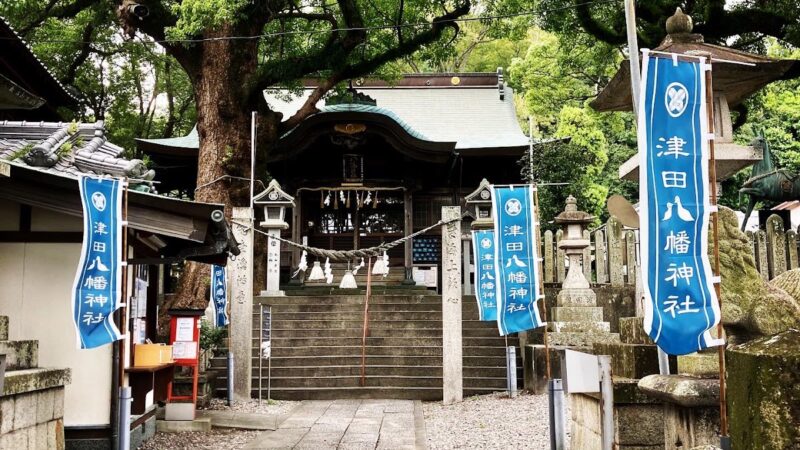
To reach the grounds of the Imbe Shrine in Tokushima City, which is located on the slopes of Mount Bizan, one must climb a long flight of stone steps. This stone staircase is surrounded by a tranquil forest, allowing visitors to escape the hustle and bustle of the city and experience a sacred atmosphere.
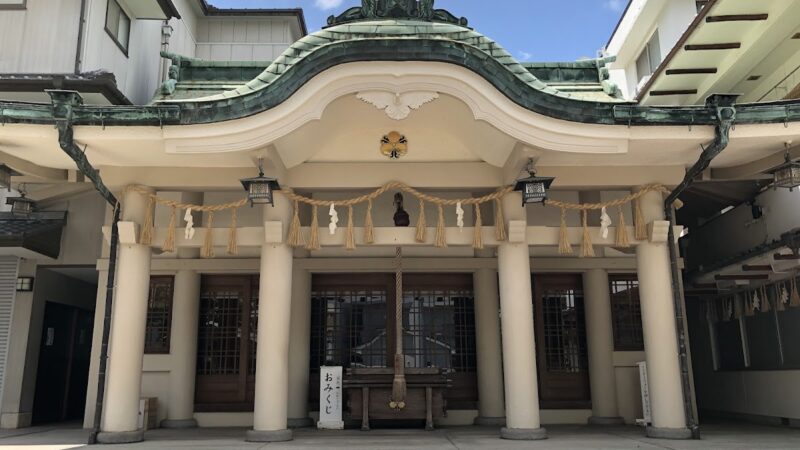
The main hall is characterized by its exterior walls primarily composed of white pillars, and its roof is covered with copper plates. A hemp shimenawa (sacred rope) adorns the shrine, symbolizing the deep connection between the Imbe clan and hemp. The chrysanthemum crest is also displayed, conveying a sense of high status.
From the shrine grounds, you can enjoy a panoramic view of Tokushima city, especially on clear days. It’s also known as a filming location for the movie “Bizan” and is a popular tourist spot.
Gosho Shrine (Subsidiary Shrine)
The Imbe Shrine in Tokushima City has a subsidiary shrine, Gosho Shrine. This Gosho Shrine is associated with the site where the Imbe Grand Shrine is believed to have once stood, and is important in exploring the history of the Imbe clan.
Imbe Shrine in Yoshinogawa City: An Ancient Shrine Located on Mount Imbe
Basic Information and Location
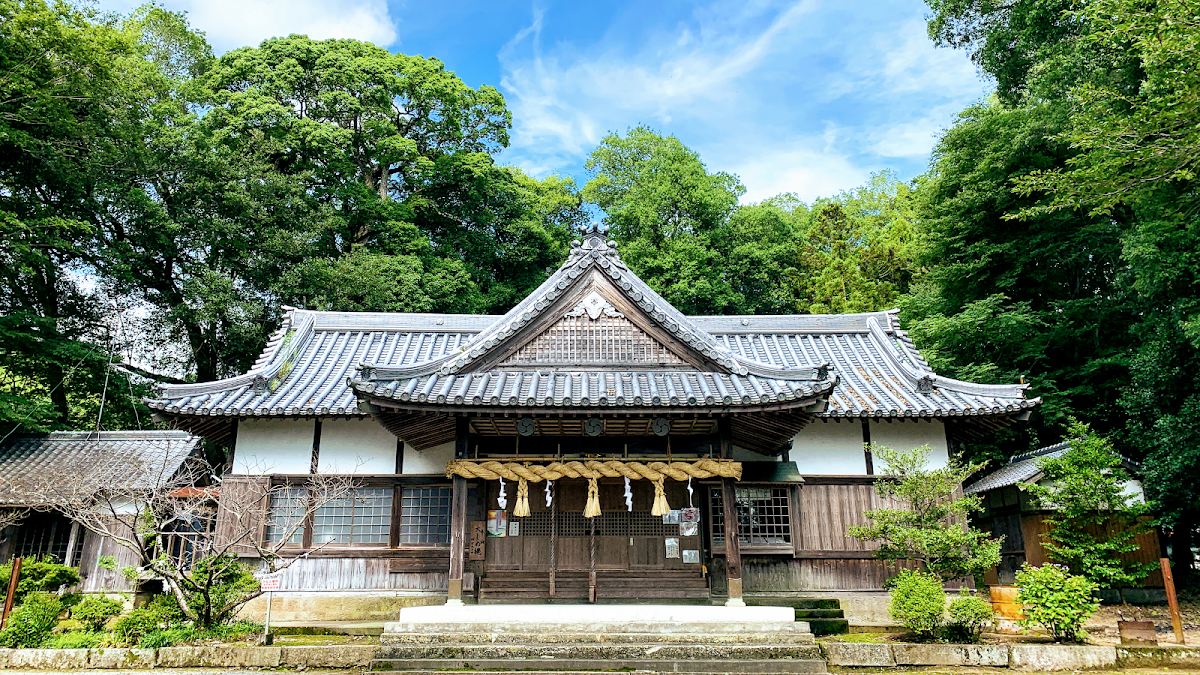
The Imbe Shrine in Yamakawa-cho, Yoshinogawa City, is also known as “Yamazaki Imbe Shrine.” It is located in a place called Mount Imbe, and is considered to be closer to the ancient base of the Imbe clan.
Location: Imbeyama, Yamakawa-cho, Yoshinogawa City, Tokushima Prefecture
Former Shrine Rank: Village Shrine (formerly a National Shrine of the Second Rank)
Shikinaisha (Shrine Listed in the Engishiki): A candidate for Myojin Taisha (Grand Shrine)
History: Tradition of Founding in the 2nd Year of the Imperial Era
According to the shrine’s detailed records, Imbe Shrine in Yoshinogawa City was founded on February 25th, the 2nd year of the Imperial Era. This indicates an extremely ancient history dating back to the mythological age.
The shrine enshrines Amenohiwashi-no-Mikoto, the ancestral deity of Awa Province, and was worshipped by the Imbe clan. In ancient times, it held the second highest divine rank in the province. This means it was the second most important shrine in Awa Province, after Oasahiko Shrine.
As mentioned above, in 1872 (Meiji 5), it was designated a National Shrine of the Second Rank as a Shikinaisha, but due to a dispute over its location, it was demoted to a village shrine in 1890 (Meiji 23). However, it has long been deeply revered by the local people and is still carefully preserved today.
The Importance of the Imbe Clan’s Base
The Yamakawa-cho area of Yoshinogawa City is believed to have been the base of the ancient Imbe clan. The place name “Imbe-yama” (Imbe Mountain) remains, indicating the importance of this region to the Imbe clan.
Numerous historical sites and legends related to the Imbe clan remain in the surrounding area, making it a region of interest in ancient history research.
The Imbe Clan and Aratae: A Deep Connection to the Daijōsai Ceremony
What is Aratae?
Aratae is a sacred textile presented during the Daijōsai ceremony, the enthronement ritual of the Emperor. Woven from hemp fibers, this cloth is made using traditional methods that have continued since ancient times.
During the Daijōsai ceremony, two types of textiles are presented: Aratae and Nigitae (silk cloth). The Aratae was prepared by the Awa Imbe clan, while the Nigitae was prepared by the Mikawa Imbe clan.
A Tradition Continuing to the Present
Even during the Daijosai (Great Thanksgiving Festival) of the Reiwa era (2019), coarse cloth was presented from Tokushima Prefecture. This is a tradition that has continued for over 1000 years, conveying the historical importance of the Imbe Shrine and the Awa Imbe clan to the present day.
The preparation of the coarse cloth was centered at the Oasahiko Shrine (Naruto City), and this is a source of pride for Tokushima Prefecture as a whole, carrying on the tradition of the Imbe clan.
Visiting Information and Access
Access to Imbe Shrine in Tokushima City
By Train/Bus:
- Approximately 30 minutes on foot from JR Tokushima Station
- Approximately 15 minutes on foot (including stone steps) from the “Nikenya” bus stop on the Tokushima City Bus
By Car:
- Approximately 15 minutes from the Tokushima IC on the Tokushima Expressway
- Parking available (limited number of spaces)
Note: There are long stone steps leading to the shrine grounds, so comfortable shoes are recommended.
Access to Imbe Shrine in Yoshinogawa City
By Train/Bus:
- Approximately 20 minutes on foot from JR Tokushima Line “Yamase Station”
By Car:
- Approximately 15 minutes from Tokushima Expressway “Wakimachi IC”
- Parking available
About Goshuin (Shrine Seals)
Goshuin (shrine seals) can be obtained at Imbe Shrine in Tokushima City. Since the opening hours of the shrine office may vary depending on the day, it is recommended to check in advance if you wish to be sure to receive a goshuin.
Goshuin may feature the hemp pattern characteristic of Imbe Shrine, or designs related to Amenohiwashi-no-Mikoto.
Nearby Tourist Attractions
Around Imbe Shrine in Tokushima City
Bizan Ropeway: You can reach the summit of Mount Bizan, a symbol of Tokushima City. From the summit, you can enjoy a spectacular view overlooking Tokushima city, the Seto Inland Sea, and the Kii Peninsula.
Mayuyama Park: A park where you can enjoy nature throughout the four seasons, and is also known as a famous cherry blossom viewing spot.
Tokushima Castle Ruins: The site of the castle of the Hachisuka family of the Tokushima Domain, now developed as Shiroyama Park.
Around Imbe Shrine in Yoshinogawa City
Oasahiko Shrine: An ancient shrine known as the Ichinomiya (first-ranked shrine) of Awa Province, with deep ties to the Imbe clan.
Awa Washi Traditional Industry Hall: A facility where you can learn about Awa Washi, a traditional industry of Tokushima.
Annual Events and Rituals of Imbe Shrine
Main Festivals
Imbe Shrine holds various festivals throughout the year.
Annual Festival: The most important festival, held every autumn. Parishioners and devotees gather for a grand celebration.
Niiname-sai (Harvest Festival): A festival of gratitude for the harvest, an important ritual demonstrating the relationship between the Imbe clan and agriculture.
Monthly Festival: A regular monthly festival to pray for daily peace and tranquility.
Special Rituals
In years when the Daijōsai (Great Thanksgiving Festival) is held, special rituals related to the preparation of coarse cloth may be performed. This is a rare opportunity that occurs only once every few decades.
The History of the Imbe Clan and Their Contribution to Japanese Culture
Role in Ancient Rituals
The Imbe clan, along with the Nakatomi clan (later the Fujiwara clan), was an important clan that played a significant role in ancient Japanese rituals. The Awa Imbe clan, in particular, excelled in hemp cultivation and weaving techniques, and were indispensable to the imperial court.
The historical work “Kogo Shūi” was compiled in the early Heian period by Imbe no Hironari of the Imbe clan. This book is a valuable historical document that records the history of Japanese mythology and rituals from the perspective of the Imbe clan.
Transmission of Technology and Culture
The Imbe clan migrated from Awa Province to various parts of Japan, spreading hemp cultivation and weaving techniques. The place name Awa Province (Awa no Kuni) in Chiba Prefecture is also said to originate from the migration of the Awa Inbe clan.
Thus, the Inbe clan was not merely a religious clan, but also a driving force behind technological innovation and cultural dissemination in ancient Japan.
Significance of Inbe Shrine in Modern Times
As a Center of Regional Culture
Even today, Inbe Shrine remains an important cultural symbol of Tokushima Prefecture. It serves as a place of worship for local people and plays a role in conveying Tokushima’s history and traditions.
As a Subject of Historical Research
The history of Inbe Shrine and the Inbe clan is an important subject of research for studying ancient Japanese religious systems, technological history, and clan systems. The Tokushima Prefectural Museum and other institutions also hold exhibitions and conduct research on the Inbe clan.
As a Tourist Resource
Inbe Shrine in Tokushima City is a popular tourist spot, part of the Bizan Mountain sightseeing area. Its tranquil grounds and beautiful scenery make it a cherished place to escape the hustle and bustle of the city and find peace of mind.
Manners and Etiquette for Visiting a Shrine
Basic Etiquette for Visiting a Shrine
When visiting a shrine, please observe the following basic etiquette:
- Bow before passing through the torii gate: This is a courtesy before entering the sacred area.
- Purify yourself at the water basin: Purify your left hand, then your right hand, then your mouth.
- Avoid walking in the center of the path: The center is considered the path of the gods.
- Two bows, two claps, one bow: This is the basic etiquette in front of the main hall.
Points to Note Specific to Imbe Shrine
Imbe Shrine in Tokushima City has a long flight of stone steps, so please allow ample time for your visit. Also, to maintain a peaceful atmosphere within the shrine grounds, it is recommended to refrain from loud conversations.
Summary: The Ancient Stories Told by the Two Imbe Shrines
The two Imbe shrines in Tokushima Prefecture, each with its own distinct history and characteristics, continue to pass on the traditions of the Awa Imbe clan to the present day. The Imbe shrine in Tokushima City, established during the Meiji era as a specially designated shrine, and the Imbe shrine in Yoshinogawa City, an ancient shrine with traditions dating back to antiquity, each fulfill their respective roles.
With Amenohiwashi-no-Mikoto as its enshrined deity and a deep connection to the Imperial family through the sacred textile known as “arafuku,” the Imbe shrines are not merely local shrines, but indispensable for understanding Japanese history and culture.
When visiting Tokushima, be sure to visit both Imbe shrines and experience the ancient Japanese ritual culture and the legacy of the Imbe clan. In the grounds surrounded by the greenery of Mount Bizan, or in the tranquility of Mount Imbe, you can feel the weight of history that has continued for over a thousand years.