Tamanooya Shrine (Hofu City) Complete Guide | A Thorough Explanation of the History, Benefits, and Highlights of the Ichinomiya of Suo Province
Tamanooya Shrine, located in Osaki, Hofu City, Yamaguchi Prefecture, is a venerable shrine that has been revered since ancient times as the Ichinomiya of Suo Province. It enshrines Tamanooya-no-Mikoto, who is said to have created the Yasakani-no-Magatama, one of the Three Sacred Treasures of Japan, and is known as the head shrine of all Tamanooya Shrines nationwide.
This article comprehensively explains everything you need to know before visiting Tamanooya Shrine, from its history and enshrined deities to its highlights, festivals, and access methods.
What is Tamanooya Shrine? | The Status and History of the Ichinomiya of Suo Province
Tamanooya Shrine is positioned as the “Ichinomiya,” the most prestigious shrine in Suo Province (present-day eastern Yamaguchi Prefecture). An Ichinomiya is the shrine with the highest rank in a province, and the first shrine visited by the provincial governor.
History of its Founding and Records from Ancient Times
The exact founding year of Tamaso Shrine is unknown, but its name is recorded in the “Suō Province Tax Register” of 738 (Tenpyō 10), confirming its existence at least during the Nara period. This record is an important historical document proving that Tamaso Shrine is an ancient shrine with a history of over 1200 years.
The “Engishiki Jinmyōchō” (a list of shrines compiled in 927, the fifth year of the Engi era) lists “Tamaso Shrine, two deities,” indicating that it was recognized by the imperial court as a Shikinaisha (a shrine listed in the Engishiki) enshrining two deities. A Shikinaisha is a shrine listed in the Engishiki Jinmyōchō, evidence of special reverence from the state in ancient times.
Head Shrine of Tamaso Shrines Nationwide
Tamaso Shrine is considered the head shrine of all Tamaso Shrines of the same name scattered throughout Japan. In particular, Tamaoya Shrine in Yao City, Osaka Prefecture, was established in 710 (Wado 3) with a divided spirit invited from this shrine. Several other Tamaoya Shrines are also believed to have received their deities from this Tamaoya Shrine, the Ichinomiya (first-ranked shrine) of Suo Province.
This indicates that Tamaoya Shrine was not merely a local Ichinomiya, but a center of faith related to jewel making, possessing nationwide influence since ancient times.
Deity | Tamaoya-no-Mikoto, creator of the Three Sacred Treasures
About Tamaoya-no-Mikoto
The main deity of Tamaoya Shrine is Tamaoya-no-Mikoto. Tamaoya-no-Mikoto is considered the ancestral deity of the Tamatsukuribe (jewel makers), who created jewels such as magatama (curved jewels) and kudatama (tubular jewels).
In Japanese mythology, Tamaoya-no-Mikoto is said to have created the Yasakani-no-Magatama (curved jewel) when Amaterasu-Omikami hid in the Amano-Iwato (Heavenly Rock Cave), contributing to the divine ritual that lured Amaterasu-Omikami out of the cave. This Yasakani no Magatama (curved jewel) is a sacred treasure that remains in the Imperial Household today as one of the Three Sacred Treasures.
The Mystery of the Second Deity and the Engishiki Jinmyocho (Register of Shrines in the Engi Era)
The Engishiki Jinmyocho (Register of Shrines in the Engi Era) lists “Tamaoya Shrine, two deities,” indicating that originally two deities were enshrined there. However, the identity of the third deity, besides Tamaoya-no-Mikoto, is currently unknown. It is possible that ancient records were lost, or that the enshrined deity changed over time.
This mystery is one of the intriguing themes in the historical research of Tamaoya Shrine.
Benefits and Faith
Since Tamaoya-no-Mikoto is the god of jewel making, Tamaoya Shrine is believed to offer the following benefits:
- Technical Improvement and Protection of Craftsmen: Improvement of craft techniques, including jade making.
- Business Prosperity: Success in business, linked to the prosperity of the jade-making community.
- Good Fortune and Prosperity: Divine efficacy as a deity associated with the Three Sacred Treasures.
- Family Safety: Guardian deity of the region as the Ichinomiya (first-ranked shrine).
Highlights of the Shrine Grounds | A Sacred Area Woven from the Shrine Buildings and Nature
Approach and Torii Gate
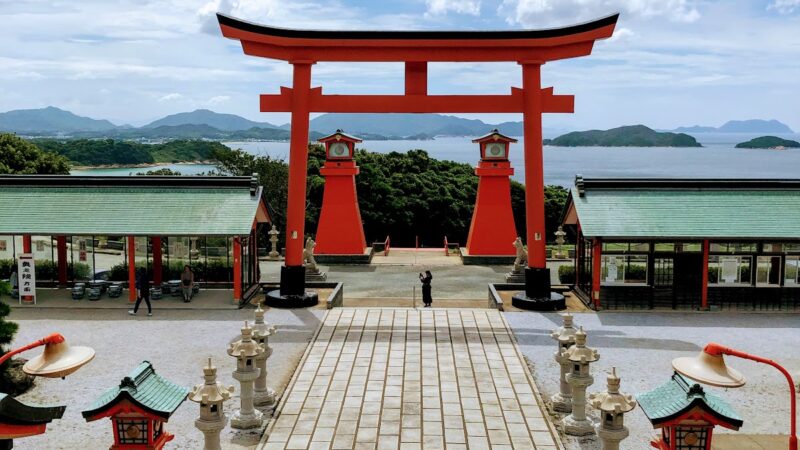
The first torii gate of Tamaso Shrine is located along National Route 2, and a straight approach extends north from there into the shrine grounds. This approach is approximately 200 meters long, and a tranquil atmosphere surrounded by lush greenery welcomes visitors.
Further along the approach is the second torii gate, and beyond this point is the true sacred area. Each time you pass through a torii gate, you feel yourself leaving the secular world and entering a sacred space.
Architectural Style of the Shrine
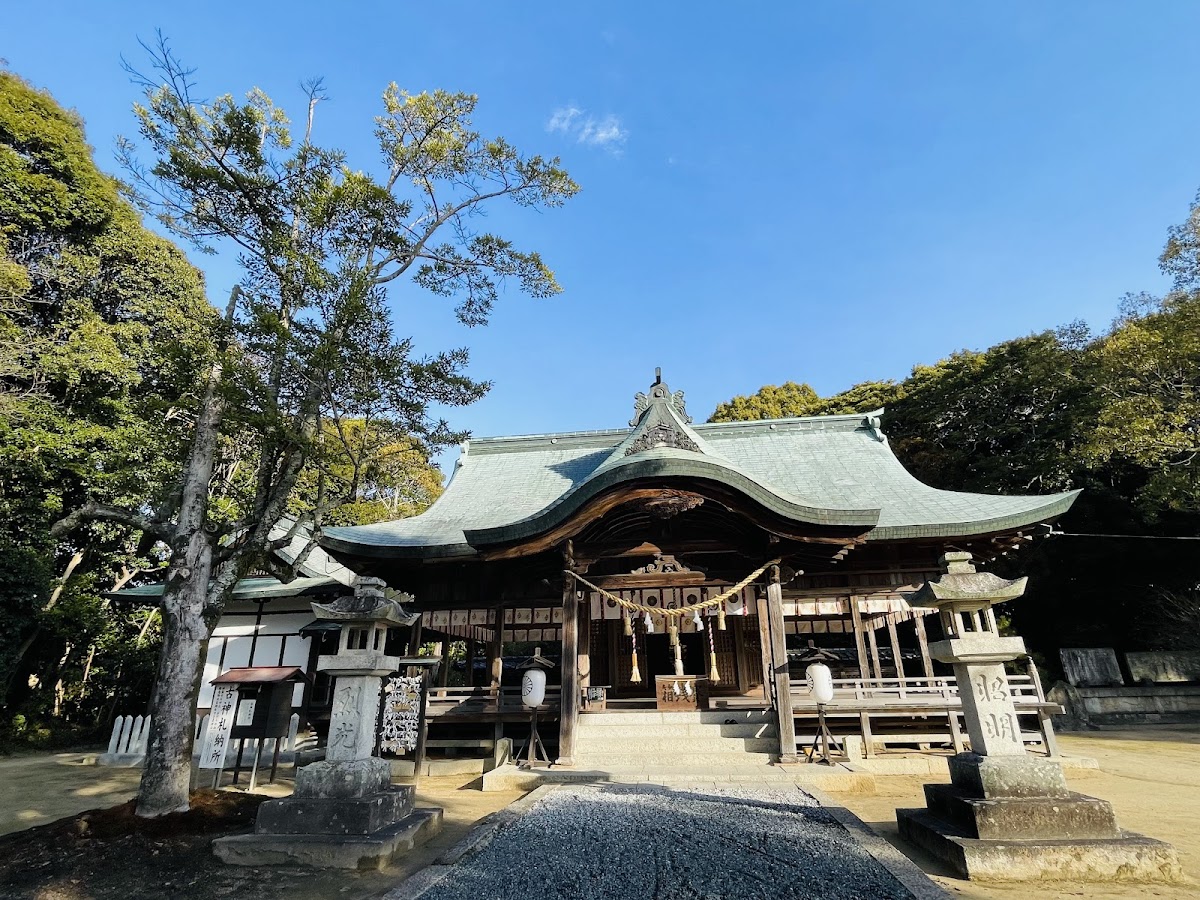
Records indicate that the shrine buildings of Tamaso Shrine were constructed during the Kenkyu era (1190-1199). A historical document, the “Suo Province Ichinomiya Reconstruction Shrine Treasures and Other Items Catalog,” contains detailed records of the shrine buildings and treasures from that time, conveying the prosperity of Tamaso Shrine during the medieval period.
The current shrine buildings were rebuilt in later periods, but they maintain the solemn style befitting the status of the Ichinomiya (first-ranked shrine) of Suo Province. Both the worship hall and the main hall are meticulously maintained, allowing worshippers to offer their prayers in a solemn atmosphere.
Natural Environment of Mt. Kasumiyama (Mt. Hachigoyama)
Tamaso Shrine is located at the southern foot of Mt. Hachigoyama (elevation 125.2 meters), also known as Mt. Kasumiyama. This mountain is one of the peaks in the mountain range along the Saba River, and the shrine grounds are surrounded by abundant nature.
The shrine grounds retain their ancient vegetation, and the aged trees enhance the mystical atmosphere of the sacred area. Being able to experience the changing seasons while visiting is one of the charms of Tamaso Shrine.
Tamano Iwaya Legendary Site
Near Tamaso Shrine is a legendary site called “Tamano Iwaya” (Jewel Cave). This is said to be the place where Tamaso-no-Mikoto created jewels, or a site related to jewel making, and is a historical site deeply connected to the faith of Tamaso Shrine.
Festivals and Rituals | Annual Events that Preserve Tradition
Urate Shinji (Fortune-Telling Ritual)
The most distinctive ritual at Tamaso Shrine is the “Urate Shinji” (Fortune-Telling Ritual). This ritual is a traditional ceremony performed according to ancient customs and is considered an important event for predicting the fortunes of the year.
While some details of the divination ritual are considered secrets of the shrine, it is still passed down as an important ritual praying for the peace and prosperity of the region, as the Ichinomiya (first-ranked shrine) of Suo Province.
Annual Grand Festival
Tamaoya Shrine holds various rituals throughout the year, but the annual grand festival is a particularly grand event attended by many parishioners and devotees. It includes a portable shrine procession and offering ceremonies, playing a central role in the faith of the local people.
Other Annual Events
- New Year’s Day Festival: A first shrine visit to pray for happiness in the new year
- Setsubun Festival: Bean-throwing ceremony to ward off evil and pray for good fortune
- Summer Purification Ceremony: A ritual to purify oneself of the impurities accumulated over the past six months
- Niiname-sai Festival: A festival to give thanks for the harvest
Through these events, Tamaoya Shrine deepens its ties with the local community.
Former Shrine Rank and Current Status
From National Shrine of the Second Rank to Special Shrine
Tamaoya Shrine was ranked as a “National Shrine of the Second Rank” under the modern shrine ranking system of the Meiji era. A National Shrine of the Second Rank refers to a shrine with a middle rank among those receiving offerings (heihaku, offerings to the gods) from the state.
Although the shrine ranking system was abolished after World War II, Tamaoya Shrine is currently designated as a Special Shrine by the Association of Shinto Shrines. Special Shrines are shrines recognized as particularly important by the Association of Shinto Shrines, and there are only about 300 such shrines nationwide. This is proof that Tamaoya Shrine’s historical importance and religious value are still recognized today.
Basic Information | Visiting Hours, Access, and Parking
Location and Contact Information
Address: 1690 Osaki, Hofu City, Yamaguchi Prefecture
Telephone: Varies by shrine (checking before visiting is recommended)
Visiting Hours
While the shrine grounds are generally open for free visits, the shrine office is only open during daytime hours. Those wishing to receive a Goshuin (shrine stamp) or other items are advised to check the hours in advance.
Access Methods
Access by Train and Bus
- From JR Hofu Station: Approximately 3 kilometers west
- By Bus: Take a bus from Hofu Station and get off at “Tamaso Shrine Mae” (however, the number of buses is limited, so advance confirmation is recommended)
- By Taxi: Approximately 10 minutes from Hofu Station
Access by Car
- Sanyo Expressway: Approximately 5 minutes from Hofu West Interchange
- National Route 2: The first torii gate is located along National Route 2, and the approach to the shrine is from there.
Parking
There is a parking lot for visitors on the shrine grounds. It is expected to be crowded during long holidays and festivals, so it is recommended to visit with plenty of time to spare.
Nearby Tourist Attractions | Highlights of Hofu City
When visiting Tamaso Shrine, combining your visit with other tourist attractions in Hofu City will make your trip even more fulfilling.
Hofu Tenmangu Shrine
Hofu Tenmangu Shrine, one of Japan’s three major Tenjin shrines, is dedicated to Sugawara no Michizane, the god of learning. Located about 10 minutes by car from Tamaso Shrine, it is a representative tourist attraction of Hofu City.
Suo Kokubunji Temple
This Kokubunji temple was built during the Nara period by imperial decree of Emperor Shomu. Like Tamaso Shrine, it is a historical site where you can feel the history of Hofu, which was the center of the ancient Suo Province.
Mori Clan Garden and Mori Museum
The Mori Clan Garden, a nationally designated scenic spot, and the museum exhibiting valuable cultural artifacts of the Mori family. You can experience the history and culture of the Mori family, the lords of the Choshu Domain.
Hofu City Machi-no-Eki “Umeterrace”
This tourist facility offers Hofu’s local specialties and gourmet food. It’s perfect for a rest after visiting the shrine or for purchasing souvenirs.
Manners and Etiquette for Visiting Tamaso Shrine
Basic Etiquette for Visiting a Shrine
- Bow before passing through the torii gate: A courtesy before entering the sacred area
- Walk along the edge of the path: The center is the path for the gods
- Purify yourself at the water basin: Left hand → Right hand → Mouth → Handle of left hand
- Two bows, two claps, one bow: Basic etiquette at the main hall
Photography Etiquette
Photography is generally permitted within the shrine grounds, but it is considered good manners to refrain from taking pictures inside the main hall or during religious ceremonies. Remember to be considerate of other visitors.
Tamaso Shrine and the History of Jade Making | Connection to Ancient Industries
Ancient Jade Making Techniques
In ancient Japan, jade such as magatama and tubular beads were symbols of power and played an important role in religious ceremonies. The jade-making group, whose ancestral deity was Tamaso-no-Mikoto, was a group of skilled craftsmen with advanced polishing techniques.
Suo Province was blessed with high-quality stone and water resources, making it a suitable environment for jade production. The existence of Tamaso Shrine suggests that this area was one of the centers of jade production in ancient times.
The Three Sacred Treasures and Tamaso-no-Mikoto
The Yasakani-no-Magatama, also known as the Yasakani-no-Magatama, is one of the Three Sacred Treasures, along with the Kusanagi-no-Tsurugi (Grass-Cutting Sword) and the Yata-no-Kagami (Eight-Handed Mirror). The myth that Tamaso-no-Mikoto created these treasures speaks to the sacredness and importance of jade production techniques.
Tamaso Shrine’s Establishment and the Spread of Branch Shrines
Tamaso Shrine in Yao City, Osaka Prefecture
Tamaso Shrine in Yao City, Osaka Prefecture, established in 710 (Wado 3) by inviting the deity from Suo Province, is revered locally as a Shikinaisha (a shrine listed in the Engishiki, an ancient Japanese legal text). According to shrine tradition, the deity landed at Sumiyoshi-tsu, stayed at Onchi Shrine, and was then enshrined at its current location. The process of its establishment is described in detail. Tamaso Shrine in Yao City is also known as “Tamaso Myojin” and “Takayasu Daimyojin,” and is located on the slopes of Mount Takayasu in the Ikoma mountain range.
Other Tamaso Shrines
There are said to be three other shrines with the same name in Hofu City, which were established by inviting the deity from this shrine, demonstrating the spread of Tamaso faith. These branch shrines have been revered in their respective regions as guardian deities of jade-making techniques and crafts.
Frequently Asked Questions
Q: Can I get a Goshuin (shrine stamp) at Tamaso Shrine?
A: Yes, you can get a Goshuin during the hours the shrine office is open. However, since priests may not always be present, it is recommended to contact the shrine in advance if you definitely want a Goshuin.
Q: Are weddings and prayers possible at Tamaso Shrine?
A: Shinto weddings and various prayers (first shrine visit for newborns, Shichi-Go-San, exorcism, etc.) are performed. Please contact the shrine directly for details.
Q: Tamaso Shrine is the Ichinomiya (first-ranked shrine) of Suo Province, but are there any other Ichinomiya?
A: While Tamaso Shrine is the Ichinomiya of Suo Province, Sumiyoshi Shrine is the Ichinomiya of the neighboring Nagato Province (western Yamaguchi Prefecture). Each province has its own Ichinomiya, considered the highest-ranking shrine in its respective region.
Q: When is the annual festival of Tamaso Shrine?
A: The date of the annual festival may vary from year to year. We recommend checking with the shrine or the Hofu City Tourism Association before your visit.
Q: Is it possible to visit in a wheelchair?
A: Some parts of the approach to the shrine are unpaved, so assistance may be necessary for wheelchair users. We recommend checking with the shrine in advance regarding accessibility.
Summary | Significance of Visiting Tamaso Shrine
Tamaso Shrine, with its history of over 1200 years, is the Ichinomiya of Suo Province and an important shrine that conveys the history and culture of Yamaguchi Prefecture to the present day. Tamaso Shrine, dedicated to Tamaso-no-Mikoto, the creator of the Three Sacred Treasures of Japan, serves as the head shrine of all Tamaso Shrines nationwide, carrying on ancient beliefs.
When visiting Hofu City, be sure to visit Tamaso Shrine and experience the weight of history and sacred atmosphere in its tranquil grounds. Its status as the Ichinomiya (first-ranked shrine) of Suo Province, its unique status as the god of jewel making, and its surroundings amidst abundant nature will offer visitors a special experience.
A visit to Tamaso Shrine is not merely sightseeing; it will be a valuable opportunity to connect with the world of ancient Japanese history and mythology.