Complete Guide to Saga Shrine | A Power Spot in Saga Dedicated to the Great Lords of the Late Edo Period
Saga Shrine, located in Matsubara, Saga City, Saga Prefecture, is a special government-supported shrine dedicated to Nabeshima Naomasa, the 10th lord of the Saga Domain, and Nabeshima Naohiro, the 11th lord, who promoted modernization during the turbulent late Edo period. The shrine grounds display replicas of Japan’s first manufactured iron cannon and Armstrong gun, conveying the historical romance of the late Edo period.
This article provides a thorough guide to the charms of Saga Shrine, from its historical background and the achievements of its enshrined deities to the highlights of the grounds, access information, and surrounding tourist spots.
History and Origins of Saga Shrine
Founding and Rank as a Special Government-Supported Shrine
Saga Shrine was founded in 1933 (Showa 8). However, its origins are even older. In 1873 (Meiji 6), after the death of Lord Nabeshima Naomasa, a South Hall was constructed at Matsubara Shrine, which enshrined the ancestors of the Nabeshima family, to honor his virtues.
In 1929 (Showa 4), the establishment of Saga Shrine, dedicated to Lord Naomasa independently, was officially decided. In 1933 (Showa 8), the current shrine building was constructed, Lord Naomasa’s spirit was transferred from Matsubara Shrine, and the shrine was designated a Special Imperial Shrine. This designation is given to shrines that enshrine individuals who have made significant contributions to the nation, indicating that Saga Shrine is recognized as a nationally important shrine.
In 1948 (Showa 23), the spirit of the 11th lord, Nabeshima Naohiro, who had been enshrined in the South Hall of Matsubara Shrine, was also enshrined at Saga Shrine, resulting in its current form.
The Achievements of Lord Nabeshima Naomasa, a Renowned Lord of the Late Edo Period
Nabeshima Naomasa (1814-1871), the principal deity of Saga Shrine, was a renowned lord of the late Edo period, sometimes referred to as the “Yokai (supernatural creature) of Hizen.” Assuming the position of lord at the young age of 17, Lord Naomasa embarked on reforms to the financially struggling Saga Domain, rebuilding its finances through strict austerity measures and industrial development policies.
Lord Naomasa’s greatest achievement was his pioneering adoption of advanced Western technology. In 1850, he completed Japan’s first practical reverberatory furnace, the Tsukiji Reverberatory Furnace, and successfully manufactured iron cannons. Furthermore, his efforts toward modernization extended to various fields, including research into steam engines and steamships, and the introduction of photographic technology.
In the field of medicine and healthcare, he invited the Dutch physician Bauduin and worked to spread Western medicine. Furthermore, he dedicated himself to education, expanding the domain school “Kodokan” and nurturing many outstanding individuals, including Shigenobu Okuma, Shinpei Eto, and Taneomi Soejima, who later played central roles in the Meiji government.
Lord Naomasa, who contributed to the development of learning, culture, and transportation, is still revered today as the “god of learning.”
Lord Naohiro Nabeshima and his contributions to the Meiji Restoration
The 11th lord of the domain, Lord Naohiro Nabeshima (1846-1921), played an active role on the imperial side in the Boshin War and contributed to the establishment of the Meiji government. In 1869, he was the first in the country to propose the return of domain registers to the emperor, and he was a leading figure in promoting the transition from the old system to the new one.
Later, he became a marquis and held important positions in the Meiji government, contributing to the development of modern Japan. Lord Naohiro’s foresight and ability to act can be seen as a manifestation of the reformist spirit he inherited from his father, Lord Naomasa. ## Guide to the Grounds of Saga Shrine
The Shrine Gate and Cannon
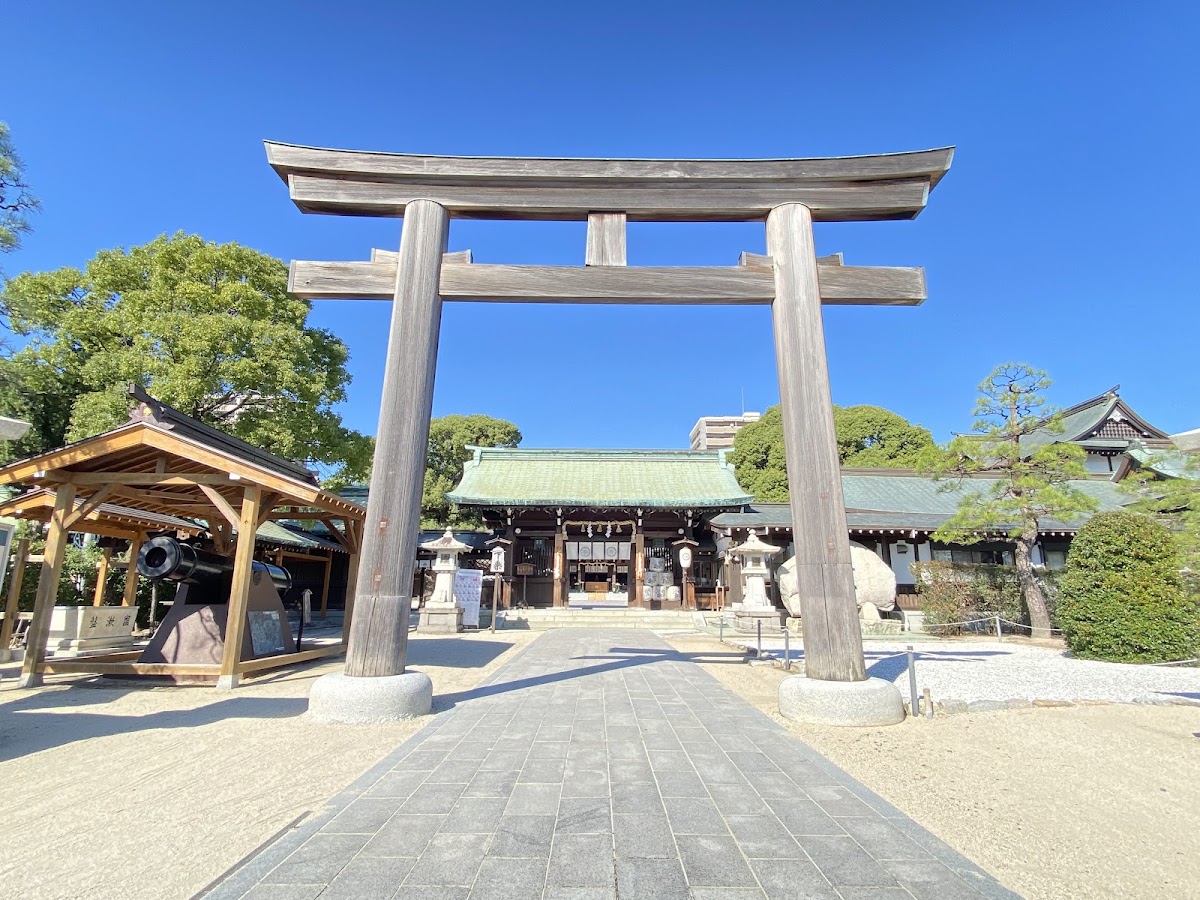
The first thing that catches the eye upon visiting Saga Shrine is the giant cannon displayed in front of the shrine gate. This is a replica of the 150-pound cannon (approximately 68 kg) that the Saga Domain first manufactured in Japan, and it is a symbolic exhibit that speaks to the high level of technology of the Saga Domain during the late Edo period.
The iron cannon, actually cast in a reverberatory furnace, far exceeded the technological level of Japan at the time. Many visitors take commemorative photos in front of this cannon, making it a representative photo spot of Saga Shrine.
The Worship Hall and Main Shrine
After passing through the shrine gate, the worship hall, enveloped in a solemn atmosphere, appears. The shrine building, which conveys the architectural style of the early Showa period, has a simple yet dignified appearance. The clear waters of the Matsubara River flow through the grounds, and a tranquil space surrounded by nature in all four seasons unfolds.
At the main hall, prayers are offered for academic success, traffic safety, and cultural advancement, and the shrine is bustling with many visitors during the New Year’s pilgrimage season.
Armstrong Gun and Steam Locomotive
In addition to cannons, a replica of an Armstrong gun is on display within the shrine grounds. The Armstrong gun was a state-of-the-art breech-loading rifled gun developed in Britain, and the Saga Domain was the first in Japan to manufacture it.
Furthermore, a model of Japan’s first practical steam locomotive is also on display, providing valuable historical materials that allow visitors to experience the history of technological innovation in the Saga Domain. These exhibits are important evidence of the pioneering role that the Saga Domain played in Japan’s modernization during the late Edo period.
Fulfillment of Great Wishes through a Pilgrimage to Eight Shrines
Within the grounds of Saga Shrine, there are eight subsidiary shrines in addition to the main shrine, and it is believed that visiting all of them will bring the fulfillment of great wishes.
Eight Shrines within the Precincts
- Matsubara Shrine: A shrine dedicated to Nabeshima Naoshige, the ancestor of the Nabeshima family. Offers blessings for victory and long-lasting military fortune.
- Matsune Shrine: A shrine dedicated to the mother of Naomasa. Offers blessings for family safety and child-rearing.
- Saga Aragami Shrine: A deity of fire prevention and protection against misfortune.
- Matsubara Ebisu Shrine: Offers blessings for business prosperity and increased wealth.
- Matsubara Inari Shrine: A deity of abundant harvests and business prosperity.
- Matsubara Kappa Shrine: Offers blessings for protection against water-related disasters and prosperity in water-related businesses.
- Matsubara Nagi Shrine: Offers blessings for matchmaking and marital harmony.
- Matsubara Shrine Precinct Shrines: Other subsidiary shrines.
A visit to the eight shrines within the grounds takes about 30 minutes to an hour. The grounds are spacious, and a walking path along the Matsubara River is well-maintained, allowing for a leisurely visit.
Annual Events and Festivals at Saga Shrine
New Year’s Day Cannon Celebration
The most famous ritual at Saga Shrine is the “Cannon Celebration,” held at midnight on New Year’s Day. Simultaneously with the signal announcing the arrival of the new year, eight celebratory shots are fired from cannons within the shrine grounds with a resounding roar.
Many visitors gather every year to witness this impressive ritual. As a unique New Year’s event that allows visitors to experience the history of the late Edo period, it has become a symbol of Saga.
Spring Wildflower Exhibition and Saga Ebine Orchid Exhibition
In spring, a “Wildflower Exhibition” and a “Saga Ebine Orchid Exhibition” are held on the shrine grounds. The event is scheduled to be held again in March and April of 2026, showcasing wildflowers and orchids (Ebine) carefully cultivated by enthusiasts.
Seasonal flowers adorn the shrine grounds, making it a popular event where visitors can enjoy the beauty of nature along with their worship.
Monthly Festivals and Grand Festival
At Saga Shrine, monthly festivals are held regularly to express gratitude to the enshrined deities and to pray for peace in the world. The annual Grand Festival features the dedication of Kagura dance and the solemn performance of traditional Shinto rituals.
The latest information on festivals, events, and ceremonies can be found on the official website of Saga Shrine.
Shinto Wedding Ceremonies at Saga Shrine
Traditional and Formal Japanese Weddings
Saga Shrine offers traditional Shinto wedding ceremonies. In the solemn main hall, prayers celebrating the new beginning are recited accompanied by Gagaku music, and Kagura dances are performed by shrine maidens.
A wedding in traditional Japanese attire is a special experience that allows you to feel the beauty and formality of Japanese tradition. The natural surroundings of the shrine grounds are ideal for photography, creating a memorable day that will last a lifetime.
Reception at Saga Shrine Memorial Hall
The shrine grounds include the “Saga Shrine Memorial Hall,” which can be used for receptions and meals after a Shinto wedding ceremony. The charming venue, surrounded by the clear waters of the Matsubara River, allows you to spend a celebratory time with family and friends.
Besides weddings, the memorial hall also accepts commemorative photography for life events such as Shichi-Go-San (a traditional Japanese rite of passage for children), Omiyamairi (a baby’s first shrine visit), and Hatsumimyo-myo (a first shrine visit for newborns), allowing you to beautifully preserve these memorable moments.
Prayers and Blessings
Prayer for Academic Success and Passing Exams
The enshrined deity, Nabeshima Naomasa, dedicated himself to the spread of learning and nurtured many outstanding individuals, and is therefore revered as the “God of Learning.” It is a popular power spot visited by students and those preparing for qualification exams to pray for success.
Traffic Safety and Cultural Promotion
Naomasa-ko contributed to the development of modern transportation, including steam locomotives and steamships. Therefore, the shrine is highly revered for its blessings of traffic safety, and many people visit to have their cars blessed or pray for safe travels.
Furthermore, because he dedicated himself to the introduction of photographic technology and the promotion of cultural projects, visitors also come to pray for the development of culture and the arts.
Regarding Prayer Requests
Saga Shrine accepts prayer requests at any time. However, reception hours may change depending on the dates of festivals and events, so it is recommended to check the official website or contact the shrine directly in advance.
Especially during busy periods such as April and May, announcements regarding prayer requests will be posted on the official website, so it is advisable to check before visiting.
Access to Saga Shrine
Location and Basic Information
Location: 2-10-43 Matsubara, Saga City, Saga Prefecture
Phone: 0952-24-9195
Opening Hours: Grounds are freely accessible (Shrine office is open from 9:00 to approximately 17:00)
Closed Days: None
Admission Fee: Free
Parking: Available (Free, large parking lot available)
Access by Public Transportation
From JR Saga Station
- Saga City Bus: Get off at the “Saga Shrine” bus stop from Saga Station Bus Center (approximately 7 minutes)
- Taxi: Approximately 5 minutes from Saga Station
- On foot: Approximately 25 minutes from Saga Station
Located in the heart of Saga city, it is close to the prefectural and city offices, making it a convenient location for sightseeing on foot.
Access by Car
From the Kyushu Expressway
- Approximately 20 minutes by car from the Saga Yamato Interchange
The shrine grounds have a large, free-to-use parking lot. Except during peak seasons such as New Year’s Day, finding a parking space is rarely a problem.
Visiting by Cycling
Saga city has a flat terrain, making it suitable for cycling. Renting a bicycle near Saga Station allows you to efficiently visit Saga Shrine and other tourist spots in the city.
Tourist Spots Around Saga Shrine
Chokokan Museum
Located about a 5-minute walk from Saga Shrine, the Chokokan Museum exhibits historical materials and art and craft items passed down through the Nabeshima family. It is a valuable facility where you can gain a deep understanding of the history of the Saga Domain and the culture of the Nabeshima family, and is well worth visiting in conjunction with a visit to Saga Shrine.
Saga Balloon Museum
Saga City is known as a mecca for hot air balloons. At the Saga Balloon Museum, you can experience the history and science of balloons, as well as the charm of the Saga International Balloon Fiesta. It’s within walking distance of Saga Station, making it ideal to visit in conjunction with Saga Shrine.
Saga City Tourism Exchange Plaza (Saga City Tourism Association)
For Saga City tourism information, the Saga City Tourism Exchange Plaza is recommended. Operated by the Saga City Tourism Association, you can obtain tourist brochures, arrange taxi tours, and gather gourmet information.
SUSIE
SUSIE, a cafe in downtown Saga, is a popular spot where you can enjoy dishes and sweets made with local ingredients in a stylish atmosphere. Why not stop by for lunch or a coffee break after visiting Saga Shrine?
BAR AROMA
For enjoying Saga at night, BAR AROMA is also recommended. You can savor local Saga sake and shochu in a relaxed atmosphere.
Model Itinerary for Visiting Saga Shrine
Half-Day Course (Morning)
- 9:00 Arrive at JR Saga Station, travel by rental bicycle or bus
- 9:30 Visit Saga Shrine and tour the eight shrines within the grounds (approx. 1 hour)
- 10:30 Visit the Chokokan Museum (approx. 45 minutes)
- 11:30 Lunch in Saga city (e.g., SUSIE)
- 13:00 Return to Saga Station
Full-Day Course
- 9:00 Arrive at JR Saga Station
- 9:30 Visit the Saga Balloon Museum (approx. 1 hour)
- 10:30 Visit Saga Shrine and tour the eight shrines within the grounds (approx. 1 hour)
- 11:30 Visit the Chokokan Museum (approx. 45 minutes)
- 12:30 Lunch in Saga city center
- 14:00 Visit Saga Castle Honmaru History Museum
- 16:00 Stroll around the city and buy souvenirs
- 18:00 Return to Saga Station
Taxi Sightseeing Plan
The Saga City Tourism Association also offers taxi sightseeing plans. This is especially recommended for those who want to efficiently visit the main tourist spots in the city, or for group tours. A popular course includes historical spots, including Saga Shrine.
Points to Note and Manners for Visiting Saga Shrine
Manners for Visiting Shrines
Please observe basic manners when visiting a shrine.
- When passing through the torii gate: Bow before entering the shrine grounds.
- How to walk along the approach: The center of the approach is considered the path of the gods, so walk along the sides.
- Procedure at the Water Basin: Cleanse your left hand, then your right hand, then your mouth, and finally cleanse the handle of the ladle.
- Worship at the Main Hall: The basic procedure is two bows, two claps, and one bow.
Photography
Photography is generally permitted on the shrine grounds, but consideration is needed when Shinto rituals are being performed. Also, please be careful not to disturb other worshippers.
Attire
If you are receiving a prayer, it is preferable to wear attire that is not too casual. There are no specific dress code restrictions for regular worship, but please dress appropriately as this is a sacred place.
Summary: Experience History and Blessings at Saga Shrine
Saga Shrine is a historically and culturally valuable shrine dedicated to Nabeshima Naomasa and Naohiro, wise rulers who promoted Japan’s modernization during the turbulent Bakumatsu period. The cannons and Armstrong guns displayed on the shrine grounds are valuable relics that convey the advanced nature of the Saga Domain at the time, and the pilgrimage to the eight shrines within the grounds is a popular power spot for fulfilling wishes.
Saga Shrine attracts a constant stream of worshippers seeking various blessings, including academic success, traffic safety, and cultural advancement. Its convenient location in the heart of Saga City makes it easily accessible. With attractive tourist spots such as the Chokokan Museum and the Saga Balloon Museum nearby, it’s an ideal base for sightseeing in Saga.
Saga Shrine hosts various events and activities throughout the year, including the New Year’s cannon salute ceremony, a spring wild flower exhibition, and Shinto wedding ceremonies. On your next trip to Saga, be sure to visit Saga Shrine and experience the historical romance of the late Edo period and the blessings of the gods.
For the latest information on festivals, events, and prayer requests, please check the official Saga Shrine website (https://sagajinjya.jp/).