
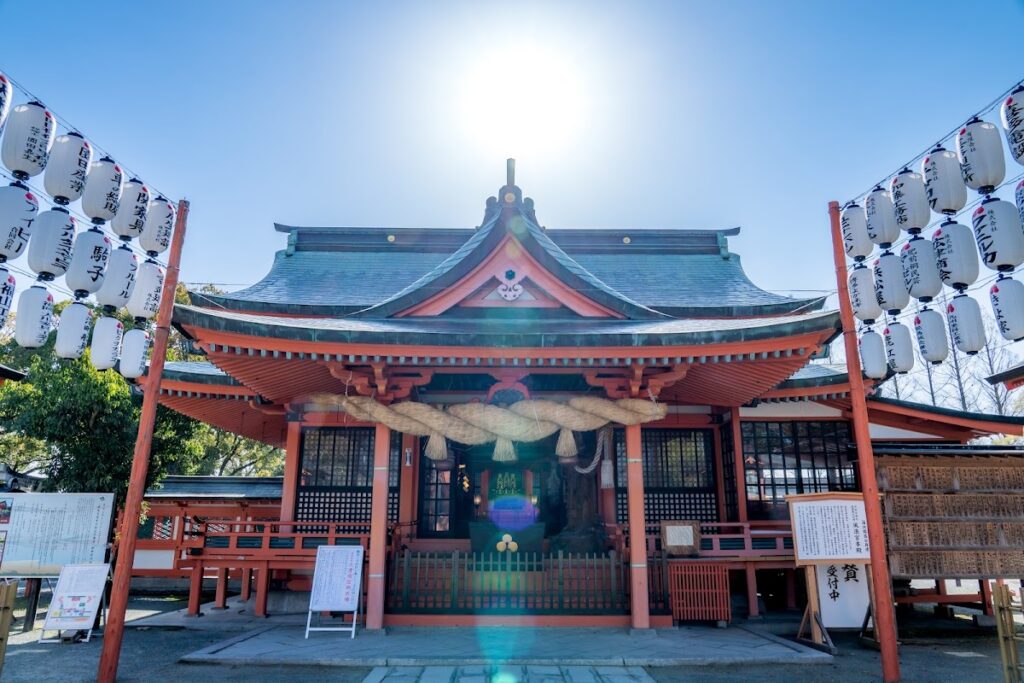
Complete Guide to Furōgū Shrine | History, Blessings, Access, and Festival Information
Fūrōgū Shrine is a venerable shrine located in Ōkawa City, Fukuoka Prefecture, affectionately known locally as “Ofurō-san.” As a representative ancient shrine of the Chikugo region, it boasts a history of over 1800 years and attracts many worshippers seeking blessings for safe voyages and protection from evil. This article comprehensively introduces information you should know before visiting Furōgū Shrine, including its history, enshrined deities, blessings, highlights of the grounds, annual events, and access methods.
What is Furōgū Shrine?
Fūrōgū Shrine is located near the mouth of the Chikugo River, overlooking the Ariake Sea. Situated in a region that has flourished as a key point for maritime traffic since ancient times, it has attracted the faith of people praying for safe voyages. Even today, it is deeply revered by those involved in fishing and shipping, and is also known as a place where general worshippers visit seeking blessings for protection from misfortune, family safety, and business prosperity.
The shrine grounds are lined with ancient trees over several hundred years old, creating a tranquil atmosphere. Located away from the hustle and bustle of the city, it provides a peaceful environment for worship.
History of Furōgū Shrine
Origin of Founding
The founding of Furōgū Shrine is said to date back to around 200 AD, during the time of Empress Jingū. Related descriptions can be found in the *Nihon Shoki* and *Fudoki*, indicating that it has played an important role in this region since ancient times.
According to tradition, Empress Jingū prayed for safe passage at this site during her conquest of the Three Kingdoms of Korea, and after her safe return, she built the shrine. Therefore, it has long been worshipped as a guardian deity of maritime safety.
History from the Medieval to Early Modern Period
During the medieval period, it was a powerful shrine in Chikugo Province, revered by local warlords. While it experienced a period of decline during the Sengoku period, in the Edo period, it received patronage from feudal lords, including the Tachibana family, the lords of Yanagawa Domain, and underwent reconstruction and repairs of its shrine buildings.
During the Edo period, as the maritime trade in the Ariake Sea flourished, the faith of shipowners and sailors deepened even further, and the reputation of Furōgū Shrine spread throughout the Chikugo region.
Modern Era
Although Furōgū Shrine was affected by the Meiji-era separation of Shinto and Buddhism, it was maintained through the fervent faith of the local residents. In the Showa era, a large-scale renovation of the shrine buildings took place, resulting in its current appearance.
Even in the Heisei and Reiwa eras, it occupies an important position as a spiritual pillar of the region and as a tourist resource, attracting many visitors throughout the year.
Deities and Blessings
Main Deities
The main deities of Furōgū Shrine are the following three:
- Watatsumi-no-Mikoto – Known as the god of the sea, the guardian deity of safe voyages and prosperous fishing.
- Okinagatarashihime-no-Mikoto – Empress Jingū, the goddess of safe childbirth, child-rearing, and protection against evil.
- Kōra Tamatare-no-Mikoto – The god of long-lasting military fortune and success in competitions.
These deities each play a role in protecting different areas, fulfilling the diverse wishes of worshippers.
Main Benefits
The benefits believed to be obtainable at Furōgū Shrine are diverse:
- Safe Voyages and Maritime Safety – The oldest form of worship, frequently visited by those involved in shipping.
- Protection from Misfortune and Disaster – Many people visit to ward off misfortune at important life events.
- Family Safety – Prayers for the health and peace of all family members.
- Business Prosperity – Visitors praying for the success and prosperity of their businesses.
- Safe Childbirth and Child-Rearing – Following in the footsteps of Empress Jingū, prayers are offered for the health of mother and child.
- Traffic Safety – Nowadays, prayers are also offered for safe land transportation as well as sea transportation.
- Fishing Prosperity – A belief held by those involved in the Ariake Sea fishing industry.
Highlights of the Shrine Grounds
Main Hall
The main hall of Furōgū Shrine is built in the traditional style of Shinto shrine architecture, and its majestic appearance captivates visitors. The carvings and decorations showcase intricate craftsmanship, demonstrating the skills of artisans passed down since the Edo period.
Worship Hall
The worship hall, where worshippers offer their prayers, is located in front of the main shrine and offers a spacious area. Votive tablets and framed pictures hang from the ceiling, reflecting the long history and the faith of many people.
Sacred Trees
Within the shrine grounds are sacred trees, including giant camphor trees and ginkgo trees said to be hundreds of years old. These trees are living witnesses to the history of the shrine, and their presence is overwhelming. The ginkgo trees, in particular, turn yellow in autumn, making it a popular spot for photography.
Stone Lanterns and Komainu (Guardian Dogs)
Stone lanterns donated since the Edo period line the approach to the shrine, creating a historical atmosphere. The guardian dogs in front of the main shrine are also impressive, featuring intricate carvings.
Water Basin
The water basin, where worshippers purify themselves before praying, is also maintained in a traditional style. Pure water flows constantly, allowing visitors to purify their minds and bodies before worship.
Annual Events and Festivals
Furōgū Shrine holds various festivals and events throughout the year.
Furōgū Grand Festival
The most important festival at Furōgū Shrine is the “Furōgū Grand Festival,” held every February. This festival, affectionately known locally as “Ofurō-san’s Festival,” features various Shinto rituals and events over several days.
During the festival, numerous stalls line the approach to the shrine, and the path is bustling with worshippers. Traditional Kagura (sacred dance) performances and local traditional performing arts are also showcased, providing a valuable opportunity to experience the culture of the Chikugo region.
New Year’s Visit
Many worshippers from all over the Chikugo region visit the shrine for their first shrine visit of the New Year. The shrine is especially crowded from New Year’s Day to the third day, with people praying for family safety, business prosperity, and a safe year ahead.
Summer Purification Ceremony
On June 30th, the “Summer Purification Ceremony (Nagoshi no Oharae)” is held. This Shinto ritual purifies the impurities accumulated over the past six months and prays for good health and protection from illness for the remaining half of the year. Traditional events such as passing through a ring of reeds are performed.
Autumn Grand Festival
In autumn, the Autumn Grand Festival is held to give thanks for a bountiful harvest. Appropriate for the harvest season, a Shinto ritual is performed to express gratitude for a good harvest and to pray for a bountiful harvest in the following year.
Monthly Festival
Monthly festivals are held on the 1st and 15th of each month, where gratitude and prayers are regularly offered to the gods.
Goshuin (Shrine Seals) and Amulets
Goshuin (Shrine Seals)
At Furōgū Shrine, you can receive a Goshuin as proof of your visit. Available at the shrine office, the carefully handwritten Goshuin are sought after by many as a memento of their visit.
The Goshuin (temple/shrine stamp) bears the shrine’s seal and date, allowing you to feel the history and tradition of the shrine. You can bring your own Goshuincho (stamp book) or purchase one on the spot.
Amulets and Souvenirs
Furōgū Shrine offers a variety of amulets and souvenirs:
- Safe Voyage Amulet – A traditional amulet popular with those involved in shipping
- Traffic Safety Amulet – For the safety of cars and bicycles
- Exorcism Amulet – For those in their unlucky year or those seeking protection from misfortune
- Safe Childbirth Amulet – To protect the health of pregnant women and babies
- Academic Success Amulet – Popular with students and those taking exams
- Business Prosperity Amulet – For business owners wishing for success
In addition, there are other souvenirs such as ema (votive tablets), hamaya (demon-repelling arrows), and kumade (rakes), available depending on the season and purpose.
Manners and Etiquette for Visiting a Shrine
Basic Etiquette for Visiting a Shrine
When visiting Furōgū Shrine, please observe the following basic etiquette:
- Bow before passing through the torii gate – As a sign of respect before entering the sacred area.
- Avoid walking in the center of the approach – The center is considered the path of the gods.
- Purify yourself at the water basin – Purify your left hand, then your right hand, then your mouth.
- Etiquette at the main hall – Two bows, two claps, and one bow is the basic procedure.
- Bow upon leaving – Turn around and bow before leaving the torii gate.
Attire
While special formal attire is not required, it is desirable to wear clothing that reflects the sacred nature of the place. Avoid revealing or overly flashy clothing, and aim for clean and presentable attire.
Photography
Photography is generally permitted within the shrine grounds, but there are areas and times where photography is restricted, such as inside the main hall or during religious ceremonies. If you are unsure, please check with the shrine office. Also, please be considerate of other visitors and avoid causing any inconvenience.
Access Information
Location
726-1 Sakemi, Okawa City, Fukuoka Prefecture 831-0004
Access by Car
From Fukuoka City
- Approximately 15 minutes from the Kyushu Expressway “Miyama Yanagawa IC”
- Accessible via National Route 208
From Saga
- Approximately 40 minutes from the Nagasaki Expressway “Saga Yamato IC”
- Via National Route 208
Parking
- Free parking available on the temple grounds (approximately 50 cars)
- Temporary parking may be provided during peak times such as major festivals
Access by Public Transportation
By Train/Bus
- Get off at Nishitetsu Yanagawa Station on the Nishitetsu Tenjin Omuta Line
- Approximately 15 minutes by taxi from the station
- Alternatively, take the Nishitetsu Bus bound for “Okawa,” get off at the “Furōgūmae” bus stop, and walk for approximately 3 minutes
By JR
- Get off at Setaka Station on the JR Kagoshima Main Line
- Approximately 20 minutes by taxi from the station
Visiting Hours
- Grounds are freely accessible (24-hour worship available)
- Shrine office hours: 9:00 AM – 5:00 PM (may vary depending on the season)
- Goshuin (shrine stamp) and amulet distribution: During shrine office hours
Nearby Tourist Attractions
When visiting Furōgū Shrine, we recommend also visiting nearby tourist attractions.
Ōkawa City Seiriki Museum of Art
A museum exhibiting works by Seiriki, a painter from Ōkawa City. Approximately 5 minutes by car from Furōgū Shrine.
Chikugo River Lift Bridge
A movable iron bridge designated as a National Important Cultural Property. Known as the oldest lift bridge in Japan, it is a highly valuable tourist attraction as an industrial heritage site. Approximately 10 minutes by car from Furōgū Shrine.
Yanagawa River Cruise
A river cruise along the canals of Yanagawa City is a representative tourist activity of the Chikugo region. Enjoy the scenery of each season. Approximately 15 minutes by car from Furōgū Shrine.
Visiting Ōkawa Furniture Workshops
Ōkawa City is nationally famous as a furniture town. There are workshops where you can observe traditional craftsmanship and experience the skills of artisans.
Tips for Enjoying the Charms of Furōgū Shrine to the Fullest
Best Time to Visit
While Furōgū Shrine can be visited year-round, there are particularly recommended times:
Spring (March-May)
- Mild weather makes it easy to visit
- Beautiful fresh greenery creates a refreshing atmosphere within the shrine grounds
Autumn (October-November)
- Beautiful autumn foliage, with the sacred ginkgo tree turning golden
- Pleasant weather makes it ideal for strolling
During the Grand Festival (February)
- Recommended for those who want to experience the festival atmosphere
- You can experience traditional events and local culture
Estimated Time to Visit
- Visiting the Shrine Only: Approximately 30 minutes
- A Relaxing Stroll Through the Grounds: Approximately 1 hour
- Including the Receiving of Goshuin (Shrine Stamps) and Amulets: 1 to 1.5 hours
- During the Grand Festival: 2 hours or more
Dining in the Nearby
Okawa City and Yanagawa City have numerous restaurants where you can enjoy dishes made with seafood from the Ariake Sea and local cuisine. Yanagawa’s specialty, “Unagi no Seiro Mushi” (steamed eel in a bamboo steamer), is particularly exquisite and highly recommended to enjoy in conjunction with a visit to Furōgū Shrine.
Frequently Asked Questions about Furōgū Shrine
Are Pets Allowed?
Bringing small dogs and other pets is often permitted if they are kept on a leash or in a carrier bag and with consideration for other visitors. However, it is recommended to check with the shrine office in advance. Pets are generally not allowed inside the main hall.
Is the Shrine Wheelchair Accessible?
The shrine grounds are generally barrier-free, but there are some areas with steps. If you plan to visit in a wheelchair, it is best to contact the shrine office in advance to confirm.
Can Weddings Be Held Here?
Shinto wedding ceremonies can be held at Furōgū Shrine. Those wishing to have a traditional wedding ceremony at a shrine should inquire at the shrine office for details.
Can I receive Shichi-Go-San prayers?
Yes, we accept Shichi-Go-San prayers. October and November are particularly busy, so advance reservations are recommended.
Summary
Furōgū Shrine is a representative ancient shrine of the Chikugo region with a history of over 1800 years, known for its diverse blessings, including safe voyages and protection from evil. Affectionately known as “Ofurō-san” by the local community, it is a place of worship visited by many worshippers throughout the year.
The shrine grounds feature historical shrine buildings and sacred trees, allowing visitors to pray in a tranquil atmosphere. The grand festival in February, in particular, is one of the largest in the region and offers an excellent opportunity to experience traditional culture.
Access is relatively good, making it easily accessible from Fukuoka City and the Saga area. The surrounding area boasts numerous tourist attractions, including the Chikugo River Lift Bridge and the Yanagawa River boat tour, allowing you to leisurely enjoy the charm of the Chikugo region for a full day.
A wide variety of goshuin (temple/shrine stamps) and amulets are available, making them perfect as souvenirs of your visit or as gifts for loved ones. Please visit Furōgū Shrine, where history, tradition, and the deep faith of the local people thrive. You’re sure to have a refreshing and uplifting experience.
Fūrōgū Shrine is not merely a tourist spot; it’s a special place where the faith and culture cultivated over a long history continue to live on. Through your visit, you can connect with traditional Japanese spiritual culture and gain peace of mind and renewed vitality.

