Complete Guide to Yamaguchi Prefecture Gokoku Shrine | A Thorough Explanation of History, Deities, Access, and Goshuin Information
Located in Hirano, Yamaguchi City, Yamaguchi Prefecture, Yamaguchi Prefecture Gokoku Shrine is a shrine dedicated to the spirits of 52,128 war dead from Yamaguchi Prefecture. It also enshrines great figures who contributed to Japan’s modernization, such as Yoshida Shoin, Takasugi Shinsaku, Kusaka Genzui, and Omura Masujiro, who were patriots of the Meiji Restoration. It is known as a shrine of significant historical importance.
This article provides a detailed explanation of Yamaguchi Prefecture Gokoku Shrine, including its history, enshrined deities, highlights within the grounds, access methods, goshuin information, and surrounding tourist spots—all the information you need to know before visiting.
What is Yamaguchi Prefecture Gokoku Shrine?
Yamaguchi Prefecture Gokoku Shrine is a Gokoku Shrine dedicated to the spirits of those who sacrificed their lives in times of national crisis within Yamaguchi Prefecture. It is designated as a special shrine by the Association of Shinto Shrines and is considered one of the most important shrines in the prefecture.
A Gokoku Shrine is a shrine dedicated to comforting the spirits of those who sacrificed their lives for their country and honoring their achievements. There are 52 Gokoku Shrines throughout Japan, and Yamaguchi Prefecture Gokoku Shrine is one of them, serving as a spiritual anchor for the people of the prefecture.
About the Enshrined Deities
The main deities enshrined at Yamaguchi Prefecture Gokoku Shrine are Fukushima Otokoya-no-Mikoto and 52,128 other martyrs from Yamaguchi Prefecture (as of 2019). This includes some of the following prominent figures from the late Edo period and Meiji Restoration.
- Yoshida Torajiro (Yoshida Shoin): He presided over the Shoka Sonjuku school and nurtured many patriots as a spiritual leader of the Meiji Restoration.
- Takasugi Shinsaku: He founded the Kiheitai and was a revolutionary who supported the Choshu Domain during the late Edo period.
- Kusaka Yoshisuke (Kusaka Genzui): One of the four leading figures of the Shoka Sonjuku school, he died in the Kinmon Incident.
- Omura Masujiro: A military leader known as the founder of the modern Japanese Army.
- Kurishima Matabei: A samurai of the Choshu Domain, he died in the Kinmon Incident.
- Tsukisei: A Buddhist monk during the late Edo period who participated in the Sonno Joi (Revere the Emperor, Expel the Barbarians) movement.
These patriots dedicated their lives to the Meiji Restoration, a period of great transformation in Japan, and are revered as contributors who laid the foundation for present-day Japan.
History of Yamaguchi Prefecture Gokoku Shrine
Origin of Establishment
The history of Yamaguchi Prefecture Gokoku Shrine dates back to 1939 (Showa 14), when the Gokoku Shrine system was established. At that time, amidst rising war tensions, the Ministry of Home Affairs promoted the establishment of Gokoku Shrines nationwide.
In Yamaguchi Prefecture, there had been no Gokoku Shrine designated by the prefecture until then. Therefore, in 1941 (Showa 16), the Yamaguchi Prefecture Gokoku Shrine was built in the present-day Hirano, Yamaguchi City. This was officially recognized as a Gokoku Shrine designated by the Minister of Home Affairs.
Post-War Changes
During the occupation period after World War II, the shrine was forced to change its name to “Goryo Shrine” due to the GHQ’s Shinto Directive. However, after the restoration of sovereignty in 1952 (Showa 27), it reverted to the name “Yamaguchi Prefecture Gokoku Shrine,” which it remains to this day.
Connection to the Meiji Restoration
Yamaguchi Prefecture, as the Choshu Domain, played a central role in the Meiji Restoration. Therefore, Yamaguchi Prefecture Gokoku Shrine enshrines many patriots who were active from the end of the Edo period to the Meiji era. It is not merely a place to commemorate those who died in war, but also an important historical site that conveys the history of the Meiji Restoration to the present day.
Highlights of the Shrine Grounds
Main Hall and Worship Hall
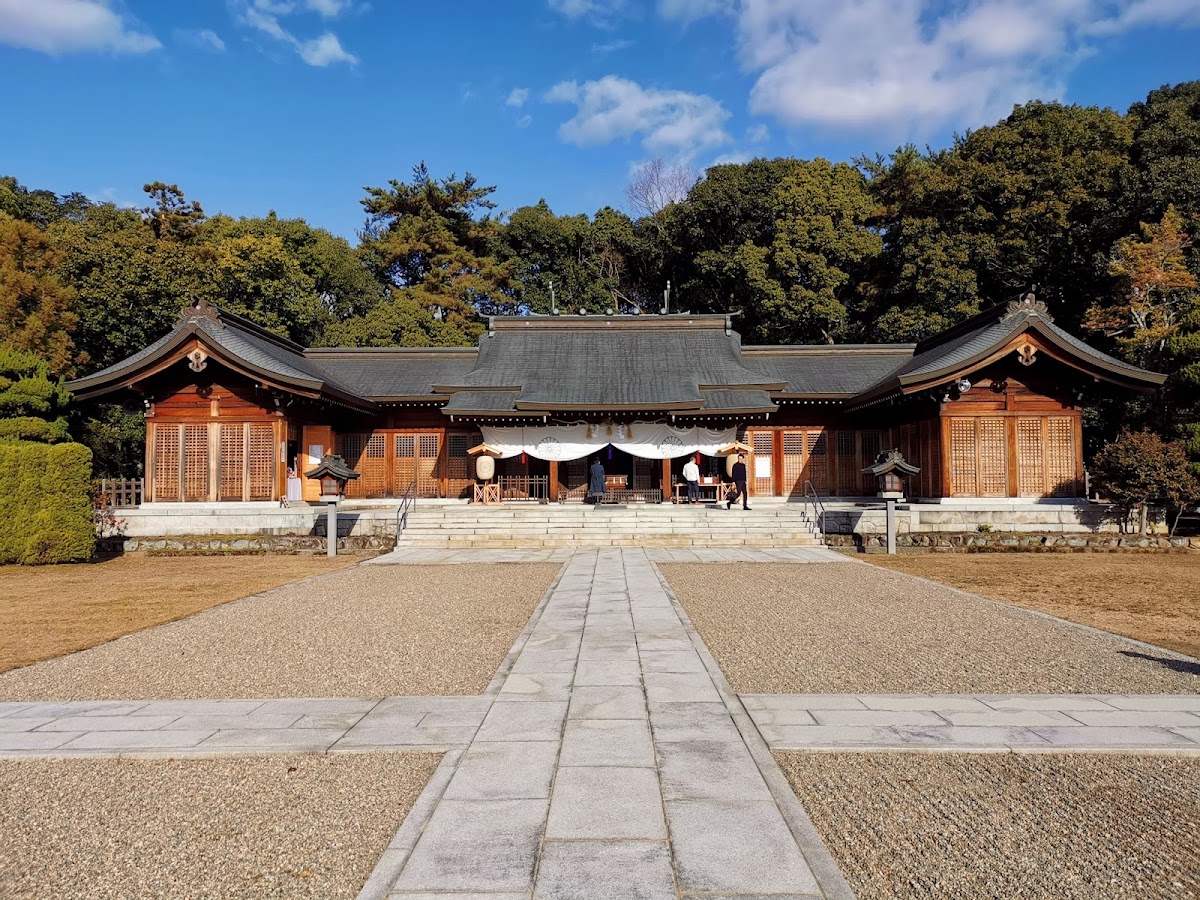
The main hall and worship hall of Yamaguchi Prefecture Gokoku Shrine are magnificent structures that retain the characteristics of shrine architecture from the early Showa period. Worshippers perform the ritual of two bows, two claps, and one bow in front of the worship hall. In a quiet and solemn atmosphere, one can offer their gratitude to the war dead.
Nature Through the Seasons
The shrine grounds are planted with many cherry trees and azaleas, allowing visitors to enjoy beautiful scenery throughout the seasons.
- Spring (late March to early April): Cherry blossoms are in full bloom, enveloping the shrine grounds in a vibrant atmosphere.
- Spring (late April to early May): Azaleas bloom in vivid colors.
- Summer: Enjoy a refreshing visit amidst the lush greenery of the shrine grounds.
- Autumn: Autumn leaves adorn the grounds, creating a tranquil atmosphere.
- Winter: Enjoy a quiet visit in the crisp, clear air.
Memorials and Monuments
Within the shrine grounds, various memorials and monuments commemorating those who died in war are erected. Visiting these monuments allows you to gain a deeper understanding of the history experienced by people from Yamaguchi Prefecture.
About Goshuin (Shrine Seals)
Goshuin (shrine seals) are available at Yamaguchi Prefecture Gokoku Shrine. If you visit during the shrine office’s reception hours and bring your goshuincho (seal book), a Shinto priest will carefully write the seal for you.
Features of the Goshuin (Shrine Seal)
The goshuin of Yamaguchi Prefecture Gokoku Shrine features the shrine’s name and date of visit written in ink, along with the shrine’s seal. Its simple yet powerful calligraphy is a distinctive feature, making it a popular memento for many visitors.
Etiquette for Receiving a Goshuin
- First, complete your prayers at the main shrine before receiving your goshuin.
- Prepare your goshuin notebook and present the open page at the shrine office.
- Have the offering (usually around 300-500 yen) ready.
- Remember to express your gratitude to the shrine priest.
Information on Prayers and Festivals
Various Prayers
Yamaguchi Prefecture Gokoku Shrine accepts the following types of prayers:
- Family Safety
- Business Prosperity
- Traffic Safety
- Protection from Evil
- Success in Exams
- Safe Childbirth
- First Shrine Visit for a Newborn
- Shichi-Go-San (7-5-3 Festival)
- Shinto Wedding Ceremony
If you wish to request a prayer, it is recommended that you contact the shrine office by phone in advance. They will provide detailed information regarding the type of prayer, date and time, and offering fee.
Main Festivals and Annual Rituals
Yamaguchi Prefecture Gokoku Shrine holds various festivals throughout the year.
- Spring Memorial Service (April 29th): One of the most important annual services, a large-scale ceremony to commemorate the war dead.
- Autumn Memorial Service (November 3rd): An important annual service, comparable to the spring service.
- Monthly Service: A regular service held every month.
- New Year’s Service: A service to welcome the new year.
Especially the spring and autumn memorial services are attended by many bereaved families and related parties, and are conducted in a solemn atmosphere. General visitors are also welcome to attend, so please feel free to come if you are interested.
Access and Basic Information
Location
Address: 2-2-1 Hirano, Yamaguchi City, Yamaguchi Prefecture 753-0015
Access by Train
- Approximately 20 minutes on foot from JR Yamaguchi Line “Miyano Station”
- Although it’s a bit of a distance from the station, you can enjoy the scenery of Yamaguchi City while walking.
Access by Car
- Approximately 15 minutes from Chugoku Expressway “Ogori IC”
- Approximately 10 minutes from Chugoku Expressway “Yamaguchi IC”
- Free parking is available on the temple grounds.
Parking
There is free parking for visitors. While there is usually ample parking space, it may get crowded on festival days and during cherry blossom season, so it is recommended to allow plenty of time for your visit.
Visiting Hours and Shrine Office Hours
- Shrine Grounds Visiting: Generally possible all day
- Shrine Office Hours: 9:00 AM to 5:00 PM (approximate)
- If you wish to receive a Goshuin (shrine stamp) or make a prayer, please visit during the shrine office’s reception hours.
Inquiries
Phone Number: 083-922-2027
If you would like to know more about prayers and festivals, we recommend contacting us by phone in advance.
Recommended Nearby Tourist Spots
When visiting Yamaguchi Prefecture Gokoku Shrine, you can enjoy the charm of Yamaguchi City more deeply by also visiting nearby tourist spots.
Rurikoji Five-Storied Pagoda
Distance: Approximately 10 minutes by car
The Rurikoji Five-Storied Pagoda, designated as a National Treasure, is a representative tourist attraction of Yamaguchi City. Built during the Muromachi period, this five-storied pagoda is counted as one of Japan’s three most famous pagodas, and its elegant appearance captivates many tourists. Especially at night, the garden is illuminated, creating a magical atmosphere.
Jōei-ji Temple Sesshū Garden
Distance: Approximately 15 minutes by car
This garden is said to have been created by Sesshū, a painter-monk of the Muromachi period. Designated as a national historic site and place of scenic beauty, it allows visitors to appreciate the beauty of a Japanese garden. The scenery changes with the seasons, and the autumn foliage is particularly magnificent.
Yamaguchi Prefectural Museum of Art
Distance: Approximately 10 minutes by car
This museum primarily exhibits art works related to Yamaguchi Prefecture. Visitors can admire works by artists from Yamaguchi Prefecture, such as Sesshū and Yasuo Katsuki.
Yamaguchi Xavier Memorial Cathedral
Distance: Approximately 12 minutes by car
This church was built to commemorate the visit of Francis Xavier. It features a modern architectural design and is one of Yamaguchi City’s landmarks.
Cherry Blossom Trees Along Ichinosaka River
Distance: Approximately 10 minutes by car
This is a famous cherry blossom viewing spot where approximately 600 cherry trees bloom in spring. Enjoy a beautiful tunnel of cherry blossoms while strolling along the river.
Recommended Local Restaurants
Yamaguchi City has many restaurants where you can enjoy delicious dishes made with local ingredients.
Kawara Soba
Kawara Soba, a specialty dish of Yamaguchi Prefecture, is a unique dish where green tea soba noodles and toppings are served on a heated roof tile. It is characterized by its crispy texture and savory flavor, and can be enjoyed at several restaurants in Yamaguchi City.
Fugu Cuisine
Yamaguchi Prefecture is known as the home of fugu (pufferfish). There are specialty fugu restaurants in Yamaguchi City where you can enjoy sashimi, hot pot, and fried fugu made with fresh fugu.
Local Sake
Yamaguchi Prefecture is also famous as a sake producing region. Many famous sake brands, including Dassai, are available, and you can enjoy local sake at izakayas and restaurants throughout the city.
Points to Note When Visiting Yamaguchi Prefecture Gokoku Shrine
Manners for Visiting
Gokoku Shrine is a sacred place dedicated to the spirits of war dead. Please observe the following manners when visiting:
- Bow when passing through the torii gate.
- Avoid walking in the center of the approach to the shrine. (The center is considered the path of the gods.)
- Purify your hands and mouth at the water basin.
- Bow twice, clap twice, and bow once in front of the main hall.
- Worship quietly and with a solemn heart.
- Refrain from taking photographs. (Especially during festivals, consideration is necessary.)
Attire
For regular visits, no special attire is required. However, if you are receiving prayers or attending a festival, it is advisable to wear attire that is not too casual.
Recommended Time to Visit
- Spring (Cherry Blossom Season): The cherry blossoms in the shrine grounds are beautiful, allowing you to enjoy both worship and cherry blossom viewing at the same time.
- Annual Festival Days (April 29th, November 3rd): Experience a solemn festival.
- Weekdays: Enjoy a quiet and peaceful visit.
Yamaguchi Prefecture Gokoku Shrine and Historical Exploration
Visiting Yamaguchi Prefecture Gokoku Shrine holds more meaning than mere sightseeing. The spirits enshrined here are those who sacrificed their lives for Japan’s modernization and development.
In particular, the patriots of the late Edo period and the Meiji Restoration worked tirelessly to break down the feudal system and lay the foundation for modern Japan. Many patriots who received instruction from Yoshida Shoin played central roles in the Meiji government and promoted Japan’s modernization.
A visit to Yamaguchi Prefecture Gokoku Shrine will be an opportunity to reflect on this history and renew your gratitude for the Japan of today.
Connection to the Shoka Sonjuku School
The Shoka Sonjuku school, founded by Yoshida Shoin, is preserved in Yamaguchi City (there is also a Shoin Shrine in Hagi City). Visiting it in conjunction with the Yamaguchi Prefecture Gokoku Shrine will allow for a deeper understanding of the history of the late Edo period and the Meiji Restoration.
Visitor Feedback and Reviews
The following are some comments from people who have actually visited the Yamaguchi Prefecture Gokoku Shrine:
- “I visited the shrine because it enshrines the spirits of those who died in war from the prefecture. The architecture had a beautiful atmosphere. It was quiet because it was a weekday.”
- “It enshrines the spirits of 52,128 war dead. I visited with a feeling of gratitude.”
- “It also enshrines the patriots of the Choshu Domain during the late Edo period, making it a place where you can feel history.”
- “The cherry blossoms in the shrine grounds are beautiful, and I especially recommend visiting in spring.”
- “I was able to visit in a quiet and solemn atmosphere, calming my mind.”
Many visitors highly appreciate the shrine’s tranquil atmosphere and historical significance.
Other Gokoku-related facilities in Yamaguchi Prefecture
Besides the Yamaguchi Prefectural Gokoku Shrine, there are other facilities in Yamaguchi Prefecture that commemorate those who died in war.
Shokonsha Shrine in Hagi City
Hagi City also has a facility dedicated to those who died in war, and is particularly known as a place associated with the patriots of the late Edo period.
Gokoku Shrine-related facilities in Shimonoseki City
Shimonoseki City also has facilities related to the commemoration of those who died in war, and expressions of gratitude to the war dead are offered throughout the prefecture.
What you can do at Yamaguchi Prefectural Gokoku Shrine
Worship and Memorial Service
The most basic purpose of a visit is to pay respects to and commemorate the war dead. Quietly put your hands together in prayer, expressing gratitude for peace and respect for the war dead.
Collecting Goshuin (Shrine Stamps)
Many people visit as part of a nationwide collection of Goshuin. The Goshuin from Yamaguchi Prefectural Gokoku Shrine will be a valuable addition to your collection.
History Learning
For those interested in the history of the late Edo period and the Meiji Restoration, visiting the actual sites where these heroes are enshrined offers a deeper learning opportunity that cannot be gained from textbooks.
Enjoying Seasonal Scenery
Enjoying the seasonal beauty of nature, such as cherry blossoms and azaleas, while visiting the shrine is another attractive feature.
Prayer and Exorcism
You can also receive formal prayers at important life milestones or when you have a wish.
Summary
Yamaguchi Prefecture Gokoku Shrine is an important shrine that enshrines the spirits of 52,128 heroes from Yamaguchi Prefecture. In particular, it holds great historical significance as it enshrines heroes who promoted the Meiji Restoration, such as Yoshida Shoin, Takasugi Shinsaku, Kusaka Genzui, and Omura Masujiro.
Located in Hirano, Yamaguchi City, it is approximately a 20-minute walk from JR Miyano Station, and accessible by car in about 10-15 minutes from various interchanges on the Chugoku Expressway. The shrine grounds are beautiful with cherry blossoms and azaleas, allowing visitors to enjoy the changing seasons while paying their respects.
You can also receive a Goshuin (shrine stamp), and various prayers are accepted. The Spring Memorial Service (April 29th) and the Autumn Memorial Service (November 3rd) are particularly important ceremonies, held in a solemn atmosphere.
Nearby are many of Yamaguchi City’s representative tourist spots, such as the Rurikoji Five-Storied Pagoda and the Joeiji Sesshu Garden, making a combined visit a fulfilling Yamaguchi sightseeing experience.
Visiting Yamaguchi Prefecture Gokoku Shrine is a valuable opportunity to express gratitude to the war dead, learn about modern Japanese history, and reaffirm the preciousness of peace. It is a shrine you should definitely visit when you come to Yamaguchi Prefecture.