
Complete Guide to Matsue Gokoku Shrine | History, Goshuin (Seal Stamp), Access, and Highlights Explained in Detail
What is Matsue Gokoku Shrine?
Matsue Gokoku Shrine is a Gokoku Shrine located within the grounds of Matsue Castle, a national treasure, in Tonomachi, Matsue City, Shimane Prefecture. It was founded on March 13, 1939, through the dedicated service and cooperation of many prefectural residents, as a shrine to enshrine the spirits of 22,928 soldiers from the former Izumo and Oki provinces who perished in the national crisis after the Meiji Restoration, and to pray for the peace of their souls.
Located in the Kitanomaru area of Matsue Castle, on the site of the former Kamigoten (Upper Palace), it stands in a historical location north of the castle tower and inside the moat. The solemn atmosphere of the shrine grounds provides visitors with a tranquil space for prayer.
There are two Gokoku Shrines in Shimane Prefecture: Matsue Gokoku Shrine and Hamada Gokoku Shrine. This stems from the historical background of Shimane Prefecture’s formation through the merger of two domains during the Edo period: the Matsue Domain and the Hamada Domain. Matsue Gokoku Shrine, as a guardian shrine overseeing the Izumo and Oki regions, serves as a spiritual anchor for the local people.
History and Origins of Matsue Gokoku Shrine
Circumstances of its Founding
The founding of Matsue Gokoku Shrine is deeply intertwined with the historical context of the early Showa period. Following the Meiji Restoration, during the turbulent times of the First Sino-Japanese War, the Russo-Japanese War, World War I, and the Manchurian Incident, many young men from the Izumo and Oki regions went to war for their country, sacrificing their precious lives.
To honor these heroic spirits, to eternally pass on their achievements, and to provide a spiritual anchor for their bereaved families, Matsue Gokoku Shrine was founded on March 13, 1939, on the site of the former Kamigoten Palace within Matsue Castle, thanks to the enthusiasm and dedicated cooperation of many prefectural residents. The founding of this shrine was greatly aided by donations and volunteer activities from local residents, making it truly a shrine realized through the collective will of the people of the prefecture.
Enshrined War Dead
Matsue Gokoku Shrine enshrines 22,928 war dead from the former Izumo and Oki provinces who perished in national crises during the various wars following the Meiji Restoration. This includes those who died in the following wars:
- Boshin War
- Satsuma Rebellion
- First Sino-Japanese War
- Russo-Japanese War
- World War I
- Manchurian Incident
- Second Sino-Japanese War
- World War II (Greater East Asia War)
These war dead are enshrined not as deities, but as “war dead,” which is a characteristic of Gokoku Shrines that distinguishes them from typical Shinto shrines. Worshippers pray for the peace of the spirits, offering their gratitude and prayers for the repose of the souls of the war dead.
Post-War History
After World War II, the Gokoku Shrine’s continued existence as a religious corporation was threatened for a time due to GHQ policies. However, it was maintained thanks to the support of many bereaved families and local residents. Currently, it belongs to the Shimane Prefectural Shrine Association and functions as an important place of prayer for the community.
Guide to Matsue Gokoku Shrine Grounds
Torii Gate and Approach
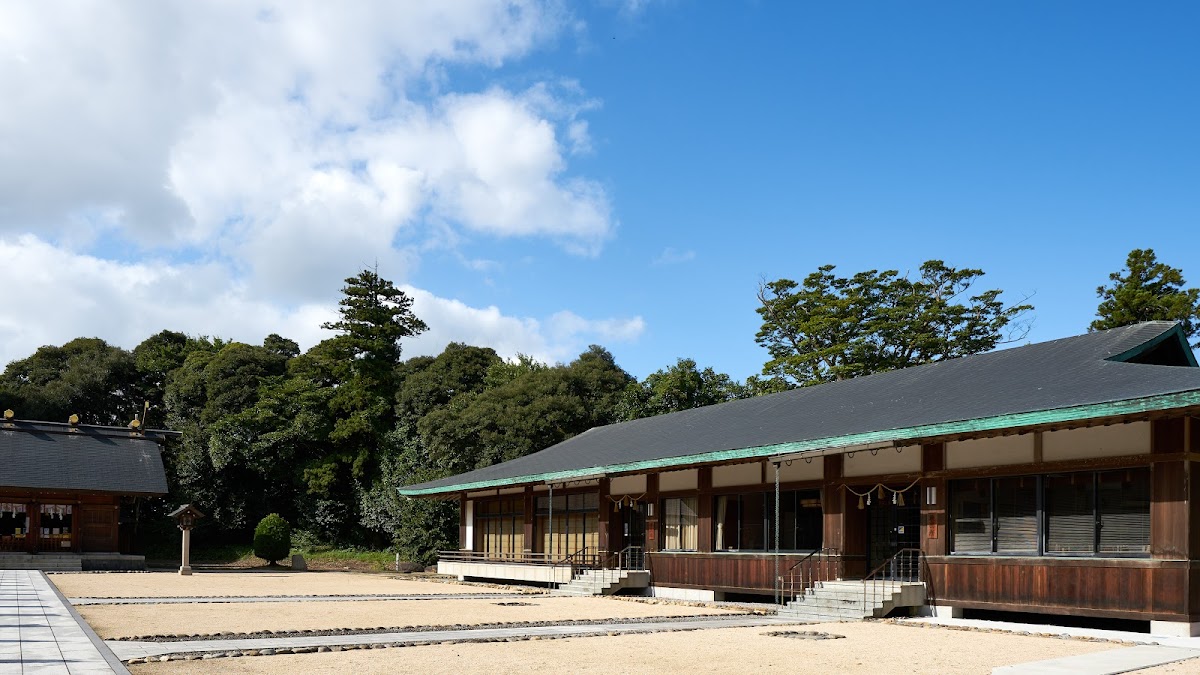
Climbing the stone steps leading to the Kitano-maru of Matsue Castle, you will see the torii gate of Matsue Gokoku Shrine. Passing through the gate, a spacious grounds bathed in bright light unfolds. The approach is well-maintained, allowing visitors to enjoy the changing seasons while praying.
Especially during the snowy season, the entire grounds are enveloped in white, creating an even more solemn atmosphere. In spring, cherry blossoms, and in autumn, autumn leaves, create a beautiful landscape in harmony with the natural surroundings of Matsue Castle.
Worship Hall and Main Shrine
The shrine office and worship hall are located within the grounds, presenting a simple yet majestic appearance. The worship hall is a wooden structure, following traditional shrine architectural styles. The main sanctuary is located behind the worship hall, where the spirits of 22,928 fallen soldiers rest peacefully.
In front of the worship hall, a row of distinctive banners bearing the words “Prayer for Great Victory” attracts the attention of visitors. These banners are also a popular photo spot, with many worshippers taking commemorative photos.
Atmosphere of the Shrine Grounds
The grounds of Matsue Gokoku Shrine have a unique atmosphere, slightly different from typical shrines. This is due to the solemnity befitting a Gokoku Shrine dedicated to the spirits of fallen soldiers, naturally inspiring a sense of reverence in visitors.
The number of visitors is relatively small, maintaining an environment where one can offer prayers in peace. The spacious grounds offer ample room for leisurely worship, which is another attractive feature.
Information on Matsue Gokoku Shrine’s Goshuin (Shrine Seal)
Issuance of Goshuin
Matsue Gokoku Shrine offers Goshuin to worshippers. Goshuin (temple/shrine stamps) can be obtained at the shrine office, and many visitors receive them as proof of their visit.
The goshuin features the calligraphy of “Matsue Gokoku Shrine” and the shrine’s seal, characterized by a simple yet powerful style of calligraphy. The solemn atmosphere befitting a Gokoku Shrine is reflected in the goshuin.
Goshuincho (Goshuin Stamp Book)
Matsue Gokoku Shrine may also offer its own original goshuincho. For details, please inquire at the shrine office during your visit.
Issuance Hours and Offering Fee
The issuance hours for goshuin are the same as the shrine office’s opening hours. The offering fee is generally considered to be around the standard rate (300-500 yen), but it is recommended to confirm during your visit.
Access and Transportation Information
Location
Address: 1-15 Tonomachi, Matsue City, Shimane Prefecture (within Matsue Castle)
Matsue Gokoku Shrine is located within the grounds of the National Treasure Matsue Castle, in the Kitanomaru area. It’s located in an easily accessible spot, north of Matsue Castle’s main tower, inside the moat.
Access by Public Transportation
From JR Matsue Station
By Bus:
- Take the Lake Line bus (towards Matsue Castle) from JR Matsue Station
- Get off at the “National Treasure Matsue Castle (Otemae)” bus stop
- Approximately 10 minutes on foot from the bus stop
- Total time: Approximately 20 minutes (bus ride + walking)
On Foot:
- Approximately 25-30 minutes on foot from JR Matsue Station
- Distance: Approximately 2km
- Enjoy walking while taking in the scenery of Matsue
By Ichibata Electric Railway
- Approximately 15-20 minutes on foot from Matsue Shinjiko Onsen Station
- Head towards Matsue Castle, enter the castle grounds, and aim for Kitanomaru
Access by Car
From the Expressway
- Approximately 15 minutes from the San’in Expressway “Matsue Nishi IC”
- Approximately 10 minutes from the San’in Expressway “Matsue Chuo IC”
Parking
There are several paid parking lots around Matsue Castle:
- Matsue Castle Otemae Parking Lot
- Shimane Prefectural Government Parking Lot (may be available on weekends and holidays)
- Nearby private parking lots
General vehicles are not allowed inside Matsue Castle grounds. Therefore, you must use nearby parking lots and enter the castle grounds on foot.
Visiting Hours
While visiting the shrine grounds is generally free, the shrine office has limited opening hours. If you wish to obtain a Goshuin (shrine stamp) or other items, it is recommended to check the visiting hours in advance.
Generally:
- Visiting Hours: Anytime during the day
- Shrine Office Hours: Approximately 9:00 AM to 5:00 PM (approximate)
Highlights of Matsue Gokoku Shrine
Integration with Matsue Castle
One of the greatest attractions of Matsue Gokoku Shrine is its location within the grounds of the national treasure Matsue Castle. You can visit the shrine at the same time as visiting the castle tower, experiencing the history of both Matsue Castle and the Gokoku Shrine simultaneously.
The Kitanomaru area of Matsue Castle is the site of the former residence of the feudal lord, making it a historically significant location. The establishment of the Gokoku Shrine on this venerable site reflects a deep respect for the war dead.
Seasonal Scenery
Matsue Gokoku Shrine, located within Matsue Castle, is surrounded by beautiful nature throughout the seasons.
Spring (March-May): When the cherry blossoms at Matsue Castle are in full bloom, the shrine grounds are bathed in pink. The combination of cherry blossoms and the shrine is a landscape symbolizing the beauty of Japan.
Summer (June-August): The fresh greenery is beautiful, and the shrine grounds, surrounded by lush green trees, are enveloped in a refreshing atmosphere.
Autumn (September-November): During the autumn foliage season, the shrine grounds are colored in red and yellow, adding a touch of splendor to the solemn atmosphere.
Winter (December-February):
When it snows, the entire shrine grounds transform into a world of white. Matsue Gokoku Shrine, covered in snow, is particularly solemn and beautiful, making it a popular spot for photography enthusiasts.
Banners for Great Victory
The distinctive banners bearing the words “Prayer for Great Victory,” lining the shrine grounds, are an iconic sight at Matsue Gokoku Shrine. These banners are very impressive and popular as a photogenic spot.
Visitors come to pray for various kinds of “victory,” such as passing exams, winning in sports, or business prosperity, and dedicate banners.
A Serene Space for Prayer
Despite being located within the tourist area of Matsue Castle, Matsue Gokoku Shrine has relatively few visitors, making it a precious space for quiet prayer. The time spent away from the hustle and bustle, calming the mind and offering gratitude to the war dead and prayers for peace, holds special meaning in modern society.
Tourist Attractions Around Matsue Gokoku Shrine
Matsue Castle Keep (National Treasure)
When visiting Matsue Gokoku Shrine, a must-see is the Matsue Castle Keep, a National Treasure. It is one of the 12 remaining castle keeps and was designated a National Treasure in 2015. Its black clapboard exterior has earned it the nickname “Chidori Castle” (Plover Castle), and from the top floor, you can enjoy a spectacular view of Matsue city and Lake Shinji.
Matsue Castle Hill Park
Shiroyama Park, centered around Matsue Castle, is also known as a famous cherry blossom viewing spot, attracting many visitors in spring. The vast grounds have well-maintained walking paths, perfect for a leisurely stroll.
Samurai Residences
To the east of Matsue Castle, samurai residences from the Edo period are preserved, offering a glimpse into the lives of samurai of that era. The Shiomi Nawate street features rows of pine trees and a moat, creating a picturesque landscape.
Lafcadio Hearn Memorial Museum and Former Residence
This museum houses the former residence and memorial hall of Lafcadio Hearn (Koizumi Yakumo), best known as the author of “Kwaidan,” during his stay in Matsue. Visitors can experience the scenery and culture of Matsue that Hearn loved.
Lake Shinji
Lake Shinji, a symbol of Matsue City, is the seventh largest lake in Japan. Famous for its beautiful sunsets, it has been selected as one of “Japan’s Top 100 Sunsets.” Strolling along the lakeshore or taking a sightseeing boat is highly recommended.
Manners and Etiquette for Visiting Shrines
Guidelines for Visiting Gokoku Shrines
Gokoku Shrines are special shrines dedicated to the spirits of war dead. Please keep the following points in mind when visiting.
- With a reverent heart: Visit the shrine with gratitude and respect for the war dead.
- With silence: Act quietly within the shrine grounds and maintain a solemn atmosphere.
- Attire: Avoid extremely casual clothing and wear clean attire when visiting the shrine.
Etiquette for Visiting the Shrine
- Bow before passing through the torii gate: Bow before entering the sacred area.
- Purify yourself at the water basin: Purify your left hand, then your right hand, then your mouth.
- Worship in front of the main hall: Worship using the two bows, two claps, and one bow ritual.
- Pray for the peace of the spirits: Pray for the peace of the spirits of the war dead.
Regarding Photography
Photography is generally permitted within the shrine grounds, but please note the following points.
- Please refrain from taking photographs inside the main shrine.
- Please be considerate of other worshippers.
- Please take photographs within limits that do not detract from the solemn atmosphere.
- Please refrain from using flash photography.
Annual Events and Festivals
Matsue Gokoku Shrine holds various festivals throughout the year.
Spring Grand Festival
In spring, the Spring Grand Festival is held to commemorate the war dead. Family members and related parties attend, and the festival is conducted in a solemn atmosphere.
Autumn Grand Festival
Similarly, the Autumn Grand Festival is held in autumn, offering gratitude and remembrance to the war dead.
End of War Memorial Day
On August 15th, the anniversary of the end of the war, a special memorial service may be held. It is an important day to offer prayers for peace and gratitude to the war dead.
New Year’s Visit
Worshippers also visit the shrine for their first shrine visit of the New Year. The shrine is bustling with people praying for peace and tranquility in the new year.
Contact Information
You can contact Matsue Gokoku Shrine using the following methods:
Official Website
For the latest information and event schedules, please check the official website of Matsue Gokoku Shrine. It includes information on visiting hours, festival dates, and access.
Telephone Inquiries
For information on the hours for receiving Goshuin (shrine stamps), prayer requests, and other inquiries, please contact the shrine office directly.
Affiliation
Matsue Gokoku Shrine belongs to the Shimane Prefectural Shrine Association. Detailed information about the shrine can also be found on the Shimane Prefectural Shrine Association website.
Significance of Visiting Matsue Gokoku Shrine
Gratitude for Peace
The peace we enjoy today is built upon the sacrifices of many ancestors. Visiting Matsue Gokoku Shrine is an opportunity to express gratitude to the 22,928 spirits of those who perished and to reaffirm the preciousness of peace.
Learning History
You can learn about the turbulent history of Japan from the Meiji Restoration to World War II through the spirits of the war dead. You can experience the history of how the people of the Izumo and Oki regions faced national crises.
Understanding Local Culture
Matsue Gokoku Shrine is a part of Shimane Prefecture’s history and culture. It is an important place for understanding the history of the Matsue domain, the culture of the Izumo region, and the hearts of the local people.
Finding Peace of Mind
Spending time in the tranquil grounds is a precious opportunity to escape the hustle and bustle of everyday life and calm your mind. Through prayer to the war dead, you may also be able to re-examine your own way of life.
Summary
Matsue Gokoku Shrine is a Gokoku Shrine located within the National Treasure Matsue Castle in Matsue City, Shimane Prefecture, enshrining the spirits of 22,928 war dead from the Izumo and Oki regions. Since its founding in 1939, it has been cherished as a spiritual center for the local people and a place of prayer for peace.
Matsue Gokoku Shrine is a shrine with many attractions, including its convenient location for visiting Matsue Castle, its beautiful scenery throughout the seasons, and its solemn atmosphere that allows for quiet prayer. You can also receive a Goshuin (shrine stamp), making it a memorable souvenir of your visit to Matsue.
When visiting Matsue City, Shimane Prefecture, why not visit Matsue Gokoku Shrine and offer your gratitude to the war dead and your prayers for peace? It will be a special pilgrimage experience where you can feel the preciousness of history, culture, and peace.
Access is also good; you can reach it by bus or on foot from JR Matsue Station. Visiting nearby tourist spots such as Matsue Castle, samurai residences, and the Lafcadio Hearn Memorial Museum will allow you to gain a deeper understanding of Matsue’s history and culture.
May the souls rest in peace—while praying for the peace of the war dead’s spirits, we renew our resolve to build a peaceful society. That is the significance of visiting Matsue Gokoku Shrine.


