Complete Guide to Iwazono-ni-imasu Takumushitama Shrine | History, Deities, Blessings, and Access Information for Ryuo-gu Shrine
What is Iwazono-ni-imasu Takumushitama Shrine?
Iwazono-ni-imasu Takumushitama Shrine (or Isono-ni-imasu Takumushitama Shrine) is a Shikinai-Taisha shrine located in Katashio-cho, Yamato-Takada City, Nara Prefecture. Locally known as “Ryuo-gu” or “Ryuo-gu,” it has long been revered as the only Engishiki-listed shrine in Yamato-Takada City.
Located in the heart of the city, just a 2-minute walk from Takada-shi Station on the Kintetsu Minami-Osaka Line, it is a valuable shrine that preserves its ancient history. It is known as the god of water, sericulture, and craftsmanship, and is also said to be the site of Emperor Annei’s Katashio-no-Ukiana Palace.
Pronunciation and Spelling of the Company Name
There are several theories regarding the pronunciation of the name “Iwazono-ni-imasu Takumushitama Shrine.” It can be read as “Iwazono-ni-imasu Takumushitama Jinja” or “Isono-ni-imasu Takumushitama Jinja,” both of which are recognized as official pronunciations. Similarly, there are several variations in spelling, including “Takumushitama,” “Takumushitama,” and “Takumushitama.”
The Engishiki Jinmyocho (a list of shrines compiled in the Heian period) lists it as “Iwazono-ni-imasu Takumushitama Shrine,” which is considered the oldest spelling. While “Takumushitama” is the most common spelling today, different spellings can be found in ancient documents and research papers.
History of Iwazono-Isono Shrine
Founding and Ancient History
The exact founding date of Iwazono-Isono Shrine is unknown, but it is certain to be an ancient shrine that existed before the Heian period, as it is listed as a major shrine in Katsuragi District, Yamato Province, in the Engishiki Jinmyocho (compiled in 927). As a shrine deeply connected to the ancient agricultural culture that continued from the Yayoi period, it is believed to have enshrined the pioneering deity of this region.
The shrine’s name, “Iwazono” or “Isono,” is interpreted as an ancient place name, and “Takumushi” is thought to mean silkworm. The Katsuragi region is known as an area where weaving communities resided since ancient times, suggesting a deep connection to sericulture and textile production.
Relationship with Emperor Annei’s Katashio Ukikuno Palace
The area around Katashio Town, where the shrine is located, is considered the presumed site of “Katashio Ukikuno Palace,” the imperial residence of Emperor Annei, the third emperor of Japan. According to the *Nihon Shoki*, Emperor Annei ascended the throne at Katashio Ukikuno Palace and ruled for 38 years.
While there are various theories regarding the connection between the palace site and the shrine, it is not uncommon for shrines to be built on the site of ancient imperial palaces. It has been suggested that this shrine may have been founded as a guardian deity of the imperial palace or to commemorate the site. Given that the history of agricultural development, which began in the Yayoi period, overlaps with the reign of Emperor Annei, a deep connection between the two is believed.
Status as a Shikinaisha (Great Shrine)
In the *Engishiki Jinmyocho* (Register of Shrines in the Engi Era), Ishizonoza Takumushitama Shrine is listed as a “Great Shrine.” While many Shikinaisha exist in Katsuragi District, Yamato Province, only a limited number are designated as Great Shrines, indicating that this shrine held considerable status and influence in ancient times.
According to records of divine ranks from the Heian period, the deity enshrined here frequently received promotions, suggesting deep reverence from the imperial court. Although it experienced periods of decline due to wars and other factors from the medieval period onward, it has survived thanks to the fervent faith of the local residents.
From the Early Modern Period to the Present
During the Edo period, it came to be known by the common name “Ryuo-gu” (Dragon King Shrine) and developed as a center of water deity worship. In this region, where securing agricultural water was crucial, the worship of the Dragon King, who controls water, was particularly important.
Under the Meiji era’s shrine ranking system, it was designated a prefectural shrine, establishing its position as a central shrine in the region. After World War II, it became a religious corporation and has continued to function as a spiritual center for the local residents to this day.
Deities and Divine Status
Main Deities
The main deities of Ishizonoza Takumushitama Shrine are Taketamayorihiko-no-mikoto and Taketamayorihime-no-mikoto. These two deities are worshipped as siblings or a married couple, and possess characteristics of gods of craftsmanship and water.
The name “Tamayori” signifies a being possessed by a divine spirit and is known as a divine name associated with shamanistic characteristics. In mythology, Tamayori-hime often appears as the daughter of the sea god, emphasizing her connection to water.
Enshrined Deities
In addition to the main deity, Toyotamahiko-no-mikoto and Toyotamahime-no-mikoto are enshrined. Toyotamahiko-no-mikoto is a sea god, also known as Watatsumi, and Toyotamahime-no-mikoto is his daughter and an important goddess in mythology, being the grandmother of Emperor Jimmu.
All of these deities possess characteristics of water gods, which is the origin of the common name Ryuo-gu (Dragon King Palace). Dragons are worshipped as divine beasts that control water and have been revered as beings that bring the blessing of water, which is essential for agriculture.
Various Theories Regarding the Deity
Regarding the shrine’s name, “Takumushi (Takuzu),” the prevailing theory is that the original deity was “Takuzutama-no-kami.” This deity is considered to preside over sericulture and weaving, and may have been worshipped as an industrial deity in the Katsuragi region.
On the other hand, there is also a tradition that the deity is Shitateluhime-no-mikoto. Shitateluhime-no-mikoto is the daughter of Okuninushi-no-mikoto and is known as a deity deeply connected to the Katsuragi region. Multiple theories coexist regarding the deity of this shrine, reflecting the changes and syncretism of beliefs since ancient times.
Divine Benefits and Faith
Faith as a Water Deity
As its common name, “Ryuo-gu” (Dragon King Shrine), suggests, Ishizono-za Takumushitama Shrine is most prominently worshipped as a water deity. Prayers for all kinds of water-related matters, such as securing agricultural water, praying for rain, and protection from floods, have been offered here. Especially during droughts, prayers for rain were frequently offered, and the shrine played an important role as the guardian deity of local agriculture.
Even today, worshippers visit to express gratitude for the blessings of water and to pray for protection from water-related disasters and for bountiful harvests.
God of Sericulture and Weaving
Because the shrine’s name, “Takumushi,” means silkworm, it is also worshipped as the god of sericulture and weaving. In ancient times, a group of immigrant weavers resided in the Katsuragi region and are believed to have possessed advanced weaving techniques.
During the era when sericulture flourished, many worshippers visited to pray for the healthy growth of silkworms and the production of high-quality cocoons. Although the weaving industry has declined in modern times, the shrine continues to attract worshippers from craftsmen and technicians as a god of all kinds of manufacturing.
God of Manufacturing and Industry
Developing from its characteristics as a water god and sericulture god, it is also revered as a god of all kinds of manufacturing and industrial development. People, especially those engaged in manufacturing and technical professions, visit the shrine to pray for technological advancement and business prosperity.
Due to the interpretation of the deity as a creator of “jewels,” it also has aspects of a guardian deity for artisans who create ornaments and crafts.
Other Benefits
Derived from water deity worship, prayers are also offered for maritime safety and fishing prosperity. Furthermore, due to the miko-like deity Tamayorihime, blessings for matchmaking, safe childbirth, and child-rearing are also believed to be associated with the shrine. As the local tutelary deity, many visitors come to pray for protection in all aspects of daily life, including family safety, protection from evil, and traffic safety.
Highlights of the Shrine Grounds
Main Hall and Shrine Architecture
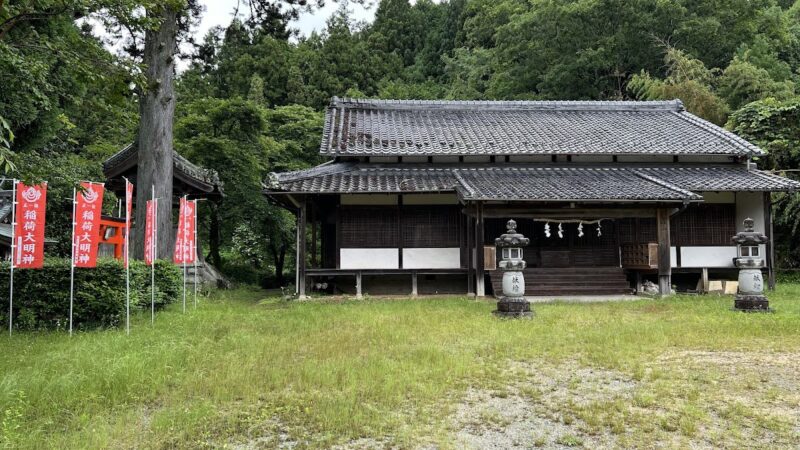
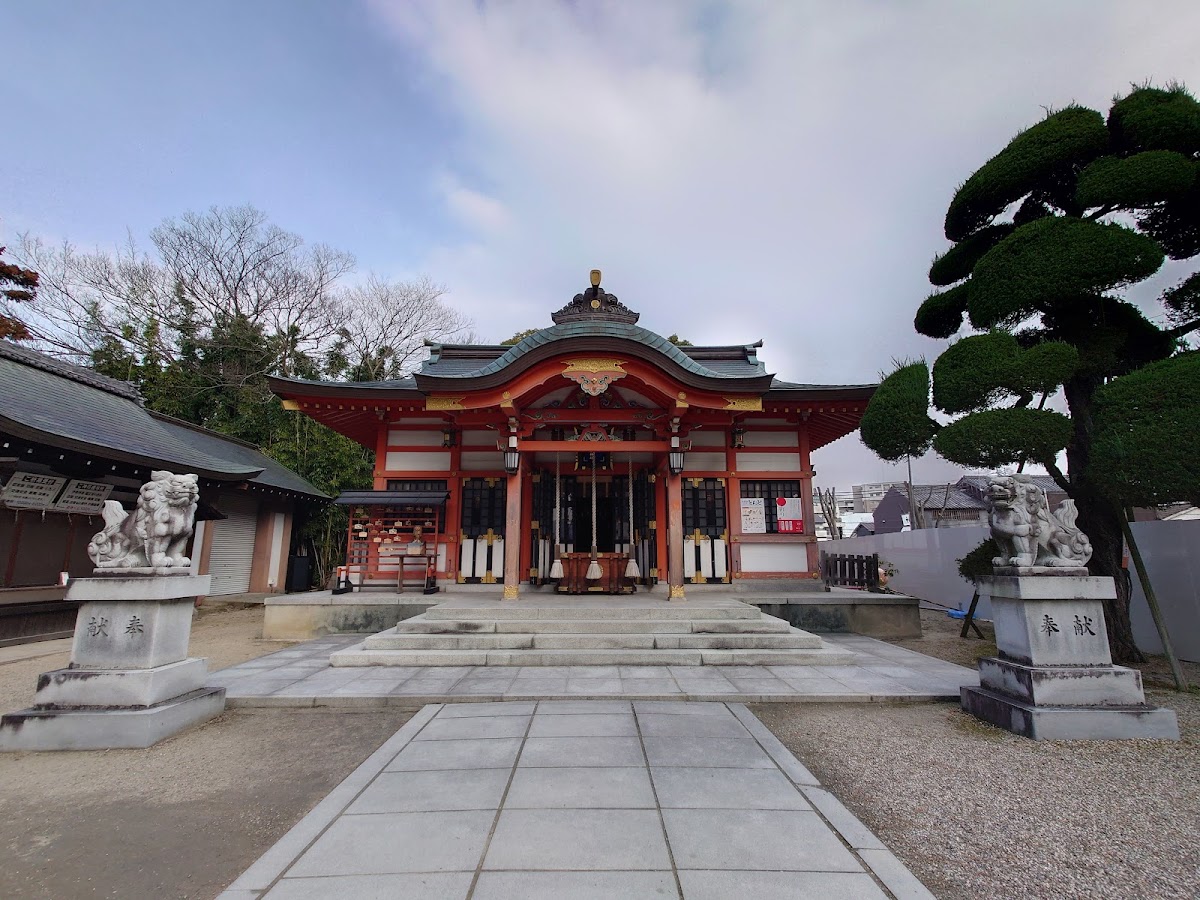
The main hall of Ishizonoza Takumushitama Shrine is a valuable structure that preserves traditional shrine architectural styles. Despite being located in the heart of the city, the shrine grounds are enveloped in a tranquil atmosphere, making it a precious space for prayer in today’s increasingly urbanized world.
The shrine buildings have been rebuilt several times, and the current structure is thought to date from the early modern period onward. However, it retains an appearance that suggests continuity as a place of worship since ancient times.
Torii Gate and Approach
Due to its location within walking distance of Kintetsu Takada City Station, the approach is relatively compact. Passing through the torii gate, one can feel the atmosphere of a sacred area, far removed from the hustle and bustle of the city.
The form and arrangement of the torii gate reflect the history and form of worship of the shrine, serving to guide worshippers into a sacred space.
Subsidiary Shrines
Several subsidiary shrines are enshrined around the main shrine, each reflecting the local beliefs and history. These subsidiary shrines, along with the main deity, have met the diverse religious needs of the local residents.
Some of the subsidiary shrines may include local tutelary deities or deities worshipped by specific professional groups, demonstrating the multi-layered nature of the shrine’s faith.
Annual Events and Festivals
Ishizonoza Takumushitama Shrine holds various festivals and religious ceremonies throughout the year. The annual festival, in particular, is a significant local event, attracting many worshippers and parishioners.
Due to its nature as a water deity, prayer ceremonies coinciding with agricultural milestones are also highly valued. The spring Kinensai (harvest festival) and the autumn Niinamesai (harvest festival) are ceremonies expressing gratitude for abundant harvests and the blessings of water.
Visits for important life events such as New Year’s visits, Shichi-Go-San (a traditional rite of passage for children), and exorcisms are also popular, making it a deeply rooted presence in the lives of the local residents as their tutelary deity.
Surrounding History and Culture
Ancient History of the Katsuragi Region
The Katsuragi region, where Ishizonoza Takumushitama Shrine is located, was an extremely important area in ancient Japan. It was the base of the powerful Katsuragi clan and played a major role in the establishment and development of the Yamato Kingdom.
Many Shikinaisha (shrines listed in the Engishiki, an ancient Japanese legal code) are concentrated in the Katsuragi region, suggesting it was one of the religious and political centers in ancient times. This shrine also provides important clues to understanding the ancient history of this region.
Relationship with Yokoodori Road
Yokoodori Road, which passes near our shrine, was one of the major ancient roads, an important transportation route connecting Asuka and Naniwa. Many shrines and historical sites are scattered along this road, and our shrine, situated at a key transportation hub, has watched over the safety of travelers and the prosperity of trade.
It is known that culture and technology from the continent were transmitted via Yokoodori Road, contributing to the development of the Katsuragi region. Weaving techniques may also have been introduced via this road.
Connection with Shizuka Gozen
Approximately 600 meters west of our shrine lies Isono Village (present-day Isono-cho, Yamato-Takada City), which is considered the hometown of Isono Zenny, the mother of Shizuka Gozen, known as the beloved concubine of Minamoto no Yoshitsune.
This region remained culturally important even in the Middle Ages, and our shrine has continued to function as a center of local history and culture. The legend of Shizuka Gozen is one example of the historical richness of the area surrounding our shrine.
Access Information
Access by Train
Access to Ishizonoza Takumushitama Shrine is very convenient. The nearest station is Takada-shi Station on the Kintetsu Minami-Osaka Line, and it’s conveniently located just a 2-minute walk from the station.
From Osaka, it takes about 30 minutes on the Minami-Osaka Line from Kintetsu Abenobashi Station. From Nara, it takes about 40 minutes by transferring between the Kintetsu Kashihara Line and the Minami-Osaka Line. Because of its location right in front of the station, even first-time visitors can easily find it.
Access by Car
If traveling by car, it’s about 15 minutes from the Kashiba IC or Kashiwara IC on the Nishi-Meihan Expressway. However, because it’s located in the city center, the surrounding roads have heavy traffic, and parking spaces are limited.
When visiting, we recommend using public transportation whenever possible. If you visit by car, you may need to use nearby paid parking lots.
Visiting Hours
While visiting the shrine grounds is generally free, the shrine office is open from approximately 9:00 AM to 5:00 PM. If you wish to receive a Goshuin (shrine stamp) or other items, it is recommended to visit during these hours.
The shrine is open year-round, but hours may change on special days such as festivals, so it is recommended to check in advance.
Nearby Tourist Attractions
Historical Sites in Yamato-Takada City
Around Ishizonoza Takumushitama Shrine, there are numerous historical sites that tell the history of Yamato-Takada City. There are also burial mounds believed to be the tomb of Emperor Annei and other ancient ruins nearby, making it a great place to enjoy a historical walk.
The city also has other shrines, such as Nagao Shrine, which are identified as Shikinaisha (shrines listed in the Engishiki), allowing for a shrine-hopping experience.
Famous Places in the Katsuragi Region
The Katsuragi region as a whole boasts numerous famous tourist attractions, including Mt. Katsuragi, Taima-dera Temple, and Takakamo Shrine. Starting from our company, it’s possible to plan a trip exploring the history and nature of the Katsuragi region.
In particular, the hiking course along the historical road known as the Katsuragi Ancient Road is popular, allowing you to visit multiple shrines and temples while experiencing an ancient atmosphere.
Research and Mysteries
Changes in Deities
One of the biggest mysteries of Ishizonoza Takumushitama Shrine is the changes in its enshrined deities. There is debate as to whether the current principal deities, Taketamayorihiko-no-Mikoto and Taketamayorihime-no-Mikoto, were the original deities from the time of its founding.
The connection to the original deity, Shitateluhime-no-Mikoto, inferred from the shrine’s name “Takumushitama (Takumuzu),” and its relationship with Toyotamahiko-no-Hiko and Toyotamahime, among others, involves a complex interplay of multiple deities, making it an important subject of research for unraveling the changes in ancient Shinto rituals.
Relationship with the Katsuragi Clan
Because our shrine is a Shikinai-Taisha (a major shrine listed in the Engishiki) of the Katsuragi region, its relationship with the ancient Katsuragi clan is attracting attention. The Katsuragi clan was a powerful clan within the Yamato court from the 5th to the 6th centuries, and it is believed they founded many shrines in this region.
It has been suggested that our shrine may also be the tutelary shrine of the Katsuragi clan, or a shrine worshipped by the Katsuragi clan, making it a valuable case study for researching the relationship between ancient clans and shrines.
The Reality of Sericulture and Weaving Beliefs
Further research is needed regarding the reality of sericulture and weaving beliefs inferred from the shrine’s name. Many issues remain to be clarified, including ancient textile production in the Katsuragi region, the existence of immigrant groups of artisans, and their relationship to our shrine.
Archaeological excavations and detailed analysis of ancient documents are expected to clarify the true nature of our shrine.
Summary
Ishizonoza Takumushitama Shrine (Ryuo-gu) is a Shikinai-Taisha (a major shrine listed in the Engishiki) located in the heart of Yamato-Takada City, Nara Prefecture, and is a place of worship that has continued uninterrupted from ancient times to the present day. This shrine, dedicated to the water god, sericulture god, and craftsmanship god, offers diverse blessings and enjoys the fervent devotion of local residents.
It possesses many academically intriguing elements, including its historical significance as the site of Emperor Annei’s palace, its place in the ancient history of the Katsuragi region, and the mysterious changes in its enshrined deity.
Its excellent accessibility, just a two-minute walk from Kintetsu Takada-shi Station, is another attractive feature. It’s definitely a shrine worth visiting when you’re in Nara Prefecture. In today’s increasingly urbanized world, it will undoubtedly continue to walk alongside the local people as a precious presence that conveys ancient faith and history.