Honshoji Temple Complete Guide: The History and Highlights of the Fortress Temple that Fought Against Tokugawa Ieyasu
About Honshoji Temple
Honshoji Temple is a Shinshu Otani sect temple located at 26 Nodera, Nodera-cho, Anjo City, Aichi Prefecture. Its mountain name is Unryuzan, and it is also known as Nodera Gohonbo. It is said to have been founded around 1206 (Ken’ei 1) during the late Kamakura period by Keien, a disciple of Shinran, making it a venerable temple with a history of over 800 years.
The most distinctive feature of Honshoji Temple is its castle-like defensive structures, stemming from its historical background as a central base for the Mikawa Ikko-ikki rebellion during the Sengoku period. The temple grounds, surrounded by a double moat and earthen ramparts, preserve a very rare form of castle-like temple (castle-style temple complex), and it was designated a National Historic Site in 2015.
Beyond its religious role as a Jodo Shinshu temple, Honshoji Temple holds significant value from the perspectives of history, religious studies, and castle research as an important historical site that tells the story of popular uprisings during the Sengoku period.
History of Honshoji Temple
Founding and the Kamakura Period
Honshoji Temple is believed to have been founded around Ken’ei 1 (1206). A tradition remains that it was founded by Keien, a direct disciple of Shinran Shonin, the founder of Jodo Shinshu Buddhism. It is said that Shinran, on his way back to Kyoto after missionary work in the Kanto region, visited the Mikawa region, and Keien, having received Shinran’s teachings, established the temple in this area.
In its early days, Honshoji Temple functioned as a base for spreading the teachings of Jodo Shinshu Buddhism and became a central figure in Shinshu faith in the Mikawa region. The Mikawa region in the Middle Ages was a thriving agricultural area, and the teachings of Shinshu Buddhism were widely accepted, particularly among the peasant class.
The Sengoku Period and the Mikawa Ikko-ikki Rebellion
The most important event in the history of Honsho-ji Temple is the Mikawa Ikko-ikki rebellion, which took place from 1563 to 1564. This rebellion was a large-scale armed conflict between Matsudaira Ieyasu (later Tokugawa Ieyasu), who aimed to unify Mikawa Province (present-day eastern Aichi Prefecture), and Ikko-shu temples and followers who held the right of non-entry (a privilege of not being subject to interference by the feudal lord).
After Imagawa Yoshimoto was killed at the Battle of Okehazama (1560), Ieyasu, who had become independent from the Imagawa clan, proceeded with the unification of Mikawa. However, the three temples of Mikawa—Honsho-ji, Jogu-ji, and Shoman-ji—possessed considerable economic power and armed followers, and resisted Ieyasu’s rule.
Honsho-ji Temple became the central base of the Mikawa Ikko-ikki rebellion, and thousands of followers gathered under the leadership of its head priest, Kūsei Shōnin. Because many of Ieyasu’s retainers were also believers, Ieyasu’s army faced a crisis of internal division. It is said that Ieyasu’s senior retainers, such as Honda Masanobu and Natsume Yoshinobu, even briefly joined the rebel side.
The fierce fighting continued for about a year, but ultimately a peace agreement was reached between Ieyasu’s side and the rebels. However, even after the peace agreement, Ieyasu intensified his vigilance against the Ikko-ikki, and it is said that Honsho-ji Temple’s main buildings were temporarily destroyed, and its monks were ordered to leave the country.
Restoration in the Edo Period and Beyond
After the Mikawa Ikko-ikki rebellion, Honsho-ji Temple suffered severe persecution, but in the Edo period, it gradually began its path to restoration. Under the Tokugawa Shogunate’s religious policies, the temple’s activities as a Shinshu Buddhist temple were re-recognized, and it revived as a center of local faith.
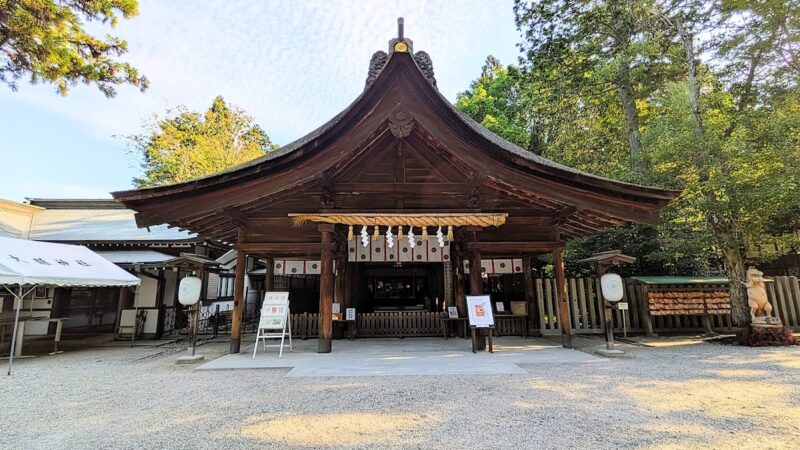
The current main hall was rebuilt during the Edo period and is a designated cultural property of Aichi Prefecture. Although it lost its function as a castle, parts of the double moat and earthworks remain, strongly preserving the atmosphere of the Sengoku period.
Despite being affected by the anti-Buddhist movement of the Meiji era, it was protected by the deep faith of the local residents, and the Buddhist tradition has been passed down to the present day. Since the Heisei era, its historical value has been re-evaluated, and archaeological excavations and preservation work on the temple grounds have been carried out.
Characteristics of Honshoji Temple
Structure as a Castle Temple
The most distinctive feature of Honshoji Temple is that, despite being a temple, it is a “castle temple” equipped with defensive facilities like a castle. This stems from its function as a military base during the Mikawa Ikko-ikki rebellion.
Double Moat
The temple grounds are surrounded by a double moat, consisting of an inner moat and an outer moat. The inner moat surrounded the main temple buildings, including the main hall, while the outer moat defended a wider area. These moats functioned as water defenses, preventing enemy intrusion and also serving as firebreaks. Some of the moats still hold water today, preserving the atmosphere of the Sengoku period (Warring States period).
Earthworks
Earthworks were constructed inside the moats, creating a defensive system combining moats and earthworks. Fences and walls were built on top of the earthworks, likely to enhance defensive capabilities against attacks. Archaeological excavations have revealed the structure and scale of the earthworks.
Drum Tower
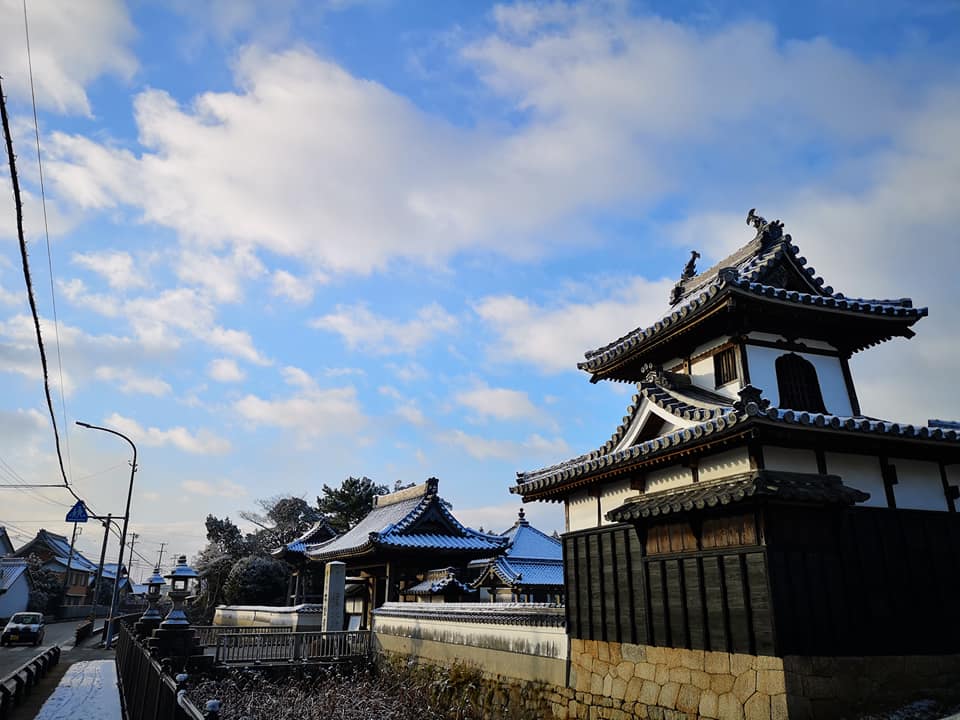
Honshoji Temple has a building called a drum tower (koro). While a drum tower is a facility used to announce the time, in a castle setting, it also served a role similar to a watchtower. The drum tower at Honshoji Temple is a valuable historical structure demonstrating that it functioned as both a religious and military facility.
Temple Layout as a Jodo Shinshu Temple
While possessing castle-like elements, Honshoji Temple maintains the temple layout characteristic of a Jodo Shinshu temple. The main hall is at the center, surrounded by the priest’s quarters, bell tower, and main gate, exhibiting a spatial configuration unique to Shinshu temples.
The main hall is a large-scale building with a hipped roof, and the principal image, Amida Buddha, is enshrined inside. Typical of Shinshu temples, the decoration is relatively simple, yet it exudes a solemn atmosphere.
The Center of the Three Mikawa Temples
Honshoji Temple, along with Jogu-ji Temple (Okazaki City) and Shoman-ji Temple (Okazaki City), is known as one of the three Mikawa temples and was one of the three major strongholds of the Mikawa Ikko-ikki rebellion. Of these, Honshoji Temple played the most central role, and it is believed that the rebellion’s leadership was located there.
All three Mikawa temples possessed the right of exemption from entry, and wielded considerable economic power and armed groups of followers. These temples were not merely religious institutions, but functioned as centers of autonomous communities in the Middle Ages.
Cultural Properties
National Historic Site
Honshoji Temple Grounds
Designated as a National Historic Site on March 10, 2015. The designated area encompasses the entire temple grounds, with the remains of a double moat and earthworks being the main reasons for the designation. It is considered an important historical site for understanding the temple grounds related to the Mikawa Ikko-ikki rebellion, as well as for understanding the temple complex and Buddhist faith of Jodo Shinshu Buddhism.
Excavation surveys have confirmed remains from the Sengoku period to the Edo period, providing valuable information for understanding the reality of a fortified temple. Anjo City is promoting the preservation and maintenance of the historical site, and plans are underway to restore the moat and earthworks in the future.
Aichi Prefecture Designated Cultural Property
Main Hall
The main hall of Honshoji Temple is designated as an Aichi Prefecture Designated Cultural Property (building). This building, rebuilt during the Edo period, is a large wooden structure with a hipped roof and tiled roof. It clearly exhibits the characteristics of Shinshu Buddhist temple architecture and is considered to have high architectural historical value.
The interior is divided into an outer sanctuary and an inner sanctuary, with the principal image, Amida Buddha, enshrined in the inner sanctuary. While the carvings and decorations are relatively simple, they create a solemn and majestic space.
Paintings
Several paintings at Honshoji Temple are designated as Aichi Prefecture cultural properties.
- Zenkoji Nyorai Picture Scroll (2 scrolls): A picture scroll depicting the origin of the Zenkoji Nyorai, the principal image of Zenkoji Temple. It is a valuable work demonstrating medieval painting techniques.
- Prince Shotoku Picture Scroll (6 scrolls): A picture scroll depicting the life of Prince Shotoku. In Jodo Shinshu Buddhism, Prince Shotoku is revered as the “leader of the nation,” and many Shinshu temples possess picture scrolls of Prince Shotoku. The illustrated biography of Prince Shotoku at Honsho-ji Temple is well-preserved and considered a historically significant work in art history.
These paintings demonstrate Honsho-ji Temple’s long history and cultural heritage, and are valuable resources for studying religious art from the medieval to early modern periods.
Other Cultural Properties
Honsho-ji Temple houses many other cultural properties besides those mentioned above. The ancient documents are attracting attention from researchers as primary sources for understanding the realities of the Mikawa Ikko-ikki rebellion. Furthermore, Buddhist implements and robes are of high historical value and contribute to understanding Shinshu Buddhist culture.
Access and Visiting Information
Location
26 Nodera, Nodera-cho, Anjo City, Aichi Prefecture 444-1165
Phone: 0566-99-0221
Access Methods
Public Transportation
- Approximately 15 minutes on foot from Meitetsu Nishio Line “Horiuchi Park Station”
- Approximately 15 minutes by taxi from JR Tokaido Main Line “Anjo Station”
- Temporary shuttle buses connecting tourist facilities in Anjo City may operate on weekends and holidays (may vary depending on the season)
By Car
- Approximately 20 minutes from Tomei Expressway “Okazaki IC”
- Approximately 25 minutes from Isewangan Expressway “Toyota Minami IC”
- Parking available (free)
Visiting Information
- Visiting Hours: The temple grounds are generally open for free visits. Prior contact may be recommended for viewing the interior of the main hall.
- Admission Fee: Free (except during special viewing periods)
- Notes: This temple is still actively engaged in religious activities, so please observe proper etiquette during your visit. Entry to the temple grounds may be restricted during religious services.
Nearby Attractions
When visiting Honshoji Temple, we recommend also visiting the surrounding historical sites.
- Ansho Castle Ruins: The site of the Matsudaira clan’s castle where Tokugawa Ieyasu spent his childhood.
- Honshoji Historical Park (Planned): Development of a historical park around Honshoji Temple is underway.
- Anjo City History Museum: A museum where you can learn about the history of Anjo. There are also exhibits related to the Mikawa Ikko-ikki rebellion.
Honshoji Temple and Tokugawa Ieyasu
An essential part of understanding Honshoji Temple’s history is its relationship with Tokugawa Ieyasu. The Mikawa Ikko-ikki rebellion was one of the greatest crises for the young Ieyasu.
Ieyasu’s Greatest Crisis
The Mikawa Ikko-ikki rebellion, which broke out in 1563 when Ieyasu was 22 years old, was the greatest test for Ieyasu immediately after his independence from the Imagawa clan. Many Ikko-shu followers within Ieyasu’s retainers joined the rebels, and Ieyasu’s army faced a crisis of internal division.
It is said that even key retainers who would later support Ieyasu, such as Honda Masanobu and Natsume Yoshinobu, temporarily sided with the rebels. Ieyasu faced the tragic situation of “father and son divided into enemies, brothers fighting each other,” and this experience is said to have greatly influenced his later religious policies.
Response to the Ikko-shu
After the Mikawa Ikko-ikki rebellion, Ieyasu adopted a harsh stance towards the Ikko-shu. The three temples of Mikawa, including Honsho-ji, were temporarily suppressed, and orders were given for the destruction of their main buildings and the expulsion of their monks from the country.
However, Ieyasu did not completely eliminate the Ikkō-shū sect, and later came to recognize the activities of Shinshū temples. This is thought to have been a pragmatic decision considering the large number and influence of Ikkō-shū followers.
After the establishment of the Edo shogunate, Ieyasu pursued religious control policies, and it is believed that the experience of the Mikawa Ikkō-ikki rebellion formed the basis of these policies. The battle with Honshō-ji Temple had a significant impact on Ieyasu’s life and political thought.
Current Honshō-ji Temple
Religious Activities
Currently, Honshō-ji Temple continues to be an active religious temple of the Shinshū Ōtani sect. Under the leadership of the head priest, Reverend Kōen Koyama, regular memorial services and Buddhist rituals are held, and it functions as a center of faith in the region.
In addition to traditional events such as monthly Dharma services and Hōon-kō (memorial services), modern events are also planned, and the temple is striving to be an open institution with the motto of “memorial services and events that bring joy to both oneself and others.”
Historical Site Preservation and Public Access
After being designated a national historical site, the temple grounds have been preserved in cooperation with Anjo City. While preserving the remains revealed through archaeological excavations, efforts are being made to create an environment where visitors can learn about history.
On weekends and holidays, explanatory signs and information boards are available throughout the grounds, and guided tours are sometimes possible. This provides a valuable opportunity to learn about the Mikawa Ikko-ikki rebellion and the fortified temple.
Information Dissemination via Social Media
Honshoji Temple operates an official Instagram account (@kouenoyama), where it shares information about the seasonal changes in the temple grounds and events. With over 2,000 followers, many people are interested in Honshoji Temple’s activities.
A Facebook page has also been created, serving as a platform for interaction with the local community. Using modern tools for information dissemination plays a role in conveying the charm of Honshoji Temple to younger generations.
The Seasons of Honshoji Temple
Spring
In spring, the cherry blossoms on the temple grounds bloom beautifully. The cherry blossoms reflected on the moat’s surface are exceptionally beautiful, attracting many worshippers and photography enthusiasts. Spring memorial services are also held, celebrating the start of a new season.
Summer
In summer, the lush green temple grounds create a cool and refreshing atmosphere. During the Obon period, the Urabon-e service is held, attracting many parishioners and believers.
Autumn
Autumn is the season for the Hoonko service. The most important memorial service commemorating the virtues of Shinran Shonin is held, drawing many worshippers. The autumn foliage on the temple grounds is also beautiful, creating a picturesque landscape in combination with the historical buildings.
Winter
In winter, Honshoji Temple is enveloped in a tranquil atmosphere. When snow falls, the double moat and earthen ramparts are covered in white, further highlighting the temple’s appearance as a castle-like temple from the Sengoku period.
Significance of Visiting Honshoji Temple
Honshoji Temple is not merely a tourist spot; it is an important place for deeply understanding Japanese history and culture.
A Place for Historical Learning
By visiting the site of the Mikawa Ikko-ikki, a significant historical event, you can experience living history that cannot be learned from textbooks. Honshoji Temple is indispensable for understanding Tokugawa Ieyasu’s path to unifying Japan.
Understanding Religious Culture
Honshoji Temple, a Jodo Shinshu Buddhist temple with a history of over 800 years, is a valuable place for understanding Japanese religious culture. You can learn how Shinran’s teachings spread among the people and influenced society.
Resources for Castle Research
Honshoji Temple, with its unusual form as a castle-temple, is also important for castle research. Its unique structure, a fusion of religious and military facilities, reflects the social landscape during the transition from the medieval to the early modern period.
A Local Pride
For Anjo City, Honshoji Temple symbolizes the region’s history and culture. Its designation as a National Historic Site has brought nationwide recognition of its value, making it a source of pride for local residents.
Summary
Honshoji Temple is a Shinshu Otani sect temple located in Anjo City, Aichi Prefecture, and boasts a history of over 800 years. Founded in the Kamakura period by Keien, a disciple of Shinran, it played a central role in the Mikawa Ikko-ikki rebellion during the Sengoku period, fighting against Tokugawa Ieyasu.
Its unique feature as a fortress temple surrounded by a double moat and earthen ramparts is rare nationwide, and it was designated a National Historic Site in 2015. It also houses numerous valuable cultural assets, including the main hall and paintings designated as Aichi Prefecture cultural properties.
Currently, while continuing active religious activities as a Shinshu Otani sect temple, it is also open to the public as a historical site, attracting many worshippers and history enthusiasts. Honshoji Temple is the site of the Mikawa Ikko-ikki, a significant event in Japanese history, and an indispensable location for understanding the life of Tokugawa Ieyasu.
Honshoji Temple offers a multifaceted perspective on Japanese history and culture, encompassing Jodo Shinshu Buddhism, popular movements of the Sengoku period, and castle architecture. It’s a must-visit spot when visiting Aichi Prefecture. In its tranquil grounds, it’s a precious place where you can reflect on history and connect with the faith and lives of those who came before us.