Complete Guide to Kaizenji Temple: The Charm and Highlights of a Historic Rinzai Zen Temple in Iida City, Nagano Prefecture
About Kaizenji Temple
Kaizenji Temple is a Rinzai Zen temple of the Myoshinji school located in Kamikawaji, Iida City, Nagano Prefecture. Its mountain name is Joshuzan, and it enshrines the Holy Kannon Bodhisattva as its principal image. It is a historic ancient temple founded and restored during the Kamakura and Muromachi periods, and it houses many valuable cultural assets, including its main gate, a nationally designated Important Cultural Property.
The temple is located in a scenic area near Tenryukyo Gorge and is known as a famous spot for flowers such as wisteria, peonies, and rhododendrons. Many worshippers and tourists visit, especially from spring to early summer.
History of Kaizenji Temple
Founded in the Kamakura Period
There are several legends regarding the founding of Kaizenji Temple. According to temple tradition, the temple was founded during the Kamakura period by Shijo Yorimoto, who entered the Igara Manor. Another record suggests it was founded by the Ema clan, a branch of the Hojo clan.
Igara Manor was a manor that existed in the area around present-day Iida City from the Kamakura to Muromachi periods, and was the political and economic center of the region. The fact that a samurai family appointed as local administrators built a temple in this area demonstrates the deep connection between the samurai class and Buddhism at that time.
Restoration in Kenmu 2 (1335)
The most important turning point in the history of Kaizenji Temple was its restoration in Kenmu 2 (1335). Ogasawara Sadamune, who became the governor of Shinano Province, became the founder, and he invited Seisetsu Shocho (Daikan Zenji), a high-ranking monk from Yuan Dynasty China, from Kenninji Temple in Kyoto to be the founding abbot.
Seisetsu Shōchō was a high-ranking Zen monk who introduced the Rinzai school of Zen Buddhism from China to Japan. He was also active at Engaku-ji and Kenchō-ji temples in Kamakura and was considered the foremost Zen monk of his time. By welcoming him as its founding abbot, Kaizen-ji Temple established itself as a central Rinzai Zen temple in southern Shinano Province.
The temple’s founder, Ema-ni Jōgen, was the wife of the Ema clan, the local lords of Igarashi Manor. She donated temple lands, solidifying Kaizen-ji’s foundation. With the patronage of Ogasawara Sadamune and the religious authority of Seisetsu Shōchō, Kaizen-ji rapidly developed.
Prosperity during the Muromachi Period
In 1338 (Ryakuō 1), Kaizen-ji was ranked as one of the “Various Mountains” in the Five Mountains and Ten Temples system. This meant it was officially recognized as a temple of a status second only to the Kyoto Five Mountains and Kamakura Five Mountains.
Furthermore, in 1427 (Ōei 34), it attained the status of one of the “Ten Temples.” The Ten Satsuma were a group of temples with a high status second only to the Five Mountains, and only a limited number of temples in Japan were able to attain this status. Kaizenji’s inclusion among the Ten Satsuma demonstrates its importance as a religious and cultural center of southern Shinano during the Muromachi period.
During this period, Kaizenji functioned as a training ground for many monks and played a significant role in the cultural development of the surrounding area. The rigorous training system unique to Zen temples and the advanced culture introduced from China profoundly influenced the spiritual culture of this region.
From the Sengoku Period to the Edo Period
Records indicate that the main hall was built during the Tenbun era (1532-1555). Even during the turbulent Sengoku period, Kaizenji continued to function as a center of faith in the region.
In the Edo period, Kaizenji clearly belonged to the Myoshinji branch of the Rinzai school of Zen Buddhism, and has continued to uphold its lineage to this day. Throughout the Edo period, it continued its activities as a temple with the support of influential local figures and parishioners. ### Modern and Contemporary Period
Despite the impact of the anti-Buddhist movement during the Meiji era, Kaizenji Temple successfully preserved its valuable cultural assets. In the Showa era, its historical value was officially recognized, with the temple gate being designated a National Important Cultural Property.
Currently, in addition to its role as a religious facility, it is also a popular tourist destination with historical buildings and beautiful gardens.
Cultural Assets of Kaizenji Temple
Nationally Designated Important Cultural Property: Temple Gate
The most important cultural asset at Kaizenji Temple is the temple gate, designated as a National Important Cultural Property. This gate is a valuable structure that preserves the architectural style of the early Muromachi period, strongly retaining the characteristics of Zen Buddhist style (Tang style).
Architectural Style of the Temple Gate
The temple gate is a three-bay, single-entrance gatehouse with a hipped roof covered in cypress bark shingles. The temple gate exhibits distinctive Zen Buddhist architectural details throughout, particularly in its structural elements and column placement, reflecting the advanced architectural techniques of the time.
All columns are cylindrical, and a balustrade surrounds the upper level. The deep eaves and powerful, curving roof embody the aesthetic sensibilities of Zen Buddhist architecture during the Muromachi period.
Historical Value
While there are various theories regarding the construction date of the temple gate, its stylistic characteristics suggest it dates from the late 14th to early 15th century. As a representative example of medieval Zen Buddhist architecture remaining in the southern Shinano region, it holds an extremely important position in architectural history.
Medieval gatehouses remaining in Nagano Prefecture are limited in number, and the Kaizenji Temple gate is remarkably well-preserved, making it a valuable resource for understanding the architectural techniques and aesthetic sensibilities of the time.
Other Cultural Properties
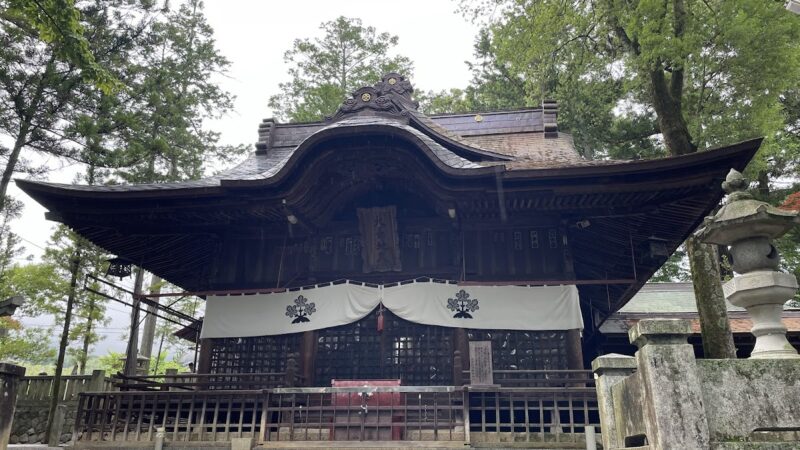
Besides the temple gate, Kaizenji Temple possesses many other cultural properties. The main hall, rebuilt during the Edo period, exhibits a simple yet powerful architectural style characteristic of Zen Buddhist temples.
The temple houses treasures such as calligraphy and paintings associated with Seisetsu Shocho, calligraphy by successive chief priests, Buddhist statues, and Buddhist implements, some of which are occasionally displayed on special occasions.
Highlights of Kaizenji Temple
The Beauty of the Wisteria Trellis
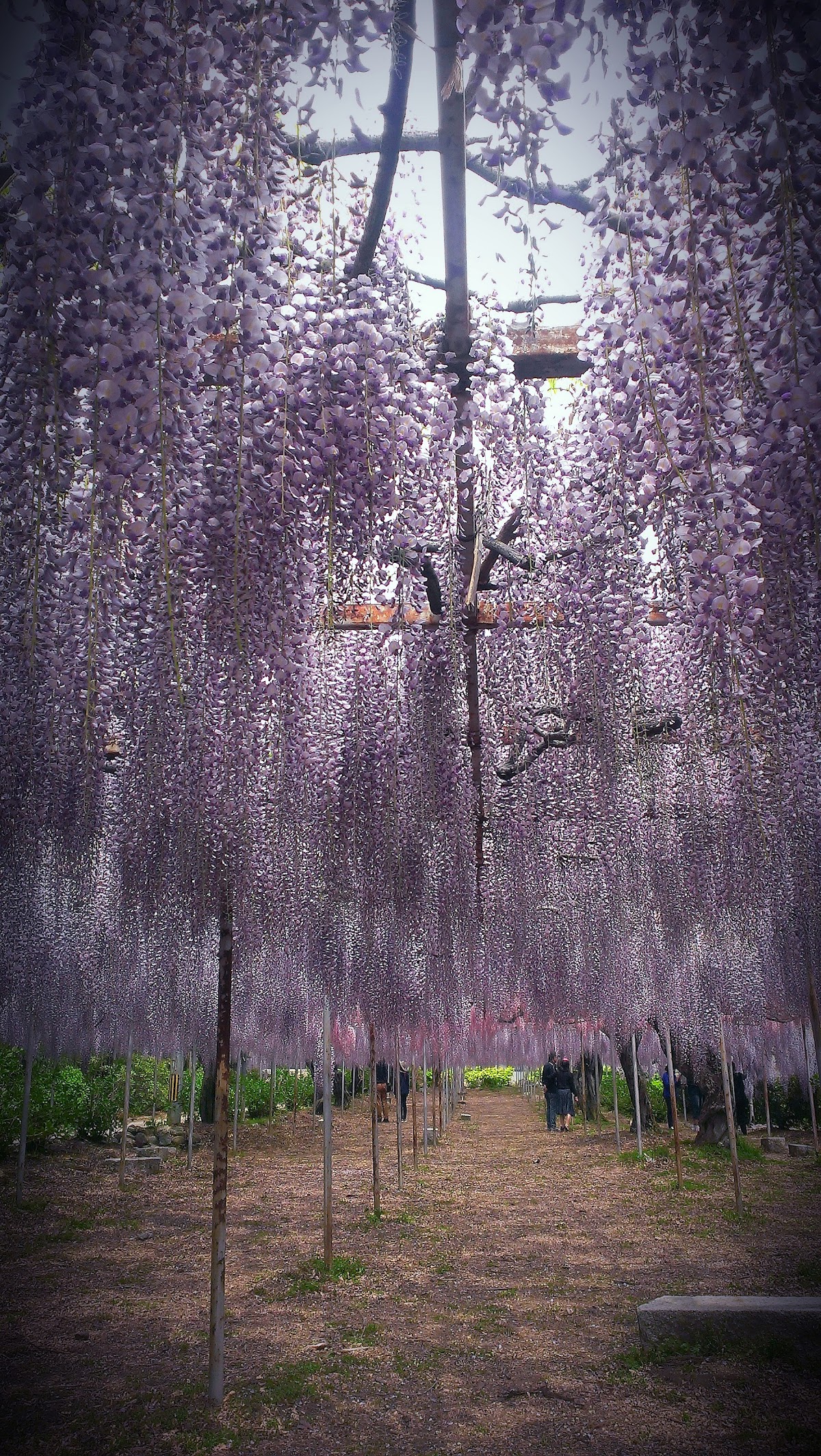
Kaizenji Temple is widely known as the “Wisteria Temple,” and its wisteria trellis is one of the most famous wisteria viewing spots in southern Shinshu. The sight of purple and white wisteria blossoms hanging from ancient trees, some hundreds of years old, is breathtaking.
Best Time to See
The best time to see the wisteria is usually from late April to early May, around Golden Week. While this may vary depending on weather conditions, during this time, countless wisteria flower clusters, some over a meter long, hang down, filling the temple grounds with a sweet fragrance.
The sight of purple and white wisteria blooming simultaneously is truly a work of art created by nature. Walking beneath the wisteria trellis, you can experience a fantastical space created by the purple and white gradient above and the sunlight filtering through the trees.
Peony Garden
Within the grounds of Kaizenji Temple is a magnificent peony garden, where colorful peonies bloom in abundance during the spring. Various varieties of peonies—red, white, pink, yellow, and more—are planted, allowing visitors to enjoy the magnificent beauty of the peony, often called the “king of flowers.”
The best time to see the peonies is from mid-April to early May, often coinciding with the wisteria blooming season, allowing visitors to enjoy both at the same time. The combination of the large-flowered peonies and the elegantly drooping wisteria captivates visitors.
Rhododendron Clusters
Another highlight of Kaizenji Temple is the rhododendrons. Planted throughout the temple grounds, the rhododendrons bloom with vibrant flowers from late April to May.
Rhododendrons are naturally alpine plants, but at Kaizenji Temple, they are carefully cultivated to thrive even in lowland areas. The sight of rhododendrons in a variety of colors—pink, white, reddish-purple, and more—blooming against the backdrop of the temple gate and main hall is truly exceptional.
Seasonal Expressions
While Kaizenji Temple is particularly famous for its spring flowers, it offers different charms throughout the four seasons.
Spring (March-May): Starting with plum and cherry blossoms, followed by peonies, wisteria, and rhododendrons, flowers bloom one after another. This is the most vibrant season.
Summer (June-August): The fresh greenery is beautiful, and the temple grounds are enveloped in deep green. You can feel the tranquil atmosphere characteristic of a Zen temple.
Autumn (September-November): The autumn leaves color the temple grounds, and the maple trees around the temple gate are particularly magnificent. In the crisp autumn air, the contrast between the historical buildings and the autumn foliage creates a beautiful landscape.
Winter (December-February): The snow-covered temple gate and main hall have a sumi-e (ink painting)-like quality, embodying the serene world of Zen.
Guide to Kaizenji Temple Grounds
Temple Gate
As you proceed along the approach to the temple, the first thing you’ll see is the temple gate, a nationally designated Important Cultural Property. Its dignified appearance from the Muromachi period transports visitors to the world of the Middle Ages. When passing through the gate, pay attention to its exquisite architectural details.
Main Hall
After passing through the temple gate, you’ll see the main hall straight ahead. The principal image, the Holy Kannon Bodhisattva, is enshrined inside, and visitors can pay their respects. It features a simple yet powerful architectural style typical of Zen temples.
Garden
A well-maintained garden spreads across the temple grounds. As is characteristic of Zen temple gardens, the stone arrangements and plantings are imbued with deep meaning, creating a space in harmony with the beauty of nature throughout the seasons.
Wisteria Trellis Area
The wisteria trellis, located in a corner of the temple grounds, is one of the highlights of Kaizenji Temple. During the wisteria blooming season, many visitors gather in this area to enjoy taking photographs.
Access Information
Location
Address: Kamikawaji, Iida City, Nagano Prefecture
Access by Public Transportation
By JR:
- Get off at Tenryukyo Station on the JR Iida Line, approximately 15 minutes on foot
- Get off at Kawaji Station on the JR Iida Line, approximately 20 minutes on foot
Tenryukyo Station is also a well-known tourist spot, and a route visiting Kaizenji Temple after enjoying the beauty of the Tenryukyo Gorge is also recommended.
Access by Car
Chuo Expressway:
- Approximately 15 minutes from Iida IC
- Approximately 10 minutes from Tenryukyo IC
The temple grounds have a parking lot for visitors. During peak seasons such as the wisteria blooming season, it is recommended to visit earlier in the day.
Nearby Tourist Attractions
When visiting Kaizenji Temple, you can also visit nearby tourist attractions.
- Tenryukyo Gorge: A scenic spot where you can enjoy the beauty of the gorge created by the Tenryu River.
- Iida City Museum of Art: A facility where you can learn about the history and culture of the region.
- Motozenkoji Temple: A temple where the principal image of Zenkoji Temple is said to have been first enshrined.
Manners and Precautions for Visiting
Basic Manners for Visiting
Kaizenji Temple is an active religious facility. Please observe the following manners when visiting.
- Be Quiet: Please be quiet and refrain from speaking loudly on the temple grounds.
- Photography: Please refrain from taking photographs in areas where photography is prohibited, such as inside the main hall.
- Consideration for Buildings: Please do not touch cultural properties such as the temple gate.
- Take Your Trash Home: To maintain the beauty of the temple grounds, please be sure to take your trash home with you.
Precautions During Flowering Seasons
Many visitors come during the wisteria and peony blooming seasons. To avoid crowds, visiting on weekdays or early in the morning is recommended. Also, since the condition of the flowers varies depending on the weather, it is recommended to check the blooming information in advance.
Visiting Hours and Admission Fees
While you can generally visit the temple grounds freely, a separate admission fee may be required for viewing the interior of the main hall or during special openings. It is recommended to check the details in advance.
Annual Events at Kaizenji Temple
Spring Events
Special events are sometimes held to coincide with the wisteria blooming season. Concerts by local cultural groups and tea ceremonies may also be held.
Autumn Events
In autumn, special exhibitions of temple treasures and events touring local cultural properties are sometimes planned. These are valuable opportunities to view precious temple treasures that are not usually on display.
Kaizenji Temple and the Local Community
As a Center of Local Culture
Since its founding, Kaizenji Temple has played an important role as a cultural center of the Minami-Shinano region. In the Middle Ages, it served as a Zen training center, and during the Edo period, it also functioned as a temple school, contributing to the development of local talent.
Even today, it remains deeply rooted in the community as an important center for conveying local history and culture, and as a spiritual haven for people.
Value as a Tourism Resource
Kaizenji Temple is one of Iida City’s representative tourist spots and contributes to the local economy. Especially during the wisteria blooming season, many tourists from within and outside the prefecture visit, and surrounding restaurants and souvenir shops become lively.
The charm of Kaizenji Temple, where historical buildings and natural beauty harmonize, will continue to increase in importance as a sustainable tourism resource.
Differences from Other Kaizenji Temples
There are several temples named “Kaizenji” throughout Japan. To avoid confusion, we will introduce the main Kaizenji temples.
Kaizenji Temple in Nagano City
There is also a Shingon Buddhist temple called Kaizenji in Nagano City. This temple is located at the northern foot of Maizuru Mountain and was relocated by Sanada Nobuyuki in 1624 (Kanei 1) along with Shiratori Shrine. It functioned as the head temple of Shiratori Shrine.
While Kaizenji Temple in Iida City belongs to the Myoshinji branch of the Rinzai school of Zen Buddhism, Kaizenji Temple in Nagano City belongs to the Shingon school, and their sects and founding histories are completely different.
Kaizenji Temple in Honjo City, Saitama Prefecture
There is also a Rinzai Zen temple called Kaizenji in Honjo City, Saitama Prefecture. This temple was founded in 1591 (Tensho 19) by Ogasawara Nobumine, the lord of Honjo Castle, and was established as the Ogasawara family’s ancestral temple. It is one of the seven temples on the Musashi Honjo Seven Lucky Gods pilgrimage, and Hotei (the god of happiness) is enshrined here.
Interestingly, both Kaizenji Temple in Iida City and Kaizenji Temple in Honjo City have deep connections to the Ogasawara clan and belong to the same Rinzai school. This suggests that the Ogasawara clan established Kaizenji temples in various locations. ## Research and Literature on Kaizenji Temple
Academic Research
Kaizenji Temple has been the subject of academic research from various perspectives, including architectural history, art history, and religious history. In particular, the architectural style of the temple gate is a crucial resource for studying Zen Buddhist architecture of the Muromachi period and has been featured in numerous research papers.
References
For those who wish to learn more about Kaizenji Temple, the following literature can be consulted:
- *Nagano Prefecture History* (Nagano Prefecture Edition)
- *Iida City History* (Iida City Edition)
- *Comprehensive Dictionary of Japanese Historical Place Names: Place Names of Nagano Prefecture* (Heibonsha)
- Various specialized books on architectural and art history
Materials related to Kaizenji Temple can be viewed at local libraries and the Iida City Museum of Art.
Best Season to Visit Kaizenji Temple
Spring (Late April – Early May)
The most recommended time to visit is spring, when wisteria, peonies, and rhododendrons are in full bloom. Especially around Golden Week, multiple flowers often bloom simultaneously, making the temple grounds at their most vibrant throughout the year.
However, crowds are expected during this period, so those who wish to visit at a leisurely pace are advised to visit on weekdays.
Autumn (November)
The autumn foliage season is also not to be missed. The maple trees around the temple gate change color, creating a beautiful landscape with the contrast between the historical buildings and the autumn leaves. It’s less crowded than spring, making it an attractive option for a quiet visit.
Fresh Green Season (Late May – June)
The fresh greenery after the flowering season is also beautiful, allowing you to experience the tranquil atmosphere characteristic of a Zen temple. There are fewer tourists, allowing for a leisurely stroll through the grounds.
Summary
Kaizenji Temple is a historic Rinzai Zen temple representing southern Shinano, with a history of nearly 700 years since its founding in the Kamakura period. The temple’s precious cultural assets, including its nationally designated Important Cultural Property, the temple gate, the beautiful wisteria trellises, peonies, rhododendrons, and other flowers, and the serene atmosphere characteristic of a Zen Buddhist temple continue to captivate visitors.
Founded by the eminent monk Seisetsu Shōchō, and having attained the status of one of the Ten Great Temples during the Muromachi period, its religious and cultural importance in the Middle Ages is immeasurable. Even today, its historical value and natural beauty make it a vital treasure of the region and a beloved tourist destination.
When visiting Iida City in Nagano Prefecture, be sure to visit Kaizenji Temple and experience its historical significance and beauty. The temple grounds, which display different expressions in each season, will offer new discoveries and inspiration with every visit.